Forschungszentrum für Europäische Mehrstimmigkeit
Die Mehrstimmigkeit stellt eines der reizvollsten Phänomene europäischer Musikpraktiken dar. Sie ist deshalb seit langem ein bevorzugter Forschungsgegenstand, besonders im nationalen Rahmen. Regionale Studien, die über die politischen Grenzen hinweg gehen, waren bis Anfang des 21. Jahrhunderts selten und sporadisch. Die regionalen und die politischen Grenzen in Europa sind aber in der Regel nicht dieselben. Dadurch ergab sich ein großer und nur ansatzweise erforschter Bereich europäischer Musik. Die Gründung eines Forschungszentrums europäischer Mehrstimmigkeit im Jahre 2003 in Form eines internationalen Netzwerkes von Spezialisten schien nach einer detaillierten Analyse mehr als notwendig geworden zu sein.
Die gründliche Untersuchung der vielfältigen europäischen mehrstimmigen Musikpraktiken, kann auf Grund der großen Vielfalt nur durch Konzentration auf bestimmte Fragen und Gebiete erfolgen. Die bisherigen Untersuchungen erfassen folgende Themen: Multipart Singing in the Balkans and the Mediterranean (EV I) , Cultural Listening and Local Discourse in Multipart Singing Traditions in Europe (EV II), The Instrumentation and Instrumentalization of Sound (EV III), Multipart Instrumental Music. Soloist and Ensemble Traditions (EV IV), Music for Dance (EV 5) und Singing, Song and Sound (EV VI).
Auf dieser Website werden Ergebnisse der bisherigen Forschungen bekannt gemacht um Interessierten Einblicke in diese Arbeit zu ermöglichen sowie um neue Impulse und Anregungen zu erhalten.
Ardian Ahmedaja
Neue Publikation
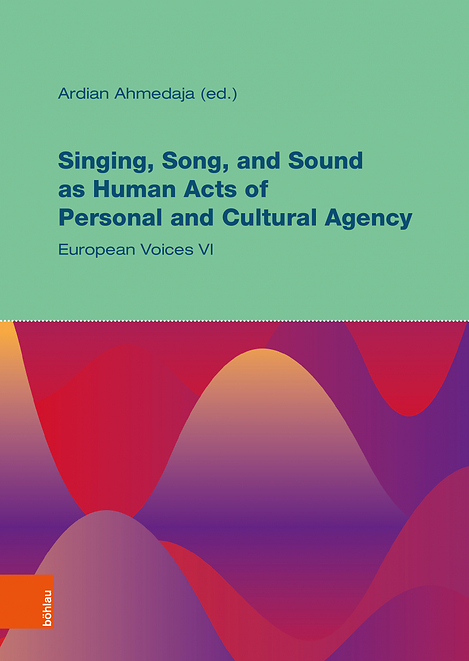
European Voices VI
Ardian Ahmedaja (ed.) Singing, Song, and Sound as Human Acts of Personal and Cultural Agency. European Voices VI. Music Traditions/Musik Traditionen Vol. 5. Wien: Böhlau. 2025. 308 pp., map, photographs, sheet music, tables, list of audiovisual examples, notes on contributors, index.
ISBN 978-3-205-22374-0 (Print)
ISBN 978-3-205-22375-7 (OpenAccess)
Johann Gottfried Herder characterised singing and song as human acts of personal and cultural agency (Herder and Bohlman 2017). These agencies are enacted musically, centralising the idea of “performance”. In this context, “singing” refers to the act of performance, which, due to its interactive nature in real time, is the most important moment of music-making, particularly in multipart music traditions, while “song” and its emergence remain the object and subject of the act of creation. “Sound” is an indispensable part of all these processes. The perception and interpretation of these aspects by different people affect both the practice and discourse of music, shaping meaningful experiences in terms of the attitudes and cognitive processes involved in its creation (Blacking 1973).