
Wissenschaftszentrum
Gustav Mahler und die Wiener Moderne
Aktuelles
Vortrag
Vienna Mahler Lecture #12
Justin Gregg: "The Other Mengelberg: Assessing Rudolf’s Personal and Professional Writings on Mahler"
17. März 2026, 18:00 Uhr
Ort: Wissenschaftszentrum Gustav Mahler und die Wiener Moderne | 1030 Wien, Lothringerstraße 18
In the field of Mahler studies, the name “Mengelberg” almost always refers to Willem, the conductor and early advocate of Mahler’s works, with whom Mahler developed a close personal friendship during the last decade of his life. In this lecture, however, I will explore the writings of Willem’s younger cousin, Rudolf Mengelberg (1892–1959), who moved from Germany to the Netherlands during the First World War and spent his career as an administrator of the Amsterdam Concertgebouw. As a musicologist, Rudolf wrote about Mahler in numerous documents spanning his lifetime, including a 1916 essay on the contemporary world, an extensive program book for the Concertgebouw’s 1920 Mahler-Feest, a shorter 1923 biography of the composer, and a 1948 monograph on the state of music after the Second World War.
For Mengelberg, Mahler’s music takes on different cultural and political meanings across time, in parallel with ongoing changes to society during the pivotal era in which he lived. In this lecture, I will examine his published writings as well as unpublished archival sources, tracing the evolution of his views on Mahler in order to add to the increasingly complex story of Mahler’s global reception across the twentieth century.
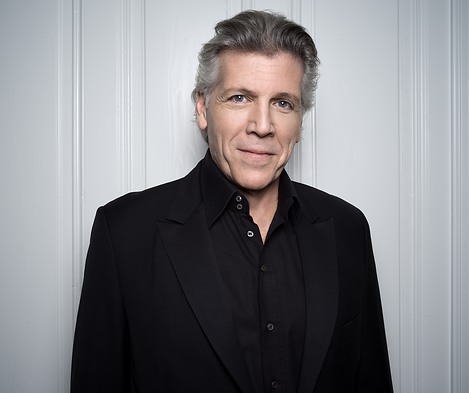
Masterclass zur Mahler-Interpretation mit Thomas Hampson
Im Studienjahr 2025/26 wird Kammersänger Thomas Hampson als Distinguished Visiting Artist in Residence an der mdw zu Gast sein. In Zusammenarbeit mit dem Wissenschaftszentrum Gustav Mahler und die Wiener Moderne leitet er erneut einen Meisterkurs zur Mahler-Interpretation, der sich an Studierende der mdw richtet.
- Termine im Wintersemester:
19., 20. und 21. Jänner 2026KRANKHEITSBEDINGT ABGESAGT!! - Ersatztermine folgen! - Termine im Sommersemester: 22., 23. und 24. April und 6., 7. und 8. Mai 2026
Interessierte Zuhörer:innen sind herzlich eingeladen!
► Die Anmeldefrist ist bereits abgelaufen und die Teilnehmer:innen informiert!
Publikation
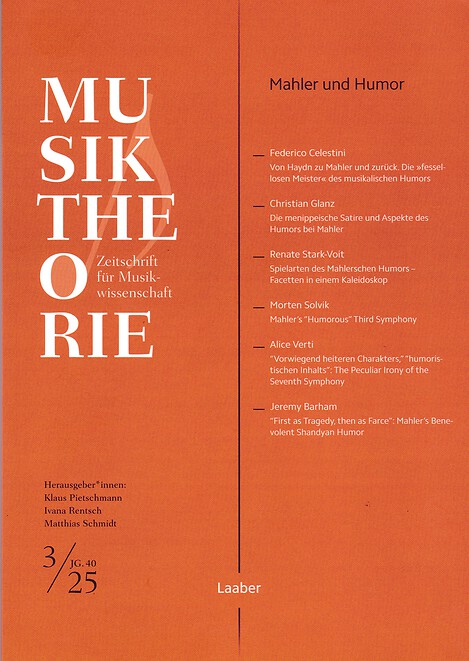
Musiktheorie. Zeitschrift für Musikwissenschaft Jg. 40, 3/25.
Ausblick
Vienna Mahler Lecture #13
Sebastian Wedler: tba
11. Juni 2026, 18:00 Uhr
Ort: Wissenschaftszentrum Gustav Mahler und die Wiener Moderne | 1030 Wien, Lothringerstraße 18