
2019
Vienna: Department for Folk Music Research and Ethnomusicology of the University of Music and Performing arts Vienna
Riga: Jāzeps Vītols Latvian Academy of Music.
280-page booklet. ISBN 978-9934-547-04-1. Colour photographs. DVD. 27 tracks (105:39). Recorded between 1977 and 2018.
Zu beziehen:
Institut für Volksmusikforschung und Ethnomusikologie
Anton-von-Webern-Platz 1, 1030 Wien
e-mail: ive-versand@mdw.ac.at
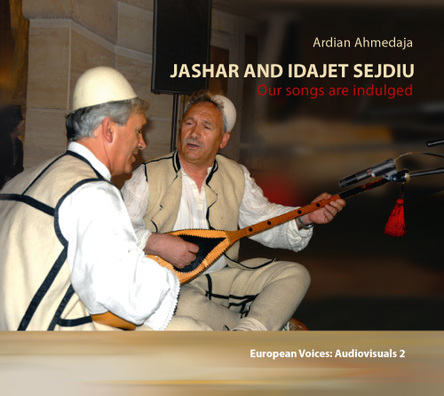
Jashar and Idajet Sejdiu have been making music and creating very popular songs since their early youth. At the same time they have steadily tried to make a larger audience familiar with the music and traditions they are embedded in through radio and television performances as well as sound and video recordings, some of which they have produced themselves. Frequent cooperation with other musicians and music lovers is another important feature of their work. Over a period of more than four decades they have become strong identification figures in musical life among Albanians living in the Sharr Mountains and the Polog Valley areas of North Macedonia.
This engagement is also reflected in the ways both brothers experience and distinguish the music they make. Remarkably, they designate the songs they perform with the local term lazdrane or të lazdruara for “indulged”, with which theymean “beautiful, free and lively”. According to the Sejdiu brothers “these songs contain everything good”, they are like “adored children” who are allowed to do anything they want. The present publication reflects on various views and aspects of this understanding through sounds, pictures and words.
Downloads:
Anda Beitāne, CD:
Notes from Latvia. Multipart Music in the Field.
European Voices: Audiovisuals 1.
Musik, Gesang und Tanz:
Liene Brence, Oskars Patjanko und Anda Beitāne.
Einführung und Moderation (in englischer Sprache): Anda Beitāne.
“Die Doppel-CD Notes from Latvia, Multipart Music in the Field (Notizen aus Lettland. Mehrstimmige Musik im Feld) ist die erste Publikation der Serie European Voices: Audiovisuals des Instituts für Volkmusikforschung und Ethnomusikologie der mdw-Universität für Musik und darstellende Kunst Wien. Die Präsentation wird geleitet vom Notizenkonzept, welches die Aufnahmenzusammenstellung und das Booklet bestimmt. Während des Abends werden einige Aufnahmen aus der CD vorgespielt, dahinter stehende Geschichten erzählt sowie live Musik aufgeführt, die sowohl mit dem CD-Inhalt als auch mit dem Symposiumsthema in Verbindung steht. Die Ausführenden werden das Publikum überdies einladen bei der Aufführung einiger Tänze mitzuwirken.
Während des Empfangs nach der Präsentation werden, dem Wunsch der Sängerinnen der CD folgend, weitere Notizen aus dem Feld, sowie regionale Getränke und kulinarische Spezialitäten serviert.
Wir wünschen allen Anwesenden einen vergnüglichen Abend mit den Notizen aus Lettland!“
Anda Beitāne
Published with the support of the State Culture Capital Foundation of Latvia, the Jāzeps Vītols Latvian Academy of Music, and the Department for Folk Music Research and Ethnomusicology of the University of Music and Performing Arts Vienna
European Voices: Audiovisuals is a new series of the Department for Folk Music Research and Ethnomusicology of the University of Music and Performing Arts Vienna. An essential element of it is the partnership with institutions in which members of the Research Centre for European Multipart Music (EMM), based in this Department, are engaged. EMM members will present here unknown audio and video recordings of multipart music and dance practices, primarily from fieldwork, with comprehensive explanations drawn up in close cooperation with music and dance makers.
Ardian Ahmedaja
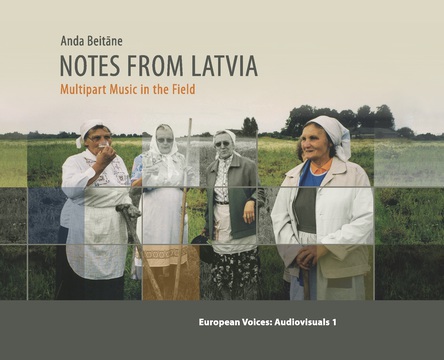
The focus of this publication is on the music and the people who make it. The concept of notes arose quite naturally during the selection of the recordings from more than 20 years of fieldwork. They contain primarily female singing, since multipart music practices in Latvia are basically in the hands of women. These “hands” are also meant physically, because the singing has often been a part of or associated with women’s work outdoors, in the field. This is also the case among the third generation of Latvian emigrants in Siberia.
Significantly, singing together is praised in widespread songs in all these practices as a celebration of the moment of “being together”, evoking at the same time the absent ones, since “only God knows where some other year / we will be singing…” Such inside views, expressed in words and music, also lead to a better identification and recognition of the particular space of music-making in the life of these communities.
Anda Beitāne