Home Research

Research

mdwHistory: “Moviegoing ended. Her employment at the Academy of Music was terminated.”

Comments Off on mdwHistory: “Moviegoing ended. Her employment at the Academy of Music was terminated.”
165
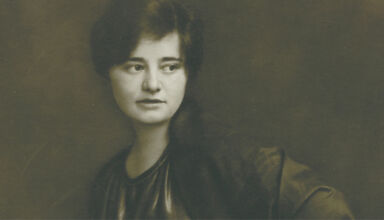
Born in Lemberg (today’s Lviv, Ukraine) in 1896 to an assimilated Jewish family, Kremer grew up in Sarajevo until her father—an officer and civil servant employed by the Ministry of War—was transferred to Vienna in 1905. While religion played zero role in her family, education was highly valued: the children were permitted to pursue any avenue of training they desired. Kremer, like her sisters, received her first piano lessons from her mother. At age ten, she continued her pianistic training in a preparatory programme at what is now the mdw.

One Shimmy at a Time

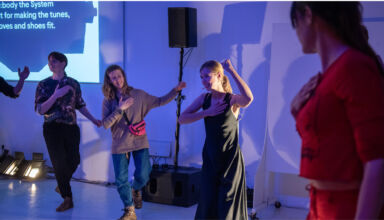
What if questions of social justice could take tangible shape in our own bodies such that we could discuss complex political issues without relying primarily on words? In an era in which disembodied content consumption continues to polarise much of the Western world, my PhD project explores a different mode of collective sense-making: a performative and educational musical theatre practice for adults not necessarily trained in either dance or music.

Review: extended piano techniques. Perspektiven 1981–2018 Luca Lavuri

Comments Off on Review: extended piano techniques. Perspektiven 1981–2018 Luca Lavuri
295
When looking beyond the piano’s 88 keys and approaching the instrument’s interior, which is often overlooked by pianists and traditionally more the domain of tuners and technicians, a rich sonic world opens up. Katharina Bleier’s Extended Piano Techniques is an extensive volume totalling nearly four hundred pages that offers a broad and well-structured reflection on non-conventional pianistic practices.

Moving Music Education Forward: Research on Music Education at the mdw

When people hear the term “music education”, their first association is frequently with a concrete practice: that of music teaching and musical learning in classrooms, at music schools, in workshops, or in work with people of various backgrounds and ages ranging all the way from kids and teens to seniors. Initially less present in their minds is the research accompanying this practice—research that analyses it, critically scrutinises it, and advances its development.

Review: Musik und Suizidalität. Interdisziplinäre Perspektiven

Comments Off on Review: Musik und Suizidalität. Interdisziplinäre Perspektiven
415
These days, playlists with titles like “Music About Suicidal Thoughts” are easy to find. It’s thus anything but a marginal topic that the book Musik und Suizidalität. Interdisziplinäre Perspektiven sets out to tackle, thereby taking its place among a growing number of publications that scrutinise the effects had by music about suicidal fantasies, intentions, preparations, and acts both generally and on the phenomena that it addresses.

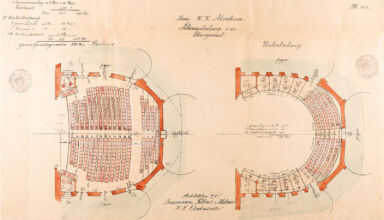
mdwHistory: The Lost Theatre

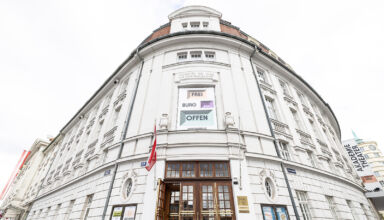
“Why exactly is the Akademietheater called the Akademietheater?” Is its name just an inexplicable relic of bygone times? Is it a former training facility of the Burgtheater? Or perhaps a one-time modernist refuge from the court theatres of the monarchy?

A Feminist Critical Analysis of Serbian Cultural Policy

Comments Off on A Feminist Critical Analysis of Serbian Cultural Policy
474
Earlier this year, after more than a decade of practical work in the field of gender equality and youth participation in cultural life in Serbia, I defended my doctoral dissertation at the University of Arts in Belgrade’s Faculty of Dramatic Arts.

mdwHistory: What does Hans Winterberg’s repatriation application, held at the Exilarte Center Archive, reveal about identity, exile, and survival?

Comments Off on mdwHistory: What does Hans Winterberg’s repatriation application, held at the Exilarte Center Archive, reveal about identity, exile, and survival?
812
Franz Kafka’s close confidant Max Brod is said to have coined the oft-quoted saying according to which Prague was one hundred percent Czech, one hundred percent Jewish, and one hundred percent German. This paradoxical ascription points to the complex cultural makeup of Bohemia’s capital city, where ethnic, linguistic, and religious affiliations existed not distinctly side-by-side but as a dense web of relationships. The Prague of that era stood alongside Vienna as an important cultural centre of the Habsburg Monarchy in which imperial, national, and transnational influences overlapped.
123...14Page 1 of 14