
Kai Ginkel
(Universitätsassistent, ZiM)
Please find English version below
Kai Ginkel ist Universitätsassistent am Zentrum für integrative Musikforschung (ZIM) der Universität für Musik und darstellende Kunst Wien. Studium der Soziologie mit Psychologie und Politikwissenschaft an der Technischen Universität Darmstadt (Deutschland), Promotion in Soziologie an der Katholischen Universität Eichstätt-Ingolstadt (Deutschland) zum Thema 'Noise – Klang zwischen Musik und Lärm' (Transcript 2017), Stipendium im postgradualen Lehrgang 'Sociology of Social Practices' am Institut für Höhere Studien (IHS), Wien (2012-2015). Beschäftigt in mehreren drittmittelfinanzierten Forschungsprojekten, darunter 'Unwanted Sound' (Stadt Wien, MA7 Kulturabteilung, 2024), 'Embodying Expression, Gender, Charisma' (FWF PEEK, 2022-2025, Anton Bruckner Privatuniversität Linz) und 'Popular Music and the Rise of Populism in Europe' (Volkswagen Stiftung, 2019-2022, Universität für Musik und darstellende Kunst Graz). Arbeitsschwerpunkte umfassen populäre Musik und Sound, qualitative Methoden, Interdisziplinarität und soziologische Theorien.
Kai Ginkel is a university assistant at the Center for Integrative Music Research (ZIM) at the mdw, University of Music and Performing Arts Vienna. He studied sociology, psychology, and political science at the Technical University of Darmstadt (Germany) and earned his doctorate in sociology from the Catholic University of Eichstätt-Ingolstadt (Germany) with his thesis 'Noise – Klang zwischen Musik und Lärm' (Transcript 2017). He received a fellowship for the postgraduate program 'Sociology of Social Practices' at the Institute for Advanced Studies (IHS) in Vienna (2012-2015). Subsequently involved in several third-party funded research projects, including 'Unwanted Sound' (City of Vienna, MA7 Department of Culture, 2024), 'Embodying Expression, Gender, Charisma' (FWF PEEK, 2022-2025, Anton Bruckner Private University Linz) and 'Popular Music and the Rise of Populism in Europe' (Volkswagen Foundation, 2019-2022, University of Music and Performing Arts Graz). Research focuses include popular music and sound, qualitative methods, interdisciplinarity, and sociological theories.
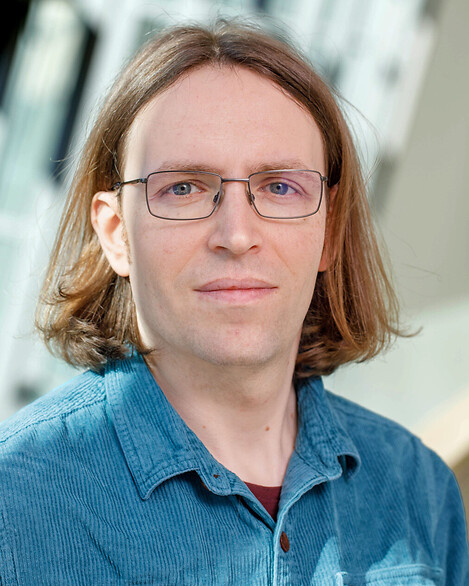 (Foto: © Hermann Wakolbinger)