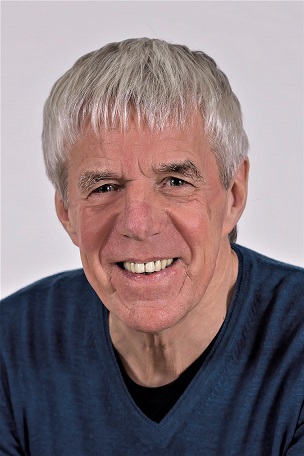
Mag. art. Dr. phil. Franz Niermann
(Emeritus)
Please find English version below
Niermann, Franz, geboren am 16. April 1947 in Werlte, Emsland (D), absolvierte das Abitur im Frühjahr 1966 in Meppen (Emsland), diente zwei Jahre beim Militär (Varel, Hammelburg) und studierte ab 1968 in Berlin Musikpädagogik, Geschichte und Erziehungswissenschaft.
Von 1974 bis 1988 war er Lehrer (Studienrat) am Diesterweg‐Gymnasium in Berlin‐Wedding, in den Jahren 1978 bis 1984 neben dem Schuldienst Wissenschaftlicher Assistent für Musikpädagogik an der Hochschule der Künste Berlin. Er promovierte dort zur Bedeutung der Aneignungstheorie für die Musikpädagogik; der Titel der Dissertation lautet „Rockmusik und Unterricht. Eigene Wege für den Alltag mit Musik“.
Im Jahre 1988 übernahm Niermann ein Ordinariat für Musikpädagogik an der Universität (damals: Hochschule) für Musik und darstellende Kunst Wien und baute das dortige Institut für Musikpädagogik auf, das er bis zum Herbst 2010 leitete. An der Wiener Musikuniversität wirkte er in leitenden hochschulpolitischen Gremien wie Abteilungskollegium, Studienkommission, Universitätskollegium, Gründungskonvent und Senat mit. Die Themen in der Hochschullehrer‐Tätigkeit, der Lehrerfortbildung, auf internationalen Tagungen und Kongressen sowie in den Publikationen ranken sich um die gesellschaftlichen Grundfragen des Musiklernens heute unter besonderer Berücksichtigung der kulturellen Verhaltensweisen der Jugendlichen als Voraussetzungen schulischen Musikunterrichts. Die musikalischen Schwerpunkte liegen vor allem in den Bereichen Klassik, Neue Musik und Rockmusik. Weitere Forschungsansätze betreffen das Klassenmusizieren, interdisziplinäre, kreative
Möglichkeiten des Zugangs zur Musik (malen, bewegen, szenisches Spiel, Texte erfinden, vgl. z.B. das Modell „die kunst der stunde. Aktionsräume für Musik“) sowie in der Lehrerbildung die konzeptionellen Möglichkeiten der Verknüpfung des Studiums mit der zweiten Ausbildungsphase und den ersten Berufsjahren (vgl. „accompagnato. Brücken zwischen Studium und Beruf des Musiklehrers“).
Niermann arbeitet in verschiedenen Fachverbänden aktiv mit und engagiert sich vor allem auf internationaler Ebene für Kommunikation, Gedankenaustausch, Kooperation und Vernetzung. Er wirkt seit den 90er Jahren im Vorstand der „European Association for Music in Schools (EAS)“ mit, seit 2001 als deren Vizepräsident, für die Jahre 2005 – 2009 als Präsident, 2009 – 2011 als Past President (www.eas‐music.org). Ab 2004 wirkte er federführend mit in der Organisation und Koordination eines von der Europäischen Kommission geförderten fachpolitischen Netzwerks: „Music education Network (meNet): Ein europäisches Netzwerk der Kommunikation und des Wissensmanangements der musikalischen Bildung“ (2006 – 2009). Dieses Netzwerk ist Teil der EASAktivitäten geworden.
Für die Perioden 2008 – 2010 und 2010 – 2012 war Niermann in der „International Society for Music Education“ (www.isme.org) Mitglied des ISME Board of Directors. Seit Oktober 2015 ist Niermann emeritierter Professor; er lebt in Wien und Berlin.
Niermann, Franz, born on 16 April 1947 in Werlte, Emsland (Germany), completed his Abitur (A‐levels) in Meppen (Emsland) in the spring of 1966, served two years in the military (Varel, Hammelburg) and studied Music Education, History and Educational Science in Berlin from 1968 onwards. From 1974 to 1988, he was a secondary school teacher (Studienrat) at the Diesterweg Gymnasium in Berlin‐ Wedding, and from 1978 to 1984, he was a research assistant for music education at the Berlin University of the Arts in addition to his teaching duties. He earned his doctorate there on the significance of appropriation theory for music education; the title of his dissertation is ‘Rock Music and Teaching. Individual Approaches to Everyday Life with Music’.
In 1988, Niermann took up a professorship in music education at the University of Music and Performing Arts Vienna and established the Institute for Music Education there, which he headed until autumn 2010 (www.mdw.ac.at/imp.at). At the Vienna University of Music, he was involved in leading university policy committees such as the departmental council, the study commission, the university council, the founding convention and the senate.
The topics covered in his work as a university lecturer, in teacher training, at international conferences and congresses, and in his publications revolve around fundamental social issues relating to music education today, with a particular focus on the cultural behaviour of young people as a prerequisite for music education in schools. His musical focus is primarily on classical music, new music and rock music. Further research approaches concern class music‐making, interdisciplinary, creative ways of accessing music (painting, movement, dramatic play, inventing texts, cf. e.g. the model ‘die kunst der stunde. Aktionsräume für Musik’ [the art of the hour. Spaces for action in music]) and, in teacher training, the conceptual possibilities of linking studies with the second phase of training and the first years of professional life (cf. ‘accompagnato. Bridges between study and the profession of music teacher’).
Niermann is actively involved in various professional associations and is particularly committed to communication, exchange of ideas, cooperation and networking at an international level. He has been a member of the board of the European Association for Music in Schools (EAS) since the 1990s, serving as its vice‐president since 2001, president from 2005 to 2009, and past president from 2009 to 2011 (www.eas‐music.org). From 2004 onwards, he played a leading role in the organisation and coordination of a specialist policy network funded by the European Commission: ‘Music Education Network (meNet): A European Network for Communication and Knowledge Management in Music Education’ (2006–2009). This network has become part of the EAS's activities. For the periods 2008–2010 and 2010–2012, Niermann was a member of the ISME Board of Directors of the International Society for Music Education (www.isme.org).
Niermann has been professor emeritus since October 2015 and lives in Vienna and Berlin.