Wie der mdw das Akademietheater abhandenkam
„Warum heißt das Akademietheater eigentlich Akademietheater?“ – Ein unerklärliches Relikt vergangener Zeiten? Eine ehemalige Ausbildungsstätte für das Burgtheater? Eine moderne Abgrenzung zu den monarchistischen Hoftheatern?
Eine spontane Umfrage auf dem mdw-Campus hat ergeben, dass es zwar viele originelle Ideen zur Namensgebung der heutigen Spielstätte des Burgtheaters gibt, dass aber kaum jemand sagen kann, warum das Akademietheater so heißt, wie es eben heißt.
Ein veritabler Krimi
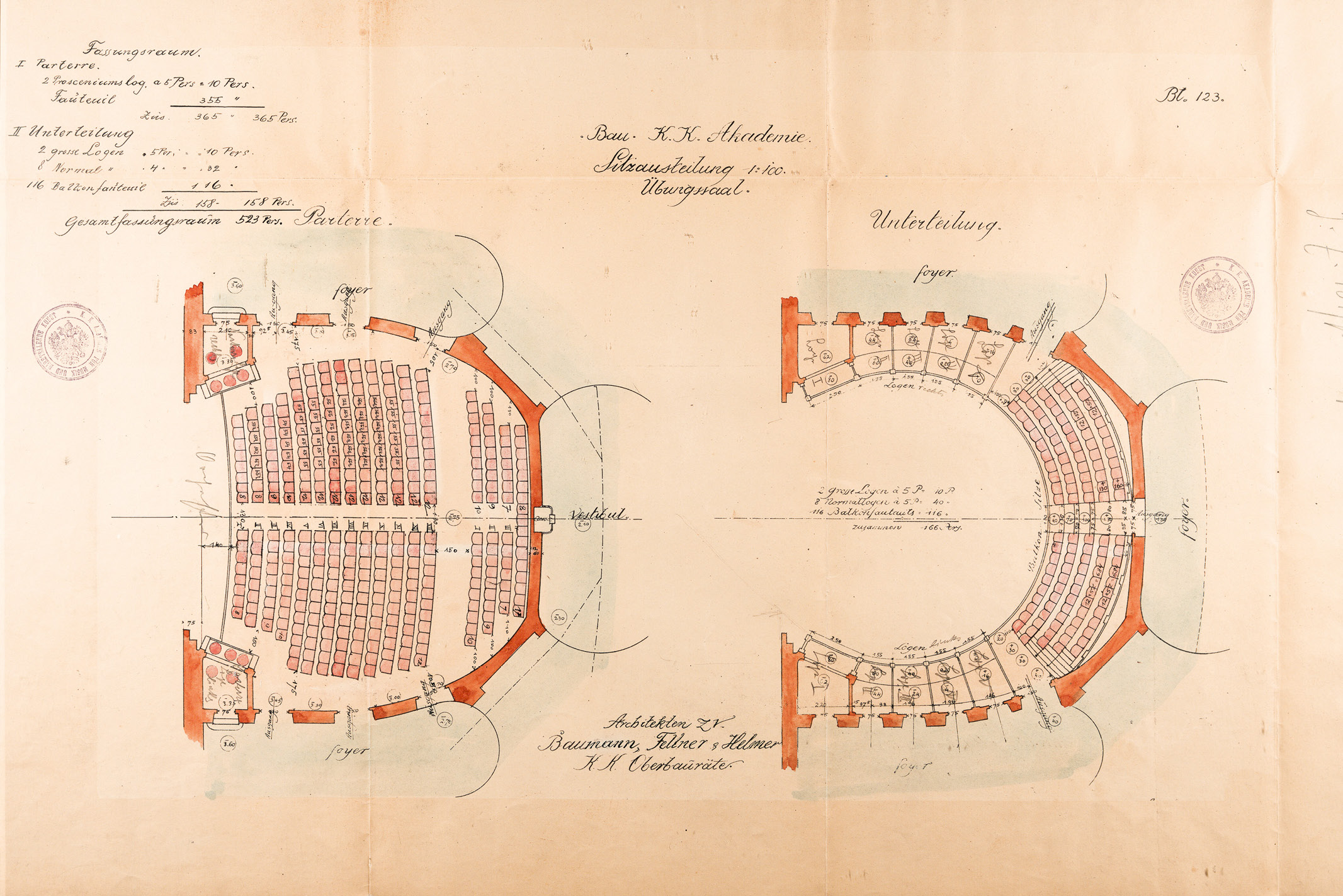
Bei der Geschichte des „entzückenden kleinen Theaterchens“, wie es damals, 1914, im Jahr seiner Eröffnung von der zeitgenössischen Presse willkommen geheißen wurde 1, handelt es sich um einen veritablen Krimi: eine Geschichte voller Spannung und eines verzweifelten Kampfes um das räumliche Zentrum des Gebäudes in der Lothringerstraße. Denn die ursprüngliche Funktion des zwischen 1911 und 1914 nach Plänen der renommierten Architekten Ludwig Baumann, Ferdinand Fellner und Hermann Helmer errichteten Theaters war, der damaligen kaiserlich-königlichen Akademie für Musik und darstellende Kunst, der heutigen mdw, als Schul- und Übungsbühne und damit als zentrales Element der Ausbildung zu dienen.
Doch bereits vor Baubeginn dachte der damalige Akademie-Präsident Karl Ritter von Wiener laut darüber nach, wie das Theater gewinnbringend vermietet werden könnte. In einem Brief vom 29. März 1910 bemerkte er:
[Ich kann nicht] umhin, darauf hinzuweisen, dass der nach dem vorgelegten Projekte im Akademietrakte unterzubringende Übungssaal für dramatische und musikalische Aufführungen, welcher ja nicht täglich von der kaiserlich-königlichen Akademie in Anspruch genommen wird, eine nicht unergiebige Einnahmensquelle für den Staat darstellen wird. […] Es ist […] zu hoffen, dass die Hoftheater, bei welchen schon längst das dringende Bedürfnis nach einer kleinen, für intime Wirkungen berechneten Bühne besteht, diesen Übungssaal für alle oder doch für einen großen Teil der verfügbaren Abende mieten werden.2
Sein Vorschlag stieß jedoch auf kein Interesse. Auch die 1912 angebotene Nutzung als Probebühne wurde abgelehnt: Diese erschiene, wie das Obersthofmeisteramt mitteilte, „nach Anhören der beiden Hoftheater-Direktionen und nach reiflicher Erwägung nicht opportun“ und es wurde bedauert, auf die „freundlichst gemachte Proposition nicht weiter eingehen zu können“3. Doch Anfang der 1920er-Jahre erwachte das Bedürfnis des Burgtheaters nach einer Nutzung des Akademietheaters, die sich über die folgenden Jahrzehnte sukzessive steigern sollte.
Ein Theaterkarussell und seine Folgen
Damit begann sich gleichsam ein Theaterkarussell zu drehen, bei dem Spielstätten zwischen Burgtheater und Akademie getauscht wurden: Das hatte unter anderem zur Folge, dass das Max Reinhardt Seminar schließlich im Schlosstheater Schönbrunn untergebracht wurde. Damit konnte jedoch nicht das Fehlen der Übungsbühne für den operndramatischen Unterricht kompensiert werden. Alle gebetsmühlenartig vorgebrachten Einwände und Beschwerden der Akademieleitung blieben ebenso wie die Suche nach Ersatzbühnen letzten Endes erfolglos. Dass das Akademietheater im Herbst 1979 schließlich zur alleinigen Nutzung dem Österreichischen Bundestheaterverband übergeben wurde, ist die letzte Konsequenz einer – vor allem für den Unterricht, für die Lehrenden und Studierenden tragischen – Verlustgeschichte, die wir für das erste Kapitel der neuen Staffel der mdw-Podcastreihe Klingende Zeitgeschichte im Ohr aufgearbeitet haben.
Das heutige Akademietheater, erfolgreiche und innovative Spielstätte des Burgtheaters, hat aber nicht nur spannende Geschichten in Hinblick auf seine institutionellen Zugehörigkeiten zu bieten: Der eiserne Vorhang, der bis heute als Brandschutz auf der Bühne in Verwendung ist, stellt ein Relikt aus der Zeit des Nationalsozialismus dar, das wir in unserem Podcast wieder zur Sprache bringen und erneut zur Diskussion stellen.