
Reach higher, reach beyond.
Mentoring-Programm für Prae und Post Docs der mdw (Frauen, inter* und nicht-binäre Personen)
Zurück zur Hauptseite von Reach higher, reach beyond.
Die Mentees
 Ragnheiður Erla Björnsdóttir (she/her) is an Icelandic composer and artistic researcher based in Vienna. Her work centers on voice, embodiment, and extended vocal techniques, weaving ecomusicology and experimental writing into interdisciplinary practice. A doctoral candidate at the Artistic Research Center at mdw, she received the phonoECHOES prize for Sound Art, Improvisation and Experimental Music at Klangzeit Festival 2023. She contributes to the European project CYANOTYPES at the University of Applied Arts Vienna and was co-artistic director of Skálholt Summer Concerts (2022). A member of the art collective HLÖKK, whose debut album Hulduhljóð won the Kraumur Award, her work has been presented internationally—from hidden sound installations in forests to theatrical vocal compositions—at festivals including Lucerne Festival Forward, Dark Music Days, and Young Nordic Music.
©Sigga Ella
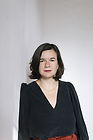 Isabel Frey is a Senior Artist and postdoctoral researcher at the Department of Folk Music Research and Ethnomusicology at the University of Music and Performing Arts Vienna (mdw) and a Yiddish singer. Her research focuses on Jewish music, diaspora, minority studies, gender & queer studies, religious studies, sound studies and urban ethnomusicology. She completed her PhD in the Structured Doctoral Program at mdw 2020–2024 on contemporary transmission and performance of Yiddish folksong, and was a Visiting Fellow at Harvard’s Center for Jewish Studies in 2023. She co-led the arts-based pilot research project “Challenging the Theater of Memory: Yiddish Song beyond Kitsch and Stereotype” (2022–2024) with Benjy Fox-Rosen at the Music and Minorities Research Center of mdw. She currently leads the FWF-funded project “(Un)heard Neighbors: An urban ethnomusicology of proximity“, (TAI1016625, 2025–2027). Outside academia, she is a sought-after performer and teacher of Yiddish song, tours internationally and has released three albums of Yiddish song.
©Viktoria Hofmarcher
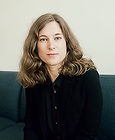 Nastasia Heckendorff is a musicologist and postdoctoral researcher in the FWF project “Composing | Publishing | Performing Opera: The Making of Alban Berg’s Wozzeck and Lulu” at the Alban Berg Foundation in Vienna. She previously held a research and teaching position at the Institute of Musicology Weimar-Jena, where she received her PhD in 2024 with a dissertation on the intersections of politics and music theater in 17th-century Italy (“Inszenierte Politik und politische Inszenierung – die Bühnenwerken Marco Marazzoli im Kontext des seicento” forthcoming with Bärenreiter). Further academic appointments include fellowships and visiting positions at Yale University, the German Historical Institute in Rome, and Humboldt University of Berlin. Her teaching and research focus on performance studies, authorship, and material cultures, with particular attention to the cultural history of music in the early modern period and modernity. Further information nastasiaheckendorff.com
©Catherine Peter
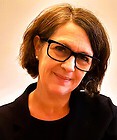 Judith McGregor studied Instrumental Pedagogy (Viola) at the mdw and completed the Master’s program Music Mediation at the ABPU Linz. Since 2022 she has been University Assistant in the Department of Instrumental and Vocal Pedagogy at the mdw. During her studies she began teaching at music schools in Lower Austria and developed numerous music mediation projects with schools, artists, and partner institutions. As a freelance violist she collaborates with ensembles such as Neue Oper Wien and the Symphony Orchestra of the Volksoper Vienna. From 2016 to 2022 she worked at Music & Arts Schools Management Lower Austria. Her doctoral research focused on music mediation in the context of instrumental pedagogy, and she contributes to professional committees and networks on national and university level.
©privat
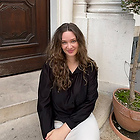 Emma Schrott studied musicology and ethnomusicology at the University of Vienna, Université Paris-Sorbonne, and the University of Oxford, graduating with distinction as a St Hugh’s College scholar. Her research explores sonic engagements with emotional and embodied experiences during times of crises, from TikTok soundscapes mobilizing political action during COVID-19 to communal electronic dance music practices as resistance in wartime Ukraine. She has also worked at the New York-based Leo Baeck Institute, conducting oral history interviews on Austrian-Jewish emigration to North America. Her PhD at the mdw, part of the ERC-funded project “GOING VIRAL. Music and Emotions during Pandemics (1679-1919)”, investigates the cultural history and history of experience of the Spanish Flu in Vienna.
©Sara Honarmand Ebrahimi
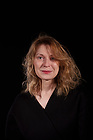 Jagoda Szmytka is a contemporary music composer, artist and artistic researcher in the field of contemporary music Since 2021 she is pursuing her artistic research doctoral degree at the Artistic Research Center of the University of Music and Performing Arts Vienna — currently finalising her dissertation »Almanac of Extended Composition«. Her artistic research focuses on musical notation, the organisation of musical material, compositional tools and methods in instrumental composition and in connection with drawing.
The composer’s creative output encompasses over forty compositions written for solo instruments, chamber and large ensembles, some of which are extended through audio and video projection. Moreover, she wrote one chamber opera and three experimental music theatres. The aesthetics of her music is rooted in exploration of the of instruments and characterised by expressive gestures. Szmytka collaborated with numerous international ensembles, such as ensemble recherche, ensemble modern, ensemble phace, kronos quartet. Her music was commissioned by renowned institutions and festivals, such as the Great Theatre National Opera in Warsaw, Warsaw Autumn, Wien Modern or Lucerne Festival. Jagoda Szmytka’s compositions are published by PWM Edition. Additionally to composing, Jagoda Szmytka practices drawing on paper.
Composer’s profile at the PWM Edition website
©Rheinmainstudio
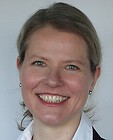 Irene Stepniczka studied musicology and cognitive science (focuses: psychology, neuroscience, and AI) at the University of Vienna. Since 2018, she has been working in various contexts and projects at the WZMF – Music Therapy Research Centre Vienna (Wiener Zentrum für Musiktherapie-Forschung), which is part of the Institute for Music Therapy at the mdw. She has developed a questionnaire to support reflection regarding intra- and interpersonal relationship experiences in dyadic music therapy improvisations (together with Monika Smetana, Website), co-led the participatory project "My Tune. Music Therapy from Our Perspectives" (together with Julia Fent), and is performing research into music therapy in a neuroscientific setting (together with Thomas Stegemann, Website). Her current focus is on her dissertation “Music therapy – a sociodynamic system – interactions, effects, and influencing factors,” which will bring together interdisciplinary perspectives on music therapy.
©privat
 Karla Louisa Stolle has been a doctoral student at the mdw – University of Music and Performing Arts Vienna since October 2024. Her dissertation compares music education across Europe by analyzing curricula from five countries. Her research interests include international music education, curriculum studies, language-sensitive teaching, and practice-oriented instruction. Previously, she studied Music and German Education at the University of Potsdam, completed her state examination in 2022 with distinction, and was a scholarship holder of the German National Academic Foundation. Alongside her doctoral studies, she works as a university assistant at the mdw and coordinates, together with Prof. Dr. Isolde Malmberg, the Erasmus+ project TEAM. More information: mdw.ac.at/imp/?PageId=4381
©privat
Mentor_innen
 Alexandra Kertz-Welzel ist seit 2011 Professorin und Leiterin der Musikpädagogik an der Ludwig-Maximilians-Universität in München, von 2023-2025 war sie auch Dekanin. Sie arbeitete von 2021-2025 als Professor II an der University of Inland Norway in Hamar (Norwegen) und war als Postdoc von 2002-2005 an der University of Washington in Seattle (USA). Ihre Bücher "Globalizing music education" wurden 2018 bei Indiana University Press und „Rethinking music education and social change" 2021bei Oxford University Press veröffentlicht. Von 2017–2019 war sie Vorsitzende der International Society for the Philosophy of Music Education. Seit 2025 ist sie Herausgeberin der internationalen Fachzeitschrift Philosophy of Music Education Review. Weitere Informationen
Alexandra Kertz-Welzel ist die Mentorin von Emma Schrott, Irene Stepniczka und Karla Louisa Stolle
©Anna Schnauss
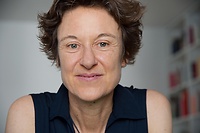 Isabel Mundrys Werke zeichnen sich durch eine differenzierte Klangsprache aus, in die das Nachdenken über die Bezüge zwischen Zeit, Raum und Wahrnehmung auf vielfältige Weise einfließt. Dabei öffnet sie sich in ihrem Schaffen stets neuen Wegen und unterschiedlichsten Realitätsbezügen, die sie mit ihrer in Timbre, Harmonik und Rhythmik nuancierten Musik erforscht.
Unter den Uraufführungen der letzten Jahre finden sich Werke verschiedenster Gattungen mit diversen Inspirationsquellen, interpretiert unter anderem vom Chicago Symphony Orchestra, dem Symphonieorchester des Bayerischen Rundfunks, dem Tonhalle Orchester Zürich, dem Tokyo Symphony Orchestra, dem Ensemble intercontemporain oder dem Ensemble Resonanz.
Ihr kompositorisches Handwerk erlernte Isabel Mundry unter anderem bei Frank Michael Beyer, Gösta Neuwirth und Hans Zender, ergänzt um Studien in Musikwissenschaft, Kunstgeschichte und Philosophie, sowie um einen Kurs für Informatik und Komposition am Pariser IRCAM. Sie ist Mitglied der Akademien der Künste von Berlin und München sowie der Akademie für Wissenschaft und Literatur Mainz. Seit 1998 war sie vielfach als Dozentin bei den Darmstädter Ferienkursen zu Gast. Nachdem sie ab 1996 eine Professur an der Hochschule für Musik und darstellende Kunst Frankfurt innehatte, ist sie seit 2004 Professorin für Komposition an der Zürcher Hochschule der Künste und seit 2011 zudem an der Hochschule für Musik und Theater München.
Isabel Mundry ist die Mentorin von Ragnheiður Erla Björnsdóttir und Jagoda Szmytka
©Manu Theobald
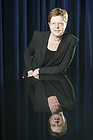 Susanne Rode-Breymann, seit Oktober 2024 Professorin für musikspezifische Genderforschung an der HfM Nürnberg im Rahmen des Bayerischen Spitzenprofessurenprogramms der Hightech Agenda Bayern, war Wissenschaftliche Mitarbeiterin an den Universitäten Bayreuth und Bonn, lehrte nach der Habilitation 1996 in Hannover, dann 1999 bis 2004 als Ordinaria für Historische Musikwissenschaft an der Hochschule für Musik Köln. In gleicher Funktion wechselte sie 2004 an die Hochschule in Hannover und gründete dort 2006 das Forschungszentrum Musik und Gender, das sie bis September 2024 leitete. In dieser Zeit war sie Mitbegründerin und Sprecherin der Landesarbeitsgemeinschaft der genderforschenden Einrichtungen in Niedersachen, Gutachterin im Professorinnenprogramm des BMBF (2013-2024) und wirkte 2014-2018 in der „Dialoginitiative geschlechtergerechte Hochschulkultur“ des Niedersächsischen Ministeriums mit.
Sie publiziert über Alte Musik, Musiktheater (u.a. Musiktheater eines Kaiserpaars. Wien 1677 bis 1705) und Gender Studies (u.a. Alma Mahler Werfel. Muse. Gattin. Witwe), gibt verschiedene Jahrbücher und Reihen heraus und war Fachherausgeberin Musik der Enzyklopädie der Neuzeit.
Im Fokus der letzten Jahre standen Hochschulleitung und -politik (2010-2024 Präsidentin der HMTM Hannover; 2017-2023 Vorsitzende der Rektorenkonferenz der deutschen Musikhochschulen; 2021-2023 HRK-Vizepräsidentin für Kooperation und Vielfalt innerhalb des Hochschulsystems).
Susanne Rode-Breymann ist die Mentorin von Isabel Frey, Nastasia Heckendorff und Judith McGregor.
©Nico Herzog