How to cite
How to cite
Outline
Outline

Music has long been at the forefront of social activism. Genres like rock and roll have built their global reputation as a weapon of resistance and empowerment. When yaogun (the Chinese literal translation for “rock and roll”) gained considerable popularity in mainland China in the late 1980s, the Western world celebrated the decline of the authoritarian system, which it saw as a threat to its own ideological hegemony. In the 2000s, when the rock performances of floating migrant workers began to appear on the concert stages in major Chinese cities and on online video-sharing platforms, Chinese media defined them as the authentic voices through which the grassroots exposed their unpleasant life experiences and expressed their criticism and disagreement.
In this chapter, I will dispel the long-standing and widely embraced myths about Chinese rock. I argue that the country’s centralized control system has been effective in ensuring that unwanted sounds cannot reach the public via concert stages, traditional publishers, broadcast media, and online platforms. I also argue that the rise of rock music scenes in economically reformed China, including the peasant worker rock that reached audiences of millions, does not point to the demise of authoritarian regulation. Instead, these rock songs and performances are promoted by the state as parts of alternative cultures to attract and influence those who are not persuaded by the state-sponsored musical representations. This chapter will explore how floating migrants shape rock music within the bounds of the regulations imposed on them and give it meaning. When being unable to overthrow or challenge the urban-biased policies that were the main cause of their hardship and marginalized status, some migrant rockers used these rock performances to attract public attention and support to improve their living conditions. This chapter also will also draw attention to a few migrant musicians who persistently explore the margins of sanctioned musical expression, using metaphor and double meanings to articulate critique and satire.
Dispelling the Myths about Chinese Rock
Chinese rock has been a domain marked by fictional stories in which banned subversives win the public’s support and become stars. Since the late 1980s, Chinese media have been spreading such stories of successful rebellion, attracting many Chinese non-conformists to become rock musicians.
The Fictional Stories of Successful Rock Rebellion
I was one of the Chinese youths captivated by media reports of Chinese rock’s countercultural nature. The Chinese rock songs repeatedly broadcast by national and regional radio channels in the 1990s made me familiar with this form of music. From the newspapers my parents subscribed to and the popular music magazines I purchased at the newsstands, I learned how Cui Jian, globally renowned as “the Father of Chinese Rock,” broke with established norms and defeated the authorities to win the support of the people. In high school, a dozen of my classmates and I became frequent rock concert goers, and some of them even formed a rock band named Yunxi, literally “sucking.” At music festivals and fan clubs, I met young Chinese from different parts of the country who expressed their nonconformity by avoiding the mainstream and everything that was state-sponsored. The very act of listening to rock songs of our own choice and attending concerts of rockers reportedly being banned, as Huang Hao (2001) argues, suggested the power of individual agency.
At diverse rock concerts and festivals, I saw rockers from different social groups perform rock music to negotiate equality, express self-chosen identities, and resist the mainstream. In Chinese cities such as Guangzhou, Shenzhen, Beijing, and Qingdao, these concerts and festivals attracted tens of thousands to hundreds of thousands of young Chinese people and fostered a sense of autonomy among them. The most recent rock club gathering I attended was in April 2022 at a basketball court in Beijing’s Chaoyang District, where the club members watched a live online rock concert by Cui Jian, the “Father of Chinese Rock,” as a way to protest the government-imposed COVID-19 lockdowns. About 45 million people watched this live stream concert. Like the migrant rocker whose experience I described in the book’s introduction, they made music to question the unfair rules they were forced to comply with and to criticize the ongoing situation that caused their suffering.
I began to question the credibility of these stories in 2011, the year when I started witnessing underground migrant rockers’ failed efforts to be heard by the public. Although the term “underground” may have different meanings in different cultures, here it refers to music that cannot be published or publicly performed through publishers, traditional media, or online platforms. However, when I recounted their stories to fellow Chinese urbanites and non-Chinese audiences, many said they found them hard to believe. Influenced by the widespread myths of successful rock rebellions, they believed that musicians could always find ways to reach the public if they were “good enough,” and cited examples such as Cui Jian and the Rising Sun, a nationally celebrated migrant rock band, as evidence.
Nimrod Baranovitch (2003) argues that Chinese rock is a nonconformist form of music that challenges the officially sanctioned discourse and mainstream ideology despite the state’s attempts to ban and suppress it. Andrew Jones (1992), for his part, contends that Chinese rock music is “essentially a subversive form of expression” and an authentic voice of rebellion, produced and distributed outside the state-controlled mainstream of music. Jeroen de Kloet (2000, 2010) proposed the term “rock mythology” to draw attention to the worldwide romantic reading of China’s rock culture as a countercultural movement overthrowing the established order. However, rather than questioning the supposed subversiveness of the well-known rock rebels portrayed in the myths, de Kloet attributes the success of China’s rock rebellion to inconsistencies, in other words loopholes, in China’s censorship system (de Kloet 2000: 243). This chapter extends the discussion of rock mythology by arguing that China’s censorship is not internally contested and that successful rebels are not subversive but are sanctioned and promoted by the state to fulfill its agenda.
The Centralized Censorship System in China’s Music Industry
To dispel the myth that a subversive musician can win the public’s support in China, it is necessary to clarify the adjective “subversive.” This book adopts the view, shared by floating migrant musicians, that a subversive song should be one that questions the communists’ monopolistic control over the country, the legitimacy of the communist regime, the superiority of the socialist system over others, and the policies and decisions made by China’s current leadership.
“There has not been one published or broadcast song that questions the legitimacy of the communist regime or the policies enacted by the current leadership of the party-state, even in this reformed China over the past forty years,” I wrote on November 21, 2017, in an email response to an underground band who asked me for suggestions in revising their songs to circumvent the censorial inspection of online sharing platforms. I had been trained to be careful not to over-generalize from field observation and experience. State Council Decree CLIV enacted in 1982, CLXV in 1994, and CCCXLIII in 2001 demand that copies of each published audio and video recording, including digital-online publications, be submitted to the archival centers of their respective administrative agencies. In the past years, I searched through these archives, private collections, flea markets, and catalogues preserved by record companies and broadcast stations in different parts of China. But I have not found one album, song, or other information to refute the statement I made on that day.1
Furthermore, my research in China over the past two decades suggests that centralized cultural control has permeated every corner of the country and has been effective enough to eliminate unwanted songs. The existing body of literature has contextualized state censorship to discuss the mechanism of suppression and exclusion in different cultures (see, e.g., Cloonan 2016; Hemetek 2007; Hernandez-Reguant 2002). The prevailing opinion, as Geoffrey Baker (2011) points out, is that even in authoritarian countries people can always find a way to dodge censorship in order to record, reproduce, and distribute their music independently and to give public performances regularly. Scholars discuss the rise of rock music in socialist contexts as indicators and factors of the transformations from monopolized control to a capitalist market economy (see, e.g., Szemere 2001; Ganev 2014).2 Many sinologists contended that China’s economic reforms after the 1980s had transformed it into a post-socialist country (see, e.g., Zhang Xudong 2008; Ho 2010; Bolesta 2015). However, as my research suggests, China’s music industry has been centrally controlled and consists of state-owned television and radio stations, music companies that can only release songs via state-directed publishers, artists who must obtain government permission to give a public concert, and systematically manipulated online platforms.
First, although private and foreign-invested record labels are allowed to exist in mainland China after the 1990s, being sponsored and supervised by government departments and agencies has been a requirement for obtaining a publisher’s license. Only licensed publishers are eligible to apply for a Standard Recording Code (Biaozhun Yinxiang Zhipin Bianma) that is issued by the Press and Publication Administration, a division of the Ministry of Propaganda, as both a unique identifier for a recording and legal permission to make the recording available to the public. Private companies and independent artists can only apply for a code through licensed publishers, which conduct the comprehensive, standard three-tiered censorial inspection on recordings before initiating the application process for a code.
Second, in every Chinese area, rural or urban, regional culture bureaus are in charge of reviewing and approving the proposal of each public concert within their jurisdictions, and they also supervise local concert venues, music troupes, cultural institutions, and artist agencies. Laws and decrees, such as the Regulation on the Management of For-Profit Performance (State Council Decree CDXXXIX enacted in 2005), granted these culture bureaus the duty to “direct, plan, coordinate, assist, and monitor” local performing activities as well as the rights to disband a group or to suspend or revoke a public performance permit of a performance venue, group, or individual. The decrees have also prescribed that performance venues, ranging from theaters, stadiums, and assembly halls to parks, clubs, and tea houses, are under the direction of local culture bureaus and do not provide space for unsanctioned performance (e.g., Ministry of Culture 1998). From the late twentieth century to this day, musicians must apply for approval to hold a public concert. The application includes the names of singers, as well as the titles, lyrics, and recordings of the pieces that will be played. Those found to perform unapproved changes will face a fine or the revocation of their permits. At the same time, the culture bureaus also formulate the goals and plans listed in the central government’s directives into performance tasks for art troupes and musical institutions, arrange performance opportunities and venues for a song the state wants to promote, and organize singing contests and other activities to attract target groups’ attention toward a form of music.
Third, the state owns all traditional broadcast channels. Central and regional stations, terrestrial, cable, and satellite channels are all operated by one single broadcast network. The NRTA, the command center of the network, formulates country-wide schemes based on the state’s updated objectives, translates the schemes into directives periodically sent to the stations, and elaborates them at the meetings the heads and executive officers of the channels are required to attend. Regional Radio and Television Bureaus oversee the implementation of the directives that usually contain information on what kinds of music should be promoted or prevented. The stations create new programs or reserve primetime slots to ensure that those who are promoted reach mass audiences. Every program must go through multiple stages of review before being aired—a standard inspection procedure that has guaranteed the complete removal of unwanted sounds and images over the past forty years. Presenters, DJs, or guest musicians are unable to act against the state’s regulations and instructions, especially in live programs which are scripted, monitored, and broadcast with a delay under Article 15 of the Broadcast Security Administrative Regulation to prevent “mistakes.”
Since January 2008, the Administrative Regulations on Online Audio and Video Services have prescribed that only state-controlled enterprises are qualified to provide streaming and sharing services or to produce programs broadcast on the internet. Like traditional broadcast media, streaming services operate with a standard internal censorship mechanism and carry out the state’s directives under the coordination of NRTA. Video and audio sharing platforms require users to verify their biometrically registered cell phone numbers. The Internal Censorship Departments of these platforms not only eliminate harmful content but also compile the Delinquent Uploader Database that stores real-world identity information of those who attempt to upload and distribute the content. Individuals on that database are forbidden from sharing videos and audio on the platforms in China for one year, three years, or permanently.
During my research, I observed event organizers, venues, and platforms placing state regulations above artistic intentions and market interests, fearing the loss of their license. Operating as parts of the coherent whole, music publishers, broadcast channels, and government departments and agencies in charge of monitoring performance activities and venues have ensured that the state is capable of preventing a song or artist from reaching audiences of more than 200 and of eliminating a form of music from this country’s above-ground musical life. A producer, editor, broadcast DJ, or inspector will be fired, or expected to resign, from their position for failing to detect and remove a song that attacks the communist regime or its policies in effect.
Aboveground Rock: State-Sanctioned Rock Rebellions and A Music Culture of the Communist Urban Elite
While the centralized censorship system has thoroughly erased subversive music, it was through state-owned publishers and state-organized concerts that the heroes of rock myths first reached large audiences. In other words, it was not until the state-controlled media reported these rock phenomena as being banned and suppressed that they began being sanctioned and promoted via this same authoritarian system. Rather than serving as a tool to overthrow the communist regime, rock music has been associated with the privileged identity of communist offspring and urban elite since it was introduced in mainland China.
The history of Chinese rock can be traced back to Lin Liguo (1948–1971), who was the son of China’s Minister of Defense and was killed in a plane crash with his parents after they lost a political struggle (see Teiwes and Sun 1996; Jin 2002). Different from ordinary people, communist officials and their families lived in the urban “family compounds” (da yuan) built for Chinese government and military institutions.3 Their children were self-referred to as “red offspring” to emphasize their elite status over the rest of Chinese society and their inherited power to lead social and cultural trends (Jiang and Ashley 2000). According to the memoir of his fiancée Zhang Ning (1998), Lin was a fan of the Beatles and formed a rock band called United Armada (lianhe jiandui) in the family compound of the Beijing Air Force (see also Zhu 2006; Zhang 1999).
In 1986, fifteen years after Lin Liguo’s death and ten years after the end of Mao’s Cultural Revolution, Cui Jian, another “red offspring” from the family compound of the Beijing Air Force, received the privileged opportunity to promote rock music in China via state-controlled channels. In 1985, Cui and his band delivered their first rock performance at Zhengxie Assembly Hall (Lu and Yang 2003: 9,16), the workplace of the Chinese People’s Political Consultative Conference’s standing committee. In 1986, at a “100 Pop Star” concert held to celebrate the International Year of Peace, Cui Jian delivered a rock performance at the Capital Stadium, which has been discussed in the existing literature as a subversive action that marked the start of Chinese rock (Chen 2023; Liu 2016). However, these academic studies did not mention that the concert was organized by China’s Ministry of Culture and broadcast by Beijing Television Station, and that copies of its video recording were distributed via China Audio-Video Publishing House, directly supervised by the Ministry of China (see, e.g., Zhou and Huang 2011; Zhao 2003). On July 18, 1988, People’s Daily, the official newspaper of the Chinese Communist Party Central Committee, published the music score to introduce Cui Jian and his rock music to a national audience.
As later rock stars became active on China’s mainstream stage, Cui Jian and his music helped get the public to embrace the state’s new policy at the time. In 1989, for example, Cui Jian released his first rock album, Rock on the New Long March, and performed his eponymous concert at Beijing Exhibition Center Theatre.4 This album has been discussed as “subversive nostalgia,” that is, as a means of disrupting the present official order by exposing what the state wanted to suppress (see, e.g., Lee 1995; Baranovitch 2003). Nonetheless, these existing studies did not pay attention to the fact that the Chinese government convened a series of national and regional assemblies in the 1980s to commemorate the 50th anniversary of the victory of the Long March to remind people of the past historical achievement of the Communist Party (see, e.g., Cao 1987). Delivered by the red offspring, effectively the country’s new generation of cultural leaders, the album and concerts conveyed a resolution to uphold the communist ideology and lead the Chinese people along the reformed socialist path of socio-economic development (see Tang 2025 for a more elaborate discussion). However, at the same time, Chinese media and chronicles written by the editors of Chinese media had been telling the public that Cui Jian and his rock music were banned by Chinese authorities but won the support of ordinary people to force the government to lift the ban (see, e.g., Jin 1989; Zhao 1992).
Although Chinese media portrayed Cui Jian as a subversive voice for the ordinary, he proudly highlighted his identity as a member of the social elite and emphasized the superiority of urban citizens over rural ones. Cui didn’t even try to hide his condescending attitude towards musicians from ordinary families and his discrimination against musicians from the countryside. “People like us, who grew up in those kinds of places [the family compound of government and military institutes] are very rare [in the music sphere],” he said frankly in an interview with his friend Zhou Guoping. “In China, people’s attitude towards arts is that they can bring them out of rural areas. Most musicians just want to become a rustic phoenix flying out of a chicken coop.” “Everyone thinks that I’m intentionally using this kind of music to represent grassroots, but I’m not,” he later added, “I just freely express myself, and at the same time, I’m having fun” (all of these quotes are from Jian and Zhou 2013: 87).
Floating Migrant Rockers: Joining the Urban Music World
For many floating migrants I have worked with, making rock music is not only a means of self-empowerment or resistance but also a way of claiming a place in the globalized urban cultural life. Born between the 1970s and 1990s, they became familiar with rock music via CDs, cassettes, and broadcast media. The rock stars they encountered during this time came predominantly from the urban upper and middle classes and openly expressed their class identities. During the first two decades of the twenty-first century, the floating migrants followed national trends in rock music with portable CD and MP3 players. Today, they generally stay abreast of the latest trends in rock through short-form videos and streaming platforms, alongside a continual algorithm-generated feed of new clips. However, any of these new media platforms will only broadcast rock videos from state-sanctioned concerts and state-owned media.
Born in a small village located in the mountainous Guangdong Province, Ji Peng recalled his first encounter with rock music:
I received a [rock] cassette as a birthday gift when I was 15 from my cousin living in Shenzhen city. He told me that it was the most cutting-edge, cool music in the world. The electronic sound was a little bit weird to me at the beginning. But I fell in love with it soon and felt that I was meant to leave my village to discover the outside world where this music was created. (Interview with the author, Shenzhen city, September 14, 2012)
Brought up in a rural region, Ji did not want to fall in the footsteps of his parents’ lives: being confined to a small village, working in the fields or mushrooming in deep mountains, marrying a girl from the same village, and watching TV as entertainment. By contrast, the allure of urban life—people wearing weird but fashionable clothing and hairstyles, harsh yet beautiful neon lights, and loud, heart-racing electronic sounds—drew Ji to the city and led him to become a floating migrant in Shenzhen.
Other floating migrants used music to ease their status of inferiority in cities and blur the boundary with urbanites. When I first met Yang Xueliang in November 2011 in Beijing, I was impressed by the contrasting personalities he demonstrated in rock performances and in his daily life. As a bassist in his band, Yang performed rock music passionately and aggressively, yet was shy and quiet after he put down his instrument. According to his roommates and co-workers, he was once bullied at a downtown supermarket by several urban seniors and was very depressed during the first couple of years in Beijing. “Many things embarrassed me when I was new in this city. I didn’t know how to buy subway tickets, and I didn’t know how to use ATM machines,” he opened up to me after I spent several months serving as a back-up guitarist in his band. “They [urbanites] looked at me, and I knew they were thinking ‘such a country bumpkin’ (xiangxia lao)” (interview with the author, Beijing, December 14, 2011). When some of his migrant friends adopted the local dialect and dressed stylishly to assimilate with the local urbanites, Yang spent all his spare time learning electric bass guitar from one of his neighbors, a professionally trained but underground rocker, just to prove that he was not a bumpkin. He finally got the chance to become a bassist of a migrant rock band in 2010 and gave some informal concerts at public open spaces located in underdeveloped areas of Chaoyang District, South Beijing. “Some locals stopped to watch our performances. Sometimes they clapped their hands for us,” he said proudly. “I told them I used to be a farmer. They said they couldn’t believe it” (interview with the author, Beijing city, December 14, 2011). Today, Yang continues to learn instrumental and vocal skills through influencers’ online videos.
The floating migrants’ rock performances I have experienced and observed roughly fit into three kinds: 1) the ones that were confined within the underground and failed to pass the censorial inspection for reaching the public, 2) the ones that obtained the permission to appear at small-scale public concerts, published albums, or cultural events arranged by the state for migrant workers, and 3) the ones that were given the opportunities to appear on national media stages reaching audiences of millions. Performances in the first and second categories included mainly songs written by migrant rockers. But in the third category, performances were dominated by songs from China’s mainstream rock stars. In the next section, I will examine the performances in the third category with a focus on a migrant-rock band the Rising Sun (Xuri Yanggang).
Peasant Worker Rockers on China’s Mainstream Stage: “Grassroots Voices Moving China”
Life is not full of heavenly sounds and beautiful flowers. There are also unsatisfactory, disappointing situations and unpleasant phenomena. I am not saying that these should not be represented in our arts. The point is how to represent them […] If our literary and artistic works simply describe the present situation and plainly reveal the darkness without praising light, showing aspiration or providing moral guidance, we cannot inspire the people to march forward. They should reflect real life in a combined realist and romanticist manner, to dispel the darkness with light, to overcome the ugly with virtues, and to help the people see the good, hopeful and a dream that will soon come true.
President Xi Jinping, speech given at the Forum on Literature and Art (Xi [2014] 2015)
In mainland China, the characteristics of rock music on the mainstream stage were established as early as the state’s promotion of the Father of Chinese Rock. On July 16, 1988, People’s Daily released its first editorial on Chinese rock, not only introducing Cui’s music to the national public but also asserting that Chinese rock serves as a cathartic outlet that encourages individuals to contemplate their lives. It states that the appeal of Chinese rock lies in its ability to transform experiences of hardship into moments of emotional release and renewed vitality. Rather than merely articulating despair, it can cultivate resilience, restore a sense of dignity and pride, and offer listeners a way of breaking through the confusion and disorientation of everyday life (Gu 1988). Soon after, numerous articles appeared in newspapers, professional magazines, and scholarly journals to spread this notion of Chinese rock among music practitioners and the public (see, e.g., Jin 1989; Zhao 1990). Indeed, it is this notion of Chinese rock that continues to prevail up to today.
These state-defined qualities of Chinese rock have been established jointly by state-owned broadcast media and cultural bureaus, which determine what can reach national audiences and who can perform on China’s mainstream stages. Over the past decades, mainstream Chinese rock has been a legitimate space to articulate and share experiences of frustration and sadness, thus serving as a channel for listeners’ negative feelings. Yet this expressive freedom has clear limits. While musicians may convey negative feelings, they are prohibited from mentioning the concrete sources behind these feelings, thus avoiding direct references to social or political conditions that might conflict with officially sanctioned narratives (see Tang 2020: 205–206). On the other hand, the release of negative feelings is always followed by an expression of confidence in a bright future and a determination to dedicate oneself quietly and selflessly. Thus, the notion that these public rock performances are subversive and rebellious is a myth, since the performers do not and are not allowed to elaborate on the sources of their confidence and the causes to which they dedicate themselves.
Combined, these factors engender the vagueness that characterizes the musical expression of floating migrants’ rock performances on the mainstream stage. These performances employed a set of musical language, techniques, and styles that contrast sharply with the state-sponsored art troupes, providing alternative images and voices for those who had not been convinced by the official representations. However, rather than challenging the official truth or actually revealing social inequality and discrimination, they create alternate images and voices that blend into and align with the official demands of musical representation, for example, by depicting floating migrants as optimistic and hopeful and inspiring them to quietly strive in suffering.
The most famous floating migrant rock performance took place in September 2010. In a 10-square-meter dorm room crammed with narrow bunk beds, messy tables, emptied beer bottles, two floating migrants, Liu Gang and Wang Xu, covered a rock song “In Spring” (Chuntian Li) from mainstream Chinese rock star Wang Feng. They presented themselves similar to construction workers in the summer: naked to the waist and wearing shabby shorts. They smoked and drank beer while singing to wooden guitars, an instrument that happened to be described in the lyrics:
I remember a spring of many years ago
I had not cut my long hair
I didn’t have a credit card
I didn’t have a girlfriend
And I didn’t have a home with 24-hour hot water
But I was very happy then.
Although I only had a ragged wood guitar,
On the streets, under the bridges, and in the fields
I sang those songs that no one wanted to listen to
If ever there comes the day when I become old and helpless
Please bury me in that spring …
If ever there comes the day when I am ready part with this world
Please bury me in that spring
I’m staring at the spring at this moment
It is still as warm as that time
I have cut off my long hair and shaved my beard
The pain is gone with the breeze
But I still feel sad
Time left me only deeper confusion
My tears are pouring down
On this sunny spring day
If there is one day when I become old and helpless
Please bury me in that spring
If ever there comes the day when I am ready part with this world
Please bury me in that spring
The performance was recorded by a low-resolution camera, uploaded to multiple Chinese social media websites and online sharing platforms, and promoted via their advertising platforms to attract over ten million viewers. As I write these sentences, the video recording is still globally accessible on YouTube, with a title summarizing its content: “Peasant Worker Covered ‘In Spring’: Moving us to Tears.” 5
However, Liu Gang and Wang Xu were not peasant workers in its strict sense. Although they were born in rural areas and resided in Beijing as floating migrants, they made a living as street musicians rather than as state-promoted construction or factory workers. Nonetheless, to this day, Liu Gang and Wang Xu remain the most famous “peasant worker musicians.” Unlike migrant rock bands confined to the underground or small-scale regional concerts, Liu and Wang appeared on China’s most-watched television shows to perform selected songs from the repertoires of China’s mainstream rock stars. “Mainstream rock stars” here refers to professional rock artists who consistently receive privileged opportunities to perform rock music on state-controlled media and at stadium concert stages.
“In Spring” is a song by Wang Feng, one of the mainstream rockers in contemporary China. Born in Beijing and professionally trained at the Central Conservatory of Music, Wang Feng proudly named his rock band Baojia Street No. 43, after the address of this elite music school. Wang Feng’s rock music inherited some basic qualities from the pioneers of China’s mainstream rock. In addition to embracing up-to-date musical elements from the global landscape of popular trends, Wang adhered to the conventional lyrical style established in Chinese rock as early as the 1980s. In his songs, ambiguous expressions open to multiple interpretations and complaints about difficulties and negative encounters are always followed by a conveyance of confidence in a bright future. A critic, quoted from a rock movie, commented on Wang’s rock songs as follows: “I tend to see them more as plastic artificial flowers that were assigned to decorate a pop scene. They are rebellious outside but well-behaved inside” (Zhang Tianpan 2010: 92). The “rebellious outside” distinguishes his rock performances from state-sponsored propaganda music, while the “well-behaved inside” separates them from Chinese rockers who are genuinely marginalized or being confined underground.
In 2003, during the outbreak of severe acute respiratory syndrome (SARS) in Beijing and other major Chinese cities, Wang released the song “Forever and Ever” (Zhidao YongYuan) to comfort people being forced to quarantine: “Putting our hearts together will make us brave.” Carrying forward the style of China’s rock pioneer, this song portrays the role model of an optimistic “I”: “I stand like a giant between life and death with a smile.”6 Frequently used by Central Television Station as both a theme song and background music for motivational stories, “Flying Higher” (Feide Genggao) is a rock song written by Wang Feng in 2004. With a more restrained musical mood, the male voice enters in a lower vocal register to convey a vague narrative of hardship to evoke emotional reactions among ordinary people who encounter diverse hardships in life:
The reality is like shackles
That is hard to break free
They are mysterious and sharp like knives
Hurting me again and again
After evoking shared sentiments among listeners, the held-back energy then bursts into full rock drive. The acceleration of tempo and the intensification of instrumental texture combine with a sudden surge in volume to carry the motivational words:
I know the happiness I want
Is in a higher sky
I want to fly higher, fly higher
Dancing with strong wind and breaking free from the shackles
Stirring up the storm and howling with heart
Flying higher7
In 2007, Wang spearheaded a rock movement named “Going Back to Nature” (Huigui Benzhi). He explained that natural music should be one that assumes social responsibility, embraces bright thoughts and ideas, and serves as “the healthy food for the mind” (Wang Jian 2012). He suggested that rock musicians must have a clear mind, a smiling heart, and the courage to give listeners positive energy (see also Ou 2021). As part of this movement, Wang wrote, or adapted, “In Spring,” a song initially written by Liu Gang and Wang Xu and quoted at the beginning of this section.
According to Wang, “In Spring” is a song about the people’s belief in and pursuit of “spring,” despite their confusion, powerlessness, and adverse circumstances. “Life disappoints us and makes us sad. That is what real life always does. But this fact is not supposed to make us pessimistic.” In this way, Wang’s outlook is very similar to that of China’s supreme leader quoted at the beginning of this section. “Rather, you are supposed to be more positive to face your life because you know that only a positive life-attitude can rescue you and give you hope.”8 Traditional open chords, clear melodic contours, and steady drumming patterns were employed to carry the lyrical expression. In the above-mentioned video of September 2010 where Liu Gang and Wang Xu performed “In Spring,” they had the stereotypical appearances of migrant workers and a stage setting that emulated migrants’ substandard living conditions. They portrayed the “I” who had no money, lived below the standard, and whose voice could not be heard. That “I” was also willing to swallow tears and to work quietly.
In the several months following September 2010, state-owned central and regional channels collaborated to rapidly promote Liu Gang and Wang Xu’s performance of “In Spring.” After announcing themselves as a rock band named “The Rising Sun” (Xu Ri Yang Gang), a name containing both of their given names, they received an invitation from the production team of Do You Remember (Wo Ai Ji Geci), a music program on Zhejiang Provincial Television. The TV host introduced them as peasant workers and stirred the studio audience to give a standing ovation, not only for the musical performance but also for the musicians’ social contribution as peasant workers. On November 13, 2010, in Shanghai, the two performers then appeared on the stage at Wang Feng’s stadium rock concert, themed “Blooming! Rock Heroes,” in front of an audience of 80,000, as reported by the China Central Television Station (Gao Lei 2011). In the same month, they won second place at the Avenue of Stars, a singing competition produced and televised by China Central Television Station, with a mission to discover musical talent from the grassroots. They also received the chance to sing “In Spring” at China Central Television Station’s 2011 Spring Festival Gala, the most-watched television show in China, again portraying themselves as peasant workers.
At the same time, over a hundred Chinese news and academic media released articles to foster public opinion in three aspects: First, they highlighted Wang Xu and Liu Gang’s identity as peasant workers and quoted from Liu that their rock performance deeply revealed the reality (see, e.g., Fan 2011; Li Renping 2011). Second, they portrayed how peasant workers’ “Singing Moves China to Tears” (quoted from the title of a Xinmin Evening News report; see Liu Yu 2011). These news articles suggested that Wang and Liu’s performances of “In Spring” reflected the experience of peasant workers pursuing their dreams in the city and quietly overcoming hardships one after another. Finally, in Wang and Liu’s case, they achieved success. They further cited socially influential celebrities and higher-ranking government officials as saying that “this song made me well up” (see also, e.g., Wang Li 2011). The third aspect described their rock-making as voices from the silenced underclass. Journalists told the readers that peasant workers are a neglected social group in Chinese society and their social status and economic situation needed to be improved. Sociologists informed the pubic that rock music is a means of self-empowerment for Chinese grassroots groups and that underclass singers standing on the mainstream stages reflect the cultural freedom and open-mindedness of Chinese society (see, e.g., Su 2011; Wang and Yang 2011).
From 2011 to 2014, Wang Xu and Liu Gang gave over thirty performances as peasant workers at music shows and competitions televised by state-controlled media channels (Xue 2013). In addition to the existing pieces borrowed from mainstream rockers, they also performed rock versions of patriotic and propaganda songs. Although these songs were mostly written by professional musicians from the urban elite, they were presented on the mainstream stage as voices of the silenced grassroots. As representatives of peasant workers, Wang Xu was appointed in 2012 to the Standing Committee of the People’s Political and Consultative Conference of Shangqiu, his hometown (see also Wei 2019; Zhao 2011).
At the same time, privately owned companies began collaborating with them to leverage their popularity for commercial purposes and commodify their grassroots expression. Record producers tailored new songs for Liu Gang and Wang Xu, in the same style as “In Spring,” as exemplified in “Hope will be at Next Stop” (Xiwang Yongzai Xia Yizhan), written by producer Xiao Quan. Here, a moderate tempo is combined with steady rhythmic patterns to give space for lyrical expression. Motifs repeat with small variation and stepwise motions to prepare for highlighted inspirational words approaching the end of the song:
Learn how to face disappointment with a smile
There is nothing you can’t get through.
The important thing is not what you have now
But the direction you choose
Every heart admiring sunshine
This is a song for you.
Standing still facing the wind and rain
My singing is getting louder …
We are walking in the journey of life
Hope will be realized at the next stop …9
In “Sparrow” (Maque), Wang Xu and Hu Xiaoou portrayed a peasant worker who feels like a sparrow without a nest in the city and “resists the dark with not-so-tough skin.” But “I sing toward the sky, accompanied by a mild wind. That is the simplest and happiest moment in a day … I want to live in happiness, although I’m just a sparrow.”
However, as soon as they began positioning themselves as professional musicians rather than as representative peasant workers, they stopped appearing on televised stages and at mainstream stadium concerts. Like other grassroots musicians who lost the support of the system and thus the privileged opportunities, their careers as professional musicians and their commercial albums were not successful. Although they were invited a few times as guest singers on televised programs to assist newly discovered musical talents from the grassroots, they were no longer the musical heroes in the spotlight. Nevertheless, the transient success as peasant worker rockers helped them move out of the urban village and become urban citizens.
Aboveground Floating Migrant Rock: Performing a Partial Reality
When the Rising Sun delivered the state-sanctioned “peasant worker rock” on media stages to reach national audiences of millions, some other migrant rockers received permission to perform at smaller-scale concerts and local music scenes. Unlike the Rising Sun, these migrant rockers performed mainly their own songs, occasionally conveying criticisms and satire. Different from state-sponsored migrant art troupes, these migrant rock groups were relatively independent and not directed by state-appointed directors. However, in order to pass the censorial inspection of publishers and cultural bureaus in charge of reviewing and approving all proposals for public performances, their music’s complaints, criticism, and satire had to remain within the bounds of the imposed regulations. They maintained reciprocal relations with state agencies, which helped them secure a degree of official endorsement and media attention, thereby improving their living conditions in the cities.
In the fall of 2011, I began working with a rock group called The New Worker Art Group (Xingongren Yishutuan). The group consisted of some rock musicians who resided in Picun, an urban village and slum located in the Chaoyang district of south-central Beijing. I still remember vividly my first visit to this group. At 7:30 a.m. that morning, I walked out of my home located in Xicheng district in the heart of Beijing. I first spent about 30 minutes on the crowded subway train and then changed to a bus that took 45 minutes to bring me to outer edge of the city, which was followed by a bumpy, suburban bus ride that ended 78 minutes later. For thousands of floating migrants living in Picun, this was a commuting journey that they had to experience twice per day, 5 to 7 days per week.
Upon stepping off the bus, I was right beside two lidless, huge garbage bins and felt confused and detached from these surroundings. The densely packed buildings of weak quality, the pitted, messy road, and the foul odor made it hard to believe that I was still in Beijing. The location of the New Worker Art Group was not marked on the official map of the city or digital map apps. I kept having to ask for directions from locals in order to find my way through substandard dwellings. Finally, I was directed to a dwelling and was told that the members of the group were renting the place to live there together with their families. The small courtyard of the building was filled with plastic bottles, cardboard boxes, and broken electronics—all of which were headed to recycling centers in exchange for money to cover everyday expenses (see Figure 4).
The members of the group were not at home, but I was welcomed by several children of these musicians and by other floating migrants who lived close by. Many floating migrants chose to live and work for a living on their own, usually sending money back to their children and elderly parents who lived relatively comfortable, stable lives in their hometowns. Yet others did not want to be separated from their beloved wife and kids. The problem they faced, however, in Beijing at least, was that they could not enroll their children in public school, given the lack of a legally registered hukou status. Foreigners and wealthy non-Beijingers, in the meantime, could send their children to private schools. Without a lawful residency or the capacity to pay for the expensive tuition of private schools, children of floating migrants were thus excluded from primary education.
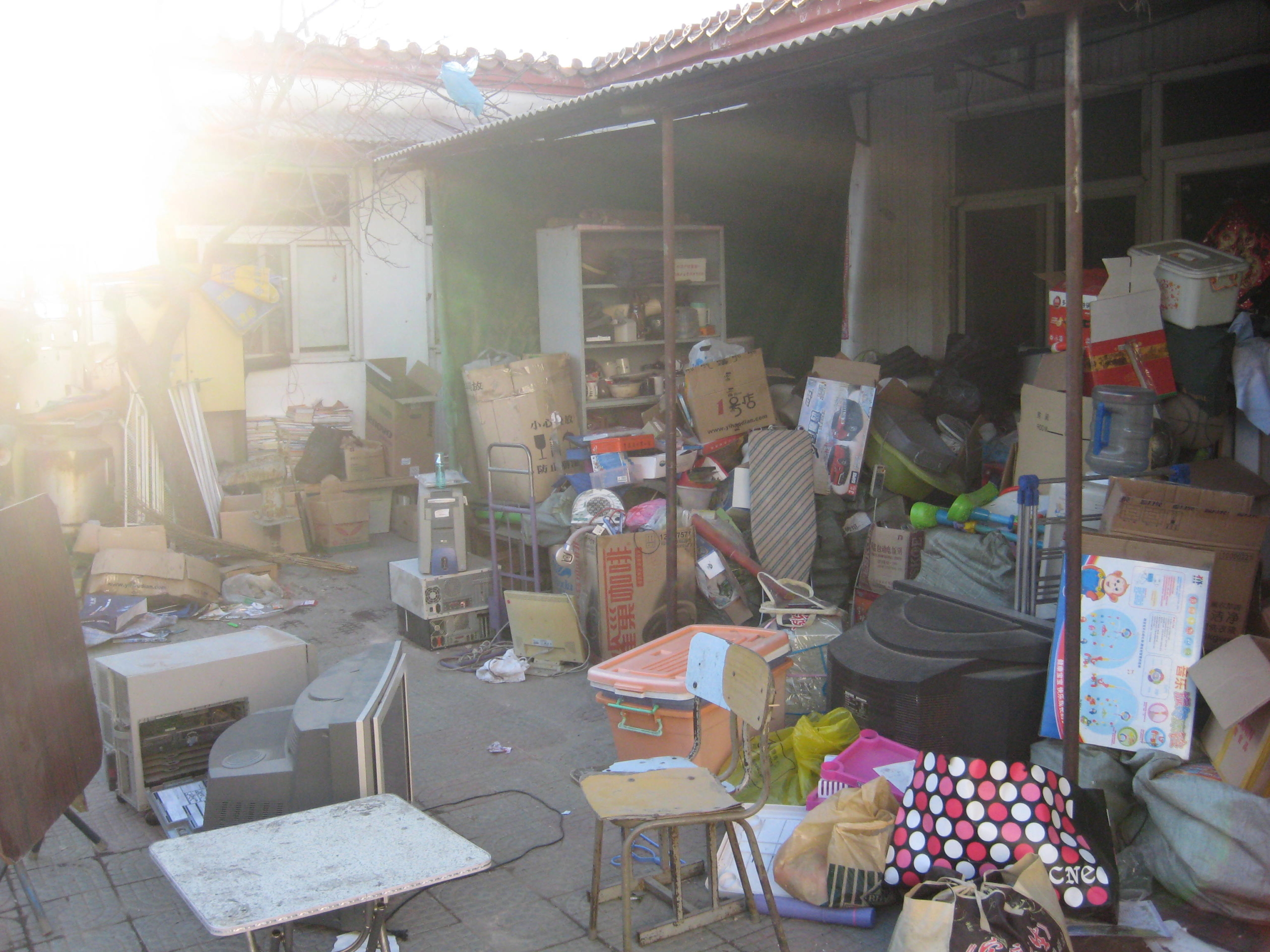
Figure 4. The rented dwelling of New Worker Art Group located in Picun, Beijing. Photographed by the author on November 24, 2011.
In September 2004, the New Workers Art Group released their first CD, All Migrant Workers Are A Family and received royalties of about 75,000 yuan (about 10,000 US dollars). According to the interviewed group members, they spent the funds on building an elementary school for floating children in Picun. With permission from the local government, they used the money to renovate an abandoned village school built in the 1970s. They named the school Tongxin, which can be translated as “be of one mind” or “be united.” The amount of money only allowed them to redo the roof, install heaters, and provide basics such as desks, chairs, and blackboards (see Figure 5). At the time of my visit, they were still using the building’s handwashing sinks and faucets from the 1970s (see Figure 6). Starting in 2005, the New Worker Art Group began to attract support for Tongxin Elementary School through their rock music-making. Their small-scale concerts at local universities and community centers attracted not only donations but young volunteers who served as teachers for the school. The New Workers Art Groups also built a small Migrant Workers Art Museum in Picun, exhibiting items such as payroll slips, employment contracts, workwear, and mail between floating migrants and their families. Over the past years, the group has been using their music to generate income and to raise funds for the maintenance and operation of the school and the museum.
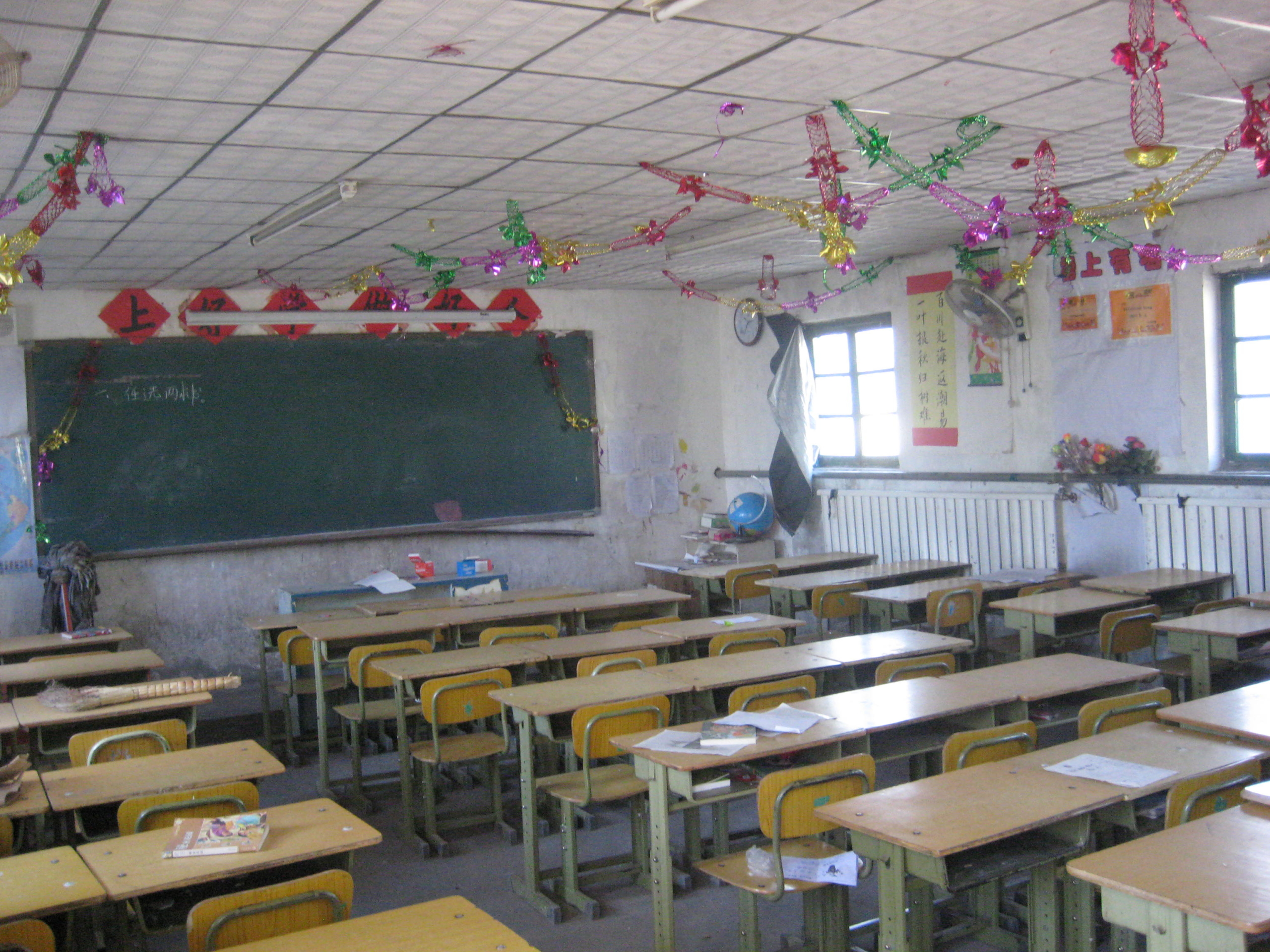
Figure 5. A classroom of Tongxin Elementary School. Photographed by the author on November 24, 2011.

Figure 6. The handwashing area of Tongxin Elementary School. Photographed by the author on November 24, 2011.
I met with some members of the New Workers Art Group later that day and began my research with them and other migrant rock bands in Beijing. I became a frequent visitor to Picun and immersed myself in their musical activities and lives in this urban slum. A year and a half later, in February 2013, I conducted a series of formal interviews with members of New Workers Art Group to summarize a general overview of the group’s historical development and mission, as well as the personal desires, pursuits, and views of individual members. In 2002, Sun Heng, a musician born in rural Henan province and a graduate of the music education department at Anyang Normal University, founded the group. Sun arrived in Beijing in 1998 and became a resident singer at bars and pubs. He had never been a factory or construction worker. He identified himself as a beipiao (literally “one floating in Beijing”) and believed that the term “worker” should also include musicians. In March 2002, Sun and a couple of other professional or semi-professional migrant musicians formed the group and began performing for migrant workers at construction sites and factories on weekends or on evenings of working days.
With the slogan “Sing Out Loud” (Dasheng Chang), the New Workers Art Group performed mainly rock music to, in Sun Heng’s words, “defend the legitimate rights and interests” of migrant workers and “realistically represent the life of this community” (interview with the author, Beijing, February 24, 2013). Sun told me that the group collaborated with the legal aid association Son of Peasants (Nongmin Zhizi) of Beijing Normal University to disseminate legal knowledge among the floating migrant workers. By giving music performances as their peers, they not only informed migrant workers of the laws and decrees they must obey in the city but also of their “legitimate rights.” Nonetheless, “legitimate rights” primarily referred to the rights to recover unpaid wages, have safe working conditions in factories and on construction sites, and request work-injury compensation. Equal access to housing, healthcare, job opportunities, or educational opportunities was not part of the protected legitimate rights. The legal aid association helped migrant workers recover unpaid salaries and compensation from foreign and domestic factory owners and real estate companies, and to punish fraudulent recruitment agencies. However, they did not submit any report concerning the biased government policies or claim that migrant workers should have equal rights in the city as urbanites. Sun Heng told me that he was awarded the title of “ambassador of judicial justice” by China’s Ministry of Justice in 2005.
Unlike underground migrant bands who still perform without a license in the slums on Beijing’s outskirts, the New Workers Art Group received the honorary title of “Model Public-Spirited Art Group” by the Ministries of Culture and Propaganda as early as December 2005 (see also Yang 2017). Rather than using vague words to describe universal feelings of depression and sadness like the mainstream rockers, the New Workers Art Group made efforts to represent the real living conditions of the floating migrants. Their songs not only portrayed construction and factory workers but also acknowledged floating migrants in other occupations. For example, the song “All Migrant Workers Are a Family,” after which their first album was named, started with such an inclusive acknowledgment:
You come from Sichuan, I come from Henan
You come from the Northeast, I come from Anhui
No Matter Where We Come from,
We work for a living
You work at a construction site, I am in the house service industry
You do small business, he is a waiter
No matter how different our occupations are
We come together in the same city to earn a living.
From May to July 2012, the group toured Hefei, Dongguan, Fanyu, and Shenzhen. At these small-scale concerts delivered at local social service centers or cultural centers, I interviewed some migrant audience members. Some of them told me that, compared to the Rising Sun’s performances on the televised mainstream stages, they preferred the performance of the New Workers Art Group.
“I could feel that these songs are written by our migrant workers, not written for us by those condescending great composers.”
“If they want to perform our voices, the voices should be from our own brains and hearts, not the words put into our mouths.”
“If they had never experienced what we experience, they don’t know.”
“Wang Feng’s rock songs are for urbanites. It is ridiculous that they want to empower us by using urbanites’ songs for urbanites.”
“Their songs mentioned Sichuan, Henan, and Anhui. Do you know that a lot of us [migrant workers] are from Anhui, Sichuan, and Henan? Because these three provinces have the most economically backward rural regions. Either they did the research or they are themselves from these regions. I can tell that they care.”
Quoted from interviews conducted with the author in Hefei on May 19, 2012; in Dongguan on July 2, 2012; and in Shenzhen on July 4, 2012.
Nonetheless, “All Migrant Workers Are a Family” continued with a refrain that adopted the typical optimistic expression found in mainstream rock songs. Sun Heng, who wrote both the lyrics and the melody of this song, employed the long-established mainstream symbols of “wind” and “rain” to signify the migrant workers’ resolve to overcome the hardships and suffering of their urban lives. He further borrowed signature musical characteristics from red classics—the marching-like rhythmic regularity, straightforward functional harmony, strong downbeats and cadences, and periodic lines—to create a sense of pride:
We migrant-brothers hand in hand
We won’t be troubled in the journey of working
We are not afraid of wind and rain,
All migrant-worker brothers and sisters are a family.10
These mainstream elements helped the song pass the censorial inspections of the music publisher and the local cultural bureau. But they did not diminish the support among migrant audience members; some of them read between the lines and told me they believed these sentences were a call to unite and overthrow the unfair, unequal social and institutional system in mainland China.
Through songs written by its members, the New Workers Art Group crafted an identity that transcended the state-imposed framework of peasant workers and floating population. As their name suggests, they introduced themselves as “new workers.” By replacing the label “peasant” with “new” and avoiding adjectives such as “outside” or “migrant,” they claimed a more equal identity with urbanites. They used the term “new” to emphasize that they were a new generation of workers, born of the current needs of economic development and irresistible economic trends. Group members explained to me that they avoided the label of “peasant” or “outsider” not because they wanted to erase their rural past, but to get rid of the inferior status of a temporary passer-by. “We don’t necessarily return to rural hometowns,” said Xu Duo, a bassist of the group (interview with the author, Beijing, February 18, 2013). In my research conducted in other parts of China between 2012 and 2019, many migrant workers told me they planned to return to their rural roots once they had enough money in their savings accounts. But others made efforts to take root in the cities and raised their children as urbanites (see also Lv 2013: 6).
Their self-description as new workers was generally ignored by the majority of the organizers and hosts of their concerts, mostly government officials and staff members of state-owned organizations, who insisted on introducing them as peasant workers. In turn, such introductions did not bother the group members very much, some of whom chose to create their own meanings and statements by singing within the regulations. On November 25, 2011, the New Workers Art Group held a non-profit concert, coordinated by local government departments, at Beijing Language and Cultural University for about 500 college students and teachers. To open the concert, the organizer clarified its goal as drawing students’ attention to the silent contribution and moving stories of peasant workers living around them in Beijing. After being introduced as representatives of peasant workers, the group members expressed their perspective on what their hometown is. As the leader of the New Workers Art Group, Sun Heng sang “Remember That Year” (Xiangqi na Yinian), a song he wrote to express his desires to return to the warm hometown where his parents were living. Whereas Xu Duo chose to sing his song “Beijing, Beijing,” in which he combined power chords and increased volume and intensity to carry his statement repeated three times: “Beijing IS my home! Beijing IS my home! Beijing IS my home!”11
Like that of the Rising Sun, the music of the New Workers Art Group has been described by China’s sole news media network as a rebellious voice from the silenced grassroots. Media articles and scholarly publications categorized them as “leftist rocker youngsters” (zuo yaogun qingnian), that is, the musicians and bands who perform to promote the ideas of freedom, equality, rights, reform, and fraternity (see, e.g., Kun 2013; Wang Hongzhe 2015). The New Workers Art Group is “different from regular bands,” said Pu Wei (2021), a professor of the Chinese Academy of Social Sciences, in his article published in the official journal of the China Musicians’ Association. He further argued that all members of the group shared the same ideals and values that glued them together “such as ecology, environmental protection, rural revitalization, the glory of laborers, the rights of workers, etc.” (Wei 2021: 89) But, based on my observations of the group members, most of them care more about the welfare of their families, friends, and fellow members of the migrant communities than about the natural environment. For some of them, the state-promoted, unrealized concept of urban revitalization made less sense than the fact that their 70-year-old parents did not receive health insurance and retirement compensation as senior urbanites. They cared more about whether their children would have equal opportunities to attend the same public schools as children with registered local urban hukou. They hoped that the government could do something to improve their living conditions in the urban villages.
At concerts, the New Workers Art Group was introduced as a mouthpiece revealing the reality about floating migrants’ urban life. But they had to convey the reality of the migrants’ living conditions in carefully calibrated language in order to pass the censorship reviews, avoid punishment, and maintain a favorable record that would enable them to secure future performance opportunities and financial aid from the state and its agencies. “This Humble Village Is Our Home in the City” (Zhe Aiai de Cunzhuang Shi Women zai Zhe Chengshi de Jia), a song from the group’s 2007 album Singing for Laborers, is a typical example of such carefully worded language. “The humble village” refers to Picun, and the group tried to represent their hard life in this urban village without violating established rules and regulations:
At the side of modern apartment buildings of this city
Some brick walls in disrepair constitute our humble village
Brothers and sisters from all parts of China reside in the village
We are here for better development
In the rows of 10-square-meter rooms
We all talk about the same topics with different dialects
We squeeze ourselves into the crowed buses in the morning and we squeeze into the civilization of this city
And then, we bravely face the hardships in our lives
The winding lanes in the villages look dirty
We all buy food in the lanes
Henan-nese braised noodles, Shanxi-style langpi, Hangzhou-style steamed dumplings
We can find food we had in our hometowns
There is an unadorned migrant children’s school in the village
Children can study here, and happily play games
At the construction site by the village, migrant folks wear safety helmets,
They industriously build beautiful buildings for others
We leave our hometowns only with hands and simple baggage
We work hard and we have not lost direction
We earn our rents to live in this humble village
Beside the beautiful townhouses and overpasses we construct
That battered radio is playing a folk opera from the Northwest
It resolutely and sonorously sings about the strength of life…
This song adopted elements from urban folk (chengshi minyao),12 a genre that emerged in the 1980s in Chinese cities and was revived in 2006 as part of a “new folk movement” led by urban pop singers Zhou Yunpeng, Wan Xiaoli, and Li Zhi. The movement called for a return to the simple life in intensive, polluted urban life. The newer, revised style requested musicians to stay sensitive to what happens around them in daily life and to use simple tunes and instruments to carry the narrative of what they observed (see also Zheng 2015; Chen Zhi 2009). Written to take part in this ongoing urban popular trend, the song combined a simple tune and a relatively peaceful narrative with rock-like rhythmic patterns.
The song lyrics include symbolic items that frequently appear in songs written by state-sponsored composers and performed on mainstream stages, such as the safety helmet and the buddies who build the buildings. The lyrics were also adorned with stereotypical portrayals and expressions of optimism such as “work hard,” “strength of life,” and “bravely face the hardships in life.” According to migrants I interviewed, they did so deliberately to feed the “radars” of the censors and authorities. “These great, busy men don’t listen carefully to what we say and what we sing. But they have a kind of radar detecting good words and bad words. Therefore, we feed them with these good words, and they will be satisfied and stop paying attention to other parts of the song” (interview with the author, Beijing, December 25, 2012). The imposed restriction forbade them from exposing the darkness they encountered in the city. But they revealed the inequality by juxtaposing two contrasting images: the humble village where the migrant workers resided, and the beautiful townhouses and modern apartment buildings built by the migrants. Although they had to generate relatively positive images of their lives to pass the censorship reviews, they inserted the “dirty lanes” and “walls in disrepair” between optimistic self-expression and invited attention to the unadorned migrant child school.
By feeding the radars of concert hosts and censors, the New Workers Art Group once successfully published several songs that contained vague criticisms and calls for rebellion. Unfortunately, these songs have been eliminated from concert stages and even Chinese social media websites today. “The Future” (Weilai Shidai), for example, is a song written by Jiang Guoliang, the drummer of the band. Jiang used aggressive heavy metal sound to support a combination of metaphorical, angry satire with borrowed words from mainstream songs:
We are living in an age like this
People are being economically strangled into perverts
The dead pile of power decays,
Discharging pus and blood
Flies and mosquitoes scream with bellies sticking out
Avengers clench teeth…
Let us shed sweat and youth,
Strength and faith are in our hands
Hand in hand, heart to heart
To build the future of our own…
To initiate a new age of justice
“Hand in Hand, heart to heart” has been a frequent phrase in communist propaganda songs written to persuade Chinese people to unite in fighting natural disasters or foreign enemies. “Shed sweat and youth,” and “strength and faith” are terms constantly sung in the official musical representations of state-owned art troupes to portray model figures who selflessly dedicate themselves to the socialist construction. Bearing the accumulated connotations of propaganda, these terms deflected from the dark imagery and blurred the metaphorical satire. The group members clarified at concerts that the “flies” and “mosquitoes” stand for the capitalists, that is, the “bad” owners of factories and construction contractors who refused to pay fair wages and jury compensation. Nonetheless, some interviewed migrant audience members believed that the rockers used the metaphors of pests, perverts, and dead piles of power decay to criticize corrupted government officials and the current condition of Chinese society. Some of them thought that the amplified pounding beats and harshly distorted timbres of “The Future” are riotous (interviews, Beijing, December 27, 2012, and Chengdu, April 18, 2017). In the 2020s, songs like “The Future” were erased from Chinese social media and online sharing programs. As of the time I’m writing these sentences, the group is trying hard to keep the videos they uploaded on non-Chinese platforms. On July 20, 2025, I could still watch a recording of “The Future” on YouTube, which does not provide any Chinese-language description or original lyrics but does provide Korean and English translations.13
Testing the Margins of Safe Musical Expression
With examples of China’s mainstream rock stars and the floating migrants’ performances in the media and public concert stages, the previous sections of this chapter disclosed how these allegedly rebellious phenomena were, in fact, state-sanctioned to give positive energy to those in adversity and to persuade them to assume assigned social responsibilities. This section will not discuss the subversive songs that challenged the legitimacy and policies of the communist regime, as that will bring not only attention but punishment to the underground musicians. Rather, I will present evidence that not all floating migrant musicians are willing to make their music “healthy food for minds,” but are instead making efforts to test the boundaries of safe musical expression. I will briefly examine two songs that failed to pass the censorial inspection for public release but did not cause trouble for their creators, who are still active at public concerts today.
The first example is a song titled “These Fucking Days” (Zhe Caodan De Rizi), a song written by a migrant rocker whose name and information will not be disclosed. As a talented musician, he is very proud of his musical flexibility, as his compositions span a wide range of styles, sentiments, and themes, from romantic love in the hometown life to lavish praise of socialist achievements. On February 18, 2013, I revisited his small room located in Picun for our scheduled informal interview. After spending the whole afternoon talking about his musical pursuits and appeal, he decided to perform something for me that I could not hear in public performances. Accompanied by his wooden guitar, he sang:
I was walking down the street in the city
As a “temporary” person, and with my mashed youth.
I was trying to find the happiness described in the legend
But there are a lot of weird things in the city.
There is something people can do, but they can’t say
There are some people who treat their pets better than people around them.
So I came up with a dream
I wanted to become a dignified pet.
A pet that doesn’t need to work over 10 hours on an assembly line.
A pet that doesn’t have to jump off a building to escape pressure.
A pet that doesn’t need to worry about their fingers being eaten by the machines.
A pet that doesn’t bear insults and abuse.
One day God heard my prayer and turned me into a Persian cat
Meow…The boss of my factory bought me for his young mistress
I then learned his secret.
He usually said to his mistress:
“Sweetie, be good and don’t cry
We can only earn money when society is stable
It is hard to be a boss now.
The young workers are more and more disobedient,
The American big bosses leave us less and less margins,
The ‘leaders’ are more and more hard to please now.”
He said: “I’m a man supporting liberty and fraternity
So sweetie, don’t play the fool like those workers,
You are an educated intellectual.”
I failed to control my temper
I jumped on the boss, and I sank my teeth into his hand.Meow…
I then escaped my boss’s house.
It was midnight; I saw the workers from the night shift.
I decided to continue being a cat, which is much easier than being a man
I then went to the cat’s domain.
An elderly cat was delivering a speech with arrogance
It said, “This is a new age.
No matter if the cat is black or white
It is a good cat if it can catch rats.”
It said, “the floating cats are all over the city now
I tried to repatriate them, but it doesn’t work well.”
It said, “I have moved all my family members abroad
Only in this way can I feel safe to be an official here.”
Then, he brought me to an expensive nightclub
The name of the club is “Heaven and Earth,”
There were very sexy lady cats there
They were students at Cat University.
It said we learned this from humans.
It means freedom,
I got very excited.Suddenly the factory bell rang
It was just a beautiful dream.
Reality gives us nowhere to hide and run.
The only thing we can do is to fight bravely these fucking days.
Meow…
These fucking days.14
According to the musician, this song was composed based on the experiences of his migrant worker friends. It depicts a fictional dream of becoming a cat and comprises two parts: the first reveals the strategy of the “boss” who exploits migrant workers; the latter indirectly criticizes official corruption in current Chinese society through a confession by a cat leader in the “cat domain.” The “boss” is greedy and only cares about how much money could be made. They disdain uneducated migrant workers, and even the mistresses they pick were “intellectuals.” The musician explained that he used the intellectual mistresses to imply that the well-educated urbanites could abandon moral principles and were not more respectable than floating migrants. Although the “boss” and “intellectuals” claim that they support democracy and liberty, they expect the migrant workers to be obedient. Although they claim that they have good, gentle hearts and a sense of fraternity, they only want to please the “leaders” from whom they could make a profit and never treat migrant workers better than a cat. However, their power and privilege could only be realized in a stable society where migrant workers selflessly dedicate themselves without complaints.
The sarcasm in the second part of this song is pointed at the Chinese communist officials. The corruption and irresponsibility of these leaders were regarded by many floating migrants as the “source of sins and troubles” (zuie yuantou) in Chinese society in the 2010s. Some terms that frequently appeared in government reports and newspapers at the time were included by the musician in the “leader” cat’s speech. “No matter if the cat is black or white. It is a good cat if it can catch a rat” is a famous dictum of Deng Xiaoping, who started the economic reform in the early 1980s. The decisions of this former leader of China accelerated urban development and modernization while casting rural residents and migrant workers as inferiors. Some corrupt officials sent their wives and children aboard, along with bribe money. “Heaven and Earth” (Tianshang Renjian) mentioned in the song was the name of a real nightclub at the time that was infamous for providing sexual services for the corrupt officials and rich businessmen.
In this song, the musician borrowed a rhetorical device from traditional Chinese folk songs—jiewu yuren—which means to implicitly comment on someone through a metaphorical portrayal of animals or natural phenomena. This device was usually used in imperial China by folk singers to express veiled criticism of governors, especially when “speech crime laws” persecuted people for frank speech and artworks that depicted the truth. Through the eyes of a cat, he revealed the nature of the “bosses,” and through a metaphorical description of the cat’s domain, he mocked Chinese officials. Moreover, the comfortable dream of being a cat stood in sharp contrast to the migrant workers’ difficult lives in reality. “I wanted to refute those who claim that China is a ‘just and caring’ society,” he said. “This is a caring society for urban residents and for urban cats and dogs, but it is not for people like us. Those bosses’ dogs eat meat every day, and their cats sleep all day. We work about 16 hours per day but can’t afford a chicken leg. We are less important than pets” (interview, Beijing, February 18, 2013).
This song could not pass censorship because it contains sarcasm and criticism that exceed the state-allowed limits, and because the musicians refused to decorate it with mainstream, positive expressions to dilute the negative representations. At the same time, it did not cause trouble for the musician because it presented inequality as an individual case rather than exposing the biased government policies. Instead of blaming the socialist system or the leadership of the communists, it satirized only “corrupt” government officials and the “capitalists,” that is, the private or foreign-owned factories and construction companies in Chinese contexts.
Likening humans to “lower creatures” (diji dongwu) such as rats, dogs, or chickens has been a deeply rooted form of sarcasm in China’s grassroots culture for safely expressing contempt and loathing toward authorities. In an ancient folk song preserved in the Book of Odes, passed down from the 8th century B.C., the folk singer criticized the evil “big rat” to express anger at local officials: “Big rat, big rat, don’t eat my grain. I have fed you for my whole life, but you never give anything back” (Zhou 2002: 156). However, the authorities usually can’t find concrete evidence to prove who is being alluded to in the song and thus have no grounds to punish the singers. Such a metaphor was also employed by Dong Jun in a song titled “Bitten by a Dog” (Bei Gou Yao):
To get a job, it is not easy
So I am working hard.
I’ve never been late, and I’ve never left early
I’m not angry when I work overtime.Boss Qian, has a dog
Who always looked at me these days.
He was angry, whatever I did,
Then I kicked his butt
Because he gave me a nasty bite.The police then took me
But the dog wasn’t willing to let me off.
I stayed in the police station for a whole night
They let me go the next morning.
In this song, Dong recounted an unhappy experience from his urban life and used the metaphor of “dog” to denote the foremen and factory guards hired by the “bosses” to watch and supervise migrant workers. “Bitten by a Dog” is a song that once successfully passed the inspection to be performed at small-scale concerts for migrant listeners. The “small-scale,” as I’ve observed since 2012 in Chinese cities, conventionally means gatherings attended by fewer than 200 people. “Because the image of the policemen in this song is very positive,” Dong explained. “I didn’t even blame the boss. I said that it’s the fault of his dog. But I think the buddies in the audience know that I’m not talking about dogs” (interview, Shenzhen, September 10, 2012).
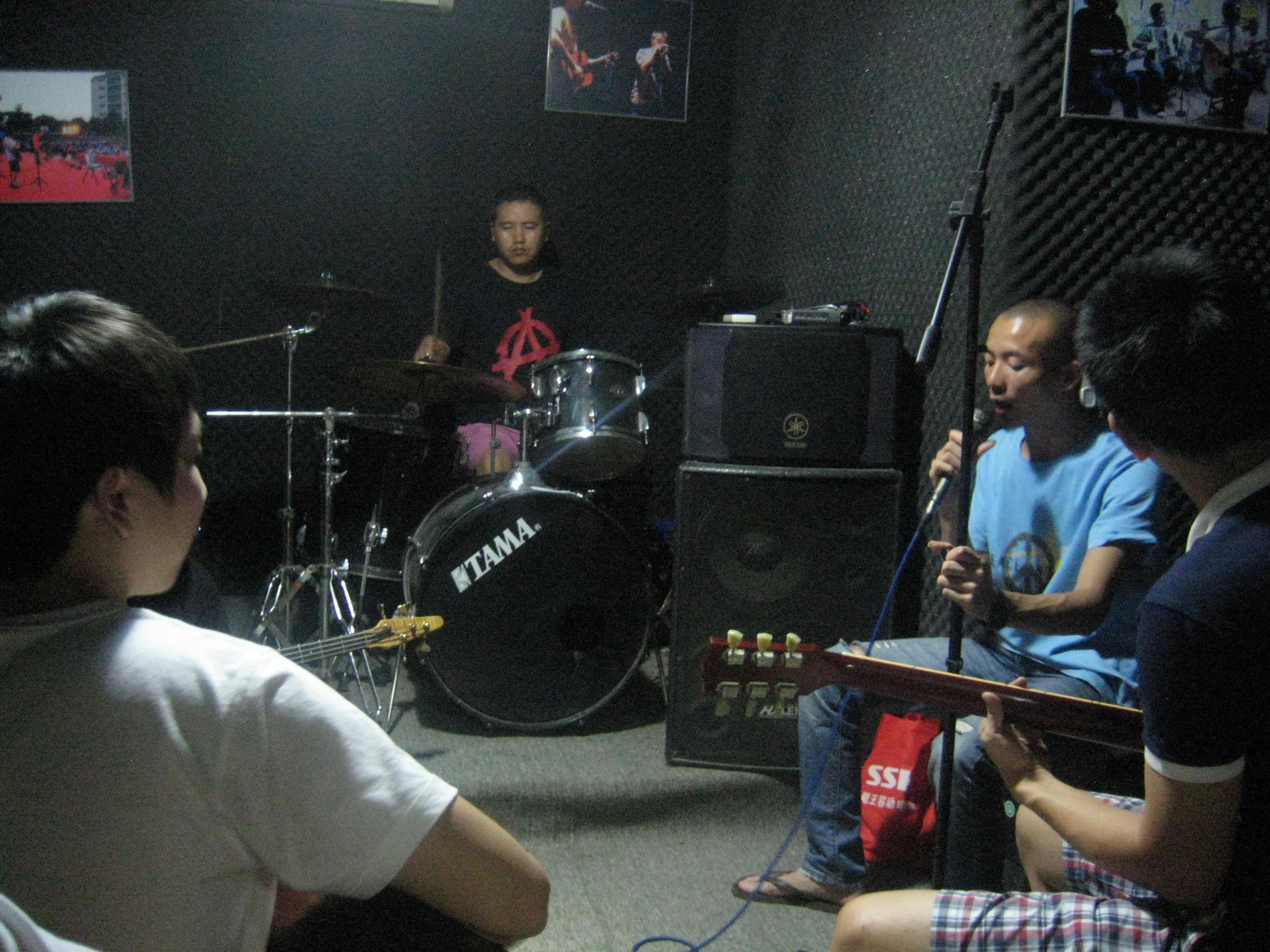
Figure 7: Dong and his band members rehearsing rock music. Photographed by the author in September 2012.
Dong founded his own migrant rock band in Shenzhen, which he named Heavy D Sound (Zhong D Yin). He explained to me that the letter “D” sounds the same as the Chinese word “low,” and he hoped his band would sing for the lower strata of society who carry heavy burdens. His band received fewer public performance opportunities than the New Workers Art Group. However, by leveraging Shenzhen’s location, Dong and his band were able to travel to Hong Kong to attend international music festivals and maintain connections with Taiwanese and foreign bands who also rocked for social justice.
In the spring of 2013 in Shenzhen, a migrant worker once shared his “survival wisdom” after a rock rehearsal:
You can criticize [in the songs], but don’t criticize the state and the party; you can complain, but don’t complain about government policies; you can describe the bitterness of the life, but don’t blame it on the communist social system; and finally, you are supposed to at least include one of the following ingredients in the songs: “hope/good future,” “to work hard,” and “to be good.” (Interview, Shenzhen, April 24, 2013)
This code helped some floating migrant rockers survive in the country’s aboveground but marginalized music scenes and also helped me recount my discussions in this chapter in a way that is safer for the migrant musicians I worked with.
Endnotes
-
Some parts of the discussion in this section also appear in my article that examine the rise of the Father of Chinese Rock in the 1980s, see Tang 2025.↩︎
-
At the same time, some scholarly works revealed how rock music was used as propaganda tools by socialist regimes (see, e.g., Ramet 2019; Pop 2016).↩︎
-
The “family compound” (da yuan) is a form of community with Chinese communist characteristics. In the 1960s, borrowing the successful experiences of the Communist Soviet Union, the Chinese government invented several new administrative policies that divided urban society into many “systems” (xitong), (including “transportation system,” “governmental system,” “medical system,” and “military system”), to cover and control every aspect of urban life. These systems could be further divided into many danwei (literally “units”), which were usually single institutions: a factory, a school, a hospital, a military camp, or a provincial or municipal government. Since the 1960s, people working in a certain “unit,” along with their family members, have been assigned to live in residential complexes built near to the institution so that they could be more easily socially organized, politically controlled, and culturally manipulated. These complexes were named “family compounds” (jiashu yuan or da yuan) and contributed to the formation of social classification and hierarchy.↩︎
-
See https://www.youtube.com/watch?v=Juld6fJt9Bg&list=RDJuld6fJt9Bg&start_radio=1 (accessed on August 11, 2025) for an audio recording of “Rock on the New Long March,” after which the album was named.↩︎
-
See https://www.youtube.com/watch?v=T6solhayYFo&list=RDT6solhayYFo&start_radio=1 for the amateur video which was posted in YouTube in 2011 (accessed on August 11, 2026).↩︎
-
An excerpt from “Forever and Ever.”↩︎
-
See https://www.youtube.com/watch?v=QHSjoxiHz10&list=RDQHSjoxiHz10&start_radio=1 for Wang Feng’s live performance of “Flying Higher” (accessed on August 11, 2026).↩︎
-
Transcribed and translated by the author from the interview conducted by the Sina Entertainment at its Online Chat Room on August 3, 2009, from 13:30 to 14:30 Beijing time.↩︎
-
See https://www.youtube.com/watch?v=i3pcFkcTHBc&list=RDi3pcFkcTHBc&start_radio=1 for a recording of the song on YouTube (accessed on August 11, 2026).↩︎
-
For the published recording of the song, see https://www.kugou.com/mixsong/jd3hv32.html (accessed on August 11, 2026).↩︎
-
See https://www.kugou.com/mixsong/hi7cb9b.html for a recording of the song “Beijing, Beijing” (accessed on August 11, 2025).↩︎
-
See https://www.bilibili.com/video/BV1av411i7bX/?vd_source=49b47812bc689e0063611633a3afe132 (accessed on August 7, 2025), which is a video of this song uploaded by Sun Heng. In this video, the audio recording of the song from the album was combined with pictures of Picun to visually represent the humble village.↩︎
-
See https://www.youtube.com/watch?v=YMMi1Jfal6M&list=RDYMMi1Jfal6M&start_radio=1 for the YouTube video (accessed on August 7, 2026).↩︎
-
To respect the request of the musician, I did not record his performance during the interview but only documented the lyrics. Therefore, the musical analysis of this song will be missing here.↩︎