How to cite
How to cite
How to cite
How to cite
Outline
Outline
State-sponsored Art Troupes: Performing for and as Representatives of the floating migrants
Basic Guidelines in Generating Official Musical Representations
Red Classics in Everyday Life: From Self-Advertisement to State-Sponsored Representation
Songs Written to Give a Voice to Peasant Workers and Performances Designed to Represent Floating Migrants
Legitimizing the Musical Representations: Images of Heroic Sacrifices and Habitual Sentiments about the Mother Country

On August 3, 2013, I stepped into a rehearsal room located on the 6th floor of the Xi’an Children and Youth Palace.1 The members of the Shaanxi Migrant-worker Dream Art Troupe” (Shanxi Wailai Wugong Mengxing Yishutuan) were standing neatly in two rows by a piano, practicing the song “My Mother Country Will Not Forget Me” (Zuguo Buhui Wangji Wo) under the guidance of Chen Hao, the artistic director of the troupe and the one who invited me to this weekly rehearsal. Several journalists with video cameras on their shoulders were busy walking around them. I tried to observe their performance up close but was constantly reminded by the cameramen to “not get in the way.” I nodded in understanding and finally hid myself in a corner.
The singing of migrant musicians was occasionally interrupted by Chen, who attempted to correct their non-standard voices and gestures: “Wave your arm exactly at the word ‘selfless dedication,’ and clench your fist when you sing ‘me’ … Try it again and make your gestures right!” The journalists acted more like directors of this scene than people gathering information. “Be more sincere, and more enthusiastic,” one of the journalists said. “No, no, no, not that fake smile” another added: “Let me see your sincere happy face! Let me hear your voice from a deep heart!”
Fifty minutes later, Chen shared a look of satisfaction with the journalists and announced that the choir had achieved the “spiritual essence” and the typical stage manner of the song. “We also need some scenes from daily life,,” a journalist suggested. The migrant musicians were then divided into several groups, each performing a designated “daily activity.” Some young men were asked to sit together near the stage, pretending to chat amicably. Others were taken outside to walk, dance, and sing in front of the Provincial Government Hall. The journalists continued to give instructions and kept adjusting the performers’ facial expressions until everyone wore big, enthusiastic smiles.2
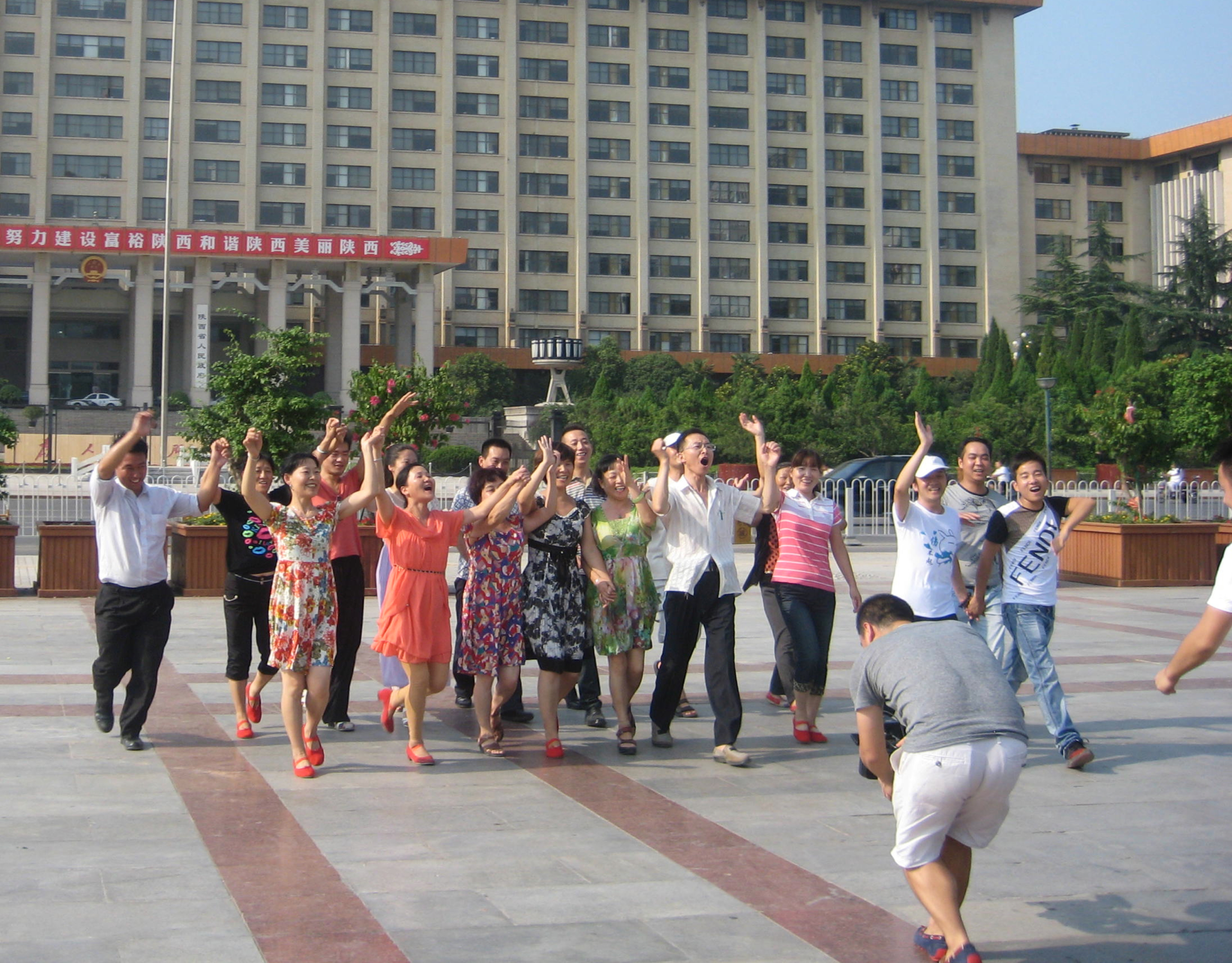
Figure 1: Members of the Shaanxi Dream Art Troupe dancing and singing under journalists’ direction in front of the Provincial Government Hall. Photographed by the author on August 3, 2013, in Xian.
This excerpt from my field journal documents what I observed at a rehearsal of a state-sponsored art troupe. It could serve as a good start for this chapter’s discussion of the construction of the official representation of the floating migrants. Located in different Chinese cities, similar state-sponsored art troupes constantly reached local and national audiences through media and concert stages in the 2010s to disseminate streamlined representations of the migrants. Given that the urban public does not have access to counterevidence, these official musical representations have established widely shared knowledge about the floating migrants and led to the collective neglect of their suffering.
State-sponsored Art Troupes: Performing for and as Representatives of the Floating Migrants
Ever since the founding of the People’s Republic of China in 1949, the central government and its regional branches began to sponsor “art troupes” (yishu tuan) for various social groups, recognizing these as the primary forces behind the economic and social development of Chinese society. National and regional Railroad Worker Art troupes emerged as early as 1950 when the state began to develop railroads as the country’s transportation backbone (see Editorial Board of China Railroad Worker Art Troupe 2010). After oil fields were discovered in Karamai and Daqing respectively in 1955 and 1959, a number of Oil Field Worker Art Troupes were founded in these regions, both to perform for and represent the oil field workers (Zhuo 2019). Similarly, after the state reformed the higher education system in 1977, college student art troupes began performing as their spokesmen and as part of an ideological campaign (see Chen Ming 2016; Li 1996).
It was only in the 2000s that the state began to sponsor art troupes for a portion of the floating population. At the time, the Beijing Olympic Games were being planned, which was regarded as a good occasion to portray the picture of a rapidly developing China to the outside world. There weren’t enough stadiums and other facilities to accommodate the expected number of attendees and visitors, and other major Chinese cities were also expecting a wave of foreign tourists. These major cities, which proudly attract well-educated and high-income, state-permitted domestic migrants, suddenly found themselves with a critical shortage of laborers. The government thus relaxed the restrictions on rural-to-urban population inflow. The governmental documents and academic and public media began to acknowledge the contributions of a portion of the floating population, in particular the construction and factory workers (see, e.g., Zheng and Huang 2007; State Council 2016). In the official documents and the media discourse, this portion of the floating population was labeled as “peasant workers” (nongmin gong) or “workers from outside” (wailai wugong renyuan). Media and academic attention was paid to their mental health, and measures were taken “to foster good behavioral habits” among these migrants and their children (Ben 2014: 77, see also, e.g., Liu et al. 2007). In 2006, the first peasant worker art troupe was established, whose success soon inspired the emergence of similar troupes. These troupes were located in different major cities but commonly funded and directed by the central government, its local branches, and its agencies.
Between April 2012 and August 2013, I visited all state-sponsored migrant art troupes reported by Chinese media or government documents. I selected four of them for focused ethnographic research. The TEDA Worker Art Troupe (Taida Gongren Yishutuan) was the first troupe I worked with and was located in Tianjin, the largest port city in North China and one of the four municipalities directly administered by China’s central government. It was named after the Tianjin Economic Technological Development Area (TEDA), a free-market zone reserved for labor-intensive plants of multinational manufacturing corporations and inhabited by hundreds of thousands of migrant workers. The troupe’s operation and performances have been directed and managed by the Floating Population Management Office (Liudong Renkou Bangongshi) of the TEDA area. As floating population management offices in other areas of the country, the TEDA office managed almost every aspect of migrant workers’ urban lives—from housing rental to skill training, from birth control to off-work entertainment. In 2007, the TEDA Floating Population Management Office founded the troupe as a gentler means of education, supplementing mandatory classes and punitive detention-repatriation measures. Before the start of my research with the troupe, my citizen ID, student ID, and past academic diplomas were examined and filed by the management office, and staff members of the office accompanied, or rather monitored, me throughout the entire process of my research and interviews.
Established in the summer of 2006, the Yuhua Peasant Worker Art Troupe (Yuhua Nongmingong Yishutuan) claimed to be the first state-sponsored art troupe of and for the floating population. The troupe was funded and supervised by the Culture Bureau of the Yuhua District, a district located in southeastern Shijiazhuang, the provincial capital of Hebei Province. Although the troupe was named after the district, it performed on both local and regional concert and performance stages for national audiences. Due to conflicts between the state-appointed director and members of the troupe, the troupe had been disbanded by the time I visited, leaving only a few singers who stayed in close contact with the Yuhua District Culture Bureau and were on call whenever “representatives” of local migrant workers were needed. Several weeks after I submitted an application to the bureau expressing the intention to interview former troupe members, I was allowed to meet some of them at the Yuhua District Culture Bureau. “Accompanied” by bureau officers, I interviewed these migrant musicians to obtain information about the origins and historical activities of the troupes. To my recorders, the singers also performed songs for me which they used to perform as members of the troupes.
Mount Yangtai Young Worker Art Troupe (Yangtaishan Qinggong Yishutuan) is a troupe I ran into when I visited a migrant rock band in Shenzhen city, South China. The Mount Yangtai troupe was directed by the Dalang Street Administrative Office (Dalang Jiedao Banshichu). As a subdistrict division of the government, the office was in charge of managing the public cultural and educational activities of over three thousand electronic factories situated around Mount Yangtai, after which the troupe was named. Aside from musically representing migrant workers at annual National Day festivals and International Workers’ Day concerts, the Mount Yangtai troupe regularly gave free concerts to the workers of these factories. About ten days after I submitted my research plan to the office, I was received warmly by Zhong Huanhuan, a young migrant who was awarded a clerical position in the office for her active and devoted services as a leading dancer of the troupe. The musical activities have a remarkable, positive impact, according to Zhong. “Among dozens of suicides committed by migrant factory workers in this city during the past several years, none of them happened in our neighborhood. More importantly, crime has been going down” (interview with the author, Shenzhen, September 12, 2012).
The Shaanxi Dream Art Troupe (Shanxi Mengxiang Yishutuan), whose activities I quoted at the beginning of this chapter, was a new troupe when I visited. Soon after Xi Jinping was inaugurated in November 2012 as the supreme leader of China, he introduced a new national ethos, that of the “Chinese Dream” (Zhongguo Meng). A few months later, the Shaanxi Dream Art Troupe was founded jointly by the Communist Youth League Committee of Shanxi Province and the local Children and Youth Palace. The former provided material support and ideological instruction, while the latter supplied rehearsal venues and personnel as the director of the troupe and instructors for musical training. Chen Hao, a professional vocalist and artistic director of the Children and Youth Palace, was appointed as the director of the troupe and assigned to guide the troupe in alignment with the four constituent ideals of the Chinese Dream: a powerful and prosperous country; a rejuvenated nation; happy people; and a harmonious society (interview with the author, Xi’an, August 10, 2012). The members were recruited through several provincially televised competitions and attracted migrant musicians who sought public attention and privileged performance opportunities. As the only migrant worker art troupe of Shaanxi province, this troupe became a major resource for the local media when reporting about the peasant workers’ urban lives and thoughts.
These four troupes shared some common characteristics: First, all of them were supervised by government branches and agencies and managed by government-appointed directors. The Yuhua Troupe was directed by Fan Xiuju, a subdistrict official. Chen Hao held a tenured position at a state-owned public institution. Zhong Huanhuan was formally trained to be an administrative staff member of the Dalang Street Administrative Office. At least twice a month, these directors reported to the local governments, from which they received instructions and plans for upcoming activities.
Second, although these troupes were situated in different parts of China and supervised by different government branches or agencies, they, or their directors to be more accurate, received the same instructions from the central government. Sometimes, the troupes received nothing other than the basic original versions of the directives from the ministries of the central government. More often, however, the directives had been fleshed out and reformulated into detailed instructions, or memorandums,” on how the troupe should prepare and deliver an upcoming performance. At the time of my field research, in 2012/2013, all the migrant troupes I visited operated under the same directive from the central government. Entitled “Opinions on Further Strengthening the Work on the Peasant Worker Culture,,” this document confirmed that peasant workers are “an important target group for the public cultural service system” (Ministry of Culture, Ministry of Human Resources and Social Security, and All-China Federation of Trade Unions 2011). It gave instructions on how to cater to and represent these migrant workers, which was rewritten into memoranda received by the state-sponsored art troupes (as shown in Figure 2) and implemented by their directors and media journalists, as documented in my field journal presented at the beginning of this chapter (see Tang 2020: 198).
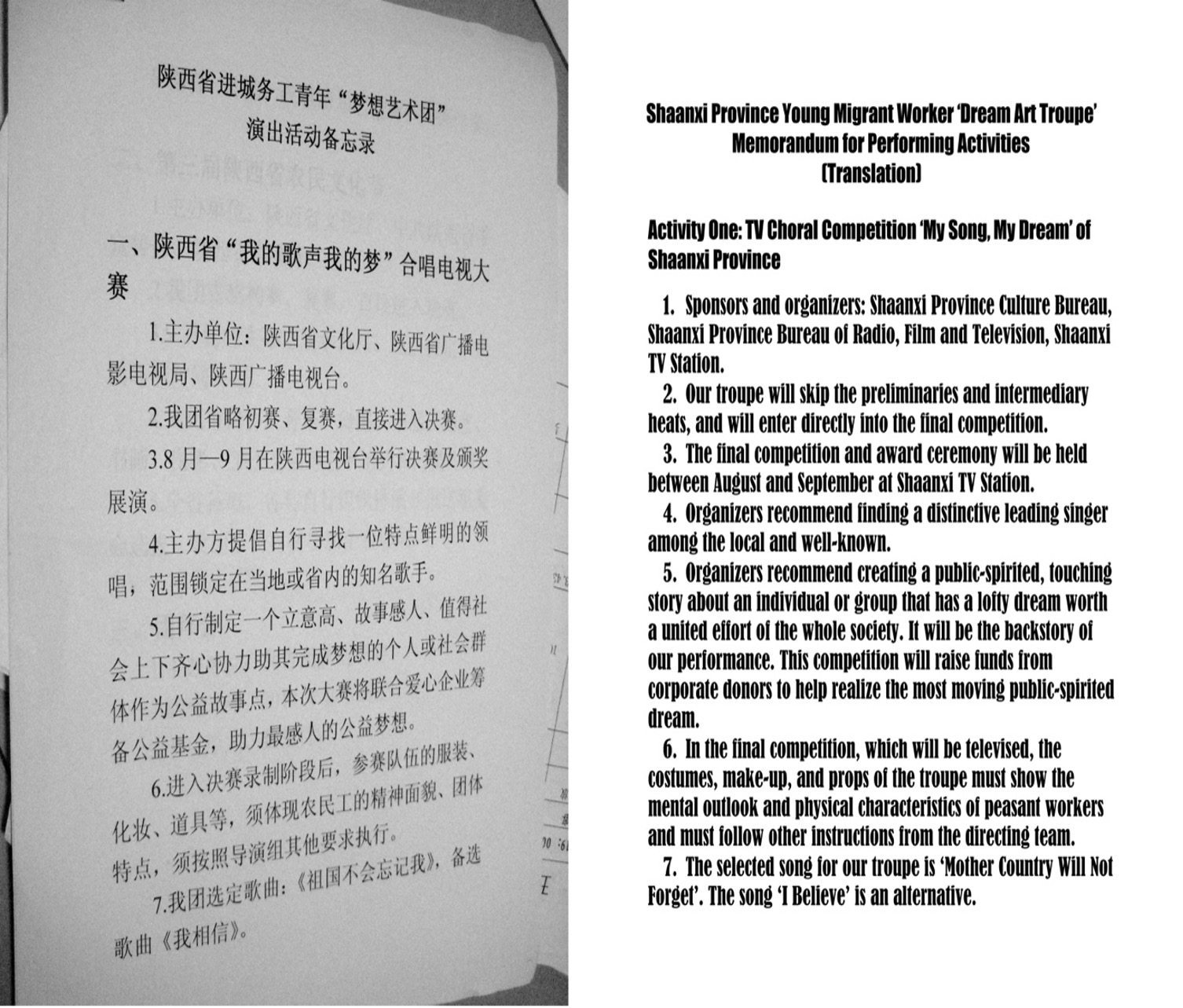
Figure 2: A memorandum received by the directors of the Dream Art Troupe in August 2013 for an upcoming choral competition. Photographed and translated by the author.
Third, the migrant members of these state-sponsored troupes did not have the freedom to choose what to perform or how to perform. The main occasions where the troupes delivered their performances were music shows on broadcast media and public concerts sponsored by government branches and agencies . The production teams and organizers of these shows and concerts not only decided what the troupe members should sing but also what they should wear on stage, what stories they should tell, and even what “mental outlook” they should display on stage, as demonstrated by Figure 2. The appointed directors were in charge of designing the details and conducting rehearsals that aimed to ensure troupe members were able to realize the decisions and designs.
Fourth, the music of these troupes was largely limited to singing, namely because it lent itself to conveying straightforward messages and representations prescribed by the instructions. Another reason for restricting the ensemble to vocal music was that it was hard to recruit professionally trained migrant musicians and much easier to train singers than instrumentalists. The well-rehearsed repertoires of these troupes overlapped and contained many so-called mass songs. Of course, in China’s government, media, and public discourses, the musical pieces and performances created and delivered as the state’s propaganda work are not described as “propaganda” (xuanchuan). Instead, several terms were frequently used to refer to songs written and composed by musicians who work for government-owned institutions and to performances of these songs organized by government departments, agencies and state-owned media. These terms included: (1) zhuxuanlv, literally “leitmotiv songs,” which summarized their assigned role in China’s cultural life; (2) qunzhong gequ, literally “mass songs,” which denoted the targeted audience of the songs (see also, e.g., Quan and An 2018; So 2003); (3) hongse gequ, “red songs,” because they proudly carried the ideological markers and missions of the communist regime (see also, e.g., Li 2024; Hong 2011). This book will adopt the term “mass songs” to stress that these songs were composed and performed to persuade, influence, and educate the masses.
Before I proceed to a more elaborate discussion of the repertoires and performances of these migrant art troupes, I would like to clarify some basic guidelines implemented by China’s state-sponsored musical domain that give rise to the main characteristic of their musical representations of the floating migrants.
Basic Guidelines in Generating Official Musical Representations
In twenty-first-century China, the country’s supreme leaders convene national conferences every several years to announce an updated set of rules which state-sponsored musicians must abide by. Over the past decades, several principles were repeatedly confirmed at these conferences, among them the “Yan’an Talks.” These guidelines were implemented in state-owned music institutions whose members composed mass songs, in government departments whose members were in charge of organizing concerts freely accessible to the public and of directing state-sponsored art troupes within their jurisdictions, and to the broadcast media whose production teams created shows hosting state-sponsored migrant art troupes. I will examine these guidelines that shape how songs are composed, selected, and performed, focusing on how these practices cultivate a distinctive imaginary of floating migrants’ urban experiences, thoughts, and feelings among audiences.
The Yan’an Talks refers to the speeches given by Mao Zedong in 1943 and that defined the mission of communist regime’s musical propaganda. At the time, the Kuomintang was still the ruling political party in most regions of China, and the communists were the opposition. After a series of military retreats in the mid-1930s, Mao and his army settled in Yan’an, a small town on the northern border of Shanxi Province, which served as a temporary capital of the Chinese regime until it took comprehensive control of mainland China (Sun Shuyun 2010; Yang 2021). Mao systematized his pragmatist views of art and convened a forum in the spring of 1943 to clarify “the important role of revolutionary literature and art in facilitating other revolutionary works” and what is “the correct development of revolutionary literature and art” (Mao [1942] 1991: 804, see also Yue 2025; Brown 2008). In front of the attendees who were professional or amateur artists and who later became the musical pioneers of communist China, Mao delivered the opening and concluding speeches widely known as the Yan’an Talks. He set out guidelines for cultural work, some of which are still upheld in twenty-first-century China.
The first guideline is that musical activities are an integral part of the organized, planned party work. “Literature must become part of the common cause of the proletariat,” Vladimir Ilyich Lenin stated in 1905, “a cog and bolt” (quoted from Solomon 1979: 184) of the socialist mechanism. Mao not only borrowed the expression “cog and bolt” to describe literature and art but also granted the title “cultural soldiers” to writers and musicians. Arts, as Mao concluded in this inflammatory talk, are “a weapon to unify and educate the people” (see also Chung 1996: 7).
Second, musicians should compose and perform to represent the people and to be their spokesmen, in order to unify, influence, and educate. After demanding that musicians and other artists and writers pay special attention to mass songs, Mao claimed: “Only by linking their works to the masses of the people, by representing the masses, and by being a spokesman of the masses can the works [of writers and artists] be meaningful” (Mao [1942] 1991: 821).
The third guideline pronounced in the Yan’an Talks and implemented to this day is that artworks should encourage the people to have “same-heart, same-mind.” “Everything that separates people into several groups, stirs the people to have different goals and opinions” should be eliminated (Mao [1942]1991: 825, see also Cui and Chen 2023; Wang et al. 2014).
Fourth, to reinforce the people’s faith in the communist leadership, Mao demanded that “praise” (zanmei) should be the main theme of arts, particularly songs. The communist party, socialism, and the merits of “the people” should be passionately praised to “give people encouragement and confidence to struggle for victory” (Mao [1942]1991: 830).
Fifth, art works should not expose the mistakes of the people, including communist leaders who are members of the people. “The people make mistakes, but these mistakes should be corrected by the criticism within our group” (Mao [1942]1991: 830). By contrast, exposing the mistakes of foreigners and domestic exploiters is allowed for the purposes of unifying the people.
These basic guidelines are still in effect and influence the cultural life of contemporary China. During my research in the 2010s, people were free to choose among a wide range of legally available musical entertainment, spanning popular and classical genres, and featuring both domestic and international stars. Nonetheless, the freely accessible concerts organized by government departments and agencies and performed by state-sponsored art troupes comprised the main source of entertainment for the average citizen. Similarly, the songs of the most-watched broadcast music shows were primarily those written by members of state-owned institutions. These agencies and institutions received directives from different ministries of the central government and composed, produced, and performed with a view to accomplishing the tasks and goals prescribed in the directives. The standardized protocol for review and inspection ensured that the institutions fulfilled the directives.
Alongside the continual introduction of new tasks in the directives, supreme leaders periodically convened pan-Chinese conferences to announce and confirm the basic guidelines. Several months after I arrived in China to work with floating migrants, the Ninth National Congress of Chinese Literature and Art Workers was held on November 22, 2011, where President Hu Jintao (2011) confirmed the “correct way on which artists must insist.” In his keynote speech, Hu reiterated that artworks should seek to influence people by representing, strengthen their faith by praising, and foster their solidarity to motivate. He highlighted the three abilities of artworks to represent, to attract, and to evoke specific sentiments and emotions. New details were added according to the socio-economic situation of the country, and artists were requested to absorb elements from new styles and techniques to cultivate the lofty spirits of the people and to represent contemporary people’s faith and pursuits and to motivate audiences to accelerate the country’s social and economic development. In 2014, the newly inaugurated President Xi Jinping demanded that artists create “life-like, emotionally appealing images” of people’s thoughts, feelings and living conditions and strive for social and economic development in order to motivate people and strengthen their faith in the future (Xi [2014] 2015).
Red Classics in Everyday Life: From Self‑Advertisement to State‑Sponsored Representation
The musical performances of the state-sponsored migrant art troupes, along with the mass songs occupying their repertoires, were created to influence public opinion and arouse certain sentiments. Musicians were expected to persuade their audiences through music and lyrics that reflected the government party line, evoking and generating emotionally captivating thoughts, feelings, and experiences The existing body of ethnomusicological literature has provided discussions on how Chinese communists instrumentalize music. Songs were composed as a patriotic rallying cry in the Korean War or to stir up zeal for the Great Cultural Revolution (Ouyang 2022; Cathcart 2010). Music was turned into a tool to support the actions and decisions of the communist regime (Perris 1983). Folk dances and operatic genres were manipulated to disseminate communist doctrine (Mittler 2010; Holm 1984). Folk and ethnic music traditions were reworked according to the state’s political needs and then labeled as authentic (Harris 2005; Lau 1996; Yang Mu 1994).
Centering on the Chinese imaginary, this study extends the discussion by proposing a new perspective to understand these state-sponsored musical practices and their impact on Chinese cultural and social life. In Chinese society, I argue, members maintain their communal life based on a constantly updated set of common-sense understandings and normative expectations. The persuasive power of the official musical representations in China, I argue, is rooted in their ability to supply emotionally appealing, normative images that underpin such common-sense understandings and normative expectations. With case studies around the repertoires and performances of the migrant art troupes, I will reveal how state-sponsored music-making influences public opinion about floating migrants by helping people imagine a collective past and the experiences, thoughts, and feelings of fellow citizens they do not generally encounter.
The repertoires of the state-sponsored migrant art troupes I visited were dominated by the songs written in different stages of the communist regime’s development to fulfil its constantly shifting strategic needs. Only a few of these songs were written specifically for the floating migrants, or to be more specific, for migrant construction and factory workers after their social contributions were officially acknowledged in the 2000s. The rest of the songs can roughly fit into two categories: the first is the so-called “red song classics” (hongse jingdian) produced during the war before the communist regime took control of mainland China in 1949, or in Maoist China between 1949 and 1976. These red classics were produced as self-advertisement to attract the support of the Chinese public at the time. In contemporary China, as I will discuss in the following part of this chapter, they are repeated in state-sponsored or arranged music performances to remind people of past achievements and to strengthen their faith in the state’s ongoing policy. The second category is comprised of more recent compositions produced in reformed China after the 1980s to portray specific groups acknowledged by the state as strategically important at certain periods. Although these songs were not composed to represent the floating migrants, migrant arts groups reworked them as musical expressions of migrants. Taking two red song classics as examples and combining both historical and ethnographic modes of analysis, this section will examine how state-sponsored musical activities generated and spread images to influence people’s opinion of the past and how past musical compositions function to constitute the musical representations of floating migrants in the 2010s.
The Chinese Communist Party was founded in 1921 and produced its first iteration of songs in the Land Revolution Period (1927–1937). Some of these songs were later promoted as red classics and became part of the musical persuasion concerning the floating migrants. With a case study of the song “Three Main Rules of Discipline and Eight Points for Attention,” I will interrogate how these songs served as self-advertisement at the time and function in the twenty-first century. I begin with an overview of the historical and social context within which the song was born. At that time, the Chines Nationalist Party (KMT) was the ruling party in China and dominated almost all urban regions, whereas the Communist Party was a newly founded opposition.3 Around 1928, after successfully leading a series of armed uprisings, Mao Zedong became a major leader of the communist forces (Womack 2019; Schram 1964). Mao soon enacted the strategy of “besieging the city from the countryside” (nongcun baowei chengshi), turning some underdeveloped rural areas into the communist safe bases (Tsui 2018; Eastman 1991).4 In the following years, the communists seized control of some rural areas located in the Jiangxi, Anhui, Hunan, and Hubei provinces (see also Mao [1938]1962).
Mao Zedong took two measures to win the support of the majority population of these areas, comprised of peasants living in poverty. The first measure was to launch a land revolution, which was summarized in communist reports as “to fight with rich landlords, redistribute their land, abolish the feudal system of exploitation, and to give peasants the land and property they want” (Communist Party Central Committee 2011[1931]: 527). As the second measure to win the support of local peasants, Mao Zedong began to advertise the communist army as a disciplined “army of the people.” He notably proposed “Three Main Rules of Discipline” (Sanda Jilv) and several supplementary “Points for Attention” (Zhuyi) as behavioral codes for soldiers (Mao 2008: 42). In mid-1935, Liu Huaqing, the head of the Communist Fifteenth Field Army’s propaganda department, set these rules and points to music using a borrowed melody from a German military march:
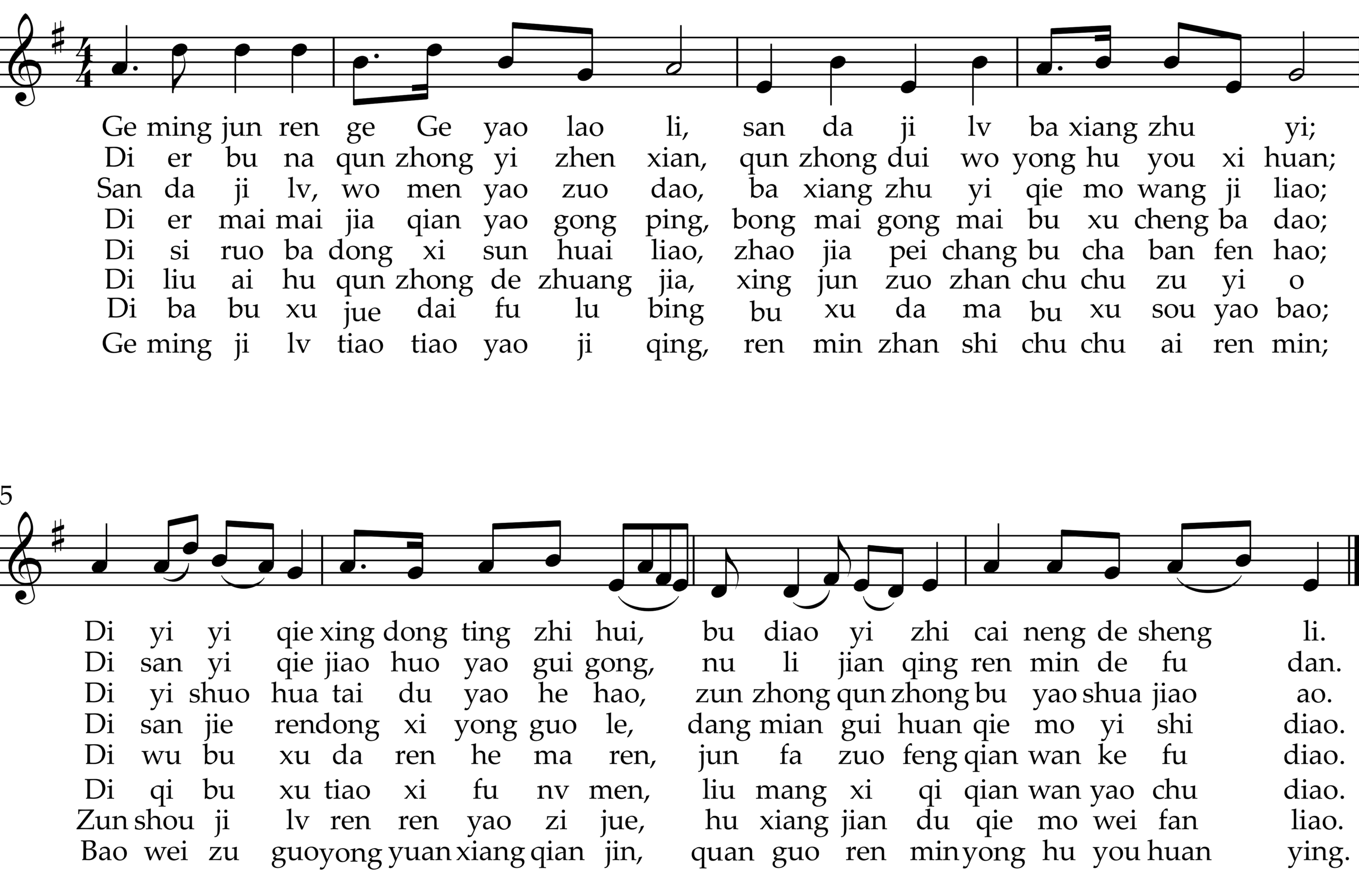
Music Example 1: Red Army Song: “Three Main Rules of Discipline and Eight Points for Attention”5
Translation of the lyrics:
-
As revolutionary soldiers we should remember
The three main rules of discipline and the eight points for attention.
First, obey orders in all your actions.
Only by matching our steps together can victory be achieved. -
Second, don’t take everything, even a needle or thread, from the masses.
The masses will like us and support us.
Third, we should turn in everything captured to the party and collective.
Make effort to lighten the burden of the people. -
Don’t forget the three rules of discipline.
Don’t forget the Eight Points for Attention.
First, we talk in a polite way,
Respect the masses, and arrogance is not allowed. -
Second, when buying and selling, do fair trades.
The price should be reasonable, and bullying tactics are not allowed.
Third, we should return the things we borrow in person.
Don’t forget them and don’t lose them. -
Fourth, if we break something of the people,
we should pay exactly the price for it.
Fifth, we should not beat people or swear at them.
Get over the warlord manner of behavior. -
Sixth, we should cherish of crops of the masses,
Don’t damage them when we march and in the midst of the battle.
Seventh, we should not flirt with women.
Get rid of the hooligan habit. -
Eighth, we should not abuse prisoners.
Don’t beat them, insult them or frisk them.
We should obey the rules of discipline conscientiously.
We mutually supervise each other to not violate them. -
Every rule of the revolutionary discipline should be remembered.
We are the people’s soldiers and we love the people.
We defend our motherland, and we are always progressing.
The people all over the country will support and welcome us.6
The “Three Main Rules of Discipline and Eight Points for Attention” (Sanda Jilv Baxiang Zhuyi) reflects characteristics shared by the earliest songs written by military propaganda officers in this period. They continue to circulate to this day and are preserved in publications and archives (see also Zhang Rong 2010). Their melodies were borrowed from European military marches in one-period or binary musical forms, or from local folk tunes familiar to the targeted audiences to attract attention. In the case of “Three Main Rules of Discipline and Eight Points for Attention,” the melody originated from the German military march “Der Präsentiermarsch Friedrich Wilhelms III.”
The transformation of the melody from musical parts of a German military march to a communist propaganda song was a long process. Right after China was defeated in the first Sino-Japanese War of 1894–1895, the Manchu-led Qing Dynasty government adopted the German mode of military training system to establish its first modernized ground force. They borrowed not only the drill routine but also marching songs. A German military instructor, whose name was not acknowledged in the historical records, introduced “Der Präsentiermarsch Friedrich Wilhelms III” to Chinese officials. Xu Shichang, a Han-Chinese literato-official who served as Chief of Staff at this newly founded army, replaced the original German lyrics with Chinese texts summarizing the drill routine to help the soldiers memorize the basic principles (Han 2021). The reworked songs were named “The Generalissimo’s Training Song” (Dashuai Lianbing Ge). After the Han-led forces overthrew the Qing dynasty, they maintained the German training system in their armies and the melodies of some effective miliary songs. The lyrics of “Der Präsentiermarsch Friedrich Wilhelms III” were replaced with new words around the mid-1920s to propagate the slogans and miliary rules of the Fengtian Warlords (Sun 1996). The miliary officers of the communist Red Army once borrowed the melody of this German military march to disseminate the core ideas of the land revolution and, in 1935, reworked the tune to convey the “Three Main Rules of Discipline and Eight Points for Attention” (Cheng 2007). The melody is characterized by simple but steady rhythms, with emphasized downbeats to aid foot movements and short, memorable melodic contours. Repeatedly used by different Chinese military forces, this melody demonstrated its effectiveness for easy recognition and its accessibility to people without musical skills. Communist miliary officers condensed the rules and points for attention into straightforward, catchy lyrics that aligned with this melody.
“Three Main Rules of Discipline and Eight Points for Attention” not only helped the communist soldiers to memorize the codes of conduct but also to showcase these soldiers’ disciplined manners in their daily activities, from “don’t flirt with people” to “don’t damage crops.” In addition to the lyrics, the visual imagery created by the coordinated marching of the soldiers also contributed to the success of this self-promotion. In summer 2016 in Jinzhai county, a region that served as the communist army’s main military base in the 1930s, I visited some folk singers to talk about local music traditions. During the interviews, some of them recounted a shared memory that they witnessed with their own eyes and ears or that were passed down in their families. They told me that in the mid and late 1930s, communist army soldiers routinely marched and sang “Three Main Rules of Discipline and Eight Points for Attention” on the main streets of their town or villages. An elderly lady retained a vivid memory about it: “I saw them at least once or twice a week when I helped my mother sell salted pork on the street market. Sometimes they were just a dozen of soldiers and sometimes it was the entire troop … they sang affably and marched in a neat way in one or two lines so as to not block the street” (interview conducted by the author, July 23, 2016, Jinzhai). For these locals, these reoccurring marches, always with the same song, gave them the first impression of these communist soldiers who had just begun to appear on their land and in their social lives. The performances of the song also reinforced their own observation that these army soldiers did not commit sexual harassment, occupy their homes, or beat the civilians. At the same time, the ruling Chinese Nationalist Party soldiers were accused in communist posters and slogans of committing all kinds of atrocities—allegations that were never substantiated, as the majority of the locals never claimed to have experienced these atrocities. The communist cause was thus advanced by combining fact and fiction.
“Three Main Rules of Discipline and Eight Points for Attention” was promoted as a red classic after the founding of the People’s Republic of China in 1949. After 1949, government and media discourses attributed the surrender of Japanese invaders to the leadership of Mao and the communist army (Reilly 2011; Kushner 2007). After peace and prosperity were restored, the communist regime sponsored performances of this and other wartime songs to remind citizens of its role in liberating the country from domestic oppression and foreign aggression (Zuo 2013; Werner 2012). At the 1984 Summer Olympics in Los Angeles, the Chinese delegation chose “Three Main Rules of Discipline and Eight Points for Attention” as its background music when they entered the opening ceremony. This song remains, to this day, frequently used as background music in China’s military parades and sports events.
Composed in 1942 in Yan’an, “East is Red” (Dongfang Hong) exemplifies another sort of self-promotion. The melody was borrowed from a local folk song called “White Horse Tune” (Bai Ma Diao, see also Yuan 2008; Hung 1996). The familiar tune attracted local people’s attention and carried the catchy lyrics:
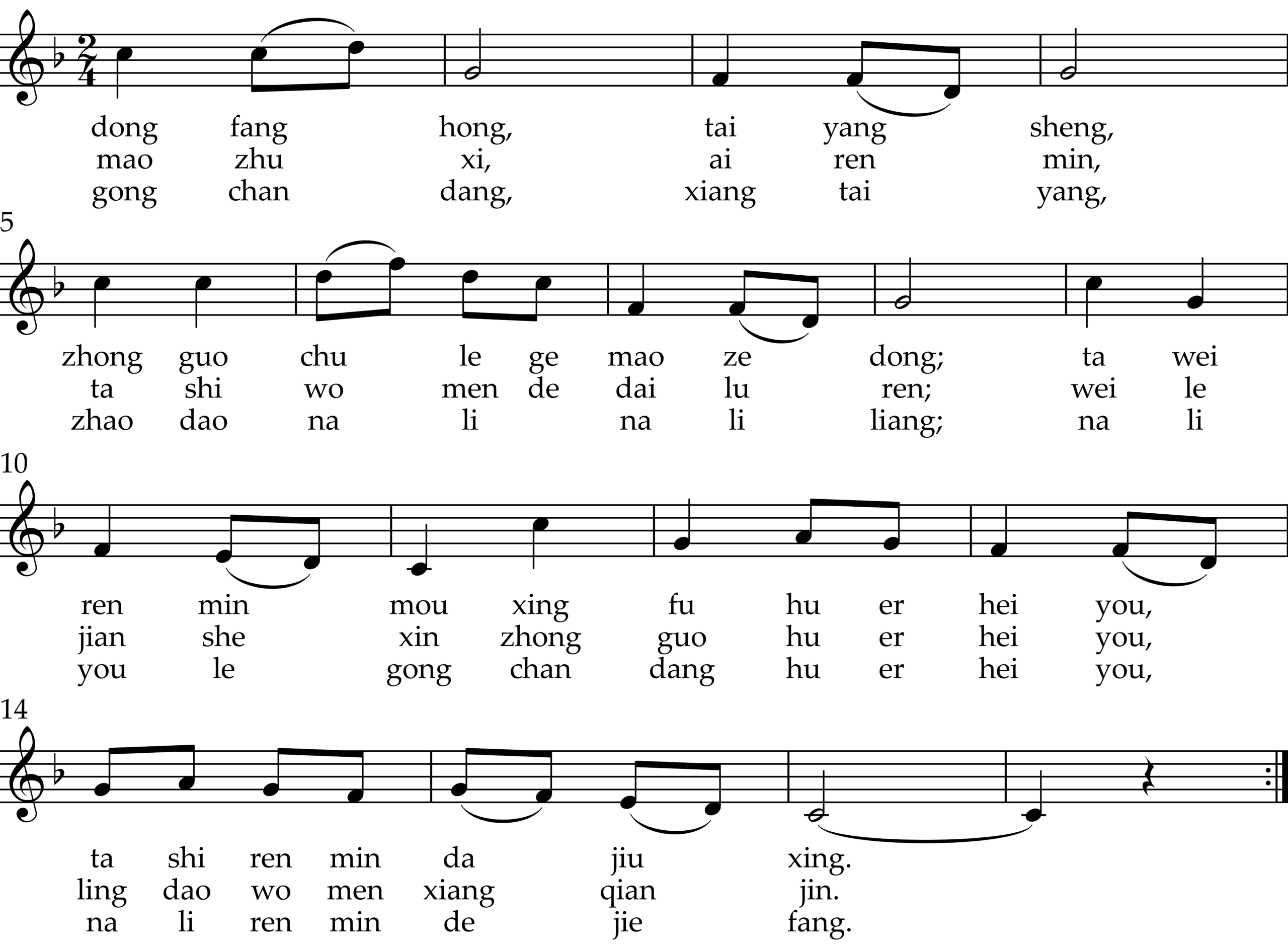
Music Example 2: Red Song Classics: “East Is Red”7
The East is Red,
The sun rises,
Mao Zedong is rising in China.
He is working hard for the people’s happiness,
He is our life saver …Chairman Mao
Loves the people.
He is the guide in our life
To construct a brand-new China,
He leads us going forward.The Communist Party is like our sun,
It shines everywhere and everywhere is bright.
Wherever the Communist Party is
Our people are liberated. 8
Rather than listing reasons for how the Communist Party and its leader would accelerate China’s social-cultural development, the song evokes a hope-inspiring image of dawn. The image became more convincing after listeners received the redistributed lands and properties confiscated from local landlords.
After 1949, state-sponsored performances of “East is Red” transformed from self-promotion to the portrayal of the people’s gratitude. On post-1949 mainstream concert and broadcast media stages, lyrics, facial expressions and bodily movements of singers and dancers, props and costumes, scenic designs and backdrops, and sound effects collectively contribute to this kind of portrayal. To celebrate the 15th anniversary of the founding of communist China, “East is Red” was developed into an eponymous “music and dance epic” (yinyue wudao shishi) (Chen 2024; Yang 2016). In the opening of the epic, in front of the rising sun projected as the backdrop on the stage, dancers waved yellow fans to form several large sunflowers while the choir praised Mao as the people’s savior. The performance of song was followed by a series of short dramatic episodes in which artists dressed as landlords or Japanese aggressors were defeated by dancers in communist army uniform and in which singers wearing standardized costumes of ethnic minorities sang about their happy new lives under a huge portrait of Mao.9
In the 2010s, these red song classics frequently reached the public at a wide range of state-sponsored musical activities, such as outdoor concerts at plazas and broadcast singing competitions. Some academic publications argue that the prevalence of these red classics in today’s China indicates “revolutionary nostalgia” (Li and Yan 2020: 508; see also Xiao 2017) among people who are dissatisfied with income inequality and unbalanced social development (Steen 2013). That said, I rarely saw migrant musicians voluntarily choose to perform these songs; instead, I observed that troupe directors, production teams of media shows, and concert organizers arranged them to sing or dance with these songs.
These performances take several forms. For example, “East is Red” was often rearranged for choral singing. In the summer of 2012 in Tianjin, I attended a Military-Civilian Joint Gala (Junmin Linhuan Wanhui) in which some members of the TEDA Worker Art Troupe and stationed garrison sang the song in chorus. Such choral performances were combined with visual theatrics boasting the country’s socio-economic developments and the people’s admiration and gratitude. In addition to the singers, these performances had dancers, elaborate stage settings, and videos and images projected on the backdrop. Meanwhile, the recordings of the instrumental version of “Three Main Rules of Discipline and Eight Points for Attention” were also played as sonic background before an organizer or invited government official customarily gave their opening speech to inspire the audience members. Besides, in Shenzhen city, whenever I passed by a public square located at the foot of Yangtai Mountain after dinner, I encountered a group of migrant workers from electronic factories who were organized by the Dalang Street Administrative Office to perform social dance as a form of entertainment and physical exercise. Their dancing was accompanied by a portable speaker provided by the Administrative Office that played the same compilation of red classics.
My interviews with migrant members of the state-sponsored troupes were always accompanied by staff members of the government departments. Therefore, I did not bother asking the migrants whether performing these red song classics helped them express their discontent against income inequality and unbalanced social development. However, based on my observations, during their many grueling rehearsals, a crew of directors, media directors, and journalists had to belabor them in order to extract a semblance of happiness and gratitude with the correct facial expressions, bodily movements and gestures, and passionate voices. The glorified pictures projected on the stage backdrops, the sunflowers and the red fans and flags were all supposed to be tokens of positivity. These performances and the playing of red classics reminded the people of the past merits and accomplishments of the communist regime and strengthened their faith in its current leadership. The well-rehearsed smiles, energetic gestures, and enthusiastic singing in the glorified portrayals of communist soldiers and leaders were supposed to represent the floating migrants and create the notion among local and national audiences that these migrants are grateful and happy with their current living conditions.
Songs Written to Give a Voice to Peasant Workers and Performances Designed to Represent Floating Migrants
They are a group of boys and girls in the prime of youth. Some of them just got off their shift from the assembly lines, and others just closed their working notebooks. Walking at a brisk pace, they gather at the base of Yangtai Mountain and embark on a long and hard artistic road.
A song, a dance, an aspiration and a good wish, they convey a lot of information. There are no flowers, but there are smiling faces of peasant workers. There is no salary, but there is the sincere applause of people.
In those evenings with a soft breeze, they are like spirits, sparkling with vigor and zest, active in industrial parks and residential enclaves. They are angels, giving people not only the artistic enjoyment but also the meditation on the meaning of life, social responsibility, and the seeds of civilization.
Excerpt from the preamble of the Anniversary Album of Yangtaishan Young Worker Art Ensemble
In modern China, the central government and its regional branches and agencies sponsor art troupes to serve as spokesmen for specific social groups recognized as important contributors to the country’s socio-economic development. In the early 2000s, China began improving its infrastructure and has made efforts to secure its position as the world’s top manufacturing economy. The state thus acknowledged the contribution of those floating migrants who worked on construction sites and in factories, referring to them as “peasant workers.” The state-sponsored migrant art troupes created and disseminated representations of this portion of the floating population, and commonly used “workers” in their names to advertise that these construction and factory workers are both their represented group and target audience. Although located in different parts of China, they follow the same basic guidelines: to encourage migrant workers to have “same-heart, same mind” to make selfless dedication and to provide positive, optimistic representations of their urban experiences without exposing the social inequality caused by biased policies (as stated in the preamble excerpts cited above). The performances of these migrant art troupes, as well as the songs composed for the migrant workers, targeted not only migrant workers but also the urban public. The images they supplied not only suggested role models for migrants to imitate, but also helped urbanites imagine migrants’ lives, thoughts, and feelings and form expectations about what migrants should do and how they should respond to the difficulties in their urban lives.
Professional composers affiliated with China’s art institutions were also assigned to compose songs for peasant workers. These songs were put at the top of the repertoires of the migrant art troupes. Written by Lan Yu and Wang Li in early 2006 for a small male chorus, “The Buddies Who Build Buildings” (Bailou De Gemener) is the first documented song for peasant workers.
I feel handsome as soon as I put on the safety helmet.
I get energy as soon as I climb up the scaffold.
Beads of sweat stand out on my face, from summer to winter.
My chest is buffeted by the wind and exposed to the sun.
Hey, our buddies who build buildings.
Cement mixers whirl our beautiful dream.
The arms of tower cranes wave the heroic ingredient in our body.
We go south, we go north, and we go outside of our hometown.
We gain knowledge, and we also gain skills.
We carry the words of our parents in our hearts.
And we have faith in the love of our wife.
Hey, our buddies who build buildings.
We are watching the cities getting more and more colorful and splendid.
And we hope that these buildings could also appear in our hometown.
Listen, the whistle is blown.
Look, the flag is waved,
The motor is sounding, and the electricity is sparkling
The buildings are built.10
Words such as “scaffold” or “tower cranes” were used to visualize the construction site, and “safety helmet” or “build buildings” captured the workers’ profession and identity. Beads of sweat and their wind-blown appearance made their burdensome workload clear. But these fictional characters conveyed feelings of being handsome and energetic, suggesting that they enjoyed their hard work as they made the city more beautiful. Although they had left their hometowns, the support of their families comforted their hearts. They blew the whistle and waved the flag, filling themselves with a heroic, sacrificial spirit to accomplish a dream not only about their own lives and hometowns but also about the future of the state. The optimistic portrayal was carried by the melody with march-like rhythms (see Music Example 3).

Music Example 3: Excerpt from the opening measures of the song “The Buddies Who Build Buildings.”11
A mix of eighth notes, quarter notes, and occasional dotted rhythms creates a feeling of marching forward. Short motives are repeated and developed throughout the song, making it more memorable for the targeted groups. In the refrain part of this song, the key signature changes from B♭ major to C major. After two bars of continuous 16th notes that created a sense of dynamic, rapid movement and a short descending motion, the stepwise descending line carried the proud statement “the building is built” to end the song (see Music Example 4).
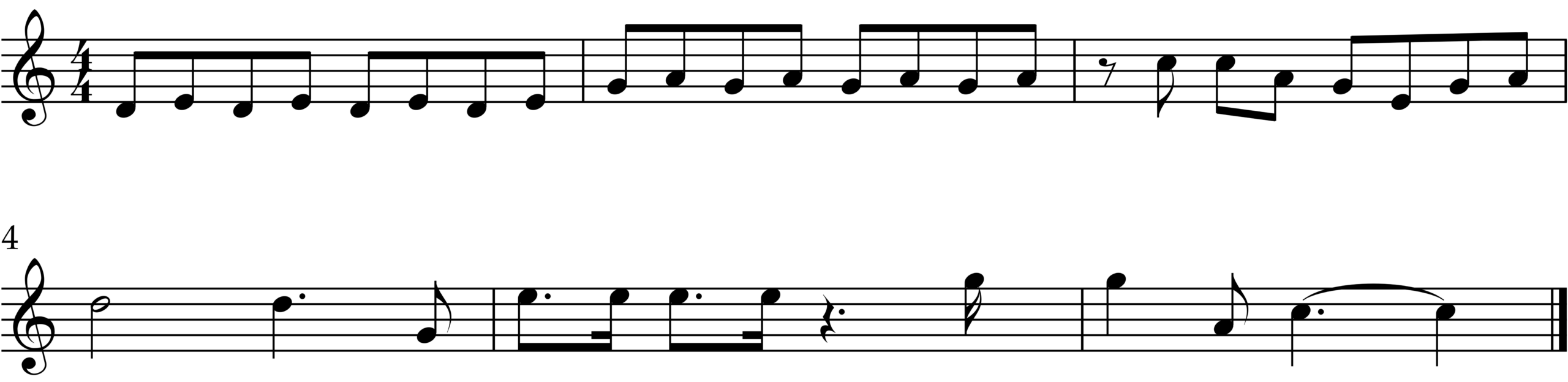
Music Example 4: Excerpt from the ending measures of “The Buddies Who Build Buildings”12
With its optimistic lyrics, upbeat melody, and performance by the peasant workers, this song provides normative images of “us” and exemplify the state-preferred way in which migrant workers should deal with hardships. The normative images are also designed to help urbanites, who generally do not have the occasion to get to know migrant workers, in understanding and forming expectations of their fellow citizens from this segment of the population.
“The Buddies who Build Buildings” premiered with the Yuhua troupe and became its first hit, drawing the troupe onto the mainstream stage. In the spring of 2012, I conducted a telephone interview with Fan Xiuju, a retired officer of the local Street Administrative Office and the founder of the Yuhua troupe, who kindly explained how the song attained its famous status. On September 18, 2007, Fan received a call from a director working for China Central TV Station. At that time, as Fan said, the Yuhua troupe was the first and only migrant art group in the country. The director told Fan that the television station was planning a concert gala dedicated to migrant construction workers on the Olympic stadium construction site, and that the gala would be broadcast to national audiences of millions. The director told Fan that they needed some migrant musicians to perform as representatives of the migrant musicians. Fan sent the director the existing repertoire and recordings of their previous performances. “The Buddies Who Build Buildings” was immediately selected, as Fan recalled (interview with the author, via telephone, April 12, 2012).
On a stage built on the construction site of an Olympic stadium, a number of male troupe members who were floating migrants (but not construction workers) had been selected to wear red safety helmets and sing “The Buddies Who Build Buildings” in front of the scaffolds. Their choral singing was accompanied by professional dancers from state-owned Beijing art institutions, likewise wearing safety helmets and overalls. Big images hung from the scaffolds on which the migrant construction workers were working with happy smiles. Together, these performers delivered the official representation of the migrant workers.
This performance was broadcast on CCTV Channel 7 and was favorably received by local and national audiences. The troupe became nationally famous. Later the same year, the Ministry of Propaganda granted the Wugeyigongcheng Award to the song for its distinguishing ability to motivate and educate people to join the socialist project (see also Jin 2008). The official nomination statement summarized the song’s merits as follows:
This is a mass song about the life of peasant workers. It represents the working enthusiasm of modern peasant workers, who positively and actively devote themselves to the construction of the cities, and their pursuit and yearning for a great life. The lyrics are austere, natural, energetic, and vibrant, and the melody has absorbed the rhythm of folk work songs and popular music. Filled with vigor, vitality, and youthful spirit, it has a distinct scent and characteristics of the new era.13
This and later migrant worker songs commonly portray fictional characters from a first-person perspective to serve as the voices of the migrant workers. Nonetheless, as my research suggested, they were written by professional composers who were not and had never been migrant workers. Another similar example is “Song of Peasant Workers” (Nongmingong Zhige), which was widely circulated on China’s televised Spring Festival Gala (celebrating the Chinese New Year) in 2008:14
My body is messy, and my face is dripping with sweat.
Chasing a dream, I venture into the urban world.
I used to be a peasant, but now I’m a worker.
I’m the new resident of this city, and I’m fired with tremendous enthusiasm.
Brothers and sisters, raise your chest.
Get through hardship and fearlessly face the wind and rain.
Believe in your own strength and believe in our future
Our life will finally be fabulous.
We polish the rainbow and twilight with our sweat.
Believe in your own strength and believe in our future.
Our life will finally be fabulous.15
Wang Xiaoling, a Major General in the Beijing Military Cultural Work Brigade, wrote the song lyrics. In the voice of a migrant representative, the general downplayed the migrants’ difficult social standing and poor living conditions, instead presenting an optimistic outlook for the future. The song attributes the migrants’ hardships to the natural environment and harsh weather rather than biased government policies or social systems. The heavy workload is depicted as a noble civic duty. Yin Qin, a military composer leading the Central Political Department Song and Dance Ensemble, composed the music with lively marching band rhythms to emphasize a dynamic and energetic image. On the stage of the Spring Festival Gala, the most-watched televised program in China, a Chinese movie star performed as the leading singer, and members of a migrant worker troupe constituted the chorus. Most of them were dressed as construction and factory workers, and a few wore other professional uniforms to acknowledge the social contributions of migrants working as security guards, chefs, and housemaids. With big smiles, passionate bodily movements, and the lyrics written in the style of self-expression, they delivered images of migrant workers’ willingly performing duties, facing challenges, and striving to accomplish the glorious socialist future. These features were manifested in many other migrant worker songs widely circulated through mainstream broadcast media and public concert stages I witnese, such as in “A Ballad of Work” which had these lyrics:
No matter who we are, no matter what we do,
We work hard.
No matter how cold the wind is and how hot the weather is,
We are happy.
It is hard to be away from hometowns, but a real man should venture out into a new world.
We believe our future is ahead.
I remember my father and mother, my good girl, and the new house in my dream.
I want to earn a good life and make it better and better.16
Although the meticulous instructions and strict supervision hindered artistic freedom and discouraged many migrant musicians from joining the state-sponsored troupes, some floating migrants were attracted by the privileged performance opportunities and media attention. In spring 2013, I received permission from the Culture Bureau of the Yuhua District, Shijiazhuang city, to interview some members of the peasant worker art troupe under their direction. Among them was Yin Dongjiang, a rural-to-urban migrant cooking dumplings for a living at the time (see Tang 2020: 196). “I inherited only two things from my parents: the skill of making good dumplings and a nice singing voice,” Yin said. “I use the former to earn money to feed my family, but becoming a singer, a star, is my life-long pursuit” (interview with the author, May 23, 2013). Meng Chao, an active member of the Shaanxi Dream Troupe, had a similar goal. “Since I was a little boy, I have been imagining myself standing on a beautiful stage with brilliant light, flowers, and loud applause,” Meng recalled (interview with the author, Xi’an, August 7, 2013). However, born in a small, isolated village, Meng didn’t have the chance to study music or perform until he moved to the city and was recruited by the Shaanxi Dream Troupe. Lu Meng, for his part, was a member of the TEDA Troupe and was from Henan Province. Several free public music classes held by the troupe convinced him to join them. He took two free vocal classes per week with a professional pop singer. “I never thought I could sing with such a charming voice,” Lu said, “That’s very cool” (interview with the author, Tianjin, December 18, 2012).
For some floating migrants, performing as members of state-sponsored art troupes eventually pays off. After successfully delivering the performance of “The Buddies Who Build Buildings” televised via the China Central Television Station, Yin Dongjiang was invited to sing on various television musical shows and national singing competitions to represent floating migrants. He was promoted as a grassroots star. Nonetheless, he continued to stay in close contact with the local culture bureau and remained on call whenever “representatives” for migrant workers were needed. He also continued to be required to follow the detailed instructions of production teams and concert organizers or risk being replaced by singers willing to comply in pursuit of stardom. Meng finally stood on his dream stage. In August 2013, I witnessed him delivering a speech at the beginning of a concert, in which he shared with the audience how he made his dream come true in the city. Lu Meng made rapid progress in his singing classes with tutor Guan and soon started singing solo songs at small-scale venues. He was commended as an “activist” (jiji fenzi) by his peer troupe members because he is usually very enthusiastic in the performances and talkative in troupe-arranged media interviews.
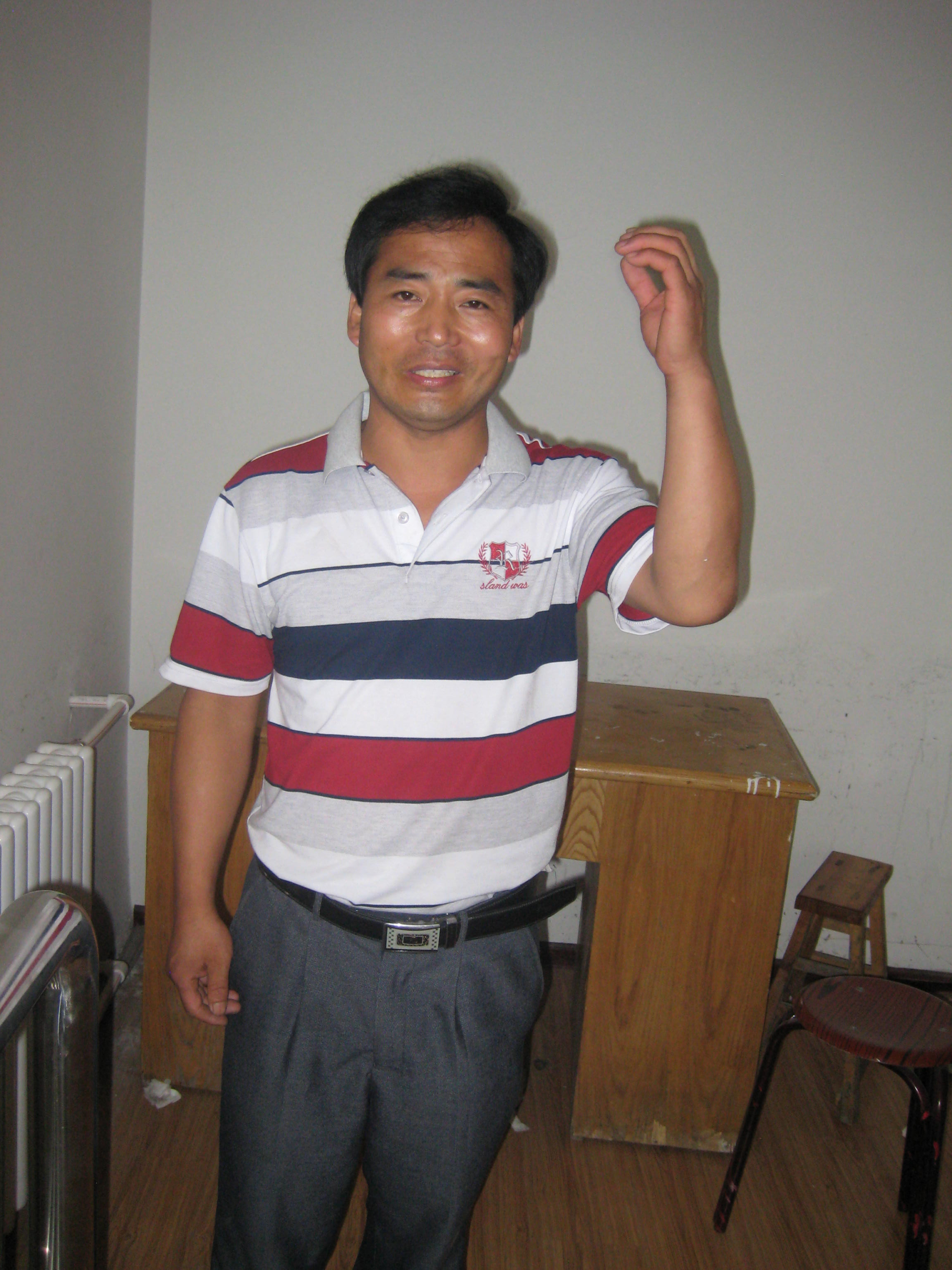
Figure 3: Yin Dongjiang performing “The Buddies Who Build Buildings” after an interview with the author. Photographed by the author on May 23, 2013.
However, not all members of these state-sponsored migrant art troupes were floating migrants. When there was a shortage of musicians with good musical skills, performing experience, and a desire to sing in a standard, positive voice, musicians outside of the migrant community were invited to join. Among these were He Haikuo of the Yuhua troupe and Huang Xianyu of the Shanxi Dream troupe, who were local urbanites born in the cities. They were professional singers who made money by performing at weddings and business openings and by hosting civilian ceremonial events in the cities. Although they performed for the troupes without monetary compensation, they gained visibility, which helped them attract clients for their other performances. At times, staffers of the government department supervising the migrant art troupes even took part in the performances, be it as backup dancers, instrumental accompanists, or solo singers. They usually did this when they had failed to recruit and retain enough migrant musicians. “Skilled at playing musical instruments, dancing, or singing” was an essential qualification listed on the announcements of vacancies in the TEDA Floating Population Management Office and the Dalang Street Administrative Office.
Legitimizing the Musical Representations: Images of Heroic Sacrifices and Habitual Sentiments about the Mother Country
Since the mid-twentieth century, “emotionally appealing” (ganren) and “lifelike” (shengdong) have been frequent terms in the directives based on which state-sponsored musicians and other cultural workers produce musical representations. In the speeches in which China’s supreme leaders pronounce the basic guidelines of music making or in the instructions from the ministries of the central government, we can always find these terms alongside the updated set of goal(s) that these artworks are supposed to achieve (e.g., Xi [2014] 2015; Hu 2006; Mao [1942] 1991). In the previous sections, I discussed how the performances of state-sponsored migrant art troupes generate lifelike images of migrant workers and their urban experiences and work attitudes. In this section, I will discuss how their performances evoked collective sentiments to justify the official representations and how they legitimatized the normative expectations that these disadvantaged migrants should remain grateful and contribute selflessly.
According to the central government’s directives and the detailed memorandums sent to troupe directors, musical representations of the migrants are intended to evoke emotions. However, while migrant workers may feel uplifted by these performances, the feeling is only temporary and not strong enough to make them forget the social inequality they experience or accept their disadvantaged situation. By the same token, these performances also fail to convince the urban public that the migrants are happy, grateful, and without complaints when subjected to such hard working environments and heavy workloads. I argue that the power of state-sponsored musical performances stems from its ability to conjure the deeply rooted collective sentiment about the mother country. A set of historically accumulated images of heroic deaths played an important role in the formation of that sentiment. Once the collective sentiment is aroused, the official representations of selfless dedication become more persuasive and convincing.
To illustrate my point, I present an example of the power of the collective sentiment around “mother country” (zuguo) (see Tang 2020: 201–202). In December 2016, during a speech at the University of Hong Kong, the Taiwanese essayist Lung Ying-tai asked the audience to identify “the song of enlightenment” in their lives. She said the song should “bear witness to history, honestly preserve a collective sentiment, and transcend time to touch individual hearts.” Albert Chau, the vice president of Hong Kong Baptist University sitting in the front row, responded, “It’s ‘My Mother Country’.” Slightly embarrassed or perhaps surprised by the response or the laughter it caused from the back of the hall, Lung asked, “How does that song go? Just sing me the first phrase.” Chau then sang the opening notes of “My Mother Country,” and gradually, more voices joined in—initially a dozen, then a hundred, and eventually half of the audience—collectively expressing their sentiment through song. The participants have been identified as being from mainland China, evidenced by their distinctly mainland Mandarin accents. 17 My personal experience indicates that these kinds of occurrences around the topic of the mother country are not unique cases but widespread, especially in mainland China. Over the past years, I also witnessed that the same questions recur across Chinese social media, such as: “Why do I always feel moved when I hear ‘I Love You China’?” “Why can I not hold back my tears whenever I hear ‘My Mother Country and I’?.”18 Incidentally, these same questions recurred frequently during my discussions about mass songs with my students in Beijing.
Mass songs about the mother country also featured prominently in the repertoires of the migrant art troupes I met with, although, as noted earlier, many of these songs were originally written for other social groups and only subsequently adopted and performed by the troupes as representations of the migrants. “My Mother Country Will Not Forget,” a song practiced by the Shaanxi Dream in the rehearsal described at the beginning of this chapter, was one of them. I witnessed how these songs brought out the habitual sentiments among the audience members, who may or may not have been migrant workers. Some interviewed migrants told me that these songs made it hard for them to complain about the difficulties they encountered in daily life. I argue that the state-sponsored musical practices translated patriotism into striking images of heroic sacrifices. Songs about the mother country and the performances of these songs evoked accumulated images and fused them with a deeply rooted sense of belonging to the ancestral land, nurturing the collective sentiments attached to the “mother country.” In the following part of this section, I will provide an elaborated discussion of this process.
State-sponsored musical practices not only take place at events that Chinese people can choose to attend or not. They are also part of the cultural and educational activities legally imposed on Chinese citizens. In 1986, China enacted the Compulsory Education Law which not only requires Chinese parents to send their children to elementary, middle, and high schools (mostly owned by the state), but also requires these schools to adhere to the uniform curriculum and course contents stipulated by the Ministry of Education. Thus, from the late 1980s to this day, Chinese children study with nationally standardized textbooks, including music textbooks. These music textbooks contain songs selected to educate and to influence, which helps Chinese citizens build a shared repertoire of emotionally appealing images.19
These songs translate patriotism into striking images of heroic sacrifice. In the music classes in China’s elementary schools, for example, children learn a nursery rhyme called “Erxiao, the Cowherd” (Gechang Erxiao Fangniulang). This song portrays a thirteen-year-old cowherd boy who lured the Japanese invaders into the ambush of communist guerrillas, but:
In rage, the enemy impales Erxiao on a bayonet.
His life spills on that big rock…
Our Wang Erxiao who was only thirteen years old,
Bravely sacrificed his life in the valley.
The communist officers and folks were kept safe,
But he slept in the cold mountains.
A smile was still on his face,
His blood reddens the brilliant blue sky…
Fang Bing wrote the lyrics of this song in the 1940s during World War II, inspired by a fictional story about a cowboy (Sun 2011). Li Jiefu, a communist composer, repeated a simple melody six times to tell the story of “Erxiao, the Cowherd” (see Music example 5). Since the early 1980s, this song has been included in China’s elementary school textbooks. In twenty-first-century China, third graders learn it from a textbook that not only provides the sheet music but also features illustrations depicting the scenes described in the song. In these drawings, the fictional cowherd boy stands bravely at the cliff’s edge, whip in hand, facing armed Japanese soldiers. His eyes show a determined readiness to face death without fear. The textbook encourages students to sing the song in chorus and aims to teach them to use “speed, dynamics, and singing styles” to convey emotions (see Fei and Du 2014: 28–29). This approach helps students express the appropriate emotions while singing, allowing them to personally feel the sadness, anger, and heroic sacrifice portrayed. Although the story and the heroic figure are fictional, they evoke genuine emotions associated with the song. On a YouTube page of this song, the comments, written in simplified Chinese (the written language created by the communist regime and used in mainland China) echo this sentiment: “Every time I hear the song, I cannot help but burst into tears.” “My childhood memory. Tears are in my eyes.” “Salute to every martyr who dedicates their life. The mother country will never forget you!”20
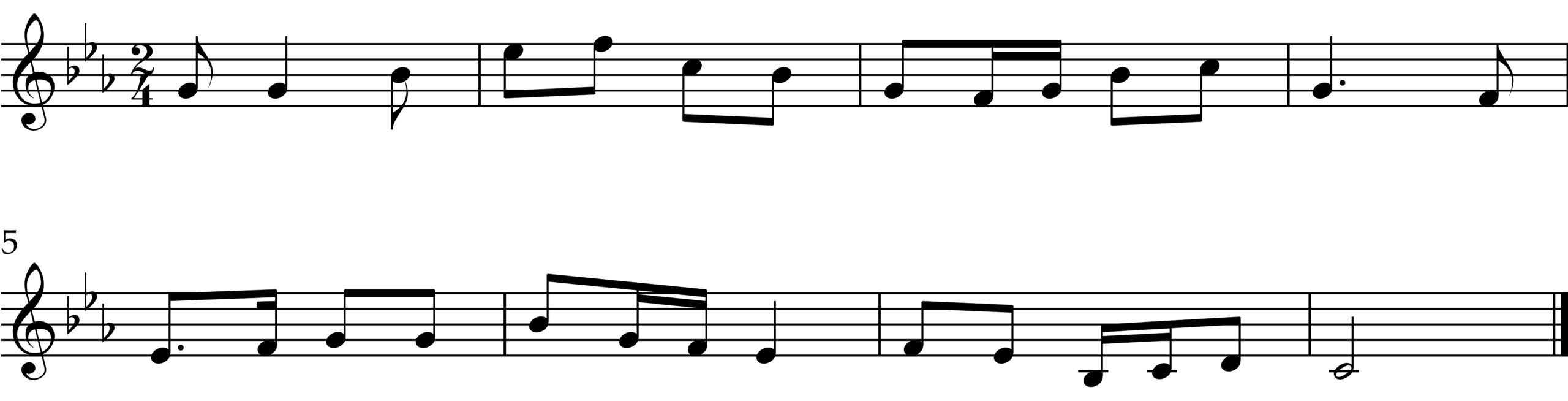
Music Example 5: The staff notation version of the nursery rhyme “Erxiao, the Cowherd,” included on page 29 of the textbook Music: Third Grade (Fei and Du 2014)
In communist China, these heroic sacrifices are portrayed not only in songs but also through diverse forms of musical drama. Sister Jiang (Jiang Jie) is an opera produced by a team led by Liu Yalou, a general of the Chinese Air Force, and was premiered in 1964. The opera depicted the experiences of communist activists imprisoned in a concentration camp operated by the Chinese Nationalist Party in early 1949, several months before the communist army defeated the Chinese Nationalist Party forces in the civil war. In 2007, China’s National Center for Performing Arts opened with a renewed version of Sister Jiang (Music Life 2007). According to the migrant workers I spoke with, however, the 1964 film version of Sister Jiang is still repeatedly broadcast on China Central Television Station to national audiences of millions.21
For many floating migrants I worked with, this same opera went by the name of “Embroidering the Red Flag” (Xiu Hongqi). The name denotes both the opera’s most celebrated aria, which is included in the textbook for seventh graders, and a ritualistic practice derived from that aria’s scene. In the seventh act of the aria, after another day of interrogation, several female communists realized that they would soon be executed and might not get to see the founding of communist China. They then endeavored to create a Five-starred Red Flag with their own hands, which would soon become the national emblem of communist China. They embroidered golden stars on an enormous, bright red flag that was unfurled and brightened the dark cell. The Sister Jiang aria followed, completing the portrayal in rich lyrical detail with a grand Western-style orchestral accompaniment:
The threads are long
The stitches are dense
Eyes are brimming with hot tears while embroidering the red flag
Hot tears follow needles and threads, more of contentment than sorrow …
In the 2010s, this aria was a frequent feature in state-sponsored musical activities. In addition to the public concerts freely accessible to all villagers when they were young and music classes in the elementary and middle schools of their rural hometowns, floating migrants were shown representations of heroic sacrifice through a variety of musical performances arranged by urban authorities. In August 2012, to celebrate China’s 18th National Congress, the propaganda bureau of Tianjin City coordinated a city-wide event where thousands of migrant workers, school children, and some urbanites gathered to embroider Five-starred Red Flags, with the aria from Sister Jiang playing in the background. This too allowed the migrants and urbanites to experience the fictional as their reality. The photographs of this activity, disseminated through print and media, also helped national and regional viewers and readers imagine the urban life, experience, and thoughts of the floating migrants.
While state-sponsored patriotic compositions generated images of courageous death, the songs about the “mother country” linked natural landscape to the heroic sacrifices and the regime’s past achievements. “My Mother Country” (Wode Zuguo) is the song known for bearing the collective memory and that initiated the improvised chorus at Lung Ying-tai’s Hong Kong lecture. It is also the theme song of Triangle Hill (Shang Ganling), a drama film about China’s victory in the Battle of Triangle Hill during the Korean War. In the official, media, and public discourses of mainland China and in this movie, the Chinese army’s intervention in the Korean War is explained as a noble, justified enterprise. Referred to as “kangmei yuanchao,” the purported aim of the intervention was to assist Korea resist American aggressors, which would ultimately serve to defend China (Zhang 1995: 298, see also Lee2013 and Stueck 2004). In Triangle Hill produced in 1956, this song appeared in a scene in which wounded and weary communist soldiers were trapped in a tunnel after the Chinese forces suffered heavy casualties. While taking care of these wounded soldiers, a young, female army nurse sang a solo verse to begin the song. Her soft voice carried the folk-like melody to depict a typical natural scenery of China:
A wide river rolls its calm waves
The wind blows through paddy flowers, bringing the fragrance to the shores
My family lives by the river
Boat songs flow into my ears and white sails delight my eyes
In the film, this soothing verse immediately galvanized the soldiers, who then chimed in with a dynamic, mixed chorus characterized by prolonged upward leaps:
This is my powerful mother country, where I was born and raised
On this warm land, peaceful sunshine fills every corner22
Born in China, I watched this song repeatedly televised on the central and regional channels. It was often synchronized with other selected scenes from the movie. I still remember one vividly: Under intense enemy fire, a Chinese army solider thrusts a Bangalore torpedo into the firing slit of a vessel held by American forces and blocks the opening with his chest until the wave of detonations turns everything into ashes. In the Yangtaishan Troupe’s 2012 rendition of “My Mother Country,” this scene was reconstructed by the background dancers.
In concert performances of songs about the “mother country,” state-sponsored troupes nurture certain modes of thought and feelings by combining images of heroic sacrifices, the regime’s past achievements, happy and grateful Chinese citizens, and landscapes of the mother country. The TEDA troupe’s performances of “Ode to the Mother Country” (gechang zuguo) in an Evening Show in December 2012 serves as a typical example. While the members of the choir sang “This vast and beautiful land, is our beloved hometown,” photos of natural scenery of mountains and wide rivers were projected on the backdrop behind them. The photos of armed soldiers standing on an aircraft carrier, the successful testing of a nuclear weapon, and Olympic medalists were projected to illustrate the verse “We heroic people have stood up. We unite and fight as tough as steel.” Wearing the standard attire of migrant workers, singers proudly repeated: “We sing about our dear mother country, and we are walking toward prosperity.” At the same time, an image of an expansive city skyline emerged behind them, and backup dancers crouched down in front of them, waving red flags and yellow stars.
Months after the Hong Kong lecture and the “My Mother Country” incident, Lung Ying-tai’s opinion piece appeared in Initium Media. She writes, “Sometimes, a wide river is just a wide river, and paddy fields are just paddy fields” (Lung 2016). Yet, after decades of compulsory education and both passive experiences and active participation in state-sponsored musical activities, the images of rivers, fields, and mountains in music have evolved. They no longer simply evoke a natural affection for the homeland. Instead, they serve as indexical signs that summon the collective memories of a thirteen-year-old cowherd skewered by Japanese bayonets, a soldier shielding a machine gun slit from enemy fire, the rapidly developing urban landscape, the Five-starred Flag rising behind Olympic medalists, grandiose National Day military parades, and more. The emotional responses—gratitude, pride, hope, and reverence—coalesce into a powerful, enduring collective sentiment that feels inherently undeniable. This collective feeling is closely tied to songs, rivers, and the phrase “mother country” (see Tang 2020: 204–205).
In the 2010s, the performances of state-sponsored migrant art troupes not only contributed to that collective sentiment but also evoked it to legitimize their representations of migrant workers. Mother country-themed songs in their repertoires were performed not only to encourage the selfless dedication of the migrant workers but also to justify the social exclusion of the floating migrants and the public ignorance of their sufferings:
In the long river of the glorious cause,
The one who strives restlessly is me.
You don’t need to recognize me,
You don’t need to know me.
I melt my youth,
Into mountains and rivers of the Mother Country
Mountains recognize me
Rivers know me.
Mother country will not, will not forget me.
The above song, named “Mother Country Will Not Forget” (Zuguo Buhui Wangji), was written by Zhang Yuehan and Cao Jin in 1993 to represent the aerospace engineers and to praise their quiet dedication. This song was assigned to the Shaanxi Dream Art Troupe to perform at a choral contest where they received the privilege to enter directly into the televised final competition (see Figure 2). The field journal excerpt that opened this chapter describes the troupe’s rehearsal of this song for the competition. Following the instructions listed on the memorandum, these members appeared on the stage wearing the usual attire of construction and factory workers and sang the song with rehearsed smiles and energetic bodily movements and passionate voices. Their singing was preceded by a narrative of a fictional story about a migrant worker realizing his lofty dream in the city. On the LED video walls behind them, different urban groups were diligently fulfilling their assigned social roles, and rivers, mountains, and cityscapes were vibrant and majestic.
People typically accept as real the object that an indexical sign brings to mind, as Turino (2008: 9) points out, for it is part of their own experience. These official representations not only influenced the opinions of the urban majority but also some floating migrants. In the afternoon of August 3, 2025, I conducted group interviews with members of Shaanxi Dream Troupe after the rehearsal described at the beginning of this chapter. The troupe’s director participated in the interviews, which might have affected the migrants’ expressions of opinion. Some of them told me that they were touched by the song “My Mother Country Will Not Forget.” Some of them said that they did not mind making selfless contributions without rewards, because they saw themselves as indebted to communist forerunners who sacrificed their lives to protect the country from foreign threats. “Our current life is much better than 60 years ago. Why should I complain?” Jiang Chao said. “The social development needs time and no country is perfect. I believe that our lives will be improved in the near future,” added Meng Chao (interview with the author, Xi’an, August 3, 2013).
Endnotes
-
A Children and Youth Palace (Shaonian Gong) was a communist public cultural program introduced in the 1950s, when theaters, concert and dance halls were regarded as capitalistic and a relic of the past. It served as a place for Chinese people to learn music and to rehearse for various state-sponsored music performances.↩︎
-
Quoted from the field journal of the author taken on August 3, 2013, in Xian, Shaanxi Province.↩︎
-
The Chinese Nationalist Party (Kuomintang or KMT) was the ruling party in China from 1927 to 1946. It established the first republic regime after overthrowing the Qing Empire but retreated to Taiwan after losing mainland China in the civil war.↩︎
-
“Revolutionary base areas” (geming genju di) was a term that appeared in the 1930s and continued to be used after the establishment of the People’s Republic of China. It refers specifically to the areas (usually rural regions) in which revolutionary armed forces (i.e., communist military), revolutionary regime, revolutionary mass organization, and revolutionary party (i.e., the Communist Party which controlled the first three), legally and publicly existed.↩︎
-
This music example is transcribed by the author from the vinyl record East is Red released by China Record Group in 1965.↩︎
-
The score and lyrics were translated from a flyer printed around 1942 and preserved in Shanxi Provincial Library. It can also be seen in Guoji Ge Sanda Jilv Baxiang Zhuyi [Internationale and Three Main Rules of Discipline and The Eight Points for Attention] (Shanghai: Shanghai People’s Press, 1971), 5.↩︎
-
This music example was transcribed by the author from the vinyl record East is Red released by China Record Group in 1965.↩︎
-
See https://www.youtube.com/watch?v=Is_t3EjGL9k for a YouTube video of “East is Red” (accessed on August 11, 2026).↩︎
-
See https://www.youtube.com/watch?v=lG0hUNTlxPY for a video recording of the epic (accessed on August 11, 2026).↩︎
-
The lyrics were transcribed by the author from the recording of the Yuhua troupe’s performance of “The Buddies Who Build Buildings.” See https://haokan.baidu.com/v?pd=wisenatural&vid=9284561564891288879 for the recorded and uploaded video (accessed on August 11, 2026).↩︎
-
This musical example was transcribed by the author from the recording of the Yuhua troupe’s performance of “The Buddies Who Build Buildings.” See https://haokan.baidu.com/v?pd=wisenatural&vid=9284561564891288879 for the recorded and uploaded video(accessed on August 11, 2026).↩︎
-
Ibid.↩︎
-
See https://www.cflac.org.cn/zt/2007-10/08/content_11338029.htm (accessed on August 6, 2026) for the nomination statement.↩︎
-
See http://tv.cctv.com/2012/12/16/VIDE1355603022270674.shtml (accessed August 6, 2026) for a broadcast version of the performance. For a discussion, see Tang 2020: 200–201.↩︎
-
The lyrics were transcribed by the author from the recording of her interviews with migrant singer Yin Dongjiang on March 23 and 24, 2013.↩︎
-
“A Ballad of Work” (Dagong Yao), composed by Xiaoming Song and Jiayi Wu in 2009.↩︎
-
See https://www.youtube.com/watch?v=6_8jfeQmTgI (accessed August 11, 2026) for an edited video of the speech.↩︎
-
See https://www.zhihu.com/question/319471422/answer/3079267940 (accessed August 11, 2026) for an example of how such questions are discussed on Chinese social media.↩︎
-
See Ho (2025) and Brand (2003) for a discussion concerning how a shared repertoire has been constructed in China’s classroom.↩︎
-
See https://www.youtube.com/watch?v=s_NV4kaGBd0&list=RDs_NV4kaGBd0&start_radio=1 for the YouTube video and comments (accessed on August 11, 2026).↩︎
-
See https://tv.cctv.cn/2010/07/05/VIDEE88vgVPUUn3MmxqpwQcA100705.shtml for the broadcasted video of the opera (accessed on August 11, 2026).↩︎
-
Translation by the author.
See https://www.youtube.com/watch?v=RB3abtW9qrc&list=RDRB3abtW9qrc&start_radio=1 for a video excerpt of the film (accessed on August 11, 2026). The scene starts at 55:33 in the movie.↩︎