The fact that cultural and above all musical diversity have (and indeed must have) an established place at our university is what this issue’s Special serves to highlight.
The introduction of the Master of Arts in Ethnomusicology at the mdw in October 2019 brought initially subtle but steadily building change to our institution that has, in fact, ended up being quite broad-based. For the first time in the mdw’s 200-year history, it became possible to study styles of music and dance that had previously lacked any representation in an academic context, doing so via both research-based exploration and artistic practice.
With its international symposium “Between Research and Activism: Futures of Music and Minority Studies”, scheduled to take place from 12 to 14 February 2026, the Music and Minorities Research Center (MMRC) will be ushering in a new phase of its existence. As part of this, the MMRC—founded in 2019 to pursue research on music and minorities—plans to celebrate its initial seven years.
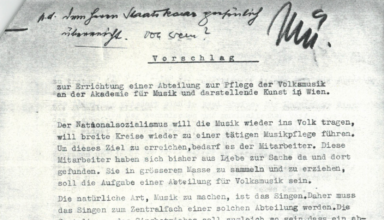
The mdw’s Department of Folk Music Research and Ethnomusicology, which is Austria’s largest place of research and teaching in its field, has existed at the mdw for 60 years. It’s hence no wonder that the department’s history is commonly viewed as having begun in 1965. However, folk music as well as research on folk music had been present here long before.
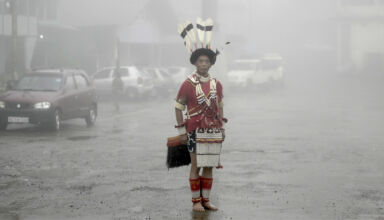
The Music and Minorities Research Center of the University of Music and Performing Arts Vienna is currently hosting the research project “Sounds of Trauma: Naga Song Responses to Political Conflict” led by Christian Poske and funded by an ESPRIT research grant of the Austrian Science Fund. It began in August 2024 and is slated to run through July 2027.
This issue’s Special reveals just how important—and experientially rich—the mdw’s diverse international activities are. We introduce you to the wide breadth of opportunities that mdw students, faculty, and administrative employees enjoy when it comes to international visits and how such instances of mobility end up leading to long-term projects time and time again.
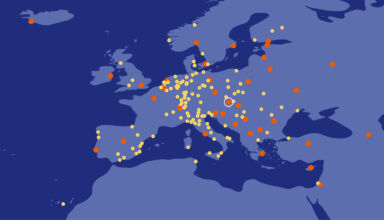
The mdw is internationally and globally networked, with students from over 70 nations and some 190 partner universities from every continent. This vibrant exchange benefits students, teachers, and administrative staff who travel to our partner institutions or come from them to the mdw.
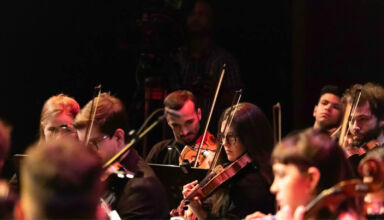
For many years, now, isa – the International Summer Academy of the mdw has been viewed as one of the most prestigious summer courses for up-and-coming talents hailing from all over the world. This year’s inaugural Viennese edition of isa took place at the innovative mdw Campus, where young musicians came together in order to hone their abilities, network internationally, and expand their artistic horizons in high-intensity master class sessions, workshops, and concerts.
Diplomatic relations between Austria and Tunisia have already existed for 300 years, and the signing of the cooperation agreement between the mdw and Fondation Hasdrubal in 2023 made a strong contribution to these relations’ reinforcement and to the continuation of an important (inter)cultural dialogue.