Wie zeigt sich das eigentlich Künstlerische im Musizierunterricht – und wie lässt sich darüber sprechen? Diese Fragen standen im Mittelpunkt des institutsübergreifenden Workshops Instrumental-/Vokaldidaktik künstlerisch befragt, der am 16. Mai 2025 vom Fachbereich Instrumental(Gesangs)pädagogik (IGP) veranstaltet wurde. Rund 60 Teilnehmer_innen – größtenteils Studierende der Instrumental- und Gesangspädagogik – nahmen teil. Ergänzt wurde die Runde durch Lehrende musikpädagogischer Fachinstitute sowie externe Gäste.
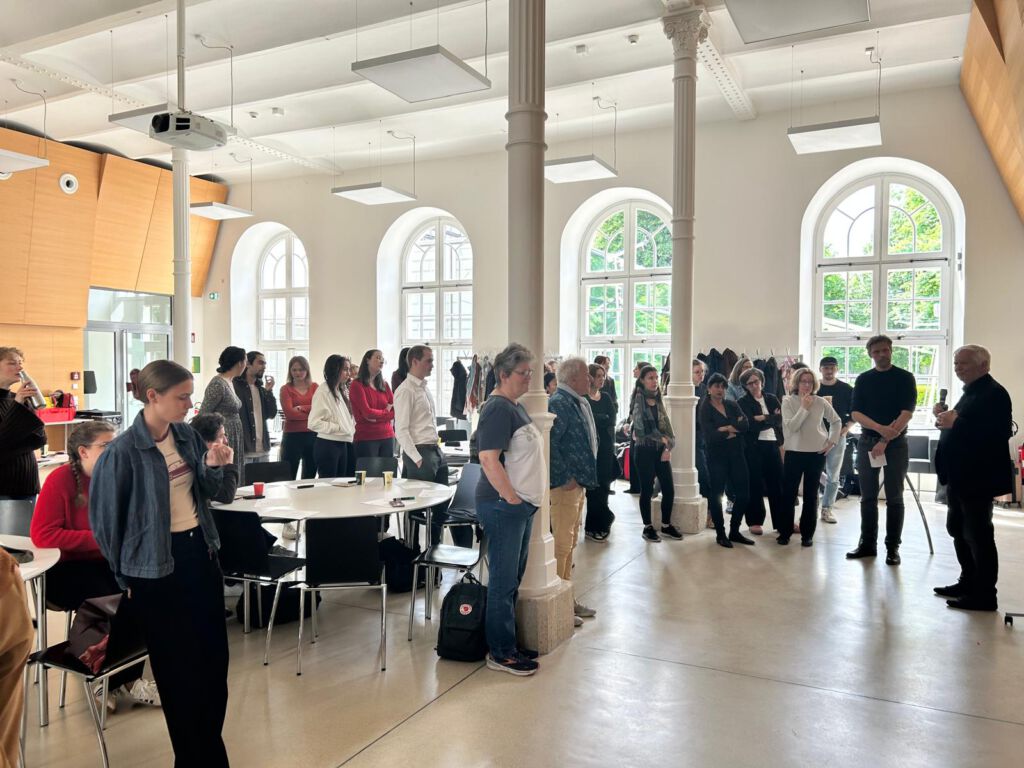
Nach einem gemeinsamen Auftakt diskutierten die Teilnehmer_innen über eigene Erfahrungen mit künstlerischen Momenten im Unterricht. Als gemeinsamer Bezugspunkt und Impulsgeber diente der neu erschienene Sammelband Instrumentaldidaktik künstlerisch gedacht, herausgegeben von Hannah Lindmaier und Peter Röbke. Der Band führt aktuelle Diskussionslinien innerhalb der allgemeinen Instrumentaldidaktik zusammen und erweitert sie um unterschiedliche Perspektiven. Ein gemeinsamer Fixpunkt der versammelten Beiträge ist der Fokus auf Augenblicke, in denen es „ernst“ wird – im Sinne einer Verdichtung, die intensive musikalisch-ästhetische Erfahrungen ermöglicht. Doch was genau macht solche Momente aus? Und wie lassen sie sich didaktisch anregen, ohne sie erzwingen zu wollen?
Diese Fragen bildeten den Ausgangspunkt für Gespräche, in denen persönliche Erfahrungen, didaktische Überlegungen, künstlerische sowie forschungsbezogene Perspektiven miteinander in Verbindung gebracht wurden. Zur Sprache kamen unter anderem folgende Aspekte: das In-Resonanz-Treten mit dem Gegenüber oder der Musik selbst; das bewusste Ausdehnen eigener Grenzen, um tiefer in die Musik einzutauchen; das Erleben eines plötzlichen musikalischen Flusses, der durch das Loslassen von Kontrolle ermöglicht wird; die Bereitschaft, volles Risiko einzugehen; das Wechselspiel zwischen spielerischem Tun und reflexivem Lernen. Solche Momente, in denen sich Musizierende zugleich präsent und gestalterisch wirksam erleben, wurden von vielen als zentral für eine künstlerisch verstandene Instrumentalpädagogik benannt.
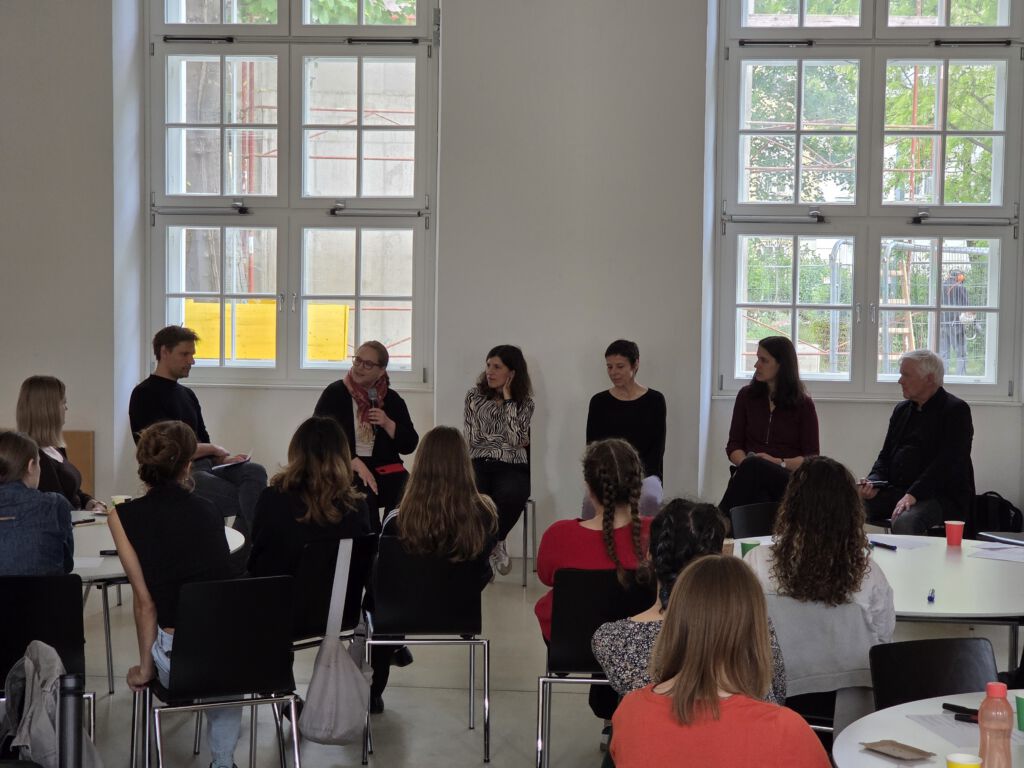
Die einzelnen Diskussionsgruppen wurden von Cecilia Björk und Ivanka Muncan, Michael Göllner, Hannah Lindmaier, Judith McGregor, Benedikt Plößnig und Peter Röbke moderiert.
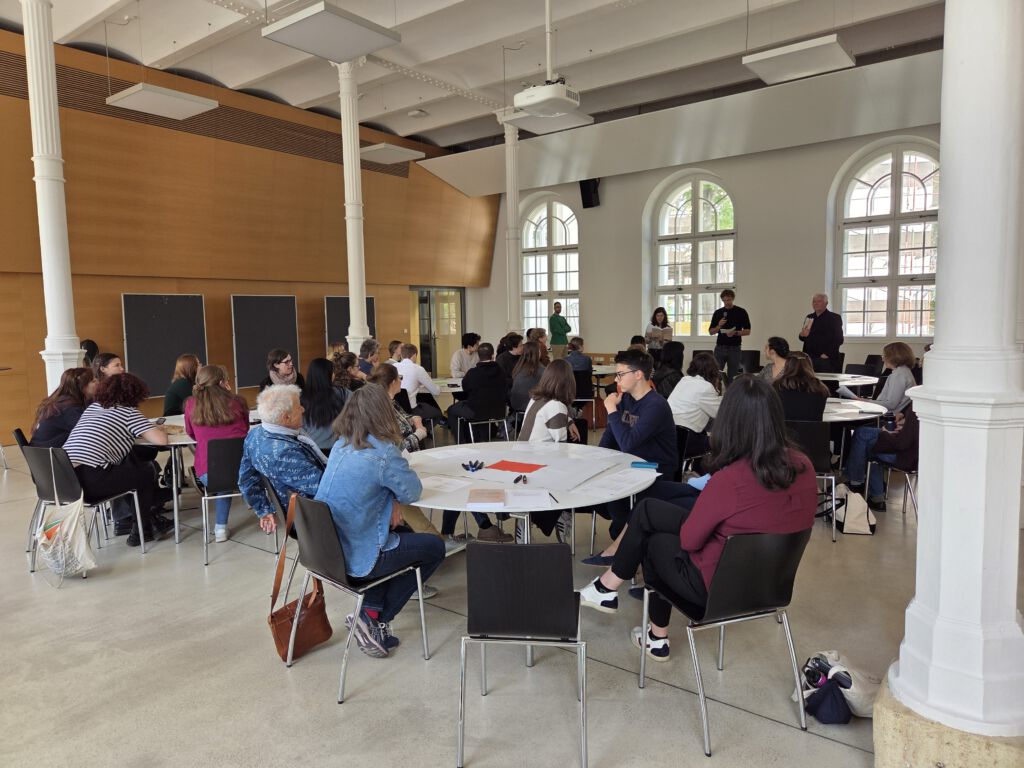
Mit dem Ziel, den Diskurs im Dialog mit den instrumental-/vokalspezifischen Didaktiken weiterzuführen, kamen anschließend Lehrende aus unterschiedlichen instrumentalpädagogischen Arbeits- und Berufsfeldern in einer Podiumsdiskussion miteinander ins Gespräch. Neben den beiden Herausgeber_innen nahmen Elisabeth Aigner-Monarth (Ludwig van Beethoven Institut für Klavier in der Musikpädagogik), Anna Guggenberger (Franz Schubert Institut für Blas- und Schlaginstrumente in der Musikpädagogik), Michael Göllner (Institut für musikpädagogische Forschung und Praxis) und Isabel Schneider (Alma Rosé Institut für Streichinstrumente, Gitarre und Harfe in der Musikpädagogik) teil.
Die Diskussion verdeutlichte: Ob im universitären Unterricht, an Musikschulen oder in sozialen Musikprojekten wie Superar – künstlerische Momente sind kein Zusatz, sondern Keimzelle und Ziel musikalischer Bildung gleichermaßen. Der Workshop bot wertvolle Impulse für eine Musizierpädagogik, die die Sphäre zwischen dem Künstlerischen und dem Unterrichtlichen als grundlegend interdependent begreift.
Zudem wurde deutlich, wie viel Potenzial im Austausch unterschiedlicher musizierdidaktischer Perspektiven liegt. Das gemeinsame Interesse an der Anbahnung künstlerischer Prozesse, ästhetischer Wahrnehmungen und intensiver Musiziererfahrungen kann dabei einen tragfähigen Nenner für eine reflektierte und lebendige Unterrichtspraxis bilden. Die Veranstaltung brachte Studierende, Lehrende aus der Fach- und allgemeinen Didaktik sowie Praktiker_innen aus dem Berufsfeld in einen vielschichtigen Austausch. Besonders positiv hervorgehoben wurde von den teilnehmenden Studierenden die Vielfalt der Perspektiven, die durch die Zusammensetzung der Beteiligten ermöglicht wurde.