“These days, when I look back, I sometimes ask myself where I got the self-confidence to go out into the big wide world,” says Anke Schad-Spindler with a laugh. Now general manager and scholarly head of EDUCULT as well as a freelance businesswoman, this mdw alumna studied in Germany, Italy, England, and Austria—and her dissertation on cultural governance was awarded a state prize by what was then Austria’s Federal Ministry of Education, Science and Research. “I was the first person in my family to have studied at a university. Growing up, my education was a huge priority for my parents and received an accordingly great amount of attention. And they made it possible for me to pursue everything I was interested in,” remembers the present-day university lecturer. In Germany, she attended a classically oriented Gymnasium and had the opportunity to take art as a major subject during her upper secondary-level years. “We did studio work in small groups. That was a very creative period, and I’m immensely grateful to have experienced it.”
As a child, I was a bookworm and read everything I could get my hands on.
Schad-Spindler launched her academic career at the University of Augsburg. She combined studies in cultural history there with an Erasmus stay at the University of Pisa, and it was while doing a master’s degree in European Cultural Policy and Management at the University of Warwick in the UK that the young academic ultimately found her present calling. In order to afford the high tuition payments there, the budding scholar spent a year working various jobs. 2006 then saw her accept a position as a research associate at the independent research institute EDUCULT, which is focused on culture, education, and mediation. “I was given a lot of responsibility right from the start and was able to make contacts quickly. It was challenging, but I also learned a lot.” After around six years, Schad-Spindler felt an urge to move forward in a scholarly sense and decided to enter the Cultural Institutions Studies programme at the mdw.

An aspiration of ours in pursuing research is to always simultaneously think about mediation as well as involve clients and participants in the projects themselves.
In the mdw’s Tasos Zembylas, she found a PhD advisor who opened up new horizons for her and showed her how one might take cultural policy research further, adding depth and methodological refinement. And in her second advisor, Monika Mokre of the Austrian Academy of Sciences, she had a likewise-empowering supporter. “Thanks to these two advisors, I came through that strenuous and stressful phase quite well. Having this network—and, especially, the support they provided—meant a lot to me.” Her doctoral studies entailed a break in her professional career. Schad-Spindler’s daughter was four years old when she began working on her PhD, and it was often difficult for her—as a single mother—to combine her studies and paid work. However, educational leave and a merit-based scholarship from the mdw helped her to focus on her doctorate. Then, shortly after defending her dissertation in November 2017, a son was born to her and her new partner. As a highly qualified scholar but also a mother, she would have had difficulty gaining a foothold in the postdoctoral realm—for which reason she decided to become a freelancer. “Former clients had asked me whether I’d also be interested in working on a freelance basis, which was what inspired me to start my own research enterprise.” When the mdw alumna returned to EDUCULT in 2024 as its general manager, the organisation’s themes and projects had changed quite a bit—especially in terms of their magnitude. The present-day emphasis there lies in conducting impact studies concerning specific programmes and projects, international cultural work in contexts characterised by conflict, and cultural policy and the cultivation of democracy. “The task we take on in our applied research is to find suitable methods that go well with the cultural and educational realm and its specific characteristics. We want our recommendations to be useable and relevant to actual practice, since we’re often asked to get involved in cases where ongoing programmes could stand to be commensurately changed and/or adapted.” It’s especially important, she says, that the clients themselves be involved in the projects and that discipline-appropriate but understandable language be used. As far as conveying such research to others goes, Schad-Spindler sees still more developmental possibilities—like employing various media or data-based storytelling. “It’s important to remain open to new methods, whether in data-gathering, data analysis, or the presentation of findings. Routines and standards are an important foundation but should still leave space open for creative ideas.”
I want to introduce young people to research and help them realise how fun it can be.
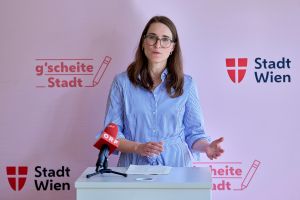
As an experienced researcher and general manager, Anke Schad-Spindler is not only active in expert bodies such as the Austrian Commission for UNESCO but also passes on her knowledge to younger generations. In her capacity as a lecturer, she has been leading a module on the topic of audience research at the mdw’s Department of Cultural Management since 2023. In doing so, she strives to encourage students to pursue their own research and thereby overcome their inhibitions. “One student had patrons of an art house cinema keep research diaries. The information she gleaned from those then helped her create recommendations for that venue,” she says enthusiastically about one of the many intriguing projects. “It’s important to me to support students as they develop their own ideas and projects, accompanying them without interfering. When I’m needed, I’m there—but they do need the opportunity to acquire experience of their own.”