Magdalena Severin’s final lesson of the day has just ended, and her students are still leaving the classroom as she sits down to talk with mdw Magazine. Here at the Döblinger Gymnasium (BG19), an academic secondary school, she’s now spending Monday through Thursday teaching students of various ages. Originally hired to teach music here, she recently added German—her second teaching subject.
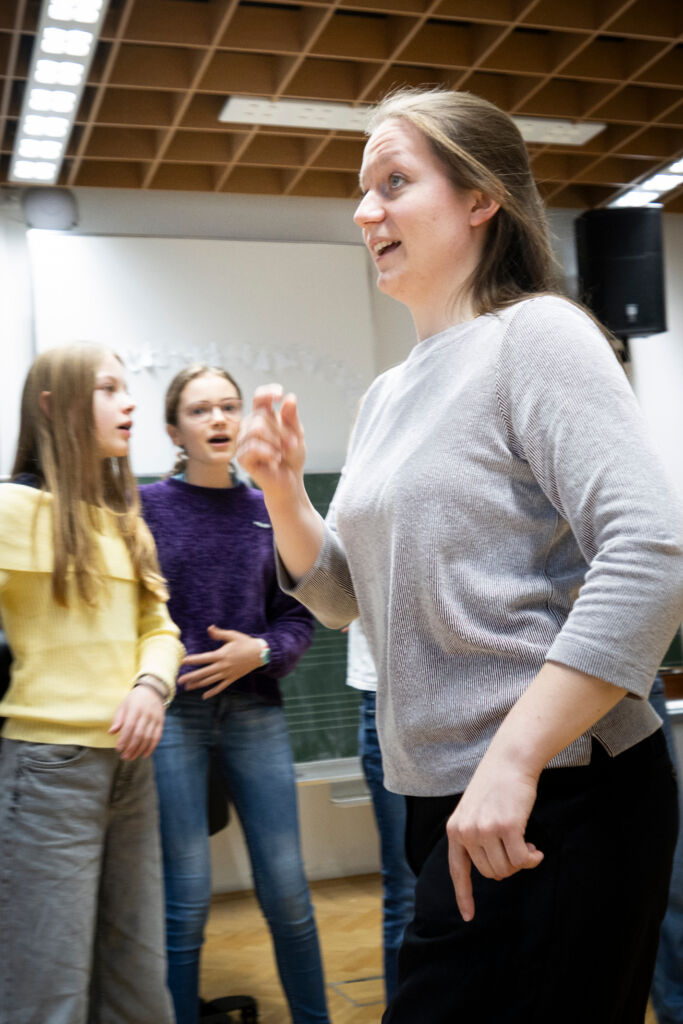
Though this ambitious teacher is actually still hard at work on her Master of Education (with Music Education and German as teaching subjects) and on a degree from the mdw’s Music Education – Voice and Instruments programme (with a specialisation in classical voice), she’s been teaching in school classrooms since autumn 2024. Combining completion of her master’s degree at the mdw with her everyday work and school activities isn’t always a friction-free affair: “Once you’ve started teaching at a school, your own studies quickly recede into the background; your main focus is on your students.” Despite all the organisational challenges, though, teaching consistently gives her room to be creative. “Even at school, you can managed to do artistic things. Teaching is an incredibly multifaceted profession that features huge optionality in terms of what you do,” she remarks happily. For instance, last year saw Magdalena compose a musical—which she and her students then performed complete with its own original choreography. What’s more, her work together with a 7th form group produced an original school song whose music and lyrics came mostly from the students themselves.
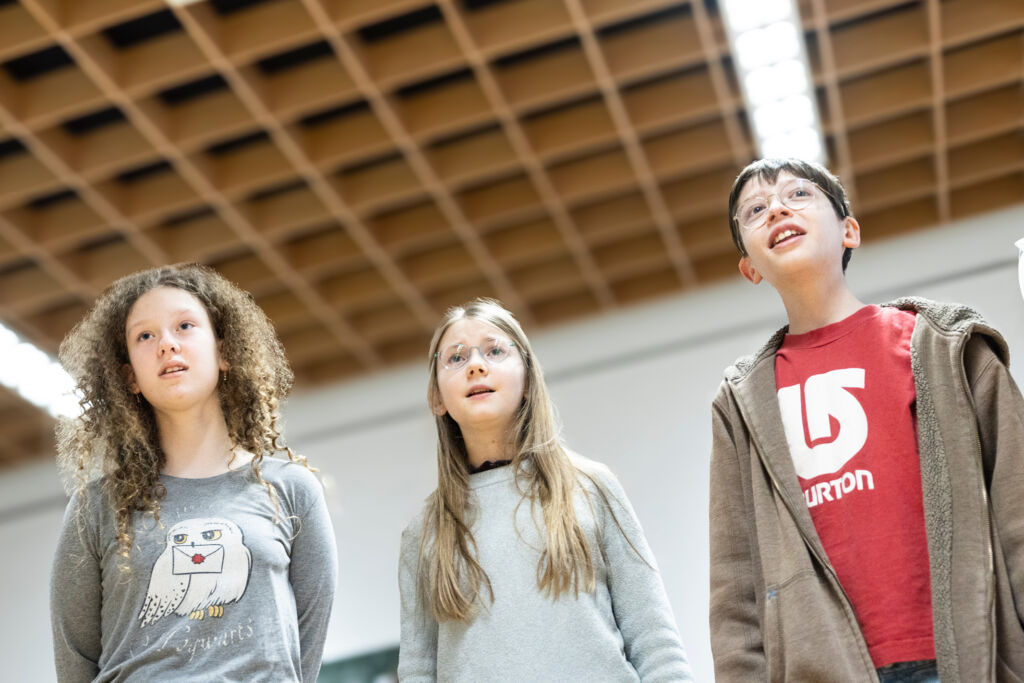
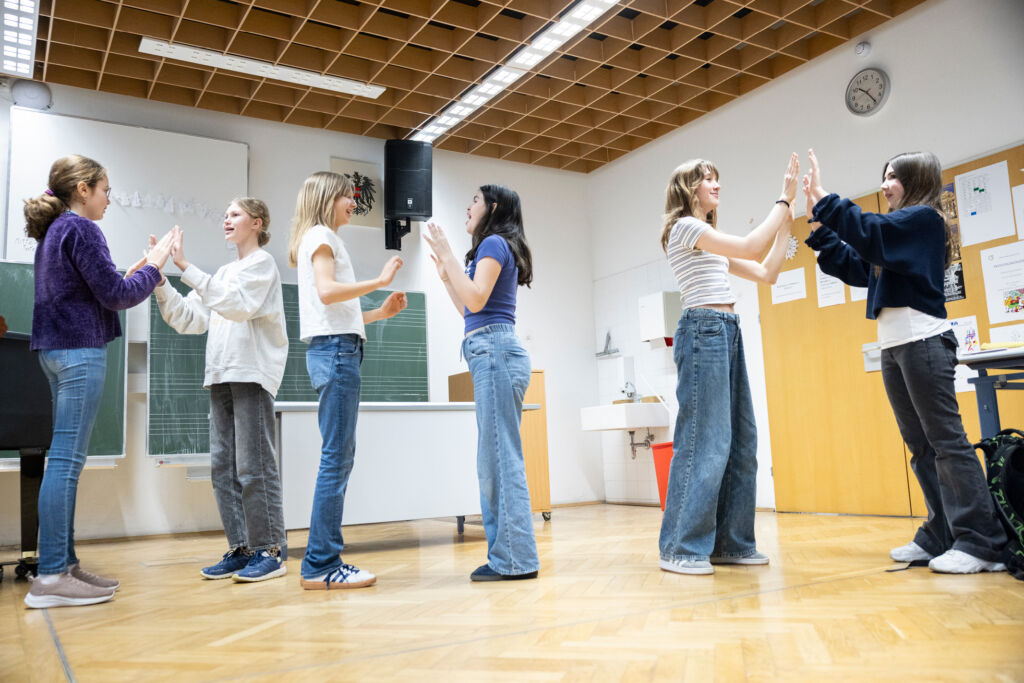
“Run-of-the-mill teaching isn’t my thing,” says Magdalena. And indeed, school music curricula do provide a great deal of freedom and latitude for all kinds of activities. She can allow herself more flexibility in her lesson planning, taking her students and their own interests into account. She’s accordingly fond of structuring creative exercises openly so that the kids she teaches can truly blossom. Being aware of how what’s ideal for some students might be too much for others, Magdalena pays attention to individual needs and offers support. But despite all this, she does indeed try to infuse each lesson with one “typical” element: “The kids often have to sit all day long, so it’s important to me that they move around in my class. Music is, after all, a practical subject.” For instance, she likes to loosen things up right at the beginning in a practical segment that might include vocal warm-up games—which also serves to calm her kids down: starting out with something active helps the students focus entirely on her music lessons.
Though her formal studies prepared her very well for schoolteaching, she did encounter some unexpected challenges when she started out. “School just is a very different environment. How do you communicate with parents? How do you react when students misbehave? And the organisational aspects of everyday school life are something our studies didn’t really cover,” she points out. Even so, Magdalena grew into her responsibilities very fast. She’s especially grateful for her school’s fantastic faculty, who welcomed her with open arms and are always there to provide support when she has questions. “There’s just a big difference between trying things out on your fellow university students and actually standing in front of 28 eleven-year-olds in a classroom. And in this respect, good exchange with experienced colleagues is important.”
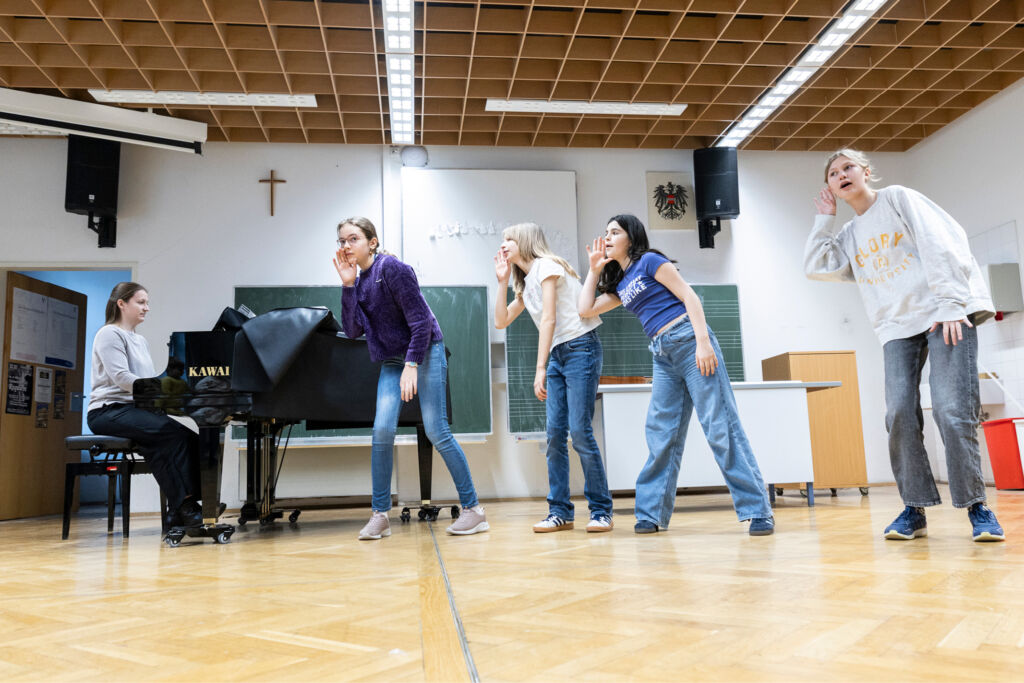
At Magdalena’s school, one helpful aspect is how lots of kids are learning instruments on their own. However, the levels of musical knowledge still can vary widely within a given class. Reconciling her students’ different interests and states of knowledge is challenging but interesting, she says, and it opens up new possibilities for lesson planning: “Do I like to sing? Do I like moving around? Questions like these are highly personal. And in this regard, it’s important to work with and for the kids to find just the right mix between encouraging them and requiring things of them without asking too much.”
Modern tools and techniques now allow for a completely new approach to music. And in this respect, too, Magdalena tries to approach her students with openness and talk with them to get to know their life realities. For instance, it’s no secret to her that ChatGPT gets used at her school, so this is something she addresses up front. She tries to encourage critical thinking in her teaching and has chosen to take a centrist position: “Work with AI tools will be a future reality for many of them, but I still am a fan of the analogue realm. And to me, that means things should also be written down by hand—rather than just photographed with your phone.” Since the kids are already active AI users, she recommends that they use such tools to get an initial overview of something and then actively question the results, checking all information with a trusted source. “It’s clear that I can’t possibly cover this whole huge topic on my own in music class. But I can contribute a few thoughts on the theme now and again and appeal to my students’ consciences.” To her mind, modern technology can also be a creative resource in teaching and learning. One group of students, for example, edited their own music video to a hit by Falco, while another class is currently recording a podcast. For her part, Magdalena is fond of using YouTube in order to add depth to her lessons. And while she’s convinced that AI can be a source of ideas, she also thinks that it can’t possibly replace our individual creative processes.
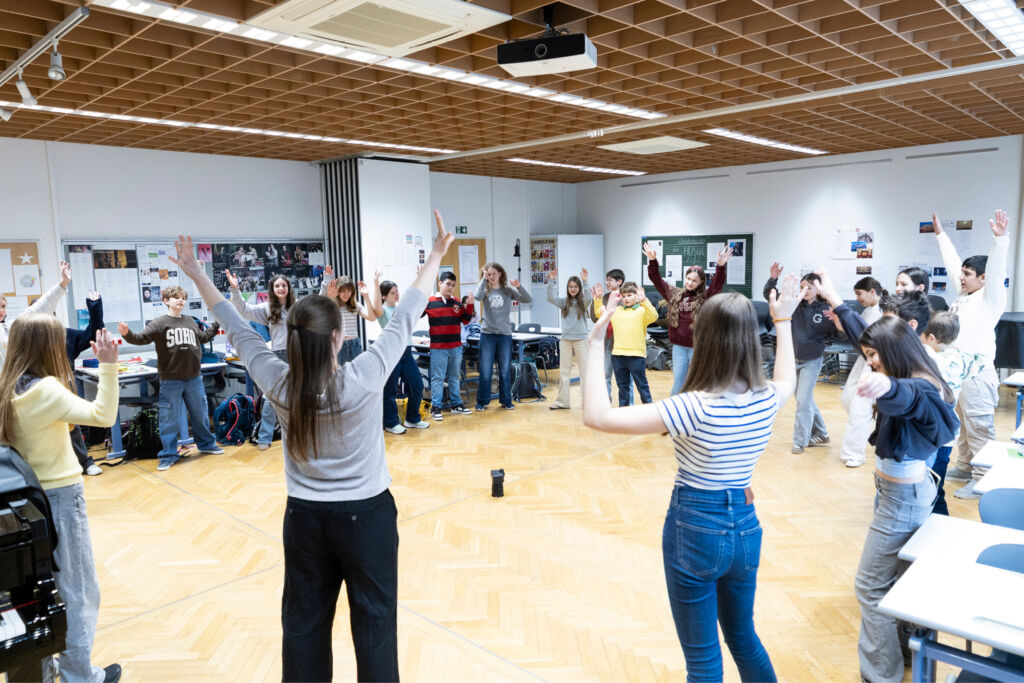
Technical innovations and societal developments entail the constant evolution of everyday school life. Music teaching twenty years ago was different than it is today, and it will continue to transform over the next 20 years. As a young teacher, Magdalena is aware of this—since change is, in a certain sense, a key feature of her job, be it overall or in terms of students’ development. “We accompany kids from age 10 to age 18. That’s an immense timespan that contains important years in their lives. Being part of that and in a position to influence it positively is hugely enriching.” Passing on her own passion to others during this phase of rapid development is important to Magdalena. “When I think back to my own school days, the very best lessons were those where the teachers succeeded in getting their content across with lots of enthusiasm.” In Magdalena, one can keenly sense the joy she gets from her job—and it’s apparent right away how she’s the teacher many of us would have wanted to have back when we went to school. If only one could be there for her next lesson!