Germany’s Federal President Frank-Walter Steinmeier and his wife Elke Büdenbender were guests of Austrian Federal President Alexander Van der Bellen from 21 to 23 October of last year. It had been 28 years since a German federal president had last made a state visit to Austria. This trip served to highlight the two countries’ close ties and friendship as well as their multifaceted relations. The guests’ official stops included the grand opening of Germany’s new embassy building in Vienna, a wreath-laying ceremony at the Shoah Wall of Names Memorial, a state banquet, a tour of the Brenner Base Tunnel construction site, and a visit to the Max Reinhardt Seminar—the mdw’s Department of Drama. Frank-Walter Steinmeier and Elke Büdenbender paid their visit here following several weeks of planning that involved the Max Reinhardt Seminar, the German Embassy in Vienna, the Office of the Federal President in Berlin, Germany’s Federal Criminal Police Office, and the Austrian Federal Police. They were accompanied by an over 20-person delegation that included tenor Jonas Kaufmann, actor Philipp Hochmair, and Germany’s Minister for Education, Family Affairs, Senior Citizens, Women and Youth Karin Prien. mdw Rector Ulrike Sych and Max Reinhardt Seminar head Alexandra Althoff formally received the federal president at Palais Cumberland in Penzing.
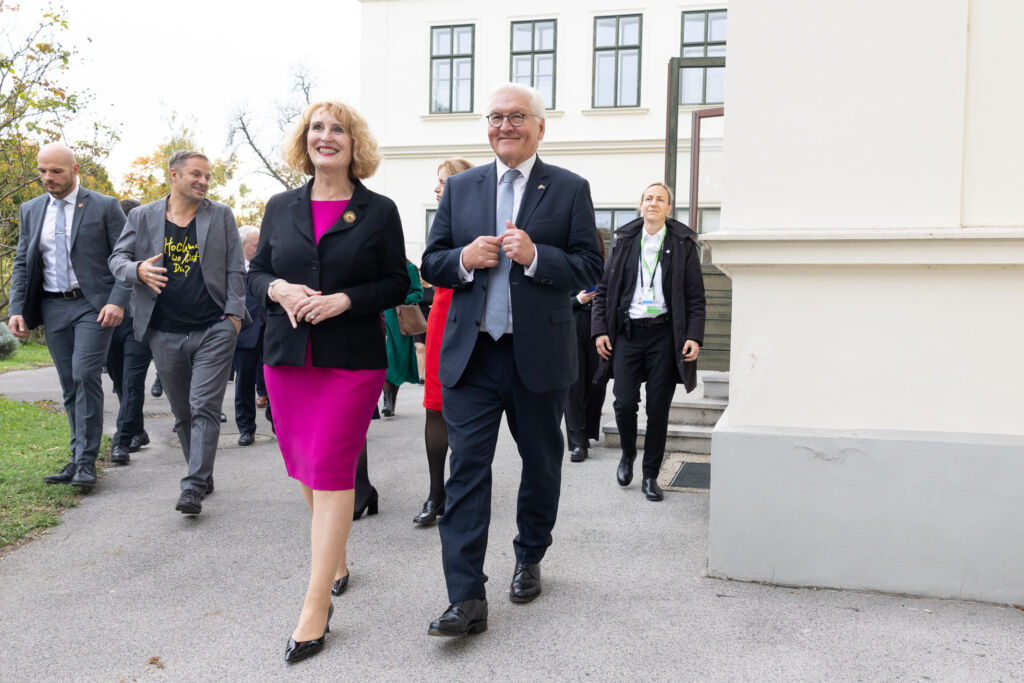
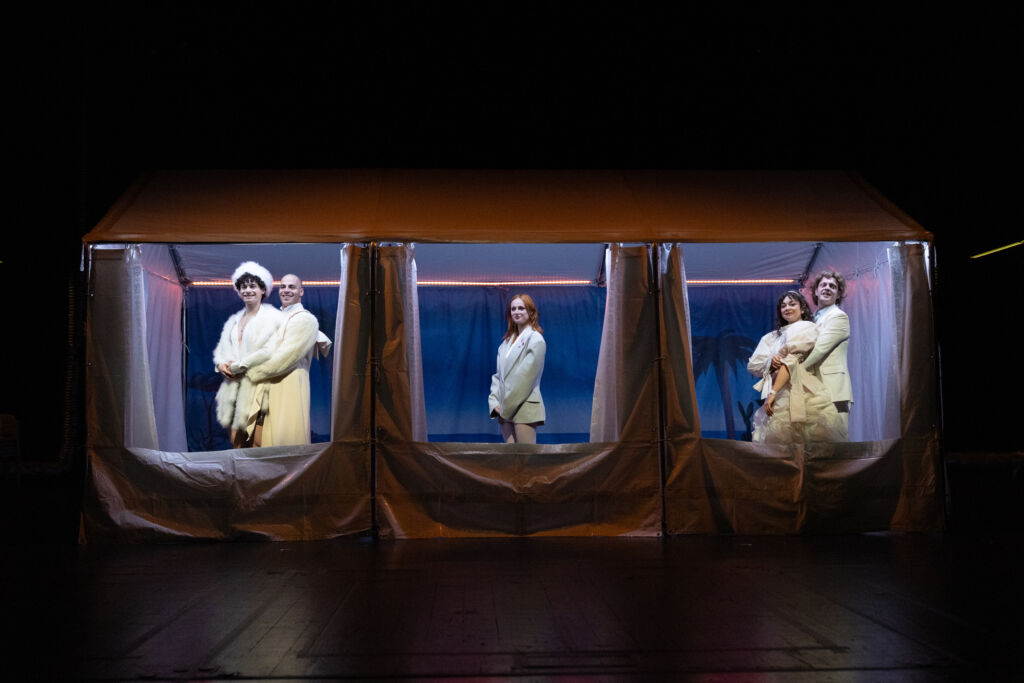
After signing the Seminar’s guest book next to the bust of Max Reinhardt, the delegation toured the Seminar and heard a great deal about its history. “It is immensely gratifying to us that the mdw’s Max Reinhardt Seminar has been selected as a place exemplary of Germany and Austria’s close ties and that this visit is centred on exchange with our students as representatives of the new generation of artists,” stated Alexandra Althoff in her words of thanks to Frank-Walter Steinmeier. The riveting climax of this visit was the performance of an excerpt from the diploma production Keine Hoffnung, Baby! by directing student Jakob Leanda Wernisch with Seminar acting students (Diyar Agit, Julius Dörner, Crispin Hausmann, Antonie Lawrenz, Bernadette Leopold, Emma Meyer, and Elena Pfleiler) at the Neue Studiobühne. Wernisch, who directed and had also authored the performed work, then joined the participating acting students, Philipp Hochmair, Elke Büdenbender, and Frank-Walter Steinmeier for a conversation that marked the crowning conclusion of this visit. Wernisch’s production engages with important themes such as economic development, the climate crisis, war, and their ruinous consequences for our world. The plot revolves around three couples in search of something eternal who decide to marry in the final hours preceding the apocalypse.
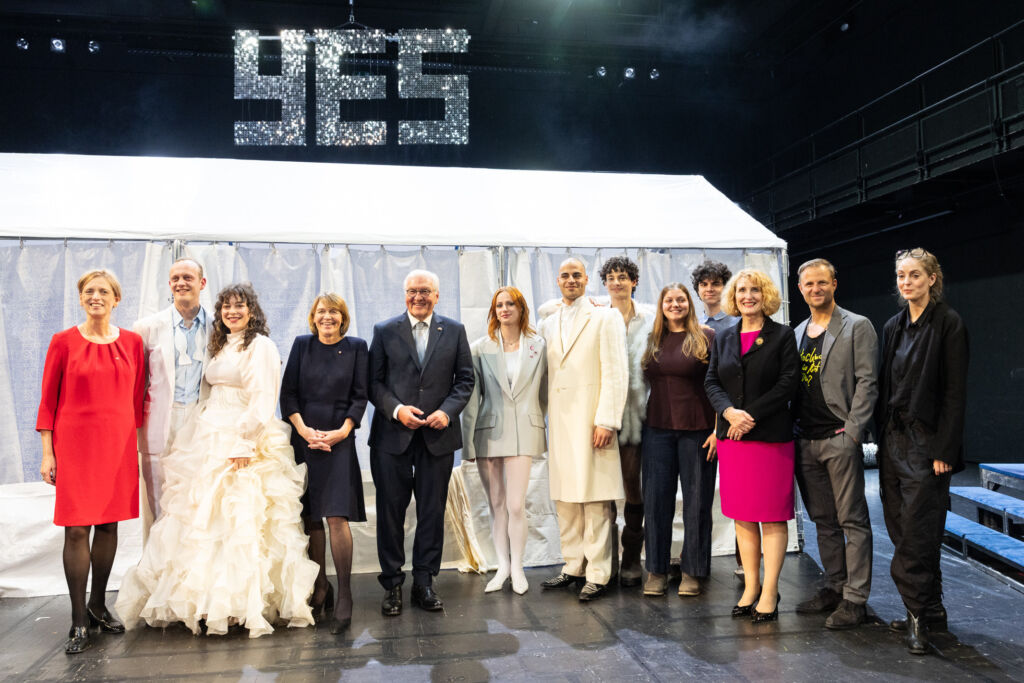
In the discussion, the Federal President and his wife focused on the questions posed by this work, its development, and the approach taken by its author and director. They also took a great interest in the current state of training at the Max Reinhardt Seminar, including how it compares to the training that Philipp Hochmair received here during the 1990s. In contrast to the authoritarian hierarchies of former times, the participating students spoke in favour of the present era’s decidedly respectful, collegial, and participative processes—as seen in relations between the directorial and ensemble levels and between faculty and students. Karin Prien acknowledged the students’ stance, remarking that one can learn a great deal from them about leadership.
Overall, the lively discussion ranged from the challenges inherent in the Seminar’s hotly contested admissions process to the students’ diverse prior histories, the international Absolvent_innenvorspiel event for final-year students, and students’ perspectives on the future. Afterwards, Jakob Leanda Wernisch commented, “It was something special to work on a project about our despair in light of world affairs and suddenly be surprised by the state visit of Frank-Walter Steinmeier—which is why I was particularly interested in the delegation’s reactions to this excerpt of the work. Where would they laugh? And where not? The delegation seemed to act as a single organism in the efficiency with which they entered the Seminar, with the dozens of security people and journalists taking up their posts. Prior to our conversation with the Federal President and Elke Büdenbender, I’d never considered the demands made by such a state visit. So I was accordingly impressed by the seeming effortlessness with which the two showed interest, paying attention even to complex themes despite how we were just one item on their day’s schedule. And thereafter, in their punctual departure from the Seminar, the speed with which they did so was equal to that of their arrival.”