It’s typically reasons like the desire to step outside of one’s comfort zone, to learn new things, to broaden one’s professional horizon, and to engage in exchange with others at the international level that motivate participation in mobility activities. Doing so always requires a certain degree of bureaucratic effort: applications have to be submitted, forms filled out, and stays carefully planned. To this end, however, ample support is available to mdw students, teachers, and administrators whenever they need it. “The International Office of the mdw views itself as a service provider: we advise students and faculty members from start to finish, accompanying them individually through the entire process,” emphasises International Office head Bojana Tesan. Similarly, mdw employees interested in Erasmus+ Staff Training (STT)—a form of short-term mobility focused on professional development—can turn to the Human Resources Development Office – Center for Further Education (ZfW). “We can use Erasmus+ STT to facilitate nearly limitless further training in Europe for any employee. Our administrative staff can and indeed should have this experience, too,” is the firm conviction of Dagny Schreiner, head of the ZfW and the mdw’s Erasmus+ STT coordinator.
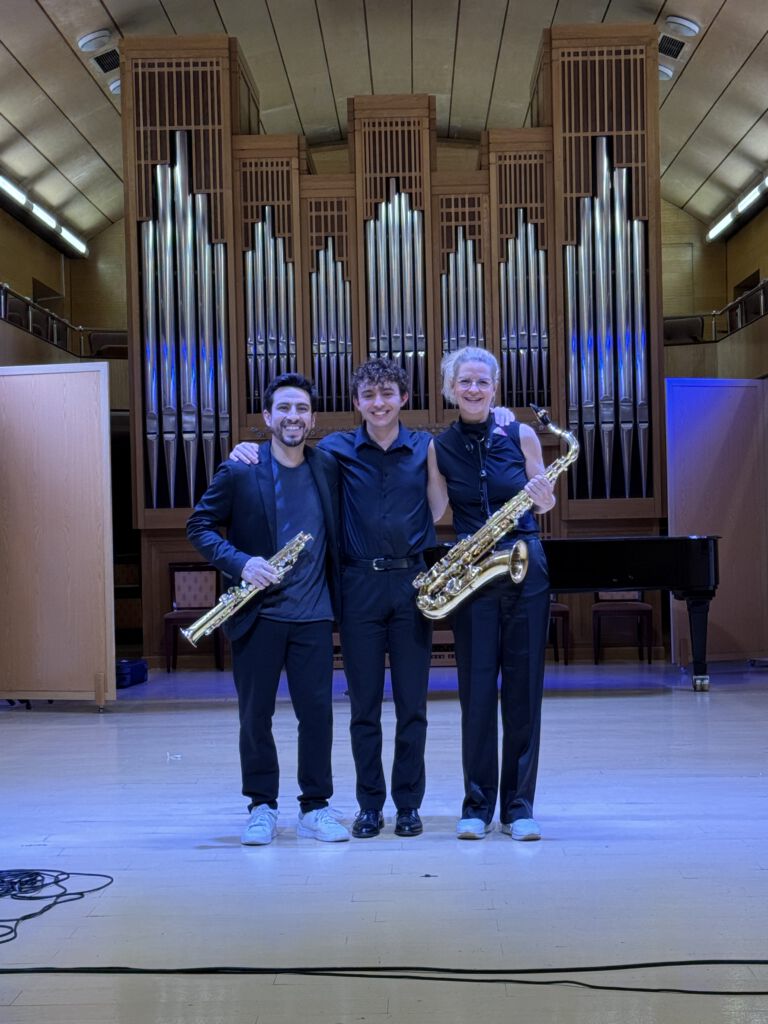
International partnerships are being strengthened and expanded on a continual basis in order to facilitate and ease such exchange, with various partner institutions playing central roles within each subject area and thematic specialisation. Here, explains Bojana Tesan, the mdw’s mobility strategy takes a three-level approach: “We have strategic partnerships, so-called prime partners on the level of the overall university. Then there are project- and exchange-based cooperative relationships on the departmental level as well as individual mobility activities pursued by faculty members for personal and specialised exchange.” This past May saw Michaela Reingruber, who teaches and also serves as deputy department head at the Leonard Bernstein Department of Wind and Percussion Instruments, engage in mobility of the third sort. Within the space of a few weeks, she made Erasmus visits to Spain and Italy. She first travelled with her colleague Álvaro Collao León, who teaches at the Joseph Haydn Department of Chamber Music and Contemporary Music, to the Real Conservatorio Superior de Música de Madrid at the invitation of Francisco Martínez García. There, the two had the opportunity to give lectures and concerts for which they’d prepared intensively beforehand. “The exchange with the Spanish students was fantastic. Everyone had prepared extremely well, and getting to know different structures was also very interesting.” Above and beyond her own international exchange activities, this dedicated teacher sets special store in exchange on the part of her students. And it’s important, she says, to go out into the world and cultivate mutual dialogue as part of which you not only learn things yourself but also share knowledge with partner institutions. Reingruber is already planning what comes next: having been invited by colleagues in Riga, Latvia to attend a festival, she’ll soon be on the move once more—this time together with Álvaro Collao León and four students. They’ll be teaching and engaging in intensive collaboration that includes music-making as part of an Erasmus+ Blended Intensive Programme (BIP).
“BIPs are an attractive alternative for students who can’t do an extended stay abroad. By combining brief physical mobility with virtual components, these project-based exchange formats facilitate international collaboration in a compact way. Such programmes are initiated mostly by departments or teachers,” Bojana Tesan explains. Another mdw faculty member who has wide-ranging experience with BIPs is Pauline Heister, who teaches classical music production at the Department of Composition Studies and Music Production. Heister is currently involved in planning a BIP in Paris scheduled for February 2026 as well as one in Vienna at the mdw in February 2027, and she previously participated in organising a BIP in The Hague. “Experiences like these are of special importance for our students, since they entail learning how to network—which will be a key aspect in their future professional careers. And on top of that, their creativity is given additional nourishment.” Most of the students who were involved in the BIP in The Hague will also be participating in Paris, where the plan is to hold a creative workshop in which students will originate sound designs as well as live performances that offer immersive experiences. As part of this close exchange with colleagues from Paris and The Hague, the initial online sessions that have been planned will see the formation of 3-person teams with one participant from each country. The programme for the 2027 BIP is likewise beginning to take shape: the “active acoustics” with which the mdw’s Sound Theatre has been equipped for quite some time now will make possible an initial five-day intensive workshop on “Active Acoustics and Recording” from which both incoming students and mdw tonmeister students will benefit.
Such partnerships as well as international exchange in general are further bolstered by the European Universities alliance IN.TUNE. “The mdw already has a worldwide network that encompasses several hundred cooperating university-level institutions active in the most varied subject areas. And with IN.TUNE, the mdw has now taken an important step toward deeper and even more intense cooperation within Europe,” states Vice Rector for International Affairs and Art Johannes Meissl. Exchange with the IN.TUNE partners—located in Paris, The Hague, Oslo, Helsinki, Belgrade, Bucharest, and Barcelona—is also in especially high demand right now when it comes to mobility activities.
Lukas Hartmann is one of those many students who are already deriving lasting benefit from IN.TUNE as well as numerous other international partnerships and projects. As part of his BA- and MA-level studies of classical piano in the Music Education for Instruments and Voice programme, Hartmann has made Erasmus visits to Spain and also took part in a BIP in Kuopio, Finland, this past June. “Exchange with students from all over Europe has shown me just how diverse the various approaches to music education are.” Of lasting influence on him have been things like encountering a new music scene, international contacts that have already led to some initial musical cooperation and projects, and generally getting to know other cultures as well as leaving his own comfort zone. He also emphasises his view that “international exchange is important particularly in our present era. With nationalist and exclusionary tendencies on the rise in Europe, active pursuit and nurturing of international dialogue by us students is crucial.” It’s hence all the more important to him to allay others’ anxieties concerning student mobility: “Yes, you absolutely do need to exhibit a high degree of proactiveness and self-organisation. But the support provided by the mdw’s International Office was really helpful, and the personal advising I received was very reassuring.”
Beyond just students and faculty, it’s also the University’s administrative employees who act as mdw brand ambassadors abroad. “The mdw is one integral system, so internationalisation is present in all areas,” emphasises Dagny Schreiner. Staff training activities serve to cultivate professional exchange and specialised development on the international level. ”Mobility activities are always motivating in terms of one’s own area of work, but they also have enormous effects on entire teams.” After all, those who participate in mobility always take the experiences they’ve gained back to their own working environments and share their “new” knowledge—which, she says, leads to fresh ideas and impulses and perhaps even to further instances of mobility. These, however, shouldn’t be just in the form of “outgoings”: “incomings”—i.e., individuals who come from institutions abroad to the mdw—likewise nourish the mdw’s underlying international ideal.
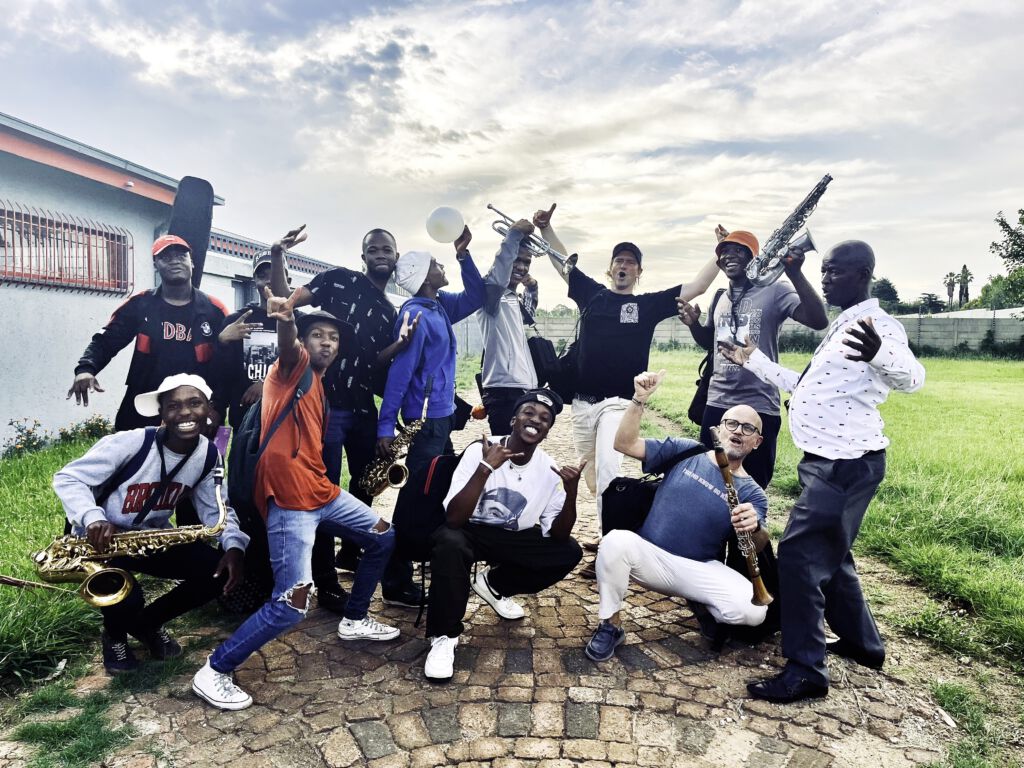
Philipp Sageder, who teaches at the Department of Popular Music (ipop), is another mdw community member who seeks to encourage instances of transnational cooperation and intellectual encounter. A few years back, he joined forces with Rupert Fankhauser to initiate the project “musicEmotion”—as part of which multiple visits to South Africa and Colombia have already taken place. Further destinations are now planned, with the project team having since grown into a threesome with the addition of Horst-Michael Schaffer. “We view ourselves as bridge-builders. It’s about barrier-free exchange between students, regardless of their backgrounds,” Sageder emphasises. In their project, the three are looking to depart from the masterclass format. They much rather intend for learning to take place on an equal footing and collectively, in the spirit of team-teaching. Realising their project in countries with potential for development was their chief maxim right from the start: “We’ve always wanted to engage in exchange outside of the “big player” countries, so we deliberately go to places with different cultural backgrounds and structures.” If Sageder could have his way, mobility activities by students and teachers would be mandatory—for music, he says, is always an expression of culture and community. Becoming acquainted with other ways of working and thinking, he asserts, can only be of benefit—and what’s more, musicEmotion shows how individual visits abroad not only give rise to sustainable long-term projects but also promote mutual mobility. For example, a master’s degree student from South Africa is now coming to continue her studies at the mdw for a year.
In a cultural landscape that’s strongly networked on a global scale, international mobility is a key factor in the further development and sustainable cultivation of artistic, academic, and intercultural competencies. In this regard, the mdw’s internationalisation strategy provides a framework for developments in the near future, as well. “In awareness of the importance of traditions and our own strengths, it’s only in constant exchange with international partners that it will be possible to continue developing and avoid stagnation,” stresses Johannes Meissl. And in a similar vein, Lukas Hartmann is convinced that “spending time abroad offers a valuable opportunity to grow beyond one’s own cultural, artistic, and pedagogical horizon. It fuels further progress in one’s area of expertise as well as personal growth in a deep and lasting way.”