
Einfluss der Luftfeuchtigkeit auf natürliche Trommelfelle
aus einer Masterarbeit:
Nagl, Wolfgang (2020)
Humidity influence on natural drumheads.
Department of Music Acoustics – Wiener Klangstil, University of Music and Performing Arts Vienna. 
Kurzfassung:
Veränderungen der Luftfeuchtigkeit verursachen Probleme, denen PaukistenInnen, die Naturfelle verwenden, entgegenwirken müssen. Feuchtigkeit, die in Konzertsälen oft durch das Publikum oder die Musiker selbst auf der Bühne entsteht, verändert die Elastizität des Naturfells, wodurch sich die Spannung und damit die Intonation verändert.
Der vorliegende Artikel befasst sich mit den Auswirkungen feuchtigkeitsbedingter Veränderungen auf die Intonation von Trommeln - hauptsächlich Pauken - mit Naturfell und stellt ein Experiment zur Messung des Zusammenhangs zwischen Luftfeuchtigkeit und Fellspannung bzw. Tonhöhenänderung vor. Es wurde ein Versuchsaufbau geschaffen, bei dem das Fell auf einer Kupferring mit einem darunter befindlichen Ultraschallbefeuchter montiert wurde. Der Befeuchtungsprozess war computergesteuert. Die sich daraus ergebende Veränderung der Paukenmembranparameter wurde mit Feuchtigkeitssensoren und Zugkraftsensoren an allen Befestigungspunkten des Fells gemessen. Die Messungen wurden in einem Bereich von bis zu 97 % relativer Luftfeuchtigkeit durchgeführt. Die Ergebnisse sollen auch den Musikern als Orientierung dienen und ihnen helfen, Feuchtigkeitsschwankungen während ihrer Konzerte besser auszugleichen.
Versuchsaufbau
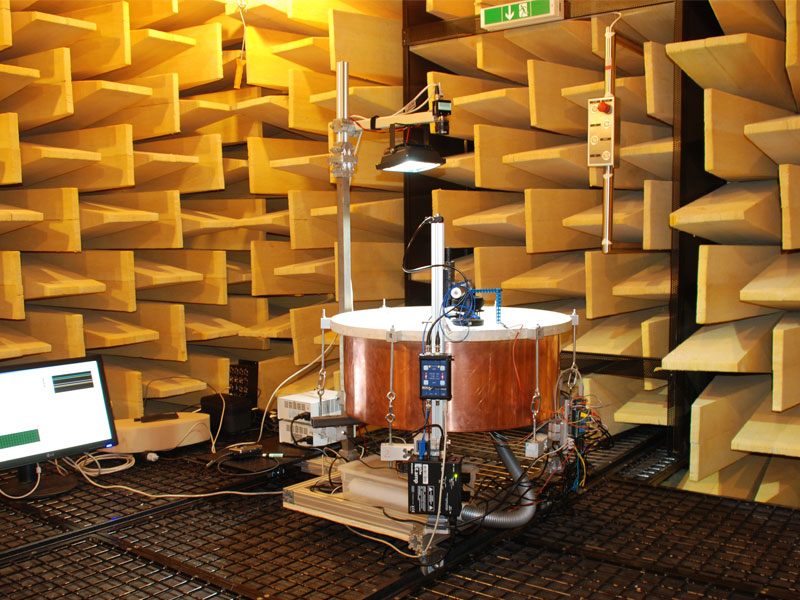
Der Aufbau bestand aus einem massiven, gekreuzten Metallgestell, das das Kupferrohr als Kesselersatz trug. Das Fell wurde an diesem Kessel befestigt und konnte manuell über sechs Gewindestangen gespannt werden. An der Unterseite jeder Stange wurde eine Wägezelle angebracht, um den Druck und die Zugkraft des Paukenfelles zu messen.
Die Luftfeuchtigkeit wurde mit einem Ultraschall-Wasserzerstäuber erzeugt, der in einem Wasserbehälter unterhalb des Fundaments aufgestellt war. Über Rohre wurde das Innere des Kupferkessels mit einem Ventilator befeuchtet, was von drei Feuchtigkeitssensoren im Inneren und einem Feuchtigkeitssensor außen als Referenz aufgezeichnet wurde. Der Trocknungsprozess sollte mit Hilfe eines zweiten Ventilators erfolgen, der die Außenluft in das Innere des Kupferkessels blasen sollte, aber letztlich nicht installiert wurde. Da Standardpauken fast geschlossen sind (bis auf das kleine Loch für den Luftaustausch), wirken sich Klimaveränderungen fast ausschließlich auf die Narbenseite des Fells aus. In dem vorgestellten Aufbau wurden die Klimaveränderungen im Inneren des Kessels erzeugt, daher wurde das Fell verkehrt herum angebracht, um die gängigsten Bedingungen zu gewährleisten. Der Boden der Pauke wurde mit einer Platte abgedichtet, so dass das gesamte Volumen der Konstruktion als Klimakammer fungiert.
 Figure 1: Total setup (Mayer & Nagl, 2017)
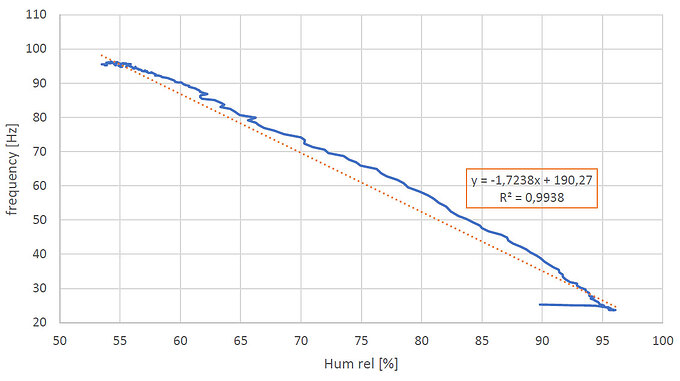 Figure 2: Humidity vs. fundamental frequency (goat skin)
Messungen
Für diese Arbeit wurden zwei verschiedene Arten von Fellen (Ziege und Kalb) untersucht. Das eine wurde von Werner Edlauer hergestellt, das andere ist ein „Kalfo Super Timpani“-Fell, das von der Vellum & Pergament Works Limited Company produziert wurde. In einem ersten Schritt wurden beide Felle nacheinander in völlig nassem Zustand auf den Versuchsaufbau aufgesetzt, wie es beim Aufsetzen neuer Trommelfelle üblich ist. Nachdem sie an jeder Kraftmessdose mit einer leichten Spannung von etwa 25 Newton belastet worden waren, ließ man die Felle auf dem Aufbau trocknen. Wie erwartet, zogen sich die Felle beim Trocknen zusammen.
Trocknungsprozess
Bei dem Ziegenfell führte das Trocknungsverfahren zu einem Anstieg der Tonhöhe von 25 Hz auf 96 Hz. Das bedeutet fast einen Zwei-Oktaven-Schritt von G0 (+34,99 Cent) auf G2 (-35,67 Cent). Nach dem Trocknen, das nach etwa 17 Stunden stattfand, blieb das Paukenfell während der restlichen 31 beobachteten Stunden auf der erreichten Tonhöhe stabil. Die Messungen des Kalb-Fells ähneln denen der Ziegenfellversuche, jedoch mit einer schnelleren Trocknungsepisode von 11 Stunden. Die Grundfrequenz beginnt bei 31 Hz und kulminiert bei 107 Hz. In Noten ausgedrückt, ist dies ein Schritt von B0 (+7,40 Cent) bis A2 (-47,86 Cent), wonach die Kalbshaut fast genau einen vollen Schritt höher als die Ziegenhaut liegt.
Direkte Proportionalität
Veränderungen der Luftfeuchtigkeit wirken sich ganz unmittelbar auf die Intonation aus. Die Grafik in Abbildung 2 zeigt diesen engen Zusammenhang eindeutig (Beispiel Ziegenhaut).
Fazit
Der Kalbsfell ist in jedem Versuch stärker von Umweltveränderungen betroffen als sein Pendant von der Ziege, sei es die schnellere Trocknung bei den ersten Messungen oder die stärkere Reaktion auf Feuchtigkeit bei den Kurzzeitmessungen (siehe die weiteren Versuche in der Diplomarbeit ). Auch braucht es weniger Spannung, um die gleiche Tonhöhe zu erreichen wie der Ziegenkopf.