
Through the Gender|Queer|Diversity Call (GQD Call), the mdw supports projects that address feminist and anti-discrimination topics from academic, artistic, and/or educational perspectives.
Funding: A total of 19,000 EUR is available for the GQD Call 2026 from the budget of Vice Rector Gerda Müller, who is responsible for organizational development and diversity. The maximum grant amount for a single project is 2,000 EUR. Grants for projects already in progress are available up to 500 EUR.
Projects to be implemented as part of the G|Q|D Call 2026:
Zwischen Sicherheit und Versicherheitlichung
(Arbeitstitel)
Philipp Hohmann
International Research Center Gender and Performativity
geplante Umsetzung: Workshop & Podiumsdiskussion, April/Mai 2027
Die Veranstaltung lädt zu einer kritischen Reflexion von Sicherheitsbegriffen unter dem Eindruck des politischen Aufstiegs autoritärer Kräfte ein. In einer Podiumsdiskussion mit einschlägigen Wissenschaftler_innen aus Gender, Queer Studies und antirassistischer Forschung, diskutieren wir einerseits die akuten Bedrohungen, die sich daraus für die (Antidiskriminierungs-)Arbeit an (Kunst-)Universitäten ergeben. Andererseits fragen wir danach, inwiefern dieser autoritäre Drift nicht auch innerhalb unserer Institutionen und Strukturen wirkt. Was wird von wem als Sicherheit verstanden und empfunden? Wessen (Un-)Sicherheitsgefühl zählt, wird hörbar? Wer gilt als schutzbedürftig, wer (oder was) als Sicherheitsrisiko? Zur Vorbereitung der Podiumsdiskussion gibt es einen Workshop für Studierende.

Ancestral Futurities
Encounters with Heritage in Contemporary Dance and Choreographic Practices
Beatriz Herrera Corado
Institut für Volksmusikforschung und Ethnomusikologie
Symposium & Studio Lab
31.10, 02. & 03.11.2026 | Tanzquartier Vienna
This symposium explores how contemporary artists engage with traditional dance practices, rituals, and embodied archives to reinterpret and recontextualize them within contemporary dance choreography. It examines how ancestral knowledge activates, transmits, and transforms dominant dance canons.
Keynote lectures: Şebnem Sözer Özdemir and Urmimala Sarkar
Curation Team: Ulduz Ahmadzadeh, Beatriz Herrera Corado, Christina Gillinger, Isabel Lewis
Program | TQW | Department of Folk Music Research and Ethnomusicology
»GEGENBILDER | GEGENERZÄHLUNGEN: Feministische Ästhetiken in Kunst, Kino und Medien« (AT)
Christine Lang
Filmakademie Wien – Institut für Film und Fernsehen
geplante Umsetzung: 04-05/2027

gehört gespielt
Unterrichtsliteratur von Komponistinnen für Klavier
Daniela Fheodoroff, Gisela Jöbstl, Elisabeth Aigner-Monarth
Ludwig van Beethoven Institut für Klavier in der Musikpädagogik
geplante Umsetzung: Studienjahr 2026/27
Klang der Hände verbindet Gebärdenpoesie und Musizieren zu einer diskriminierungskritischen Kunstpraxis, die auditive Normen hinterfragt und Vielfalt hör- wie sichtbar macht.
Heldenplatz ohne Helden
Katharina Simunek
Filmakademie Wien – Institut für Film und Fernsehen
geplante Umsetzung: Studienjahr 2026/27
Klang der Hände.
Gebärdenpoesie und musikalische Praxis als diversitätsbewusste Ausdrucksform.
Beate Hennenberg
Institut für musikpädagogische Forschung und Praxis
geplante Umsetzung: Studienjahr 2026/27
Klang der Hände verbindet Gebärdenpoesie und Musizieren zu einer diskriminierungskritischen Kunstpraxis, die auditive Normen hinterfragt und Vielfalt hör- wie sichtbar macht.
NOVA: Resonant Voices (working title)
Angelica Castello Garnett
Institut für Kompositionsstudien, Ton- und Musikproduktion
geplante Umsetzung: Frühjahr/2027
 c / breaking the walls/shutterstock bearb. mdw
Popfeminismen in Zeiten von #MeToo
Magdalena Fürnkranz (ipop), Rosa Reitsamer (IMS)
in Kooperation mit der GGD (Ulli Mayer)
22. Juni 2026
Die Veranstaltung »Popfeminismen in Zeiten von #MeToo« bringt Forschung, künstlerische Praxis und kulturpolitische Perspektiven zusammen, um Geschlechterverhältnisse und Machtstrukturen in populärer Musik und Clubkultur kritisch zu beleuchten.
Zum Auftakt geben international profilierte Autor_innen und Kulturjournalist_innen in Impulsvorträgen theoretische und kulturhistorische Einblicke in feministische Pop- und Clubkulturen. Anschließend berichten DJs und Produzent_innen aus ihrer künstlerischen Praxis und über den Umgang mit strukturellen Ungleichheiten in der Musikindustrie.
Eine abschließende Podiumsdiskussion widmet sich queer-feministischen Geschichtsschreibungen der Pop- und Clubmusik sowie der Rolle von Institutionen, Szeneakteur_innen und Forschung. Durch die Kooperation mit Akteur_innen der Wiener Clublandschaft, darunter die Vienna Club Commission (VCC), werden auch aktuelle Initiativen zu Awareness, Diversität und Sicherheit im Nachtleben einbezogen.
Die Veranstaltung schafft Raum für Austausch, Vernetzung und gemeinsame Strategien für eine gerechtere und inklusivere Clubkultur.
Precarious Lines. Politics of Materiality, Temporality, and Vulnerability
Katharina Serles
Studiendekanat für wissenschatliche Studien
geplante Umsetzung: 04/2027
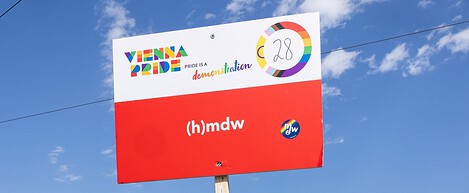
Pride Wagen hmdw x hufak
Elisabeth Höhndorf
hmdw – HochschülerInnenschaft
geplante Umsetzung: 13. Juni 2026
Sagt Lila
Josephine Jeltsch
Filmakademie Wien – Institut für Film und Fernsehen
geplante Fertigstellung: Ende 2026

Unlearn the Canon: Diverse Repertoire Now &
Unlearn String Quartets: Diverse Repertoire Now
Axel Petri-Preis
Institut für musikpädagogische Forschung und Praxis
02. Juni 2026
Die Welt der westlichen Kunstmusik ist seit Jahrhunderten von musikalischen Kanons geprägt: Eine Auswahl anerkannter Werke und Komponist_innen dominiert Konzertsäle, Lehrpläne und unsere Hörgewohnheiten. Doch wie sind diese Kanons entstanden? Wer hat festgelegt, was dazugehört und was ausgeschlossen bleibt?
In unserem halbtägigen Workshop hinterfragen wir gemeinsam die Mechanismen, Traditionen und Machtstrukturen, die diese Kanons geprägt haben. Welche Stimmen und Werke wurden ausgeschlossen und warum? Wir lesen und kontextualisieren musikwissenschaftliche Texte und lernen Recherchetools kennen, um das eigene Repertoire zu erweitern.
Der Workshop richtet sich an alle, die Musikgeschichte und -gegenwart kritisch hinterfragen und eigene Perspektiven auf Vielfalt, Qualität und Bedeutung in der Musik entwickeln möchten. Vorkenntnisse sind nicht erforderlich, nur Neugier und Offenheit.
Through the Gender|Queer|Diversity-Call, mdw supports projects and formats that explore feminist and discrimination-sensitive issues from an academic/research-based, artistic and/or pedagogical perspective.
Funding: A total of € 19,000 EUR is available for the GQD-Call 2026 from the budget of Vice-Rector Gerda Müller, who is responsible for organisational development and diversity. The maximum funding for a project is € 2,000 EUR. Grants for projects already in progress can be awarded up to € 500.
Submission & Funding
Submit now until 19 April 2026!
⸺
Submission: completed application form (via formcycle) including budget plan
Budget plan template with ‘placeholder items’ / blank budget plan template (both in Excel)
⸺
Completed application form including budget plan (submitted online)
⸺
Funding: The GQD-Call covers up to 80% of the total costs. At least 20% of the proposed budget must be provided by the applicant’s department or organizational unit.
- Example calculation: For a project with total costs of € 2,000 the department/organizational unit contributes 20% (€ 400), and the GQD-Call funds the remaining 80% (€ 1,600)
An internal jury will review and select the submitted projects.
Applicants selected for funding be notified of the grant decision via email from the Administrative Department of Equity, Gender and Diversity by the end of June 2026.
There is no legal entitlement to funding; legal recourse is excluded.
The goal is to develop, implement and sustainably embed project ideas at mdw that:
⸺
Strengthen gender sensitivity and diversity awareness
⸺
Challenge stereotyping
⸺
Critically engage with the academic and artistic canon
⸺
Highlight and empower marginalized perspectives
⸺
Enhance competencies in gender and diversity
⸺
Promote discrimination-free work and study environments
Previously supported projects can be found in our archive (German only).
Funding Criteria – Content
⸺
Artistic, academic/research-based, pedagogical, or educational engagement with gender- and diversity-related issues
⸺
Clearly articulated and identifiable queer-feminist stance
⸺
Intersectional (re-)framing
⸺
Relevance to contemporary discourses
⸺
Experimental and unconventional formats are welcome
Interdisciplinary and cross-departmental collaborations are explicitly encouraged.
Who can apply?
⸺
All members of the mdw – lecturers, students, and administrative staff – are eligible to apply
⸺
Individuals may submit only one application
General Funding Requirements
⸺
Proposals must include at least 20% co-financing from the applicant’s department/management-Head
⸺
Please consult your department’s gender representative before submitting your proposal if they are not already actively involved in the project
Support
If you have any questions, please contact Ulli Mayer for content- or concept-related inquiries or Laura Eichenseer for organizational matters before submitting your application.