In the main artistic subject of Scene Study (Rollengestaltung), Max Reinhardt Seminar students develop their roles, explore scenes, monologues, and dialogues, and analyse characters in depth. Two new teachers of this subject, Alireza Daryanavard and Ivan Strelkin, spoke with mdw Magazine about what they emphasise in their teaching, what inspires their own artistic work, and what theatre means to them today.
Our interview in the Max Reinhardt Seminar’s Weißer Saal coincides with what’s apparently an opportune moment for Ivan Strelkin, Alireza Daryanavard, and Steffen Jäger. With the semester about to begin, the two Scene Study instructors and the Max Reinhardt Seminar’s deputy head take advantage of their chance meeting here for a brief three-way exchange whose collegial and relaxed tone carries into the subsequent interview with mdw Magazine.
For the two stage directors and playwrights, who arrived at the Max Reinhardt Seminar in 2025 and 2026, the start of the present semester marks a new chapter in their work here. “We really see how students grow artistically—though it is the case that we teach one semester, and the next semester we’re confronted with a new crop of students. So we don’t accompany them throughout their studies: when they come to us they’re already well on their way, and we figure out how we can best support them and send them on afterwards,” explains Alireza Daryanavard. He hastens to add, however, that the faculty members discuss each student in depth so as to provide them with the best possible individual instruction and guidance. “We really do look quite closely at each student’s individual potential—which is something I rarely experienced in the positions I previously held.”
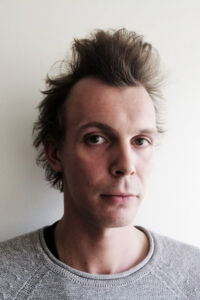
Ivan Strelkin, too, identifies a certain continuity as something he likes about teaching at the Max Reinhardt Seminar: “For me, it’s above all the opportunity I have to do serious work with someone over an extended period of time.” One aspect he finds interesting in this respect is working on plays that he hasn’t yet explored in depth himself. “I really value being able to closely examine all kinds of dramatic texts together with the students, doing research and discovering just what all is in them. And sometimes the students are interested in a text I’ve never worked with before, which lends the process a special energy.”
In his teaching, Strelkin seeks to create a safe space while also coaxing students out of their comfort zones so that they can “make room for curiosity” together. The urge to discover new things is central to Daryanavard’s teaching, as well: “Without curiosity, nothing moves forward. But even in the demonstration lesson I gave at my hearing, I noticed how much the students and my future colleagues enjoyed immersing themselves in situations and discovering new worlds. That’s when I knew this was the place for me. To my mind, there’s no separating theatre from curiosity.”
The two bring differing emphases to their teaching of Scene Study. Alireza Daryanavard is a key contact person at the Seminar where diversity and intersectionality are concerned. He contributes his expertise in these areas both at the departmental level and in his teaching: in Scene Study, for instance, the relevant themes can be done justice by thinking about which perspectives are or aren’t represented in a play—and about which texts get discussed at all. “In some works, certain questions aren’t even asked to begin with. So in our lessons, we try to discern precisely such gaps and then ask those missing questions.” This process of awareness-raising has now been moved forward to begin right away in the first semester of study—even before students have begun their individual work on scenes and monologues. The course “Theater und Vielfalt – Ansätze für eine diskriminierungskritische Theaterpraxis” [Theatre and Diversity—Approaches to a Discrimination-Critical Theatre Practice], which Daryanavard curates together with deputy department head Steffen Jäger, is all about this. “To my mind, sensitisation to these things is part of the expertise that’s essential for a theatrical practice that does justice to our times,” he states firmly.
Ivan Strelkin focuses on integrating movement with text-based work: “I did a degree in choreography, which I think has contributed a great deal to my development as a director and as an overall theatre person.” To Strelkin, text and movement are always closely linked. Movement, he says, is theatrically valuable in its own right: how we think about a text and the words we utter affect how we move. “The performer’s body always reacts to the spoken text, and clarity and deliberateness in language go hand in hand with authenticity and power in movement.” The other way around, something sensed physically can also give rise to associations and words—with text arising from “physical experience and lived experience.” Strelkin feels that classical acting—and classical teaching—sit somewhere in between. But whatever the case, he says, an important basic element here is presence. “Every semester, we welcome new arrivals who bring along different personal universes and challenges. And in view of this, it’s really important to be present as a teacher.” Moreover, he perceives a need to “avoid falling asleep”—in life in general as well as in art: “You can’t just automatically do what you know. You also have to question yourself: What am I doing here, what am I doing at this moment? It’s a state of perpetual motion.”
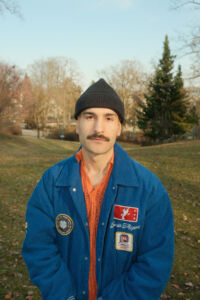
Alongside their special emphases, both instructors also bring along individual perspectives and personal histories that quite naturally inform their artistic work. Strelkin is originally from Russia, Daryanavard from Iran. “I no longer recognise Russia at all—but I engage with it. I don’t yet know Austria well—but I engage with it, too. Much of my work is influenced by my background, of course. But at the same time, I do attempt to work within the Austrian context. That’s very important to me,” says Strelkin. His staging of Die Düntzer Rhapsodie, which is set in a fictional Austrian village, won the 2025 Nestroy Prize for Best Off-Production. Alireza Daryanavard’s artistic path has been influenced in a similarly strong way by his childhood and youth in Iran. He ended up founding an underground theatre ensemble there—something that permanently altered his understanding of theatre: “When you carry experiences like that along with you, you perceive the need for theatre as well as all the power behind it in a different way.” For theatre practitioners in certain contexts, he says, theatre really is a “survival strategy”—and he hopes that such perspectives will attain more visibility in the German-speaking context.
To Alireza Daryanavard, theatre simply cannot be relevant if it doesn’t address political issues. After all, “Politics is just as diverse and wide-ranging as art.” Ivan Strelkin’s take is similar: “Theatre is there to engender doubt.” By practicing subversion, theatre can look deep into people’s inner worlds, he says. It can also—unlike, say, politics or journalism—take on an additional societal mission. In this regard, the two are also going beyond their regular one-on-one teaching to employ a new model of scene study that revolves around participants’ own artistic creativity, research, and group work.
The two teachers are now set to continue contributing to this mission as they look forward to their next semester at the Max Reinhardt Seminar and yet another new “ensemble” of students.