2024 mdw Magazine reported on the successful European tour of South Africa’s MIAGI (Music is a great investment) Orchestra and on its many years of partnership with the mdw. This collaboration has since been continued in an impressive way with a concert at Podium Zukunft in Frankfurt on 27 April 2026. The focus here was less on racking up a further guest appearance than it was on continuing the consistent refinement of an artistic idea. Under the title Searching the African Footprint, the MIAGI Orchestra (led by David Panzl) explored the many musical paths forged by the African diaspora—in the process opening up new perspectives on the classical concert canon.
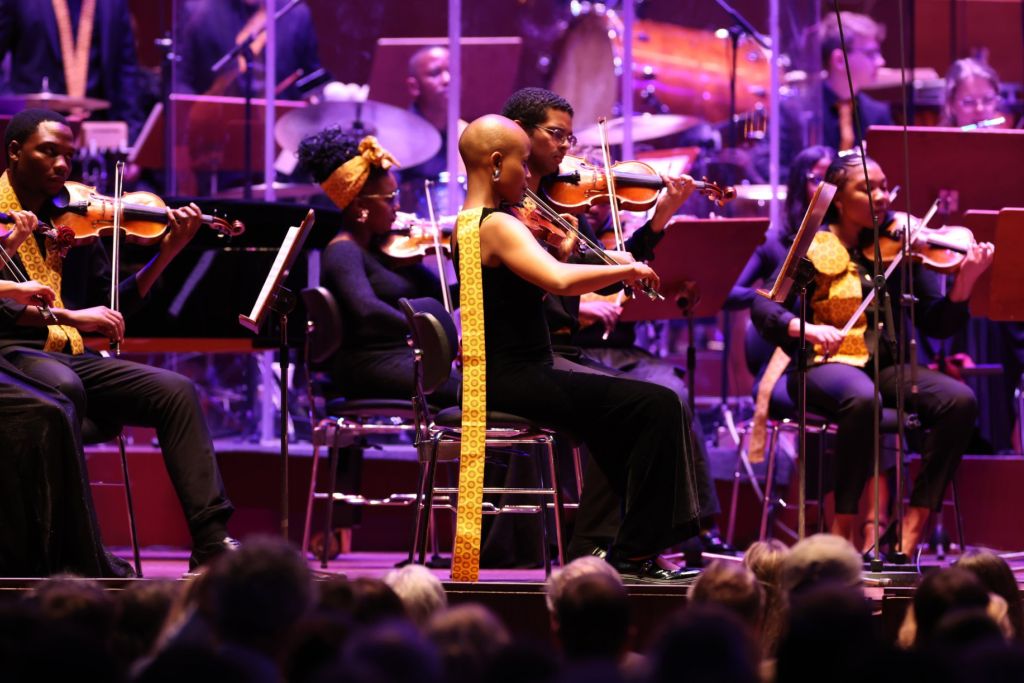
This programmatic approach sought not to geographically contextualise the African continent but to investigate how African culture and its diaspora have shaped music history, from the Caribbean to North America and back to present-day South Africa. The concert itself was conceived as a musical narrative about cultural exchange, identity, and the genesis of new forms of cultural expression—all of which have defined MIAGI’s own mission for many years, with music being understood not just as an aesthetic practice but as a medium of societal understanding as well as cultural participation. The opening piece, George Gershwin’s Cuban Overture, rendered this aspiration immediately audible. For the MIAGI Orchestra, David Panzl had created a new arrangement featuring a re-instrumentation conceived specifically for this South African ensemble, taking its characteristic expanded percussion and jazz timbres into account. This made Gershwin’s composition—which was inspired by Afro-Caribbean rhythms—into an ideal starting point from which to search for musical traces, viewing cultural influences not as peripheral phenomena but as motors of musical development. A central place in the programme was given to works by Florence Price and George Walker. Their juxtaposition formed this evening’s historical core and made clear just why engagement with the African diaspora extends far beyond questions of repertoire expansion. Florence Price wrote music history as the first African-American woman composer to have a symphony performed by a major American orchestra. But even so, her oeuvre soon faded into obscurity and remained nearly forgotten for decades. The Andante moderato originally composed as part of her first string quartet unites a late-romantic musical language with the melodic and harmonic traditions of African-American spirituals—and the fact it now goes without saying for such music to be performed on international concert stages points to how a broader reassessment of music history would likewise be necessary.
George Walker represents a further step along this historical path. His status as the first African-American winner of the Pulitzer Prize for Music exemplifies the artistic recognition of a generation that could already build upon the artistic achievements of their forbears. Walker’s Lyric for Strings numbers among the most impressive 20th-century American works for string orchestra. In the MIAGI Orchestra’s programme, this work took on the role of a quiet and deeply moving place of remembrance and served as a connecting element between African-American music history and the present.
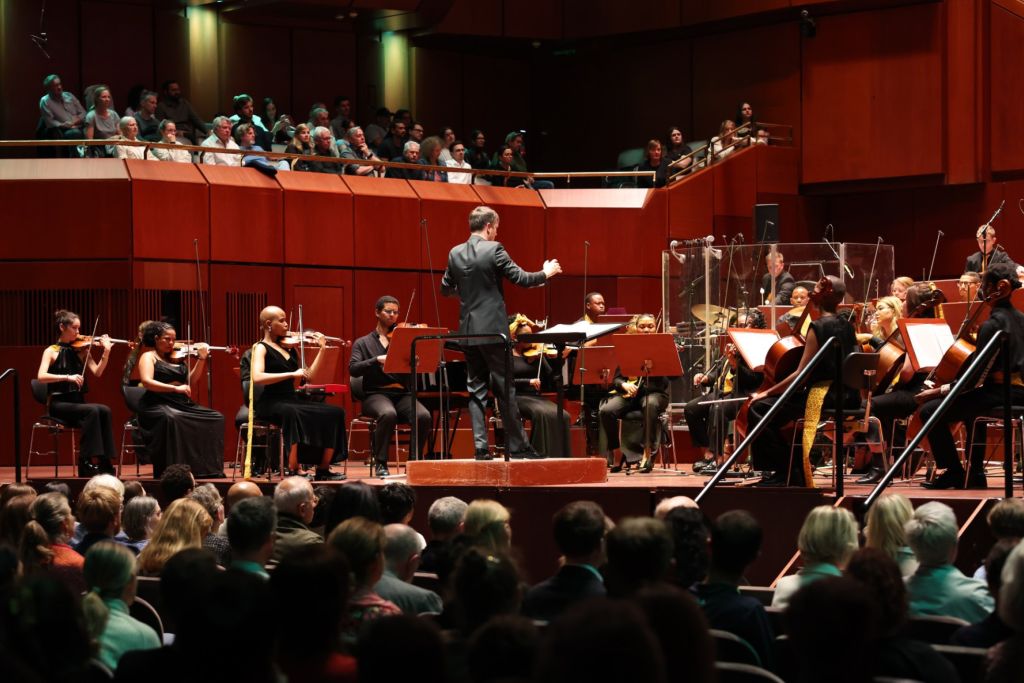
Between these two historical reference points, The Soweto Protocol inserted a bridge to South Africa. And with the works Black Child by Viwe Mkizwana and Missing Soest by Musawenkosi Mdluli, it became apparent that the search for the “African Footprint” is not something that ends in the past. Indeed, the continuing history of the African diaspora is now being written by a young generation of South African composers who blend classical music, jazz, and African traditions as a matter of course. Leonard Bernstein’s Prelude, Fugue, and Riffs, of which David Panzl also created an arrangement with new instrumentation for the MIAGI Orchestra, likewise fit seamlessly into the programme’s dramaturgy. In this context, jazz appeared not a stylistic contrast but as a direct result of those cultural entanglements that ran throughout the evening’s entire selection of works.
In this performance, collaboration with the mdw was once again a key element of the underlying artistic concept. The mdw Percussion Ensemble functioned as an integral component of the orchestra’s sound, lending additional depth to the timbres heard in the rhythmically driven works while also expanding the orchestra’s palette of harmonic colours by marimba and vibraphone. And for the programme’s energetic conclusion with Joe Zawinul’s Patriots, performed as an encore, the South African MIAGI Orchestra was joined by the mdw Drumline in a rendering that was rousing indeed. This powerful combination of orchestral precision and rhythmic energy allowed the longstanding partnership between MIAGI and the mdw to be not only heard but also experienced in a direct way, with the elicited response testifying to this artistic concept’s impact far beyond the concert hall: the performance was euphorically received and celebrated by the audience with lengthy applause. Immediately following the concert, new invitations and engagements for the upcoming season began pouring in—an impressive tribute to the international appeal of a project that combines musical excellence and social responsibility in an exemplary manner.
Searching the African Footprint thus turned out to be not just the title of a concert but indeed a programmatic statement. The MIAGI Orchestra showed that the classical canon is most lively where it remains open to previously unnoticed voices and new perspectives. And in this light, Florence Price and George Walker stand not on the margins of music history but rather at its centre. Presenting their music together with works by a young generation of South African composers made it clear how the history of classical music can only be told in its entirety if it is conceived of as shared transcultural history. Precisely therein lies the artistic and social relevance of this extraordinary project as well as the enduring significance of the partnership between MIAGI and the mdw.