How do music, people, and ideas move across geographic, political, and cultural boundaries? This was the central question at the 2026 edition of the isaResearch Summer School, entitled “Across Moving Grounds: Music, Performing Arts, and the Politics of Mobility”. This event saw an international group of 21 early stage researchers from a wide range of disciplines come together to shed light from the most varied perspectives on mobility as a core theme of musical and performative practices.
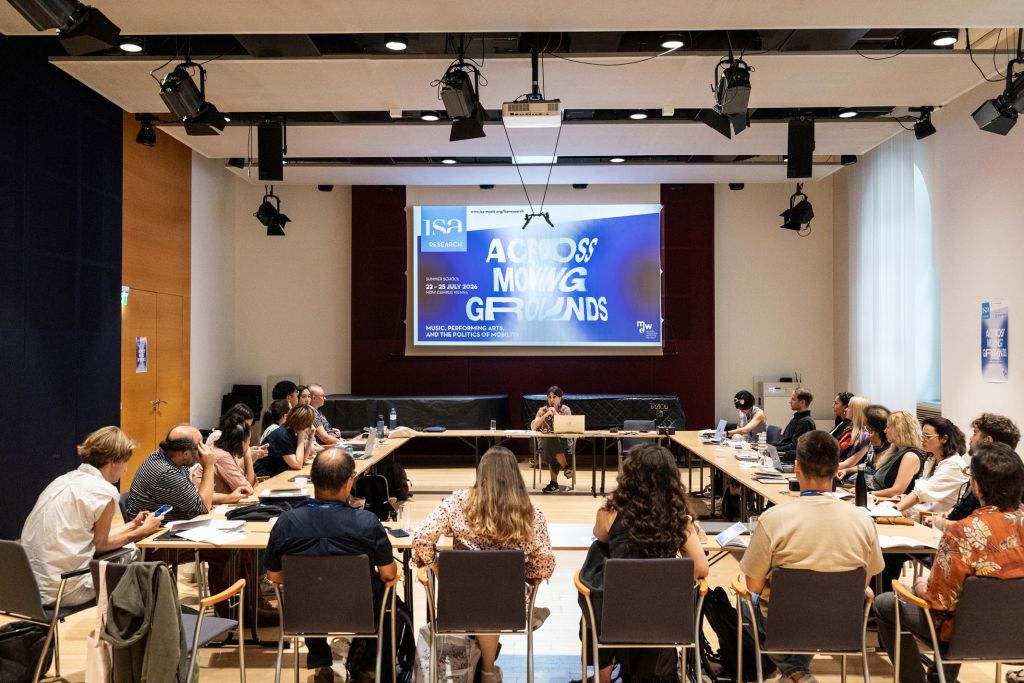
The conference began with a panel discussion on “Travelling Concepts and Cultural Transformations”, which made it clear right from the start how mobility encompasses far more than just physical movement. Subsequent contributions ranged from historical and ethnographic studies to topics such as the role of affect in the Viennese salsa scene and the transcultural paths taken by the waltz, whose transformation into the Peruvian Vals Criollo demonstrates in an exemplary way how musical styles develop new identities through appropriation and local contexts.
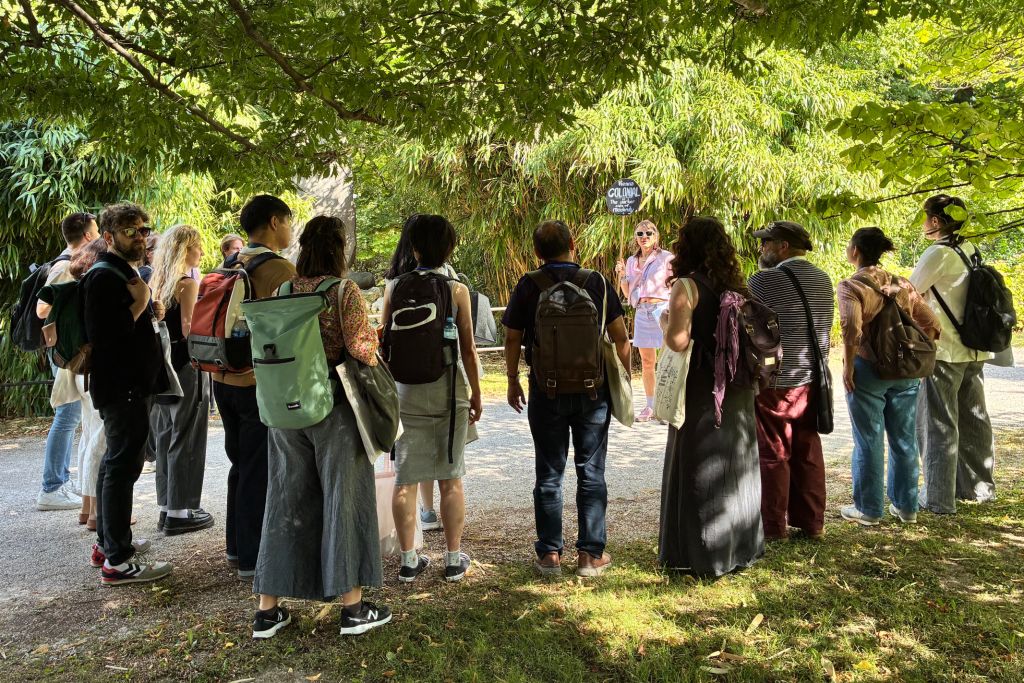
Listening itself also became a subject of research. The panel discussion “Listening Differently” centred queer and decolonial perspectives on musical perception, while a particularly impressive lecture performance invited the audience to question accustomed modes of listening and experience sound anew as a space of social power relations. The first day was then topped off by a critical city walk that exposed Vienna’s colonial history followed by a quickfire miniature poster creation session featuring current research projects as part of the isa Opening Party.
The second day featured a focus on music in the public realm and its societal impacts. Contributions on theatre music as political activism, urban musical infrastructures in Zurich, and “Afro-parties” in China made clear how musical practices open up spaces for exchange as well as for the negotiation of social belonging. Moreover, a concert lecture on Colombian bambuco showed impressively how arrangements of music can question existing canons and open up decolonial perspectives.
Afterwards, it was questions pertaining to cultural infrastructure that took centre stage. With an eye to digital networks in the Bosnian diaspora, Ukrainian artists in exile, and funding structures’ effects on the visibility of marginalised composers, it became clear how mobility is always also closely associated with political and economic conditions. The day concluded with public lectures on musical life in besieged Sarajevo as well as on multiple marginalities in Vienna’s Balkan music scene, lectures that made for moving insights into music as a strategy for survival and an expression of cultural identity.
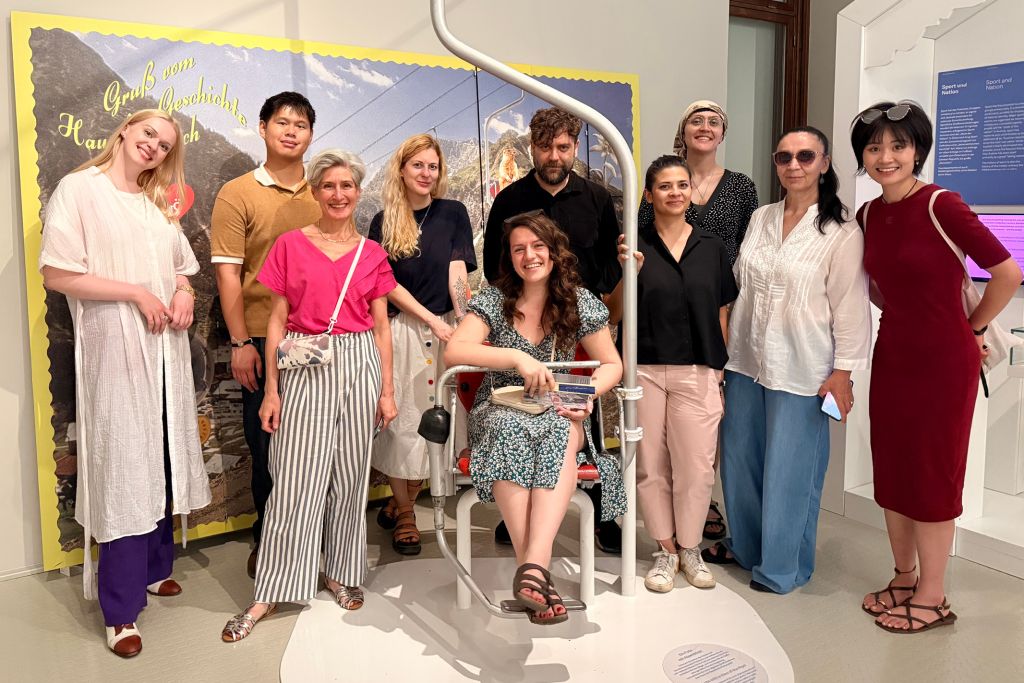
Friday was devoted to archives as dynamic sites of knowledge. The contributions, whether about performances from the 1970s, Chilean music in exile, or Afghan musical traditions in digital networks, showed how archives not only preserve the past but are also themselves in motion. Workshops on embodied knowledge and decolonial research methods expanded the discussion by practical perspectives. The day was then rounded out by a visit to the MAK’s exhibition on Christoph Schlingensief, which featured numerous points of contact with the thematic complexes surrounding music and migration.
The final Summer School day revolved around experiences of exile and forced displacement. Lecture topics ranged from the paths in life taken by the composer Jan Urban to vocal failure in singing as an expression of social exclusion, Sephardic song traditions, and contemporary performances in Cambodia. And in a final round of reflection, the participants discussed not only the week’s scholarly revelations but also the significance of international summer school events as venues for exchange, networking, and collaborative research.
The week’s core programme was complimented by local field trips, a farewell dinner, and a matinée concert presented by the exil.arte Center. And in a most impressive way, this 2026 edition of the isaResearch Summer School demonstrated how mobility goes far beyond movement between places to also embody an analytical perspective that interlinks musical practices, cultural memories, and societal power relations. Moreover, the diversity of the introduced research approaches made clear just how productive interdisciplinary dialogue is in the context of today’s music- and performance-related research—and how important international encounters remain when it comes to developing new scholarly perspectives.