In May 2026, the European Universities Alliance IN.TUNE – Innovative Universities in Music and Arts in Europe celebrated one of its milestones at the mdw: the first IN.TUNE Summit, attended by around 250 participants from the eight IN.TUNE partner universities in Vienna, Oslo, Bucharest, Paris, Helsinki, Barcelona, The Hague, and Belgrade. Developing joint courses and programmes of study as well as innovative teaching and learning formats, creating seamless mobility opportunities for students and teaching staff between the partner universities, setting up research collaborations, and developing collective strategies are the central themes of IN.TUNE’s work.
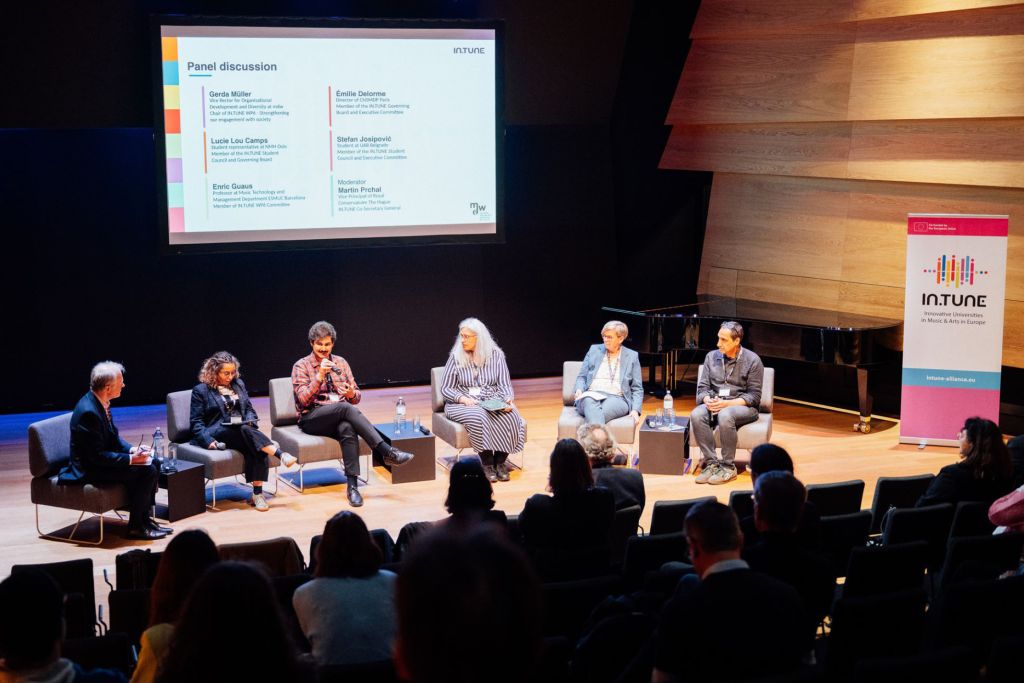
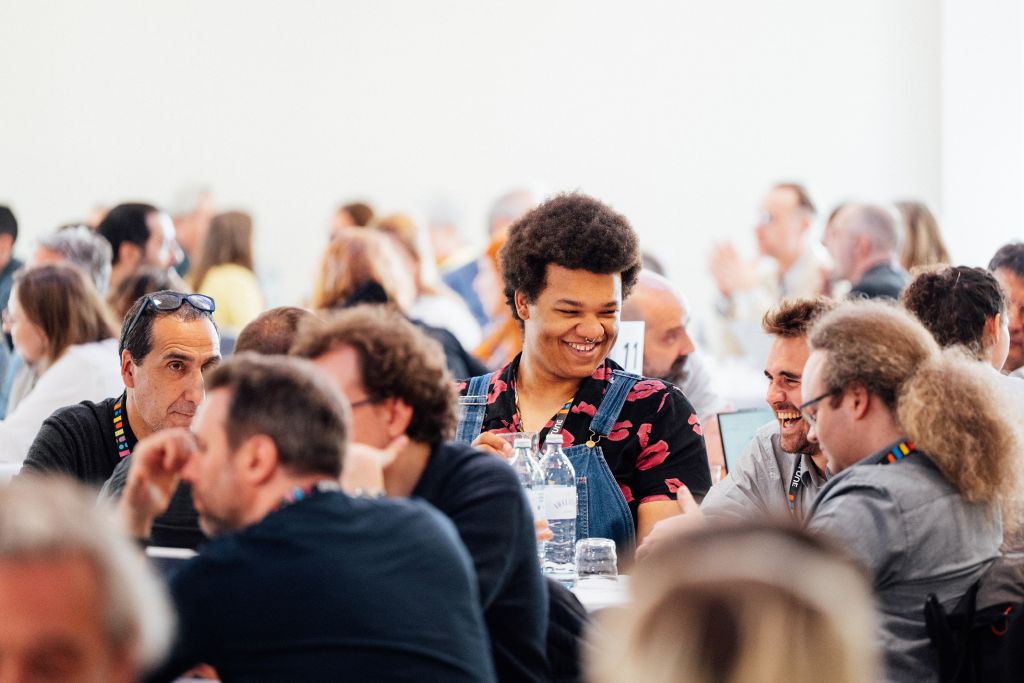
During this three-day summit, the participants—who have now spent nearly three years engaging with specific topics in working groups—experienced the combined strengths and expertise of their IN.TUNE colleagues. In meeting face to face, it became clear how trust and a common language have developed within the Alliance. IN.TUNE is now impacting not only each institution’s operational procedures and curricula but also people’s mindsets and awareness of diversity. At the same time, however, it became clear how these eight institutions are subject to eight different sets of national legislation and feature differing systems when it comes to designing programmes of study, accrediting courses, and structuring the academic year. And in the summit’s closing discussion, those present set their sights on achievements they’d like to celebrate in the future: these include lowering barriers to entry for socially disadvantaged groups, seamlessly integrating joint courses into curricula, and learning to deal constructively with differences of opinion and conflicts.
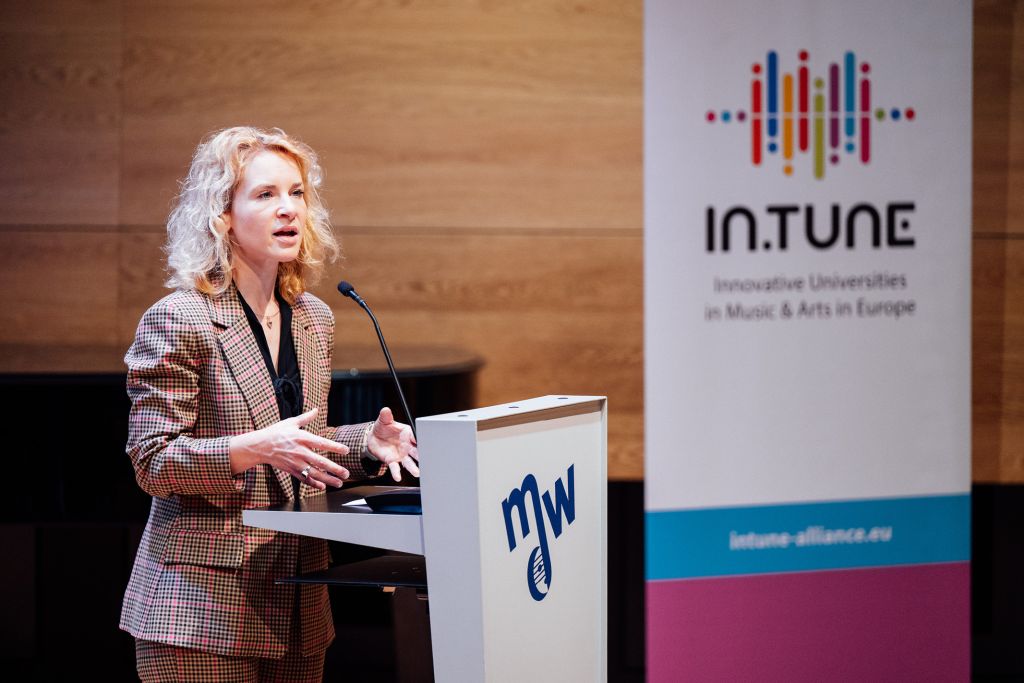
The informational event “Get to know IN.TUNE” offered interested parties insights into the Alliance and its work. Federal Minister for Women, Science and Research Eva-Maria Holzleitner, in her opening address, highlighted IN.TUNE’s role as the only European Universities Alliance situated within music and the arts at large: “IN.TUNE stands for a Europe that is open, democratic, cooperative, and culturally ambitious. Universities are not only sites of learning and research, but also places where democracy is put into practice.”
To Rector Ulrike Sych, IN.TUNE embodies “a process of change that anchors international cooperation even more strongly in teaching, artistic research, and administration.” And when political interference threatens, she added, IN.TUNE partner institutions provide one another with support: “Our shared attitude encompasses a commitment to upholding human dignity and human rights, equal treatment, transculturality, diversity, and the freedom of science and research.”
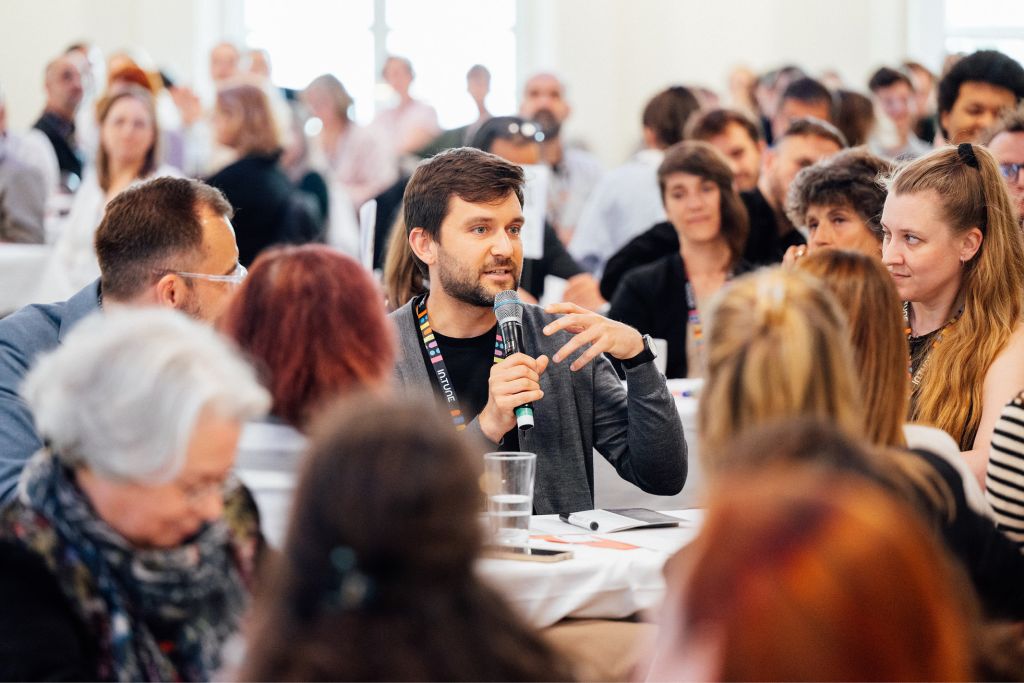
Johannes Meissl, mdw Vice Rector for International Affairs and Art, emphasised how IN.TUNE has become part of the university’s “institutional DNA” and that the mdw now intends to continue along this transformative path.
During the subsequent discussion with Alliance representatives, IN.TUNE Co-Secretary General Martin Prchal emphasised the central role of students within the Alliance through their own Student Council and through representatives at all levels of IN.TUNE.
Stefan Josipović, who studies at the University of Arts Belgrade, spoke of IN.TUNE’s importance amid the Serbian student protests that have been ongoing since autumn 2024: “IN.TUNE has been there to help—both emotionally and in every other possible way.” Josipović also brought up the matter of a non-EU-based perspective: “Staying connected with European artistic movements is difficult—and it’s in precisely this light that the Alliance steps in and builds bridges to less well-networked places like ours.”
Gerda Müller, Vice Rector for Organisational Development and Diversity at the mdw, emphasised why engaging with society is of vital importance for universities: “Music can give rise to connections between people of differing cultural and social backgrounds. IN.TUNE enables us to pool knowledge and align our values so that those who graduate from our institutions can continue developing and contribute to a more inclusive and sustainable cultural ecosystem.”
Émilie Delorme, Director of the Conservatoire National Supérieur de Musique et de Danse de Paris, is grateful for how the IN.TUNE institutions can learn from one another with an eye to tackling the challenges of our time: “Within IN.TUNE, we’re organised in a structured way and share common goals. So our greatest challenge will now be to further the development of all that’s been achieved so far.”
Lucie Lou Camps, who studies at the Norwegian Academy of Music in Oslo, had some clear words to say about how IN.TUNE impacts her everyday life as a student. A close look showed her that “IN.TUNE is everywhere”—be it in classes taught by faculty from IN.TUNE partner universities or when she seeks advice from her Student Council peers.
“IN.TUNE is everywhere”: it’s a credo that provides inspiration for the partner institutions to shape the Alliance’s innovative present and future, concrete manifestations of which can be found in this autumn’s jointly developed study offerings: mdw lecturer Michael Pinkas is taking a close, critical look at the music-historical canon together with Belgrade-based colleagues and students in a joint online course. Axel Petri-Preis (mdw), in concert with colleagues from Barcelona, Belgrade, and Bucharest, is inviting students to combine their artistic practice with social responsibility. And mdw lecturers Pauline Heister and Volker Werner are continuing their series of intensive courses that have already brought students together in The Hague and Paris.