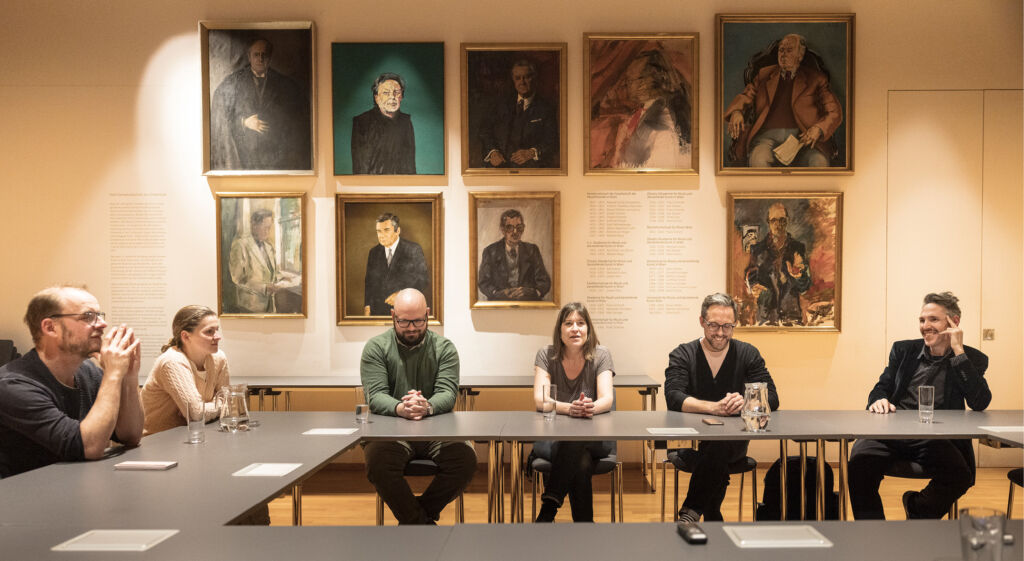
In this mdw Magazine interview, the intriguing genesis of the community music project weites Nahen [Proximate Distance] and the preparations for its performance on the mdw Campus on 3 June 2026 are discussed by Axel Petri-Preis (co-artistic director, Participation and Community), Peter Jakober (co-artistic director, Composition), Bettina Büttner-Krammer (Head of Music Education, Wiener Symphoniker), Lukas Kobermann (conductor of the wind ensemble Blasmusik Kagran), Mariia Pysmenna (secondary school teacher, MS Johann-Hoffmann-Platz), and Emir Handzo (secondary school teacher, MS Brüßlgasse).
Who came up with the idea for the community project weites Nahen?
Axel Petri-Preis (APP): The idea originated with Peter Jakober—and in my capacity as a professor of music mediation and community music, I was eager to take it up. So we sat down together and thought about how it might be realised.
What exactly is this project meant to be?
Peter Jakober (PJ): My basic idea was to create a piece of music that initiates sound’s expansion into the distance. Or to put it metaphorically: one where the mdw shines outward even more brightly. That’s always been a desire of mine, as has been expanding mutual performances by professional and lay musicians to the context of contemporary music.
One thing that makes this project special is its large number of participants, who’ve now joined hands to compose a 50-minute work for mdw students, members of the Wiener Symphoniker, members of the wind ensemble Blasmusik Kagran, and students of two compulsory secondary schools and a primary school. What does the actual composing process look like?
PJ: It’s a work in progress, a process that’s totally open. While we do have a plan, none of us knows exactly what the final outcome will be. This open framework is important since we want all participants to participate actively in shaping the project.
How do you strike a balance where the challenge that this entails is attractive both to professional musicians and to laypeople?
PJ: I’m employing a very specific technique to make it possible for musicians of highly disparate skill levels to take part. All of the participating musicians will have a click track in their ears.
So the musicians will all be wearing headphones, like having an on-ear metronome of sorts?
PJ: Right. There’s no conductor. And the performance itself is conceived as a walking concert, with the musicians positioned in various places. So the sole level of coordination is that of the metronomic click track, and I’ve composed the individual musicians’ click tracks such that the overlaps between their numerous tempo layers result in an extremely dense web of sound.
APP: This project exemplifies what the mdw’s Music in Dialogue team seeks to achieve: a true unity of artistic and societal aspirations. We bring together people of totally different backgrounds who wouldn’t otherwise encounter one another. And in view of the social upheavals we currently see unfolding, we’d ideally like to use such instances of shared music-making to contribute to a better coexistence.
I’d be interested in hearing about how this project is being received—by the school students, for instance. Ms. Pysmenna, you work as a music teacher, choir director, and music mediator at the Johann-Hoffmann-Platz secondary school. What moved you to get one of your classes involved in this project?
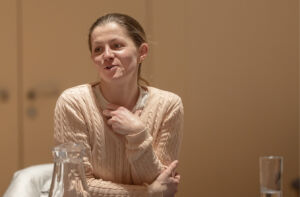
Mariia Pysmenna (MP): Axel Petri-Preis has been working closely with our school in his projects for many years, now, and the invitation to participate in weites Nahen came from him.
How old are the kids who are taking part in this project? And is it hard to get them motivated?
MP: They’re between 10 and 12—and no, it’s hasn’t been hard at all so far. Contemporary music interests them way more than baroque or classical, and they’re totally into trying out new sounds and producing all kinds of knocking and percussive noises.
Emir Handzo (EH): It’s not quite like that in my class. I teach music at MS Brüßlgasse, and I’m grateful for a project like this one—one that lets my students, some of whom are growing up in difficult socio-economic circumstances, gather experience with live music and come into contact with experts whom they’d probably never encounter otherwise. Our school doesn’t have a music emphasis, and the kids only have one hour of music per week from the second form onward. Against that backdrop, keeping 10-to-12-year-old kids motivated for an extended period is a real challenge for a teacher.
How do you make it work?
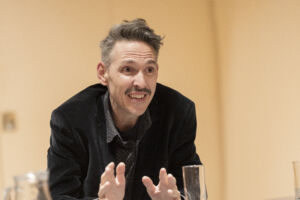
EH: Things have gone alright so far—but if their motivation flags before our concert on 3 June 2026, one thing I can do is tell them that participating actively in these experiments with sound will boost their participation scores.
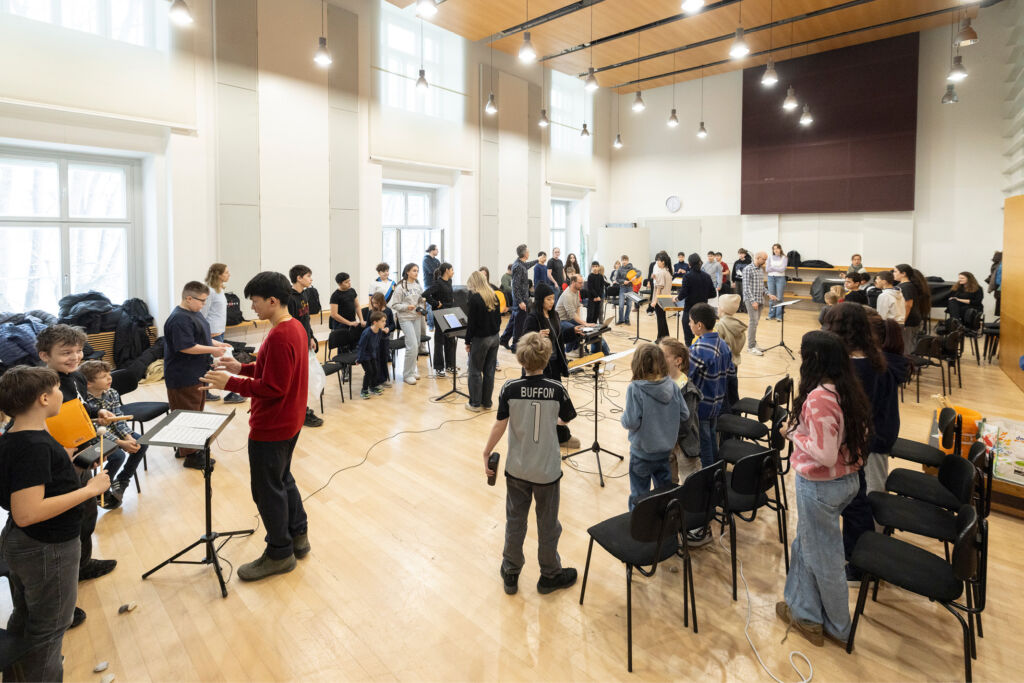
APP: The goal, of course, is to catalyse the kids’ intrinsic motivation. And to keep their interest and excitement from dropping off mid-project, we’ve worked out something like a project dramaturgy. One part of that is inviting the kids to rehearsals of the Wiener Symphoniker and/or Blasmusik Kagran. And we’re also putting on workshops at the schools where the various participant groups can get acquainted and make music together. We’re making a very targeted effort to overcome what are frequently implicit hierarchies between different musics. And in this light, the project also represents something that our society desperately needs—namely, a rehearsal space for democracy where we can shape processes of artistic negotiation on an equal footing and then join hands to perform whatever results.
Ms. Büttner-Krammer, you oversee the Wiener Symphoniker’s music mediation work. What role is your orchestra assuming in this project?
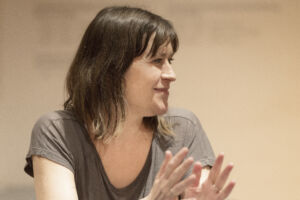
Bettina Büttner-Krammer (BBK): Around eight of our string players will be participating in the performance. And in the run-up to that, they and the school students will be getting acquainted.
How hard is it to get professional musicians interested in a project where there will be laypeople participating?
BBK: My own experience has shown me that it’s especially long-time orchestral players who are open to projects situated outside their normal routines. They view workshops at schools and senior residences as a welcome change of pace from what the classical music business usually involves, so they really do give 100 percent. A minor challenge in weites Nahen is that part of the Wiener Symphoniker will be returning from a tour of Japan right before the concert, but we’ll definitely figure out a good solution for that.
Mr. Kobermann, you trained as a school music teacher in the mdw’s Music Education and Instrumental Music Education programmes, and you’ve been leading Blasmusik Kagran for seven years now. How do your musicians feel about this project?
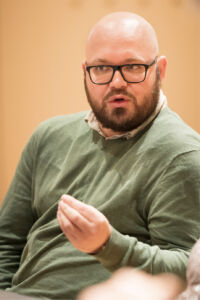
Lukas Kobermann (LK): I quite generally try to encourage my folks to be open to new projects. Blasmusik Kagran is a very diverse group of musicians: their ages range from 13 to 76, they work at all kinds of jobs, and they come from a wide range of educational backgrounds. So it’s a heterogeneous group of musicians whom you always need to motivate in one way or another—be it asking them leave work early for rehearsals or even to take a day off. And especially with experimental projects or contemporary music, you do encounter certain reservations and inhibitions.
How many of your musicians will be taking part in weites Nahen?
LK: Between 30 and 40—from flute, clarinet, and saxophone to trumpet, trombone, tuba, and horns. I should add that I don’t necessarily listen to contemporary music myself, but I find performing contemporary music incredibly fun. You can push boundaries, make unusual sounds, use your instrument in a totally different way—and you can also use the fact that it’s contemporary music as an excuse to get a bit crazy.
How many musicians will be involved in this project overall?
PJ: In addition to the musicians of Blasmusik Kagran, the participants will include around eight members of the Wiener Symphoniker, 50–60 school students, and 50–60 mdw students—including from the class of our project’s musical director Jaime Volfson Reyes, who teaches contemporary music here.
How will the concert on 3 June look in terms of its dramaturgy?
PJ: It’ll be performed outdoors on the mdw Campus as well as in the Fanny Hensel-Saal and the Clara Schumann-Saal with the halls’ doors open to the courtyard. The musicians will be positioned in all kinds of places, and our audience will move between the different locations in a circular pattern. The exciting thing will be to experience all of these spaces’ individual worlds of sound. A sound that arises outside might suddenly be taken up inside one of the halls—and the audience members will stroll through these sonic landscapes, hear different rhythmic structures in each place, and be able to move thorough and listen to these multiple forms of sonic motion at their own speed.
EH: My class has already done four rehearsal sessions with Jaime Volfson Reyes, who worked with the kids in a very empathetic way. One especially fascinating thing for us was to experience the acoustic difference between our classroom and a professional rehearsal space. And I also like this idea of cultivating a democratic mindset—one where the kids learn to listen and where the rests are just as important as the beats when you make music together.
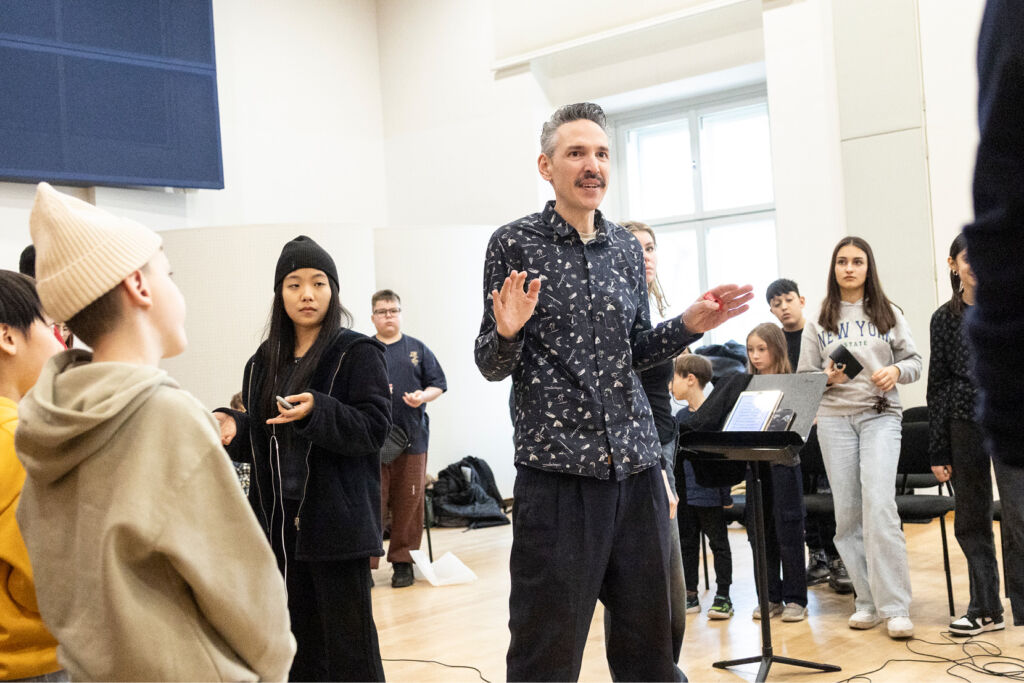
PJ: John Cage once called for the cultivation of silence even in our everyday lives.
MP: Some kids have a hard time tolerating silence. I once introduced a fourth form class to John Cage’s 4’33”—that piece of music where not a single note is played. Its silence drove them absolutely nuts. So as part of weites Nahen, I hope to be able to convey to the kids just what a wonderful thing a deliberately placed rest can be in music.
Looking back over the weeks and months so far: What are each of your personal takes on what makes this project special?
LK: I view weites Nahen as an opportunity to demonstrate just how multifaceted wind band music can be and how professional a quality even laypeople can achieve.
BBK: For the Wiener Symphoniker, every education project is hugely enriching—and it will definitely be an immense joy for our musicians to play together with these diverse groups.
EH: To me, the welcoming culture at the mdw is something special. Where else, after all, would school students get a chance to make music together with professionals?
MP: It’s wonderful for me to watch how children who have a tough time in other subject areas suddenly blossom in such great projects. And perhaps it’ll happen that such a project inspires someone to become a musician him- or herself later on.
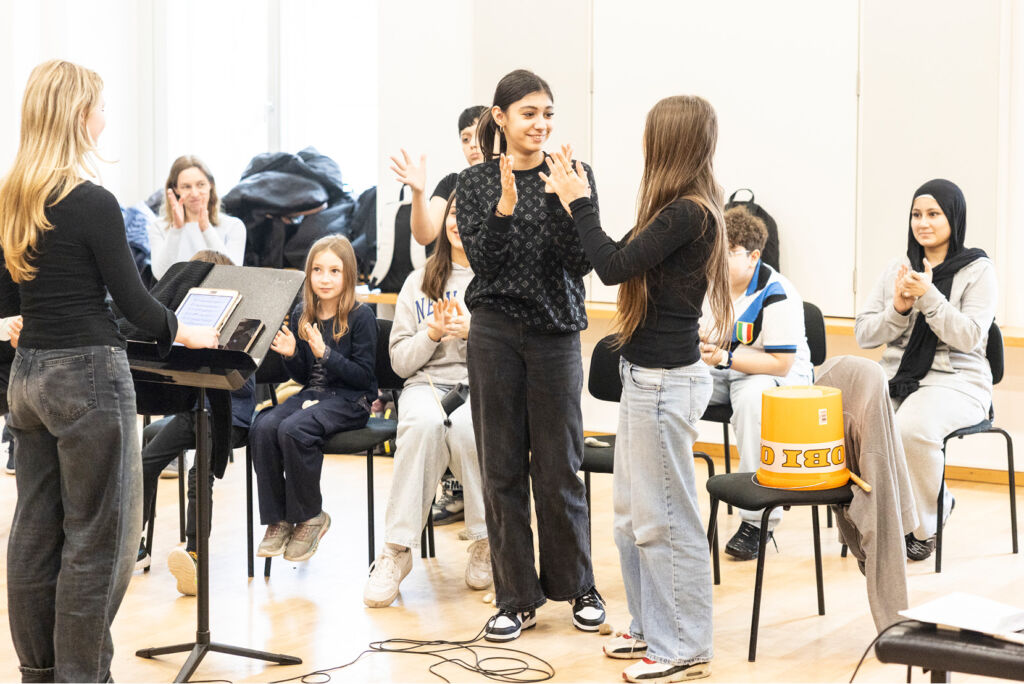
PJ: Speaking of blossoming and shining: the school workshops have also shown me how some children, owed to their personal circumstances, have never really gotten to know this sort of radiance that really should inhabit all young people. But the moment you start making music, you just have to put something out there in some way. So if this project succeeds in allowing these kids to shine, I’ll of course be very happy. And in this spirit, I also want to stress just how impressed I am with what music teachers do every day in order to allow kids to experience this joy of being alive by way of music.
APP: I’ll add something on that aspect: I enormously enjoy and value the privilege of working on this project together with such great colleagues who have a similar mindset and are willing to give themselves over to new, unknown things—in light of which I also feel immensely grateful to be at a university that’s made such a project possible. Because the community and process-oriented logic of what we’re doing here absolutely does challenge established processes and procedures.