This year will see Exilarte, Center for Banned Music—founded as a private association and institutionalised as part of the mdw in 2016—celebrate 20 years of existence. In the following anniversary conversation, Exilarte head Gerold W. Gruber surveys what has been achieved and what still remains to be done.
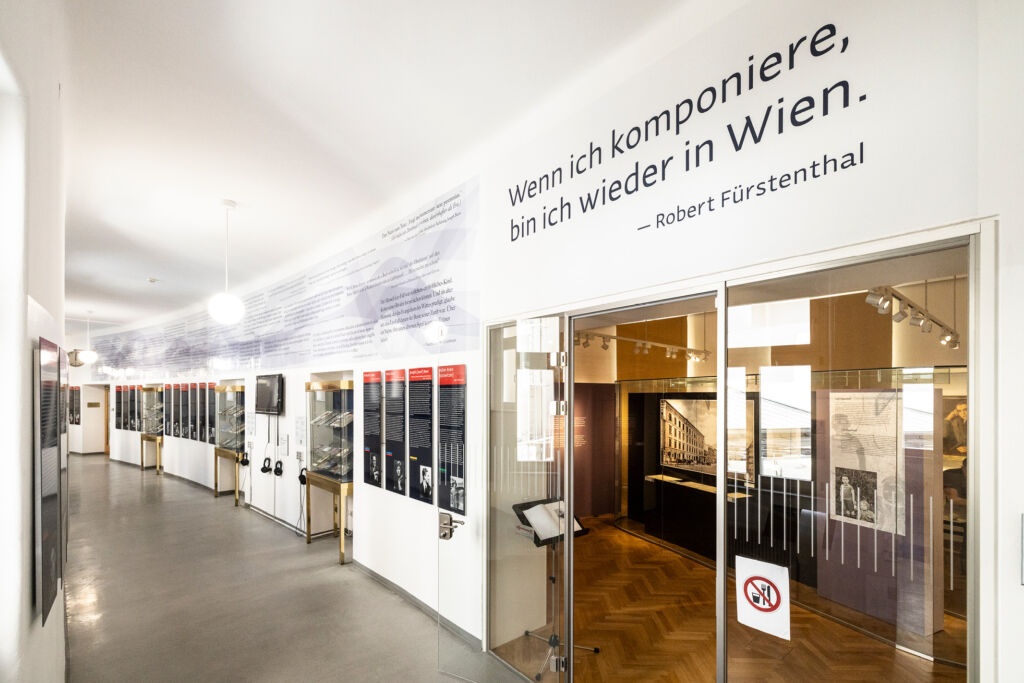
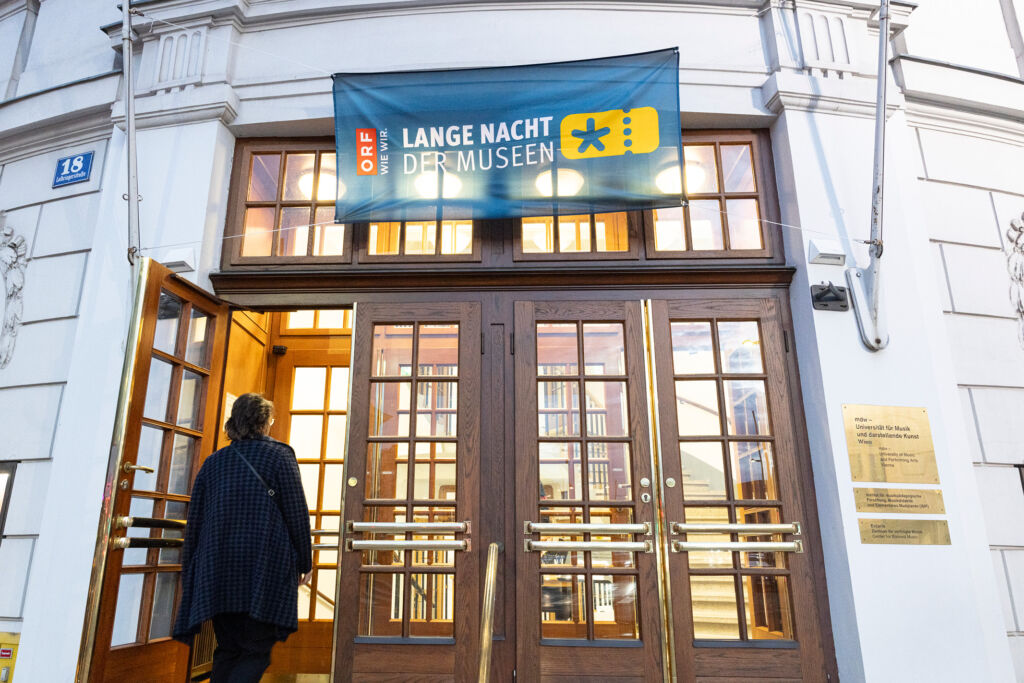
A walk through Exilarte’s generously appointed present-day spaces on Lothringerstraße gives one a sense of the strong presence that the mdw has accorded its Center for Banned Music. It seems as if the entire institution were united behind this theme—not just in principle but also organisationally and institutionally, with an eye to its sustainable anchoring at a prominent, significant location.
Gerold Gruber (GG): Yes, precisely this is what’s crucial—and indeed, such presence hasn’t always been a matter of course. We began our work in 2006 with a great deal of euphoria and clear substantive convictions but as a small association operating under relatively difficult circumstances. The turning point came in 2016 with the mdw’s new rector: immediately following her appointment, Ulrike Sych invited me to meet with her and suggested turning Exilarte into its own mdw Research Center. It was only then that numerous individual initiatives could finally coalesce into a sustainably anchored, internationally visible, and actively working centre for research on exiled music.
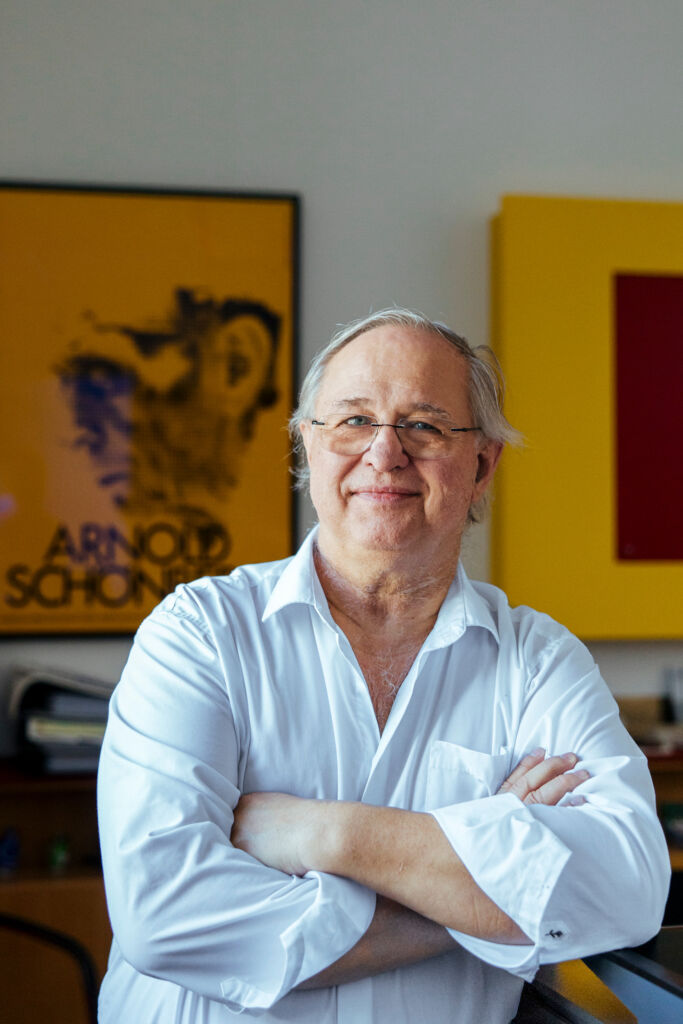
Over the years, you’ve built an extensive archive—and you’ve also been pursuing a number of activities that convey your materials and documents to the outside world. What are the main emphases of your work overall?
GG: The core of our work is, of course, preserving the artistic estates—which have by now come to include over forty variously sized bodies of material. From the very beginning, though, it was clear that we didn’t want this material to remain in obscurity. So it was only logical to also place equal emphases on research, mediation, and publicity, for which reason projects such as exhibitions, concerts, symposia, and publications are by no means incidental but much rather integral components of our self-concept.
How extensive are your total holdings? What kind of physical volume are we talking about, here?
GG: Our storage facilities are currently filled to around 20 to 25 percent of their capacity. They’re climate-controlled, secure, and technologically state of the art. Moreover, the building—which we share with the Akademietheater—has security personnel constantly present. Secure infrastructure like this isn’t a mere detail; it’s in fact a prerequisite for assuming long-term responsibility.
What are your most recent additions?
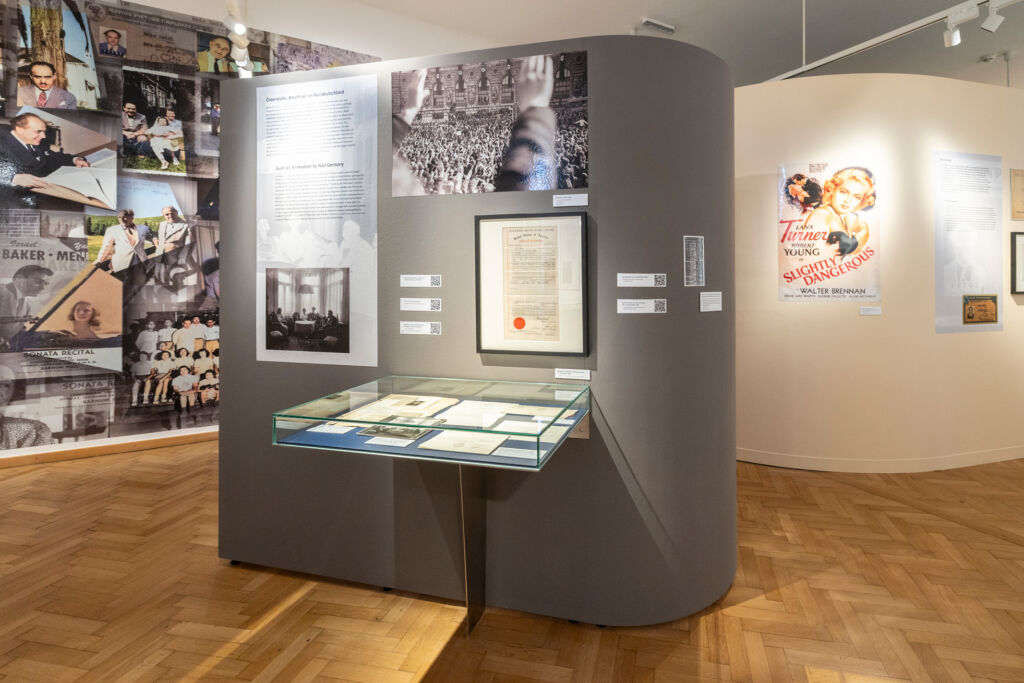
GG: We recently had the renewed pleasure of welcoming some very large and internationally relevant artistic estates, such as Erich Zeisl holdings with over 5,000 letters as well as the artistic estate of Ernst Toch. Moreover, the fact that we repeatedly receive materials from international institutions like UCLA (University of California, Los Angeles) shows to just what extent our work is being perceived and found meaningful outside of Austria, as well.
Had you originally expected to see Exilarte’s archive grow so large?
GG: Not at all, really. We’d initially reckoned with receiving perhaps two artistic estates per year, and we’d have viewed even that as a huge success. The situation now, however, is that we’re receiving an average of four to five such estates a year. Their sizes vary quite widely—from a single box to sixty boxes. This growth testifies to the huge historical need that exists as well as to the trust we’ve now come to enjoy.
To what extent does engaging with the artistic estates you hold also make possible the re-assessment of persecuted musicians?
GG: For many decades, musicology’s view had been narrowed down to just a few canonical strands of music history. It’s only gradually that we’ve now begun to see greater recognition of the enormous stylistic breadth that existed, particularly during the 20th century’s first half. Many of these composers were highly regarded and very present in concert halls and opera houses during their own era, but later times saw them systematically relegated to the background for political and biographical reasons. The resulting gap still exists today and continues to influence our understanding of music.
Whom would you consider representative examples, here?
GG: One would be Hans Gál. During the 1920s and ’30s, it was a matter of course for his operas to be programmed alongside works by composers like Zemlinsky and Schreker. There was also Hans Winterberg: it’s only thanks to editorial efforts, performances, and recordings that his oeuvre’s quality and independence are now becoming evident. And we can currently observe similar things happening with numerous further names that were long barely present.
What role do publishers, musicians, and other external partners play in this process?
GG: A central one. Without committed publishers and people who are willing to delve into an oeuvre with great persistence, lots of things would be impossible. And an equally important aspect here is being sensitive in our interactions with legal successors. They’re often caught between pride, distance, and overload when confronted with artistic estates whose significance isn’t always clear to them.
Even so, quite a lot of material seems to be irrevocably lost.
GG: Yes. And lots of families tell us that their children or grandchildren have no interest in such documents, being able neither to read the language nor to understand the musical notation. At some point, an artistic estate becomes just an old box with unknown content. So our job is to act in time before such documents disappear forever or get thrown away due to a lack of knowledge.
Why is it that we so rarely speak of women composers in the context of exiled music?
GG: Because for them, the marginalisation in play was unfortunately compounded: women had a far tougher time getting noticed in musical life to begin with. And as a consequence, their artistic estates were forgotten far more easily than even those of men who’d had comparatively little public impact. We do have some smaller holdings connected with figures such as Anita Bild and Felicitas Landesberger, but we’re aware of numerous further cases where materials have been lost or can’t be found. We often know only from secondary sources that these works existed at all, and we have no way of accessing the actual material.
What other gaps in the research can be identified by name?
GG: What’s currently visible is really just the tip of the iceberg. South America, in particular, has seen hardly any research—and biographies like that of Theo Buchwald show just how impactful emigrant artists were. Buchwald founded the National Symphony Orchestra in Lima and went on to shape musical life there over multiple decades, but he’s virtually unknown in Austria. Such cases are by no means exceptional; they’re much rather symptomatic.
To what extent does your work pose emotional challenges alongside the academic ones?
GG: Time and time again, we experience exceptional situations that are emotionally intense but also unbelievably wonderful. When someone stands before a memorial and breaks into tears at the memory of their own grandfather’s story, it provides us with a very direct reminder of just why our work is so important. Experiences and encounters like that help us shrug off all the organisational and bureaucratic difficulties while imbuing our daily work with meaning and direction.
What visions do you have for the years to come?
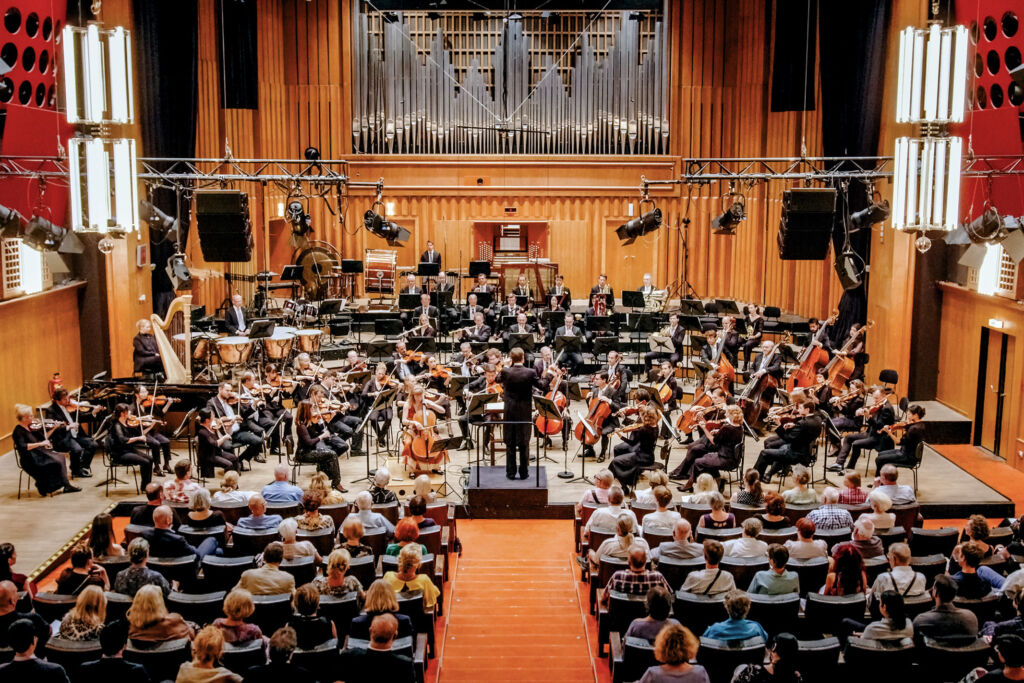
GG: Our central vision remains to rescue materials, safeguard them, and render them both visible and audible. And our anniversary this year brings with it the ability to mount our first-ever orchestral projects, including a concert with the Wiener Symphoniker. Such programmes are of great symbolic power, reach a broader audience, and help to re-anchor this music in present-day concert life.
How do things look in terms of your holdings’ digitisation?
GG: We need to be pragmatic. At present, we simply can’t afford to undertake the full digitisation of all of our artistic estates. So instead, we’re reacting on an as-needed basis and simultaneously building a database little by little. That’s a lengthy and technically challenging process, but it’s also a necessary step toward long-term accessibility.
What do you personally view as the core of your work?
GG: Giving rise to an overall impression. And going beyond storing and preserving notated material to render life contexts, networks, and ruptures visible. Exiled music is not a marginal historical detail but indeed a central chapter of 20th-century music history that we’re only gradually beginning to understand in its full breadth. And in this respect, lots still remains to be discovered.