It was through the Exilarte Center that the passionate chamber musicians of the Ineo Quartet first came into contact with banned music. And today, string quartets by composers such as Julius Bürger and Hans Gál have become fixtures of their repertoire.
Liuba and Nadia Kalmykova were born into a musical family from St. Petersburg. Their mother, a pianist, gave her two music-loving twins their first lessons on the piano when they were just three years old. “Engaging with music was a totally natural thing for us. The piano was simply there, so we could play it whenever we wanted.” Three years later, the two girls switched to violin and took their first lessons at the local music school.
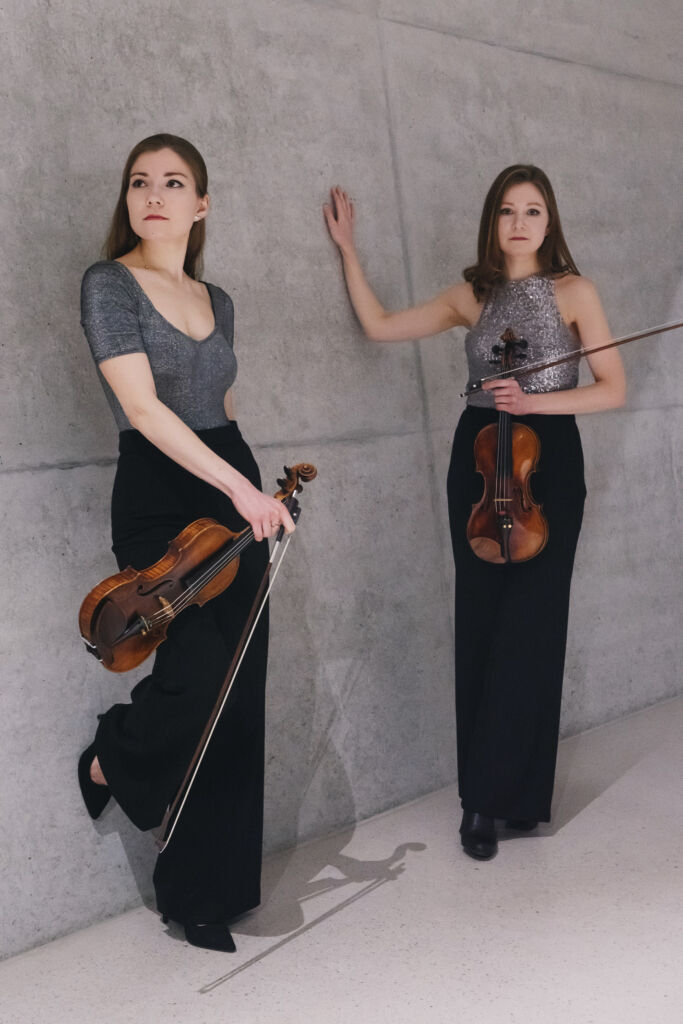
When they were twelve, Liuba and Nadia moved to Norway with their parents. That entailed a significant break, seeing as there was no violin teacher in the northern village where their parents had found employment. So in order to enable his talented children to continue with their violin lessons, their father committed to three hours of driving each week. “We didn’t want to give up music. And with the additional orchestral rehearsals, we ended up spending the entire day,” explains Nadia. “It was a difficult period for us, having moved to an unfamiliar country—but music came to our rescue.” At age 14, the girls were accepted to a preparatory course at the Norwegian Academy of Music in Oslo and ended up having to travel even longer distances. “Until we turned 16, we flew to Oslo once a month for lessons. Then we moved to the capital … alone, at first,” remembers Liuba. They enrolled in a high school there and took violin lessons at the Barratt Due Institute of Music.
When I came to chamber music, everything I’d learned before suddenly made sense. I began to experience just how I could connect with music on a deeper level.
Nadia Kalmykova
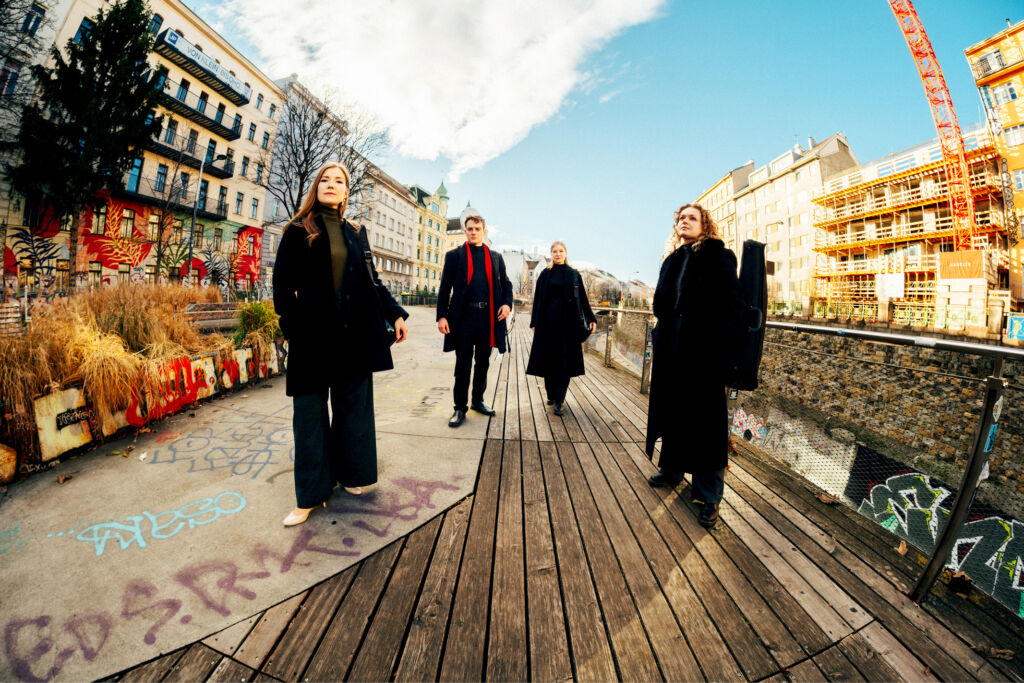
At age 19, the twins moved to Vienna and continued their studies on the violin with Pavel Vernikov at the Music and Arts University of the City of Vienna. “We’d always wanted to study in Vienna, since we thought very highly of the Viennese musical tradition. And what gave us that final push was our desire to study with Pavel Vernikov. We now have a lot to thank him for,” says Liuba. At age 24, the sisters transferred to the mdw to study chamber music, as part of which they received lessons from their new mentor Johannes Meissl. “We knew that if we wanted to focus on chamber music, we had to go to the mdw. And because of the very good supervision and constant inspiration we received from our teachers there, we even stayed on to do a postgraduate certificate.”
In 2017, Liuba and Nadia joined forces with two further musicians to found the successful Selini Quartet, whose work they then continued with different personnel as the Ineo Quartet five years later. There followed numerous performances at renowned Austrian and foreign venues, participation in festivals including the Salzburg Festival, Grafenegg Festival, and Ickinger Frühling, and multiple competition wins—including 1st prize at the mdw great talent award competition of 2020 as well as prizes at the Prague Spring International Music Competition and the Szymanowski International Music Competition.
Other postsecondary institutions don’t have anything like the Exilarte Center. It’s something very special.
Liuba Kalmykova
While still students, these young musicians came into contact with works by composers whom the National Socialist regime had classified as “degenerate” thanks to the mdw’s Exilarte Center for Banned Music. Gerold Gruber, who heads the Exilarte Center, supported the two violinists in their selection and rehearsal of such pieces. “Performances of these works are exciting not only for us but also for our audiences. Since they’re unknown, we need to give them the best possible preparation and presentation,” explains Nadia. A point of particular fascination for these two exceptional musicians is digging into the history around such works. “Having the associated background knowledge makes it clear to us just why we’re doing it all. It lends this music meaning.”
In 2020, the Selini Quartet was selected to represent the Austrian musical scene worldwide for three years as part of the programme “NASOM – New Austrian Sound of Music”. Among other things, this included a tour of the United States in 2022 on which they presented works from the artistic estates held by Exilarte—in some cases even meeting descendants and contemporaries of the persecuted composers.
The two mdw graduates have grown particularly fond of the 3rd String Quartet by Viktor Ullmann, which they discovered through their own research. “This is a highly emotional piece that Ullmann wrote in the Theresienstadt Ghetto. Although it lasts just 15 minutes, there are a huge number of contrasts—and it’s an astoundingly rich work overall.” The Ineo Quartet’s interpretation of this work can next be heard in early March at a festival in Prague. Also on the programme in Prague will be works by Ullmann’s contemporaries Pavel Haas and Erwin Schulhoff.
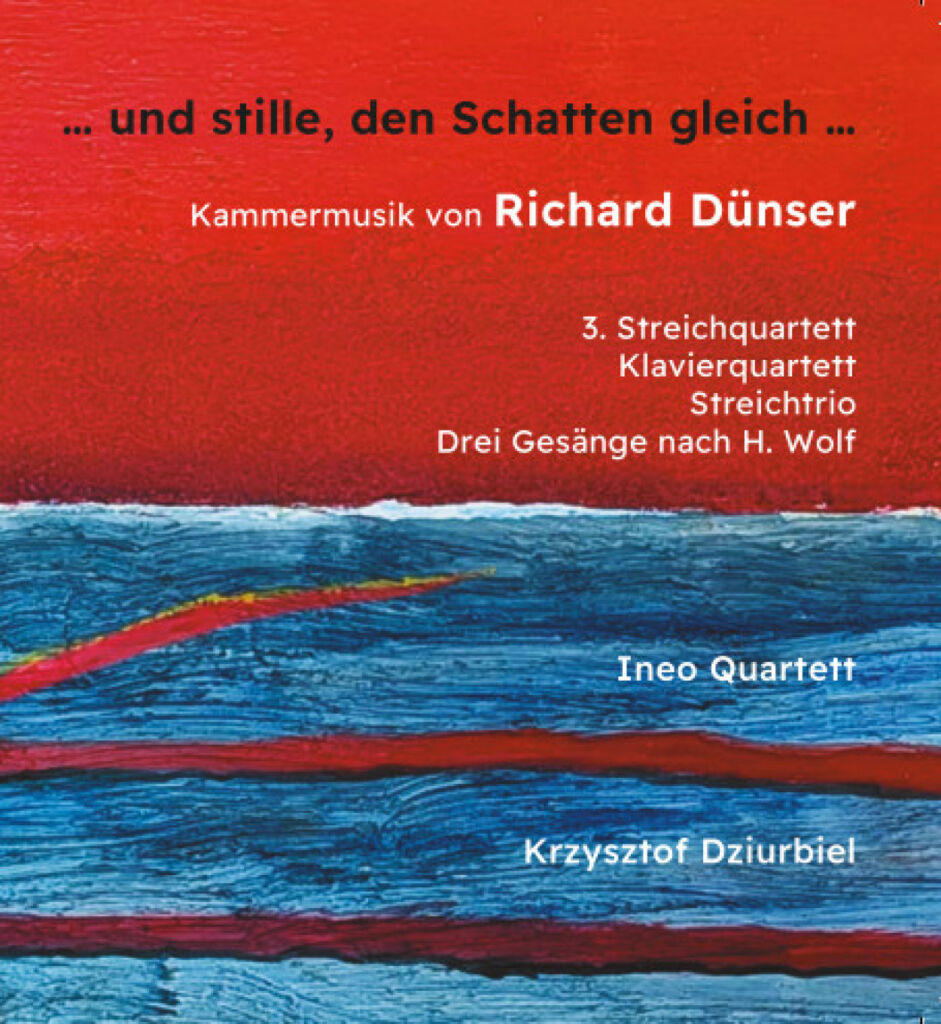
A publisher entrusted us with the task of editing a handwritten score by Julius Bürger. That was something we found very intriguing.
Liuba Kalmykova
The importance that these two sisters place on continual development is demonstrated by their ongoing collaboration with contemporary composers. “It’s particularly exciting for us to work on a world première,” says Nadia Kalmykova of her experiences. “There’s always new repertoire waiting to be discovered.” But the most important point, says Liuba, is to keep one’s eyes open—and to keep on searching for new things: “You have to find out what’s really interesting to you and not just imitate whatever you happen to be shown by others.”