Teacher to Generations – A Homage to Peter Schmidl
“The Schmidl student without beautiful tone doesn’t exist.” Clarinettist Kurt Franz Schmid, a member of the Tonkünstler Orchestra of Lower Austria, says this with a laugh but means it no less seriously. To him and many others, Peter Schmidl was not only a teacher and mentor but also an influential personality who deeply influenced their own artistic development and attitudes as musicians.
On 26 November, the mdw’s Leonard Bernstein Department will be hosting an evening memorial programme with music at the Ehrbarsaal to honour one of Austria’s most important musicians and pedagogues and help ensure that his artistic legacy remains a lively one.
Peter Schmidl was born in Olomouc, Moravia in 1941 and grew up in a family whose musical roots extended back to the days of Gustav Mahler. His father and grandfather had been first clarinettists of the Vienna Philharmonic and the Orchestra of the Vienna State Opera. Schmidl himself set out early on to follow in their footsteps: he studied under Rudolf Jettel, played his first engagement at the Vienna State Opera in 1965, and went on in 1968 to become first solo clarinettist of the Vienna Philharmonic—a post he would hold until his retirement in 2010.
He also spent over four decades teaching at the mdw, thereby leaving his mark on clarinet-playing worldwide. Moreover, Schmidl served as the Philharmonic’s managing director from 2001 to 2005.
Kurt Franz Schmid remembers how Peter Schmidl’s days were strictly regimented. Those who wished to reach him by phone had to call between nine and nine-fifteen in the morning—after which his daily schedule was always packed with rehearsals, teaching, chamber music, and performances, often in multiple locations or foreign countries.
“He taught us students not only how to play the clarinet, shape phrases, or produce a perfect staccato, but also how to organise and market ourselves as musicians.”
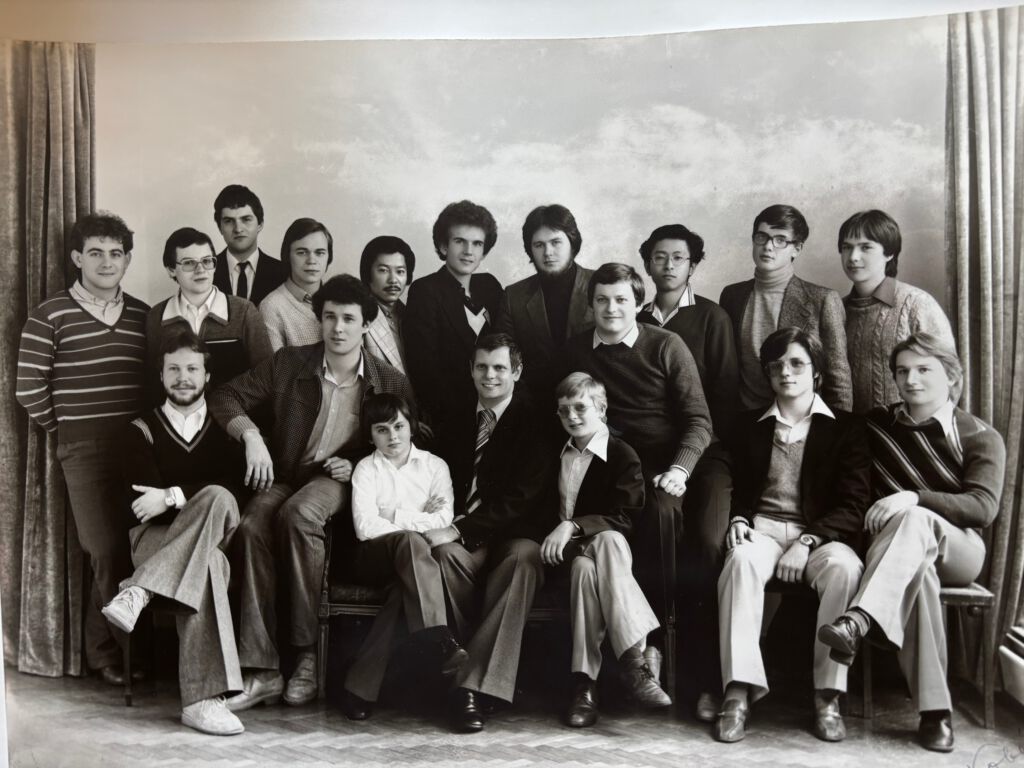
To Schmidl, pursuing a musical career also entailed developing a sense for self-marketing and structures. Schmid also emphasises how Schmidl, in his role as managing director of the Vienna Philharmonic, exhibited the same strategic farsightedness that he taught his students: “He was a very good businessman and knew how to create structures that make art possible in the first place.”
In terms of body- and health-consciousness, Peter Schmidl was far ahead of his time. To him, it was clear that superlative musical achievement is only possible on the basis of a fit body. As far back as the 1960s and 1970s, an era during which this was still unusual for musicians, he worked out regularly at the gym and paid great attention to his physical condition—hence also setting an example for his students in this regard.
Even so, music was always what was most important to Peter Schmidl. “Music was his heart’s desire, a focal point of his life. Everything he did sprang forth from this deep love of music,” says Kurt Franz Schmid.
Schmidl himself also once spoke of how music helped him deal with personal losses: “In coming to terms with the death of my mother, music is the best therapy.”
He transferred this passion directly to his students. Schmid remembers just how impressively Schmidl was able to get content across: having trained at the Max Reinhardt Seminar, he had a special knack for speaking in a visually evocative and clear manner.
“I can still hear his voice whenever I open up sheet music that bears his handwritten comments. Each one of his explanations is like an unforgettable little scene.”
No wonder that Schmidl, through his charisma, knowledge, and dedication, filled his students with such enthusiasm that nearly everyone in his class wanted to be like he was.
A central element of Schmidl’s legacy is the unmistakable approach that he took to the Viennese sound. To him, this sound was not an idealised, museally preserved phenomenon but a living, still-developing language. His playing combined warmth and elegance with extreme precision—a mixture that influenced multiple generations and brought the famous Viennese clarinet sound into the present. “When I hear a clarinettist today, I can tell instantly whether they’re from his class,” says Kurt Franz Schmid. “It’s not just about technique, but also about the imagination. Peter taught us that every phrase tells a story.”
Schmid also speaks of how his teacher was open to new approaches and experimented quite a bit with clarinet reeds and mouthpieces. This openness enabled his students to unite tradition with innovation, ensuring the Viennese sound’s living character to this day. Peter Schmidl was also known for his humour, despite all strictness. Kurt Franz Schmid remembers a lesson he had as a teenager where he’d turned up in a sweatshirt with its zipper half-open: “He saw me and said: ‘Either zip it all the way up or unzip it completely. You can play either really loud or really soft—but your zipper’s mezzo forte is something I do not like.” Moments like that kept lessons light-hearted—and also showed the precision with which Schmidl translated his observations into musical images.
He didn’t take himself all that seriously, either. Schmid remembers how Schmidl once gave him one of his CDs and commented: “Just don’t listen too closely all the time.” But by the same token, Schmidl never ceased to work on himself.
“Whenever he explained something to us, you noticed how he adhered to these same principles himself. Through his teaching, he also worked on his own development—which demonstrated to us how artistic growth never stops.” The example he set for his students impacted them deeply. “I’ve been an orchestral player for almost 40 years, and the joy I derive from making music still feels like a great privilege,” comments Franz Schmid. And when he thinks about his own students today, he recognises how intensely present Schmidl’s influence has remained across multiple generations: “We’re all part of his line.”
It’s thus that the legacy of this special artistic and teaching personality lives on in his students and his students’ students—as an audible tradition that never stands still.
We extend warm thanks to Prof. Kurt Franz Schmid for his personal memories and the time he took for this conversation.
When former students and musical colleagues gather at the Ehrbarsaal in Vienna on 26 November, it will be to remember someone who was not only a great musician but also a person who viewed music as a way of life.