I am Verena Grundner.
I study recorder in the Historical Performance Practice master’s degree programme.
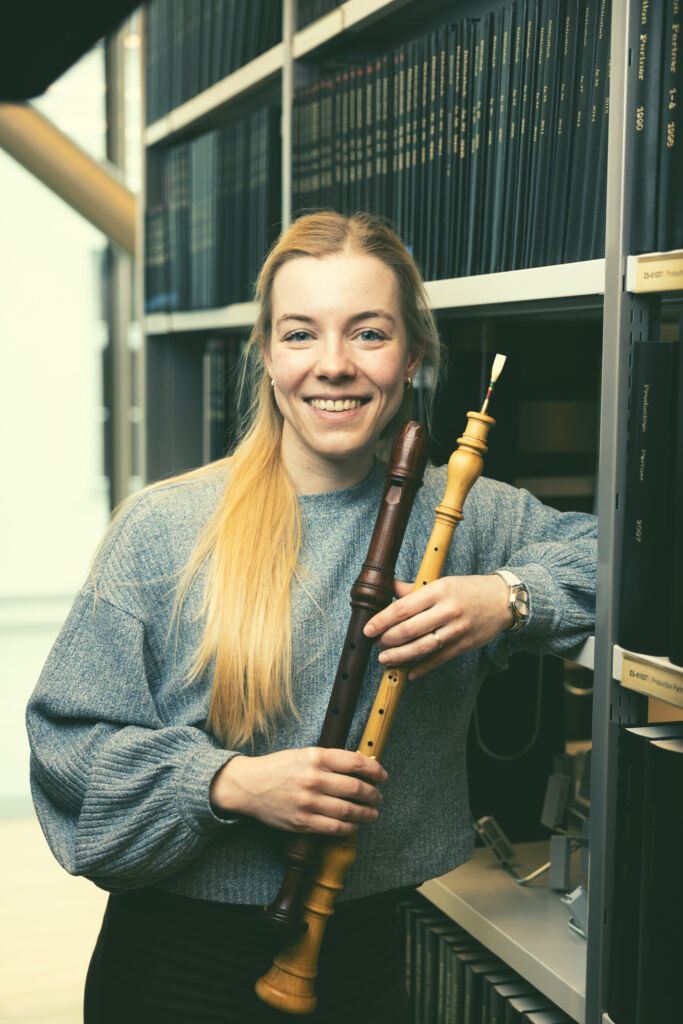
My favourite place at the mdw is the Department of Early Music, or also the University Library.
What do you wish you’d known back when you started studying here?
That our university, with all of its offerings and opportunities, is a protected but also limited space. And that you need to muster up the courage to step away and find your own niche out there in the world.
What’s special or fascinating to you about early music?
What I’m most fond of is the scene in which my work and studies play out. It’s a big community with lots of mutual esteem and support to go around. Moreover, you need to bring some inherent curiosity to the table to engage with historical sources, instruments, and notation. It’s extremely interesting: we’re virtually always on a journey of discovery, and it’s often necessary to dive into aspects like notation, diminution practices, and instrument construction to be able to play the music in the first place. This process and its ultimate result are things that I find very special.
Why does the early music scene itself matter to you, and what role do you play in it?
It’s a scene that has a long tradition in Vienna. One-and-a-half years ago, I joined forces with my friend and colleague Marco Primultini to found the cultural association Constellations in order to create innovative cultural offerings and avoid depending on larger organisations to put on the kinds of concerts we wanted to play—like programmes with lectures that introduce people to the world of historically informed performance or concert series for families. The point is to get more people enthused about early music and reach new audiences. We’re also making efforts to ensure that we and our colleagues can do what we do under fair conditions. After all, most early music people live from freelance work, since permanent positions with baroque orchestras are very uncommon. So we feel it’s all the more important to work in sustainable ways, with all these good artistic ideas flowing into a healthy labour market—ensuring things like more opportunities for smaller ensembles.