Vania Dal Maso
How to cite
How to cite
Outline
Outline
Introduction
Description of the Source
Contents and Titles
Musical Characteristics of the varie sorte de balli
Ostinato Basses and Embellishment of the Melodic Line
Bar Lines
Keyboard Instruments and/or Lute
A Practical Example: ‘La cara cossa’ / ‘Gamba gagliarda’
Comparisons With Lute Tablatures: Analogies and Differences
Performance
Conclusions
Bibliography

Introduction
The history of Italian keyboard instrument literature is initially linked to tablatures of vocal pieces. This music was conceived and created with different sound destinations in mind than those typically associated with instrumental music. The first autonomous pieces in Italian keyboard music sources that were not derived from pre-existing models are predominantly dances. The earliest known collection of dance music is a manuscript, dated between 1520 and 1550 and currently housed in the Biblioteca Nazionale Marciana in Venice.1 In addition to this volume, a number of printed collections have also survived. These are: the Intabolatura nova di varie sorte de balli da sonare (Venice: Antonio Gardane, 1551),2 preserved in the collections of the Museo internazionale e biblioteca della musica di Bologna; Il secondo libro d’intavolatura di balli d’arpicordo by Marco Facoli (Venice: Angelo Gardano, 1588), currently in the Biblioteca of the Conservatorio Santa Cecilia in Rome; Il primo libro d’intavolatvra di balli d’arpicordo by Giovanni Maria Radino (Venice: Giacomo Vincenti, 1592), previously in the possession of François-Joseph Fétis and now in the Bibliothèque Royale de Belgique.3
With the exception of Facoli and Radino, which are separated by only four years, the four anthologies are spaced apart chronologically by a few decades and encompass the majority of the 16th century. This is specifically instrumental and idiomatic music which, in spite of its individual features, has been accorded only slight academic consideration. The Intavoltura nova has even been described as music for beginners, as can be deduced from the words of Daniel Heartz, in the introduction to the modern edition of the Antonio Gardane collection. Heartz refers to the print as ‘a collection put together not from what the virtuoso did play, but under consideration of what the amateur could play’.4 What value, therefore, can these dance anthologies offer?
First of all, these pieces possess an intrinsic value as historical documents, given that this genre of music was rarely written down due to its predominantly extemporaneous nature. Secondly, together with similar collections written for the lute, they assist in contextualising and comprehending not only the strictly musical aspects of emerging forms (such as the Cara cossa or Gamba gagliarda, which will be addressed subsequently), but also other aspects, both of a theoretical and notational character and of a practical nature connected to performance. The examination of the various versions of pieces with similar titles or identical bass lines can reveal interesting aspects in the evolution of a musical form. The observation of ornamental formulas also brings to light the presence of certain recurring figures that form a sort of vocabulary, as evidenced in the subsequent manuals illustrating the so-called diminutions. Furthermore, the comparison of similar pieces written for different instruments can help us to identify the technical and idiosyncratic attributes inherent to each instrument.
In the first part of this presentation I will describe Antonio Gardane’s 1551 edition5 and attempt to distinguish its principal features. In addition, I will identify some of the ornamental figures that were typical of the period and determine the possible purposes and uses of the edition. In the second part I aim to examine this source in the context of contemporary production. To this end, I will analyse certain pieces sharing the same bass line in comparison with similar lute tablatures.
Description of the Source
The only known extant copy of the Intabolatura nova di varie sorte de balli da sonare is preserved in the Museo internazionale e biblioteca della musica di Bologna, catalogued under the call number R.178. In the Catalogo della biblioteca del liceo musicale di Bologna, edited by Gaetano Gaspari, the Intabolatura nova is described as a ‘very rare short work of great importance for the history of music, presenting a sample of the dance music in fashion in the mid-sixteenth century’.6
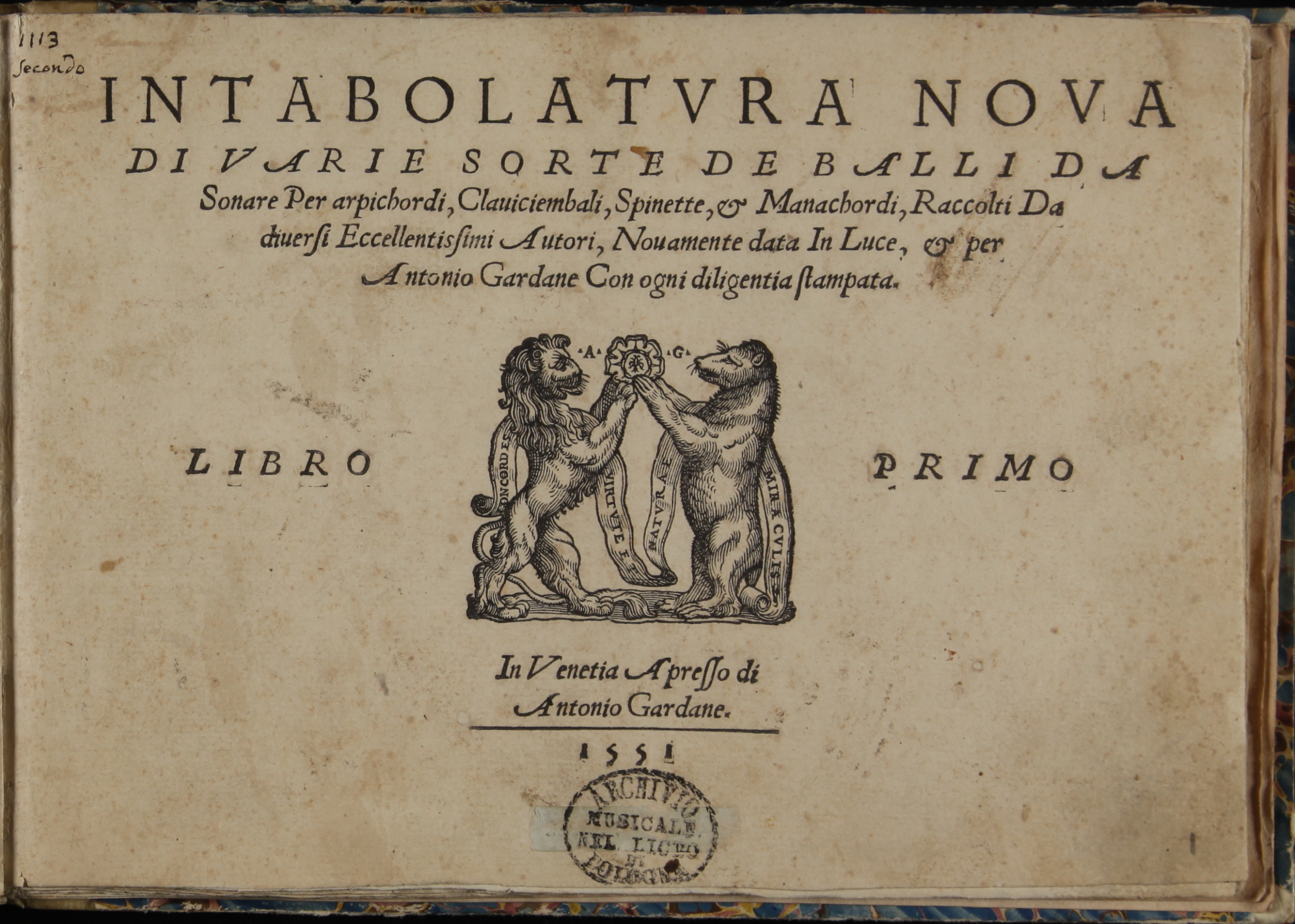
Figure 1: Title-page of the Intabolatura nova (Venice, 1551) (© Museo internazionale e biblioteca della musica di Bologna, <http://www.museibologna.it/musica>).
The volume, in oblong quarto format, consists of twenty-six sheets numbered on the verso-side only. As can be observed in Fig. 2, its size is rather small (appr. 15 x 22cm). The absence of both a dedication and a preface, precludes the possibility of deriving either information on the contents or advice on performance. The terms ‘arpichordi, Clauiciembali, Spinette, & Manachordi’ mentioned on the title-page (Fig. 1), refer to the typical stringed keyboard instruments that were widespread during the period in question. The phrase ‘Libro primo’ suggests that the publisher anticipated the publication of additional books. Of these, however, there is no trace. The book is presented in a notation on two staves in the form customarily used in Italy for keyboard music, i.e. the so-called ‘intabolatura’ (Fig. 2).
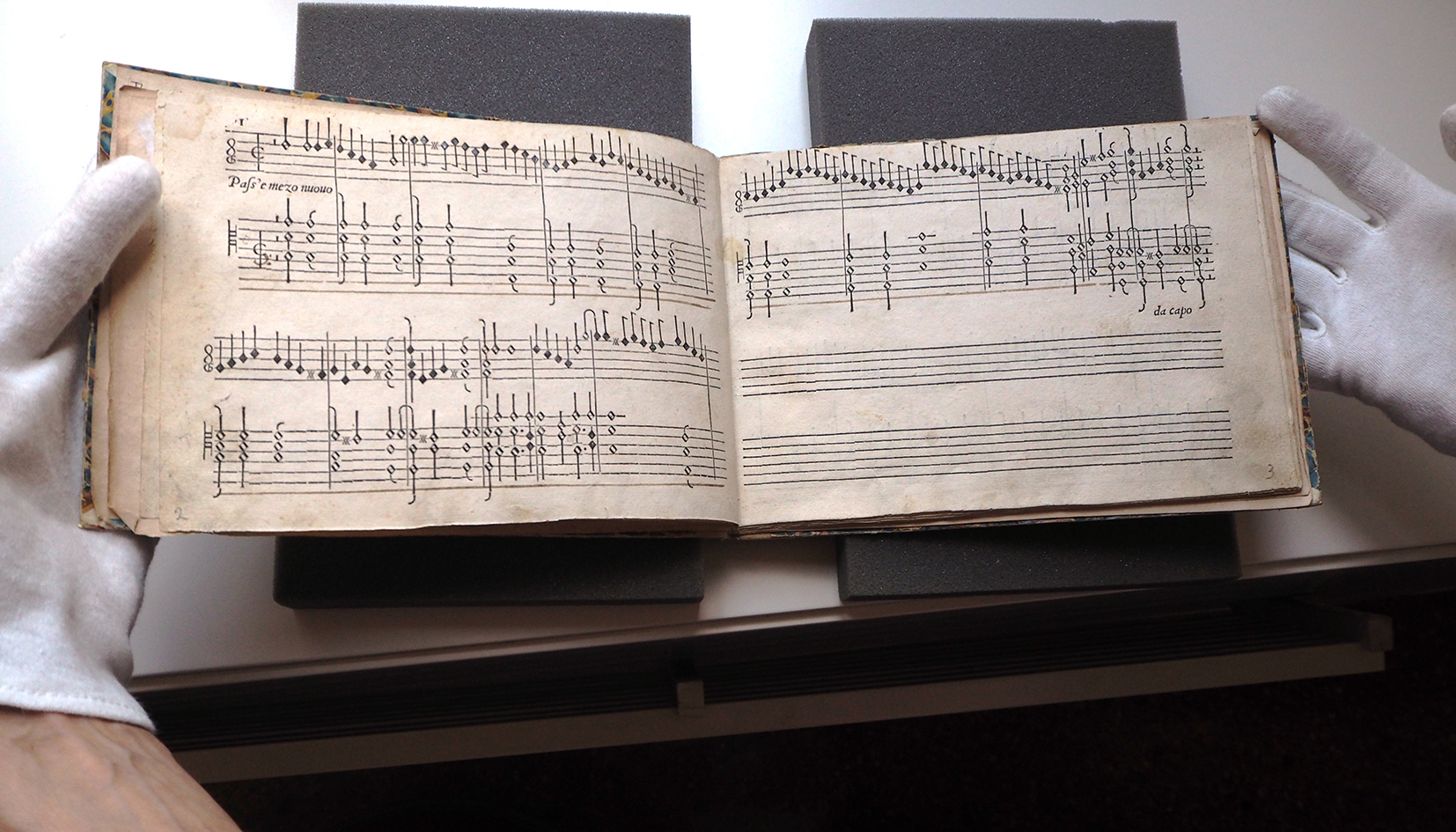
Figure 2: ‘Paß’e mezzo nuovo’ from the Intabolatura nova (Venice, 1551), fols. 1v-2r (© Museo internazionale e biblioteca della musica di Bologna, <http://www.museibologna.it/musica>).
Contents and Titles
In the table of contents at the end of the collection, the Tavola delli balli, the number of dances is indicated as being twenty-five; below this, the titles of the individual pieces are listed, accompanied by their corresponding number. The title of each piece provides a definition of the dance type (which appear in the following order: paß’e mezo nuovo, gagliarda, pavana, paß’e mezo antico, saltarello). In most cases an additional title is provided (for example: ‘Cathacchio’, ‘L’herba fresca’, ‘Gamba’).
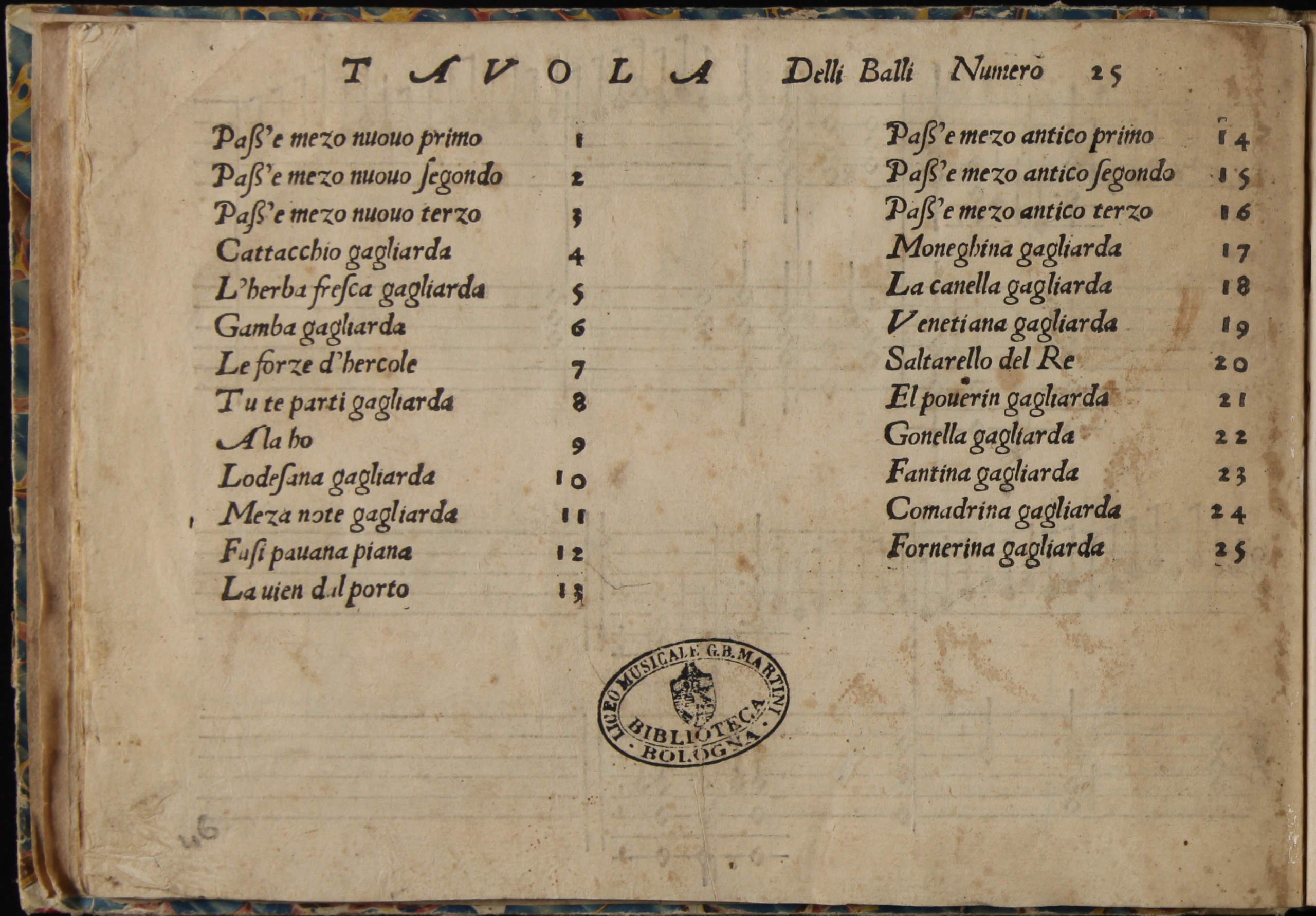
Figure 3: Tavola delli balli of the Intabolatura nova (Venice, 1551), fol. 25v (© Museo internazionale e biblioteca della musica di Bologna, <http://www.museibologna.it/musica>).
The pieces bearing the titles ‘Le forze d’hercole’ and ‘A la ho’ lack any explicit indication of the specific dance type. However, an analysis of their characteristics suggests that these may be identified as a pavana (‘Le forze d’hercole’) and, presumably, a saltarello (‘A la ho’). While for ‘A la ho’ there are no known concordances, ‘Le forze d’hercole’ is also found in other sources. One of these, the Intabolatura sopra el lauto by Iulio Abondante (which will be discussed in greater detail later on), serves to confirm that the composition is, in fact, a pavana as evidencedfrom the title in the Tavola delli balli: ‘Le forze di ercole Pavana’.
The contents of the Intabolatura nova can be summarised as follows: three paß’e mezo nuovo, three paß’e mezo antico, a saltarello (or two, if we count ‘A la ho’), two pavane, and fifteen gagliarde. Some pieces bearing similar titles are included in Ms. it. Cl. IV, n. 1227 (coll. 11699) of the Biblioteca Marciana of Venice, as one can note in Fig. 4 reproducing the Tavola di balli of this manuscript. To be precise, the pieces in the Venetian manuscript that bear titles similar to those of the Intabolatura nova are: ‘La torza: ou[er] tu te parti’, ‘La Lodexana’, ‘La canella’, ‘Saltarel de roy’, ‘La comarina’.
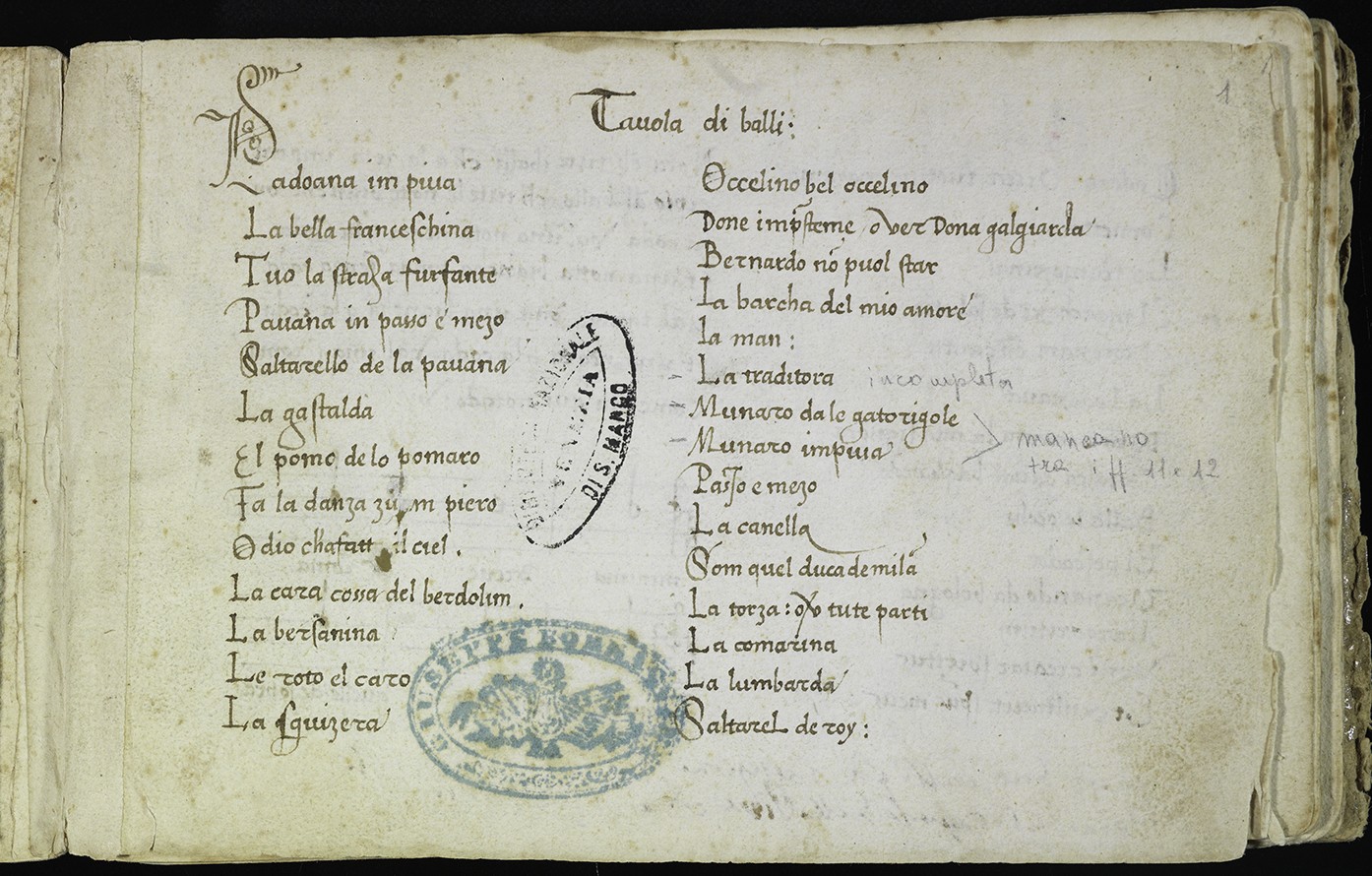
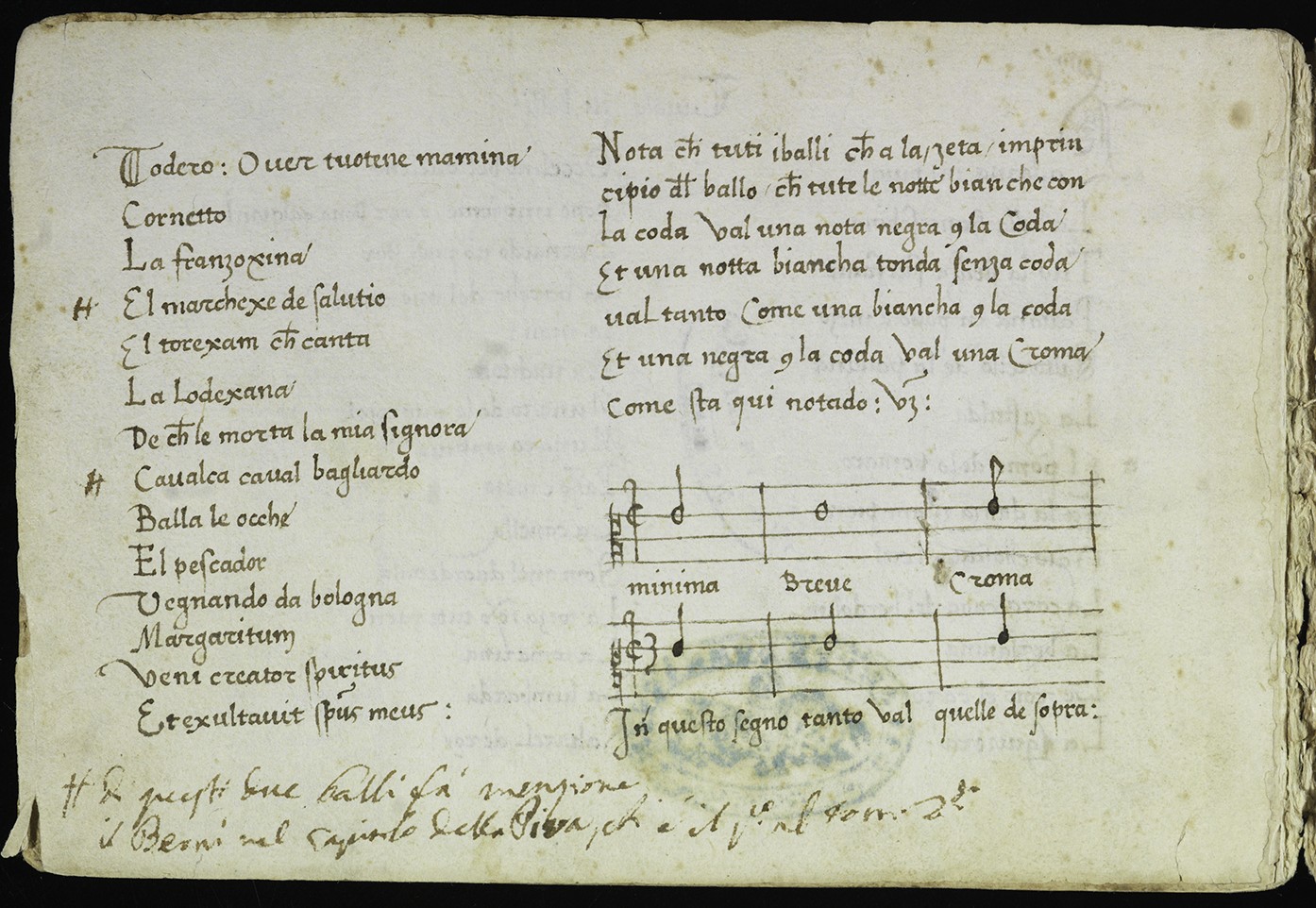
Figure 4: Tavola di balli in: I-Vnm, Ms. it. Cl. IV, n. 1227 (coll. 11699), fol. 1r and fol. 1v (su concessione del Ministero della Cultura – Biblioteca Nazionale Marciana. Divieto di riproduzione).
The pieces bearing similar titles exhibit a resemblance, though they are not an exact replication. It is also noteworthy that the same bass line (in the first part only) is shared by two pieces that are given different titles: ‘La cara cossa del berdolim’in the Venetian manuscript and the ‘Gamba gagliarda’in the Intabolatura nova.This will be examined in greater detail below. Again, it can be observed that, rather than substantial replication, similarities can be identified between the various pieces. This is due to the fact that all these pieces result from an improvisatory practice, in which pieces are created ex tempore based on or using certain common materials (like the bass lines). Hence, all correspondences of titles or musical aspects, though useful, must be treated with caution. In his study Tempo, gratia e misura. A Study of Fabrizio Caroso’s Nobiltà di Dame, 1600, Martin Paul Maloney states:
One may have misgivings sometimes that relationships may have been too ingeniously traced and that correspondences should rather be seen as similarities, but the aural transmission of the greater part of this by its nature largely fleeting kind of music and the element of improvisation in its performance would encourage conservatism in the materials and structures used, and must be taken into account when considering the many similarities encountered […].7
Musical Characteristics of the varie sorte de balli
The pieces in the Intabolatura nova are simple, with concise melodies, repetitive rhythms and clear structures. The idiomatic character is dependent on two factors: firstly, the chords of the left hand (which also serve as a rhythmic foundation); and secondly, the fast embellishments, divisions and passagework of the right hand. This gives the effect of a melody with accompaniment. From a formal perspective, the overall structure of the individual pieces is symmetrical, comprising semi-phrases of four bars and phrases of eight. The dances in Gardane’s print have numerous repeat signs, yet no explicit indication is provided regarding the number of repetitions or of specific variations, if any, that should be employed.
Ostinato Basses and Embellishment of the Melodic Line
The foundation of these dances are the bass lines, to which other notes are superimposed, typically at intervals of a fifth and octave or a third and fifth. Above this structure entrusted to the left hand we find a melodic line, rich in rapid embellishments, to be played by the right hand. In some cases, the chordal pattern (which is sometimes corroborated by the title of the piece) indicates the typical succession of so-called ‘ostinato basses’. Thus we have: three pieces on the Passamezzo antico (nos. 14, 15, 16), three pieces on the Passamezzo nuovo (nos. 1, 2, 3), two gagliarde on the bass of the Romanesca: ‘Cathacchio gagliarda’ (no. 4), and ‘El poverin gagliarda’ (no. 21), and a gagliarda on a bass called the ‘Gamba’ or ‘Cara cossa’, from which the Follia later emerged: ‘Gamba gagliarda’ (no. 6)
A study of the melodic lines reveals certain recurring figurations in the passages of quavers, the smallest note value used in these dances. The most common figurations and their variations are the following, indicated by letters and numbers.
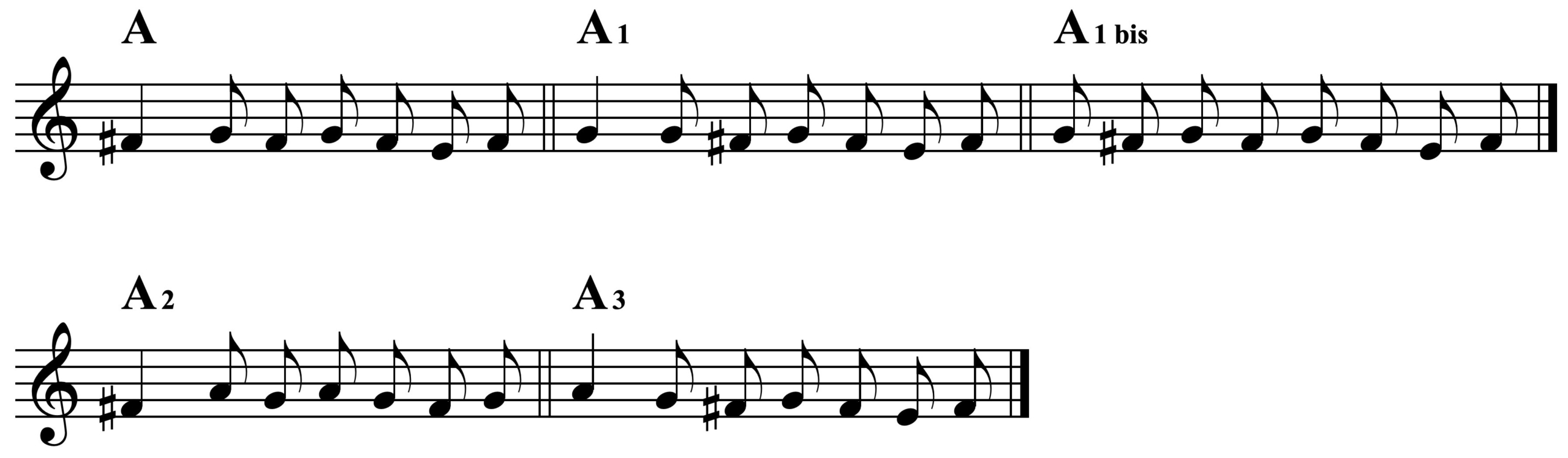
Figure 5: Recurring figurations type A.

Figure 6: Recurring figurations type B.
Additionally, there are ascending and descending passages that are characterised by the repetition of a single figure.

Figure 7: Ascending passages, as they appear in Paß’e mezo antico primo and secondo.

Figure 8: Descending passages, as they appear in Paß’e mezo antico terzo.
It is noteworthy that some of these embellishments are also present in later treatises on diminutions, such as those by Diego Ortiz8 and Giovanni Luca Conforti.9 To illustrate, the figuration indicated at A is found in Diego Ortiz’ Tratado de glosas (Fig. 9) and also in Conforti’s treatise, in halved note values, where it is referred to as a ‘Mezzo Groppo’ (Fig. 10). The figure indicated at A1 bis appears in Diego Ortiz, ‘Clausulas en B fa ♮ mi’ (Fig. 11).
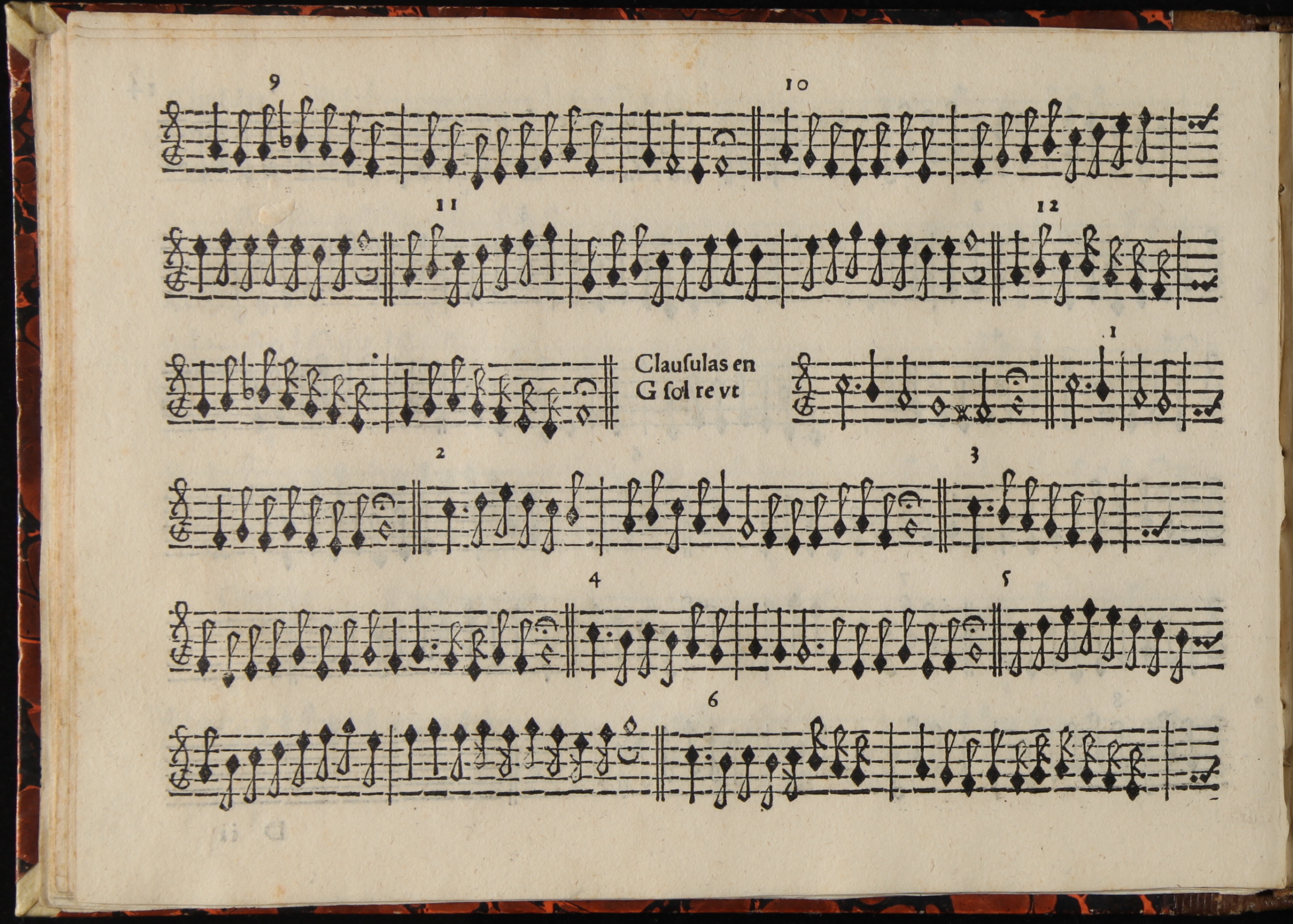
Figure 9: ‘Clausulas en G sol re ut’ from Tratado de glosas by Diego Ortiz (Rome, 1553), fol. 14v (line 4) (© Museo internazionale e biblioteca della musica di Bologna, <http://www.museibologna.it/musica>).
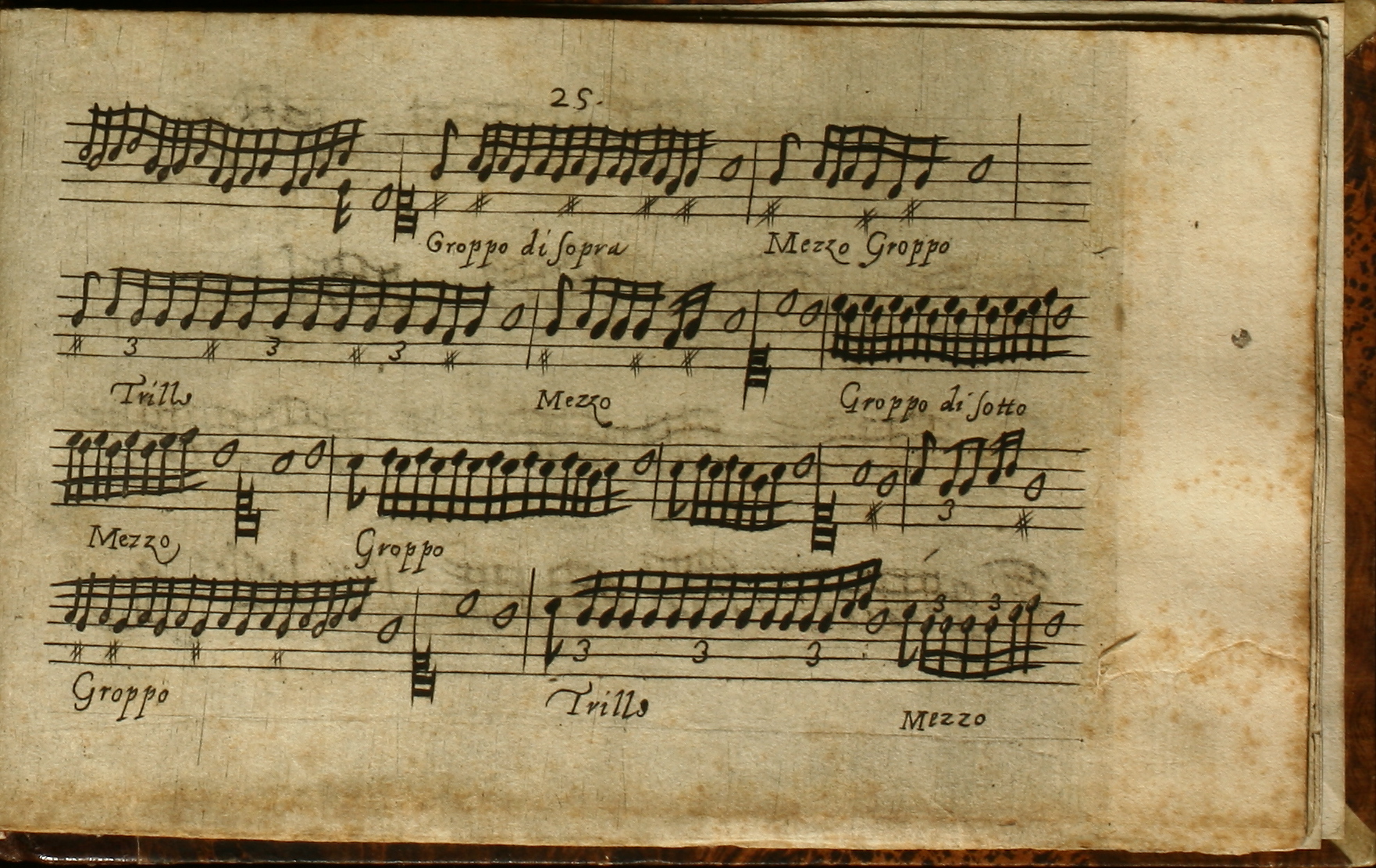
Figure 10: ‘Mezzo Groppo’ from Breve et facile maniera d’esercitarsi by Giovanni Luca Conforti (Rome [1593]), fol. 25r (© Museo internazionale e biblioteca della musica di Bologna, <http://www.museibologna.it/musica>).
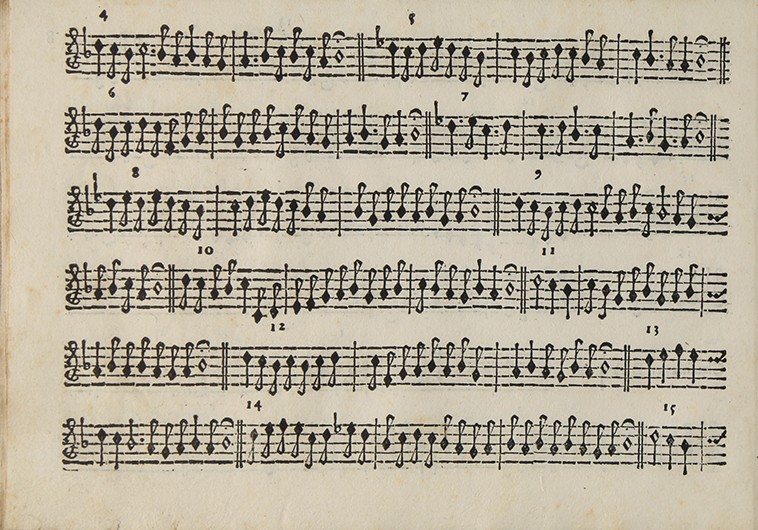
Figure 11: ‘Clausulas en B fa ♮ mi’ from Tratado de glosas by Diego Ortiz (Rome, 1553), fol. 8v (last line).
The appearance of these figures in the treatises serves as evidence of their established usage, thereby enabling contemporary players to employ them in their performances as a means of varying repetitions.
Bar Lines
Another characteristic of the Intabolatura nova, but also (as we shall see) of other sources, is the positioning of the bar lines, which is often unrelated to the metre of the dance. This is particularly evident in the gagliarde, where the discrepancy between the implied rhythmic scheme, the metrical indications and the distribution of the bar lines is particularly marked. The function of these vertical lines, as one reads in the treatises, is unrelated to the present-day concept of the distribution of accents. They simply have the function of separating a fixed number of note values and their positioning follows principles different from those of today.
The sense of discomfort that the modern player may perceive when reading these intabulations arises from the habit of considering the bar lines to be means of distributing accents, and not as ways of partitioning quantities subdivided into case (chambers) or caselle (cells). These aspects have also been remarked on in modern editions. William Oxenbury and Thurston Dart observed that ‘[w]ith rare exceptions the music is barred regularly with two semibreves to the bar, even in such pieces as galliards which are clearly in triple rhythm.’10 Friedrich Cerha draws attention to the fact that ‘the dances in triple time (galliard and saltarello) are notated in four-beat time, as they were everywhere in Italy until Frescobaldi. […] It is important for the player to bear in mind that the bar lines are not an indication of metric accentuation.’11
On this subject the contemporary treatises refer to durations, times and quantities, and not to accents. The parts comprised between two vertical lines (the case or caselle) contain a variable number of notes whose overall duration corresponds to a predetermined value. For Girolamo Diruta each casa is equal to a breve and must contain two beats (battute) or two semibreves: ‘to understand better, look at these examples of note against note over a falsobordone in the first mode, intabulated with two beats to the bar (casa)’.12 The content of a casa is called compasso (measure) or tempo (time) by Bartolomeo Lieto: ‘and the first thing to do is to set out a set of lines […] and above them, to make some lines that intersect them, which produce a certain space called a cell (casella) […] so that in every cell one can put a measure (compasso) or time (tempo)’.13 Vincenzo Galilei, wishing to indicate specific points of intabulated compositions, also uses the term casa, by which he means the space between two consecutive vertical lines.14
Keyboard Instruments and/or Lute
By citing the works of Bartolomeo Lieto and Vincenzo Galilei we have entered into the realm of the lute. The sharing of literature among instruments that are musically related in so far as they are ‘perfect’, i.e. suitable for performing polyphony (though dissimilar from the organological point of view), is in particular documented in Spain. In 1557 Luis Venegas de Henestrosa published his Libro de cifra nueva (Alcalá de Henares: Juan de Brocar) in which, thanks to a new type of notation that can be adopted by polyphonic instruments such as the ‘tecla, harpa y vihuela’, he effectively creates a common repertoire.15 This evidence has induced me to consider the interchangeability of keyboard instruments, specifically in relation to the harp and, for Italian music, the lute. Moreover, since, as Christopher Hogwood asserts, ‘these keyboard pieces evolved from the lute repertoire’,16 it seems fitting to extend the research to the intabulations for lute of a similar nature.
As Robert Floyd Judd points out, the Intabolatura nova ‘is analogous to numerous lute books which contain dance sets, and may have been Gardane’s attempt to transfer the evidently-popular lute book repertoire to a keyboard notation.’17 Already in 1546 Gardane had released three prints of lute intabulations of similar content. The one that is particularly striking right from the title-page is the Intabolatura by Iulio Abondante,18 which exclusively contains dances. A significant number of these pieces are concordant with those in Gardane’s comparable Intabolatura of 1551.
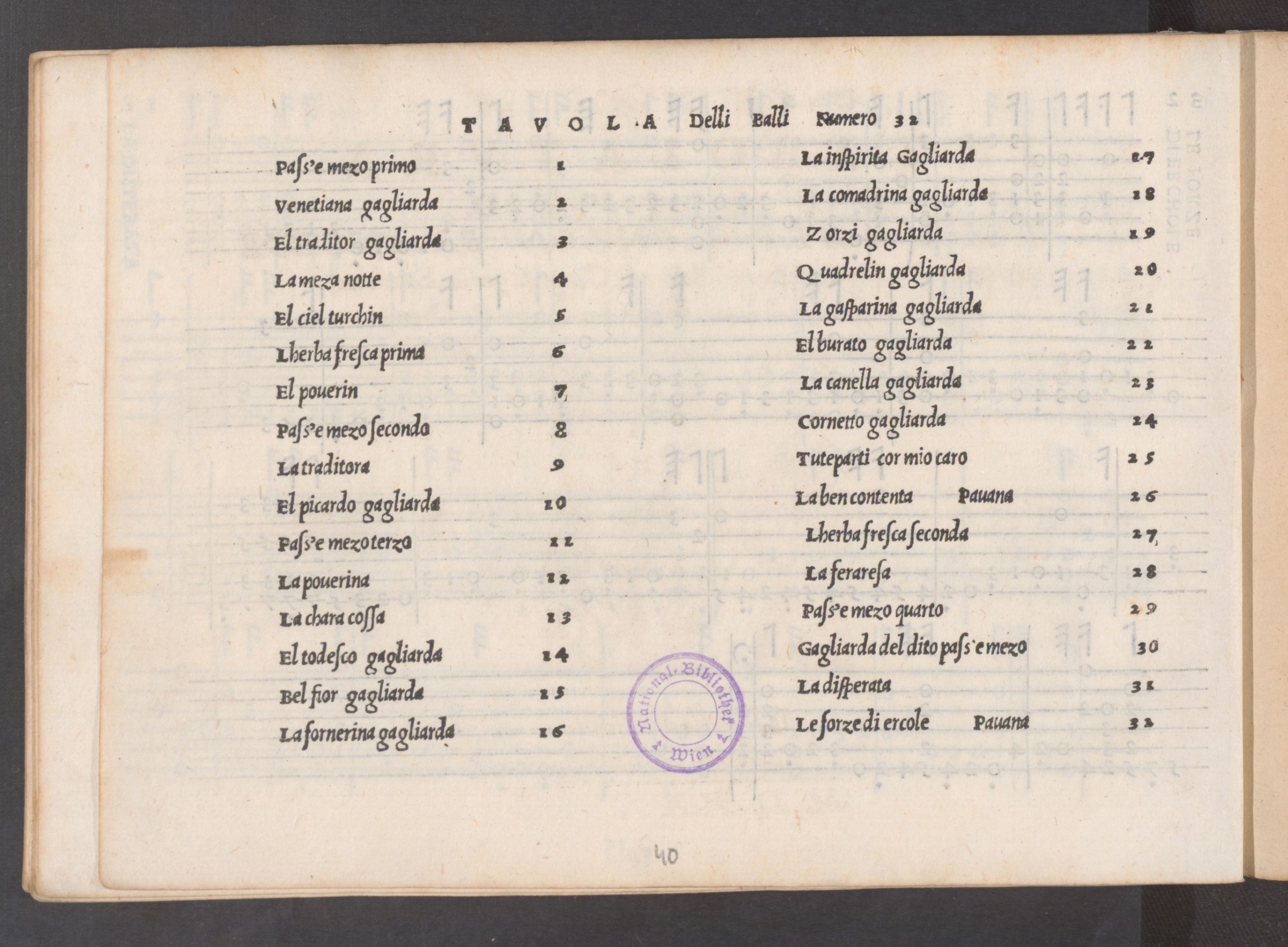
Figure 12: Table of dances of the Intabolatura by Iulio Abondante (Venice, 1546), p. [33].
The Intabolatura by Dominico Bianchini, on the other hand, is a compilation of pieces of various kinds.19 Reprinted in 1554 and 1563, it includes not only dances, but also recercari and intabulations of vocal pieces of diverse genres.
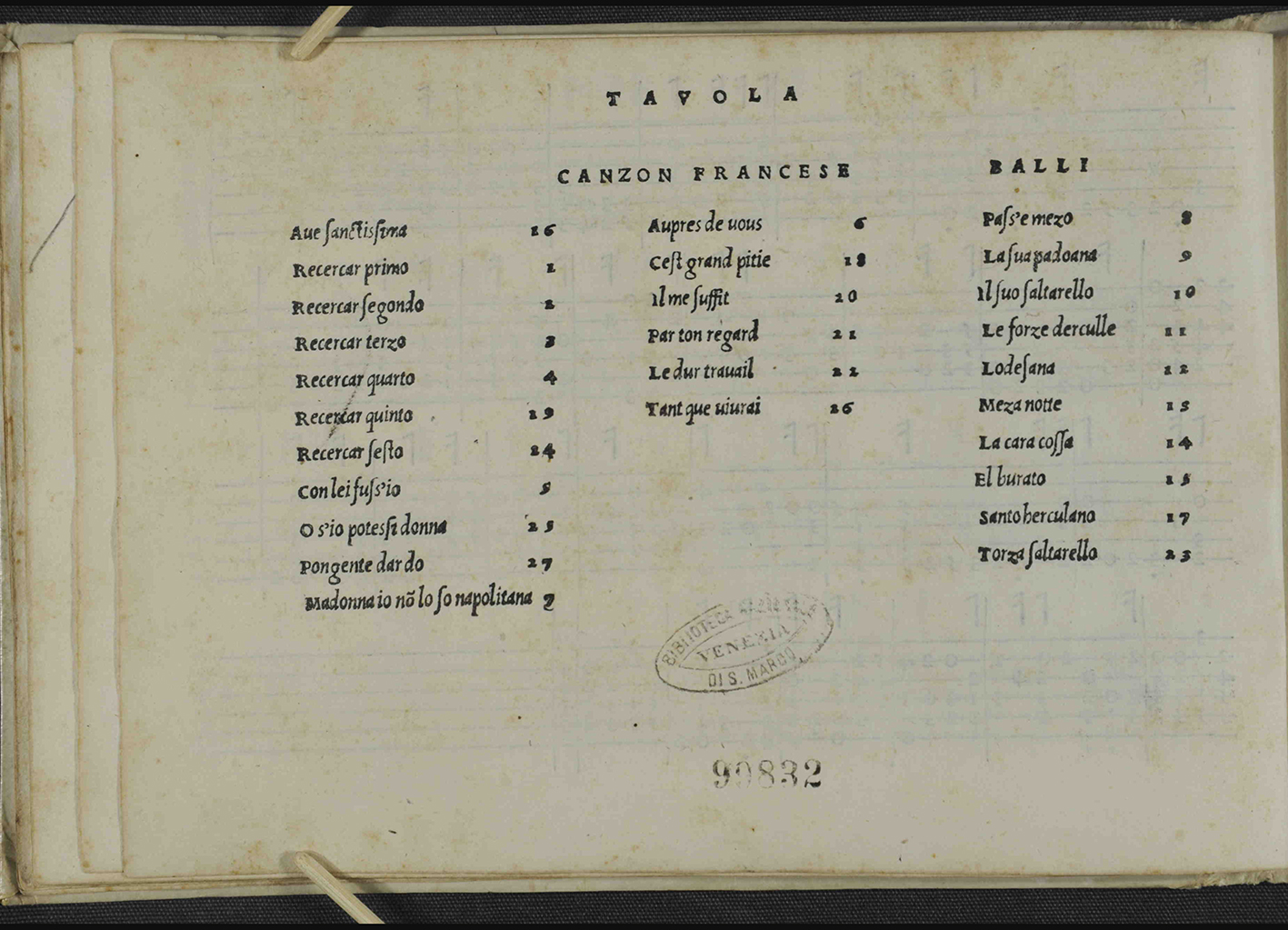
Figure 13: Table from the Intabolatura de lauto by Dominico Bianchini (Venice, 1546), p. 29 (su concessione del Ministero della Cultura – Biblioteca Nazionale Marciana. Divieto di riproduzione).
Likewise, Antonio Rotta’s Intabolatura de lauto is composed not only of dances, but also of recercari, motets, madrigals and canzoni francese.20
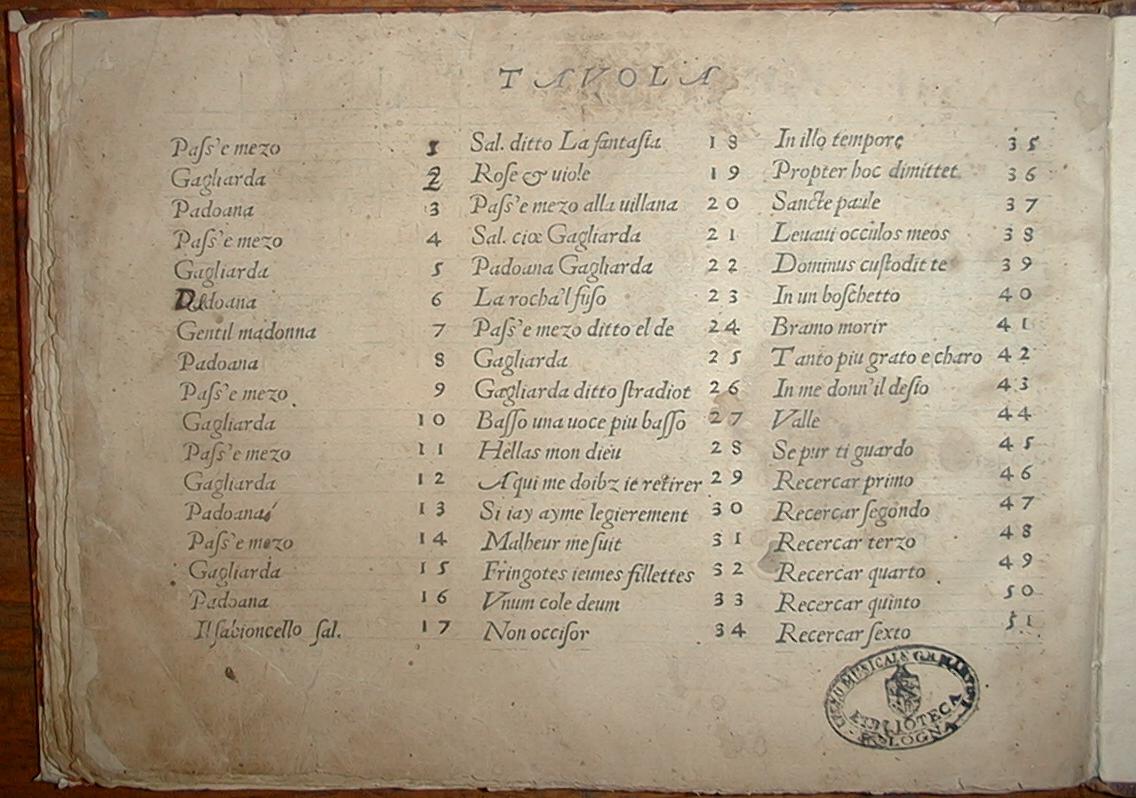
Figure 14: Table from the Intabolatura de lauto by Antonio Rotta (Venice, 1546), fol. 52v (© Museo internazionale e biblioteca della musica di Bologna, <http://www.museibologna.it/musica>).
The following titles of pieces from the Intabolatura nova of 1551 are also found in the lute sources described above:
nos. 1–3: Paß’e mezzo nuovo – Abondante: no. 1 Pass’e mezo primo and no. 11 Pass’e mezo terzo; Rotta: no. 11 Pass’e mezo
no. 5 L’herba fresca gagliarda – Abondante: no. 6 Lherba fresca prima and no. 27 Lherbafresca seconda
no. 6 Gamba gagliarda – Abondante: no. 13 La chara cossa; Bianchini: no. 14 La cara cossa
no. 7 Le forze d’hercole – Abondante: no. 32 Le forze di ercole Pauana; Bianchini: no. 11 Le forze derculle
no. 8 Tu te parti gagliarda – Abondante: no. 25 Tuteparti cor mio caro; Bianchini: no. 24 Torza saltarello
no. 10 Lodesana gagliarda – Bianchini: no. 12 Lodesana
no. 11 Meza note gagliarda – Abondante: no. 4 La meza notte; Bianchini: no. 13 Meza notte
nos. 14–16 Paß’e mezo antico – Abondante: no. 8 Pass’e mezo secondo and no. 29 Pass’e mezo quarto; Bianchini: no. 8 Pass’e mezo; Rotta: no. 4 Pass’e mezo
no. 18 La canella gagliarda – Abondante: no. 23 La canella gagliarda
no. 19 Venetiana gagliarda – Abondante: no. 2 Venetiana gagliarda
no. 21 El pouerin gagliarda – Abondante: no. 7 El pouerin
no. 24 Comadrina gagliarda – Abondante: no. 18 La comadrina gagliarda
no. 25 Fornerina gagliarda – Abondante: no. 16 La fornerina gagliarda
A Practical Example: ‘La cara cossa’ / ‘Gamba gagliarda’
In the lute books of Bianchini and Abondante we find two versions of ‘La cara cossa’ (Fig. 17, 18, Ex. 1, 2), which I have compared with the piece of the same name from the Venetian manuscript (Fig. 16) and the ‘Gamba gagliarda’ in the Intabolatura nova (Fig. 19.) These pieces are based on a bass pattern that is found in many sources and is known by the name of Cara cossa or La gamba. In his Tratado de glosas of 1553, Diego Ortiz inserts some recercadas on ‘Cantos llanos que en Italia comunmente llaman Tenores’, which are repeated as frequently as necessary to allow the soloist to play the variations. Although Ortiz does not indicate the Tenores by their names, they are clearly recognisable. The bass line of Ortiz’ ‘Recercada ottava’ corresponds to the bass pattern known as La cara cossa or La gamba. In its most common form, it consists of a first, longer phrase and two successive semi-phrases, each of which can be repeated. A range of variants can be identified across the different sources.
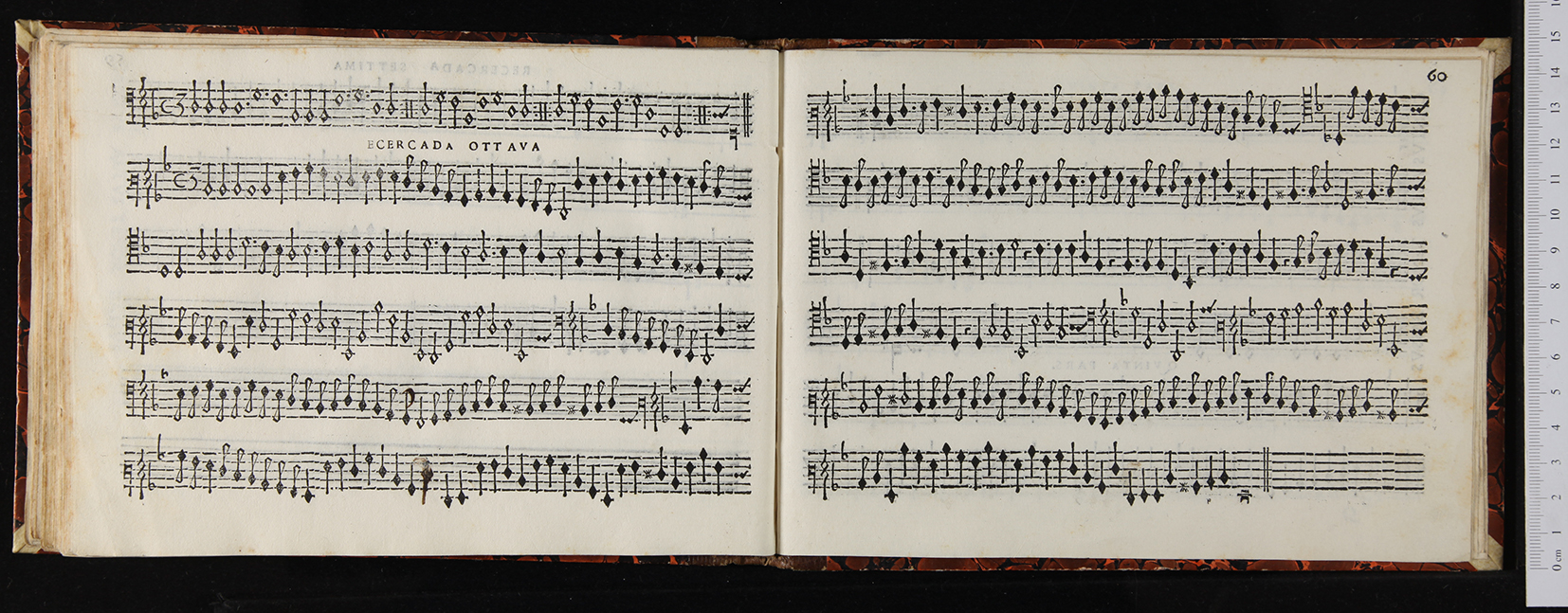
Figure 15: Bass of the ‘Recercada ottava’ from Tratado de glosas by Diego Ortiz (Rome, 1553), fol. 59v (© Museo internazionale e biblioteca della musica di Bologna, <http://www.museibologna.it/musica>).
In the Venice manuscript the repetition of the first phrase is written out in full, with variations. The two following semi-phrases have repeat signs. Any further variations are left to the performer.
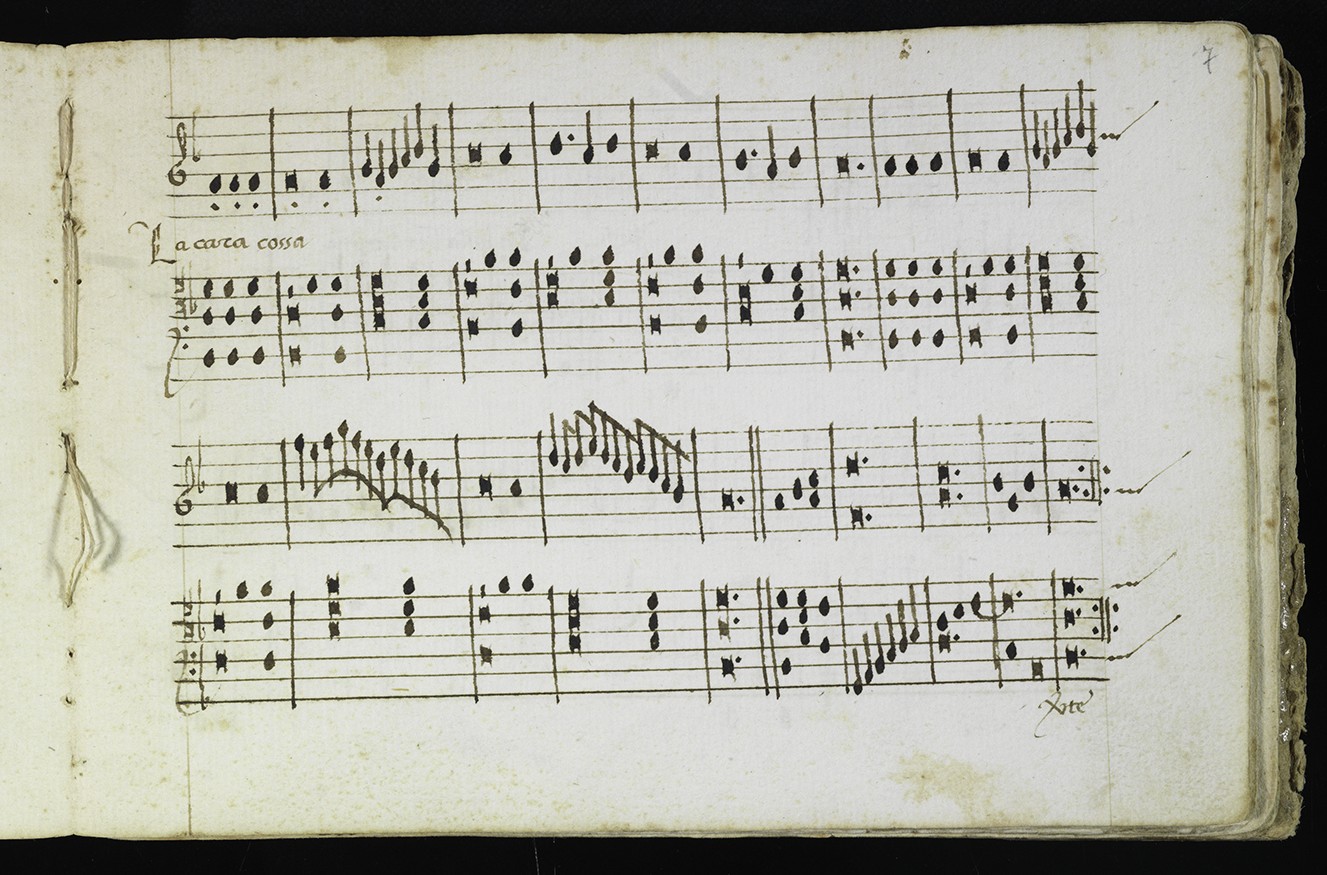
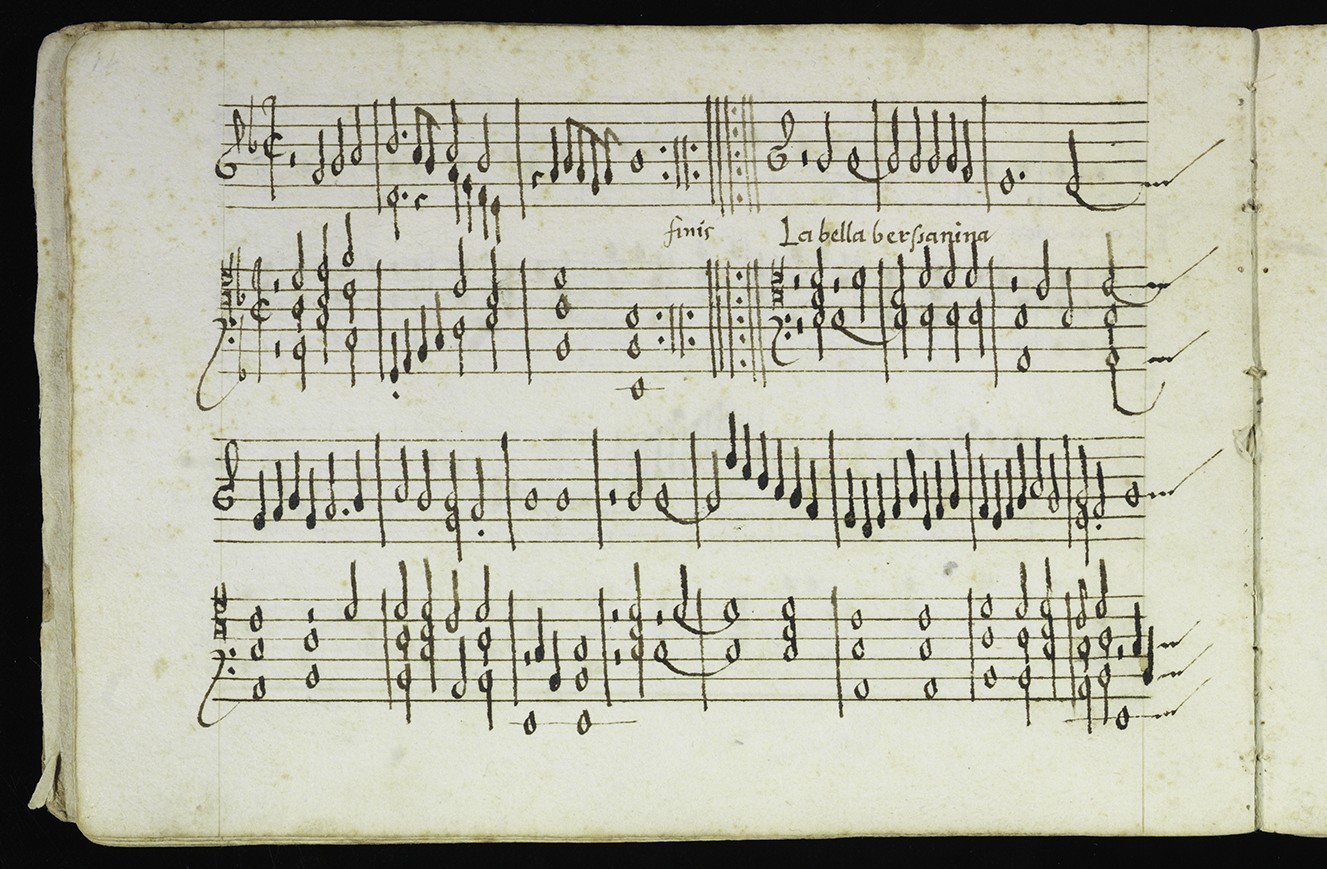
Figure 16: ‘La cara cossa’, in: I-Vnm Ms. it. Cl. IV, n. 1227 (coll. 11699), fol. 7r-v (su concessione del Ministero della Cultura – Biblioteca Nazionale Marciana. Divieto di riproduzione).
Bianchini does not present any variations of the first phrase. According to Franco Fois, the pieces of which the writer of the manuscript proposes only the initial theme in a schematic form are ‘to be completed with variations entrusted to the performer’s capacity for improvisation’.21
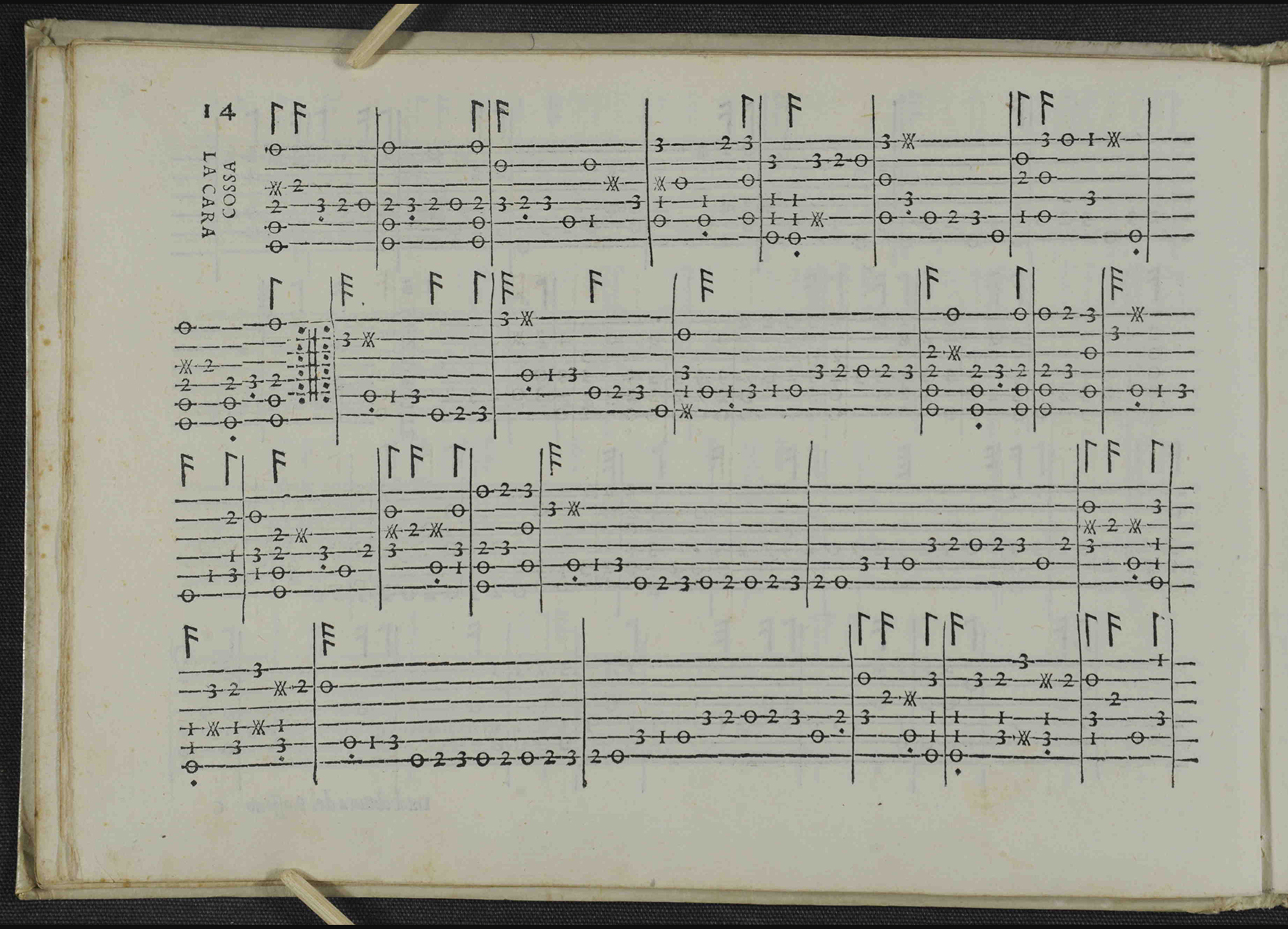
Figure 17: ‘La cara cossa’, in: Intabolatura de lauto by Dominico Bianchini (Venice, 1546), p. 14 (su concessione del Ministero della Cultura – Biblioteca Nazionale Marciana. Divieto di riproduzione).
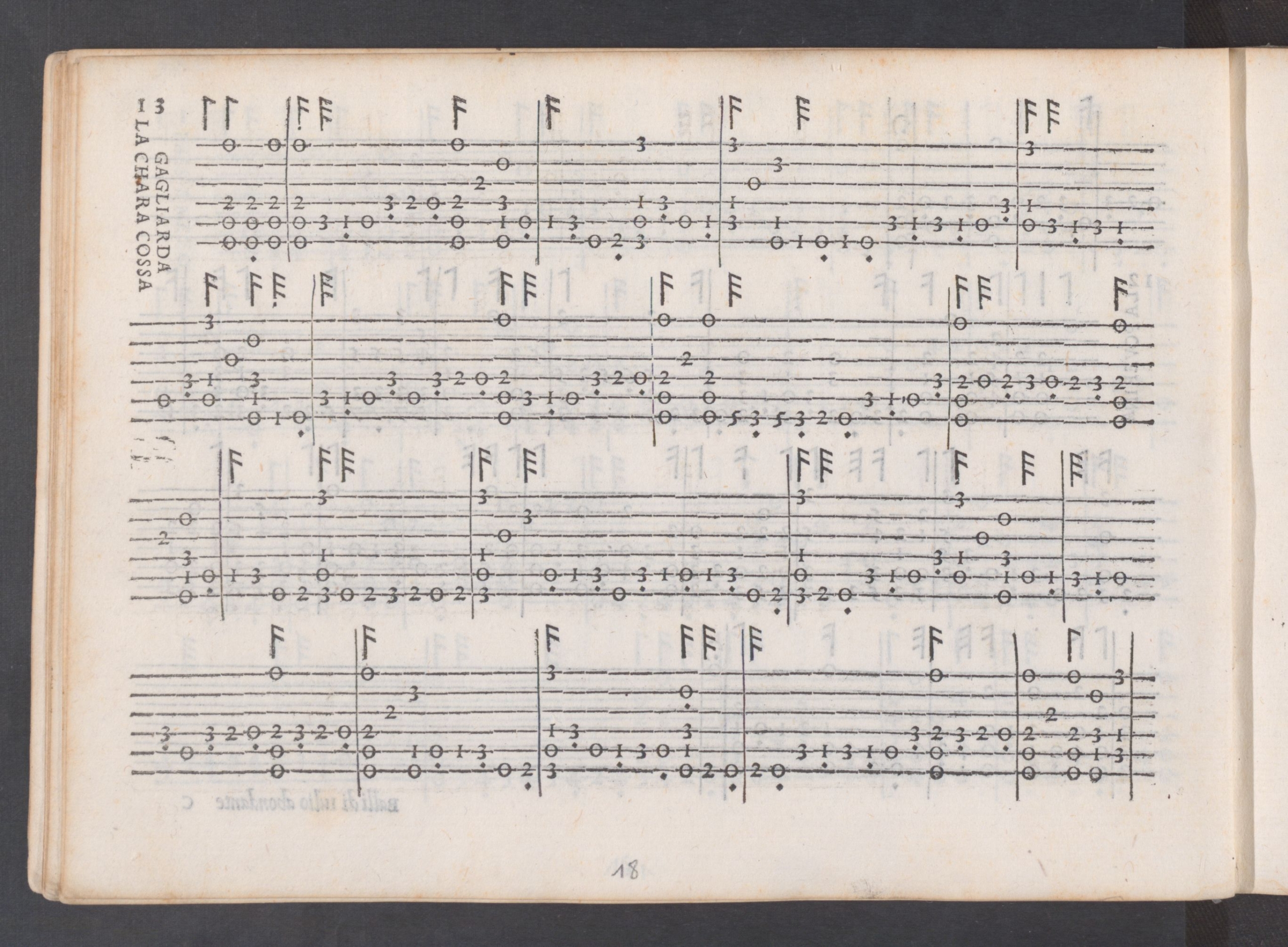
Figure 18: ‘Gagliarda La chara cossa’, in: Intabolatura by Iulio Abondante (Venice, 1546), p. 13.
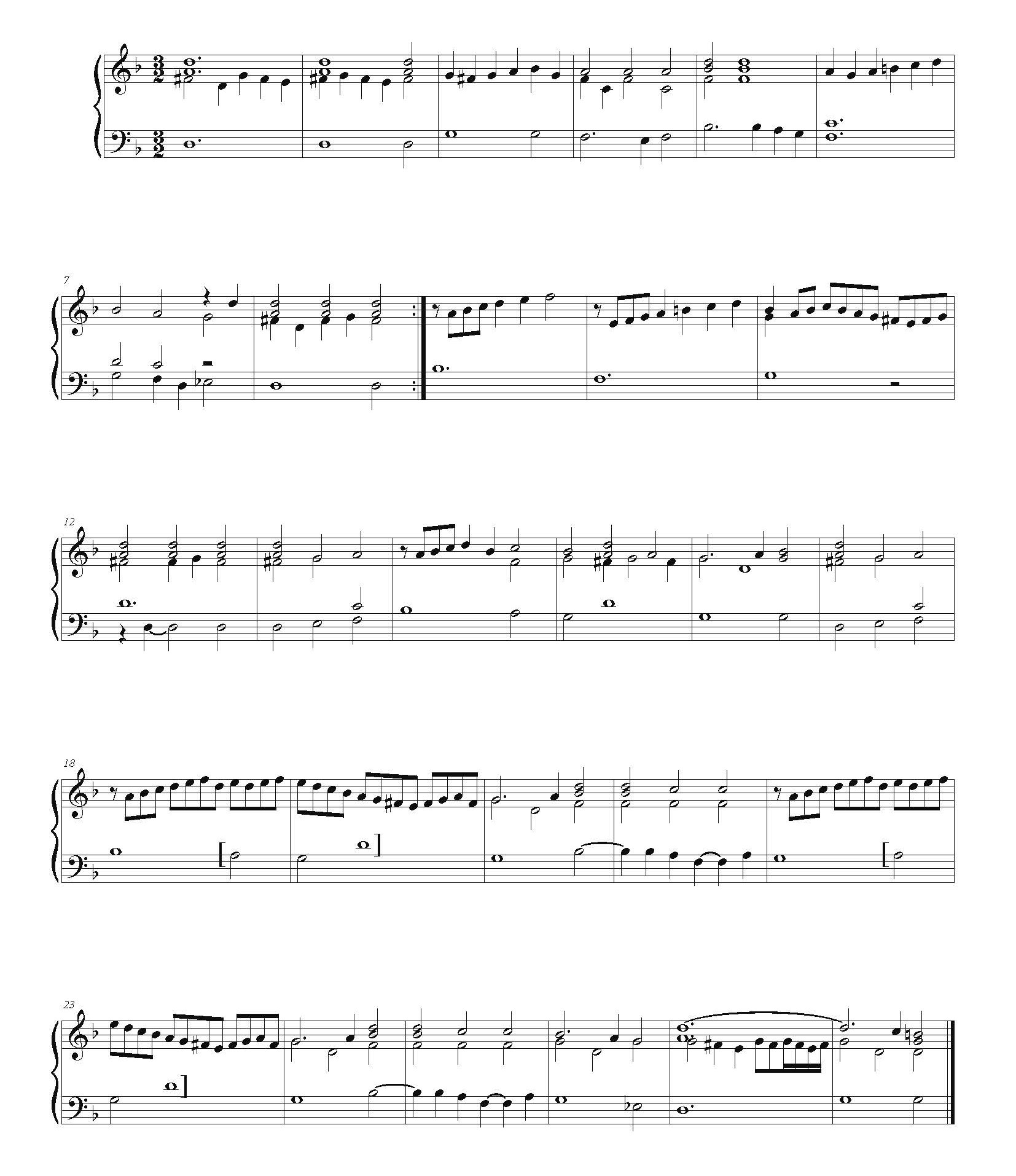
Example 1: ‘La cara cossa’, in: Intabolatura de lauto by Dominico Bianchini (Venice, 1546). Transcription: Vania dal Maso.
In the ‘Gagliarda La chara cossa’ by Iulio Abondante, we can observe the repetitions written out in a variant form.
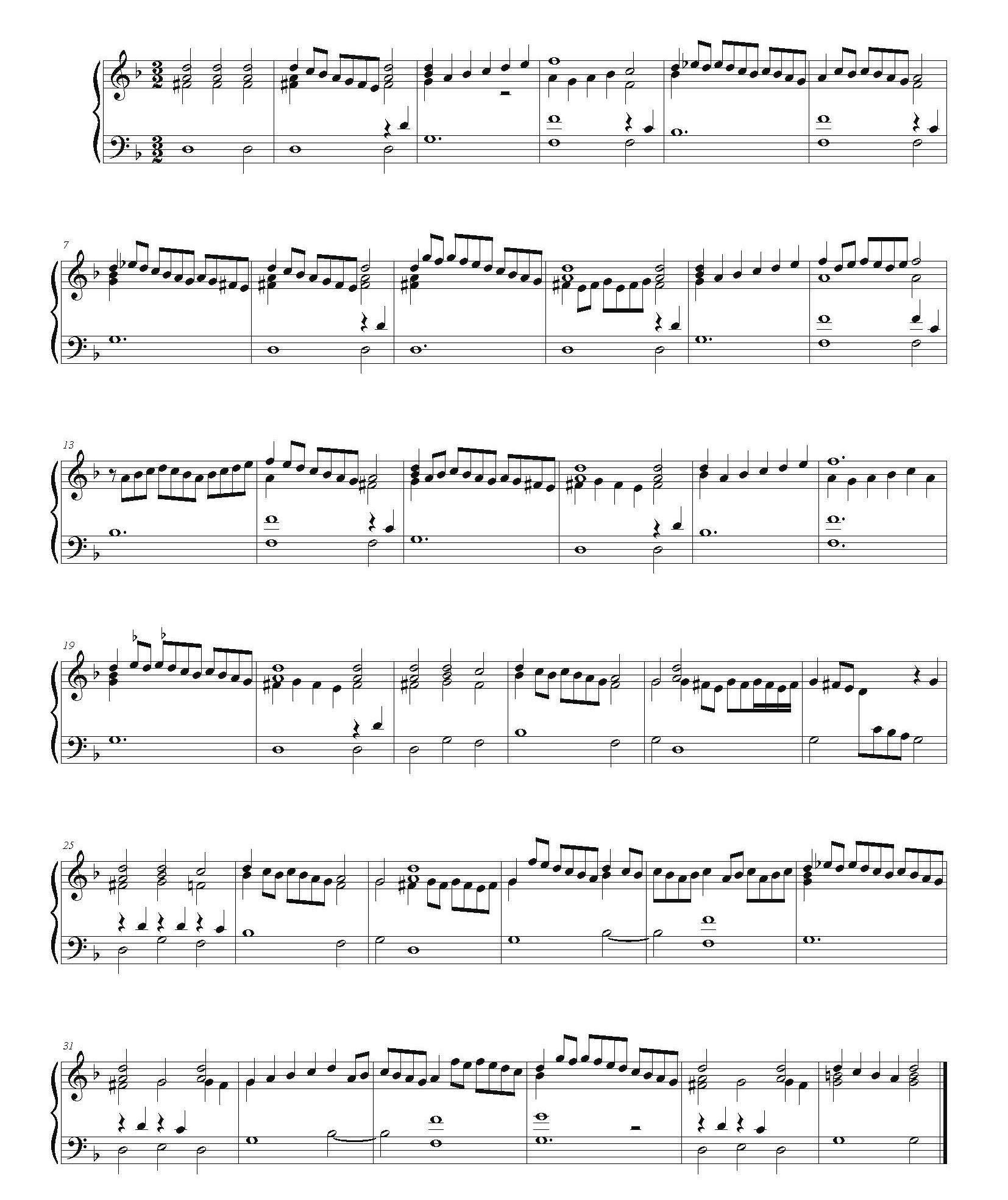 Example 2: ‘Gagliarda La chara cossa’, in: Intabolatura by Iulio Abondante (Venice, 1546). Transcription: Vania dal Maso.
In Gardane’s Intabolatura, the corresponding piece is called the Gamba gagliarda. As in the Venetian manuscript, the varied repetition of the first phrase is written out in full. The second part moves more freely.
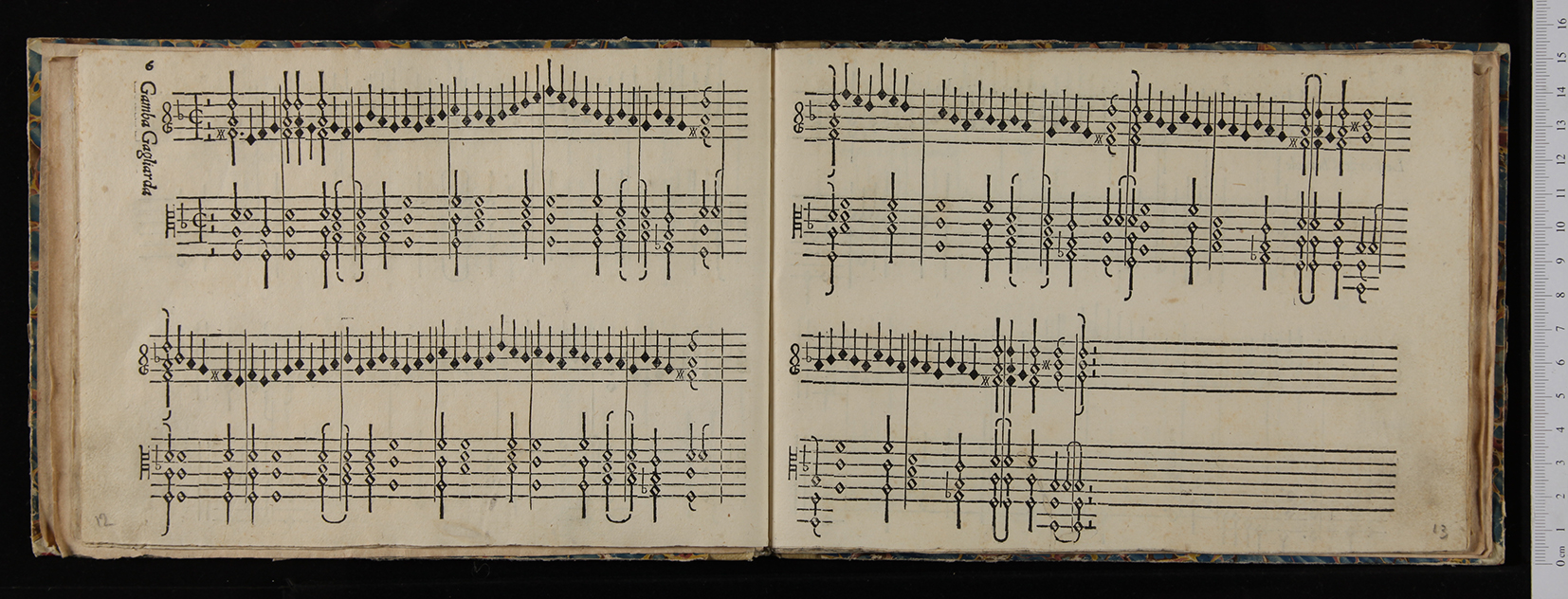
Figure 19: ‘Gamba gagliarda’, in: Intabolatura nova (Venice 1551), fols. 6v-7r (© Museo internazionale e biblioteca della musica di Bologna, <http://www.museibologna.it/musica>).
Comparisons With Lute Tablatures: Analogies and Differences
For the purposes of comparing the aforementioned pieces, I have transcribed the lute tablatures into a notation for a keyboard instrument. The following criteria were employed in the transcription:
- In order to align the finalis with that of Gardane, I have conjectured a tuning of the lute in D.
- My transcription follows the division by Bianchini of three minims to the bar, according to the metric scheme of the gagliarda. To facilitate a comparison I have also done this to Abondante’s gagliarda.
- The notes have been distributed between the two hands in accordance with the criteria described by Diruta.22
- As is well known, the Italian lute tablature represents the notes to be played simultaneously as if they had the same value, even in cases where they should have different durations. An objective transcription would faithfully present the note values indicated in musical notation, but the result would be lacking in musical sense and cannot be reproduced sic et simpliciter in performance on keyboard instruments. In order to reconstruct a coherent musical texture, it is necessary to resort to a type of interpretative transcription that takes into account the technical characteristics of the instrument for which it is written, providing a coherent graphic appearance.
- In order to provide a better rendering of the musical sense of the pieces, I have also incorporated additions and potential amendments regarding the use of musica ficta, in alignment with contemporary music theory.
In the course of comparing sources for the lute of comparable content, certain distinctive features, already identified by some scholars, become apparent. As Robert Judd has remarked, ‘[t]he transfer of lute genres to the keyboard is also common: keyboard dance music is a direct imitation of similar lute volumes, especially evident in Gardane 1551 […].’23 A comparison of Gardane 1551 with the transcriptions, reveals a close connection between lute and keyboard settings: both rely on quick movement in the upper voice and an accompaniment in slower notes. Conversely, the accompaniment assumes a distinct form in the case of keyboard settings, comprising of fifth-octave chords, whereas on the lute it is accompanied by single notes, a consequence of the technical capabilities of the respective instruments. In the aforementioned modern edition of Balli per cembalo, Christopher Hogwood, referring to the Venetian manuscript, states:
The earliest arrangements offer a ‘blunt’ keyboard style with which to reconstitute lute pieces as ‘clavier’ music […]; the new style is melodic, homophonic and defiantly ‘keyboard’, often with a ‘stomping bass’ in the left hand of octave and fifth which, despite its simplicity, cannot – as sometimes claimed – be designed for children, since the stretch is too big.24
Performance
Before outlining the conclusions I recommend listening to the pieces mentioned above.
The instrument used is a Venetian Renaissance spinet, a copy by Paolo Zerbinatti (2013) after the original built in Venice by Benedetto Floriani in 1571 and preserved in the Musikinstrumentenmuseum der Universität Leipzig. The programme was performed at the Museo San Colombano of Bologna on 27 October 2023 as an integral part of the presentation and was recorded on 1 June 2024 at 51 Recording Studio, Bonavigo/Verona (http://www.51recordingstudio.it/).
Video 1: ‘La cara cossa’, in: I-Vnm Ms. it. Cl. IV, n. 1227 (coll. 11699) Video 2: ‘La cara cossa’ (transcription by Vania Dal Maso), in: Intabolatura di lauto di Dominico Bianchini (Venice, 1546) Video 3: ‘Gagliarda La chara cossa’ (transcription by Vania Dal Maso), in: Intabolatura di Iulio Abondante sopra el lauto (Venice, 1546)Video 4: ‘Gamba gagliarda’, ‘Cathacchio gagliarda’, ‘Paß’e mezo nuouo primo, segondo, terzo’, ‘Paß’e mezo antico primo, segondo, terzo’, in: Intabolatura nova di varie sorte de balli (Venice, 1551)
Conclusions
In the course of this project, a number of questions emerged during the various stages of the research process, including the following:
- Can lute tablatures be useful for keyboard players, and if so, in what manner?
- What are the similarities and differences between pieces written for the lute or keyboard instrument?
- Is this music to be considered functional for the purpose of dance?
- What aspects are left to the performer’s discretion?
In order to respond to these questions, different aspects of the Gardane dances have been considered, such as the chordal progression and corresponding cadences, the metrical movement with the respective note values and consequent ‘accents’ (which are dependent on the value of the note rather than its position within the bar lines). Additionally, the melodic development as a whole has been taken into account.
The observations, presented in a sequential order, could be as follows:
- In cases of doubt, lute tablatures can provide certain solutions regarding repeats. If we compare a piece with the various versions found in the lute tablatures, we can find examples of repetitions. For example, in Bianchini’s ‘La cara cossa’, at the end of b. 8 we find the ritornello sign, while in Abondante’s ‘Gagliarda La chara cossa’, bb. 9–16 are a varied repetition of bb. 1–8. This evidence suggests that the initial eight-bar phrase of a Cara cossa or Gamba ought to be repeated.
- Moreover, a comparison with the lute intabulations can clarify any uncertainties regarding the placemnet of the bar lines, which we previously discussed. For example, in Bianchini’s version of ‘La cara cossa’, the bar lines are positioned in accordance with modern criteria, thereby revealing the otherwise concealed metre.
- Comparing pieces based on the same bass, but intended for different sound media, one notes that the organological characteristics of each instrument require the use of appropriate idioms. If one performs the notes represented in lute tablatures literally on the keyboard, one finds a certain inadequacy of musical expression. In Bianchini’s ‘La cara cossa’, for example, in bb. 18–19 and 22–3 the absence of bass becomes particularly pronounced when the piece is performed on a keyboard instrument.
- Performing or listening to music originally conceived for the lute on the harpsichord facilitates a better understanding of the observations made by Robert Floyd Judd, who characterises Gardane’s tablature as an ‘attempt’ ‘to transfer the evidently-popular lute book repertoire to a keyboard notation’,25 and Christopher Hogwood’s description of the ‘new style’ as ‘melodic, homophonic and defiantly “keyboard”, often with a “stomping bass” in the left hand of octave and fifth’.26
- The transcription of lute tablature into keyboard notation should not be understood as a simple transfer from one method of notation to another, but should be adapted to align with the characteristics of the target instrument. Accordingly, the initial step in transcribing or adapting a musical piece is to define the duration of each note, thereby establishing the musical texture. To illustrate, one may consider the transcription of Bianchini’s ‘La cara cossa’, bb. 9–10, where the first note, assigned to the left hand, is to be held for the entire bar, whereas in the lute tablature it is represented with the value of a quaver. In addition, it is possible to introduce extemporaneous sounds at the moment of performance. These may be added either as embellishments of the melodic line, or as fifth and octave additions to the bass, as seen in the Intabolatura nova.
The evidence presented thus far indicates that there are no insurmountable obstacles to the practical use of this music for dancing purposes. With reference to Bianchini Franco Fois makes the following observation:
It seems evident in fact that the Intabolatura does not propose compositional stylisations by way of dance, but rather ready-made recipes always containing […] the rhythmic impulse of movement. These themes were conceived for the accompaniment of actual dancing, […] in a more private sphere either for enjoyment or for the study of steps and choreographic movements.27
In this regard William Oxenbury and Thurston Dart are in agreement with Fois. Concerning the Intabolatura nova, they specify that ‘There can be no doubt that the whole collection was intended as music for dancing to’.28
In his edition of Balli per Cembalo, Christopher Hogwood asserts that ‘given the differences between all versions of this music (both rhythmic and harmonic), the player need not be too respectful of the text in performance nor too highbrow about its style.’29 Furthermore, the performer is at liberty to determine the number of repetitions and the nature of the variations to be incorporated in each repetition. This freedom, however, must be constrained in accordance with the prevailing style and musical idiom of the period. As previously indicated, an examination of the Intabolatura nova reveals the presence of recurring minute (to use Diruta’s term): formulas that, due to the frequency of their use, form a specific vocabulary. When varying the repetitions I would recommend adopting such models. Finally, for the more experienced performers, I would leave open the possibility of considering these basses as a source of subjects to vary for virtuosos, up to degrees of elaboration such as those of the two pass’e mezzo that open the collections – mentioned at the beginning of this article – by Marco Facoli (1588) and by Giovanni Maria Radino (1592).
(Translation of the article and, unless otherwise stated, quotations from the original sources: Hugh Ward-Perkins)
Endnotes
-
I-Vnm Ms. it. Cl. IV, n. 1227 (coll. 11699); <https://www.internetculturale.it/jmms/iccuviewer/iccu.jsp?id=oai%3A193.206.197.121%3A18%3AVE0049%3ACSTOR.247.2202&mode=all&teca=marciana> (accessed on 10 July 2024). cf. Alexander Silbiger, Italian Manuscript Sources of 17th Century Keyboard Music (Ann Arbor, 1980), 12–13; Knud Jeppesen, ‘Ein altvenezianisches Tanzbuch’, in: Festschrift Karl Gustav Fellerer zum sechzigsten Geburtstag, ed. Heinrich Hüschen (Regensburg, 1962), 245–63.↩︎
-
RISM 155121, Brown 15515; <http://www.bibliotecamusica.it/cmbm/viewschedatwbca.asp?path=/cmbm/images/ripro/gaspari/_R/R178/> (accessed on 10 July 2024).↩︎
-
<https://uurl.kbr.be/1559753> (accessed on 10 July 2024).↩︎
-
Keyboard Dances from the Earlier Sixteenth Century, ed. Daniel Heartz, CEKM 8 (Rome, 1965), xii.↩︎
-
On Antonio Gardane (later ‘Gardano’) see Mary S. Lewis, Antonio Gardano. Venetian Music Printer 1538–1569. A Descriptive Bibliography and Historical Study, 3 vols. (New York, 1988–2005).↩︎
-
‘Operetta rarissima e di grande importanza per la Storia Musicale, avendosi un saggio della musica da ballo in voga nella metà del decimosesto secolo.’ Gaetano Gaspari, Catalogo della biblioteca del liceo musicale di Bologna, 5 vols. (Bologna, 1905), iv: Pratica, 27.↩︎
-
Martin Paul Maloney, Tempo, gratia e misura. A Study of Fabrizio Caroso’s Nobiltà di Dame, 1600 (Victoria, 2016), 288, <https://www.monash.edu/arts/music-archive/digital-publications> (accessed on 10 July 2024).↩︎
-
Diego Ortiz, Tratado de glosas sobre clausulas y otros generos de puntos en la musica de violones / El primo libro […] nel qual si tratta delle glosse sopra le cadenze & altre sorte de punti in la musica del violone (Rome: Valerio & Luigi Dorico, 1553), <http://bdh-rd.bne.es/viewer.vm?id=0000037748> (accessed on 10 July 2024).↩︎
-
Giovanni Luca Conforto, Breve et facile maniera d’esercitarsi […] a far passaggi (Rome [1593]), <http://www.bibliotecamusica.it/cmbm/viewschedatwbca.asp?path=/cmbm/images/ripro/gaspari/_B/B060/> (accessed on 10 July 2024).↩︎
-
Intabolatura Nova di Balli (Venice, 1551), ed. William Oxenbury and Thurston Dart (London, 1965, rev. 1968), 16.↩︎
-
Intabulatura Nova (Venedig 1551), ed. Friedrich Cerha (Wien/München, 1975), 24: ‘Die dreischlägigen Tänze (Gagliarde und Saltarello) sind wie allenthalben in Italien bis zu Frescobaldi herauf im Vierertakt notiert. […] Für den Spieler ist es wichtig, daß er sich vergegenwärtigt, daß die Taktstriche keinen Hinweis für die metrischen Schwerpunkte liefern.’↩︎
-
Girolamo Diruta, Il Transilvano dialogo sopra il vero modo di sonar organi, & istromenti da penna (Venice: Giacomo Vincenti 1593), fol. 7r: ‘per maggior intelligentia mirate questi esempii di nota contra nota sopra d’un Falso bordone del primo Tuono intavolato à due battute per casa’; <http://hdl.loc.gov/loc.music/muspre1800.100422> (accessed on 29 July 2024).↩︎
-
Bartolomeo Lieto, Dialogo quarto di musica (Naples: Matthio Cancer, 1559), fol. Aiiiv: ‘e primo si deve ordinare una scala di linee […] e sopra quelle, farci alcune linee per traverso, le quali producano una certa distanza domandata casella […] perché in ogni casella se li pone un compasso, o ver tempo’; <https://imslp.org/wiki/Special:ReverseLookup/264659> (accessed on 10 July 2024). Cf. Dinko Fabris, ‘Lute Tablature Instructions in Italy: A Survey of the Regole from 1507 to 1759’, in: Performance on Lute, Guitar, and Vihuela: Historical Practice and Modern Interpretation, ed. Victor Anand Coelho (Cambridge, 1997), 16–46, at 31–2.↩︎
-
Vincenzo Galilei, Fronimo. Dialogo […] nel quale si contengono le vere e necessarie regole del intavolare la musica nel liuto (Venice: Girolamo Scotto, 1568), 14, <https://imslp.org/wiki/Special:ReverseLookup/257147> (accessed on 10 July 2024).↩︎
-
John Griffiths, ‘Keyboard Tablatures and Imaginary Instrumental Interchange in the Sixteenth Century’, in: ‘Universum rei harmonicae concentum absolvunt’: The Harpsichord in the Sixteenth Century, ed. Augusta Campagne and Markus Grassl (Vienna, 2024), 24–41, <https://www.mdw.ac.at/mdwpress/en/mdwp003-keyboard-tablatures/> (accessed on 10 July 2024).↩︎
-
Balli per cembalo. 90 Keyboard Pieces from Early Italian Manuscripts, ed. Christopher Hogwood (London, 2007), x.↩︎
-
‘The Use of Notational Formats at the Keyboard: A Study of Printed Sources of Keyboard Music in Spain and Italy c. 1500–1700, Selected Manuscript Sources Including Music by Claudio Merulo, and Contemporary Writings Concerning Notations’, 2 vols., PhD diss., University of Oxford, 1989, ii, app. A, p. 10, <https://www.academia.edu/attachments/50221810/download_file?st=MTcyMjY5NDI1Miw4MC4xMDkuMjM4LjIwMCwxMzcxNjE5&s=profile> (accessed on 30 July 2024).↩︎
-
Intabolatura di Iulio Abondante sopra el lauto de ogni sorte de balli (Venice: Antonio Gardane, 1546), <https://digital.onb.ac.at/RepViewer/viewer.faces?doc=DTL_3150023&order=1&view=SINGLE> (accessed on 10 July 2024).↩︎
-
Intabolatura de lauto di Dominico Bianchini ditto Rossetto, di recercari, motetti, madrigali, canzon francese, napolitane et balli libro primo (Venice: Antonio Gardano, 1546), <https://imslp.org/wiki/Special:ReverseLookup/273297>; <https://digital.onb.ac.at/RepViewer/viewer.faces?doc=DTL_3844369&order=1&view=SINGLE> (edition of 1563); <https://gallica.bnf.fr/ark:/12148/btv1b10867429h?rk=42918;4> (edition of 1554) (accessed on 10 July 2024).↩︎
-
Intabolatura de lauto de […] Antonio Rotta di recercari, motetti, balli, madrigali. Canzon francese da lui composti & intaboladi […]. Libro primo (Venice: Antonio Gardane, 1546), <https://mdz-nbn-resolving.de/details:bsb00071964> (accessed on 10 July 2024).↩︎
-
Franco Fois, Dominico Bianchini ditto Rossetto. Un friulano musicista e mosaicista nella Venezia del Cinquecento (Cagliari, 2005), 44: ‘temi destinati alla danza da completare con variazioni affidate alla capacità d’improvvisazione dell’esecutore’.↩︎
-
Girolamo Diruta, Seconda parte del Transilvano Dialogo diviso in quattro libri (Venice: Giacomo Vincenti 1609), lib. i, <http://www.bibliotecamusica.it/cmbm/viewschedatwbca.asp?path=/cmbm/images/ripro/gaspari/_D/D019/> (accessed on 30 July 2024).↩︎
-
Judd, ‘The Use of Notational Formats’ (see n. 17), i, 81.↩︎
-
Balli per cembalo, ed. Christopher Hogwood (see n. 16), ix.↩︎
-
Judd, ‘The Use of Notational Formats’ (see n. 17), ii, app. A, p. 10.↩︎
-
Balli per cembalo, ed. Christopher Hogwood (see n. 16), ix.↩︎
-
Fois, Dominico Bianchini (see n. 21), 89: ‘Pare evidente infatti che l’Intabolatura non proponga delle stilizzazioni compositive a mo’ di danza, bensì delle ricette pronte per l’uso contenenti sempre […] l’impulso ritmico del movimento. Questi temi erano concepiti per l’accompagnamento della danza vera e propria, […] in una condizione più raccolta per il diletto o per lo studio dei passi e dei movimenti coreografici.’↩︎
-
Oxenbury/Dart (eds.), Intabolatura Nova di Balli (see n. 10), 16.↩︎
-
Balli per cembalo, ed. Christopher Hogwood (see n. 16), xi.↩︎
Bibliography
Balli per cembalo. 90 Keyboard Pieces from Early Italian Manuscripts, ed. Christopher Hogwood (London, 2007)
Giovanni Luca Conforto, Breve et facile maniera d’esercitarsi […] a far passaggi (Rome [1593]), <http://www.bibliotecamusica.it/cmbm/viewschedatwbca.asp?path=/cmbm/images/ripro/gaspari/_B/B060/>
Girolamo Diruta, Seconda parte del Transilvano Dialogo diviso in quattro libri (Venice: Giacomo Vincenti, 1609), <http://www.bibliotecamusica.it/cmbm/viewschedatwbca.asp?path=/cmbm/images/ripro/gaspari/_D/D019/>
Girolamo Diruta, Il Transilvano dialogo sopra il vero modo di sonar organi, & istromenti da penna (Venice: Giacomo Vincenti, 1593), <http://hdl.loc.gov/loc.music/muspre1800.100422>
Dinko Fabris, ‘Lute Tablature Instructions in Italy: A Survey of the Regole from 1507 to 1759’, in: Performance on Lute, Guitar, and Vihuela: Historical Practice and Modern Interpretation, ed. Victor Anand Coelho (Cambridge, 1997), 16–46
Franco Fois, Dominico Bianchini ditto Rossetto. Un friulano musicista e mosaicista nella Venezia del Cinquecento (Cagliari, 2005)
Vincenzo Galilei, Fronimo. Dialogo […] nel quale si contengono le vere e necessarie regole del intavolare la musica nel liuto (Venice: Girolamo Scotto, 1568), <https://imslp.org/wiki/Special:ReverseLookup/257147>
Gaetano Gaspari, Catalogo della biblioteca del liceo musicale di Bologna, 5 vols. (Bologna, 1905), iv
John Griffiths, ‘Keyboard Tablatures and Imaginary Instrumental Interchange in the Sixteenth Century’, in: ‘Universum rei harmonicae concentum absolvunt’: The Harpsichord in the Sixteenth Century, ed. Augusta Campagne and Markus Grassl (Vienna, 2024), 24–41, <https://www.mdw.ac.at/mdwpress/en/mdwp003-keyboard-tablatures/>
Intabolatura de lauto de […] Antonio Rotta di recercari, motetti, balli, madrigali. Canzon francese da lui composti & intaboladi […]. Libro primo (Venice: Antonio Gardane, 1546), <https://mdz-nbn-resolving.de/details:bsb00071964>
Intabolatura de lauto di Dominico Bianchini ditto Rossetto, di recercari, motetti, madrigali, canzon francese, napolitane et balli libro primo (Venice: Antonio Gardano, 1546), <https://imslp.org/wiki/Special:ReverseLookup/273297>; <https://digital.onb.ac.at/RepViewer/viewer.faces?doc=DTL_3844369&order=1&view=SINGLE> (edition of 1563); <https://gallica.bnf.fr/ark:/12148/btv1b10867429h?rk=42918;4> (edition of 1554)
Intabolatura di Iulio Abondante sopra el lauto de ogni sorte de balli (Venice: Antonio Gardane, 1546), <https://digital.onb.ac.at/RepViewer/viewer.faces?doc=DTL_3150023&order=1&view=SINGLE>
Intabolatura Nova di Balli (Venice, 1551), ed. William Oxenbury and Thurston Dart (London, 1965, rev. 1968)
Intabulatura Nova (Venedig 1551), ed. Friedrich Cerha (Wien/München, 1975)
Knud Jeppesen, ‘Ein altvenezianisches Tanzbuch’, in: Festschrift Karl Gustav Fellerer zum sechzigsten Geburtstag, ed. Heinrich Hüschen (Regensburg, 1962), 245–63
Robert Floyd Judd, ‘The Use of Notational Formats at the Keyboard: A Study of Printed Sources of Keyboard Music in Spain and Italy c. 1500–1700, Selected Manuscript Sources Including Music by Claudio Merulo, and Contemporary Writings Concerning Notations’, 2 vols., PhD diss., University of Oxford, 1989, <https://www.academia.edu/attachments/50221810/download_file?st=MTcyMjY5NDI1Miw4MC4xMDkuMjM4LjIwMCwxMzcxNjE5&s=profile>
Keyboard Dances from the Earlier Sixteenth Century, ed. Daniel Heartz, CEKM 8 (Rome, 1965)
Mary S. Lewis, Antonio Gardano. Venetian Music Printer 1538–1569. A Descriptive Bibliography and Historical Study, 3 vols. (New York, 1988–2005)
Bartolomeo Lieto, Dialogo quarto di musica (Naples: Matthio Cancer, 1559), <https://imslp.org/wiki/Special:ReverseLookup/264659>
Martin Paul Maloney, Tempo, gratia e misura. A Study of Fabrizio Caroso’s Nobiltà di Dame, 1600 (Victoria, 2016), 288, <https://www.monash.edu/arts/music-archive/digital-publications>
Diego Ortiz, Tratado de glosas sobre clausulas y otros generos de puntos en la musica de violones / El primo libro […] nel qual si tratta delle glosse sopra le cadenze & altre sorte de punti in la musica del violone (Rome: Valerio & Luigi Dorico, 1553), <http://bdh-rd.bne.es/viewer.vm?id=0000037748>
Alexander Silbiger, Italian Manuscript Sources of 17th Century Keyboard Music (Ann Arbor, 1980)