
How to cite
How to cite

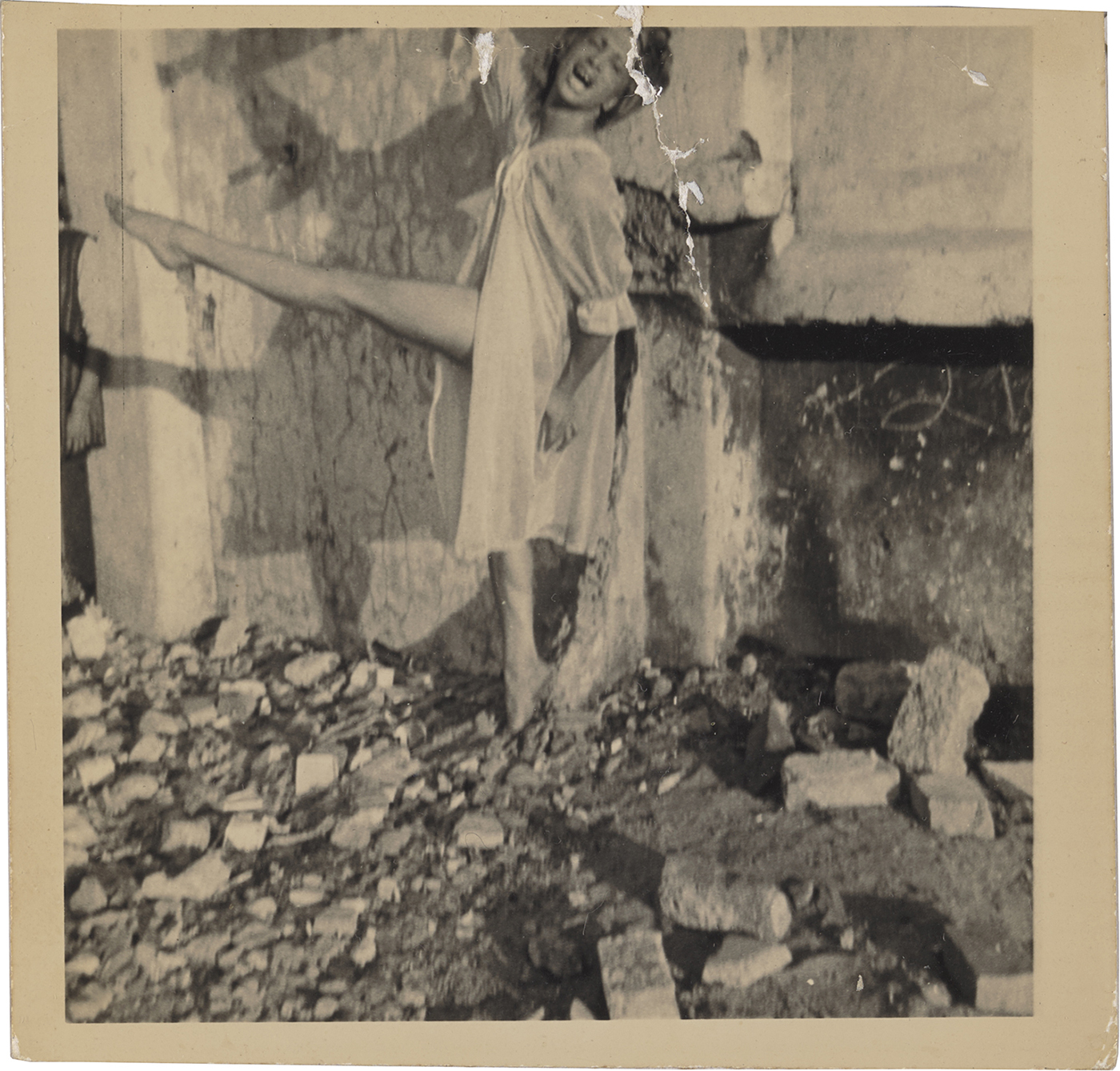
Figure 1: Kewpie, District Six, near Invery Place, Cape Town, late 1960s. Kewpie Collection, GALA Queer Archive, Johannesburg, South Africa (AM2886/127).
The undated black-and-white photograph captures a drag queen dancing amid the ruins of a destroyed house. Presumably taken in the late 1960s, this queer street scene in rubble can be read as a visual message in a bottle48—an offbeat, queer response to destruction. Seen from the side, with their head turned toward the camera, the dancer merges ballet with a revue-style pose. Clad in a kind of negligee, their face is turned toward the camera, mouth open like a playmate’s—perhaps mid-shout. Their gender-bending performance amalgamates different movement repertoires and plays with referential excess.49 The lower body quotes classical European academic dance. The left leg, stretched into the air, references a grand battement, while the right leg is lifted halfway. Yet the movement is staged in ways that can be read as dirty: both legs remain parallel, the upper body breaks the ballet pose, the left arm hangs loosely, and the right arm extends upward beyond the edge of the image. The head is thrown back, bending the vertical axis in another direction. This tension between gestural repertoires and heterogeneous movements renders the citation of European stage dance neither affirmative nor deconstructive. Instead, this gestural drag operates as a performative transposition, recontextualizing the repertoire it employs.50 Here, the traces of what is quoted are not simply reiterated but recycled in a different context—a street scene in drag, one that is bent, queered, so to speak. Yet what is staged as dirty is less the dancer themself than the “impure” mode of appearance. The image enacts a queering that extends beyond the staging of a deviant figure, opening up an understanding of performing as related to the body’s environment51—one that draws attention to transversal lines of flight.
In this shot, scattered stones become apparent, while the dancer’s arm and head are cropped. The framing clearly gestures beyond merely representing a person in drag; it can be read as a queer negotiation of a body dragging its surrounding along. This dragging is not solely tied to outfit and repertoire—to the tension between gender legibility, bodily image, clothing, and posture. Rather, the image exposes the relationship between the dancing body and its background. On the right and in the center, the scattered stones possess a depth of field that the dancing drag queen’s face, their open mouth, does not. The photograph thus makes the reciprocal conditionality of figure and ground its subject. In its reference to the ruins, the image diffracts central perspective, raising questions about the interrelatedness of presence and absence, uplift and gravitational pull, the dancing figure and the rubble lying around.
This reading is reinforced by the strange, anamorphically distorted shadow cast on the wall behind. While the head is no longer recognizable, the wave-like silhouette of the outstretched leg appears to touch another figure standing on the left, seemingly observing the scene but cropped out of it. The visual composition invites to imagine a scene beyond what is depicted. Hence the bending of the movement repertoire translates into diffraction;52 in doing so, the photograph resists focus, allowing the surrounding environment to come into view. Rather than treating the background as a negligible flipside, I propose considering it as constitutive—as an invitation to think through the societal, historical, and geographical conditions under which this drag scene was staged: a queer appearance in the midst of rubble. Shot in the 1960s, this dirty dancing in a landscape of ruins recalls the terror of apartheid-era forced removals, preceded by the displacement of the Black population in the 1930s, and the takeover of Cape Town’s inner city by the white middle class.53 Snapped in the context of the criminalization of “sexual offenses” and corresponding laws against “disguises,” the image captures an area near the former port.54 The drag scene has in tow the violent political history from which its environment emerges.
During the colonial period, which began in the mid-sixteenth century, this area was called the tavern of the seas and, after the inner-city evictions, salted earth. The drag scene reflects the destructive effects of apartheid and the trauma of forced removals from District Six, a neighborhood established in 1867. These removals displaced approximately 60,000 people, making way for white middle-class families in the inner city while driving out residents who did not fit into the bourgeois-colonial-racist family model with its essentialist notions of belonging.55 In retrospect, this image evokes a layered history of forced migration and violent racist gentrification, along with the expulsion of queers from the city. The lines of flight staged in the image—the continuum between body, shadow, and background—suggest a particular reading of this drag scene embedded in an uninhabitable space. It is as though what is depicted asserts both the right to remain and the right to move around without restriction.56
The forced removals exemplify the transformation of colonial violence into securitization. In this light, the photograph also reveals how colonial policies of divide and rule were modernized through urban planning and public health policies. Armed with security and sanitation ideology—prefiguring today’s justifications for gentrification—the ruling National Party systematically “cleansed” District Six of supposed dirtiness into the 1980s, dismantling existing social and political relationships. Apartheid also foreshadowed later modes of governmentality, of environmental modifications, when it declared the inner city white-only through the implementation of the 1950 Group Areas Act.57
Largely undeveloped, the area depicted in the photograph still borders Cape Town’s inner city like an open wound, serving as a reminder of destroyed social structures. It also highlights the precarious conditions under which many people continue to live in distant townships, even after the official end of apartheid. The arbitrary classifications of the past continue to shape present-day class relations and, as Premesh Lalu argues, obstruct the emergence of alternative relationships beyond the lingering effects of everyday “petty” apartheid in the so-called Rainbow Nation.58 This “salted earth,” still partly left fallow, bears witness to the afterlife of past governmental violence, recalling the devastation of “grand” apartheid—its arbitrary racialized, gendered, and class-specific divisions, where colonial coercion and purity laws regulating the nuclear family were repurposed as tools of modern social engineering.
The drag scene of someone dancing barefoot in the rubble of their bulldozed neighborhood—later referred to as their “gay vicinity”—was photographed at a time when cross-dressing had been officially banned.59 The image captures someone making a scene despite the forced removals. Here, the rubble is not merely a striking backdrop; rather, it directs the viewer’s attention to the legacy of apartheid.60 Read thus, the photograph challenges identitarian government policies, exposing their inherent violence. The ruins of District Six are not simply juxtaposed with the quotation of a dance culture imbued with colonial history. This dance posture does not call for the decolonization of movement repertoire but rather “indigenizes” what it quotes—in line with Zimitri Erasmus’s paraphrasing of creolized appropriations, which references Sylvia Wynter.61 In front of a camera playing with shadows in the rubble, someone performs a claim to fluidity amid destruction and segregation, asserting the interweaving of different movement techniques.
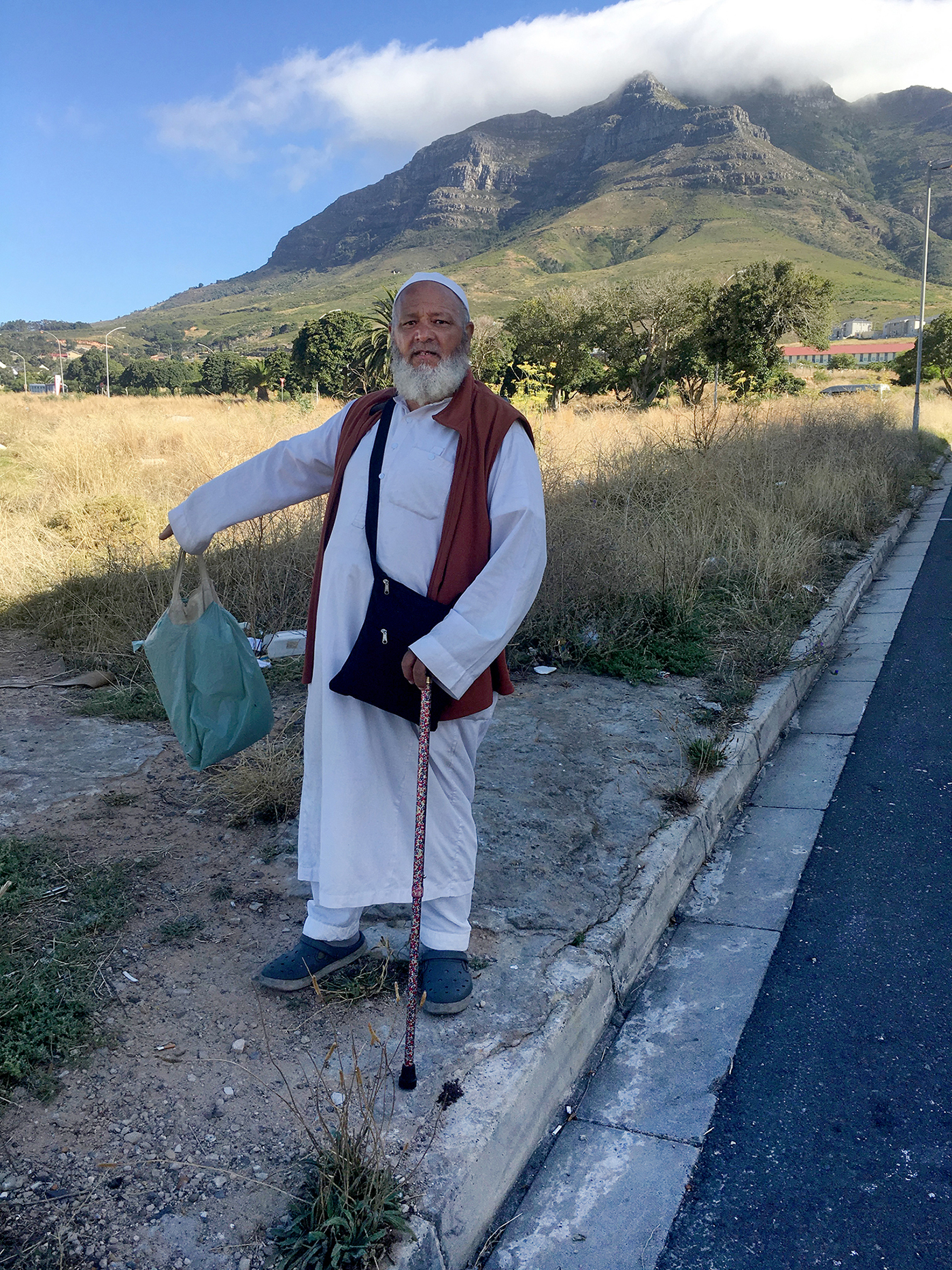
Figure 2: Mogamat Kafunta Benjamin, indicating “salted earth,” District Six, Cape Town, 2019. Photo: Evelyn Annuß.
In this sense, the image also undermines notions of the self-determined representation of one’s standpoint.62 The camera does not focus on a “spectacle of one queer standing onstage alone”63—the paradigmatic scene of queer deconstruction that José Esteban Muñoz describes in Disidentifications: Queers of Color and the Performance of Politics. This “dirty dancing” is not primarily about representing oneself differently than the apartheid police would allow at the southern tip of the African continent; rather, it drags along the memory of material destruction, the erasure of already existing collective living conditions of all kinds of people. The photograph interweaves the gestus of “this has been” with an embodied gesture of defiance.64 This danced critique of governmental classification thus moves beyond (counter)representation and (dis)identification.
Collecting (Kewpie)
In What Is Slavery to Me?, Pumla Dineo Gqola calls for an approach that does not just subject South Africa to theoretical perspectives developed in the Global North.65 Accordingly, reading this dragging photo is about more than building a bridge “between Western queer theory and South African articulations of gender identity and alternative sexualities.”66 What if a different episteme could be ascribed to this specifically situated image—one that could also be used elsewhere in the present? What if current demands for queering drag, as formulated by Meredith Heller in the context of recent trans studies, could be reperspectivized through this scene’s allegorical relationship to its surroundings?67 The drag scene outlined here can be read as a practical theory, reflexively bound to its environment—as Umgebungswissen—that is useful beyond its specific situatedness. This theory contradicts the violent identitarian thinking which emerged over the course of colonial expansion, lives on in a modernized form in the politics of apartheid, and continues to materialize in contemporary discourse.68
As we will see, this drag scene is a site of anti-identitarian assembly, what Julia Prager has called “ver-sammeln.”69 And this, in turn, resonates with the history of collecting photographs. Especially under apartheid, both street and studio photography were media for bearing political witness.70 The drag scene described here is a minor photo in the sense of Katrin Köppert following Deleuze and Guattari,71 emphasizing the political necessity of engaging directly with everyday life and lived environments. It enacts what Ruth Ramsden-Karelse rightly interprets as a visual politics that is less documentary than performative.72 The image is part of the Kewpie Collection, which comprises over 700 photographs spanning from the 1950s to the 1980s. In 1998—fourteen years before her passing and just a few years after the collapse of the apartheid regime—Kewpie, read today as the drag icon of District Six, sold her photo collection to the GALA Queer Archive in Johannesburg, which had been founded only a year earlier. In doing so, she contributed to a new historiography from below.73 Clearly aware of the collection’s historical significance, Kewpie, as Malcolm Corrigall and Jenny Marsden note, created the first “explicitly queer personal photographic collection” in South Africa accessible to a wider public.74 These images would not be available in this way without the fall of apartheid, the end of the Cold War, and the successful fight against anti-LGBTIQ+ laws.75 Today, the digitally accessible collection has gained supraregional significance—especially in the face of right-wing populist and neocolonial attempts to link antiqueer rhetoric with supposedly decolonial discourses on African indigenous heteronormativity. It is thus far more than personal.
These images have long since migrated online, expanding their reach beyond what could have been anticipated at the time they were taken.76 In 2018 and 2019, the exhibition Kewpie: Daughter of District Six, curated by Jenny Marsden and Tina Smith, was presented by GALA (Johannesburg) in cooperation with the District Six Museum (Cape Town). It situated Kewpie within local history, intertwining references to forced removals and antiqueer politics. Kewpie’s image collection is diverse, ranging from private photographs to various studio shots that circulated locally as early as the 1950s and 1960s. The portraits from the Van Kalker Studio, for example—glamorous images of drag icons of the time—were exchanged among the community. Many of the drag queens depicted took on the names of famous Hollywood actresses, such as Doris Day, using transoceanic mass cultural references to overemphasize white US femininity and perform a queer otherwise against the backdrop of apartheid.77
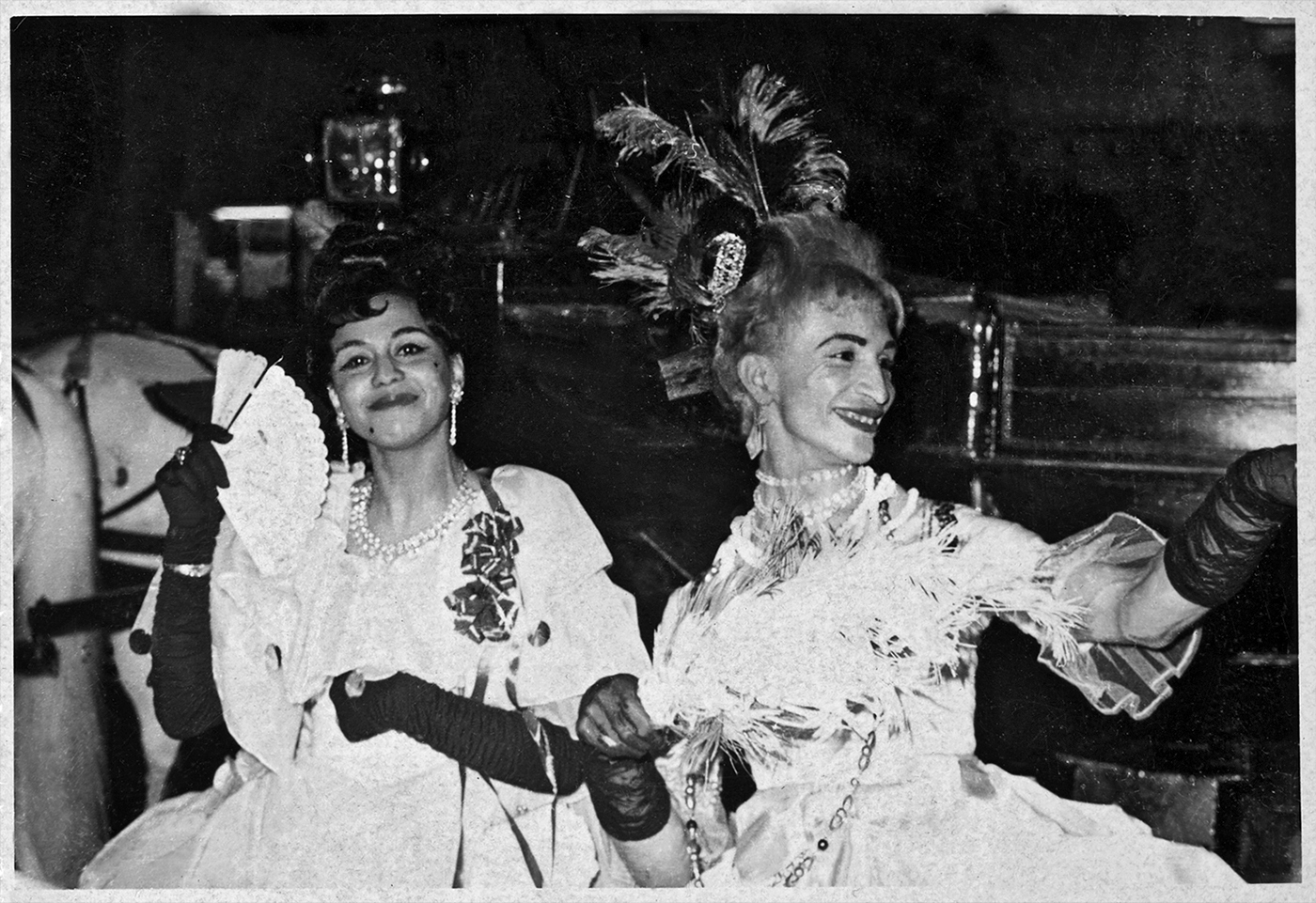 Figure 3: Kewpie and Sodia (l.), Marie Antoinette Ball, Ambassador Club, Cape Town, Sir Lowry Road, Cape Town, 1967. Kewpie Collection, GALA Queer Archive, Johannesburg, South Africa (AM2886/81.3).
Kewpie, born Eugene Fritz in 1941 and performing under the name Capucine in spectacular ballroom and moffie konsert appearances, also referenced a brand name: that of a white baby doll with blue eyes and a shock of blonde hair, originally produced in Germany for the global market. The doll had an earlier life as a comic character drawn by Rose O’Neill in the 1910s to illustrate feminist claims and has been used as the logo for an internationally marketed Japanese mayonnaise brand from 1925 to the present day. In Cape Town, the name was presumably associated primarily with contemporary Kewpie Doll songs of US pop music. The overt amalgamation of different contexts in Kewpie’s living quotation of a doll paralleled her spectacular appearances, as seen in ballroom photographs such as one showing Kewpie and her friend Sodia in a carriage outside the Ambassador Club. Ramsden-Karelse interprets these images as expressions of survival strategies, as anticipations of freedom of movement beyond the restrictions imposed by precarious living conditions in Kewpie’s immediate surroundings.78 These were “performances of an elsewhere,” or rather “of an imagined global,”79 that were also about collectively redefining one’s own use value.
However, the street portraits—often taken without permission by the Movie Snaps Studio and sold on demand, later appearing in Kewpie’s collection—also bear witness to public opposition to contemporary politics.80 They show that queers like Kewpie remained part of street life in District Six during apartheid. Moreover, the numerous other images in the collection make it clear that both sexist and racist regulations were not entirely enforceable in parts of Cape Town’s inner city, even at the time.81 In this sense, the redefinition of one’s value aimed at the collective negotiation of societal conditions.
Now circulating globally, these images generate new readings, while their provenance become increasingly difficult to trace. Initially collected in albums or displayed as mementos in Kewpie’s hairdressing salon in Kensington—a queer refuge—they appear to have been reorganized before being sold. The traces of use suggest their social and (semi)public historiographical function. Corrigall and Marsden, drawing on bell hooks, place them within the context of a collective “non-institutionalized curatorial process,”82 a countercultural practice of collecting.
In 1998, against the backdrop of apartheid’s collapse, Kewpie provided GALA with additional handwritten captions, some of which are contradictory. The collection illustrates the way the supposedly private spills into the public sphere. It also reflects the unconcern of those involved with claims to authorship or a singular narrative. Even in how they were captured, these images were a collective matter. They do not merely state: just because this has been, it doesn’t have to stay this way; rather, they stage this otherwise as a joint effort—ultimately recalling that apartheid’s eventual collapse was collectively enforced locally while also being supported worldwide.
Accordingly, the image taken here as a starting point belongs to a larger series depicting a queer posse posing in a demolished area—a posse that contradicts racist and sexist binaries. One photo in this series shows Kewpie with several others, including her friend Brigitte, who also appears cropped at the edge of the scene described above. A retrospective caption from the late 1990s reads: “The Sea Point girls used to frequent the Queen’s Hotel where we stayed at Invery Place.”83 Kewpie’s caption explicitly connects the photograph to the destruction of her neighborhood by apartheid’s urban planning policies, addressing future viewers. In the group photo, six people laugh into the camera. Once again, the background exposes the area where Kewpie had lived in her house, the “Queen’s Hotel,” before the removals.
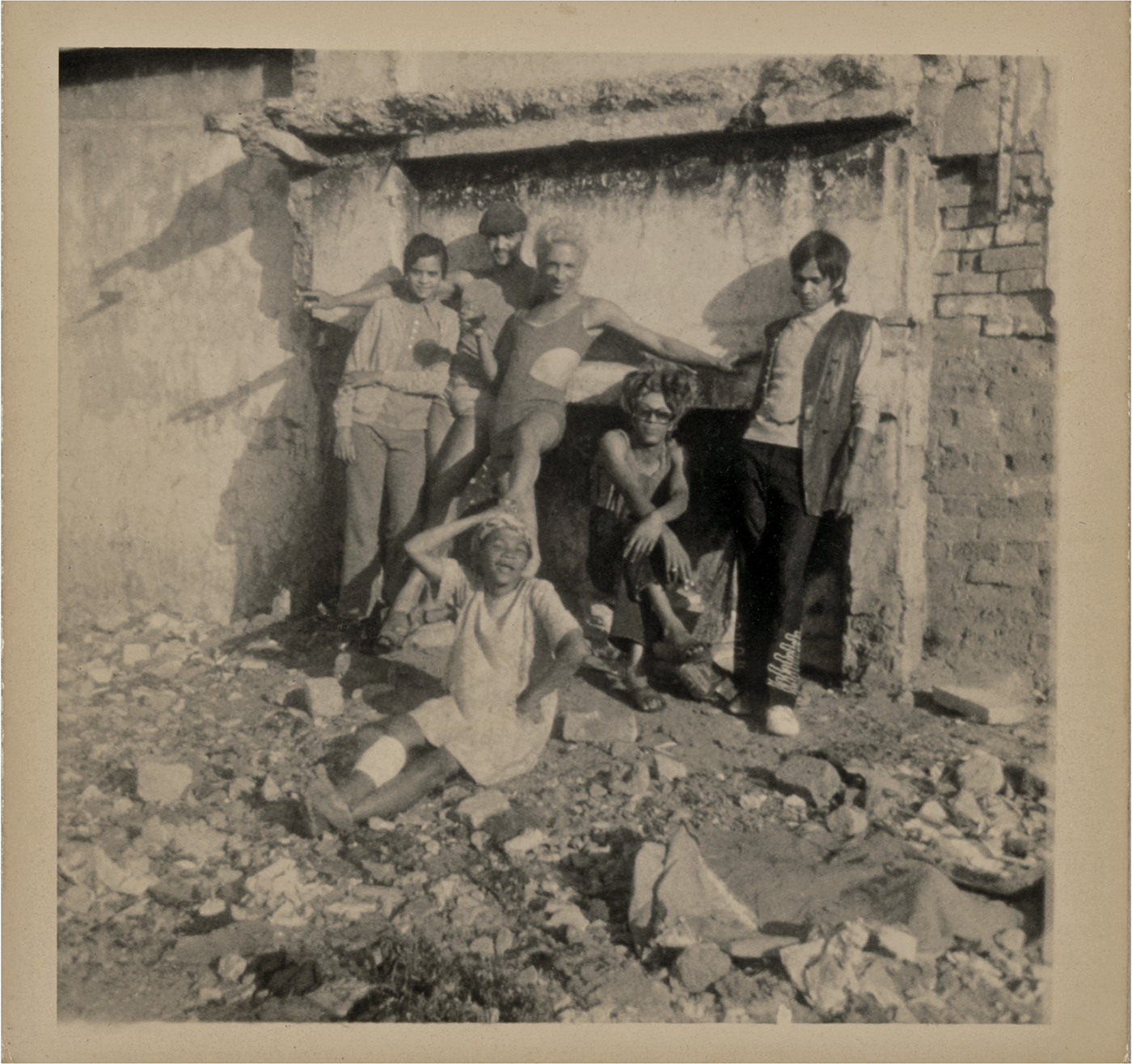
Figure 4: Kewpie and the Seapoint girls, District Six, near Invery Place, Cape Town, late 1960s. Kewpie Collection, GALA Queer Archive, Johannesburg, South Africa (AM2886/116.4).
The cropping and motion blur give this series of images—whose photographer remains unknown—the appearance of private snapshots. Yet they also seem anything but spontaneous. Rather, they are “carefully composed … stylish,”84 as Corrigall and Marsden observe. Clearly posed, they resist simplistic notions of documentary photography.85 By staging queer relationships in this environment, they assert the right to kinship and sociality beyond standardized norms—even and precisely in the midst of destruction.
If one follows the GALA catalog for the Kewpie exhibition, these images prefigure today’s gender fluidity, queering drag:
From what we know, Kewpie’s gender identity was fluid, and she did not strictly identify as either male or female. Kewpie and her friends generally used feminine pronouns, and would refer to each other as “sisters” and “girls.” Today, some of these people might identify as transgender, although this term was not used at the time. They were sometimes known as “moffies,” which can be an offensive term, but in District Six its use was not necessarily derogatory. … Kewpie herself recalled that “ … we were called as moffies then. But it was beautifully said … ”86
Kewpie rejects classification. Here, moffie is not simply a synonym for the homophobic or transphobic devaluation of those then called fairies; rather, its significance depends on affective charge, the touching potential of intonation, and its situatedness.87 Making no distinction between trans identity and drag as stage performance,88 this understanding aligns with the image outlined at the beginning of this chapter—Kewpie dancing in the ruins of District Six with ballet and revue-like moves, interweaving different dancing techniques and exposing the embodiment of opposing repertoires. The environmental gesture of this appearance accentuates assembly. Kewpie’s performance amid the rubble allegorizes resistance against essentializing classification. This dirty dragging recalls the ways people danced in defiance of segregation policies, enacting a kind of performing otherwise.89 The photos of rubble surroundings, in particular, negotiate arbitrary, specifically situated relations and bring their precarious conditions into play.
At the same time, these images drag the memory of others along, expanding the view of dragging in turn. In this sense, Kewpie’s collection—especially the series depicting the destruction of District Six—is also intertwined with the memory of other transoceanic histories of forced migration, predating the forced removals and already evoking related cultural techniques of collective resistance. Kewpie’s drag scenes thus refer not only to the destructive power of apartheid but also to specific queer survival strategies, which can themselves be read as creolized techniques that overturn rigid classifications through “illicit blendings” and assert convivial, nonidentitarian ways of relating.90
In Édouard Glissant’s works, situated in the Caribbean, creolization describes unpredictable linguistic reiterations emerging from colonial rule and forced migration. From the “bitter, uncontrollable residue”91 of what was lost displaced people were forced to invent new forms of relating, bringing forth the previously unimaginable. Through what Glissant calls “an art of the flight [fugue] from one language to another,”92 those forcibly thrown together subverted the colonial phantasm of maintaining clearly distinguishable groups. Against the identitarian episteme of representation and the universalist ideal of an ordered Totalité-monde (World-totality), Glissant proposes the translational potential of a chaotic, creolized tout-monde—a multitude. His understanding of creolization reveals the flipside of the colonial project and opens up a counterhegemonic perspective on our contemporary globalized world.93 Accordingly, Glissant conceives of creolization as a form of practical knowledge—one that demonstrates how, despite traumatizing conditions, hyperexploitation, abduction, and arbitrary classification, collective relating remains possible. It is precisely in this sense that Kewpie’s drag scenes can be read.
In contrast to notions of hybridity, mestizaje, or miscegenation, creolization is understood as a decidedly processual and praxeological phenomenon.94 Glissant’s perspective thus provincializes—to borrow Dipesh Chakrabarty’s term from subaltern studies95—the engagement with drag. It contributes, as Tavia Nyong’o suggests, to “unburden blackness and queerness of their identitarian and representational logics.”96 Reading Kewpie’s photos, I seek to bring queering and creolization closer and to explore the incalculable survie of creolized, dirty, minor modes of making an appearance in public—of making a scene.97
Endnotes
-
See Struck, Flaschenpost, 2022. ↩︎
-
On repertoire as mnemonic embodiment see Taylor, Archive, 2003; the following deals with nongenealogical forms of embodiment.↩︎
-
On “gestural drag,” see Ruprecht, Gestural Imaginaries, 2019. ↩︎
-
My take is not neomaterialist, but a materialist understanding of “environmentality”; I am interested in reflexive modes of mimetic transgression that are aware of the specific political conditionality of public appearing. For a critique of new materialism with regard to questions of political agency, see Malm and Hornborg, “The Geology of Mankind?,” 2014. ↩︎
-
See Deuber-Mankowsky, Praktiken der Illusion, 2007: 343; “Diffraktion,” 2011: 89, and Schade, “Widerständigkeiten,” 2020.↩︎
-
“Cape Town was arguably the most racially integrated city in South Africa.” See Trotter, Trauma, 2013: 51.↩︎
-
On the Immorality or Sexual Offences Act (1957) and the Prohibition of Disguises 16, i. e., the ban on drag (1969), see Pacey, Emergence, 2014: 112. On South African gender politics, see Hoad, Martin, and Reid, Sex and Politics in South Africa, 2005; Carolin, “Post-Apartheid Same-Sex Sexualities,” 2021; Lease and Gevisser, LGBTQI Rights, 2017. On the history of Cape Town, see Bickford-Smith, Ethnic Pride, 1995; James, Class, 2017; Worden et al., Cape Town, 1998; for an overview on South African history, see Nattrass, A Short History, 2017, Ross, R., A Concise History, 2008, Hamilton and Ross et al., The Cambridge History of South Africa, 2009, 2011, here especially Legassick and R. Ross, “From Slave Economy,” 2009; on the South African history of enslavement Dooling and Worden, “Slavery,” 2017; on the Cape: van de Geijn-Verhoeven et al., Domestic Interiors, 2002: 115—137.↩︎
-
With Brah, District Six could be read as a diaspora space; see “Diaspora,” 2003: 615. ↩︎
-
See von Redecker’s reformulation of the concept of freedom in Bleibefreiheit, 2023. On the fundamental right to freedom of circulation, see Balibar, “Toward a Diasporic Citizen?,” 2011. ↩︎
-
On the environmentality of biopolitics, see Sprenger, Epistemologien des Umgebens, 2019. On the social engineering of apartheid, see Adhikari, Burdened, 2013. On the history of Nazi reception through apartheid, see Kum’a N’Dumbe, Nationalsozialismus und Apartheid, 2006. ↩︎
-
See Lalu, Undoing Apartheid, 2022: 46. For a critique of the afterlife of apartheid classifications, even in their critical usage, see Erasmus, “Apartheid Race Categories,” 2012.↩︎
-
Corrigall and Marsden 2020 (on the “conjunction of pose and location”: 24; on the anchoring of drag in everyday life in 1960s Cape Town: 16).↩︎
-
This understanding of violence is situated and goes beyond the metaphorical extension of the term as exemplified in Barad’s talk of an “apartheid type of difference.” See Barad, “Troubling Time/s,” 2020. ↩︎
-
See Erasmus, “Caribbean Critical Thought,” 2025. On the concept of decolonization, see, for example, Mignolo, The Politics of Decolonial Investigations, 2021; for a critique of the current metaphorical use of the term, see Tuck and Yang, “Decolonization Is Not a Metaphor,” 2012; for a fundamental critique of decolonial discourse, see Táíwò, Against Decolonization, 2022.↩︎
-
For a critique of simplified notions of positionality and corresponding standpoint theories, see the thematic issue “Left of Queer,” Social Text 3, no. 4, 2005, edited by David Eng and Jaspir Puar.↩︎
-
In distinction from “mainstream representations,” see Muñoz, Disidentifications, 1999, 3. ↩︎
-
On the gestus of “this has been,” see Barthes, Camera Lucida, 1981, 79. ↩︎
-
See Gqola, Slavery, 2010: 204.↩︎
-
Lease, “Dragging Rights,” 2017: 131. ↩︎
-
See Heller, Queering Drag, 2020.↩︎
-
In contrast, see Samir Amin on the “right to be similar” (Specters of Capitalism, 1998: 42) and related reflections on transculturalization (Ortiz, 1995). On the replacement of similarity by identity and the hypostasis of differences in bourgeois-European culture, see Foucault, Les mots et les choses, 1966, 64. For a critique of postcolonial assertions of alterity and the pitfalls of reversing discourses, see Koschorke, “Ähnlichkeit,” 2015, in Bhatti and Kimmich, Ähnlichkeit; Kimmich, Ins Ungefähre, 2017. On theory that has become practical, see Sonderegger, Vom Leben der Kritik, 2019.↩︎
-
On the German term, see Prager, “ver-sammeln,” 2021; in the context of the DFG network Versammeln: Mediale, räumliche und politische Konstellationen. https://gepris.dfg.de/gepris/projekt/426798101?language=de; accessed September 12, 2024.↩︎
-
On the politicality of South African documentary photography during apartheid, see the works of David Goldblatt, Santu Mokofeng, Jürgen Schadeberg, and Peter Ugabane; for an example of the Market Photo Workshop in Johannesburg, see Camera Austria 100, 2007. ↩︎
-
On minor photography as opposed to stigmatizing representations of the Other, see Köppert, Queer Pain, 2021: 13, 317; following Deleuze and Guattari on minor literature (Kafka, 1986). ↩︎
-
“Privileging their creative rather than documentary functions,” Ramsden-Karelse points out how these photos were used as “a medium of ‘fantastic’ performance.” See “Moving,” 2020: 410, 427.↩︎
-
See GALA: https://gala.co.za/kewpie-daughter-of-district-six/, accessed September 24, 2024. On the Kewpie collection, see Corrigall and Marsden, “District Six,” 2020; GALA and District Six Museum, Kewpie, 2019; Ramsden-Karelse, Moving, 2020, A Precarious Archive, 2023. See also Jack Lewis’s Kewpie films A Normal Daughter: The Life and Times of Kewpie of District Six (2000) and Dragging at the Roots: The Life and Times of Kewpie of District Six (1997); see also Lewis and Loots, “Moffies,” 1995. On Kewpie’s popularity, see the coverage in Drum Magazine (October 1976) and the Golden City Post of June 18, July 9, and September 24, 1967.↩︎
-
Corrigall and Marsden, “District Six,” 2020: 11. See also Chetty, “A Drag,” 1995: 123—124.↩︎
-
On colonial homophobia, see Carolin, “Post-Apartheid Same-Sex Sexualities,” 2021: 9. Today’s neocolonial efforts to implement antiqueer, petty-bourgeois family images through an alliance of the US religious right and Russian investors, under the umbrella of the World Congress of Families on the African continent, and to frame colonial sodomy laws as “decolonial.” See Kalm and Meeuwisse, “Transcalar Activism,” 2023; Stoeckl, “Russian Christian Right,” 2020; Butler, Who’s Afraid, 2024 (Chapter 1, “The Global Scene”). For an overview of the increasingly draconian antisodomy laws, especially in Uganda and Nigeria, see the Amnesty International 2024 report: https://www.amnesty.org/en/documents/afr01/7533/2024/en/, accessed September 5, 2024.↩︎
-
See most recently Ramsden-Karelse, Salon Kewpie, 2024; https://www.instagram.com/kewpie_legacy/; www.youtube.com/watch?v=YOGhOxK9740; https://gala.co.za/salon-kewpie/, accessed September 22, 2024.↩︎
-
On the Van Kalker Studio, from 1937 in the Woodstock district, see Corrigall and Marsden, District Six, 2020: 19. The Studio Collection can be found in the District Six Museum and brings together a range of staged self-portraits: https://www.districtsix.co.za/project/chamber-of-dreams-photographs-of-the-van-kalker-studio/, accessed September 11, 2024. On the diverse history of African studio photography, see Behrend and Wendl, Snap me one!, 1998. On the alternative historiography of studio portraits and the “democratization of the portrait”—here in the Caribbean-British context—see Hall, “Reconstruction Work,” 2024 (originally published 1984): 242.↩︎
-
See Ramsden-Karelse, “Moving,” 2020. ↩︎
-
Ramsden-Karelse, “Moving,” 2020: 412, 414.↩︎
-
See the project Movie Snaps. Cape Town Remembers Differently at the Centre for Curating the Archive of the University of Cape Town, http://www.cca.uct.ac.za/cca/projects/movie-snaps-cape-town-remembers-differently/. Some of the images have been recolored. On the intermedial play with photography and painting, which Foucault describes as androgynous, see “Photogenic Painting”/”La peinture photogénique,” 1999: 81—108, on 82; also Stiegler, Theoriegeschichte der Photographie, 2006: 360.↩︎
-
The bikini shots on the segregated beach indicate that public gender bending in Cape Town may have been less sanctioned than crossing the apartheid color line; see Corrigall and Marsden, District Six, 2020: 16. ↩︎
-
hooks, “In Our Glory,” 1995: 59—61; cited in Corrigall and Marsden, “District Six,” 2020: 26.↩︎
-
GALA and District Six Museum, Kewpie, 2019: 74.↩︎
-
Corrigall and Marsden, “District Six,” 2020: 22.↩︎
-
On the historicity and assertive character of the documentary, see Solomon-Godeau, “Who Is Speaking Thus?,” 1991: 169—170; see also Köppert, Queer Pain, 2021: 288n35; on occidentalist perspectives, see Bate, “Photography and the Colonial Vision,” 1993. On the documentary, see Balke et al., Durchbrochene Ordnungen, 2020.↩︎
-
GALA and District Six Museum, Kewpie, 2019: 5.↩︎
-
On the current shift from deconstruction to touch, see Erwig and Ungelenk, Berühren Denken, 2021, here especially Ungelenk, “Was heißt”: 39. For trans studies, see Preciado, Testo Junkie, 2013; Apartment, 2020. On the political nature of affects, of circulating energies, see Massumi, Politics of Affect, 2015; Gregg and Seigworth, Affect Theory, 2010; on the stickyness of the affective, see Ahmed, The Cultural Politics of Emotion, 2014; see also Sophie Zehetmayer’s dissertation project Rhythmic Relations: Transitions of Musical and Social Rhythm (mdw).↩︎
-
See Bukkakis, “Gender Euphoria,” 2020; in contrast to Stokoe’s separation of drag as an “onstage performance” from trans as an “identity category” (Reframing Drag, 2020: 3).↩︎
-
See Erasmus, Race Otherwise, 2017, on XXVII; with regard to the United States, see Hartman, Wayward Lives, 2020. On the definition of the performative “as a kind of action or practice that does not require the proscenium stage,” “an action that involves a number of people,” see Butler, “When Gesture Becomes Event,” 2017: 171, 180.↩︎
-
I take the notion of “illicit blendings” from Gordon, Creolizing Political Theory, 2014: 10.↩︎
-
Glissant, Introduction to a Poetics of Diversity, 2020: 7; for the French original version see Glissant, Introduction, 1996: 18.↩︎
-
Glissant, Introduction to a Poetics of Diversity, 2020: 27.↩︎
-
See Glissant, Introduction to a Poetics of Diversity, 2020: 8—9.↩︎
-
See Anzaldúa, Borderlands, 1987, Bhabha, Hybridity, 2012. In contrast, see C. L. R. James’s reading of the complicit role of the “mulattoes” in the context of the Haitian revolution; see Black Jacobins, 2022, originally 1938.↩︎
-
See Chakrabarty, Provincializing Europe; see also the Comaroffs’s call for an “ex-centric” theory from the South, 2012, and, with regard to the United States, Knauft, “Provincializing America,” 2007.↩︎
-
Nyong’o, Afro-Fabulations, 2018: 199. See also Mbembe’s attempt, situated in South African discourse, to undermine US-ontologizations of Blackness, in Critique of Black Reason, 2017.↩︎
-
On creolization, see Gordon, Creolizing Political Theory, 2014; Lionnet and Shih, Creolization of Theory, 2011; Brah, Diaspora, 2003: 633. With regard to the Paris Commune and in contrast to deconstructive perspectives, Kristin Ross accentuates survie as reemergence; speaking of the surplus of the movement, of a life beyond life as an extension of struggle by other means. Communal Luxury. 2015: 6—7. See also Freeman’s plea for a certain vulgar referentiality, i. e., for taking into account the body-related desire of queer theory. Time Binds, 2010: xxi.↩︎