How to do good theatre in this day and age? How can a stage director structure the time from the first rehearsal to opening night such the production, the participants, and the audience all benefit? mdw Magazine learned from two 2026 graduates of the Max Reinhardt Seminar’s Stage Directing programme how a new generation views directorial work—and how they’re implementing this approach in their own projects.
When you graduate from the Max Reinhardt Seminar, you’re called upon to do three final things: clean out your locker, return props, and—optionally—choose a piece of your own clothing for a “trousers donation”, as it’s known here. “Having done that,” says the freshly graduated Max Reinhardt Seminar stage director Anja Jemc with a chuckle, “you’ll always get a kick out of seeing your jacket running around on this or that stage.” Jemc arrived to talk with mdw Magazine (a fourth post-graduation to-do, likewise optional) together with her colleague Jakob Leanda Wernisch.
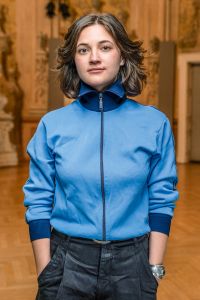
It goes without saying that these two graduates, just emerged from the Max Reinhardt Seminar’s sacred halls, will soon be bringing other spaces to life: “I think that’s what I’m really looking forward to—making different moves, being able to work in other constellations and spaces, not being limited to a specific atmosphere,” remarks Jakob Leanda Wernisch. For the moment, it just feels good to shift the centre of one’s life somewhere else after devoting so much time to studying—“and even so, I notice how I’ll also be missing the phase I spent here in a certain way.”
The point now is to build a bridge from this “instructive and motivating stage of life” to other stages. But what’s it all about, and what does it take to be a young stage director in the present day and age? “There’s a very positive shift going on towards directing that takes the concerns of the entire team into account. An approach where team members’ needs play a role, where one doesn’t prioritise the result or one’s work as such above all else,” answers Jakob Leanda Wernisch without hesitation. This increasingly “sensitive and needs-oriented directing” refrains from putting team members’ well-being on the line—which gives rise to a better working atmosphere that can, in turn, allow more to “spring forth”.

To Anja Jemc, participants’ well-being is likewise an unconditional goal—although she thinks the term “well-being” isn’t quite apt in this context. After all, “The stage is a realm of high performance. Acting and directing are high-performance sports. So it isn’t the case that I’d think to myself, ‘aah, I’ll just get all comfy and cosy, here’”, she says with a laugh. What’s actually key, continues Jemc, is “to trust in what’s being sought after together. To trust in the project, in one’s partners. I think that if these things are ensured, you can do good theatre.”
The trend toward this new mode of directing is something the two Max Reinhardt Seminar graduates say they’ve already begun to notice, even if they prefer not to make any blanket statements in light of how they lack a bird’s-eye view: “What I’m hearing from theatre-makers around my age is that there’s definitely a huge desire to change things, to radically rethink old hierarchies, to put content onstage that ideally hasn’t ever been there before—or even just to exchange old viewing conventions for new ones that we’ve created ourselves,” Jemc notes.

In their work as directors, the two graduates have found their own ways of implementing these values, developing their own personal directing styles in the process. “I think that as a director,” asserts Jakob Leanda Wernisch, “you owe the people with whom you work true honesty. I think you have to reveal in a very clear way just why you decided in favour of something or decided against a particular topic or dramatic work.” This also entails not sweeping it under the rug when personal, “not particularly intellectual motivations” figured into a decision. “What I’ve often experienced is that people conceal truly personal impulses out of shame.” This begets frustration on the part of everyone involved, according to Wernisch, since they then don’t know why they’re doing something.
For this reason, Wernisch says, a director should state their personal motivations up front and then also imply “where the potential in a role or an acting task lies, what could be interesting about it to this or that specific person, and—even with smaller roles—show where the potential for enjoyment lies.” In this way, concludes Wernisch, one can generate excitement within a group, achieve a certain measure of democratisation, and ultimately set out to combat the cliché of the “white, specifically male director” who “knows his intended outcome but remains mysterious and steers people along a path that’s visible only to him,” says Jakob Leanda Wernisch.
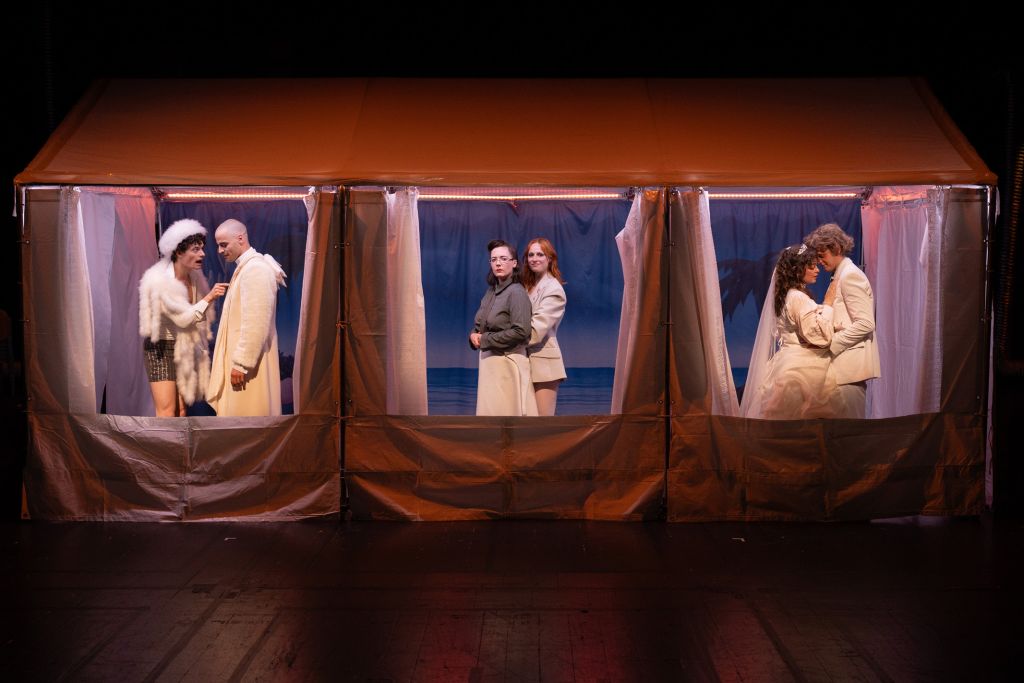
In her work, says Anja Jemc, there’s another thing that’s important: “What I always demand of my actors is that they help to maintain a space of concentration. I think it’s totally important for people to avoid glancing at their phones on the side, to avoid withdrawing from a concentrated phase, because I want to create a good working atmosphere—and that has a lot to do with what goes on within a space.” Another thing that can contribute positively here is holding individual conversations at the outset of a production: “I’ll sit down with each actor for about an hour and say, okay, what do you think about your character? What would you find important? Kind of a one-on-one character/role discussion.” This, she says, makes it possible to ascertain right away whether the respective understandings of a character match. “It’s then just great to see how there really is no right or wrong, how there isn’t just this one path. But whichever you end up choosing, you do have to travel down it together.”
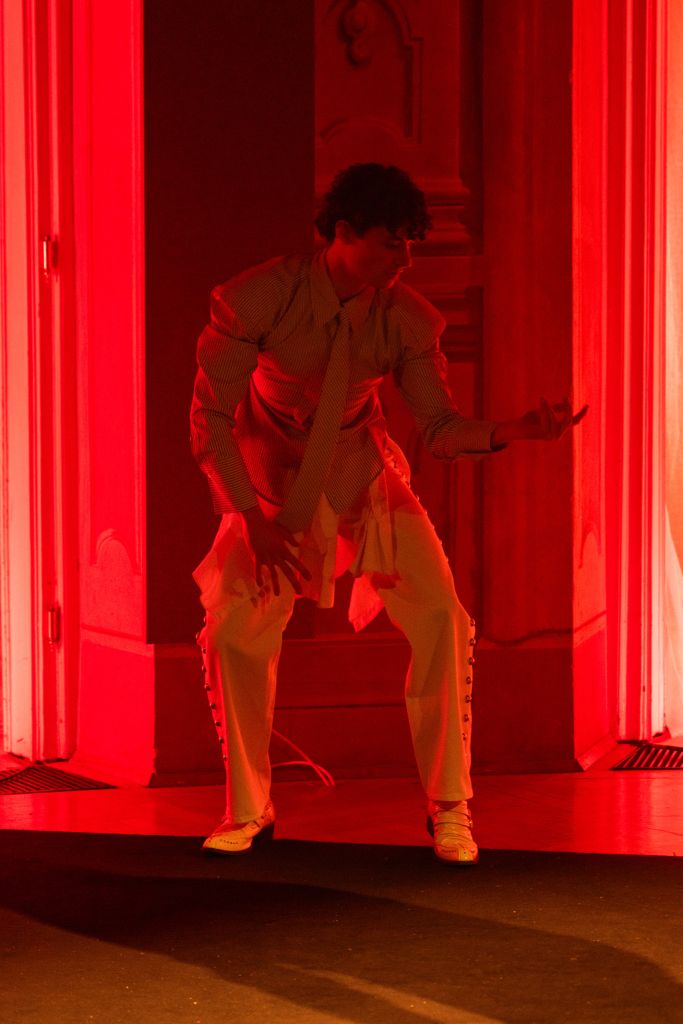
The approach of sometimes just trying stuff out without any fear of doing things wrong is another thing that Anja Jemc says she picked up at the Max Reinhardt Seminar: “Having the spunk and the courage to say, I’ll just go out there and try it out and see where I land. And spending less time wondering what everyone might think of me.” In this way, she and each of her fellow young stage directors had the opportunity to discover an artistic language of their own during their studies—“and it’s now time to go out and speak it.”