The mdw Campus is now home to 14 new modern and soundproofed practice rooms planned by architect Reinhardt Gallister. This project’s ten-month construction phase also included renovation work on the historic lecture hall around which these new rooms are grouped, which is now likewise available for teaching and research-related use. On 12 May 2026, the newly built structure—called the “Practice Arc”—was formally opened by the Bundesimmobiliengesellschaft (Austria’s federal real estate holding company), Federal Minister of Science Eva-Maria Holzleitner, and the mdw.
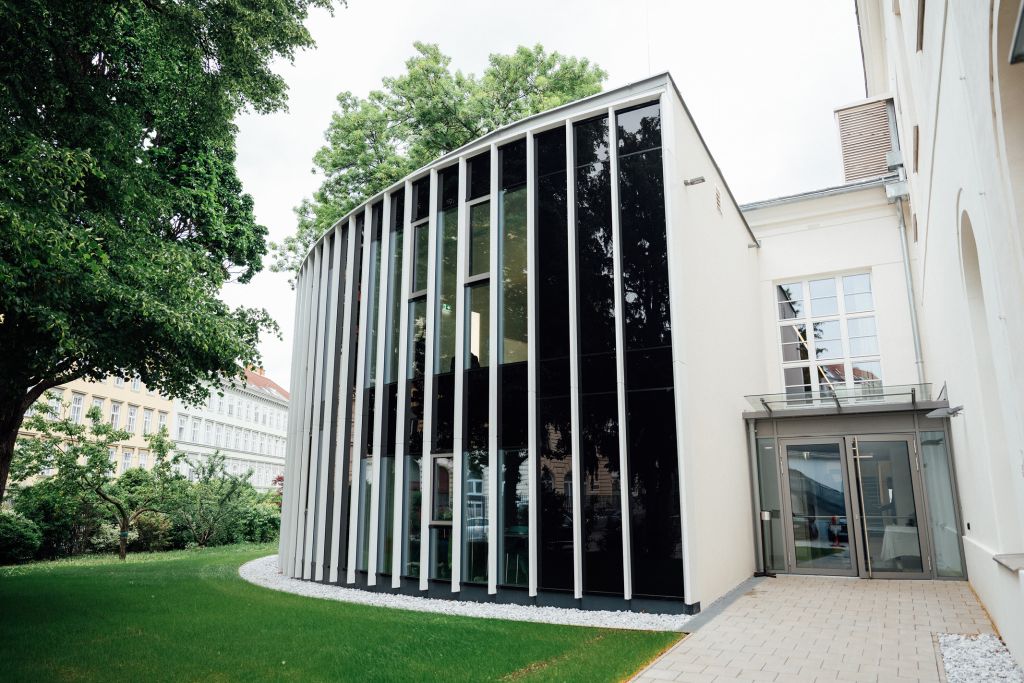
In the words of Rector Ulrike Sych, “The new Practice Arc on the mdw Campus augments the resources available to our students in that area of work which is essential for performing artists: practicing. These additional rooms provide modern infrastructure for concentrated musical work and artistic development.” The majority of the 14 new practice rooms offer between 12 and 14 square metres of floor space, and they’re designed to provide optimal conditions for students’ practicing, music-making, and development as artists. The 1,500 students entitled to use the Practice Arc can reserve these rooms using an app called FluidLife. A special feature of this modern system is the ability to make such reservations up to two weeks in advance, with the app then being used to unlock the reserved rooms. “Our new practice rooms have been very well received. Since Easter, they’ve been seeing heavier and heavier use—and they currently host around 80 users per day,” reports Berthold Huber, head of the Department of Facility Management.
The renovation of the historic lecture hall, originally built in the 1950s and the determining factor in the Practice Arc’s overall geometry, posed a huge challenge due to its status as a listed structure. However, it ultimately proved possible to retain the hall’s impressive windows and tiered seating while still adhering to all regulatory requirements. This lecture hall in the former anatomy building has now been named for the Austrian folk music scholar Gerlinde Haid, who once headed the mdw’s Department of Folk Music Research and Ethnomusicology.
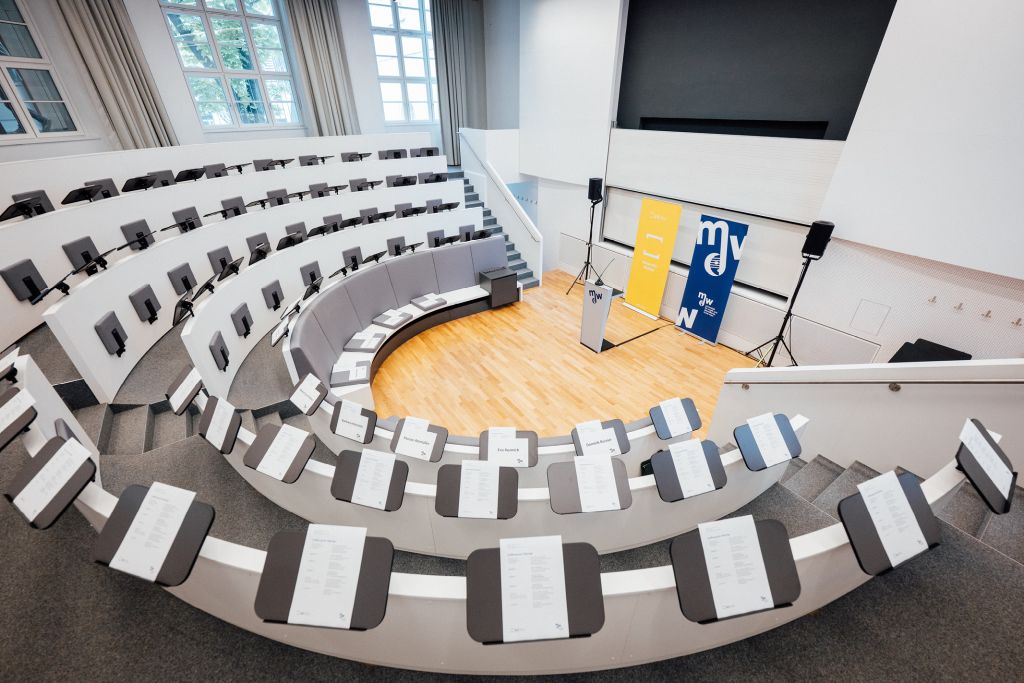
Over the course of the coming year, the hall will be furnished with state-of-the-art audio-visual technology. “What we need to consider here are the hybrid requirements of this space along with the needs of its users. It should be possible to hold lectures as well as realise concerts where the students are presented in the best possible way. To this end, we’re planning an LED wall, modern LED stage lighting, and a permanently installed sound system,” says Ulrich Wagner of the mdw’s AV Center team.
A special priority of the project was to work around the trees that have long been present at this site. Measures to protect the ash and the maple here were integrated into the architectural design and the plans for the surrounding green spaces. “A pile foundation system ensures that the building won’t put pressure on the trees’ roots—and it also enables water to reach the ground beneath the Practice Arc”, says Berthold Huber of the protective measures that were necessary. “Thanks to all this, we were able to realise the idea of being able to practice surrounded by greenery—including a view of our approximately 110-year-old Turkish hazel, the oldest tree on the Campus.”