Ferdinand Breitschopf, inspector for music at the Vienna Education Authority, and jury chair Karl-Gerhard Straßl provide a glimpse into the 2026 edition of the Wiener Landesjugendsingen [Vienna Provincial Youth Choir Competition]—which the mdw hosted for the first time from 21 to 23 April.
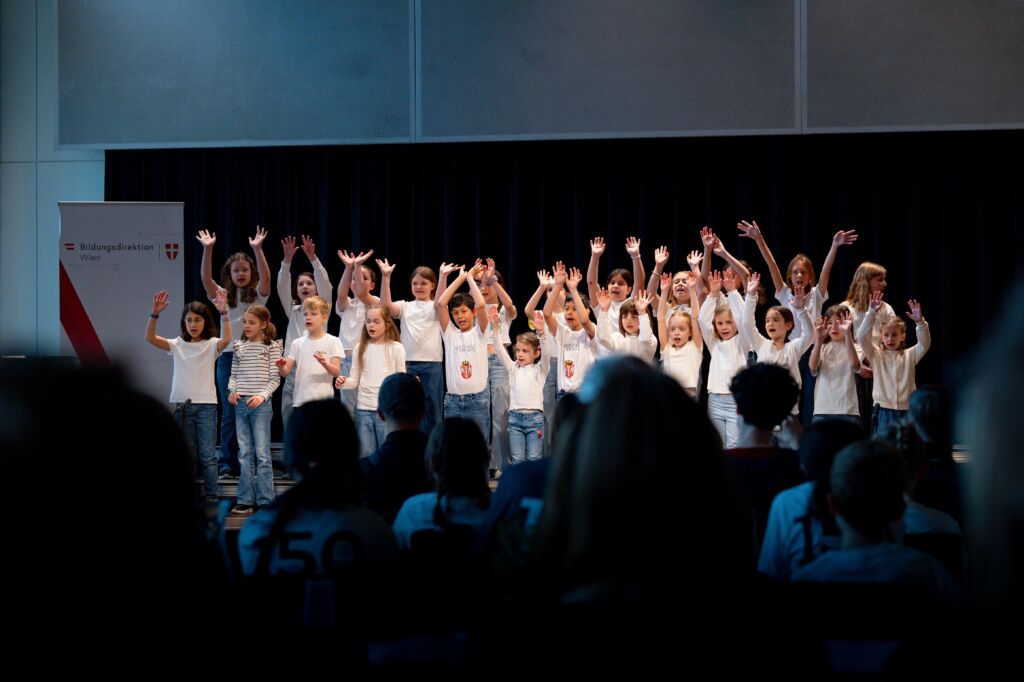
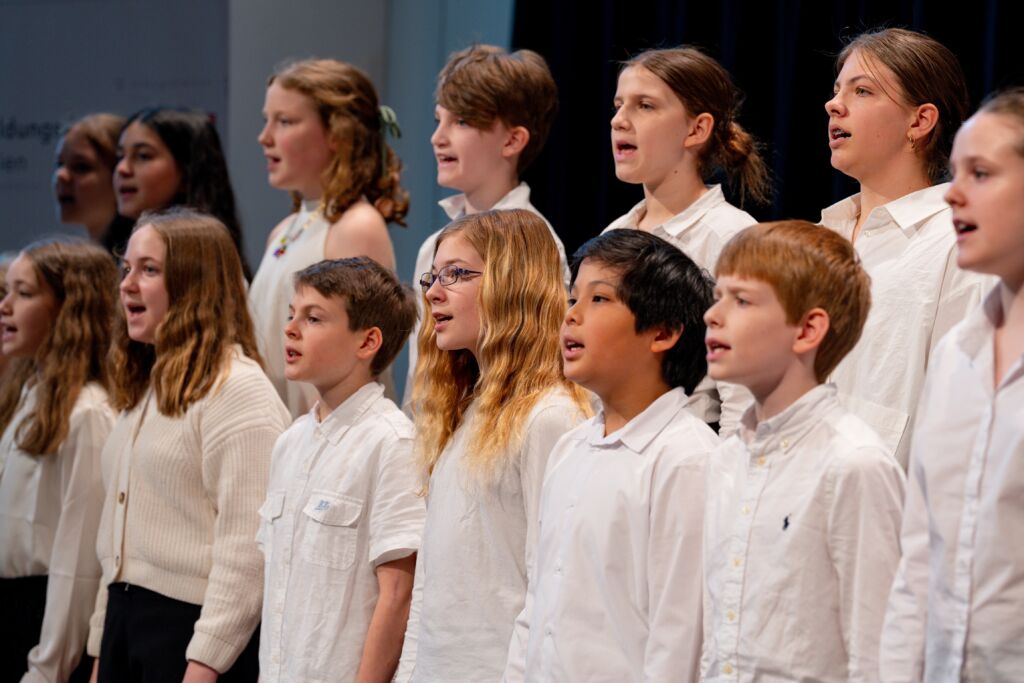
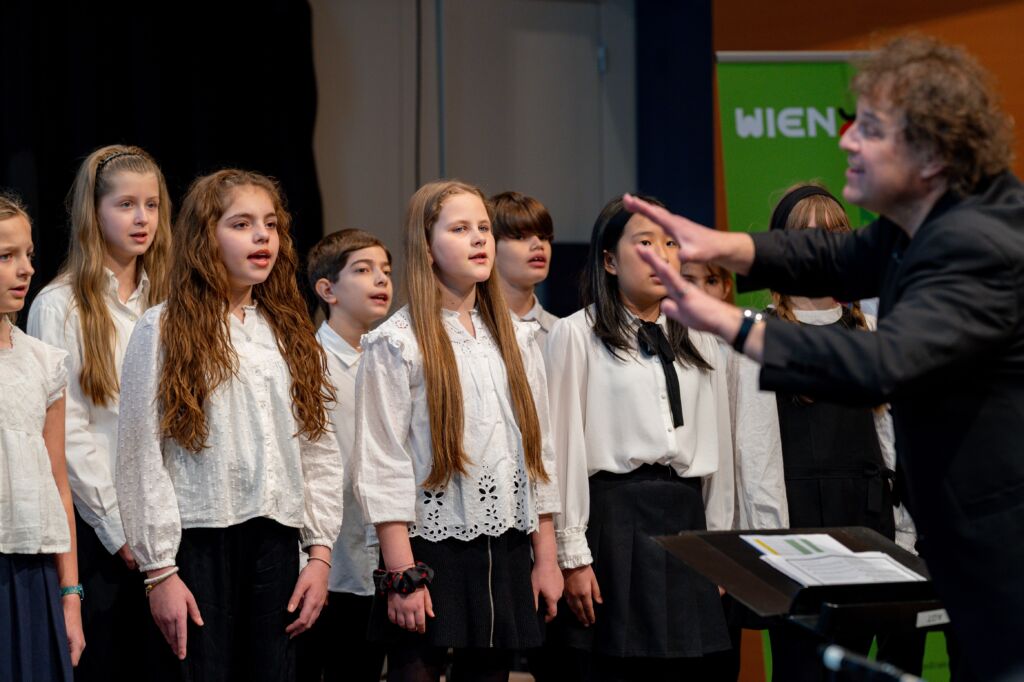
The Wiener Landesjugendsingen is Vienna’s provincial-level round of the Austria-wide youth choir competition Österreichisches Jugendsingen. Every three years in April and May, all of Austria’s federal provinces witness youth choir competitions whose winning choirs then go on to represent their provinces at the national level in Linz. The competing choirs are grouped into five age categories, and their performances are evaluated according to uniform nationwide criteria by juries consisting of a chairperson and four jurors. This year’s Vienna jury included Karl-Gerhard Straßl (as jury chair), Angelika Berrini, Verena Doublier, Katja Kalmar, and Johannes Hiemetsberger. The performances were judged in terms of technical criteria (intonation, choral sound, dynamics, rhythm), musical and artistic criteria (interpretation, style), programme selection (variety and difficulty of the performed pieces), and general artistic impression (overall concept, presentation).
The provincial competition culminated in a gala concert in the Great Hall of Vienna City Hall that involved around 1,000 participants, and this occasion also saw the presentation of certificates and various prizes. The overall Österreichisches Jugendsingen has been held since 1948.
As Municipal Inspector for Music at the Vienna Board of Education, I bear primary responsibility for the provincial-level Wiener Landesjugendsingen’s artistic and pedagogical direction while organisational aspects are seen to by the school events association WienXtra-Schulevents.
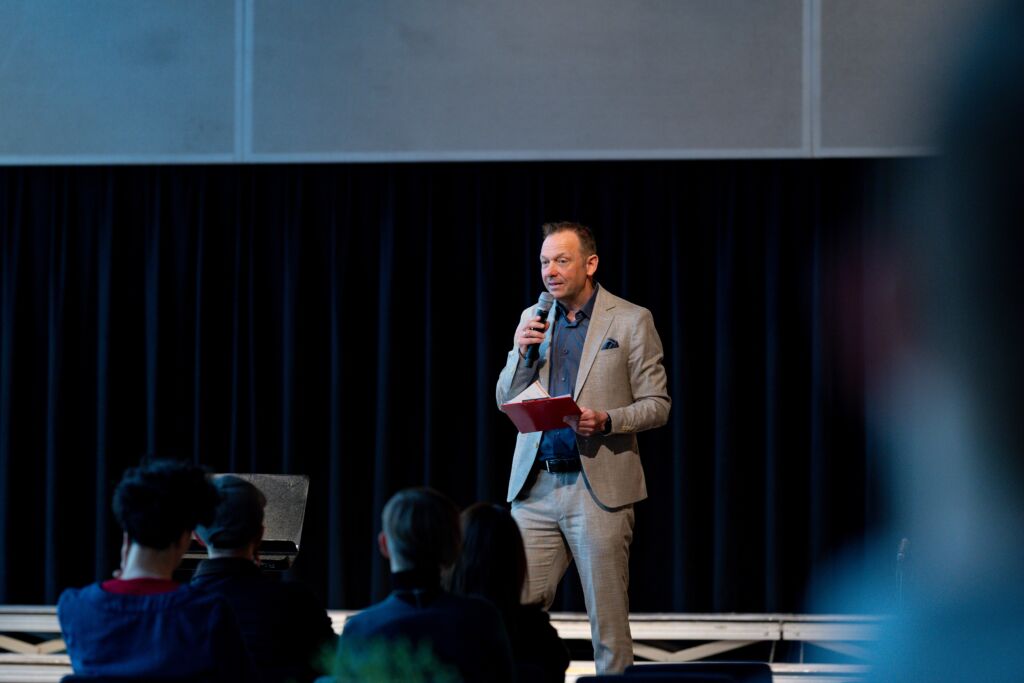
After many years of smooth collaboration, it’s with a certain pride that we can now point to a massive increase in the number of Wiener Landesjugendsingen participants since 2010. And in 2026, with 69 choirs and 2,100 singing children and teenagers, we’ve once again set a new record. What’s particularly heartening to note is how our 2026 event included a particularly large number of primary school choirs. Recent years have seen huge progress in this respect, which is a truly wonderful thing. After all, it’s at precisely this stage of childhood that the foundations can be laid for accessing one’s own voice, one’s own music, and making music with others— foundations that positively impact one’s entire musical education and personal development.
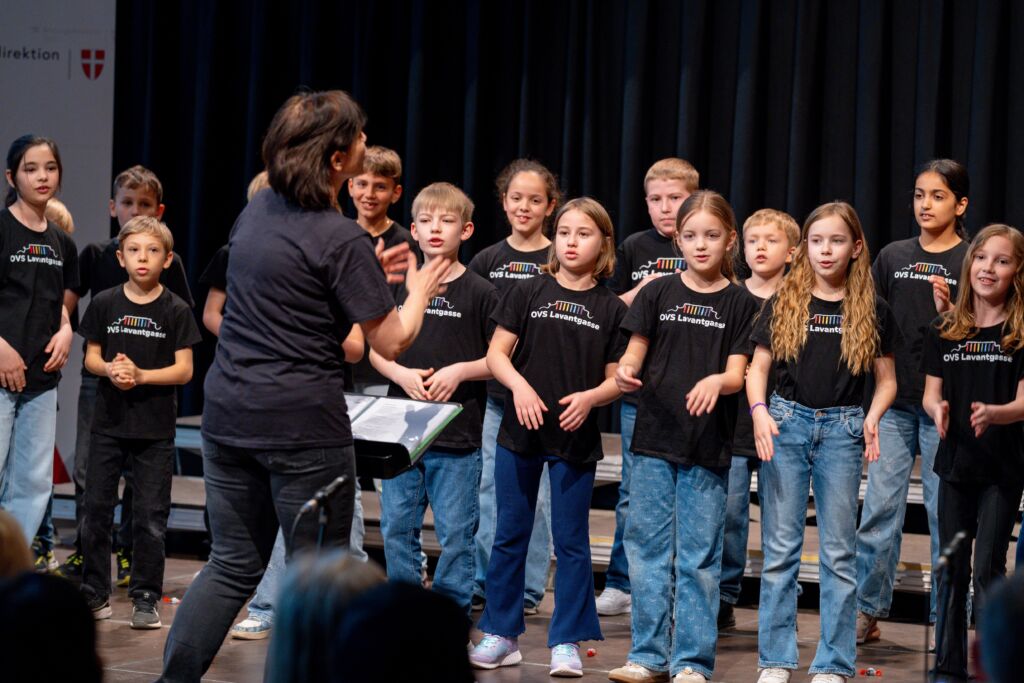
For us, this year’s first-ever opportunity to host the event at the mdw was a true stroke of luck. Here, we had access to ideal infrastructure for the competition and could also take advantage of a fantastic concert setting. Technical equipment, instruments, warm-up rooms—for the mdw, none of this was a major challenge. The idea to hold this year’s competition at the mdw came from Johannes Hiemetsberger, who’d already extended an invitation of sorts at our prior event three years ago. But it goes without saying that the ultimate decision could only be made at a higher level, for which reason our thanks go out to the entire institution—above all to Rector Ulrike Sych as well as Wilhelm Spuller and his entire department. It was clear from the outset that this would be a wonderful event for the mdw, too, especially seeing how it’s a fantastic opportunity to introduce kids and teens to an important place of education for music and music teachers. A perfect match!
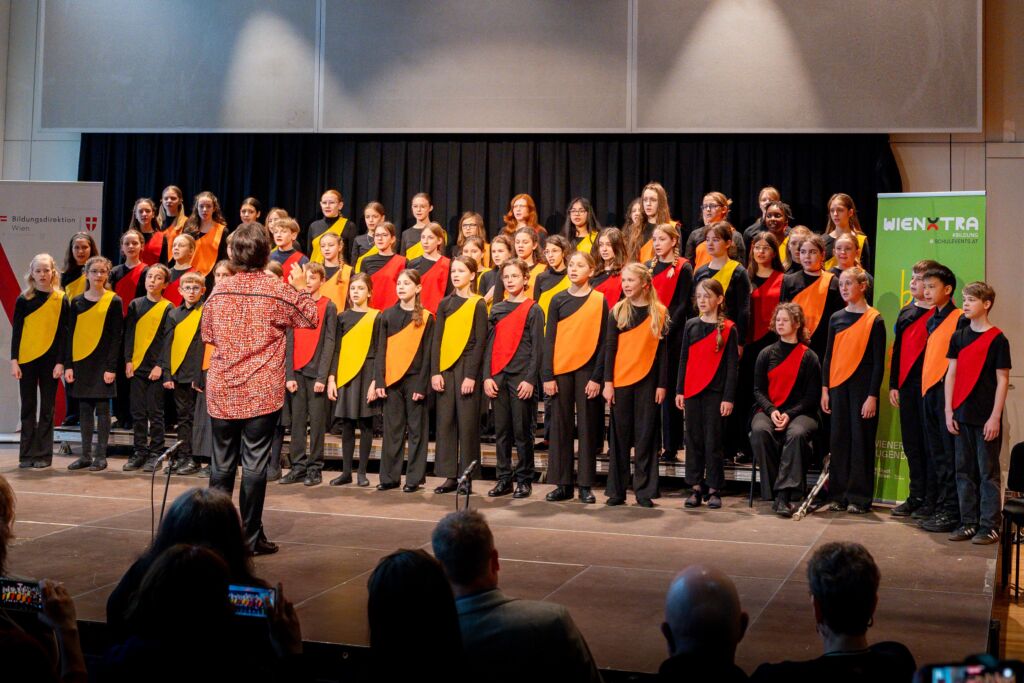
In closing, I’m pleased to report that the entire event took place in an extremely pleasant and relaxed concert atmosphere—with bright-eyed children, spirited performances, enchanting sounds, touching moments, and an enthralled audience that vibrantly brought the Joseph Haydn Hall to life for three straight days. We extend our heartfelt thanks to everyone who worked with us as well as to all of the participants.
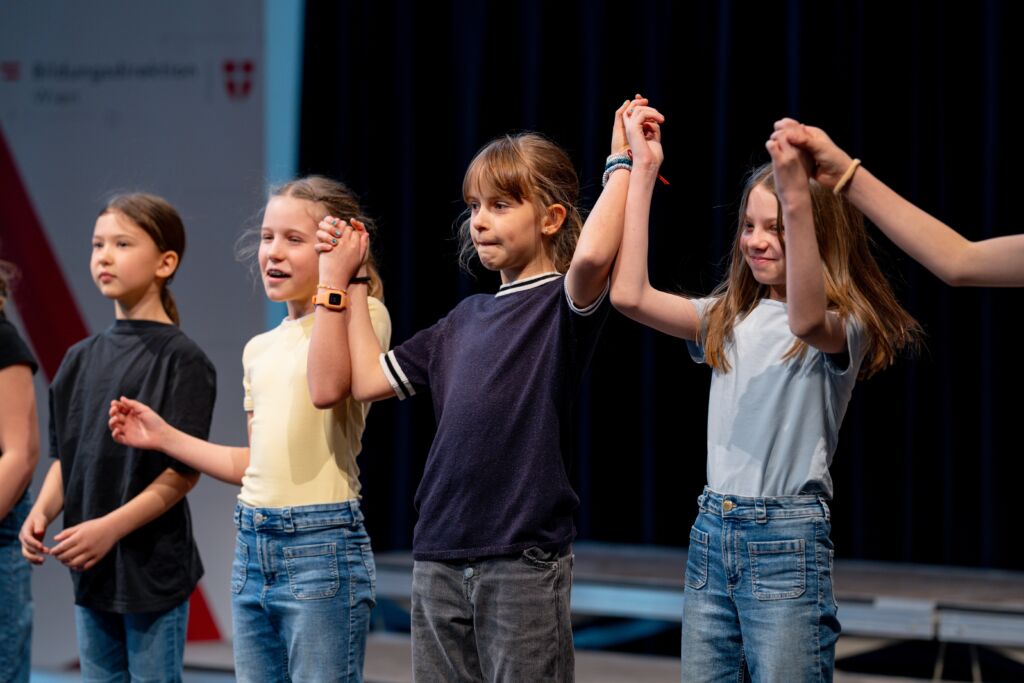
“In a choir, you sing not alongside each other but truly together”
Jury Chair Karl-Gerhard Straßl in Conversation with mdw Magazine
Interviewer: Astrid Meixner
What does choral singing mean to you, personally?
Choral singing is something that’s been with me almost my entire life; I first sang in a choir while at primary school and have been doing so ever since. In a choir, you sing not alongside each other but truly together— and each choir has its own culture and its own specific way of expressing itself. Moreover, the many years I’ve spent conducting multiple choirs—including the mdw’s “VerwaltungsChor”, which is recruited from our university’s administrative staff—have shown me again and again just how special making music together with others can be. And in the process, I’ve been fascinated by how a choir is more than the sum of its parts. I’m also deeply involved in the Chorverband Österreich [Austrian Choral Association], the umbrella organisation of choir associations and choirs in Austria and South Tyrol, as whose president I served for eight years up to 2024. So I can state with quite some joy that choral singing has strongly impacted and unbelievably enriched my life.
What, to your mind, makes a good choir good? And to what did you pay special attention as a jury member at this year’s competition?

A choir’s quality manifests itself in terms of how that choir puts artistic and vocal aspects into practice. What I look for is good music-making where the music as such can be experienced. However, it’s important to add that I also consider the concrete parameters that are in play. For instance, an ambitious amateur choir that gives a great concert performance of a fairly easy piece is something that I can find just as compelling as a highly professional choir at a challenging choir competition. As jury chair, it’s important to me that our choirs of children and teenagers engage in lively ensemble music-making and present colourful programmes. What I want to experience is the emotion written into the music—particularly the joy.
Why do you view singing together as something important?
As a former president of the Austrian Choir Association, I could say a whole lot about this—seeing as I had to advocate for it vis-à-vis political decision-makers on a daily basis. To put it in a nutshell, I’d point out that numerous scientific studies have demonstrated the diverse benefits of singing as a group: as the lowest-threshold form of interaction, it embodies lived inclusion and hence gives rise to connections and trust. Singing is healthy, puts people in a good mood thanks to the feel-good hormones that get released, and makes it easier to learn foreign languages. Those who sing discover a bridge to the people around them.
What’s the significance of events like the Landesjugendsingen at the mdw?
This year’s 26th edition of the Landesjugendsingen, which only happens every three years, took place as part of the Austria-wide Jugendsingen—whose three levels (district, provincial, and federal) bring together school and non-school choirs from all provinces in the spirit of esteeming competition. It’s Europe’s largest youth choir festival! All of the choirs are scored, and their directors can obtain personal feedback from the jurors if desired. To me, the provincial event’s debut at the mdw this year represents the perfect symbiosis—with the singing kids representing a pool of possible mdw students or, perhaps even sooner, students of our music education graduates. When else does an opportunity arise where around 2,100 Viennese kids and teenagers (along with numerous teachers and listening parents) can get to know our institution in such a special atmosphere?
What were some especially memorable aspects of this year’s Landesjugendsingen?
Quite a few come to mind … like the largest-ever number of participating choirs and singers from Vienna (68 choirs, 2,100 singers), the choirs’ musical cohesion (even at sizes like 120 singers), their diversity as a reflection of our society, the joy of making music together, the fruitful interplay between dedicated teachers and their students, the large number of class choirs, the increasingly multilingual programming, and the palpable energy. It all amounted to a magnificent signal of how important choral singing is—and of just how cool it can be when children and teenagers sing together!