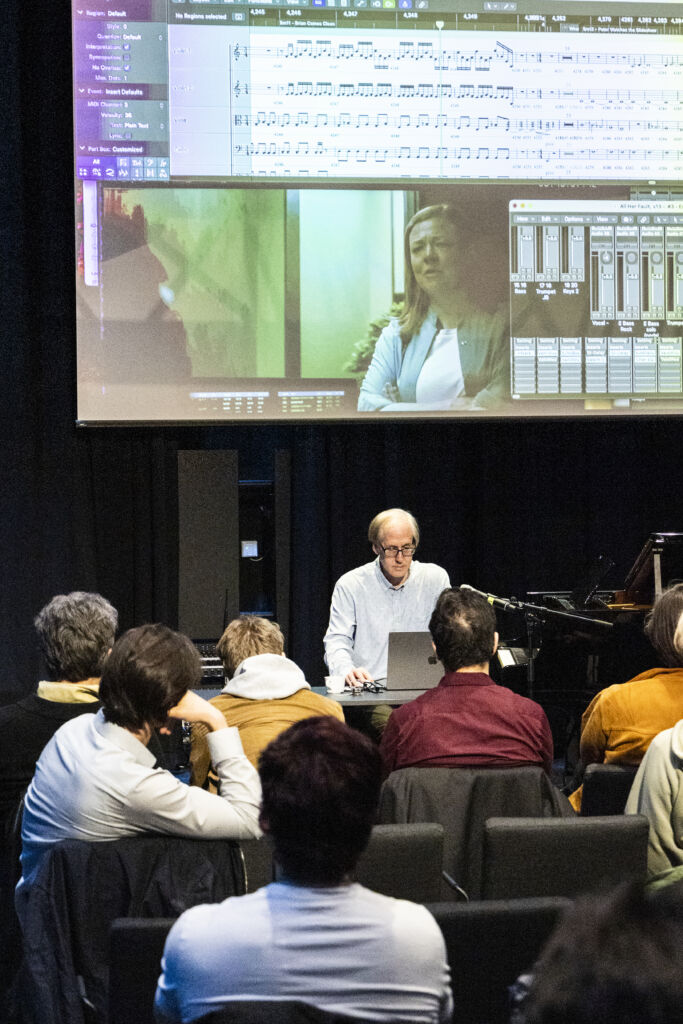
For decades, Jeff Beal has been shifting his focus back and forth between film studios and concert halls, and it was with music for productions like House of Cards that this American composer became known internationally. 13 April saw the five-time Emmy Award-winner give a master class for mdw students. In the following conversation, he speaks about artistic processes, inspiration, and how living with MS has changed his understanding of music.
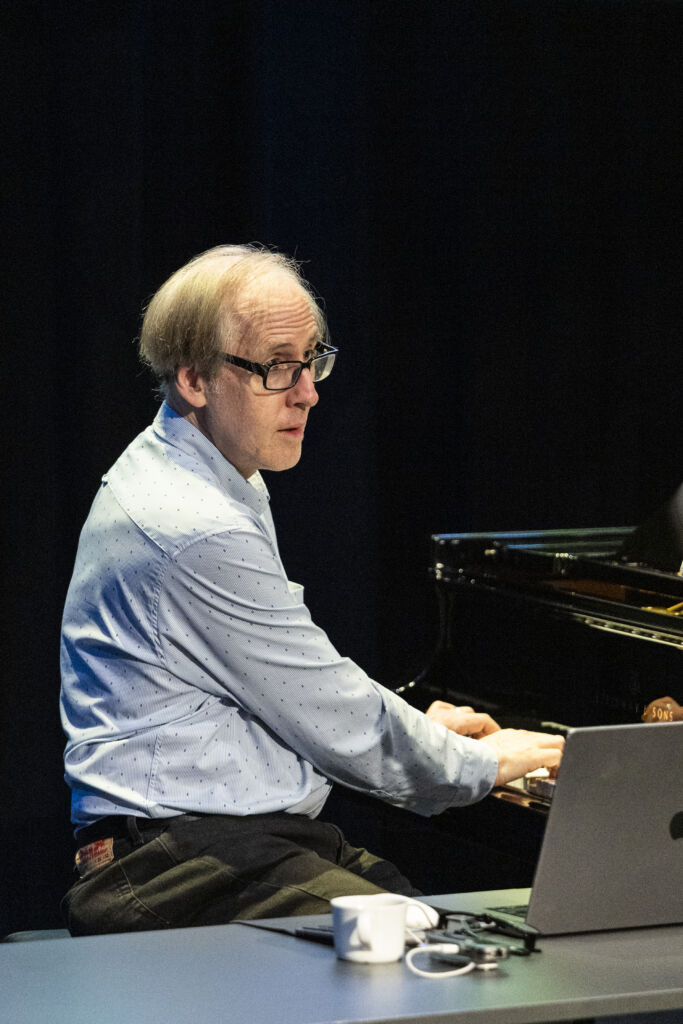
You began as a jazz musician. How does that influence your work today?
I think it all goes back to when I was really young and started improvising on the trumpet: that was when I truly discovered my musical voice. I love improvising. And even if the music I write these days doesn’t often sound improvised, that’s precisely where it comes from. After all, improvising is how you compose: you come up with something in the moment. And what I really value about it is these little unexpected things that can happen. Though you might sometimes view this or that thing as a mistake, it’s often the things you don’t expect that are most interesting. I’m fond of surprises in music because of how they make it exciting to listen, which is why the musical language of jazz is such an important part of my style. In a certain sense, it finds its way into everything I do.
You write music both for films and for the concert hall. Does that make you feel like one and the same composer or more like two different personalities?
There are composers whose concert music sounds nothing like their film music. But in my case, the two are connected. These different formats do allow me to do different things, of course, but I’ve never felt like there’s any real separation between the two. On the contrary: the older I get, the freer I feel to refrain from worrying about where an idea came from or what inspired it. Sometimes, a piece of film music will inspire something that I then use in my concert music—or vice-versa, where things I work on in a classical piece can find their way into my film music later on.
When you take on a new project, what do you start out with? Do you have a clear idea, or do you tend more to just see what happens?
I never know what something will turn into, and I like that. I’m very good at dealing with uncertainty. Some composers will pre-plan an entire piece, and I, too, believe that structure is important. When I compose a longer work, it should be solid, of course—like a building that needs to stand there with a certain stability. But my preference is to discover this structure as part of the process itself. I find that more inspiring.
Speaking of inspiration: in one of your videos on social media, you mention the quotation, “Good artists borrow, but great artists steal.“ What does this saying mean to you?
”Stealing” might, of course, strike one as something criminal, but that’s not how it’s meant here. What it’s really about is taking something you admire in another artwork and internalising it such that you make it your own. You understand it to the point where you can run with it and give rise to something new. If you just “borrow”, all you’re really doing is imitating or copying. I don’t want to copy—but I am happy to be inspired by things. You’ll often start out with a feeling that you’re imitating something, but the longer you work on it, the more you notice how it was really just a starting point that ended up leading you in a new direction.
You’re very open about how you’ve been living with multiple sclerosis. Has your relationship with music been influenced by this experience?
I think it’s been deepened by it. My diagnosis has ultimately made me a far more grateful person. I was diagnosed with MS almost 19 years ago, and I’m now 62. If I’d learned back then that I’d still be making music actively today, I probably would’ve been truly surprised and overjoyed. Living with MS isn’t easy; its effects are something I feel every day. But music is what I love, and I know that continuing to compose and make music is good for my body and my mind. Music is very complex and stimulates lots of brain regions. And especially when you play, it’s really your entire body that’s involved.
What did your diagnosis change about how you view your own work and your identity as a musician?
I’ve never wanted to think of myself as a victim. I think one of the most crucial things is what stories you tell yourself. That has a huge impact on your health, including your mental health. And I made a conscious decision to tell myself a hopeful story, not a tragic one. I was in my forties when I received my diagnosis, which is pretty common with MS. And it helped me to accept—earlier than others, perhaps—that we all have physical limitations and that our bodies change. The diagnosis sharpened my sense for what really counts.
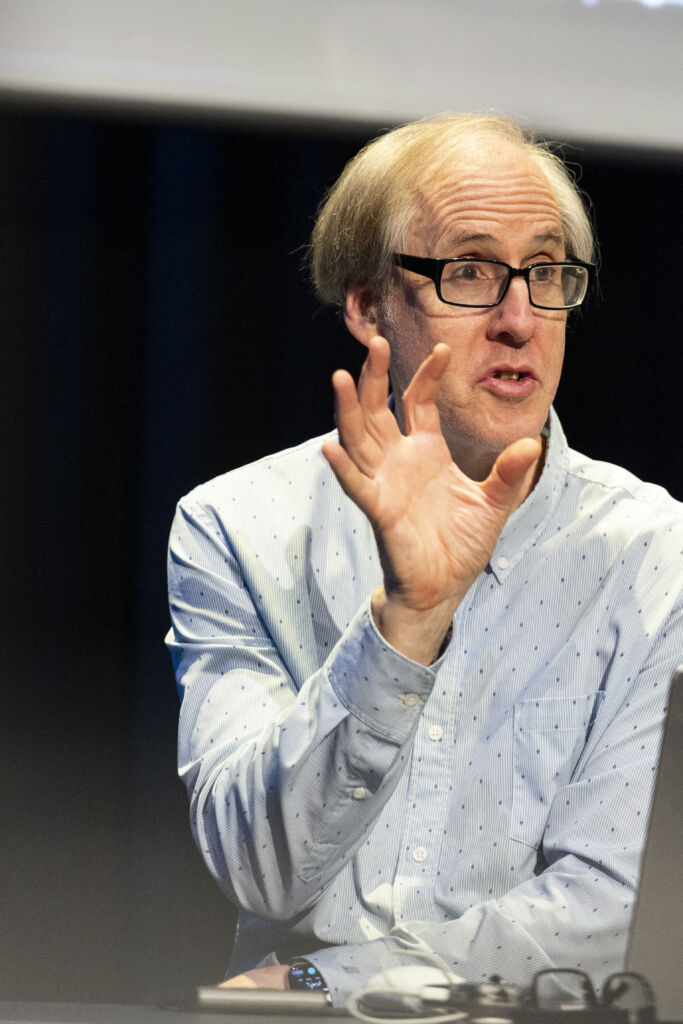
You’re giving a master class for mdw students today. Is there anything you pay special attention to in young musicians?
I think that curiosity and proactivity are key. When you’re a composer, you can’t necessarily sit around waiting for someone to award you a commission. You have to just go ahead and compose. So I try to really encourage young composers—especially if they’re at a fabulous university like this one, with so many opportunities—to use this phase of their lives to write and record as much music as possible. Because at some point, when you’ve finished here and gone out into the world, you’ll need to have something you can show people.