Work Package 6 of the European Universities Alliance IN.TUNE
Since early 2024, the mdw has been part of the European Universities Alliance IN.TUNE – Innovative Universities in Music and Arts in Europe. That spring saw the committee of IN.TUNE’s Work Package 6—entitled “Strengthening our Engagement with Society”—hold its first meeting, at which colleagues from all eight partner universities were present. The lead institution for this work package is the mdw, represented here by Vice Rector for Organisational Development and Diversity Gerda Müller. As its committee chair for over two years running, she has been responsible for a thematically broad portfolio that is now being tackled by five working groups: “Lifelong Learning”, “Sustainable Careers”, “Artistic Citizenship, Audience and Community Engagement”, “Belonging, Diversity, Equity & Inclusion”, and “Sustainability”. The experts appointed to these interinstitutional working groups are overseen substantively by the Work Package Committee. The outcomes of their collaborative efforts are to form the basis for a total of five policies that the Committee will formulate by the end of 2027 in the interest of furthering work on the specified themes at the Alliance level.
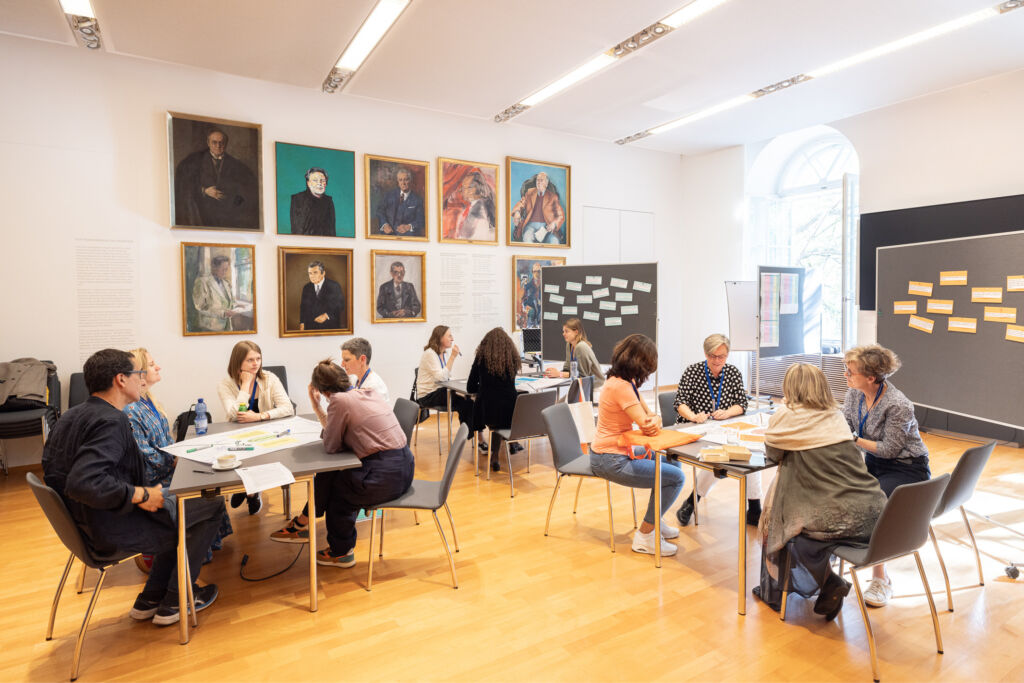
The halfway point of IN.TUNE’s initial phase has now been reached, which makes it worthwhile indeed to take a look back upon the great effort that’s gone into Work Package 6.
Since the very beginning, the working group Lifelong Learning—in which the mdw’s Alicja Rybkowska is a member—has dealt with the eponymous concept in terms of both musicians and music experts in general. Lifelong learning denotes a holistic approach that enables individuals to always be capable of learning and adapting in exchange with society and its institutions as well as in their private lives. Though all partner universities are home to numerous personal and professional further education offerings, most of them have neither strategically conceived nor institutionally anchored lifelong learning as such. This working group has therefore begun testing measures such as jointly offered courses that take up the idea of making the shared knowledge of all partners available to music professionals. An initial bit of success was the online pilot course “The Lifelong Healthy Musician”, which attracted registrations from nearly 600 interested parties located all over Europe. Its seven sessions saw teachers from the IN.TUNE Alliance hold lectures covering physical, cognitive, and psychological well-being (e.g., “Hearing Loss Prevention” by Enric Guaus, “Quality Practice – Managing Your Resources” by Susan Williams, and “Mindful on Stage and Beyond” by Angelica Postu). Building on the experiences of this initial course, a further course on a new theme will be developed and conducted in 2027. And to kick off the present year, the mdw harnessed this working group’s outcomes so far to launch its own institution-wide strategy process concerning “university-based further education” with an eye to making its existing offerings more visible and providing them with clear structural anchoring at the University.
For exactly two years, the working group Sustainable Careers—with Dagmar Abfalter representing the mdw—has engaged with the question as to which entrepreneurial or career-related skills need to be encouraged in the interest of Alliance students’ long-term career development. All partner universities feature numerous offerings for bachelor’s degree students (focussed on fundamental competencies such as communication, basic project management skills, and personal branding) and for master’s degree students (emphasising advanced entrepreneurial qualities like leadership, business administration skills, and flexibility where labour market dynamics are concerned). By learning to approach problems in a creative way, students prepare themselves to deal independently with increasingly complex global challenges as well as the demands of the modern music industry. And in the spirit of “Engagement with Society”, the overarching idea of this work package, this working group developed a concept for a joint blended learning course entitled “Innovation Through Music: Community-Driven Practice”. This course can take shape as anything from a digital lecture series or a blended intensive programme at a partner university and in collaboration with a local NGO to the actual implementation of a previously conceived student-led project. The working group is now aiming to present a concrete recommendation based on its concept by this summer with an eye to conducting an initial pilot before the conclusion of the present Alliance phase.
Since early 2025, the working group Artistic Citizenship, Audience & Community Engagement has dealt with transformative processes in which concepts for musician-audience interplay are rethought. Here, mdw representative Axel Petri-Preis and the working group are focussing on the concept of “artistic citizenship”, defined as an attitude held by musicians that combines artistic endeavours with social commitment. Harnessing the diverse nature of music’s societal potential in programme development has been an increasingly important focus for years now in the realm of music mediation, with students’ curricula changing as a result. In this context, working in innovative community-oriented formats and actively involving traditional audience groups are not viewed as contradictory approaches. The working group started out here by surveying all partner universities’ current offerings in these areas and then complemented the inventory thus created by a comparative study. This study asked as to possible ways in which to more strongly anchor societally relevant music-based practices in musician’s training. As a result, the Alliance now has eleven recommendations at its disposal that range from coherent skillset-based educational trajectories for bachelor’s, master’s, and postgraduate programmes to continual professional development offerings (e.g., concerning the conception of participatory projects) for faculty members and on to enhancing the accessibility of regular concert activities at the partner universities in order to strengthen their ties with local and regional audiences. Furthermore, this year will see the working group begin collaborating with associated Alliance partners such as Musethica and Superar to develop new training modules for concert production professionals as well as students.
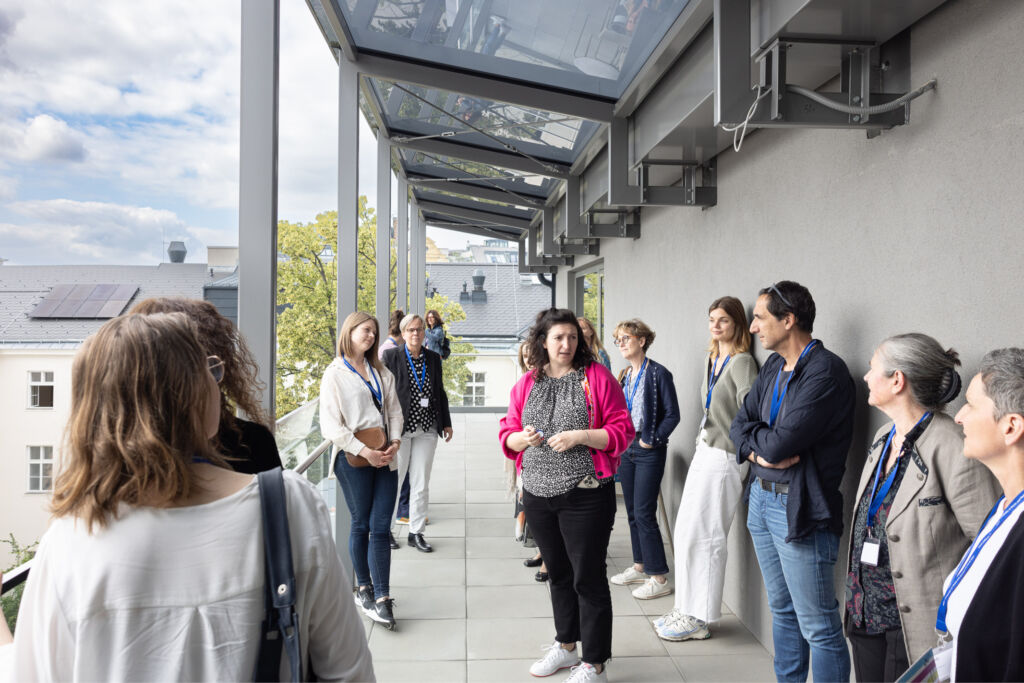
2025 also saw the working group Belonging, Diversity, Equity & Inclusion—where the mdw is represented by Ulli Mayer—commence its activities. Right at the beginning of its work for the Alliance, the group introduced the concept of “belonging”. This entails collaboration between institutions and individuals to nourish the development of communities in which all people feel seen and valued. At the Alliance’s partner universities, such efforts involve students, employees, and alumni who engage in exchange with other communities to network their respective institutions across society. In order to set up a substantive framework for their analysis, the working group defined five areas of action—“Access & Entrance”, “Curricula & Teaching”, “Organisational Structure”, “Staff & Students”, and “Organisational Culture”—and gathered detailed information from all partner universities. This information made clear the abundance of existing diversity and inclusion measures focussed on the aforementioned areas but also highlighted real challenges and/or gaps in implementation that will now be dealt with by the Alliance going forward. Particularly because the partner universities have chosen differing emphases in the aforementioned five areas of action (e.g., concerning the visibility of traditionally excluded groups, research and art projects, or the encouragement of a culture of belonging), an effort is being made here to work under a consistent premise of mutual learning.
The beginning of this year marked the start of active involvement in Work Package 6 by the working group Sustainability. Here, mdw representative Birgit Huebener and colleagues from the partner universities have set out to conduct continual documentation and analysis of initiatives and measures pertaining to ecological sustainability. These can range from student activities to structurally implemented processes. The framework for orientation here is provided by the 17 Sustainable Development Goals (SDGs) of the United Nations’ 2030 Agenda as well as by further recommendations developed on the European level such as “Play Green! Recommendations for Green Transition in Higher Music Education”.
As challenging as collaborative work involving eight partner institutions subject to differing political, economic, societal, and technological circumstances can be, the attendant exchange proves all the more gratifying when mutual inspiration gives rise to new programmes that can equip students to deal with the multiple challenges of our times. Work Package 6 aims to nourish values such as diversity, pluralism, equality, democracy, and solidarity. And in this, a major concern of Gerda Müller is to enable students to become critical and reflective personalities who are well positioned to drive forward processes of change. These objectives have been made part of Work Package 6’s agile modus operandi, an approach based on transparent communication, collective commitment to the learning process, and mutual trust throughout all of this developmental work. It’s hence with great eagerness that the overall team is now looking forward to the IN.TUNE Summit at the mdw in May, which will provide space for exchange, new perspectives, and the next steps together.
The published findings and outputs of IN.TUNE’s Work Package 6, “Strengthening our Engagement with Society”, can be viewed at intune-alliance.eu/achievements-and-outputs.