To mark the 60th anniversary of the Department of Music Sociology (IMS), the international conference “The Archival Turn in Music Sociology” took place from 5 to 7 February 2026 in the mdw’s Fanny Hensel Hall (and online). Organised by Rosa Reitsamer, Rainer Prokop, and Tianyu Jiang, this conference aimed to highlight the significance of archives, gendered music historiographies, and (the politics of) the reconstruction of music histories. Nearly 30 contributions by speakers from 15 countries across five continents addressed these topics.
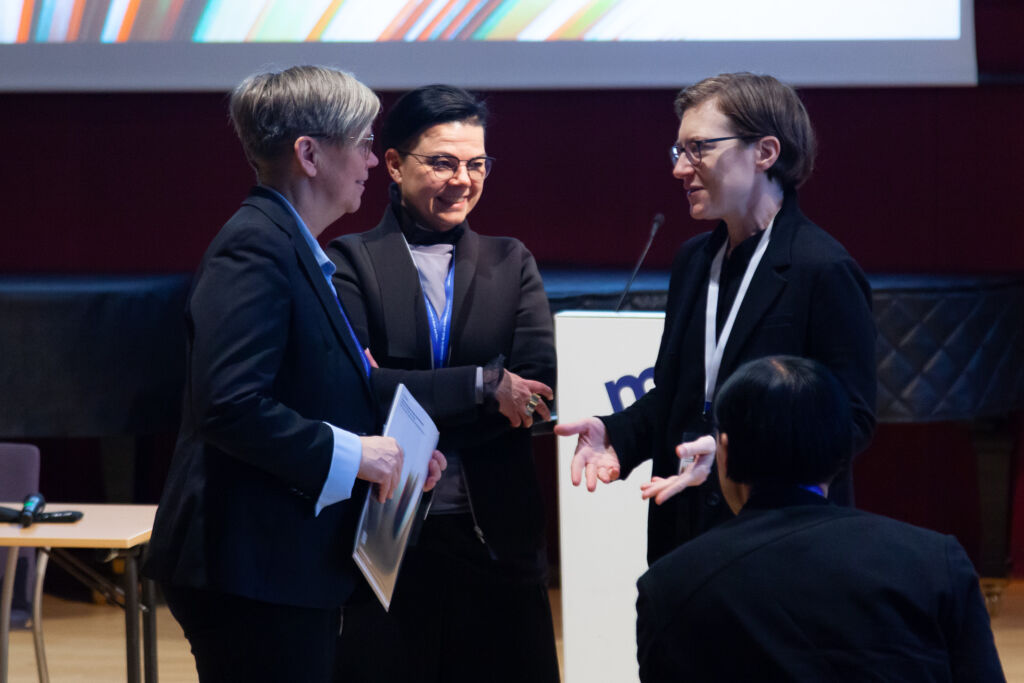
The first conference day opened with a video message from Rector Ulrike Sych, followed by welcoming remarks from Vice Rector Gerda Müller and the organisers themselves. Both the rector and vice rector emphasised the importance of IMS and its research activities in light of the mdw’s academic values and objectives. In her tribute to Kurt Blaukopf, who furthered the development of music sociology following his expulsion by Austria’s National Socialists and his return after the Second World War, Müller highlighted his pivotal role in the founding of IMS. She also pointed out current socio-political shifts due to which critical academic research and archives are facing increasing attacks and pressure by way of political rhetoric.
The organisers’ speeches paid tribute to the work and careers of Kurt Blaukopf and Elena Ostleitner as well as to the “Viennese School of Music Sociology”. Rosa Reitsamer emphasised the need for an “archival turn” in order to challenge the androcentric history of music sociology and music historiographies in general, underlining the importance of unearthing suppressed voices and hidden power structures within archives in order to construct a “useable past” 1. Rainer Prokop spoke about the contributions of further female researchers and administrative staff at IMS and about the key aspects of music sociology: namely, a focus on social and aesthetic practices, the plurality of the concept of music, and entanglements between music and technology. In her contribution, Tianyu Jiang focused on her work with the Elena Ostleitner Archive, which is not merely about cataloguing the material but also about engaging in a dialogue with history itself. Jiang concluded by paying tribute to Ostleitner’s cultural and political commitment to female instrumentalists and musicians of colour in symphony orchestras such as the Vienna Philharmonic.
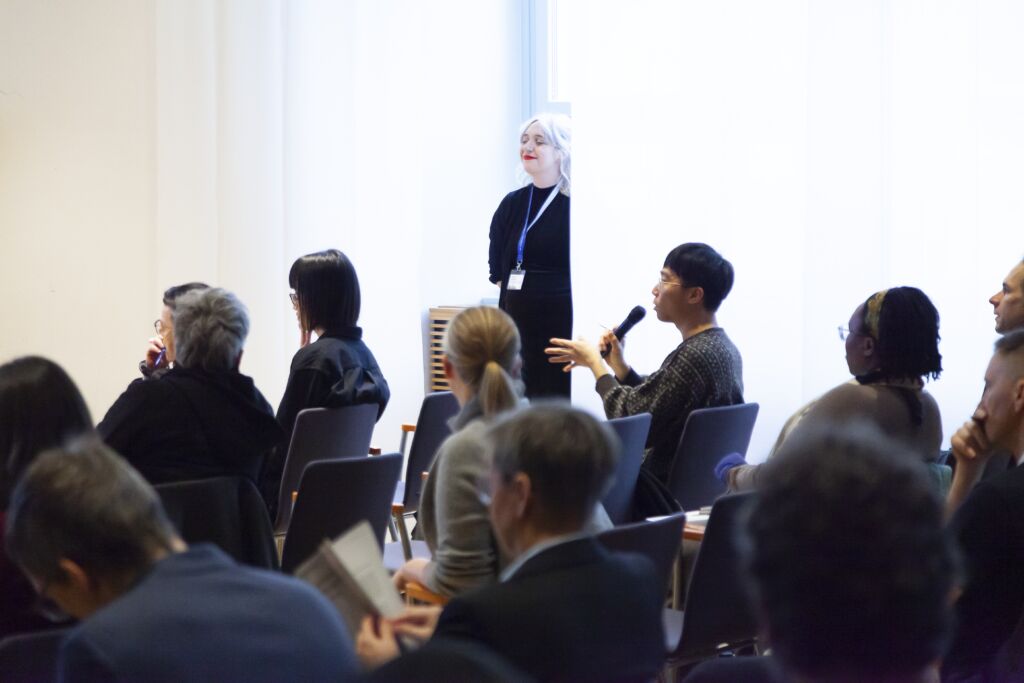
The organising team emphasised the need to shift the research focus away from established narratives and towards women* and marginalised voices and experiences. This shift is linked to the importance of archival work, collaborative knowledge production, and a critical examination of music sociology’s foundations. These are key aspects that contribute to a more inclusive and representative understanding of music sociology and its future potential.
Building on this, the conference keynotes contributed to the thematic framework: Kate Eichhorn contrasted the common perceptions of archives as nostalgic spaces featuring simple practices tied to accessible and insightful material with reality. In light of platform capitalism, the challenges of digital archiving, and algorithmic bias in politically turbulent times, she called for a re-evaluation of how archives are understood and represented. To this end, she proposed a more nuanced framework that views archives as vital “laboratories” for exploring and shaping a more just and sustainable future in a digitally driven world.
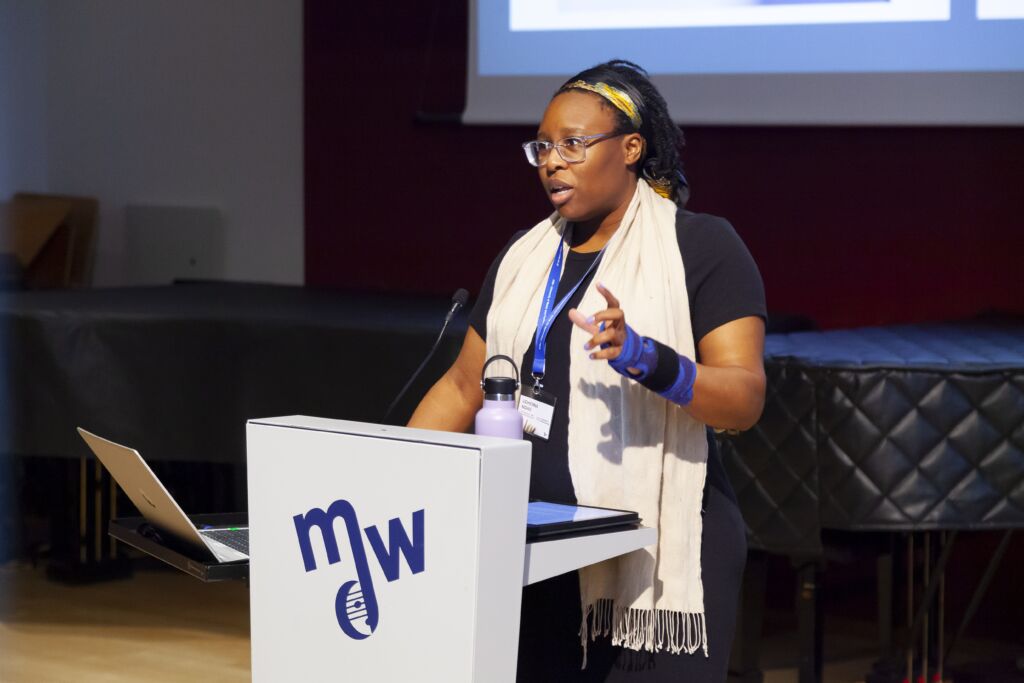
Uchenna Ngwe referred to traditions of Western art music and their links to the 19th century, highlighting how the sacralisation of this music and the disregard for critical historical contexts such as colonialism and slavery perpetuate cultural exclusion and marginalisation within the classical music world. In order to address this issue methodologically, she proposed “curatorial activism” and “counter-storytelling”. Through her project plainsightSOUND, Ngwe demonstrated how a bridge can be built between archives and performances, thereby enabling critical engagement with marginalised narratives within classical music and granting such narratives the place they deserve.
In the third keynote, Nick Prior presented his explorations of contemporary music and the aesthetics of hauntology as a theoretical and methodological framework that he employs in order to understand the complex relationships between archives, digital culture, and musical creativity. Doing so can unleash their potential to challenge narratives and power structures shaped by racism and colonialism as well as to foster innovative forms of musical expression in a saturated digital world.
All three days offered insights into relevant and current topics. With lively discussions and a final evening get-together with stimulating conversations, these days virtually flew by. The IMS team now looks forward all the more to the future of music sociology—which, after sixty years, continues to inspire with important and up-to-the-minute contributions.