What topics from the world of music and the performing arts at large captivate the minds of soon-to-graduate secondary school students? To what questions do current political, societal, and environmental developments give rise? On all this, the recent conferral of the mdw young research award to its third crop of winners offered some insights. Since 2023, this award has recognised music and performing arts-related papers authored as part of Austria’s Matura exam.
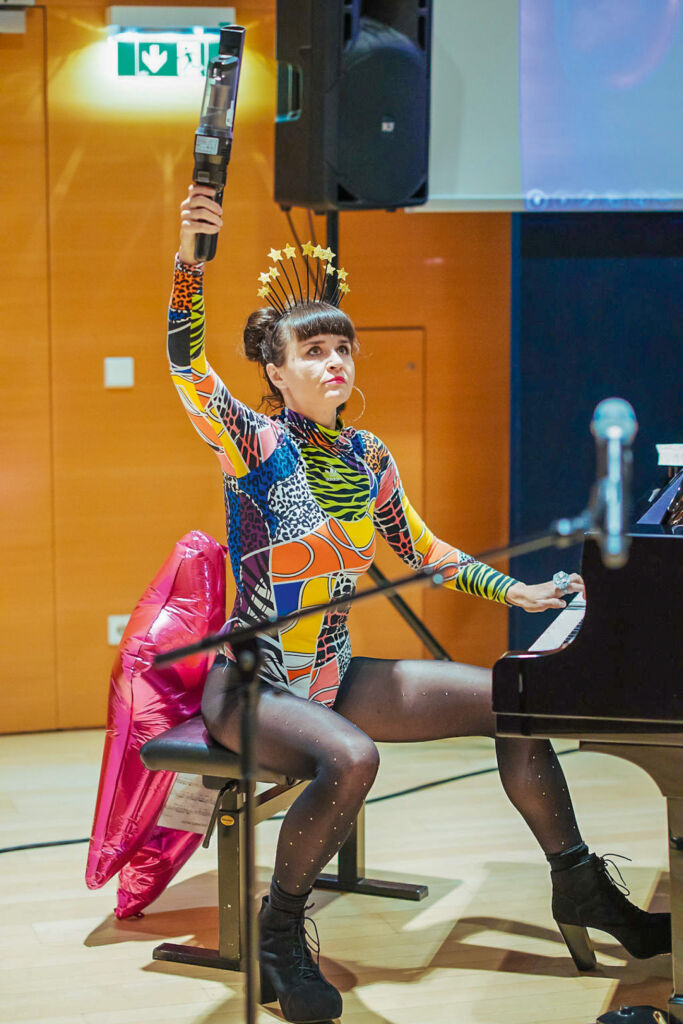
With the “pre-academic final paper” (formerly called the “VWA”, now the “ABA”) having been made optional as of the 2024/25 academic year, the present call saw fewer projects submitted—and with the ABA’s definition having been expanded to include artistic and creative projects, nine of the 26 submissions were of an artistic character. 21 evaluators from the mdw supported the process with their specialised expertise, nominating twelve projects from which a jury selected the prize-winners. A new feature was direct feedback for all entrants, and the jury ended up recognising a total of ten submissions—conferring six awards, three honourable mentions, and a Special Award. The topics ranged from stage fright among musicians, John Cage’s 4’33”, Stanislavski’s theories on acting, and Schwitters’ Ursonate to the visual language of science fiction films and the mafia’s influence on the music industry with Frank Sinatra as a case study. Further topics included music for dementia patients, anorexia in the acting profession, and strategies for making theatre more attractive to a young audience. The Special Award, presented by the Department of Composition Studies and Music Production, went to the composition Andante con Variazioni, Opus 1. The awards ceremony took place on 25 September 2025 in the presence of Vice Rector Barbara Strack-Hanisch, with all awardees on hand to personally introduce their projects and motivations. The evening was moderated by the award initiators Eveline Christof (Department of Music Education Research and Practice) and Therese Kaufmann (Office of Research Support) and featured musical contributions by Filip Anic at the piano (Johannes Brahms: Intermezzo in A Major, op. 118 no. 2, Andante teneramente), by Magdalena Hahnkamper and Daniel Aebi (Performance: DadaRella und der Angriff der Synkope!), and by Leona Sperrer and Lea Carlotta Walenta (“Something Stupid” [Nancy & Frank Sinatra] and “Arrow” [original composition]). The Special Award was presented by Annegret Huber, head of the Department of Composition Studies and Music Production.
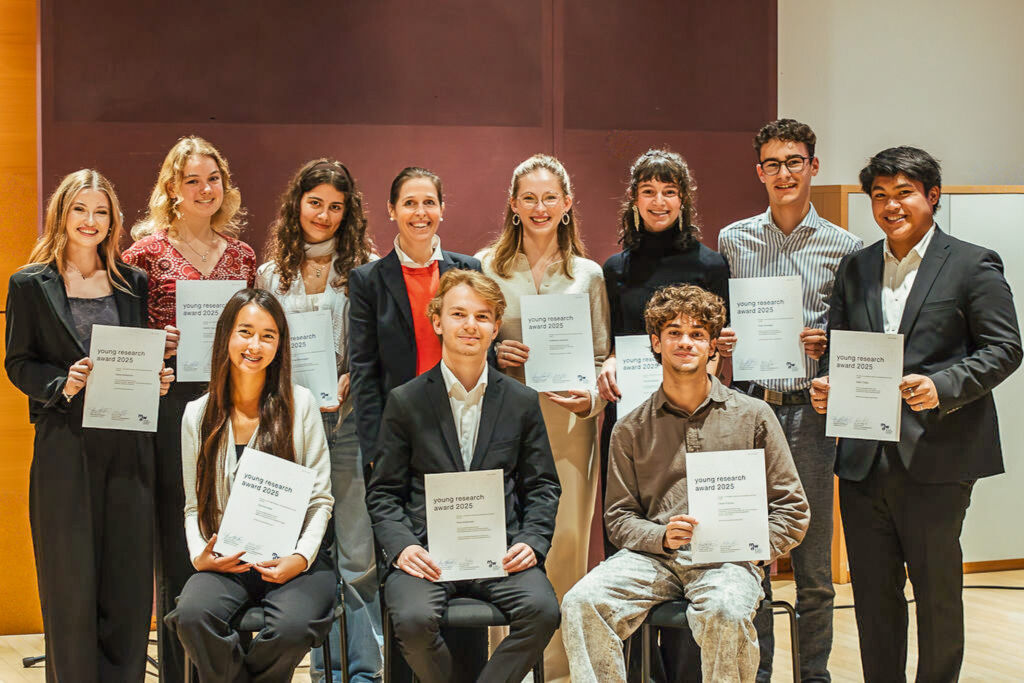
On the whole, it can be said that the participating secondary school students’ motivation to engage with their topics in an intense and interest-driven way was all the more palpable thanks to how the new ABA is optional and can be either a pre-academic paper or an artistic/creative project. Just how this format will develop in the future remains to be seen, but especially the new option of artistic projects promises further potential for the mdw.
This time around, there was also great interest in the associated Campus tour: around 30 interested school students visited the University Library’s reading room, the Future Art Lab’s studios, and the Film Academy’s facilities.
The mdw young research award makes the mdw more visible as a place of study while also reinforcing its relationship with the school system. It also recognises the work of final-year school students, encourages them to apply here, and creates an awareness of the diverse range of expertise present at the mdw. And finally, it provides valuable insights into the interests of young target audiences—an important basis for science communication on an equal footing.