Comments Off on Opening of the International Research Center – Gender and Performativity
1
1,070
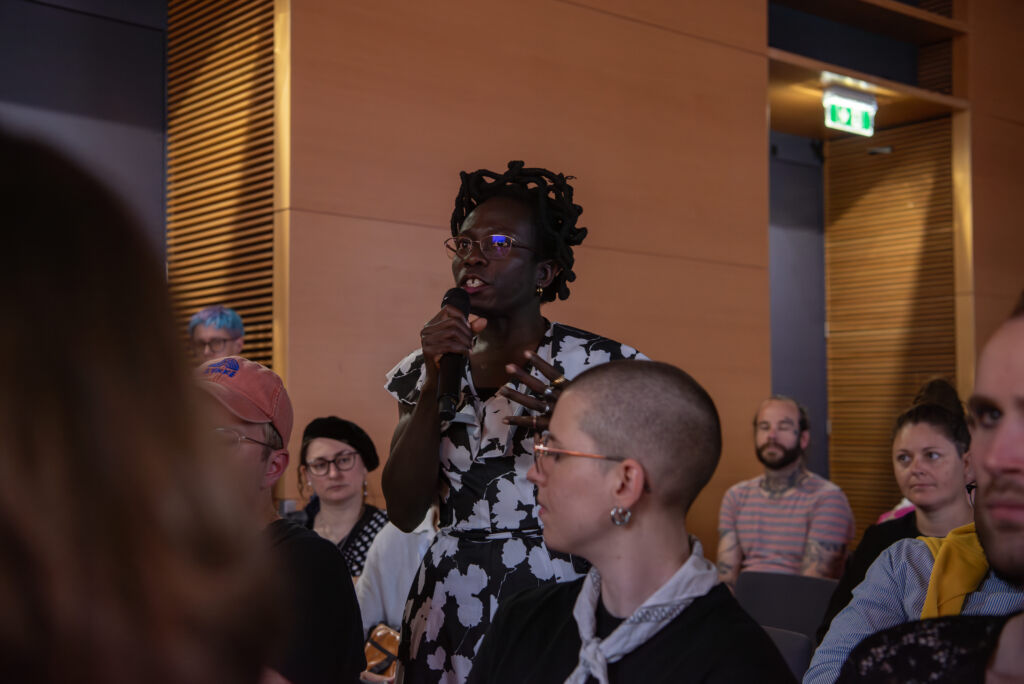
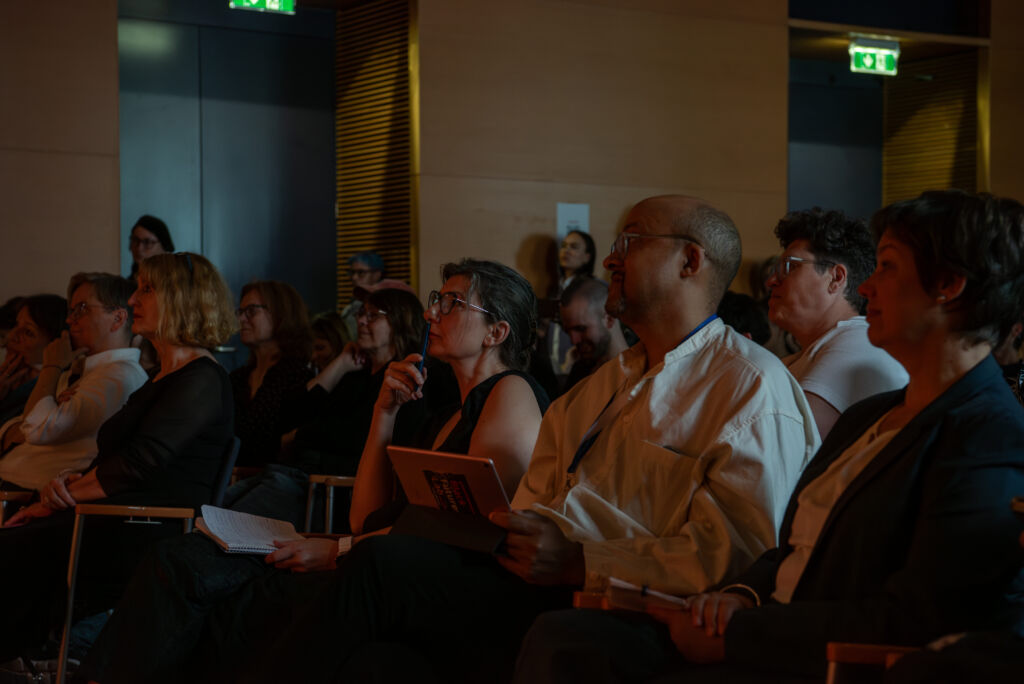
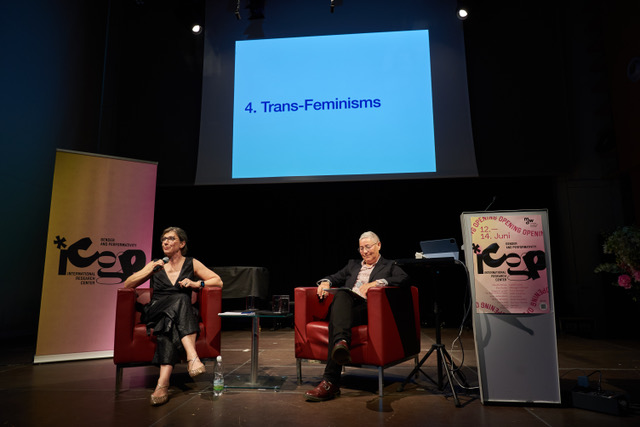
It’s packed—more than packed. The Joseph Haydn-Saal is filled to the last seat, with people sitting on the floor, perched on windowsills, and leaning against the walls despite the live video feed in the foyer and the hot summer temperatures. The programme that’s brought everyone here consists of welcoming addresses, a programmatic introduction, and a keynote, all revolving around questions of gender, performance, and the performative. It’s the official inauguration of the International Research Center – Gender and Performativity (ICGP).
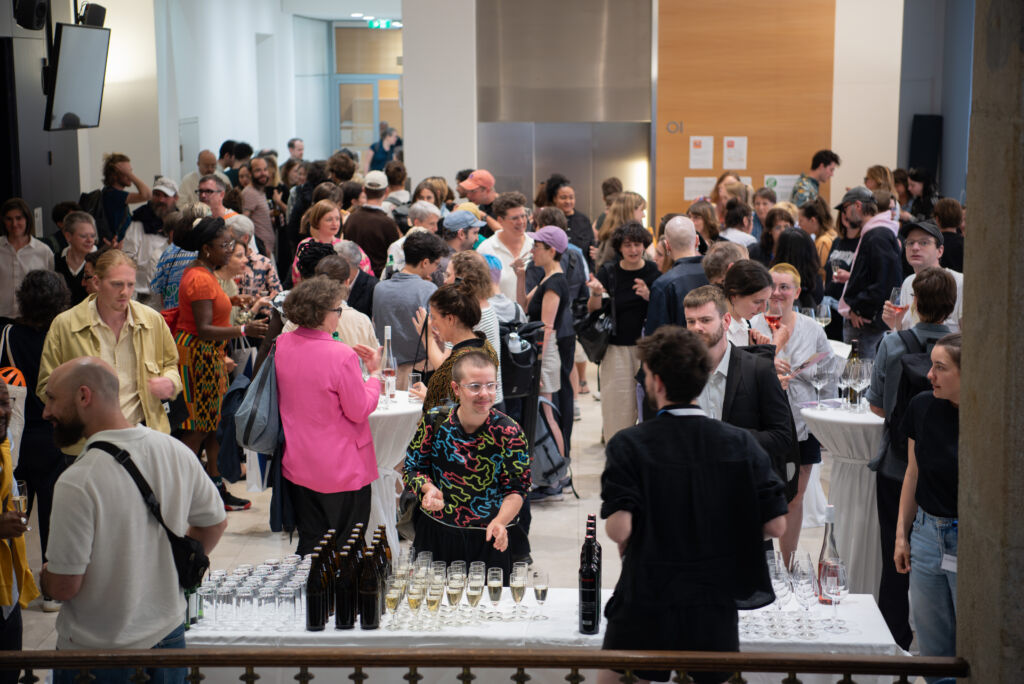
Now, with nearly two months’ distance, I look back upon this tremendous event that I’d had the pleasure to help organise beginning in March 2025. One thing that the ICGP’s opening clearly proved is that there’s significant interest in and a great need for discussion at the intersection of gender and performance or performativity studies. From 12 to 14 June, we welcomed over 300 guests at the mdw to engage with contributions by international and local academics, researchers, and artists. As all of the opening night’s speakers emphasised, it is by no means a given to open a research centre in our field of study in today’s political climate. The field of gender studies is under pressure, increasingly targeted by attacks and hostility. Rector Ulrike Sych, in her welcoming address, emphasised how the mdw actively resists such developments by making gender and diversity issues an integral part of the University’s teaching and research. The welcoming address from the Center for Women’s and Gender Studies at TU Berlin (Hannah Meissner) and the GAIN research platform at the University of Vienna (Sylvia Mieszkowski) also highlighted the broader socio-political context, in which attacks on gender studies become legible as attacks on academic freedom.
Beyond being potentially affected by these dynamics , the ICGP is also—as Evelyn Annuß, professor of gender studies at the mdw since 2019 and head of the ICGP, made clear in her opening remarks—a critical academic actor. One of the Center’s responsibilities is therefore to analyse the societal, historical, and political backgrounds of these disruptions.
We are living in dragging times in which the undoing of a normative matrix is being superseded by the dismantling of existing institutions by the libertarian far right, times that call for revisiting the figures of thought and analytical tools with which we work. Attacks on queers as well as on reproductive and trans rights—i. e., manifestations of so-called anti-genderism—are part of the contemporary unleashing of a neo-authoritarian turn and the fascisation of economic liberalism around the globe. Undoing is about to become a new normal. Anti-genderism thus needs to be contextualized, and its stagings need to be analysed.
Also speaking to this commitment are the ICGP’s core areas of work: engagement with the performing arts writ large (theatre, music, performance art, and dance as well as film and media art) with a particular focus on questions of gender and desire, their staging, and their representation; work with and on contemporary theories of performativity; and the analysis of political spectacles and their mediality. Starting from a perspective trained in engagement with the aesthetic dimension and form of (gender) performances and performativity as well as their political implications, the ICGP also aims to investigate ordinary, everyday stagings and mediatisations of gender in its transversal entanglement with dimensions such as race, class, and dis_ability while also working towards a global perspective.
The opening symposium already offered a glimpse into the breadth and complexity of this field. Contributions ranged from the keynote on feminist violence and the concept of “dereliction” delivered by Jack Halberstam (Columbia), reflections on queer mobilisations of spirituality and concepts of indigeneity in South Africa by Mbongeni Mtshali (University of Cape Town), and a perspective on Afro-pessimism and futurism provided by Tavia Nyong’o (Yale) to an analysis of the archive, the audience, performance, and documentation in the work of Valie Export by Ulrike Hanstein (Linz) and a close reading of Florentina Holzinger’s performances by Ulrike Haß (Bochum), to name but a few contributions.
If I had to choose one part of the programme to highlight, it would be the conversation between the Vienna-based theatre scholar and dramaturge Sandra Umathum and the Ghanaian performance artist and activist Va-Bene Elikem Fiatsi a.k.a. crazinisT artisT. Umathum managed to create a productive platform, striking a perfect balance between contextualising Elikem Fiatsi’s work and leaving the stage to her. Besides presenting visual material, the artist’s contribution provided a powerful impression of her radical performances—which deal with her gender identity and transition—but above all of its context, the discrimination and criminalisation of members of the LGBTIQ+ community. This included problematisation of the role of evangelical churches and other protagonists—with connections to Europe and the US—in these political developments. Elikem Fiatsi’s work once again underscores the importance of viewing European and US perspectives on gender politics and performance as partial and situated, of critically challenging their hegemony, and of decentring them in order to broaden our understanding of gender via other situated knowledges.
During the present winter semester, the ICGP will continue this quest with further international research and networking activities: 10 to 12 December will witness the second part of the opening, which was postponed until the winter due to the Campus Party. In addition to Evelyn Annuß’s inaugural lecture and the presentation of the ICGP’s initial publications (released by mdwPress), numerous international guests have once again been invited—this time including Zimitri Erasmus (University of the Witwatersrand, Johannesburg) and Eric Lott (City University of New York). Erasmus will focus on “Articulations with ‘Race’” in a keynote and preceding seminar while Lott will address the afterlife of popular minstrel shows and their gendering.
We look forward to this exchange—despite all challenges.