It’s now official: the isaScience conference is history, having made way for the isaResearch Summer School as a new format for research within the framework of isa. Conceived as an international forum for doctoral students and other early-stage humanities and artistic researchers, its three-day first edition enabled participants to present their research in an interdisciplinary setting, develop new ideas through discussion, establish contact with mdw researchers, and immerse themselves in the urban space of Vienna.
The theme “Sound, Politics, and the Urban Laboratory” brought together research on a wide range of questions: What role does music play in protest movements? How does sound in public spaces impact well-being, and what political and class-related mechanisms come to light in the process? What performative strategies do artists employ in public spaces? And how can such artistic performances and protests be documented and mapped?
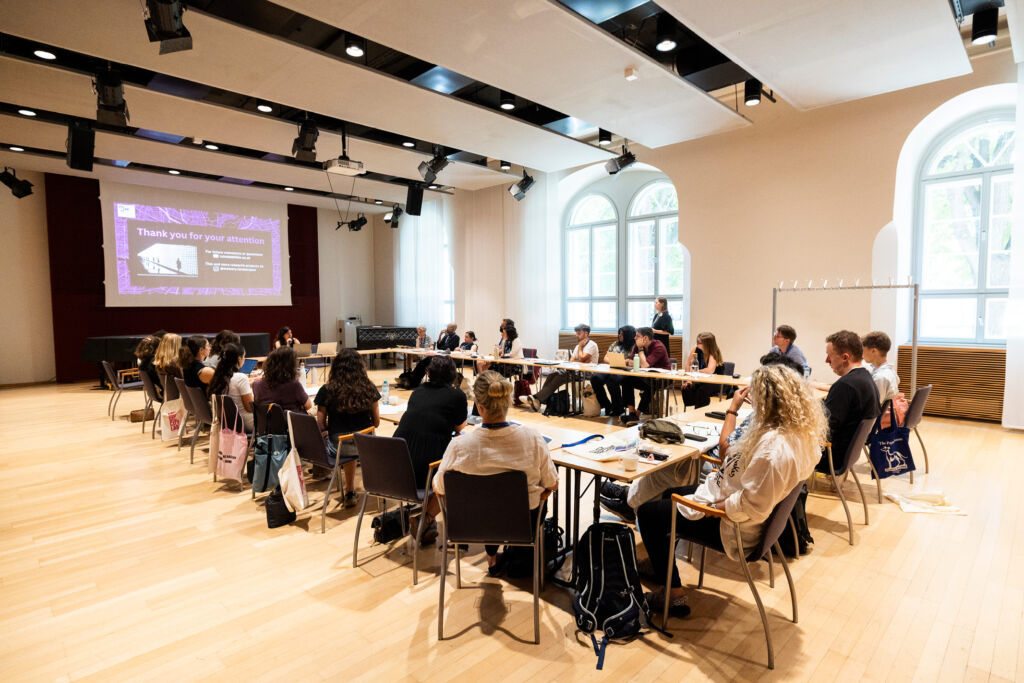
Insights into local research were provided by the opening keynote and a guest lecture: as part of isa’s opening, Isabel Frey and Ioannis Christidis (Department of Folk Music Research and Ethnomusicology/mdw) presented their research on sacred sounds in a neighbourhood of Vienna’s 15th district, while the following evening saw Kai Ginkel of the Bruckner University shed light on the recent debate concerning the 3rd-district venue Arena from a socio-musicological perspective. In response, Scott Edwards (Department of Musicology and Performance Studies/mdw) presented his music-historical archival research on the regulation of music in 18th-century Vienna and made clear by way of contextualization that music in urban spaces has always been contested.
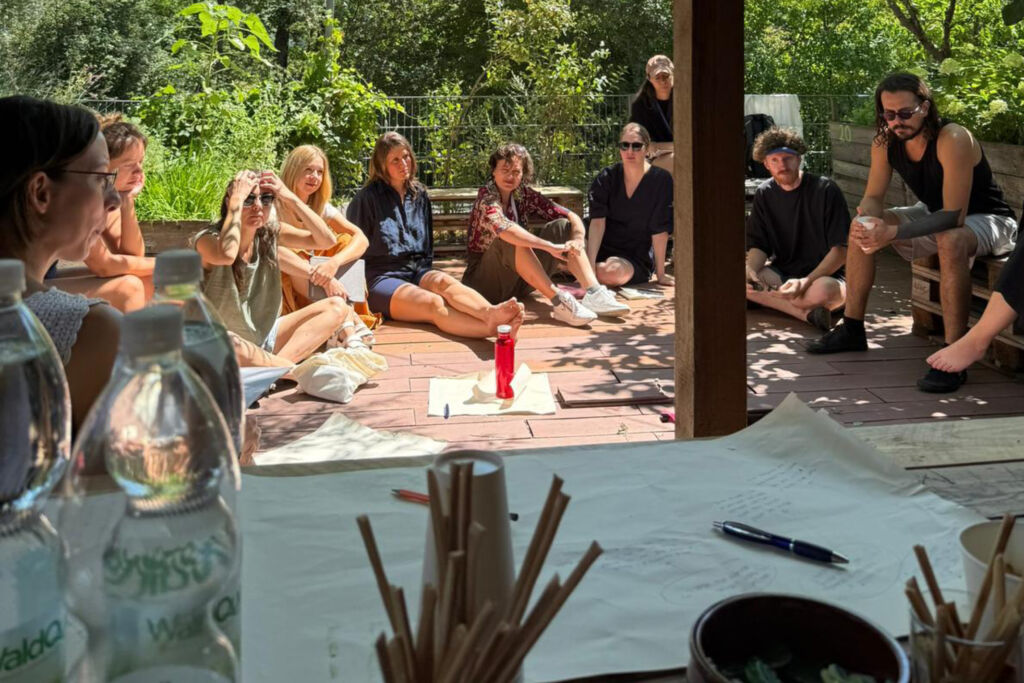
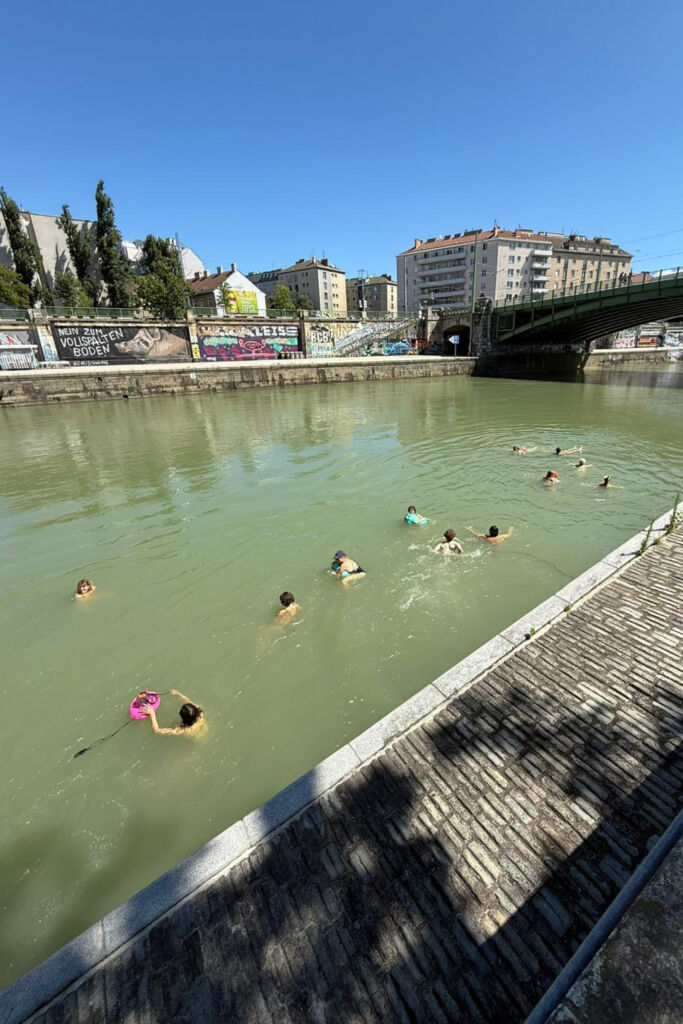
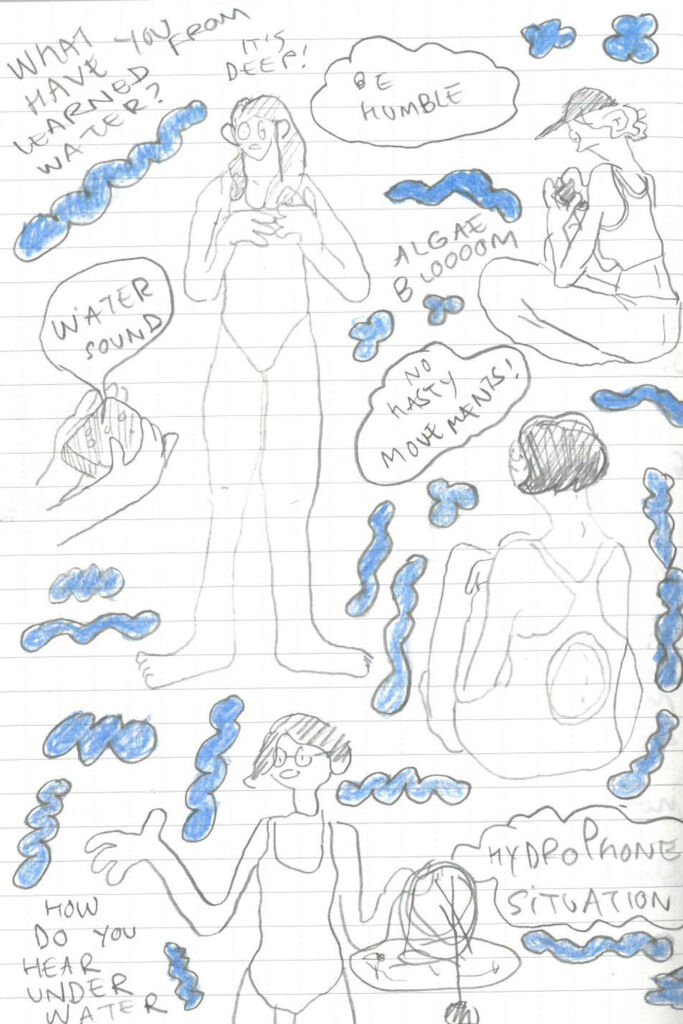
The programme was rounded off by two excursions: at the exhibiting venue musa, musician and author Paul Buschnegg gave a tour of the exhibition Zwidemu. Between Party and Protest, which he had co-curated, explaining the significance of the area around Maria-Theresien-Platz as a place for politics as well as for subcultures and youth culture. And with the temperature hovering above 30 degrees Celsius, the second excursion—to the swimming club Schwimmverein Donaukanal—turned into an unexpected highlight: Verena Frauenlob and Lily Carr presented their artistic work using hydrophones, after which the attendees headed up the Danube Canal on an audio walk. Following a dip in the water, the isaResearchers then drifted back down the canal to the Sophiengarten, where they reflected on their impressions in a group discussion.
“Presenting at isaResearch was a special experience for me: it was the first time I’d presented my artistic research work in public. Among other things, I spoke about the history of the organ and its aesthetic significance over the centuries. I find it particularly important that there are forums like this where even supposedly niche topics can enter into dialogue with other fields of research pertaining to sound, space, and society. The response and the discussions that followed were very enriching and motivating.” Amar Priganica, Academy of Fine Arts Vienna
“Participating in isaResearch was an inspiring experience. The programme fostered meaningful conversations across disciplines and opened new perspectives on my research into the role of music in the ongoing war in Ukraine. And taking a swim in the canal—what a fantastic idea!” Olga Zaitseva-Herz, University of Alberta
“My isaResearch experience was so much more than what was written in the curriculum. It came through in the little things—casual talks during breaks, new friendships, and helpful feedback from others. I came to the summer school to have my research challenged. But by the end, it wasn’t just my project that had changed: the overall trajectory of my research, in fact, has been enhanced thanks to the people I met and the time I spent at the mdw and in Vienna.” Uroš Đurović, independent researcher, Museum of Popular and Subcultures Belgrade