
The question of participation in the cultural life of our city is, for me, one of the central challenges of Vienna’s cultural policy, for which I have been responsible since 2018. With the slogan “Culture for All”, a vision has been formulated that provides us with orientation both now and in the future, and further determines our cultural policy decisions. All institutions, organisations, associations and initiatives face the task of communicating what they have to offer, in order to build bridges to both known and yet unknown audiences. Once considered more of an accessory, mediation formats today belong to the programme of every institution. The impact of this is strikingly visible in the field of music, where hardly any concert event or music festival can do without professional music mediation. In this way, new professional fields have become indispensable in the cultural landscape. It is essential to focus on, develop and research this still young professional sector, because we are only at the start of recognising the possibilities and opportunities of this cultural work.
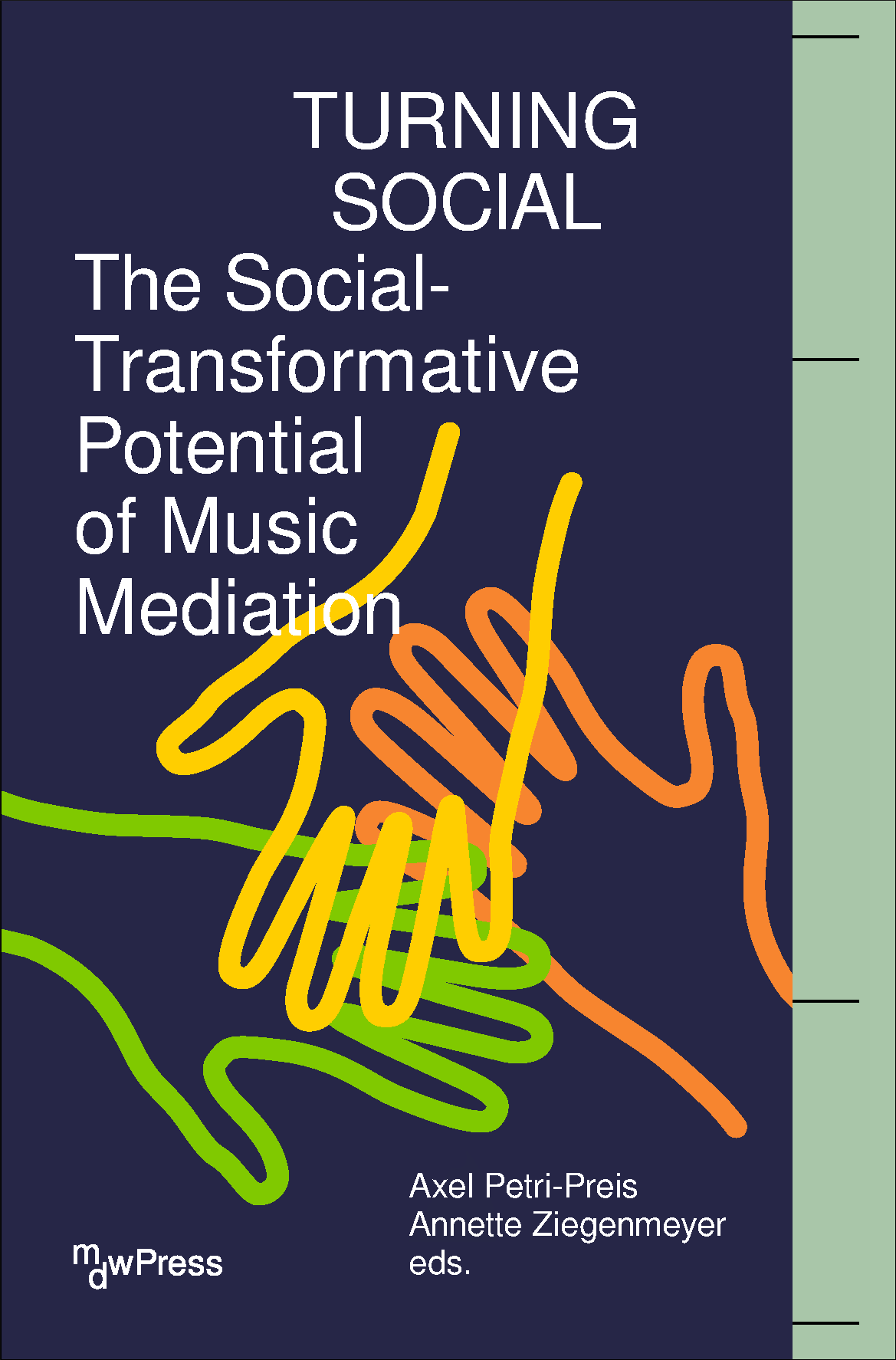
I am pleased that, with the conference Turning Social. On the Social-Transformative Potential of Music Mediation, Vienna is taking on a pioneering role in this research field. It is interesting to observe how thinking has progressed from classical audience development and is now reaching new audience groups. The future of music mediation, according to the research approach, lies in the motif of mediation-between-people, and ideally is to be regarded as a socio-transformative project. The special aesthetic experience, participation in the cultural heritage, can be intensified in new formats, and music can utilise its cohesive effect to unite and strengthen society. The work of future music mediators may lead to very independent formats that redefine the experience of music. Research in this field sets itself the ambitious goal of achieving a social turn, thereby creating new methodologies in music mediation and a deeper understanding of a new professional field.
In our day and age, when democracies are increasingly exposed to erosion, and populist, nationalist currents are undermining the cohesion of societies, it is of great importance and value for us to explore the profound questions inherent in social-transformative music mediation and to use the power of music as something for everyone.
Sincerely,
Mag.a Veronica Kaup-Hasler
Executive City Councillor for Cultural Affairs and Science in Vienna