
Paola Erdas
How to cite
How to cite

This article offers a glimpse into the world of Antonio Valente, author of the seminal Intavolatura de cimbalo, Naples 1576, as well as on the music he wrote and his innovative and unique notation in the history of music.1
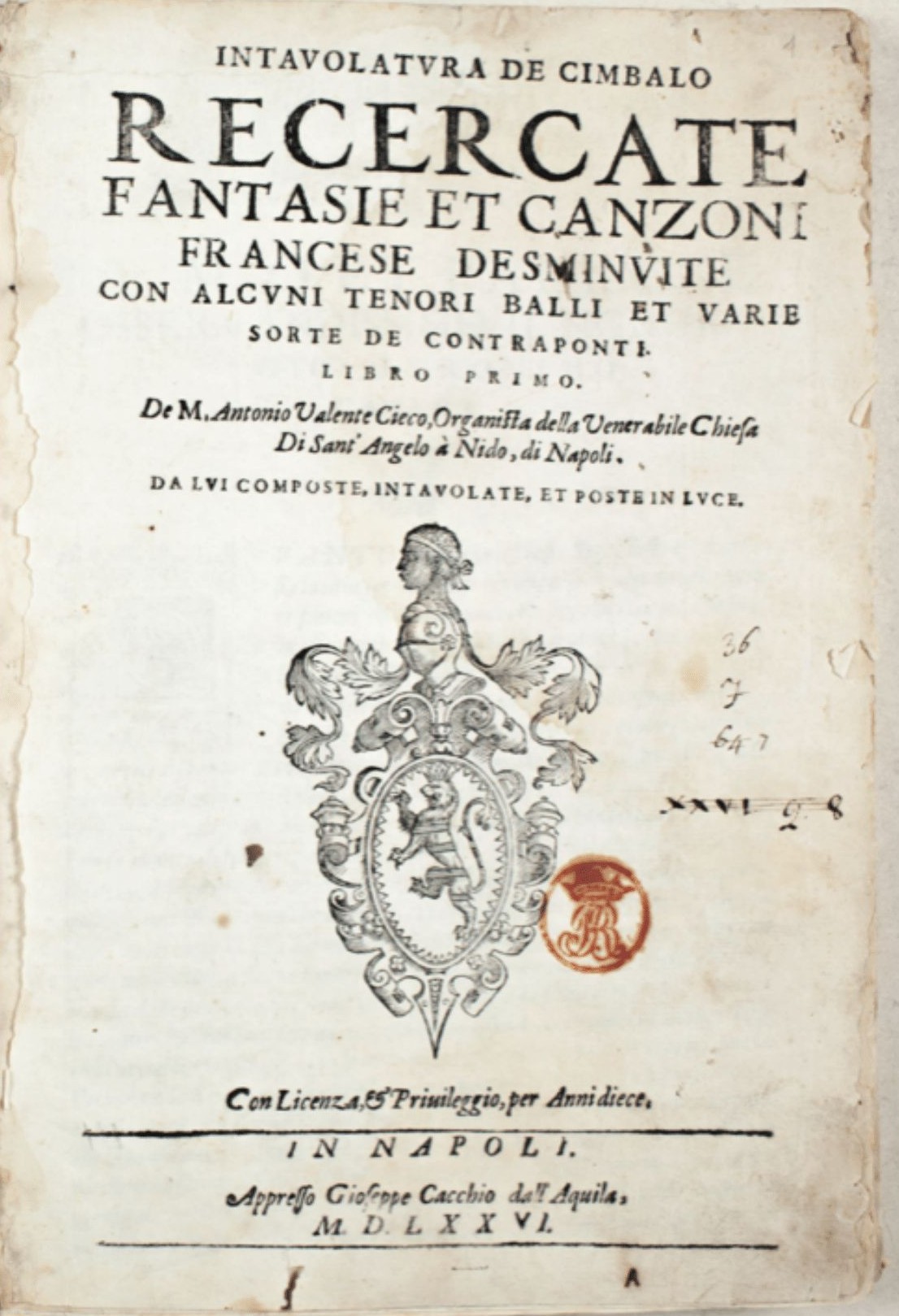
Figure 1: Antonio Valente, Intavolatura de cimbalo (Naples, 1576), frontispiece.
Giulio Cesare Capaccio, Neapolitan gentleman, theologist and erudite scholar, describes the great capital of Southern Italy in Il Forastiero, dated 1634:2
Maravigliosa è Napoli per gli molti doni della fortuna, per l’opportunità degli stranieri traffici, per la frequenza dell’innumerabile popolo, per lo splendore dell’antica, e potente nobiltà.
(‘Naples is wonderful because of fortune’s many blessings, the opportunities of foreign trade, the multitude of people, and the splendour of the ancient and powerful nobility.’ [translation of this and all other quotations from the original sources by the author])
Figure 2: Giulio Cesare Capaccio, Il Forastiero (Naples, 1634), frontispiece.
This lively and cosmopolitan atmosphere is reflected in Valente’s music and, just as the background noise of the city described in the book is still relevant today, Antonio Valente’s works retain their freshness through the centuries.
Antonio Valente was active in Naples at the end of the 16th century. Naples was the capital of the Kingdom of Naples, an Italian territory that was a dependency of the Kingdom of Spain. At that time Naples was second only to Paris in population density and in commercial traffic, a cultural setting that fostered unusual qualities. Valente was the titular organist of the church of Sant’Angelo a Nilo in piazzetta Nilo, from November 1565 to May 1580. Valente wrote ‘Sant’Angelo a Nido’ on the frontispiece of his Intavolatura instead of ‘Sant’Angelo a Nilo’, the real name of the church. The most plausible hypothesis for this, is derived from Carlo Celano’s description of Naples, published in 1692:3
Vogliono molti de’ nostri scrittori che in questo luogo anticamente vi fussero state le scuole letterarie, fundate da Federico imperatore […] e che anco quivi erano l’habitationi de’ scolari, perloché dicono alcuni che havesse il luogo sortito il titolo di Nido.
(‘Many of our writers think that this place was formerly the site of schools of letters founded by Emperor Federico […] as well as the living quarters of the students, and thus the place was named Nido [nest].’)
The book is now in the Biblioteca Nazionale ‘Vittorio Emanuele III’, the same library in which Valente’s book is kept, and another copy is in the Biblioteca del Conservatorio di San Pietro a Majella.
Valente’s salary at this church saw regular increases over the years, eventually doubling what he was originally paid. He benefited from the patronage of Don Geronimo Capece, who was a member of one of the most important Neapolitan families, and was a typical example of a nobleman with a keen interest in the arts.4 Carlo Celano wrote:
Questo cavaliere fu lo splendore de’ nobili del suo tempo, poiché – oltre l’esercitare perfettamente tutte le attioni cavalleresche, e’l farsi conoscere versato nelle scienze della filosofia, della teologia, nelle facoltà legali e nelle pulite lettere, e particolarmente della poesia – sommamente si dilettò della musica, toccando maestrevolmente ogni sorte d’istromento musicale; e, vedendo dipingere e scolpire, anch’egli perfettamente dipinse, e scolpì.
(‘This gentleman was a model of excellence among the nobility. In addition to acts of chivalry and having an aptitude for philosophy, theology, jurisprudence, letters and particularly poetry, he took pleasure in music, playing all kinds of musical instruments, and also learned to paint and sculpt.’)
Figure 3: Carlo Celano, Notitie del bello, dell’antico e del curioso della città di Napoli (Naples: Giacomo Raillard, 1692),frontispiece.
Not much information about Valente’s life is known,5 just some details such as a mention in Scipione Cerreto’s Della prattica musica vocale, et strumentale (Naples, 1601), in which Valente is listed as one of the important musicians of the recent past: ‘Sonatori eccellenti d’Organo, della Città di Napoli, che oggi non vivono. […] Antonio Valente per antichità Napolitano’ (‘Excellent organ players, of the City of Naples, who are no longer alive: Antonio Valente, Neapolitan by residence’).6 This implies that he was not a Neapolitan by birth, but was adopted by this cosmopolitan city, just as Diego Ortiz of Toledo, or Bartolomeo lo Roy Borgognone of Burgundy.
A further mention appears in a ‘bancale’, a document issued by a bank which serves as proof of a loan.7
Ad Antonio Valente ducati 20. E per lui a Gio Antonio Stefanello cimbalaro dissero per il prezzo de uno zimbalo de 50 tasti le ha venduto declamando essere stato pagato integralmente. A lui contanti. 21 febbraio 1579.
(‘To Antonio Valente 20 ducats. And via him to Gio Antonio Stefanello, harpsichord maker, for the price of a 50-key harpsichord, which he has sold, declaring to have received the full payment, given to him in cash. 21 february 1579.’)
Giovanni Antonio Stefanello or de Stefani or Stefanelli was a very active and rather wealthy harpsichord maker; documents attest to his activity in Naples from 1557 to 1586.
‘Antonio Valente Cieco, the Blind.’ In his preface to the collection Frat’Alberto Mazza, a Dominican friar, illustrates a new notational system which was invented by Valente.8 It consist of a stylised derivation of the Spanish keyboard tablature in which the numbers from 1 to 27 are used to identify the notes. This preface includes an illustration of a keyboard with a short octave (C/E), with numbers inscribed on each natural key. Additionally, it provides a detailed description that accidental keys are indicated with an X over the numbers. The note values, called bandiere (flags), are indicated with the value symbol at the top of the notes in a style analogous to lute tablatures. Notes without any value symbol are a semibreve and are designated as botta (beat). Other additional note values, such as dotted notes, are indicated with various symbols. For example, a single dot indicates a double value, two indicate the addition of half the value, three a triple value and so on. The score contains no bars, but only one line that divides the right hand (D: mano dritta) and the left hand (M: mano manca). Neither a key signature nor a time signature is present. The end of the composition is marked with the word Finis (end).
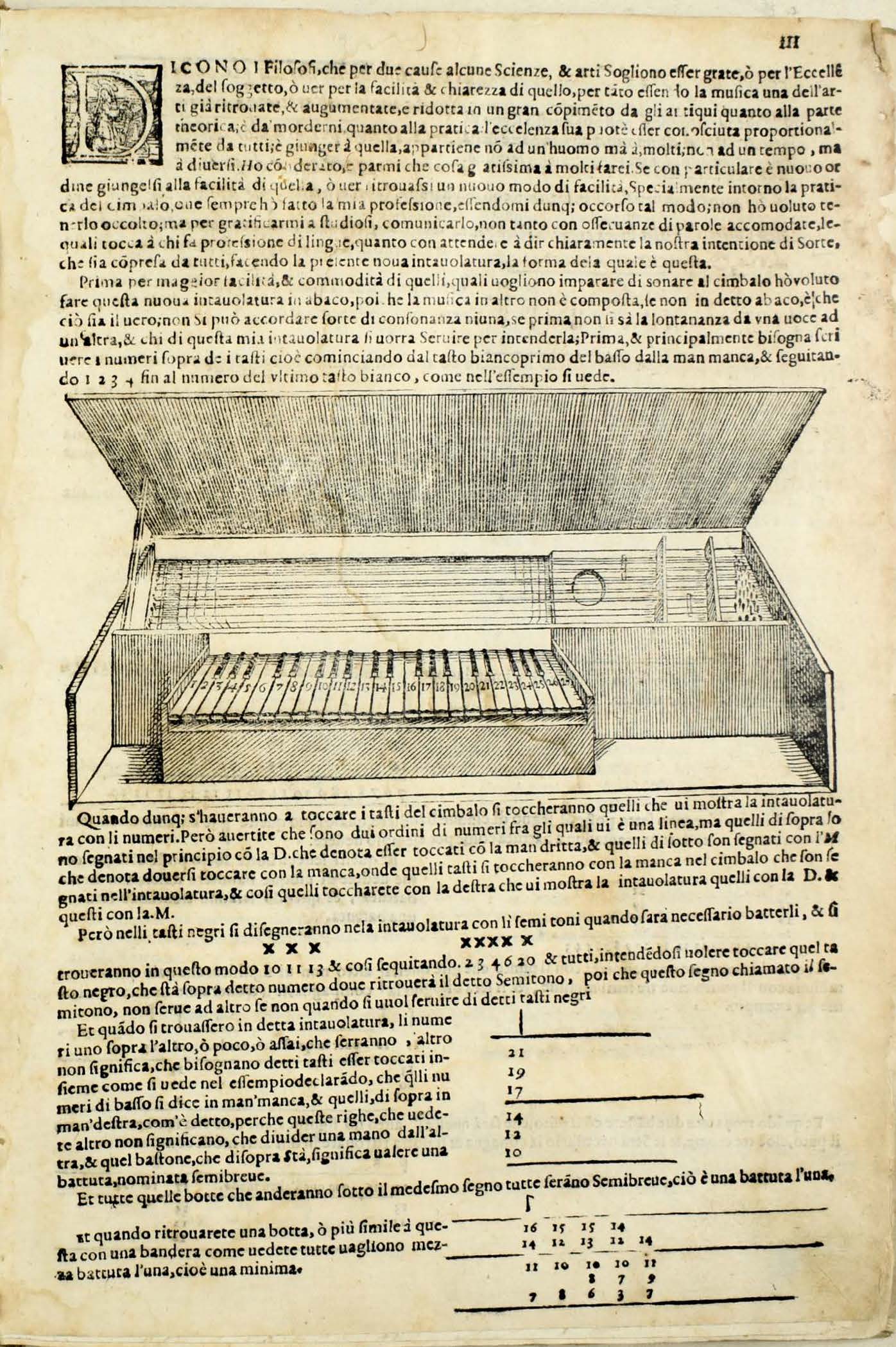
Figure 4: Antonio Valente, Intavolatura de cimbalo (Naples, 1576), from the preface by Frat’Alberto Mazza, p. iii.
According to Mazza and Valente, this notation is easier: it could be useful to introduce even the most inexperienced beginner to musical literacy and proficiency in a relatively short time. Valente’s tablature is different from other number tablatures of this time. His system seems to be a visual simplification used by a man who had a serious eyesight deficit. Today he would probably be called ‘visually impaired’, but in the 16th century he was considered blind. I asked for medical advice on the basis of the score and the two possible diagnoses were retinitis pigmentosa or evolved glaucoma. Both diseases are genetic and result in a progressive narrowing of the field of vision, down to the so-called ‘tunnel vision’ (only frontal vision) and then to full blindness.9
Maybe because of his blindness, Antonio Valente’s next (and last) publication, the Versi spirituali sopra tutte le note was published in a more conventional notation, in open score.10 In modern times the Intavolatura was edited by Charles Jacobs (1973)11 and Bernard Thomas (1981).12 These remarkable publications, partly published with editorial criteria now perceived as anachronistic, are followed by an exemplary new modern edition by Maria Luisa Baldassari (2021).13
The Intavolatura is a compilation of many kinds of 16th century keyboard compositions: we can find ricercari, canzoni desminuite, one fantasia written in a refined and beautiful counterpoint, and a lot of balli and tenori: variations upon bassi ostinati, developed in a way similar to modern pop music: one hand plays a musical accompaniment (in a chitarra battente style) with the plain melody and the variations in the other hand.14
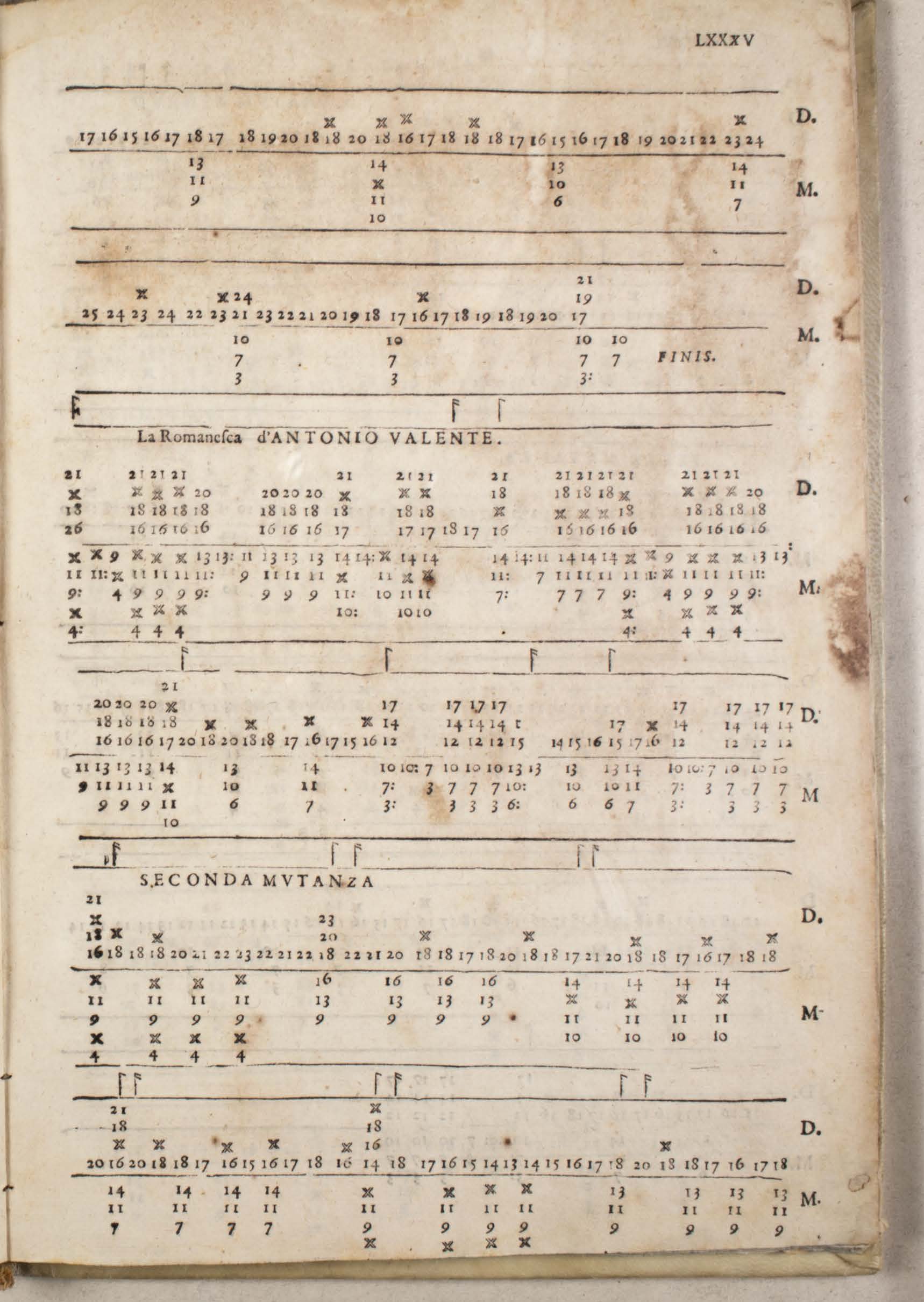
Figure 5: Antonio Valente, Intavolatura de cimbalo (Naples, 1576), ‘La Romanesca con cinque mutanze’, p. 85 [75].
Valente’s music is also the ideal material for students: the balli and the tenori are excellent exercises for the left hand to learn to imitate a jaunty and energetic chitarra battente; the contrapuntal pieces like the recercate help develop the ability to play the different parts vocally; lastly, the desminuiti pieces are useful to practice the art of ornamentation. Valente’s music is a good starting point for understanding the Southern Italian School that continues with Mayone and Gesualdo and culminates with Scarlatti.
Valente was a composer who embodies the world of Naples: a diverse, extremely cultured and pleasure-loving capital. His music marks the start of the Baroque era, with a fresh, intriguing style that still has a hint of Renaissance about it. After his death, although his music might have been played rarely, we can read his name in many chronicles, such as in the Memorie dei compositori di musica del Regno di Napoli (1840) written by Carlantonio Marchese di Villaròsa.15
At the beginning of the 20th century the Sicilian Nino Caravaglios, like Valente Neapolitan by residence, published an essay titled ‘Una Nuova “Intavolatura de Cimbalo” di Antonio Valente Cieco’ in the the Rivista Musicale Italiana.16Caravaglios was an eclectic musician: the first to conduct in Italy music by Elgar and Mussorgsky, he was also active in the revival of early music. He transcribed the pieces in modern notation in their entirety, hoping that an editor might be interested in publishing them, to no avail.
Instruments
For the recordings made to present the music of Valente with this paper, I was fortunate to be able to use two antiques instruments, the Virginal Rucellai and the Cembalo Sansevero both in François Badoud collection, Neuchâtel, now in the possession of Mireille Badoud.
The Virginale Rucellai
For more than four centuries the viriginal was kept in the Ruccellai Palace, one of the residences of the homonymous family, which, alongside the Medici, was one of the great dynasties of Florence. In the 1980s the palace became a museum and in those years the instrument was bought by a rich businessman and antiquarian who sold it to François Badoud, a fine harpsichord amateur and collector.
The instrument was incredibly well conserved and, even before the restauration, it still possessed a magical sound: archaic, soft and powerful at the same time, simply perfect for Antonio Valente. This perfect condition as shown by the extraordinarily beautiful three-layered parchment rose, by the fine wreath of white and red ivory buttons that line the whole border of the instrument, by the jackrail and by the finely carved cornucopias on the edges of the keyboard.
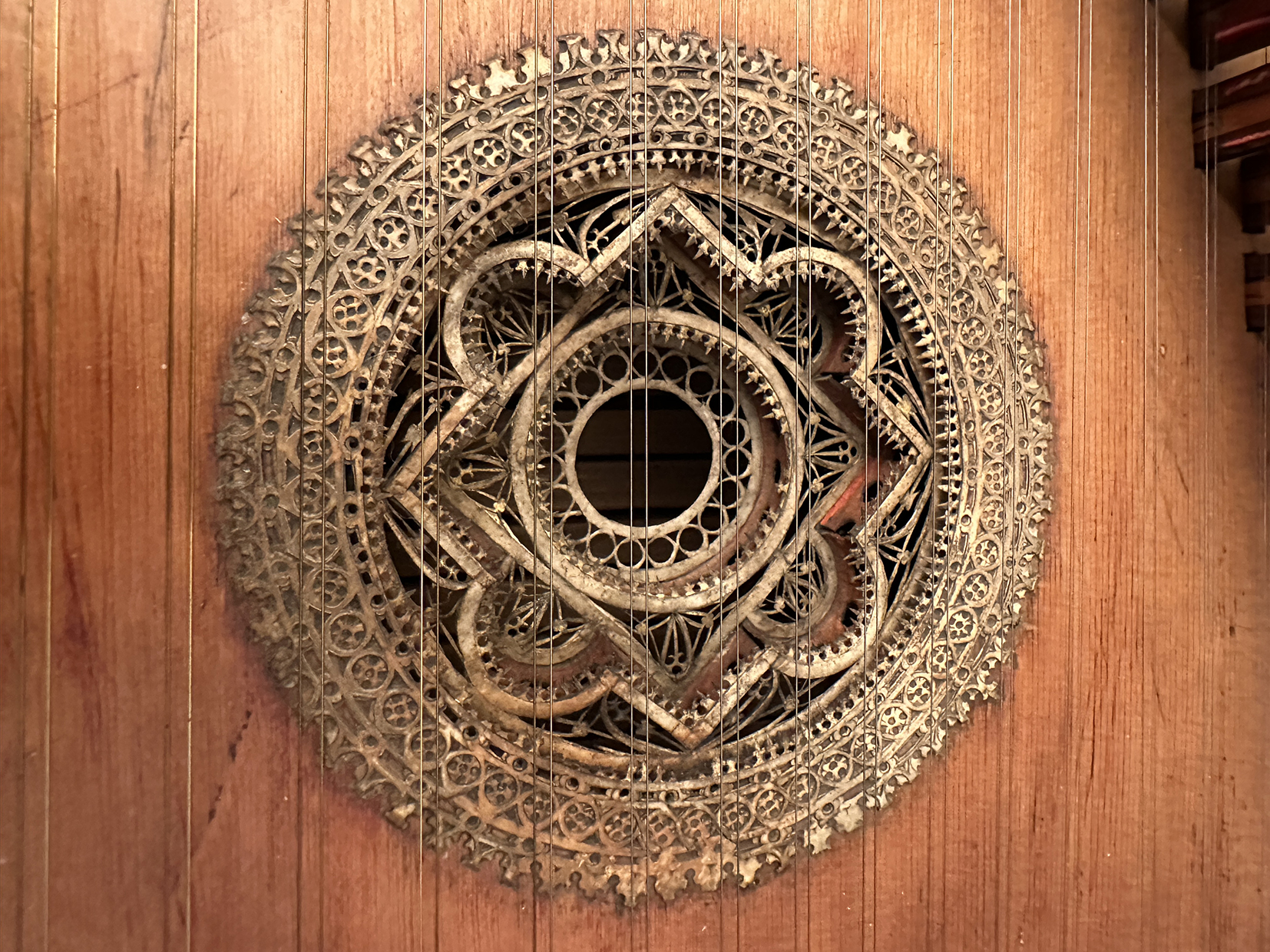
Figure 6: Virginale Rucellai, rosetta (Photo: P. Erdas).
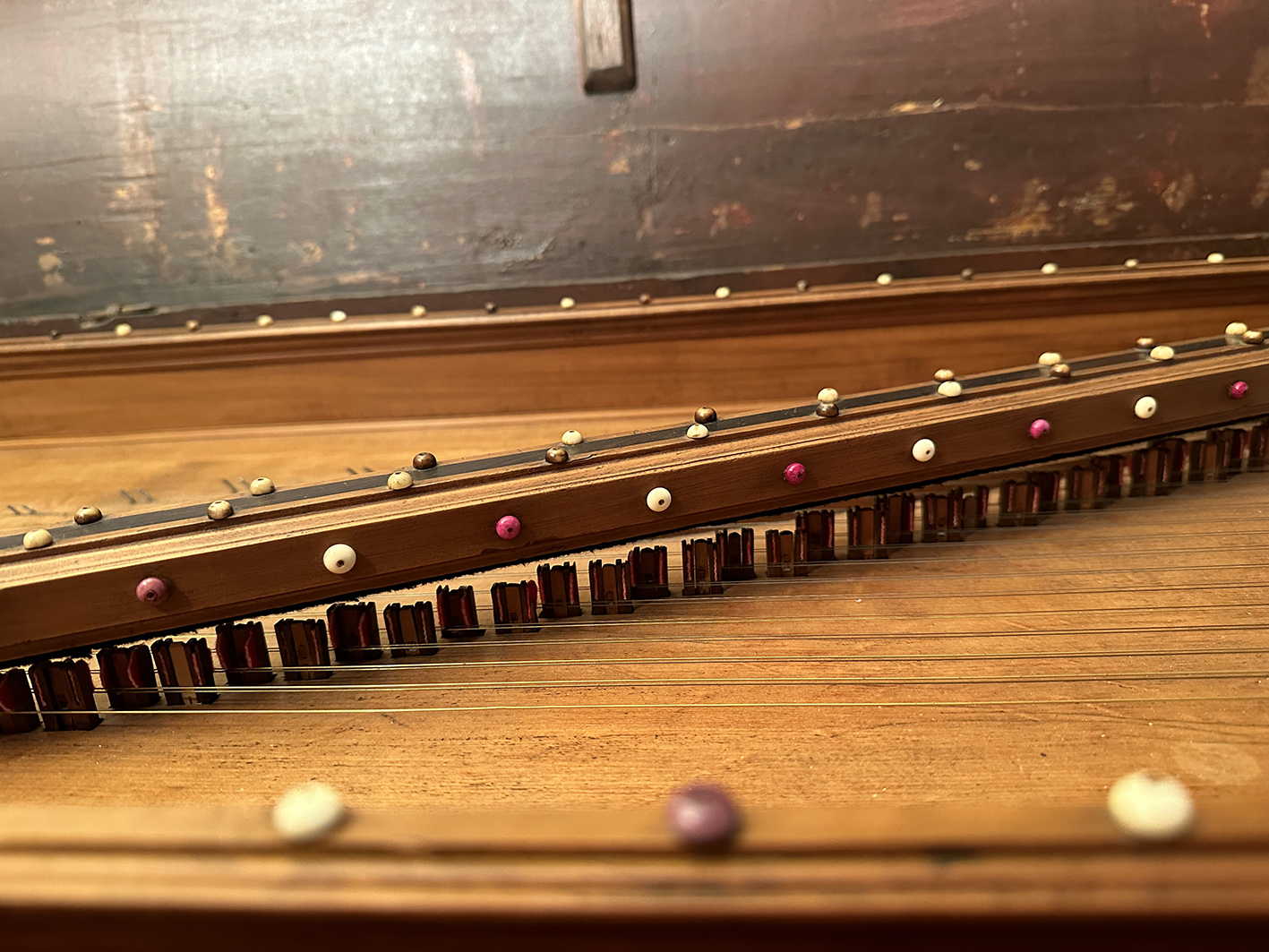
The virginal is inserted into a simple cypress outer case with slots on the bottom that suggest the previous existence of a pedalboard, not uncommon at the time. The nameboard, which features an ivory decoration in the middle and is held in place by ivory nails, bears illegible writing on the reverse side, which has resulted in uncertainty regarding the attribution of the instrument even in the present era. Recently, after the comparison of the mouldings and the cornucopias, Augusto Bonza and Thomas Stainer have suggested that the instrument is an anonymous Neapolitan instrument from the late sixteenth century.
Video 1: ‘La Romanesca con cinque mutanze’, from: Antonio Valente, Intavolatura de cimbalo (Naples, 1576), pp. 85–8 [75–8].The Cembalo Sansevero
DISTICHON. / VIVA FUI IN SYLVIS: SUM DIRA EXCISSA SECURI DUM VIXI
TACUI: MORTUA DULCE CANO
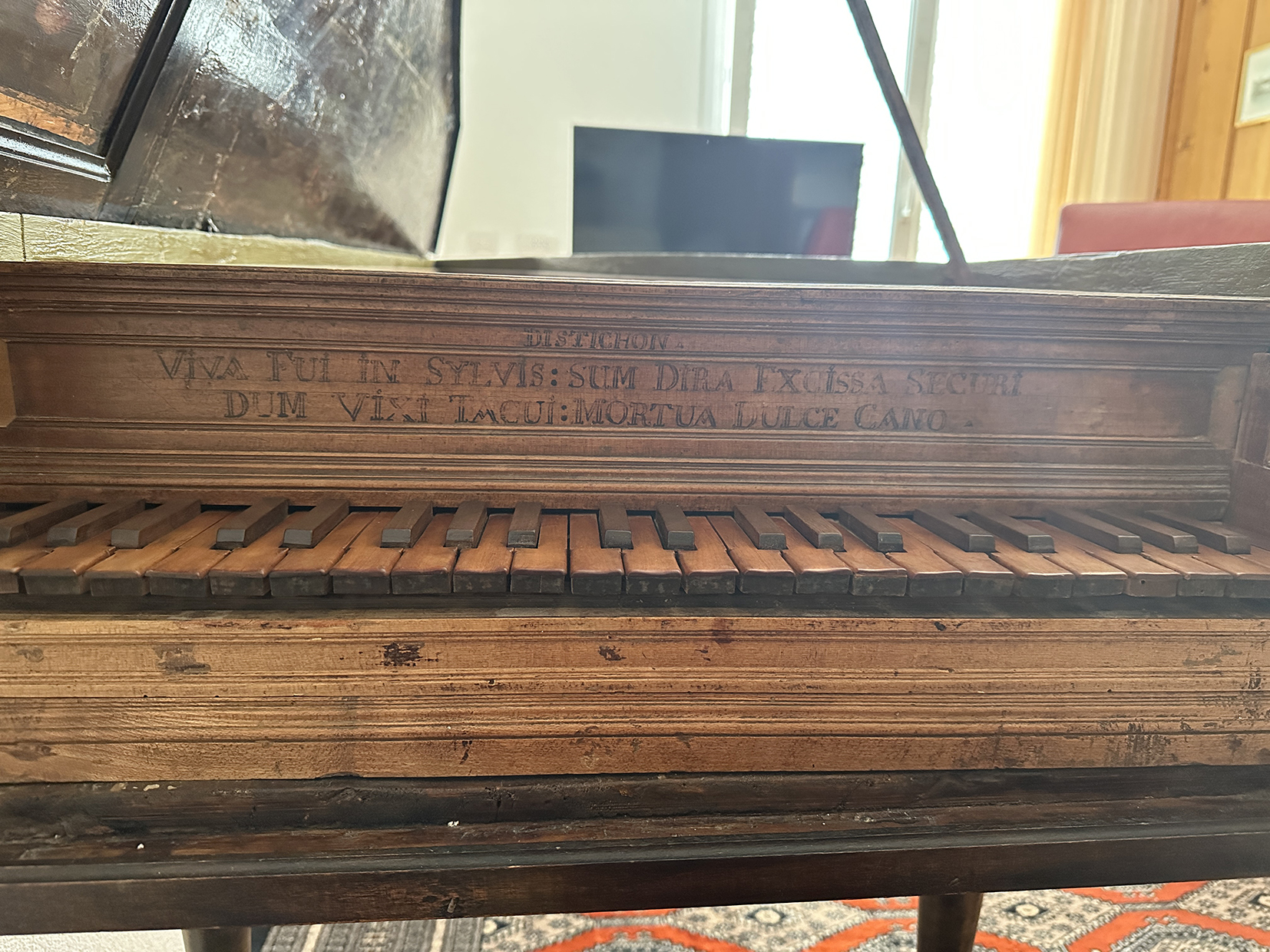
Figure 8: Cembalo Sansevero, nameboard recto (Photo: P. Erdas).
This inscription, written on the front of nameboard, is evidently spurious: it is not well written and the fonts seem anachronistic. On the reverse side, however, the following is inscribed in pen:
Fatto del celebre Autore Gaetano Carotenuto pegli … / Sigi Prencipe di Sansevero e Principeƒsa della [Re]na / An D[omi]ni 1619.
![Close-up of an inscription on the rear side of the nameboard, written in Italian, reading “Fatto del celebre Autore Gaetano Carotenuto per Sig. Principe di Sansevero e Principe della c[asa]… An. Dni 1619,” indicating the instrument was made by the renowned maker Gaetano Carotenuto for the Prince of Sansevero in 1756.](https://www.mdw.ac.at/mdwpress/wp-content/uploads/Fig.-9-Nameboard-VERSO.jpg)
Figure 9: Cembalo Sansevero, nameboard verso (Photo: P. Erdas).
This inscription appears to be executed in a more convincing handwriting but one can see that there are some differences in the two lines, evidently written by two different hands, with different ink. Gaetano Carotenuto was a harpsichord maker active several decades later, from 1688 to 1691.17 There are two possible reasons for this: either there was another Gaetano Carotenuto active seventy years earlier, or the signature in the top lines is forged, anachronistically attributing it to Gaetano Carotenuto by covering the original name. 1619 is nevertheless a plausible date of construction, or possibly reconstruction.
The instrument is built lightly, with a very acute tail angle and sycamore maple ribs. The removable front board is also made of maple. On either side of the keyboard, there are two blocks made of carved maple each of them representing a cornucopia. The keyboard, of 45 notes, has boxwood key covers for the naturals and walnut for the chromatics. The key arcades of the diatonic keys have not survived; their traces suggest an elaborate carving – similar to that of the outer part on the crown of the rose – on a blue background. The current restoration by Augusto Bonza has restored the instrument to its original arrangement of a single 8-foot, which, as we have seen in the bank document, was the most widespread type of harpsichord in 16th-century Naples.
A comparative study made by John Koster18 of the mouldings suggests that the harpsichord is from the same workshop of the set of instruments known as the maple group. This includes an Italian harpsichord in the Metropolitan Museum in New York, an ottavino in National Music Museum South Dakota Vermillion (with the same cornucopia as the Sansevero Harpsichord), the clavichord 1540 in Leipzig and a harpsichord from about 1550 in Boston.
Video 2: ‘Recercata del primo tono’, from: Antonio Valente, Intavolatura de cimbalo (Naples, 1576), pp. 11–15.These two miraculous instruments were absolutely perfect for Valente’s music: from balli to recercate, the whole palette of sounds and compositional refinements of the Neapolitan blind man were expressed in the best possible way, taking me, and you, back to a time when Naples shone with art and splendour.
Endnotes
-
Antonio Valente, Intavolatura de cimbalo, recercate, fantasie et canzoni francese desminuite con alcuni tenori, balli et varie sorte de contraponti, libro primo (Naples: Gioseppe Cacchio dall’Aquila, 1576) (RISM A/I V 33), I-Nn BANC.RARI 1. D 12.↩︎
-
Giulio Cesare Capaccio, Il Forastiero, Dialogi di Giulio Cesare Capaccio Academico Otioso (Naples: Gio. Domenico Roncagliolo, 1634), dedication letter, fol. [1v], <https://www.digitale-sammlungen.de/de/view/bsb10052653?page=8,9> (accessed on 15 July 2024).↩︎
-
Carlo Celano, Notitie del bello, dell’antico e del curioso della città di Napoli per i signori forastieri date dal canonico Carlo Celano napoletano, divise in dieci giornate. Giornata terza (Naples: Giacomo Raillard, 1692), 147; modern edition: Notitie del bello, dell’antico e del curioso della città di Napoli […] Giornata Terza, eds. Paola Coniglio and Riccardo Prencipe (Naples, 2010), 47, <https://www.memofonte.it/ricerche/napoli/ – carlo-celano> (accessed on 15 July 2024).↩︎
-
Ibid., 123–4 (ed., 39).↩︎
-
Cf. the information on Valente in the articles by Matteo Messori, Art. ‘Valente, Antonio’, in: Dizionario Biografico degli Italiani, vol. 97 (2020), <https://www.treccani.it/enciclopedia/antonio-valente_(Dizionario-Biografico)/?search=VALENTE%2C%20Antonio%2F> (accessed on 29 July 2024), Roland Jackson, Art. ‘Valente, Antonio’, in: Grove Music Online, <https://doi-1org-1004737bz01bb.han.onb.ac.at/10.1093/gmo/9781561592630.article.28910> (accessed on 25 July 2024), and Peter Niedermüller, Art. ‘Valente, Antonio’, in: MGG Online, <https://www-1mgg-2online-1com-1004790bz01bc.han.onb.ac.at/mgg/stable/23016> (accessed on 25 July 2024), and furthermore, the comprehensive biographical account in: Diego Cannizzaro, ‘Legami tra Spagna e Italia meridionale’, in: RdM 34 (2011), 185–201, at 193–4.↩︎
-
Scipione Cerreto, Della prattica musica vocale, et strumentale (Naples: Giovanni Giacomo Carlino, 1601), lib. iii, p. 159, <https://imslp.org/wiki/Special:ReverseLookup/463507> (accessed on 15 July 2024).↩︎
-
Francesco Nocerino, ‘Cembalari a Napoli nel Cinquecento. Nuove fonti e inediti documenti’, in: Recercare 15 (2003), 173–88, at 184–5.↩︎
-
On Valente’s notational system and in particular its relation to the Spanish keyboard tablature cf. Andrés Cea Galán, ‘La cifra hispana: música, tañedores e instrumentos (siglos XVI-XVIII)’, Doctoral thesis, Universidad Complutense de Madrid, 2014; Cannizzaro, ‘Legami’ (see n. 5), 194–9; Mario Stefano Tonda, ‘Nuove osservazioni sull’Intavolatura de cimbalo del 1576 di Antonio Valente’, in: Informazione organistica: Rivista della Fondazione Accademia di Musica Italiana per Organo 17 (aprile-agosto, 2005), 3–21, at 10–18.↩︎
-
Cf. Paola Erdas, [Liner notes], in: Antonio Valente (c1520–c1580). Intavolatura de Cimbalo, Napoli 1576, Paola Erdas (virginal, harpsichord), CD-recording HITASURA HSP005 (2019).↩︎
-
Antonio Valente, Versi spirituali sopra tutte le note, con diversi canoni spartiti per sonar ne gli organi, messe, vespere, et altri offici divini (Naples: Eredi di Mattio Cancer, 1580), <https://imslp.org/wiki/Special:ReverseLookup/907887> (accessed on 25 July 2024).↩︎
-
Antonio Valente, Intavolatura de Cimbalo (Naples 1576), ed. Charles Jacobs(Oxford, 1973).↩︎
-
Antonio Valente, Ricercars, Chansons and Dances from Intavolatura de Cimbalo 1576, ed. Bernard Thomas (London, 1980). In addition, complete transcriptions of the Intavolatura can be found in two unpublished theses: Joseph A. Burns, ‘Neapolitan Keyboard Music from Valente to Frescobaldi’, 2 vols., PhD diss. Harvard University, 1953; Mario Stefano Tonda, ‘L’intavolatura de cimbalo del 1576 di Antonio Valente e la nuova “notazione in Abaco”: studio ed edizione’, tesi di laurea, Facoltà di musicologia dell’Università degli studi di Pavia, 2003.↩︎
-
Maria Luisa Baldassarri (ed.), Antonio Valente. Intavolatura de Cimbalo (Napoli 1576) (Bologna, 2021).↩︎
-
On the music of the Intavolatura cf. Willy Apel, The History of Keyboard Music to 1700, trans. and rev. by Hans Tischler (Bloomington, 1972), 125–7, Joseph Burns, ‘Antonio Valente, Neapolitan Keyboard Primitive’, in: JAMS 12 (1959), 133–43, and the recent publication by Francesco Cera, ‘L’intavolatura de cimbalo di Antonio Valente, Napoli 1576: Riflessioni per un lavoro interpretativo’, in: Napoli e l’Europa: Gli strumenti, i costruttori e la musica per organo dal XV al XX secolo. Atti del Convegno Internazionale di Studi, Battipaglia, 12–14 novembre 2004, eds. Luigi Sisto and Emanuele Cardi (Battipaglia, 2005), 235–42.↩︎
-
Carlantonio Marchese di Villaròsa, Memorie dei compositori di musica del Regno di Napoli (Naples: Stamperia Reale, 1840).↩︎
-
Nino Caravaglios, ‘Una Nuova “Intavolatura de Cimbalo” di Antonio Valente Cieco’, in: RMI 23 (1916), 491–508.↩︎
-
Francesco Nocerino, ‘Napoli centro di produzione cembalaria alla luce delle recenti ricerche archivistiche’, in: Fonti d’archivo per la storia della musica e dello spettacolo a Napoli tra il XVI e XVIII secolo, ed. Paologiovanni Maione (Naples, 2001), 205–26, at 211–12, 214–15.↩︎
-
John Koster, ‘A distinctive group of sixteenth-century Italian stringed-keyboard instruments’, paper read at the American Musical Instrument Society’s annual meeting, San Antonio, Texas, May 1992. I would like to thank Augusto Bonza for providing me with information about this paper.↩︎
Bibliography and Sitography
Willy Apel, The History of Keyboard Music to 1700, trans. and rev. by Hans Tischler (Bloomington, 1972)
Joseph Burns, ‘Antonio Valente, Neapolitan Keyboard Primitive’, in: JAMS 12 (1959), 133–43
Joseph A. Burns, ‘Neapolitan Keyboard Music from Valente to Frescobaldi’, 2 vols., PhD diss. Harvard University, 1953
Diego Cannizzaro, ‘Legami tra Spagna e Italia meridionale’, in: RdM 34 (2011), 185–201
Giulio Cesare Capaccio, Il Forastiero, Dialogi di Giulio Cesare Capaccio Academico Otioso (Naples: Gio. Domenico Roncagliolo, 1634), <https://www.digitale-sammlungen.de/de/view/bsb10052653?page=8,9>
Nino Caravaglios, ‘Una Nuova “Intavolatura de Cimbalo” di Antonio Valente Cieco’, in: RMI 23 (1916), 491–508
Andrés Cea Galán, ‘La cifra hispana: música, tañedores e instrumentos (siglos XVI-XVIII)’, Doctoral thesis, Universidad Complutense de Madrid, 2014
Carlo Celano, Notitie del bello, dell’antico e del curioso della città di Napoli per i signori forastieri date dal canonico Carlo Celano napoletano, divise in dieci giornate. Giornata terza (Naples: Giacomo Raillard, 1692); modern edition: Notitie del bello, dell’antico e del curioso della città di Napoli […] Giornata Terza, eds. Paola Coniglio and Riccardo Prencipe (Naples, 2010), <https://www.memofonte.it/ricerche/napoli/ – carlo-celano>
Francesco Cera, ‘L’intavolatura de cimbalo di Antonio Valente, Napoli 1576: Riflessioni per un lavoro interpretativo’, in: Napoli e l’Europa: Gli strumenti, i costruttori e la musica per organo dal XV al XX secolo. Atti del Convegno Internazionale di Studi, Battipaglia, 12–14 novembre 2004, eds. Luigi Sisto and Emanuele Cardi (Battipaglia, 2005), 235–42
Scipione Cerreto, Della Prattica Musica vocale, et strumentale (Naples: Giovanni Giacomo Carlino, 1601), <https://imslp.org/wiki/Special:ReverseLookup/463507>
Roland Jackson, Art. ‘Valente, Antonio’, in: Grove Music Online, <https://doi-1org-1004737bz01bb.han.onb.ac.at/10.1093/gmo/9781561592630.article.28910>
John Koster, ‘A distinctive group of sixteenth-century Italian stringed-keyboard instruments’, paper read at the American Musical Instrument Society’s annual meeting, San Antonio, Texas, May 1992
Matteo Messori, Art. ‘Valente, Antonio’, in: Dizzionari Biografico degli Italiani, vol. 97 (2020), <https://www.treccani.it/enciclopedia/antonio-valente_(Dizionario-Biografico)/?search=VALENTE%2C%20Antonio%2F>
Peter Niedermüller, Art. ‘Valente, Antonio’, in: MGG Online, <https://www-1mgg-2online-1com-1004790bz01bc.han.onb.ac.at/mgg/stable/23016>
Francesco Nocerino, ‘Cembalari a Napoli nel Cinquecento. Nuove fonti e inediti documenti’, in: Recercare 15 (2003), 173–88
Francesco Nocerino, ‘Napoli centro di produzione cembalaria alla luce delle recenti ricerche archivistiche’, in: Fonti d’archivo per la storia della musica e dello spettacolo a Napoli tra il XVI e XVIII secolo, ed. Paologiovanni Maione (Naples, 2001), 205–26
Mario Stefano Tonda, ‘L’intavolatura de cimbalo del 1576 di Antonio Valente e la nuova “notazione in Abaco”: studio ed edizione’, tesi di laurea, Facoltà di musicologia dell’Università degli studi di Pavia, 2003
Mario Stefano Tonda, ‘Nuove osservazioni sull’Intavolatura de cimbalo del 1576 di Antonio Valente’, in: Informazione organistica: Rivista della Fondazione Accademia di Musica Italiana per Organo 17 (aprile-agosto, 2005), 3–21
Antonio Valente, Intavolatura de Cimbalo (Naples 1576), ed. Charles Jacobs(Oxford, 1973)
Antonio Valente, Intavolatura de Cimbalo (Napoli 1576), ed. Maria Luisa Baldassarri (Bologna, 2021)
Antonio Valente, Intavolatura de cimbalo, recercate, fantasie et canzoni francese desminuite con alcuni tenori, balli et varie sorte de contraponti, libro primo (Naples: Gioseppe Cacchio dall’Aquila, 1576)
Antonio Valente, Ricercars, Chansons and Dances from Intavolatura de Cimbalo 1576, ed. Bernard Thomas (London, 1980)
Antonio Valente, Versi spirituali sopra tutte le note, con diversi canoni spartiti per sonar ne gli organi, messe, vespere, et altri offici divini (Naples, Eredi di Mattio Cancer, 1580), <https://imslp.org/wiki/Special:ReverseLookup/907887>
Carlantonio Marchese di Villaròsa, Memorie dei compositori di musica del Regno di Napoli (Naples: Stamperia Reale, 1840