
An Attempt at a Response According to Nicola Vicentino
Martin Kirnbauer 
How to cite
How to cite

This paper was shaped by two major research projects that were carried out at the Schola Cantorum Basiliensis in the last ten years. The first was ‘Studio31’ with a reconstruction of two keyboard instruments proposed by Nicola Vicentino in his treatise L’antica musica ridotta alla moderna prattica (Rome, 1555): the archicembalo and the arciorgano, two keyboard instruments with 36 keys per octave.1 After having started the project, we decided not to build an archicembalo according to Vicentino (among other reasons, Marco Tiella lent us his reconstruction of the archicembalo, built in the 1970s). Instead we opted for a kind of new interpretation of the clavemusicum omnitonum, i.e. the only completely preserved harpsichord with 31 keys per octave (although this instrument has a different story that has yet to be told).2 Since then, a reconstruction of Vicentino’s arciorgano (Fig. 1) and of the clavemusicum omnitonum (see Fig. 2) in Basel have been available for further research and practical exploration. It can already be emphasised at this point that the presence and availability of the reconstructed instruments (especially Vicentino’s arciorgano) was – and is – fundamental for reading and understanding Vicentino’s treatise which is the focus of the second project ‘Vicentino21’. This project has the creation of a digital edition and translation (into German and English) of Vicentino’s notorious treatise as its aim.3 A team consisting of Luigi Collarile, David Gallagher, Johannes Keller, Anne Smith and me, began an intensive re-reading of Vicentino’s treatise, which led to new insights and understanding of his ideas. In my contribution I would like to try to analyse the role of the archicembalo, described in detail by Vicentino in the treatise, and what the function of the instrument is. Before attempting to answer the question in the title, a few preliminary remarks on Nicola Vicentino, his treatise L’antica musica ridotta alla moderna prattica and the instruments presented in it are necessary.
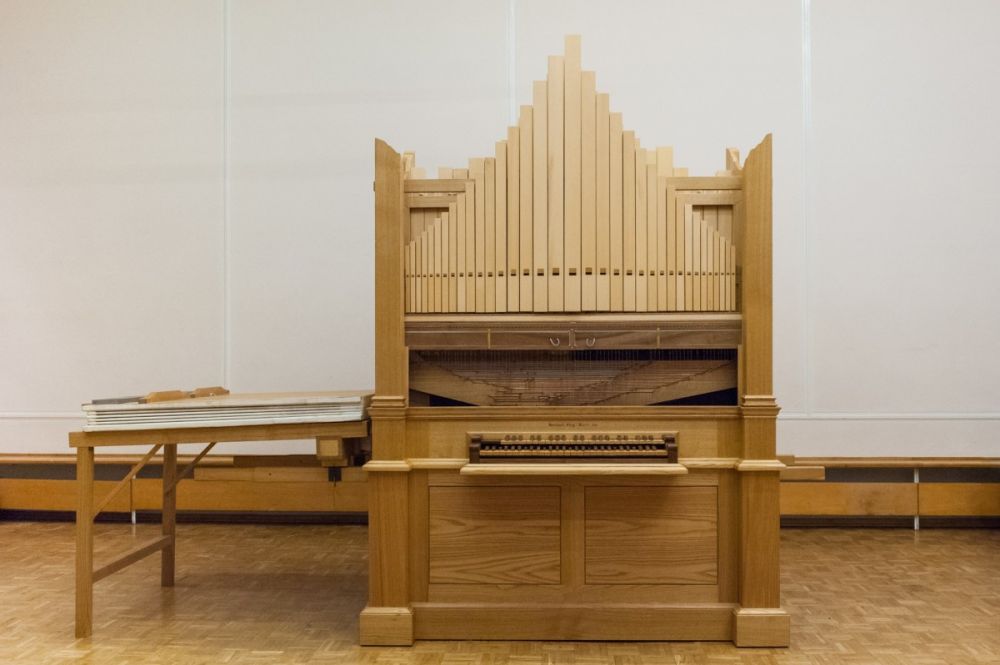
Fig. 1: Reconstruction of Vicentino’s arciorgano by ‘Studio31’ and Bernhard Fleig, Basel 2016 (Photo: Susanna Drescher).
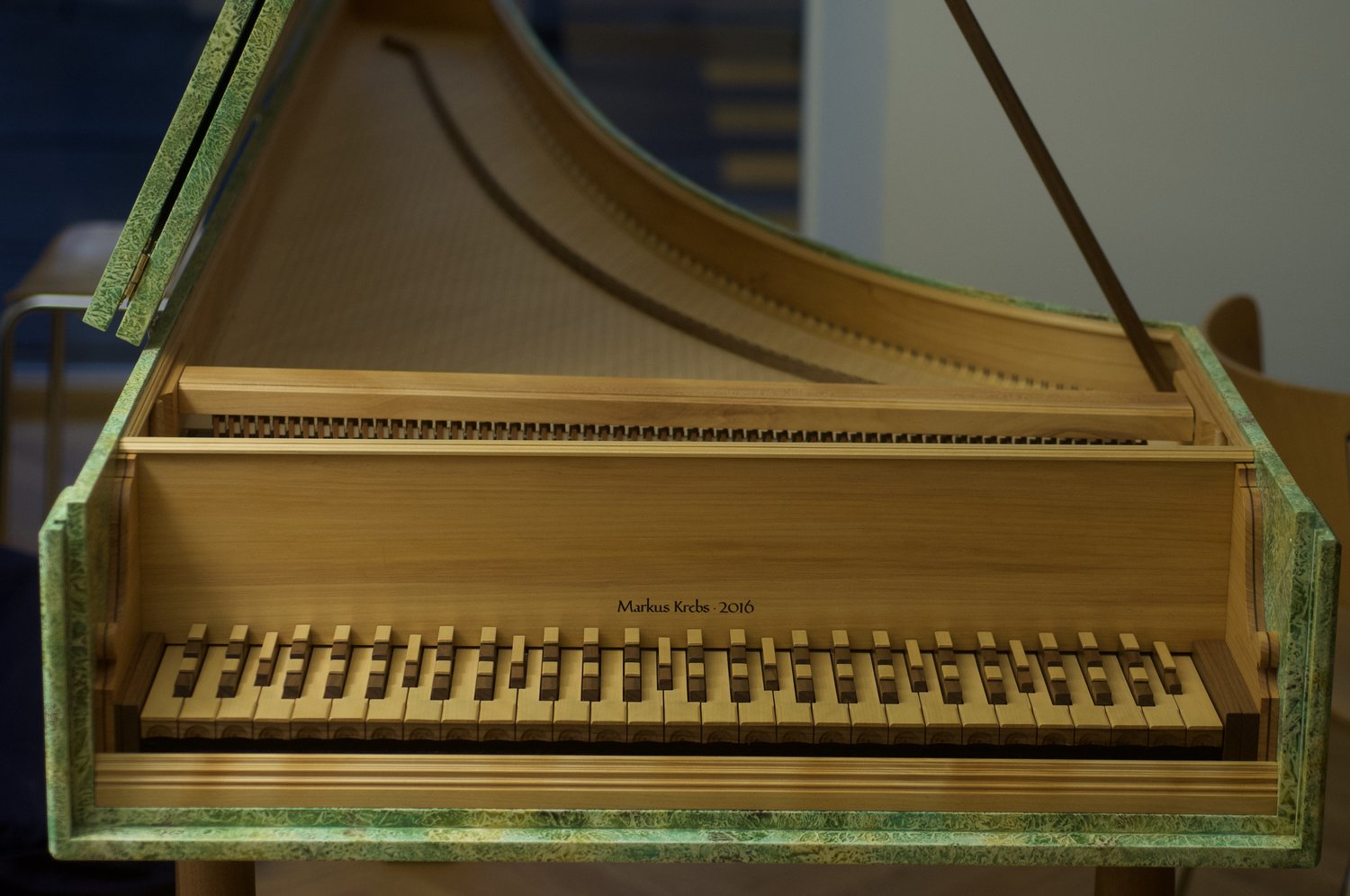
Fig. 1: Reconstruction of the clavemusicum omnitonum by ‘Studio31’ and Markus Krebs, Schaffhausen 2016 (Photo: Susanna Drescher).
Don Nicola Vicentino dei Vicentini (Fig. 3), as he called himself, was probably born in Vicenza in 1510 (but this is not certain) and he must have been active in Venetian circles in which the ancient genres and their potential for modern music were discussed, especially in the circle of Willaert, as whose pupil he describes himself.4 In Venice, he applied in 1549 for a printing privilege for music ‘in the two genera (long ago lost), that is, the enharmonic and chromatic’ (‘de li dui generi [gia tanto tempo persi] cioe henarmonico et cromaticho’).5 He explicitly states that he sings and plays them (‘cantar et sonar’), which suggests the existence of an instrument capable of producing the fine subdivisions of the octave in instruments, and not only in singing.
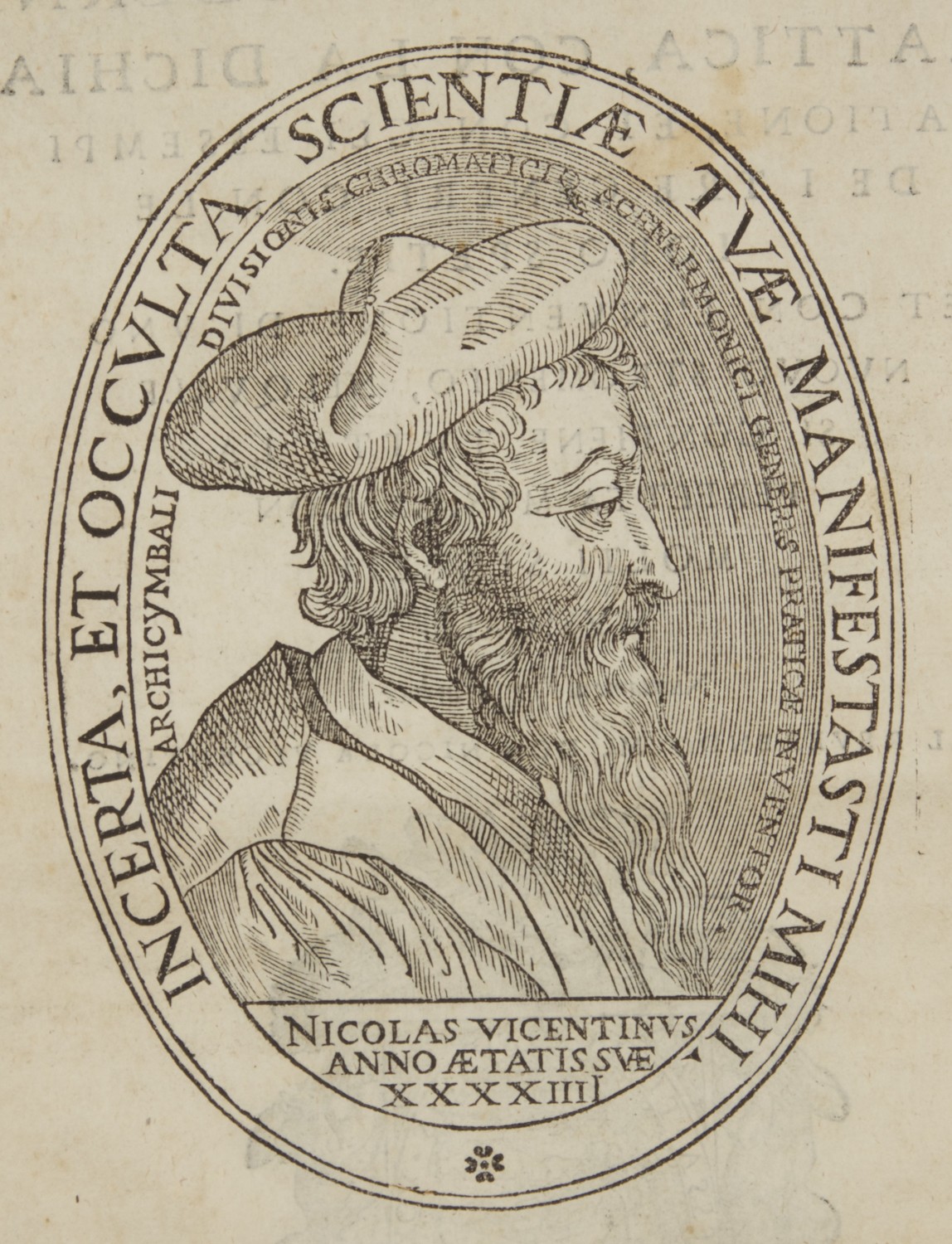
Fig. 3: Portrait of Nicola Vicentino dei Vicentini at the age of 44; frontispiece of Vicentino, L’antica musica, fol. [A1v].
This specialisation led him to Rome in the service of the powerful cardinal Ippolito II d’Este, who was ‘papabile’ several times, and the famous dispute with Vicente Lusitano in the spring of 1551. This dispute – behind which also lay a power struggle between competing cardinals –, which Vicentino is known to have lost, influenced and inspired the publication of his notorious treatise L’antica musica ridotta alla moderna prattica (Rome: Antonio Barrè 1555). According to Claude Palisca, this was ‘one of the most famous books in the history of music theory and one of the least read’.6
The colophon of the treatise is dated the day after the election of Pope Paul IV, an ardent opponent of Vicentino’s patron Ippolito d’Este, who was immediately sent into exile. Vicentino had to leave Rome together with his patron, never to return, which could explain the failed ‘marketing’ of slightly differing printed versions and editions of his voluminous treatise. Vicentino’s further life is irrelevant for the topic of this paper, and we do not know all his later positions apart from his being maestro di cappella in Venice, Vicenza and then in Milan, where he was called by Cardinal Carlo Borromeo; he died there of the plague in 1577.
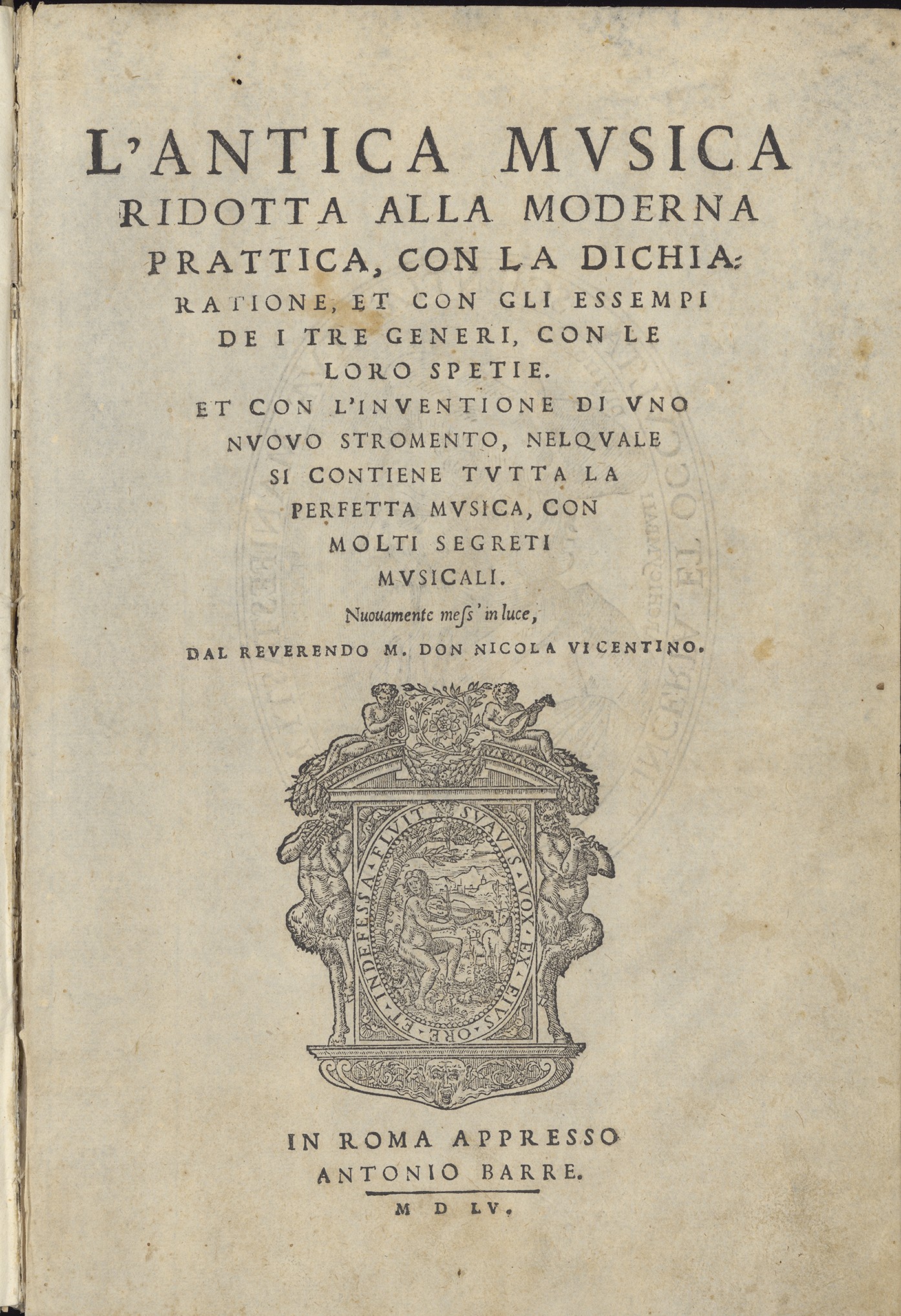
Fig. 4: Titlepage of Vicentino, L’antica musica, fol. [A1r].
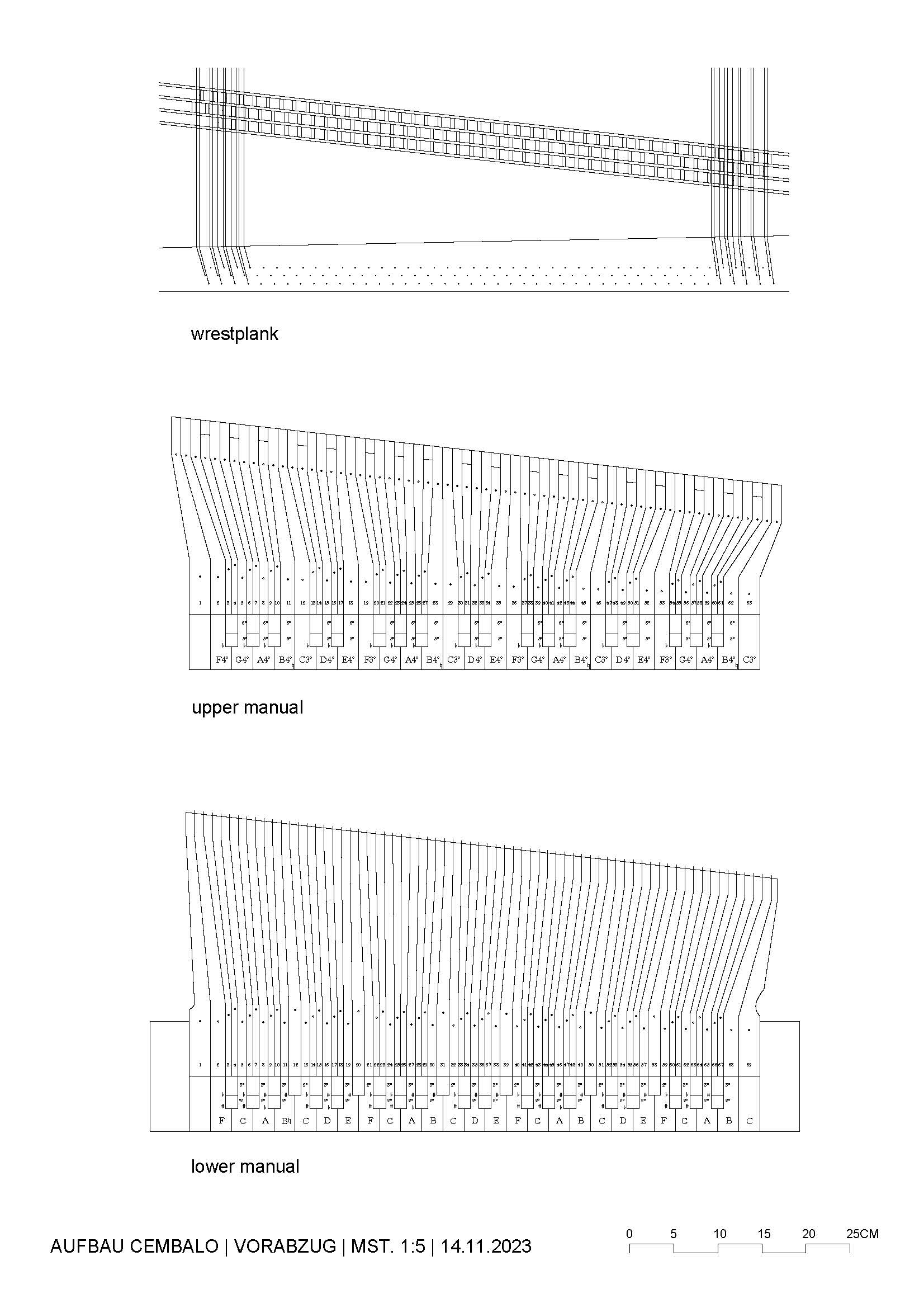
L’antica musica is a lavishly printed and extensive treatise of 152 folios in small folio format, dedicated to Vicentino’s patron Ippolito d’Este (Fig. 4). The title ‘Ancient music adapted for modern practice’ very clearly describes its content, although this title was and still is often misunderstood; it is not a treatise on music theory, or more precisely a scholarly contribution to the music theory of antiquity, on the contrary, Vicentino was interested only in the ‘moderna prattica’ and accordingly he writes about many aspects of the musical practice of his time. He also provides rare first-hand information about composition and performance practice of conventionally composed music. But at the centre is ‘nostra prattica’, by which he means above all the use of a much larger number of pitches. Vicentino calls these the ‘gran ricchezza de i gradi’ – ‘the great wealth of steps’, embedded within the demands of the polyphony of his time, which he made audible and measurable in the form of a musical instrument, his so-called archicembalo.7 This instrument is highlighted prominently on the title page of the treatise (cf. Fig. 4) announcing the invention of a new instrument, which contains within it all perfect music, with many musical secrets (‘con l’inventione di uno nuovo stromento, nelquale si contiene tutta la perfetta musica, con molti segreti musicali’). One of the six books of the treatise is devoted to the practice of the instrument, he calls archicembalo (‘sopra la Prattica del stromento, da lui detto Archicembalo’).8 At the beginning of this book, Vicentino describes in detail how to build the harpsichord with 36 pitches in the octave with very practical building instructions, including three foldout woodcuts for the instrument builder with the design of the keyboard, keys and key-lever, and the wrestplank with the position of the tuning pins and jack guides (Fig. 5). With these detailed specifications an archicembalo can be built by every experienced instrument maker (‘ogni Prattico de fare stromente’), as Vicentino claims.9 But why build an archicembalo at all?
Several attempts have already been made to answer this question in the secondary literature, wherein it becomes evident that a certain obsession with tunings and temperaments has been cultivated within the field of musicology. I now would like to present a few prominent stances:
Patrizio Barbieri, in his magistral study on Enharmonic instruments and music, asks the question ‘Why enharmonic keyboards?’ and gives three categories:10
- transpositions of church modes and the increasing spread of their ‘major mode’ version
- the revival of the ancient Greek enharmonic genus
- the ‘stylus metabolicus’, later ‘enharmonic of the Italians’ (for which I coined the term ‘vieltönig’ as a tag for this context – see below).
For Vicentino, Barbieri explicitly refers here to the latter’s intention of a ‘revival of chromatic and enharmonic genera’; at the same time he criticises that Vicentino ‘did not strictly respect the original tetrachordal form of the three Greek genera, but instead mixed them together’.11 Barbieri goes on to present the archicembalo in detail in the chapter ‘ETS 31: Vicentino’s archicembalo’ (‘ETS’ stands for ‘Equal Tempered System’ also known as ‘EDO’ or ‘Equal Division of the Octave’), i.e. as an instrument with which a closed cycle of fifths is possible through ‘an equal multiple division’ of the octave into 31 equal parts. Here Barbieri cites the description of the archicembalo by Francesco de Salinas in De musica libri septem (Salamanca: Mathias Gastius, 1577):
à quibusd[am] magni nominis Musicis in precio habitum, & vsu receptu[m]; eò quòd omnis in eo sonus habet omnia interualla, atque omnes consonantias (vt sibi videntur) infernè, & supernè, & post certam periodum ad eundem, aut æquiualentem sibi sonum post 31 interualla reditur.12
(‘esteemed and accepted in practice by certain famous musicians, for the fact every one of its notes can command any interval and any consonance – as they claim – both above and below, and that every interval, after 31 repeats, returns with a specific periodicity to the starting note or to one equivalent to it’.)
But in Vicentino’s treatise, the possibility of a circular tuning does not seem to have interested him; there is no mention of this anywhere, unlike in later research.
In a similar direction to Barbieri, Nicolas Meéus in his New Grove article on ‘Enharmonic keyboard’ writes:
Such keyboards may serve various purposes, to make available mean-tone temperament in tonalities involving more than two flats or three sharps; to make possible the playing of a number of chords in Just intonation; and to produce microtones.13
Meéus explicitly assigns Vicentino’s approach to the third category:
Nicola Vicentino […] appears to have been one of the very few Renaissance or Baroque theorists to realize that the best purpose of an enharmonic keyboard would be the playing of microtones, and some of his compositions use the quarter-tone as a melodic interval.14
This deduction seems to me to be ahistorical, since the concept of ‘microtones’ (as well as ‘quartertones’) was only developed in much later times (especially in the 20th century) and is inappropriate in the thought and sound world of the 16th century. This is why I have argued to use less historically loaded terms for this purpose, i.e. ‘vieltönig’ (literally, ‘many-toned’ or ‘multitonal’) or ‘Vieltönigkeit’ (as a noun) to describe music that, in its conceptual and structural design, employs more than twelve pitches per octave – leaving open for the time being what the concrete occasion for the respective ‘Vieltönigkeit’ is.15
A few years before the publication of Barbieri’s book, Rudolf Rasch asked the same question and begins his answer with the earliest instrument known to him, the archicembalo.16 Rasch begins with a description of Vicentino’s approach. This differs from that of the ancient tetrachords, i.e. with the division of the diatonic semitone by means of the chromatic semitone, resulting in either the sequence chromatic semitone – diesis, or diesis – chromatic semitone. In the end this leads to a division of the diatonic semitone into three more or less equal intervals. This concept had enormous consequences, ‘since it makes the generalization over the entire keyboard possible’. Rasch concludes:
So Vicentino’s motivation for building the archicembalo may be summarized in the following succinct phrase: the archicembalo was constructed in order to make audible the enharmonic pitches of Greek music theory.17
This is more cautious than Barbieri’s formulation, but leaves open the question of what Vicentino intended with the ‘enharmonic pitches of Greek music theory’, apart from the fact that Vicentino knew and used many other smaller ‘gradi’ (or steps) which he called ‘propinque’ or even ‘propinquissime’ (see below), that cannot be systematized, nor has Vicentino tried to do so.
This leads to the classic ‘chicken-and-egg question’: did Vicentino design his instrument after he had developed his ideas and musical concepts based on the revival of ancient genera? Or vice versa, i.e. did he first develop the instrument and then its possible uses? In my attempt to answer this question, I propose to approach it differently and place Vicentino’s perspective at the centre. In addition, I would like to separate the egg from the chicken (so to speak), or the hardware from the software, i.e. the instrument from what Vicentino did with it – and also ask what was before the chicken or the egg.
The motivation and beginning of Vicentino’s interest can be traced back to the then current and fashionable interest in the Greek genera, which is documented since the end of the 15th century, especially in Italy.18 In this context, we should consider Vicentino’s teacher Adrian Willaert and the discussions about antique genera and their use in Venice and its environs. A prime example of this are letters in the Spataro correspondence from autumn 1532. They report conversations in the house of the English ambassador in Venice in the presence of Willaert, discussing the question, if ‘in view of the marvellous effects ascribed to ancient Greek music – compositions could be written in other than the common diatonic genus’ (‘se el se poteva comporre canti per altri generi che per el genere diatonico usitato’).19 It is therefore quite conceivable that Willaert’s circle actually tried to use the other genera in practice and to explore their musical possibilities.
Interest in the Greek genera is also reflected in the earliest document of Vicentino’s activities in this regard, namely the Venetian printing privilege of 1549 as mentioned above, and also in the title lines of his treatise, ‘con la dichiaratione, et con gli essempi de i tre generi, con le loro spetie’ (‘with an explanation and examples of the three genera with their species’, cf. Fig. 4). But reading Vicentino’s treatise, he already states in his extremely short book on theory (covering only 8 pages of 270 pages in all), that much of the music theory of the ancient is not applicable to today’s practice, which is why he does not discuss it (‘Hauiamo lasciato à dire tutte queste cose per non ci essere hoggi utile alcuno alla nostra prattica […]’).20 Noteworthy is Vicentino’s observation that the qualities of contemporary music, which are in principle higher, cannot come to the fore because among other reasons it is heard too often and ‘because of its abundance, it is afforded little esteem’ (‘& ne loro tempi erano tenute bonissime, per il che si conclude molto piu sapersi di Musica ne I nostri tempi che innanzi, ma per la abbondanza di quella esserne fatta poca stima’).21
Vicentino describes the three genera and their species only to motivate the multiplicity of accidentals and thus the ‘gradi’ (steps) – introduced shortly after the beginning of the following First Book of Musical Practice. In a spectacular list at the end of this book called the ‘arbore delle proportoni & delle diuisioni’ (fol. 26v; Fig. 6), he introduces not only the smaller subdivisions of the semitono, for which he introduced what he calls his ‘inuentione’ (i.e. invention or device) of dots placed above the notes designating a half of a semitono minore,22 but also different types of diesis and an even smaller comma (as a kind of smallest unit).
Remarkable here is the category of ‘propinque’ (literally close or related), which means that the step is a little bit larger (by about a ‘diesis enarmonico minore’) than the ‘normal’ step and can be used for aesthetic reasons. In the Vicentino21-team we called this ‘precise, but not exact’.23
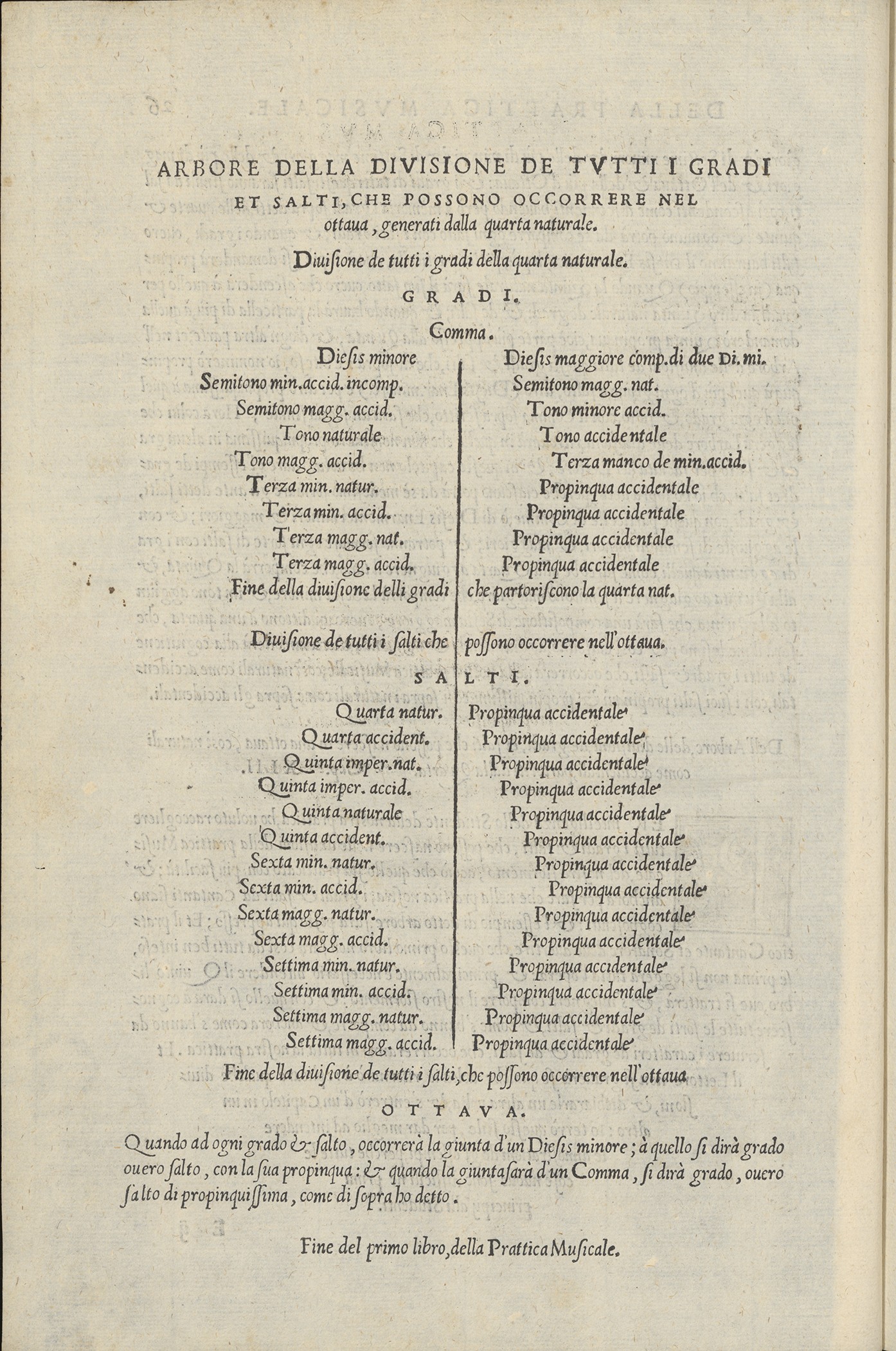
Fig. 6: ‘arbore delle proportoni & delle diuisioni’ in Vicentino, L’antica musica, I.42 (fol. 26v).
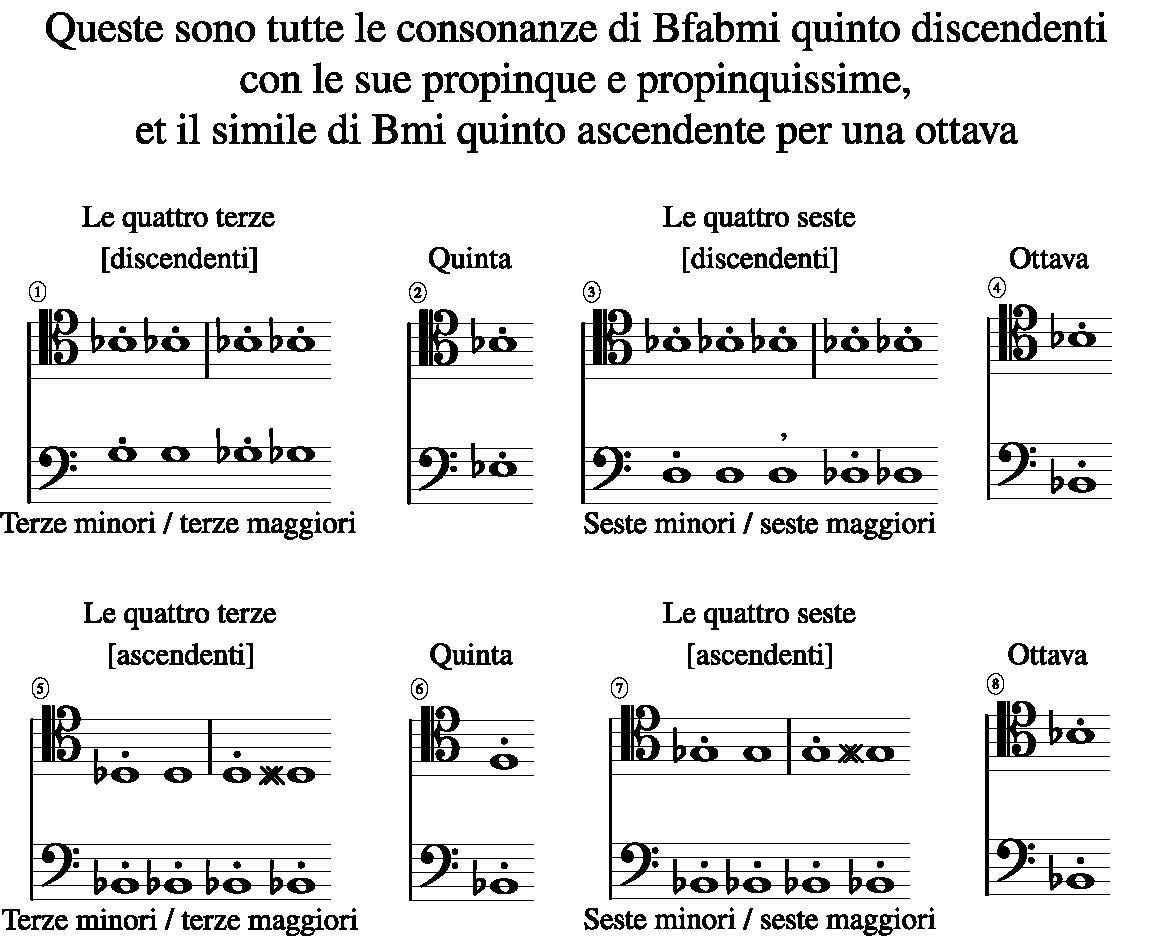
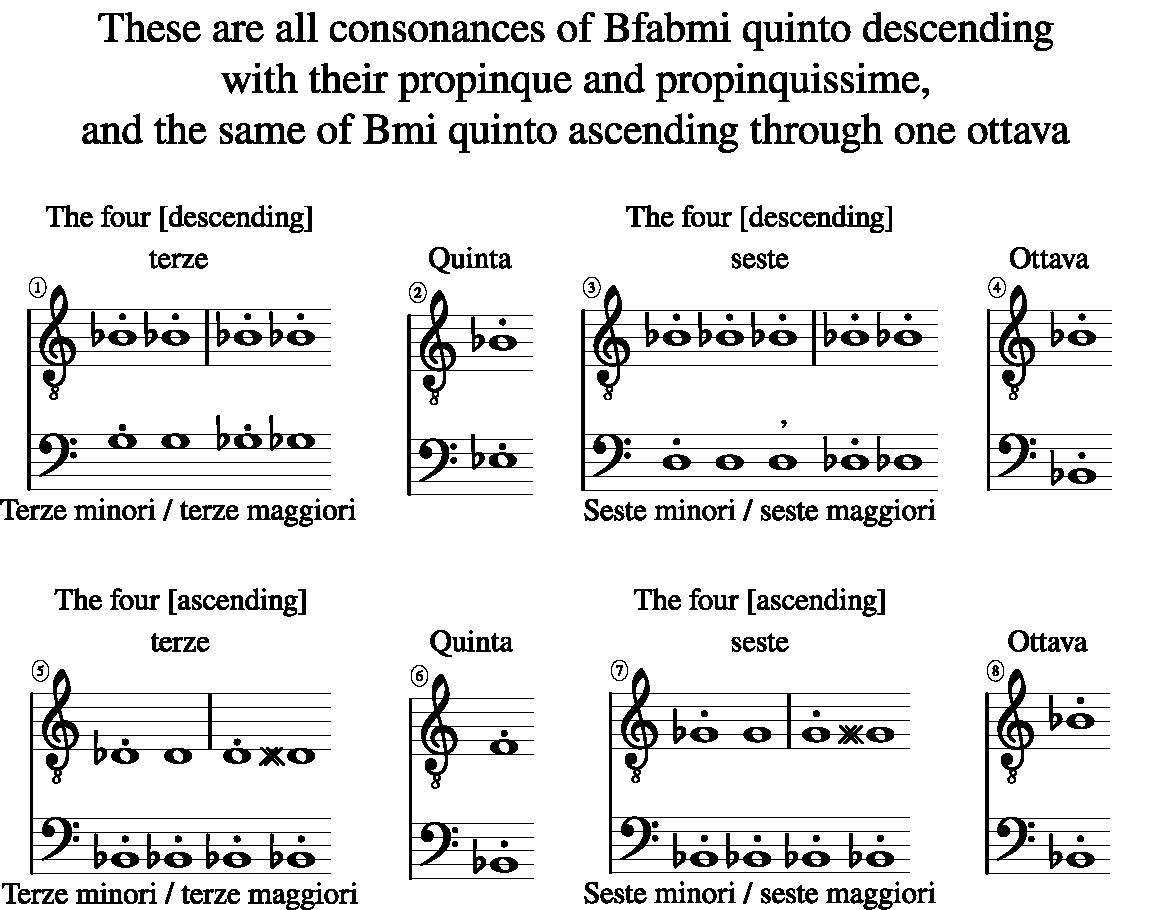
This supposed terminological blurring clearly demonstrates how a concept is pragmatically expanded by the reality of the instrument and access via the keyboard, unlocking a new kind of aesthetic potential. At the same time, it can also be experienced and understood in practice. Accordingly, Vicentino ‘declines’ all possible pitches and intervals of his instrument in the fifth and last book ‘On the Practice of the Instrument, called by him Archicembalo’ (‘sopra la prattica del stromento, da lui detto Archicembalo’) presenting them in long lists of note examples. If you have the instrument at hand, this huge tonal variety can also be understood and experienced through the senses (Fig. 7 from chapter V.38) with ‘all the consonances of Bfa♭mi acuto quinto [♭Ḃ] descending with their propinque and propinquissime, and the same of Bmi quinto [♭Ḃ] ascending through an ottava’ [‘tutte le consonanze di B fa b mi quinto discendenti con tutte le sue propinque & propinquissime, & il simile di B mi quinto ascendente per una Ottaua’]).24 The reader is invited to visualise the individual intervals through the music examples, to play them on the instrument, and thereby to experience and to memorise them sensually.
Fig. 7: ‘tutte le consonanze di B fa b mi quinto discendenti con tutte le sue propinque & propinquissime, & il simile di B mi quinto ascendente per una Ottaua’, in Vicentino, L’antica musica, V.38 (fol. 118v) in the edition of Vicentino21: a) digital representation of the original music example and b) transcription in modern notation and clefs with c) video of the presentation on the arciorgano (Johannes Keller – Vicentino21).
a)
b)
c)
Video i: The four [descending] terze Video ii: Quinta Video iii: The four [descending] seste Video iv: Ottava Video v: The four [ascending] terze Video vi: Quinta Video vii: The four [ascending] seste Video viii: OttavaThe key point is that, with reference to his archicembalo, all these intervals are declared both singable and usable. Vicentino has, so to speak, created a taxonomy of all the intervals that can be distinguished and heard through his instrument, effectively creating a kind of acoustical microscope. Immediately upon introducing these many intervals and steps, Vicentino refers to the explanation and examples in the Fifth Book, stating that
Et tal prattica non ti paia strana in questo principio, perche queste diuisioni meglio l’intenderai nel quinto libro da molti essempi accompagnato sopra tal diuisione, & più ti farà capace il nostro instrumento, detto Archicembalo, che ti mouera più l’essempio accompagnato dalla prattica, che gli essempi scritti & accompagnati con parole non fanno.25
(‘This practice should not seem strange to you in this beginning, as you will better understand these divisions [later] in the Fifth Book from many accompanied examples on this division. And our instrument, called the archicembalo, will make you more competent, because an example accompanied by practice will sway you more than written examples accompanied by words.’)
A few lines later, in the context of teaching how to sing the subtle steps via scaled-down traditional solmisation he explains the ‘Vieltönigkeit’ in relation to the keyboard of his instrument:
& non sarà fuore della regola Cromatica nominare ut. re. mi. fa. sol. la. in ogni riga, & in ogni spatio, & come le mutationi uengano piu commode al cantante; Ma queste mutationi, lo nostro instrumento li certificarà, come in esso appareno, che in ogni luogo delli tasti si può dir ut. re. mi. fa. sol. la. scritti con li segni delli semitoni, & delli Diesis Enarmonici26
(‘And it would not be outside the chromatic rule to utter ut, re, mi, fa, sol, la in every line and in every space [sc. of the staves], so that the mutations become more convenient for the singer. But our instrument [archicembalo] will confirm these mutations by the way they appear on it, because in every position of the keys one can say ut, re, mi, fa, sol, la, written with the signs of the semitoni and of the diesis enarmonici.’)
Perhaps this can be misunderstood as a kind of technical extension of the tonal range resulting from the design of the instrument and its keyboard. But Vicentino goes much further in supporting the use of all intervals aesthetically. Already in the First Book of Musical Practice, he muses on the imperfection of things and the duty of every good artisan, to adorn the defects through their skill:
così auiene nella prattica Musicale, che si uede l’ordine naturale mancare in molte cose, et con gli accidenti, di aggiugnere et minuire alli gradi naturali, si fà un grandissimo acquisto, di poter usare in ogni luogo, ogni sorte di consonanze, come si uedrà nel nostro Archicembalo, quanta ricchezza de gradi, in quello si hà racquistata, et così anchora nella prattica del cantare, come per questa mia fatica la esperienza ne farà ogniuno certissimo, et se tal abondantia de gradi è tanto utile: […]27
(Thus it happens in the musical practice that one sees the natural order is lacking in many things, and with the accidentals for adding to or decreasing [the number of] the natural steps, one has made a very great acquisition, which one can use any place and for any sort of consonance; just like one sees in our archicembalo what a wealth of steps has been recovered in it, and also in the practice of singing, where due to my effort, anybody may make the most certain experience of whether the abundance of steps is so useful.)
Elsewhere, in the context of composing not only in eight diatonic modes (or scales), but also in eight chromatic and enharmonic modes, Vicentino writes that the composer
haurà modi di comporre con tanta ricchezza de gradi, & di uarie spetie insieme adunati, con uarietà di procedere, che sarà cosa marauigliosa all’Oditore, per le tante differenze de gradi commisti.28
(‘will have ways of composing with so great a wealth of steps and of various species gathered together, with such a variety of ways to proceed, that it will be a marvelous thing for the listener, because of the mixture of so many different steps.’)
This is also where the listeners come into play, because, according to Vicentino, the purpose of the music is ultimately to convince them and to satisfy the ear (‘adunque il fine della Musica è di satisfare à glʼorecchi.’).29 To explore this variety of intervals and gain practical musical experience, an appropriately equipped instrument, the archicembalo or arciorgano, is needed, perhaps comparable to a catalyser or interface.30
Although concrete evidence is sparse, presumably earlier instruments (monochords, as well as keyed monochords, i.e. clavichords, and harpsichords) were set up for the practical implementation of the genera, as well as for acoustic reference or as research devices.31 In the literature, a ‘chordotonum’ is mentioned by Franchino Gaffurio in his treatise Practica musica of 1496, perhaps referring only to a hypothetical monochord designed for finding the notes of the enharmonic genus.32 However, a real instrument was the ‘manocordio’, described by John Hothby, a Lucca-based English theorist and composer, who died in 1487. It featured additional red upper keys (‘tasti rossi’) for so-called enharmonic notes (such as a#, e#, or b#), alongside the normal ‘tasti bianchi’ for the diatonic and ‘tasti neri’ for the chromatic keys.33 Hothby explained the necessity of these additional keys in relation to the different sizes of the semitone (semitonio maggiore, semitonio minore, semitonio minime) and connected them to the chromatic and enharmonic genera, referring to two species of the tetrachord as described in ancient Greek theory. He referred to his clavichord as a ‘true master of all music’ (‘el monochordia e vero maestro di tuta la musica’) because, in Hothby’s view,34 of its ability to produce all the necessary pitches for any kind of music. However, Hothby oriented himself according to Pythagorean tuning, which made the instrument unsuitable for musical practice in his time – in distinct contrast to Vicentino.35
The basic design of the keyboard as described by Hothby would later be called ‘cimbalo cromatico’.36 Although it seems obvious to assume that split keys – used sporadically for tuning and temperament reasons on keyboard instruments from the second half of the 15th century – served as a makeshift solution to the limitation of only 12 keys per octave, they were also likely applied for all semitones on a keyboard. However, there is no concrete evidence of such an instrument before the middle of the 16th century and thus before the activities of Vicentino. Zarlino in 1558 claimed that the construction of such an instrument occurred as early as 1548.37 But he is not necessarily a credible witness here, as he was also a student of Willaert and an aspirant to succeed him, clearly in competition with Vicentino, who had published his treatise three years prior.38 In any case, Vicentino can claim to be the first to have combined two cimbali cromatici for his archicembalo by placing, so to speak, one on top of the other.
The instrument thus functioned as a catalyst, triggering and accelerating further development by making concrete listening experiences possible. It also made the many intervals and steps nameable and accessible in a very practical way via the keyboard, functioning here as an interface. On this basis, Vicentino developed new musical and previously unheard-of possibilities for ‘nostra prattica’. It was neither an interest in ETS31, in microtones or quarter-tones, nor the antiquarian revival of chromatic and enharmonic genres, that led him to ‘invent’ the archicembalo, although these latter were probably already in Vicentino’s mind earlier. But as soon as the instrument was available, the concrete experiences made completely different musical realities possible. This is also confirmed by the arciorgano built in 1561, as can be seen from the advertising leaflet published for it (Fig. 8).39
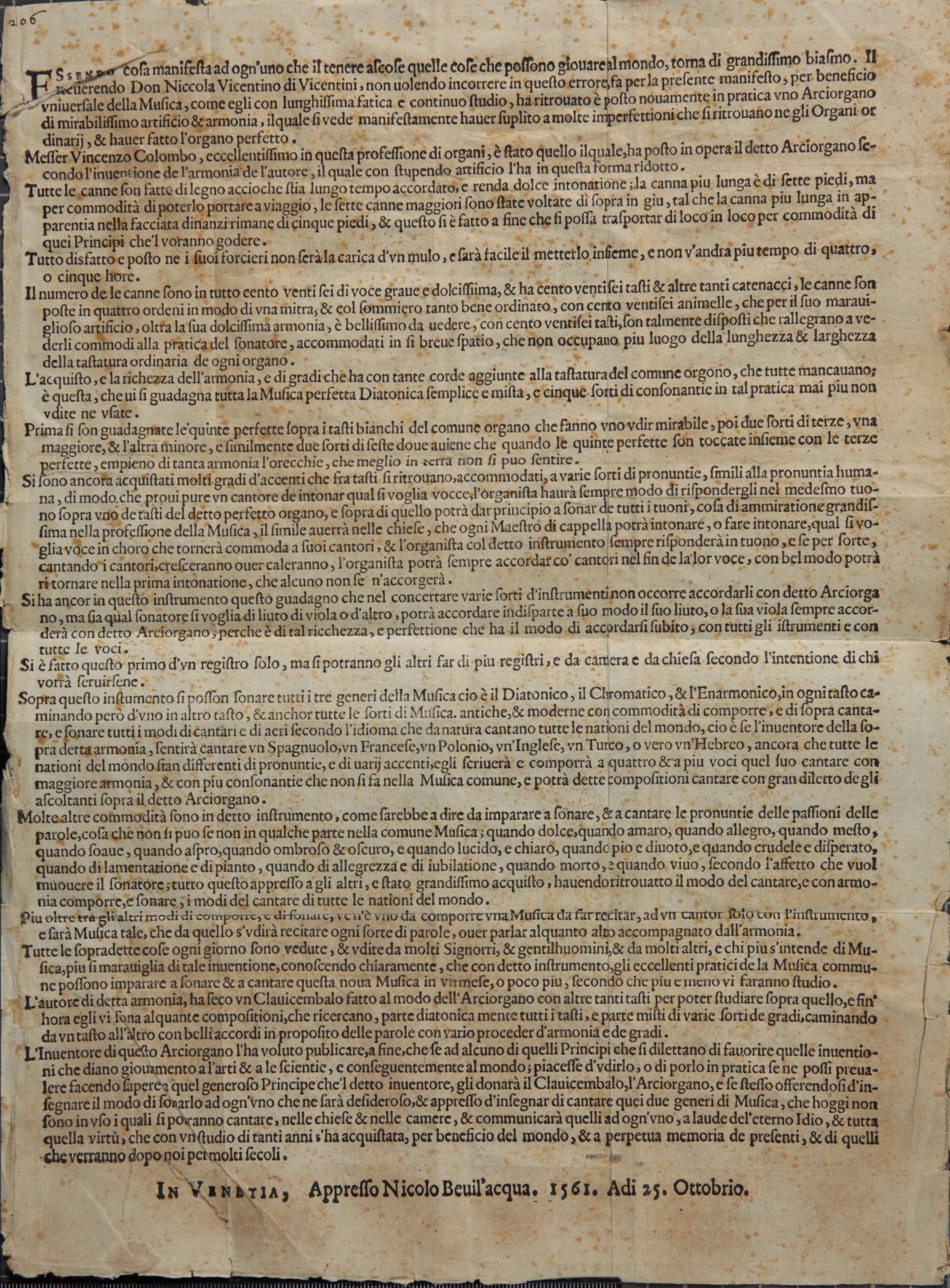
Fig. 8: Advertising sheet of the arciorgano, Venice 1561 (Museo internazionale e biblioteca della musica di Bologna, C.32).
In the list of advantages, the three genera are mentioned only briefly and in passing; where at the centre of this ‘organo Perfetto’ are (again and to mention only a few)
- ‘the richness of armonia, and of steps it has with so many pitches added to the keyboard of the common organ, that they [the common organs] all lack’ (‘la richezza dell’armonia, e di gradi che ha con tante corde aggiunte alla tastatura del comune orgono, che tutte mancauano’; line 19)
- the ‘many gradations of accents which can be found among the keys, accommodated to various kinds of pronunciation, similar to the human pronunciation’ (‘molti gradi d’accenti che fra tasti si ritrouano, accommodati, a varie sorti di pronuntie, simili alla pronuntia humana’; line 25)
- ‘to learn to play, and to sing the pronunciations of the passions of words’ (‘da imparare a sonare, & a cantare le pronuntie delle passioni delle parole’; lines 45-46)
- and ‘to set a music to be recited by a single singer with the instrument (‘da comporre vna Musica da far recitar, ad vn cantor solo con l’instrumento’; line 51).40
In addition to the other advantages emphasized by Vicentino — such as the ability to better accompany singers and other instruments with flexible tuning, allowing performers to move beyond the constraints of meantone tuning when using a keyboard instrument, and adjust slightly to enhance the tuning of certain chords — the goal of linking music theory and practice is also clear here. His ideas resonate far into the future and, in my opinion, provide more than enough motivation to build an archicembalo or arciorgano.
Endnotes
-
<https://www.fhnw.ch/de/forschung-und-dienstleistungen/musik/hochschule-fuermusik-klassik/projekte/studio-31> (accessed on 26 August 2024); <https://www.projektstudio31.com/> (accessed on 26 August 2024); see also the contributions in Martin Kirnbauer (ed.), Zwischen Vieltönigkeit und Mikrotonalität. Materialen und Beiträge aus dem Forschungsprojekt ‘Studio31’, Schola Cantorum Basiliensis Scripta 10 (Basel, 2024), <https://schwabe.ch/Martin-Kirnbauer-Zwischen-Vieltoenigkeit-und-Mikrotonalitaet-978-3-7965-5193-2>.↩︎
-
Cf. Johannes Keller, ‘Das Basler Arciorgano und Clavemusicum omnitonum’, in: Kirnbauer (ed.), Zwischen Vieltönigkeit und Mikrotonalität (see n. 1), 137–70; in particular to the clavemusicum omnitonum see David Gallagher, ‘Vicentino’s missing music’, in: ibid., 9–84, at 82–4.↩︎
-
<https://www.fhnw.ch/plattformen/vicentino21/> (accessed on 26 August 2024); <https://vicentino21.ch/> (accessed on 26 August 2024). Unless otherwise stated, all translations are by the author or ‘Vicentino21’, when quoting from Vicentino’s texts..↩︎
-
For references for the following biographical information see Davide Daolmi, ‘Vicentino, Nicola’, in: Dizionario Biografico degli Italiani 99 (2020), <https://www.treccani.it/enciclopedia/nicola-vicentino_(Dizionario-Biografico)/> (accessed on 26 August 2024); Martin Kirnbauer, ‘Nicola Vicentino (1510–1577) – Ein biographischer Abriss’, in: idem (ed.), Zwischen Vieltönigkeit und Mikrotonalität (see n. 1), 3–8.↩︎
-
Richard J. Agee, ‘The Privilege and Venetian Music Printing in the Sixteenth Century’, PhD diss., Princeton University, 1982, 101–2, 179, 222–3; the quote on p. 202.↩︎
-
Claude V. Palisca, ‘Foreword by the Series Editor’, in: Nicola Vicentino, Ancient Music Adapted to Modern Practice, trans. by Maria Rika Maniates, Music Theory Translation Series (New Haven/London, 1996), vii–viii, at vii.↩︎
-
Nicola Vicentino, L’antica musica ridotta alla moderna prattica (Rome: Antonio Barrè 1555), III.44.2 (fol. 61v); Vicentino’s treatise is cited according to the following principle: Book.chapter.paragraph-subparagraph (fol. indication), as it is also used in the digital edition Vicentino21 (<https://vicentino21.ch>).↩︎
-
Ibid.,V.1.title (fol. 99r).↩︎
-
Ibid., V.2.1 (fol. 100r).↩︎
-
Patrizio Barbieri, Enharmonic Instruments and Music 1470–1900. Revised and Translated Studies, Tastata 2 (Latina, 2008), 45–52.↩︎
-
Ibid., 49.↩︎
-
Ibid., 308–24, at 308; in Salina’s treatise on p. 164, <http://bdh-rd.bne.es/viewer.vm?id=0000046156&page=1> (accessed on 20 Dec. 2024).↩︎
-
Nicolas Meeùs, ‘Enharmonic keyboard’, in: New Grove2, xiii (London, 2001), 248–50, at 248. Similar explanations can also be found in Volker Rippe, ‘Nicola Vicentino – sein Tonsystem und seine Instrumente: Versuch einer Erklärung’, in: Mf 34 (1981), 393–413, at 413, or Franz Josef Ratte, Die Temperatur der Clavierinstrumente: Quellenstudien zu den theoretischen Grundlagen und praktischen Anwendungen von der Antike bis ins 17. Jahrhundert, Veröffentlichungen der Orgelwissenschaftlichen Forschungsstelle im Musikwissenschaftlichen Seminar der Westfälischen Wilhelms-Universität Münster 16 (Kassel etc., 1991), 376 (who on pp. 387–8, however, also names the ‘manifold possibilities of differentiation’ arising in the archicembalo with ‘affective qualities’ for ‘imitar le parole’).↩︎
-
Meeùs, ‘Enharmonic keyboard’ (see n. 13), 249.↩︎
-
Cf. Martin Kirnbauer, Vieltönige Musik: Spielarten chromatischer und enharmonischer Musik in Rom in der ersten Hälfte des 17. Jahrhunderts, Schola Cantorum Basiliensis Scripta 3 (Basel, 2013); idem, ‘“Vieltönigkeit” instead of Microtonality. The Theory and Practice of Sixteenth- and Seventeenth-Century “Microtonal” Music‘, in: Experimental Affinities in Music, ed. Paulo de Assis, Orpheus Institute Series (Leuven, 2015), 64–90, at 64–7, <https://library.oapen.org/handle/20.500.12657/32935> (accessed on 14 August 2024)>.↩︎
-
Rudolf A. Rasch, ‘Why were enharmonic keyboards built? From Nicola Vicentino (1555) to Michael Bulyowsky (1699)’, in: Chromatische und enharmonische Musik und Musikinstrumente des 16. & 17. Jahrhunderts – Beiträge zu einem Kolloquium der Schola Cantorum Basiliensis, Hochschule für Alte Musik Basel, und dem Musikwissenschaftlichen Institut der Universität Basel am 9. April 2002, ed. Thomas Drescher and Martin Kirnbauer, in: Schweizer Jahrbuch für Musikwissenschaft 22 (2002), 11–250, at 35–93 (in particular 37–43), <https://www.e-periodica.ch/digbib/view?pid=sjm-004%3A2002%3A22 – 40>.↩︎
-
Rasch, ‘Why were enharmonic keyboards built?’, 43.↩︎
-
See for instance Claude V. Palisca, Humanism in Italian Renaissance Musical Thought (New Haven/London, 1985); Karol Berger, Theories of Chromatic and Enharmonic Music in Late 16th Century Italy, Studies in Musicology 10 (Ann Arbor, 1980) [PhD diss., Yale University, 1975]; David R.M. Irving, ‘Ancient Greeks, world music, and early modern constructions of Western European identity’, in: Studies on a Global History of Music: a Balzan Musicology Project, ed. Reinhard Strohm, SOAS Musicology Series (London/New York, 2018), 21–41.↩︎
-
Bonnie J. Blackburn, Edward E. Lowinsky and Clement A. Miller (eds.), A Correspondence of Renaissance Musicians (Oxford, 1991), 548–62, (No. 46) at 548.↩︎
-
Vicentino, L’antica musica, libro della theorica.16.5 (fol. 6v).↩︎
-
Ibid.↩︎
-
‘& anchora l’inuentione, ch’io ho fatta nel scriuere sopra le note con il punto’, I.7.6 (fol. 14v). It should be noted that for him, of course, the whole tone is divided into two unequal semitones, one ‘maggiore’ and the other ‘minore’, which at the same time ensures that his ideas were consistent with the music of his time, which was tuned in meantone – to which his claim ‘ridotta alla moderna prattica’ probably also refers.↩︎
-
This category is only briefly explained in I.18.2-3 (fol. 21v–22r), but frequently appears in the catalogue of all intervals available on the archicembalo in the Fifth Book.↩︎
-
Vicentino, L’antica musica, V.38 (fol. 118v).↩︎
-
I.5.10 (fol. 11v).↩︎
-
I.5-1.5 (fol. 12r).↩︎
-
I.30.1 (fol. 22v).↩︎
-
III.49.5 (fol. 65v).↩︎
-
IV.40.5 (fol. 93v).↩︎
-
Cf. Johannes Keller and Martin Kirnbauer, ‘Keyboards Adapted to Music vs. Music Adapted to Keyboards: An Essay on “Vieltönigkeit” and Keyboard Instruments’, in: Keyboard Perspectives. Yearbook of the Westfield Center for Historical Keyboard Studies 12 (2019/20), 61–82.↩︎
-
For the broader context see Alexander Rehding, ‘Instruments of Music Theory’, in: Music Theory Online 22/4 (2016), <https://mtosmt.org/issues/mto.16.22.4/mto.16.22.4.rehding.html> (accessed on 24 August 2024).↩︎
-
Franchino Gaffurio, Practica musice (Milan: Guillermus Le Signerre for Johannes Petrus de Lomatio, 1496), fol. [a6v], <https://gallica.bnf.fr/ark:/12148/bpt6k15160772> (accessed on 9 Sept. 2024); see also Irwin Young, The ‘Practica musicae’ of Franchinus Gafurius, Translated and Edited with Musical Transcriptions (Madison/Milwaukee/London, 1969), 27, n. 30.↩︎
-
John Hothby, ‘Epistola’ (in: I-Fn Magl.XIX.36), fol. 74–8, at 75v; ed. Albert Seay (ed.), Johannes Hothby: Tres tractatuli contra Bartholomeum Ramum, CSM 10 (Rome, 1964), 79–92, at 83–5.↩︎
-
Hothby, ‘Epistola’, fol. 76v; Seay (ed.), Johannes Hothby, 89.↩︎
-
Bonnie J. Blackburn, ‘Musical Theory and Musical Thinking after 1450’, in: Music as Concept and Practice in the Late Middle Ages, ed. Reinhard Strohm and Bonnie J. Blackburn, New Oxford History of Music III.1 (Oxford, 2001), 301–45, at 324–5; Sigrun Heinzelmann, ‘John Hothby as Innovator: The Solmization System in La Calliopea Legale’, in: Studi Musicali, N.S. 2 (2012), 353–96, at 366–72.↩︎
-
Christopher Stembridge ‘The Cimbalo cromatico and Other Italian Keyboard Instruments with Nineteen or More Divisions to the Octave’, in: PPR 6 (1993), 33–59, <https://scholarship.claremont.edu/ppr/vol6/iss1/> (accessed on 17 August 2024); Denzil Wraight and Christopher Stembridge, ‘Italian Split-Keyed Instruments with Fewer than Nineteen Divisions to the Octave’, in: PPR 7 (1994), 150–81, <https://scholarship.claremont.edu/ppr/vol7/iss2/> (accessed on 17 August 2024); Denzil Wraight, ‘The cimbalo cromatico and other Italian string keyboard instruments with divided accidentals’, in: Chromatische und enharmonische Musik und Musikinstrumente des 16. & 17. Jahrhunderts – Beiträge zu einem Kolloquium der Schola Cantorum Basiliensis, Hochschule für Alte Musik Basel, und dem Musikwissenschaftlichen Institut der Universität Basel am 9. April 2002, ed. Thomas Drescher and Martin Kirnbauer, in: Schweizer Jahrbuch für Musikwissenschaft 22 (2002), 11–250, at 105–34, <https://www.e-periodica.ch/digbib/view?pid=sjm-004%3A2002%3A22 – 110>, and the addition ‘Checklist of Italian Harpsichords and Virginals with Split Sharps’ (2016) <http://www.denzilwraight.com/download.htm> (accessed on 28 August 2024)>; Martin Kirnbauer, ‘Viele Tasten – viele Töne. Das Cimbalo cromatico und musikalische Praxis’, in: Les espaces sonores. Stimmungen, Klanganalysen, spektrale Musiken, ed. Michael Kunkel (Büdingen, 2016), 43–57.↩︎
-
Gioseffo Zarlino, Le Istitutioni harmoniche (Venice: author, 1558), 139–42. Incidentally, the term cimbalo cromatico is not used in the text, but in Zarlino’s estate inventory the instrument is explicitly described as ‘Vn clauiciembalo cromatico’; Isabella Palumbo Fossati, ‘La casa veneziana di Gioseffo Zarlino nel testamento e nell’inventario dei beni del grande teorico musicale’, in: NRMI 20 (1986), 633–49, at 640 and 648 (facs.). On this instrument see now also Denzil Wraight, ‘The Tuning of Trasuntino’s “Clavemusicum Omnitonum” and Zarlino’s Enharmonic System’ (2024) <https://www.denzilwraight.com/publications.htm> (accessed on 20 Dec. 2024).↩︎
-
See Michael Fend, Gioseffo Zarlino, Theorie des Tonsystems – Das erste und zweite Buch der Istitutioni harmoniche (1573). Aus dem Italienischen übersetzt, mit Anmerkungen, Kommentaren und einem Nachwort versehen, Europäische Hochschulschriften, Reihe XXXVI, Musikwissenschaft 43 (Frankfurt a.M., 1989), 397–9 and 429–33.↩︎
-
I-Bc C.32; see the edition in Martin Kirnbauer, ‘Das Werbeblatt für das Arciorgano: Edition, Übersetzung und Kommentar’, in: idem (ed.), Zwischen Vieltönigkeit und Mikrotonalität (see n. 1), 115–27, at 116–19; for an English translation see Henry William Kaufmann, ‘Vicentino’s Arciorgano: An Annotated Translation’, in: JMT 5/1 (1961), 32–53.↩︎
-
Cf. Martin Kirnbauer, ‘“sonare & cantare le pronuntie delle passioni delle parole” – Annäherungen an Nicola Vicentinos arciorgano’, in: Stimme – Instrument – Vokalität. Blicke auf dynamische Beziehungen in der Alten Musik, ed. Martina Papiro, Basler Beiträge zur Historischen Musikpraxis 41 (Basel 2021), 71–91, <https://schwabe.ch/martina-papiro-gross-geigen-um-1500-orazio-michi-und-die-harfe-um-1600-978-3-7965-4109-4?c=833> (accessed on 20 Dec. 2024).↩︎
Bibliography
Richard J. Agee, ‘The Privilege and Venetian Music Printing in the Sixteenth Century’, PhD diss., Princeton University, 1982
Patrizio Barbieri, Enharmonic Instruments and Music 1470–1900. Revised and Translated Studies, Tastata 2 (Latina, 2008)
Karol Berger, Theories of Chromatic and Enharmonic Music in Late 16th Century Italy, Studies in Musicology 10 (Ann Arbor, 1980) [PhD diss., Yale University, 1975]
Bonnie J. Blackburn, ‘Musical Theory and Musical Thinking after 1450’, in: Music as Concept and Practice in the Late Middle Ages, ed. Reinhard Strohm and Bonnie J. Blackburn, New Oxford History of Music III.I (Oxford, 2001), 301–45
Bonnie J. Blackburn, Edward E. Lowinsky and Clement A. Miller (eds.), A Correspondence of Renaissance Musicians (Oxford, 1991)
Davide Daolmi, ‘Vicentino, Nicola’, in: Dizionario Biografico degli Italiani 99 (2020), <https://www.treccani.it/enciclopedia/nicola-vicentino_(Dizionario-Biografico)/>
Michael Fend, Gioseffo Zarlino, Theorie des Tonsystems – Das erste und zweite Buch der Istitutioni harmoniche (1573). Aus dem Italienischen übersetzt, mit Anmerkungen, Kommentaren und einem Nachwort versehen, Europäische Hochschulschriften, Reihe XXXVI, Musikwissenschaft 43 (Frankfurt a.M. etc., 1989)
Franchino Gaffurio, Practica musice (Milan: Guillermus Le Signerre for Johannes Petrus de Lomatio 1496), <https://gallica.bnf.fr/ark:/12148/bpt6k15160772>
David Gallagher, ‘Vicentino’s missing music’, in: Zwischen Vieltönigkeit und Mikrotonalität. Materialen und Beiträge aus dem Forschungsprojekt «Studio31», ed. Martin Kirnbauer, Schola Cantorum Basiliensis Scripta 10 (Basel, 2024), 9–84, <https://schwabe.ch/Martin-Kirnbauer-Zwischen-Vieltoenigkeit-und-Mikrotonalitaet-978-3-7965-5193-2>
Sigrun Heinzelmann, ‘John Hothby as Innovator: The Solmization System in La Calliopea Legale’, in: Studi Musicali, N.S. 2 (2012), 353–96
David R.M. Irving, ‘Ancient Greeks, world music, and early modern constructions of Western European identity’, in: Studies on a Global History of Music: a Balzan Musicology Project, ed. Reinhard Strohm, SOAS Musicology Series (London/New York, 2018), 21–41
Henry William Kaufmann, ‘Vicentino’s Arciorgano: An Annotated Translation’, in: JMT 5/1 (1961), 32–53
Johannes Keller, ‘Das Basler Arciorgano und Clavemusicum omnitonum’, in: Zwischen Vieltönigkeit und Mikrotonalität. Materialen und Beiträge aus dem Forschungsprojekt «Studio31», ed. Martin Kirnbauer, Schola Cantorum Basiliensis Scripta 10 (Basel, 2024), 137–70, <https://schwabe.ch/Martin-Kirnbauer-Zwischen-Vieltoenigkeit-und-Mikrotonalitaet-978-3-7965-5193-2>
Johannes Keller and Martin Kirnbauer, ‘Keyboards Adapted to Music vs. Music Adapted to Keyboards: An Essay on “Vieltönigkeit” and Keyboard Instruments’, in: Keyboard Perspectives. Yearbook of the Westfield Center for Historical Keyboard Studies 12 (2019/20), 61–82
Martin Kirnbauer, ‘Nicola Vicentino (1510–1577) – Ein biographischer Abriss’, in: Zwischen Vieltönigkeit und Mikrotonalität. Materialen und Beiträge aus dem Forschungsprojekt «Studio31», ed. Martin Kirnbauer, Schola Cantorum Basiliensis Scripta 10 (Basel, 2024), 3–8, <https://schwabe.ch/Martin-Kirnbauer-Zwischen-Vieltoenigkeit-und-Mikrotonalitaet-978-3-7965-5193-2>
Martin Kirnbauer, ‘Viele Tasten – viele Töne. Das Cimbalo cromatico und musikalische Praxis’, in: Les espaces sonores. Stimmungen, Klanganalysen, spektrale Musiken, ed. Michael Kunkel (Büdingen, 2016), 43–57
Martin Kirnbauer, Vieltönige Musik: Spielarten chromatischer und enharmonischer Musik in Rom in der ersten Hälfte des 17. Jahrhunderts, Schola Cantorum Basiliensis Scripta 3 (Basel, 2013)
Martin Kirnbauer, ‘“Vieltönigkeit” instead of Microtonality. The Theory and Practice of Sixteenth- and Seventeenth-Century “Microtonal” Music‘, in: Experimental Affinities in Music, ed. Paulo de Assis, Orpheus Institute Series (Leuven, 2015), 64–90, <https://library.oapen.org/handle/20.500.12657/32935>
Martin Kirnbauer, ‘“sonare & cantare le pronuntie delle passioni delle parole” – Annäherungen an Nicola Vicentinos arciorgano’, in: Stimme – Instrument – Vokalität. Blicke auf dynamische Beziehungen in der Alten Musik, ed. Martina Papiro, Basler Beiträge zur Historischen Musikpraxis 41 (Basel 2021), 71–91, <https://schwabe.ch/martina-papiro-gross-geigen-um-1500-orazio-michi-und-die-harfe-um-1600-978-3-7965-4109-4?c=833>
Martin Kirnbauer, ‘Das Werbeblatt für das Arciorgano: Edition, Übersetzung und Kommentar’, in: Zwischen Vieltönigkeit und Mikrotonalität. Materialen und Beiträge aus dem Forschungsprojekt «Studio31», ed. Martin Kirnbauer, Schola Cantorum Basiliensis Scripta 10 (Basel, 2024), 115–27, <https://schwabe.ch/Martin-Kirnbauer-Zwischen-Vieltoenigkeit-und-Mikrotonalitaet-978-3-7965-5193-2>
Martin Kirnbauer (ed.), Zwischen Vieltönigkeit und Mikrotonalität. Materialen und Beiträge aus dem Forschungsprojekt «Studio31», Schola Cantorum Basiliensis Scripta 10 (Basel, 2024), <https://schwabe.ch/Martin-Kirnbauer-Zwischen-Vieltoenigkeit-und-Mikrotonalitaet-978-3-7965-5193-2>
Nicolas Meeùs, ‘Enharmonic keyboard’, in: New Grove2, xiii (London, 2001), 248–50
Claude V. Palisca, ‘Foreword by the Series Editor’, in: Nicola Vicentino, Ancient Music Adapted to Modern Practice, trans. by Maria Rika Maniates, Music Theory Translation Series (New Haven/London, 1996), vii–viii
Claude V. Palisca, Humanism in Italian Renaissance Musical Thought (New Haven/London, 1985)
Isabella Palumbo Fossati, ‘La casa veneziana di Gioseffo Zarlino nel testamento e nell’inventario dei beni del grande teorico musicale’, in: NRMI 20 (1986), 633–49
Rudolf A. Rasch, ‘Why were enharmonic keyboards built? From Nicola Vicentino (1555) to Michael Bulyowsky (1699)’, in: Chromatische und enharmonische Musik und Musikinstrumente des 16. & 17. Jahrhunderts – Beiträge zu einem Kolloquium der Schola Cantorum Basiliensis, Hochschule für Alte Musik Basel, und dem Musikwissenschaftlichen Institut der Universität Basel am 9. April 2002, ed. Thomas Drescher and Martin Kirnbauer, in: Schweizer Jahrbuch für Musikwissenschaft 22 (2002), 11–250, <https://www.e-periodica.ch/digbib/view?pid=sjm-004%3A2002%3A22 – 40>
Franz Josef Ratte, Die Temperatur der Clavierinstrumente: Quellenstudien zu den theoretischen Grundlagen und praktischen Anwendungen von der Antike bis ins 17. Jahrhundert, Veröffentlichungen der Orgelwissenschaftlichen Forschungsstelle im Musikwissenschaftlichen Seminar der Westfälischen Wilhelms-Universität Münster 16 (Kassel etc., 1991)
Alexander Rehding, ‘Instruments of Music Theory’, in: Music Theory Online 22/4 (2016), <https://mtosmt.org/issues/mto.16.22.4/mto.16.22.4.rehding.html>
Volker Rippe, ‘Nicola Vicentino – sein Tonsystem und seine Instrumente: Versuch einer Erklärung’, in: Mf 34 (1981), 393–413
Francesco de Salinas, De musica libri septem (Salamanca: Mathias Gastius, 1577), <http://bdh-rd.bne.es/viewer.vm?id=0000046156&page=1>
Albert Seay (ed.), Johannes Hothby: Tres tractatuli contra Bartholomeum Ramum, CSM 10 (Rome, 1964)
Christopher Stembridge ‘The Cimbalo cromatico and Other Italian Keyboard Instruments with Nineteen or More Divisions to the Octave’, in: PPR 6 (1993), 33–59, <https://scholarship.claremont.edu/ppr/vol6/iss1/>
Nicola Vicentino, L’antica musica ridotta alla moderna prattica (Rome: Antonio Barrè 1555), <https://vicentino21.ch>
Denzil Wraight, ‘Checklist of Italian Harpsichords and Virginals with Split Sharps’ (2016) <http://www.denzilwraight.com/download.htm>
Denzil Wraight, ‘The cimbalo cromatico and other Italian string keyboard instruments with divided accidentals’, in: Chromatische und enharmonische Musik und Musikinstrumente des 16. & 17. Jahrhunderts – Beiträge zu einem Kolloquium der Schola Cantorum Basiliensis, Hochschule für Alte Musik Basel, und dem Musikwissenschaftlichen Institut der Universität Basel am 9. April 2002, ed. Thomas Drescher and Martin Kirnbauer, in: Schweizer Jahrbuch für Musikwissenschaft 22 (2002), 11–250, <https://www.e-periodica.ch/digbib/view?pid=sjm-004%3A2002%3A22 – 110>
Denzil Wraight, ‘The Tuning of Trasuntino’s “Clavemusicum Omnitonum” and Zarlino’s Enharmonic System’ (2024), <https://www.denzilwraight.com/publications.htm>
Denzil Wraight and Christopher Stembridge, ‘Italian Split-Keyed Instruments with Fewer than Nineteen Divisions to the Octave’, in: PPR 7 (1994), 150–81, <https://scholarship.claremont.edu/ppr/vol7/iss2/>
Irwin Young, The ‘Practica musicae’ of Franchinus Gafurius, Translated and Edited with Musical Transcriptions (Madison/Milwaukee/London, 1969)
Gioseffo Zarlino, Le Istitutioni harmoniche (Venice: author, 1558)