Sketches on an Artistic Investigation of Spatial Phenomena
Hanne Pilgrim  , Adrián Artacho , Leonhard Horstmeyer ,
and Markus Kupferblum
How to cite
How to cite
Abstract
Abstract
In this article we share sketches from our research process investigating spatial qualities in a specific set of audio-corporeal practices, within the context of the artistic research project Atlas of Smooth Spaces (funded by the Austrian Science Fund, AR640). We are particularly interested in those emergent qualities of space that exist outside of—but not without—the performer, and seek to develop concepts and methods for mapping them. Based on the premise that we can never capture and notate these spatial qualities from one singular perspective, we produced descriptions from different disciplinary views. The six case studies “for a pianist and a self-playing piano” conducted by Hanne Pilgrim, Adrián Artacho, Leonhard Horstmeyer and Markus Kupferblum are seen as an intermediate step in the process of approaching our research goal of notating, creating, and communicating spatial phenomena. The text guides the reader through the artistic research methods and tools set in place.
Outline
Outline

Introduction
The objective of the artistic research project “Atlas of Smooth Spaces”1 is to investigate spatial phenomena in the audio-corporeal arts. Audio-corporeal artistic practices share an alertness for and a certain tacit knowledge about space.2 We seek to notate, create, communicate, and eventually compose spatial phenomena. Here we are not concerned with the metric properties of spaces but instead with the emergent qualitative spatial qualities of spaces that exist outside of—but not without—the performer. The emphasis lies specifically on these spatial qualities rather than on metric quantities.3 We pursue a methodological investigation of such spaces in the audio-corporeal practices. In the following sketches from our ongoing research we introduce a series of case studies involving artist-researcher Hanne Pilgrim and the self-playing grand piano CEUS by Bösendorfer.4 These brief case studies investigate the concept of spatiality in its different facets, leading into a cycle of short pieces titled Six Memos for a Pianist and a Self-Playing Piano after Italo Calvino’s unfinished lecture series Six Memos for the New Millenium.5
Within the artistic research community there have been notable works, such as the projects “Contingent Agencies,”6 “Choreo-graphic Figure: Deviations from the Lines,”7 and “The Choreography of Sound,”8 which also investigate spatial qualities and their notation in the performing arts. What we consider to be a distinguishing feature of our research is firstly the application of specific methodological steps9 according to our disciplinary research which focuses on modes of collision. There we created a framework with tools and concepts from experimental physics, mathematics, and complexity science. Secondly, we are specifically concerned with what we call “audio-corporeal” practices in the selected disciplines of dance, eurhythmics, choir conducting, and direct sound.
This article is structured as follows: first we present the methodology used for this research. We then introduce the self-playing piano CEUS by Bösendorfer as a research tool. Subsequently we outline six case studies—each investigating different spatial qualities—with frequent excursions into the different disciplinary perspectives to convey a more sophisticated description of said spatial phenomena. We conclude the article by presenting the output of the case studies.
Investigating Spatial Qualities—a Cartographic Methodology from Six Perspectives
In this section we discuss the methodological approach used in our investigations. What do we mean by spatial qualities? What do they pertain to? When do they arise and how may one explore them? Spatiality has long been elevated from a purely physical quantity to a more relational—and partly abstract—concept. The work of Descartes in particular has paved the way for embedding relational phenomena into a spatial context via the so-called Cartesian coordinate system. But also the notation of music has profited from the projection of qualities such as pitch or duration onto some spatial representation of musical phenomena. Here we refer to spatiality as encompassing relational aspects, textural and structural spatial aspects, directional and intentional aspects, as well as experiential aspects. The relational aspects include such concepts as constraining, containment, adjacency, segmentation, marginalization, and voidness. The textural aspects include smoothness, friction, stickiness, and striation. The directional aspects include rising and sinking on scales or ladders, the changing chromaticity, but also attack and rebound of bodies. Intentional and experiential aspects both pertain to a subject, with the distinction that the former are directional in nature, while the latter are not. Experiential aspects include the sensations of floating, of being dragged, or of resting. Each of these examples have spatiality pertaining to them, not exclusively but significantly and sometimes vastly.
In order to explore these respective spatial qualities we have developed six case studies that cover relational, textural, structural, directional, intentional, and experiential spatial aspects. Each case study focuses on a subset of these aspects. The subject of study is a performer, in our case a pianist, and a programmable grand piano. Additionally we also have a physical space in which they are situated, and one or two observers. One of the observers is a capturer, namely a videographer.
The exploration of a plentitude of spatial qualities through a set of case studies forms the core of our cartographic approach. Each case study is like a little chart of an atlas of spatial qualities. This is the overarching guiding methodological theme of this research. Since some studies share a spatial aspect, there is an overlap that allows one to go from any chart to an overlapping adjacent chart. This process of passing from one chart to another can be thought of as a transition map between two charts. When turning the page of an atlas one will find that certain geographic landmarks are present on both charts. This is the overlap that allows for a transition between charts.
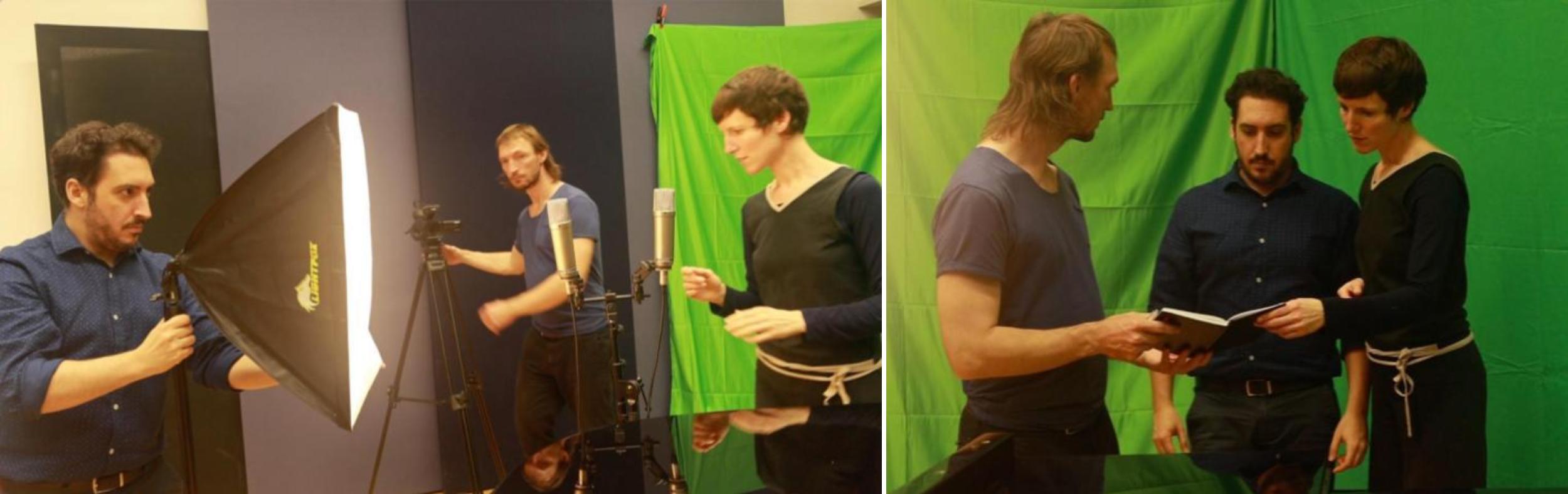
Figure 1: Sequence of stills from the 5th case study, Molteplicità for a pianist and a self-playing piano. © Markus Kupferblum
How can one pursue the charting of spatiality through case studies? Our approach in this regard focuses on a particular artistic practice and a particular setting, namely the relation between a pianist, a programmable self-playing piano, and the ambient space. Both the pianist as well as the composer iterate for each study on a theme that facilitates and illuminates a certain spatiality. For each case study we proceed as follows: First we raise the artistic research questions that this study is concerned with. We then evolve the performance, and subsequently discuss the spatial aspect, the processes, and the various perspectives on the study. A videographer captures the performance, creating snapshots that show one instance of a spatiality portrait. The respective outputs are described in the last section.
A Self-Playing Piano as a Research Tool?
In this particular investigation of space qualities shaped by and created around the performer—a pianist—we use a computer-controlled self-playing piano as a probe,10 enabling the performer to freely interact with different algorithms and the probe for hidden affordances.11
Certain sound-generation features in computer-generated music, […] or generative algorithms in musical composition, further unfold into sets of relations that turn the DMI into a probe and cause it to become the other, constituting a phenomenological mode.12
By doing this, we attempt to pack complex, multilayered research questions “as multiple, rich, and engaging tasks”13 for the performer to engage with. The self-playing piano becomes somewhat of a Digital Musical Instrument (DMI)14 while the added computation changes the mode-of-being of the piano as such,15 transforming “musical norms, habits, language and intentions”16 and fostering a new, specific kind of performance practice.
If doing phenomenology becomes a way to study our experiences of the world, we can deploy DMIs as scientific instruments or probes in which we further seek to understand our human condition through active musical perception.17
The otherness of the computer’s generative output is mitigated by a self-imposed restriction to keep the response time window relatively narrow (under six seconds) to maintain the feeling of connection between the performer’s actions and the sonic/haptic output. This can be understood as an augmentation of the pianist, who can achieve incredibly intricate textures18 that would be simply impossible on a regular piano.19 This haptic quality of the self-playing piano (all across the keyboard, keys are engaged and released seemingly on their own) reverts also into the specific spatial quality of the interaction. This makes the self-playing piano a very interesting epistemic tool20 to pursue our space investigations.
The generative algorithms run in a nearby computer which communicates via MIDI with the CEUS grand piano.21 These algorithms are modular and can be stuck in different configurations to achieve different results, allowing us to quickly iterate different versions while working together. Rather than composing a piece in the traditional sense, we attempted to create different environments for the performer to engage in free play, which ultimately becomes the piece.
At the core of the composition process is a system which ties together the performer, instrument, audience, performance space and sound. However, this system is never completely fixed, and to boot many of these demarcation lines have become blurred. It requires listening as a probe to retain balance in flux.22
Case Studies: Six Memos
Following the cartographic approach we mentioned above, we decided to organize our research around a series of case studies, each of them charting a specific quality of space. We found it useful to use the structure of Italo Calvino’s Lezioni americane (published in English as Six Memos for the New Millenium in 1988) as a prompt to re-imagine the qualities of the space inhabited by the pianist in our investigations. Calvino devotes each of his lectures to one of the literary qualities he values most: lightness, quickness, exactitude, visibility, multiplicity, and consistency. These concepts—loosely appropriated and reinterpreted in the context of the audio-corporeal arts—helped articulate our shared thinking about space, crystallizing in a series of six case studies “for a pianist and a self-playing piano” that each bear the name of one of Calvino’s lectures. Note that Calvino died before being able to finish his Lezioni americane, leaving everyone to speculate about the content of his last lecture. We nonetheless produced a last case study that explores the concept of consistency from different perspectives.
1. Leggerezza (lightness)
“My working method has more often than not involved
the subtraction of weight.”
Italo Calvino, Six Memos for the New Millenium23
What does it mean to subtract weight from a pianistic action? How does a pianist interact with a piano in terms of weight and lightness? The downward movement of the keys would be unthinkable under normal circumstances without the use of the pianist’s body weight (i.e., of the fingers, hands, arms). But what if the piano suddenly starts playing by itself? How does a pianist behave in such situations? How does she interact with the instrument and what new ways of playing may arise from this? What is on the one hand outrageous from the pianist’s point of view (is the pianist becoming superfluous?), on the other hand shows completely new ways for the player to relate to the instrument. These range from very concrete physical references (who mobilizes which key?) to musical-dramaturgical references through anticipations, repetitions, doublings, etc.
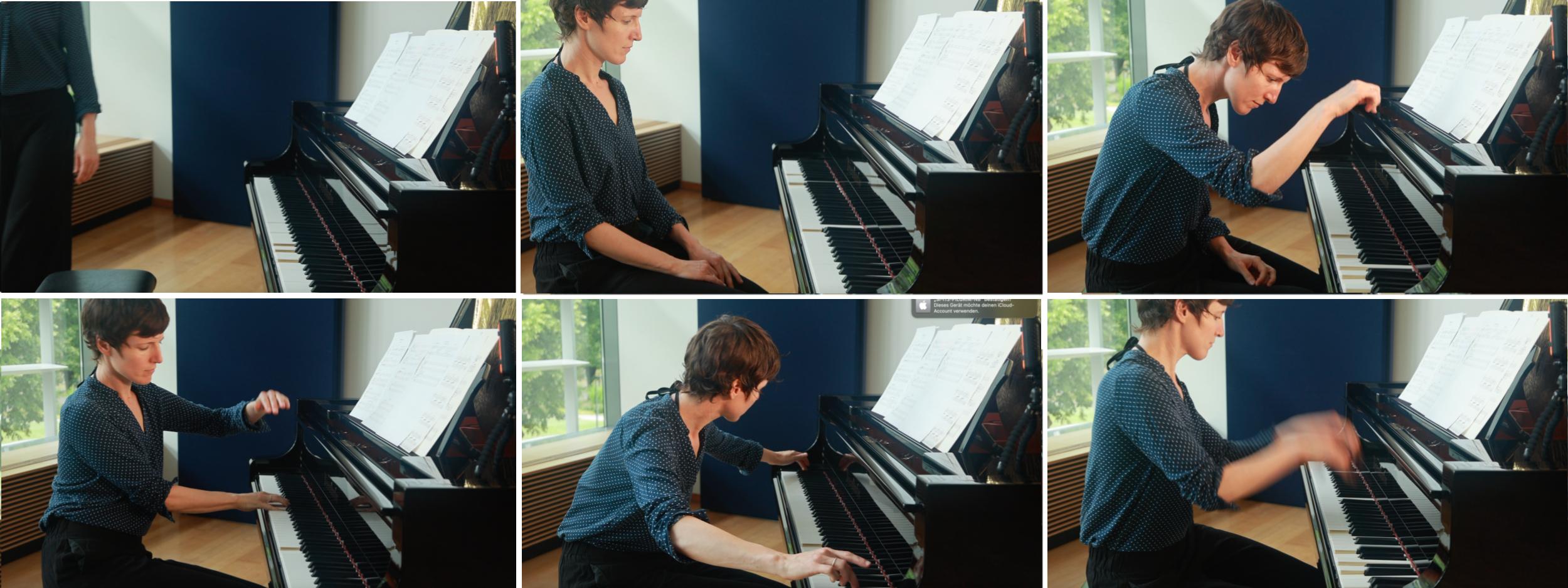
Figure 2: Sequence of stills from the first case study, Leggerezza for a pianist and a self-playing piano. © Markus Kupferblum
The piece begins with an erratic rumbling activity of the keys, with no performer close to it. Carefully, the pianist approaches it until she is close enough to hit a specific chord, which stops the keys momentarily. The performer is engaging with the piano in a playful manner and explores the acoustic and responsive range of the CEUS. By exploring the range of dynamics and pitch she opens up the space of possibilities and at the same time constrains them by delimiting the extremes. During one of her movements she probes the highest and the lowest keys of the piano or she probes the simultaneous attack of as many keys as possible, respectively to test the response of the piano. She applies attacks with varying levels of pressure and assertiveness to probe the rebound and the general response of the piano. Here she uses a playing technique in which certain tones are filtered out of a sounding cluster with the effect of creating a harmonic echo. In the end of this first movement, the pianist leaves the piano which is still busy replaying the chords she had played before like a reverberation of the common interaction. The pedal does a long shaky shadow of her foot movements. The pianist*performer writes:
As I approach CEUS I try to unburden myself of any expectation and turn to listening and observing the whimsical and at the same time tender own movements of its keys. I take a seat. I stay until I can no longer restrain myself from testing and interacting with it. I have never interacted with a piano like this before. Now the challenge is to elicit a dramaturgy from the play that unfolds from our interactions and to integrate all unplannable events en passant in the process. As the arc of the piece clearly draws to a close for me, I let CEUS play the coda for us alone.
The video concept for Leggerezza, in its documentary format, directs all the attention to the interaction between the piano and the pianist. In favor of the presence of the two bodies, the director’s presence and the shooting process remain in the background.
The pianist’s handling of the piano is akin to the act of searching for an escaped pet in a space where the doors and all conceivable escape routes are closed. The search may be carried out in this constrained space, which nevertheless still leaves a lot of room. In the practice of mathematical research it is also common to delimit a question in this way. One often tests whether a statement holds at the extreme scenarios in order to get a first feeling for it. In testing for the range, the performer makes use of the Newtonian principle of action and reaction, presenting us with a twisted sense of causality as a result; to all accounts, the piano seems to sometimes initiate actions of its own accord. In stark contrast to the experience of a life-long piano practice, here the performer ought to negotiate every action with the instrument, to the extent that we may consider agency to be distributed across the system.
Another spatial aspect that appears—or rather disappears—in this piece is that of the void. On one hand, the interaction between the performer and the piano takes place through subsequent “contact events,” where the pianist’s body encounters the surface of the keys, portraying manifold variations of pressure, length, velocity … On the other hand, though, the piano keeps sometimes responding in her absence, as though she were present. The concept of a void has inspired generations of physicists and lies at the very core of our metaphysical idea of the world: Is there anything without anything? This question asks about the existence of space without matter. For a long time people have believed that a sort of substance called ether permeates space. Even though this concept has become unfavorable in the light of the Michelson-Morely light-interference experiment, the question remains: What is there where nothing is? This piece poses a similar question by presenting the bodiless gap between the piano and the performer—the void—as a territory in dispute that shrinks and expands with the advances of each contender. Moreover, the use of the “filtering”24 technique towards the end of the piece resonates with the notion of negative space, a literal subtraction of the weight that nudges the piece towards its final resting point.
2. Rapidità (quickness)
“Agility, mobility, and ease, all qualities that go with writing where it is natural to digress, to jump from one subject to another, to lose the thread a hundred times and find it again after a hundred more twists and turns.”
Italo Calvino, Six Memos for the New Millenium25
How many jumps, twists and turns do pianist’s hands make when following a musical flow of thoughts in an instant composition? How does she digress while surrendering to a certain movement, texture, harmony, or rhythm? How does she find her thread again? What does quickness even mean for a piano’s body?
Rapidità is, perhaps as a result of the high density of action, a brief piece. The principle of tone repetition with consistent hand changes is maintained for the entire course, whereby the pitches change and the movement also alternates between unisono playing and clusters. The pianist*performer writes:
The first question I ask myself is what quickness is meant to be from a pianistic point of view. Obviously there are so many facets to being quick (mentally, musically, bodily) depending on where you look. Quick reaction and quick release as central aspects of piano playing can be transferred to various activities of the body and mind: movements of the fingers, wrists, arms, feet, gaze, thinking movements in processing and planning, breathing movements. How do I face the discrepancy between what feels fast from my perspective of acting and what feels fast from an outside reception. I assume that sound production and sound effects are often not congruent. Focussing on the conditions of the piano: how can I challenge the piano’s body in terms of quickness? The expectation of a good key action is among other things linked to how cleanly and quickly the key returns after being mobilized by the pianist. Tone repetitions are a tool to check and evaluate this. So I throw myself into the competition with gusto and repeat a key. The resulting principle of exertion and recuperation forms the basis for the emerging music.
We discuss two spatial concepts that are present in this piece from a mathematical point of view: Accumulation and Resolution. Accumulation is a core concept in the mathematical field of analysis. It is possible and indeed common for a succession or a series of points to inch towards a point that may or may not be reached, as suggested by the quick succession of notes that propel the piece towards some uncertain resolution ahead in time. This is akin to the idea of throwing darts at a target without ever hitting its center. The failed attempts will however accumulate around the center. Resolution of space and time, on the other hand, figures most prominently in the concept of a Fourier transform.26 Translating a signal from one medium to another, for instance from the fingers to the piano keys and then to the hammer, may result in a lag or a smoothening that effectively alters or crops the high frequency modulations. A repeated attack on a piano key can at some critical attack velocity not be resolved any further due to mechanical constraints of the hammer. The ear for instance cannot resolve very high pitches, because of the ear physiology.27
The long chain of repeated notes is not—at least initially—perceived as motivic material, but as belonging to a narrow space conformed by the accumulation of intensities in the Deleuzian sense.28 The properties of said space seem to emerge from this simple accumulation, rendering the speed at which the performer is able to actuate the keys its most expressive parameter.
3. Esattezza (exactitude)
“To my mind, exactitude means three things above all: (1) a well-defined and well-calculated plan for the work in question; (2) an evocation of clear, incisive, memorable visual images; (3) a language as precise as possible both in choice of words and in expression of the subtleties of thought and imagination.”
Italo Calvino, Six Memos for the New Millenium29
In his own literary work, Calvino cultivates this quality of exactitude through the use of structural patterns and numerical systems. But which affordances does the self-playing piano—as opposed to a regular piano—offer a pianist in terms of exactitude? What is a well-defined and well-calculated musical expression? Can we shift the idea of clear, incisive and memorable images from visual to audio-corporeal?
This piece begins with the pianist placing a 13/8 ostinato pattern, which is rhythmically full-beat but has an upbeat effect in the repetition due to the division 222223. Harmonically, the three-part pattern plays with friction and resolution. CEUS takes over the pattern immediately after a run, so that the pianist can add further voices to the looped pattern. At that point, the piece becomes a duo of sorts,30 the looped pattern dutifully accompanying the successive layers added by the pianist as the piece unfolds. The way these layers fall into place against the backdrop of the looped pattern holds a palpable structural tension until it ultimately diffuses in a fadeout with a ritardando, the voices quietly rippling out of the rhythmical harness that appears to have held the piece together all along. The pianist*performer writes:
What makes working with CEUS so special is the feedback the piano gives me—not only in the usual form of haptics and acoustics, but in very concrete pianistic (interlocking) events and musical textures. What is transient and fleeting in other repertoire playing can be recycled here and kept moving. In the case of the 13/8 reference pattern CEUS’ repetitions of my initial input are precise and inescapable in timing. This circumstance forces my attention to rhythmic accuracy. At the same time I am challenged to be at ease with the asymmetry of the pattern, to place it in a mindful and easy way. After Guilherme Schmidt and Danielsen when being in a groove, the relation of subject and object is almost suspended within a continuous field where the limit between music and musician/listener/dancer has vanished.31 This describes quite well my experience of interacting with CEUS. The more motives we exchange and loop, the more blurred it becomes as to who is playing what. My impression of the spatial quality can be described as a balancing of weights, fragile and stable at the same time. My kinesthetic gestures unfold between control and devotion.
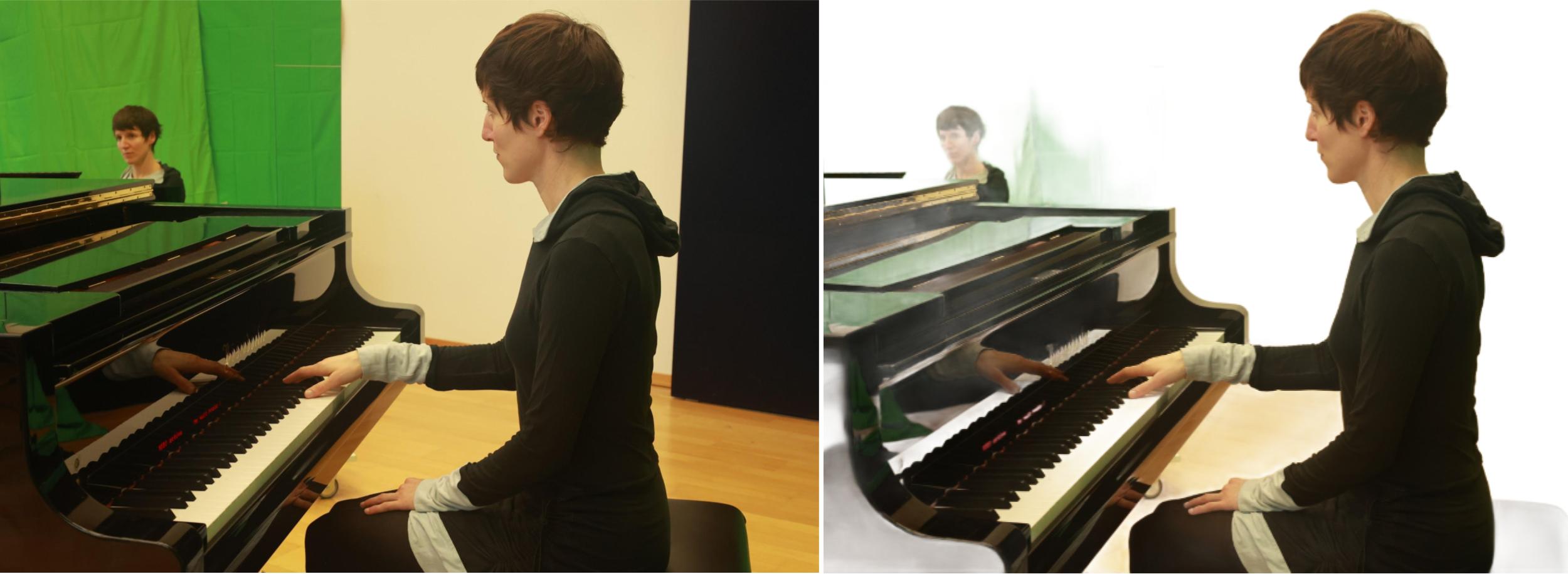
Figure 3: Sequence of stills from the 3rd case study, Esattezza for a pianist and a self-playing piano. © Markus Kupferblum
The coordination of sensory input and motoric output and their respective coupling is an active field of research in control theory and more precisely in robotics, but also in communication and information theory. In the control-theoretic formulation the sensorimotor loop can be seen as a problem of proportional, integral, and derivative control. Each control tries to place the motoric response in an optimal way, but the proportional one achieves this through correcting possible mistakes in the magnitude of their appearance, whereas the integral and derivative controls try to steer the motorics in relation to the cumulative deviation or the relative change of the deviation respectively. Also from a communication-theoretic standpoint the sensorimotor loop presents us with an interesting problem. How can sensorimotor systems optimally respond to their environment? How does the rebound of the pedal and the general mechanical feedback on the tactile senses inform an optimal motorical response?
The space surrounding the performer—the keys, the pedaling, etc.—is therefore shaped by the looped ostinato which, akin to a stubborn memory, keeps arising again and again in the same precise pattern. As listeners, we anticipate the repetition and hence become hyper-aware of the slightest rhythmic imprecision. This heightened rhythmic sensitivity informs the performance (must adhere to the rhythmic grid) and allows it to only evolve over time “vertically” by introducing additional layers on top of the ostinato. The “otherness” of the looped accompaniment is expressed visually through the mirror set opposite the performer, giving the impression of an actual piano duo.
4. Visibilità (visibility)
“[This lecture is a] warning of the danger we run in losing a basic human faculty: the power of bringing visions into focus with our eyes shut […].”
Italo Calvino, Six Memos for the New Millenium32
Evoking a (subjective) vision in the listener is a much appreciated effect of musicking as a human activity, even in purely instrumental genres such as piano music. But what happens if the piano seems to enter the space of human expression? What images are triggered by a soundscape relating to a “talking” piano? How does a pianist deal with a talking piano, what images arise in her mind and how does she transform them into (audio-corporeal) expressions?
In this piece, the pianist finds herself confronted with a talking piano.33 An almost human voice seems to stream from the instrument, an argument of sorts that suggests a space in dispute between one another. We can almost recognize speech.34 Here the alterity of the instrument is made apparent, the self-playing piano conjuring an almost human agency. The irritation caused by the piano’s speech-like gestures initially puts the pianist in a listening and observing position. After careful attempts to fit into the piano’s monologue have no great effect on its flow, the pianist begins to take a closer look at it, to examine it visually but also haptically. Starting with examinations and measurements, she gradually surrenders to the touches and palpations that lead more and more to a merging of the two bodies. The narration unfolds in the theater of the observer’s imagination.
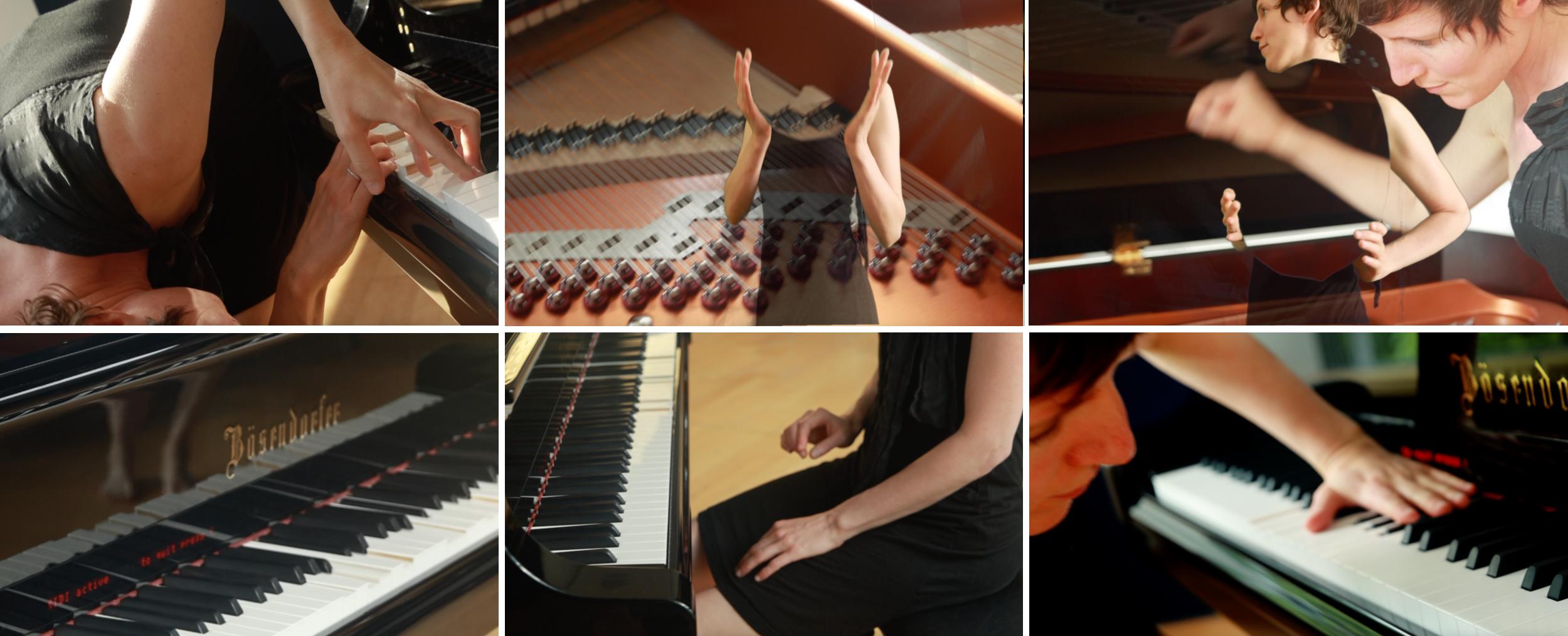
Figure 4: Stills from the video piece for Visibilità, further exploring the space around the performer by means of overlaying multiple perspectives in different ways. The visual concepts for the pieces were largely contributed by theater director and video artist Markus Kupferblum. © Markus Kupferblum
The pianist*performer writes:
The piano expresses itself in such a peculiar way with rhythmic keyboard group actions that it takes me a moment to interpret that these strange keyboard gestures are movements similar to language. Different, however, from musical gestures that simply resemble speech, but almost imitating a person with a certain speech habitus. After making my presence felt through some brief pianistic interjections, I find that this kind of dialogue with the talking piano does not lead to the development of a common musical texture and I retreat to interactions through touching and not triggering sounds from various body parts beyond my hands. In the process, of course, I listen very attentively to the piano’s speech, commenting, interrupting, supporting it with my movements. I approach the piano’s body with my own body; I dance with it, I move through its acoustic and physical, corporeal spaces.
The video to this piece is elaborate and playful. The filming process is consciously present; one sees props and utensils belonging to the filming in the picture again and again. The visual language of the video is intimate. The camera focuses on sections of the two bodies. It then gives rise to forms that are not always clearly assignable. The play with sharpening and blurring reinforces the formation of interwoven image structures, contributing to a polyhedral representation of the space inhabited by the performer. Rather than following a conventional musical development, the piece can be better described as an accumulation of evocative images conjured by the piano speech,35 the performer’s body movements, and a unique visual language holding it all together. There is a particular spatial quality in the bodies—their forms, colors, skin, landscapes—and in the surreal imagery that results from their fusion, the intimacy afforded by the close-ups, and the relationship of alterity suggested between body actions and piano utterings, insofar as their respective spaces are superimposed, yet not necessarily connected.
5. Molteplicità (multiplicity)
“[Literature] remains alive only if we set ourselves immeasurable goals,
far beyond all hope of achievement.”
Italo Calvino, Six Memos for the New Millenium36
What spatial qualities can be described in a set-up in which four protagonists—present in the same space—create a multi-layered instant composition together? How are the musical actions of the pianist influenced by the observer close-up—even reaching into her kinesphere—while a composer interacts with the piano through multiple interfaces whose actions are being captured by the camera?
What begins as a mystery in Leggerezza and remains a mystery in the other memos is deliberately woven into the composition in Molteplicità: the beforehand invisible but actively composing parties are now shown. It is a piece which unfolds itself through the focus of the camera. At first, the camera’s gaze only accompanies the composer, who controls the piano via MIDI, and only later turns to the pianist, the observer creating attention spaces, and then to himself in the mirror. The pianist*performer writes:
In this piece, my attention travels back and forth between the physical space and the virtual space created by the camera. In the first, I observe how the pleasantly concentrated focus of the observer looking at the piano and me at close range affects my musical sending. In the second, I look at myself as if from a distance from the perspective of the person accompanied by the camera. My attention thus rotates, expanded by three new perspectives that I seek to integrate into the flow of the music.
The repeated composition of basic transformations, such as reflection, scaling and transposition in pitch and temporal dimensions creates ever more complex patterns, both in the temporal and the tonal dimension. How can one understand this complexity and its degree? The more often the transformations are carried out, the more intricate, the more fine-grained and the more complex the resulting output appears to become. In the theory of fractals, one frequently encounters and invokes the concept of a Hausdorff-dimension to capture this degree of complexity. The idea is that a one-dimensional thread that is folded again and again and so forth eventually will behave a little bit like a two-dimensional quantity, but not quite. Repeated transformations of two-dimensional qualities behave more three-dimensionally and so on for ever higher dimensions. The extent to which it behaves higher-dimensionally is captured by the Hausdorff-dimension. In some sense, it measures how much new space is created. The space created around the performer is also subject to these fractal multiplications, the whole of it virtually contained in the very reduced contact point between performer and instrument, analogous to how musical textures appear to sprout from relatively simple performer’s actions. The abrupt closing of the fallboard at the end seems to make the fragile architecture of the piece collapse in one brutal blow, the resonance of which gives place to an almost oppressive silence …
6. Coerenza (consistency)
The last of Italo Calvino’s lectures was never written due to the untimely death of the writer. We are left with the title this lecture would have had: Coerenza (consistency). We can only speculate what Calvino might have had to say about consistency in literature but what does consistency mean with reference to an audio-corporeal expression?
For this last piece we decided to integrate the algorithmic output generated by the computer with the performer’s actions in a way that would behave almost like an extension of her body. One motivation was to push back the feeling of otherness we had sometimes identified in the previous case studies. The musical concept underlying the piece addresses the principle of repetition and variation as the piece progresses. While a simple motive is repeated and shaped, its surroundings are changing in terms of harmonic accumulation, dynamics, and additional feedback layers like changing aggregate states. While the pianist sits at the instrument almost motionless, her kinesthetic gestures are changing in attack and muscle tone. Her gaze oscillates between a focused “spotting” and a softer peripheral view. The pianist*performer writes:
With the idea of changing consistencies in my mind, I try to look for them in the music, to grasp and move them. This focus triggers changing levels of tension in my playing movements and in my listening. My gaze also changes its spatial reference in a constant change of its quality. Here I perceive the camera as a co-player. It mirrors my constant mental transformation through its constancy and direction.
Coherence is also an important aspect of wave dynamics: two waves are coherent if their phase difference stays constant. More generally the coherence of two waves is a measure of their correlation. If two signals have deviating amplitude or frequency, then the two signals are said to be incoherent. Loosely speaking coherence measures the alignment of two signals. Consistency on the other hand is a property of mathematical theories, namely the lack of logical contradictions. If one argument or theorem stands in contradiction with another theorem, then these two statements are inconsistent. One could also describe Coerenza in those terms, stating the (dis)alignment of the computer generated motives with respect to the performer’s actions as the main principle structuring the piece, from a highly coherent initial state to a sequence of perturbations, progressively reabsorbed as the system finds its way again to the initial balance.
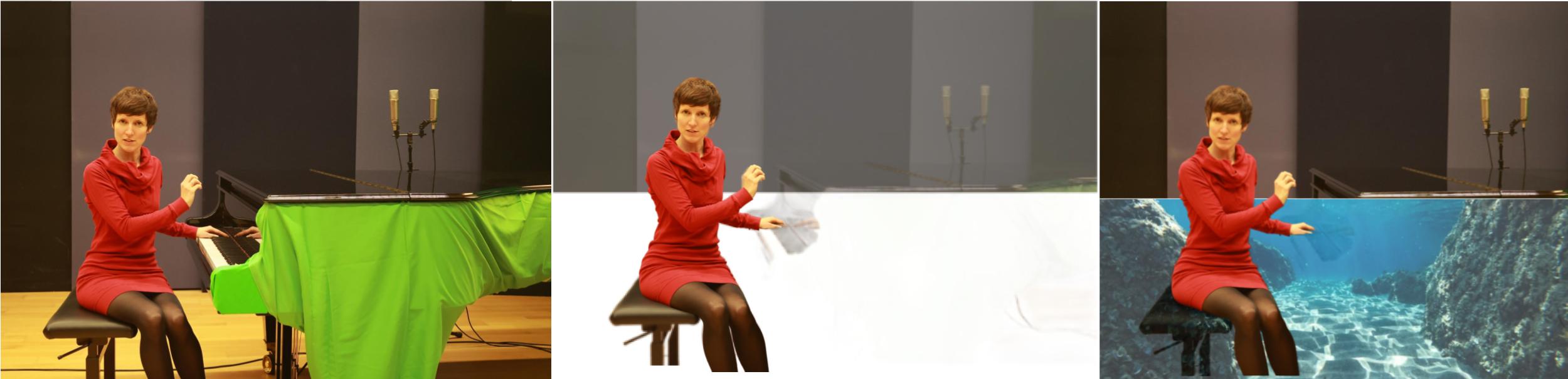
Figure 5: Sequence of stills from the 6th case study, Coerenza for a pianist and a self-playing piano. © Markus Kupferblum
The visual treatment of the video introduces different associations with extrinsic spatial qualities (liquid, air, etc.), using transparencies to conjure up in the viewer the sense of the piece being transitioning through different states.
Conclusions and Output
Upon finishing Six Memos for a Pianist and a Self-Playing Piano and reflecting on the six case studies as a whole, the question that needs to be answered is to what extent the applied methodology for the research process was useful to approach spatial qualities. We find that our approach, albeit not necessarily systematic, did help us think anew about space in original ways. This is not to say that the work was without its challenges. Since the different steps in the research process took place in different constellations and settings, we had to constantly realign ourselves and let go of expectations in order to make productive decisions and come to an output which represented the respective spatial topic we were investigating. For instance each of the involved researchers was working partly in peer-to-peer, and partly alone. We had restricted time slots with the CEUS piano. The compositions as musical pieces had different requirements than the audio-visual compositions with video etc. We found that we could face these challenges by working on iterations as different versions of each piece. These we consider to be “snapshots” of a moment in time of the artistic research process. In terms of the musical structure, we found it productive to let go of the pianistic repertoire or through-composed music in favor of loose sketches that allowed the performer to explore the material in-the-moment. We shaped our workflow in order to maximize flexibility at the moment of the performance, which was fundamental in confidently addressing the desired spatial qualities we wanted to map. We therefore focused on the stage where the performer IS in the space, and did not preempt the output by fixing the notation or compositional system too much. We also hope that the output of the project, including the artistic research methods developed for these case studies will provide valuable insights into the artistic research community.
The audio-visual output of the project, the cycle Six Memos for a Pianist and a Self-Playing Piano consists of six video pieces presenting each of the case studies. The video playlist can be accessed using the QR code at the end of this paragraph. We recommend that it be viewed together with the sketches that make up this article for clarity.
In order to pursue this artistic investigation, we also developed a library of MaxForLive devices (TesserAkt) that perform all sorts of operations in the MIDI realm. These modules can be stuck in any configuration and connect to one another using MIDI CC messages. This library is open source and freely available for other artist-researchers to use and expand on: https://bitbucket.org/AdrianArtacho/tesserakt/.
https://youtube.com/playlist?list=PL02OBWE0nN6B7xmFQ2Gtplh2VxIkdMeTN&si=gUmjsNF4LkX-EkZw
Acknowledgements
At this point we would like to thank the entire team of artistic researchers in the “Atlas of Smooth Spaces” project. Our vigilant critical discourses on disciplinary, inter- and transdisciplinary issues have been instrumental in shaping this publication. Many thanks to: Damián Cortez Alberti, Rose Breuss, Kai Chung Chuan, William Edouard Franck, Sara Glanzer, Johannes Hiemetsberger, Marcela Lopez Morales, Maria Shurkal, and Stephanie Schroedter.
A special thank goes to Werner Goebl and the Department of Music Acoustics—Wiener Klangstil (IWK) who made this research work with the CEUS grand piano possible for us.
-
Fund by the Austrian Science Fund (FWF) AR640.↩︎
-
Guillemette Bolens, The Style of Gestures: Embodiment and Cognition in Literary Narrative (Baltimore, MD: Johns Hopkins University Press, 2012); Susanne Quinten and Stephanie Schroedter, ed., Tanzpraxis in der Forschung – Tanz als Forschungspraxis (Bielefeld: transcript, 2016); Annegret Huber, Doris Ingrisch, Therese Kaufmann, Johannes Kretz, Gesine Schröder, and Tasos Zembylas, ed., Knowing in Performing: Artistic Research in Music and the Performing Arts (Bielefeld: transcript, 2021); Frédéric Pouillaude, Unworking Choreography: The Notion of the Work in Dance (Oxford: Oxford University Press, 2017); Carrie Noland, Agency and Embodiment: Performing Gestures / Producing Culture (Cambridge, MA: Harvard University Press, 2009); Stephanie Schroedter, ed., Bewegungen zwischen Hören und Sehen: Denkbewegungen über Bewegungskünste (Würzburg: Königshausen & Neumann, 2012).↩︎
-
Gilles Deleuze and Félix Guattari, A Thousand Plateaus: Capitalism and Schizophrenia, trans. Brian Massumi (London: Continuum, 2004), 322 (1987), 484-5.↩︎
-
CEUS Computer-Controlled Grand Piano, accessed 23 November 2022, https://iwk.mdw.ac.at/ceus-grandpiano/.↩︎
-
Italo Calvino, Six Memos for the Next Millennium (Cambridge, MA: Harvard University Press, 1988).↩︎
-
Accessed 23 November 2022, https://contingentagencies.net/.↩︎
-
Accessed 23 November 2022, https://www.choreo-graphic-figures.net/publications/book/.↩︎
-
Gerhard Eckel, Martin Rumori, David Pirrò, and Ramón González-Arroyo, “A framework for the choreography of sound,” in Proceedings of the 38th International Computer Music Conference (ICMC) (2012), 404-511, accessed 23 November 2022, https://www.researchgate.net/project/The-Choreography-of-Sound.↩︎
-
Here we refer to the methodical elaboration of nullspaces in the respective disciplines which we apply as basis for any transdisciplinary research, accessed 23 November 2022, https://the-smooth.space/w/index.php/Main_Page; Leonhard Horstmeyer and Hanne Pilgrim, “Dialectic Attempts in Artistic Eurhythmics Practice, Towards a Notation of Spatial Qualities Through an Iterative Multi-Layered Description,” accepted for publication in Le Rythme (2022).↩︎
-
Gaver already explored the idea of using cultural probes “to enquire further into their agency as far as musical composition and performance are concerned.” Bill Gaver, Tony Dunne, and Elena Pacenti, “Design: Cultural Probes,” in Interactions 6/1 (1999): 21–9.↩︎
-
Koray Tahıroğlu, Thor Magnusson, Adam Parkinson, Iris Garrelfs, and Atau Tanaka, “Digital Musical Instruments as Probes: How Computation Changes the Mode-of-Being of Musical Instruments,” in Organised Sound 25/1 (2020): 64–74.↩︎
-
Ibid., 71.↩︎
-
Gaver notes that the probes demonstrated that “research questions could be packaged as multiple, rich, and engaging tasks that people could engage with by choice and over time.” William W. Gaver, Andrew Boucher, Sarah Pennington, and Brendan Walker, “Cultural Probes and the Value of Uncertainty,” in Interactions 11/5 (2004): 53.↩︎
-
Malloch et al define digital musical instruments (DMI) as “musical instrument whose sound generator is separable from its control interface […], and with musical and control parameters related by a mapping strategy.” Joseph Malloch, David Birnbaum, Elliot Sinyor, and Marcelo Wanderley, “Towards a New Conceptual Framework for Digital Musical Instruments,” in Proceedings of the 9th International Conference on Digital Audio Effects (DAFx-06) (2006), 49.↩︎
-
Tahıroğlu, Magnusson, Parkinson, Garrelfs, and Aau Tanaka, “Digital Musical Instruments as Probes,” 64–74.↩︎
-
“Computation therefore shapes our relationship with DMIs and also transforms our musical norms, habits, language and intentions; it is the DMI’s unique mode-of-being in a new performance practice.” Ibid., 64.↩︎
-
Ibid., 67.↩︎
-
The exploration of the furthest possibilities of self-playing pianos has a history possibly as long as the self-playing pianos themselves, with the towering figure of Conlon Nancarrow and his Studies for Player Piano from 1948 to 1992 as one of its most substantial contributions (Philippe Kocher, “Polytempo Composer: A Tool for the Computation of Synchronisable Tempo Progressions,” in Proceedings of the SMC Conferences, SMCNetwork (2016), 238–42.↩︎
-
Self-playing pianos are particularly suitable to explore “machine music” that no human performer could possibly master in terms of speed, loudness, massiveness, and time precision (Philippe Kocher, “The Piano Automaton as an Instrument for Algorithmic Music,” in Proceedings of the Generative Art Conference, Verona 2018.↩︎
-
Thor Magnusson, “Of Epistemic Tools: Musical Instruments as Cognitive Extensions,” in Organised Sound 14/2 (2009): 168–76, accessed 23 November 2022, http://sro.sussex.ac.uk/id/eprint/46873/1/magnusson.pdf.↩︎
-
In this respect, our work is inspired by jazz pianist DanTepfer’s similar use of a Yamaha Disklavier (Dan Tepfer, “Natural Machines,” personal blog, posted on 27 October 2018, accessed 15 November 2022, https://dantepfer.com/blog/?p=711).↩︎
-
Tahıroğlu, Magnusson, Parkinson, Garrelfs, and Aau Tanaka, “Digital Musical Instruments as Probes,” 68.↩︎
-
Cambridge, MA: Harvard University Press, 1988, 3.↩︎
-
Here a chromatic cluster is followed by a quiet resonance that is not struck separately but “filtered” out of the cluster, so to speak. This playing technique is used, for example, in Helmut Lachenmann’s piece Filter-Schaukel from the cycle Ein Kinderspiel.↩︎
-
Cambridge, MA: Harvard University Press, 1988, 46.↩︎
-
William T. Cochran, James W. Cooley, David L. Favin, Howard D. Helms, Reginald A. Kaenel, William W. Lang, George C. Maling, David E. Nelson, Charles M. Rader, and Peter D. Welch, “What Is the Fast Fourier Transform,” in Proceedings of the IEEE 55/10 (1967): 1664–74.↩︎
-
David Howard and Jamie Angus, Acoustics and Psychoacoustics (New York: Routledge, 2013).↩︎
-
Deleuze and Guattari here speak of a smooth space, whose determinations “are connected by processes of frequency or accumulation,” Deleuze and Guattari, A Thousand Plateaus, 485.↩︎
-
Cambridge, MA: Harvard University Press, 1988, 55–56.↩︎
-
It could be argued that the otherness of the computer-controlled CEUS system is—insofar as it becomes a DMI—“less strong than the otherness found in an alternative human musician.” Tahıroğlu, Magnusson, Parkinson, Garrelfs, and Aau Tanaka, “Digital Musical Instruments as Probes,” 71.↩︎
-
Guilherme Schmidt Câmara and Anne Danielsen, “Groove,” in The Oxford Handbook of Critical Concepts in Music Theory, ed. Alexander Rehding and Steven Rings (Oxford: Oxford University Press, 2018), accessed 23 November 2022, http://dx.doi.org/10.1093/oxfordhb/9780190454746.013.17.↩︎
-
Cambridge, MA: Harvard University Press, 1988, 92.↩︎
-
The method to evoke human speech using a computer-controlled piano was proposed by composer Peter Ablinger and successfully developed by Winfried Ritsch in the early two-thousands (Winfried Ritsch, “Robotic Piano Player Making Pianos Talk”, in Sound and Music Computing Conference [Padova, Italy: 2011], 1–6).↩︎
-
The illusion of human speech is most effective when the “words” are displayed at the same time as the sound is produced. Since that would not be part of the live performance, we decided to omit it from the videos as well and leave meaning intentionally open for interpretation.↩︎
-
This concept of “phonorealism” (as opposed to photorealism) is what initially motivated composer Peter Ablinger to ultimately develop the talking piano together with Winfried Ritsch (Winfried Ritsch, “Robotic Piano Player Making Pianos Talk”, in Sound and Music Computing Conference [Padova, Italy: 2011], 1-6).↩︎
-
Cambridge, MA: Harvard University Press, 1988, 112.↩︎