The Cello as a Corporeal Performative Instrument
Ulrike Brand 
How to cite
How to cite
Abstract
Abstract
By juxtaposing the biological body of the performer and the sounding body of the cello, I am concerned with clarifying the multi-layered relations between both.1 As the cellist not only performs functional movements but also moves in space relating to dancers and the audience, these interactions are revealing multi-layered role changes.
The relation of the different bodies opens several interesting questions: How does the body/corpus relate to the dancers in the performative situation? Do the dancers react more to the musician’s body or that of the cello? Can traditional connotations of the instrument and its sound be overcome and what about the different kind of energy involved? Is the cello object, tool or icon?

Introduction
In the performative context described here, three acting figures appear: a rolling cello, a performing cellist, and dancers interacting with her. Their manifold interactions, their different kinds of confusion and disguise provide the opportunity to reflect, at least to a certain extent, on some questions that exceed the original “setup,” such as those about the different roles and their dissolution, about the function of the musical instrument and its aura, and, last but not least, about the relationship between the human body and the corpus2 of the instrument.
Acting Figures
The Cello
The shape and size of its corpus suggest a comparison of the cello with the human body. Its tonal register from C to c3 corresponds to the registers of the human singing voice from bass to soprano. If the cello is moved from its seated position to an upright, rolling position, this similarity is reinforced.
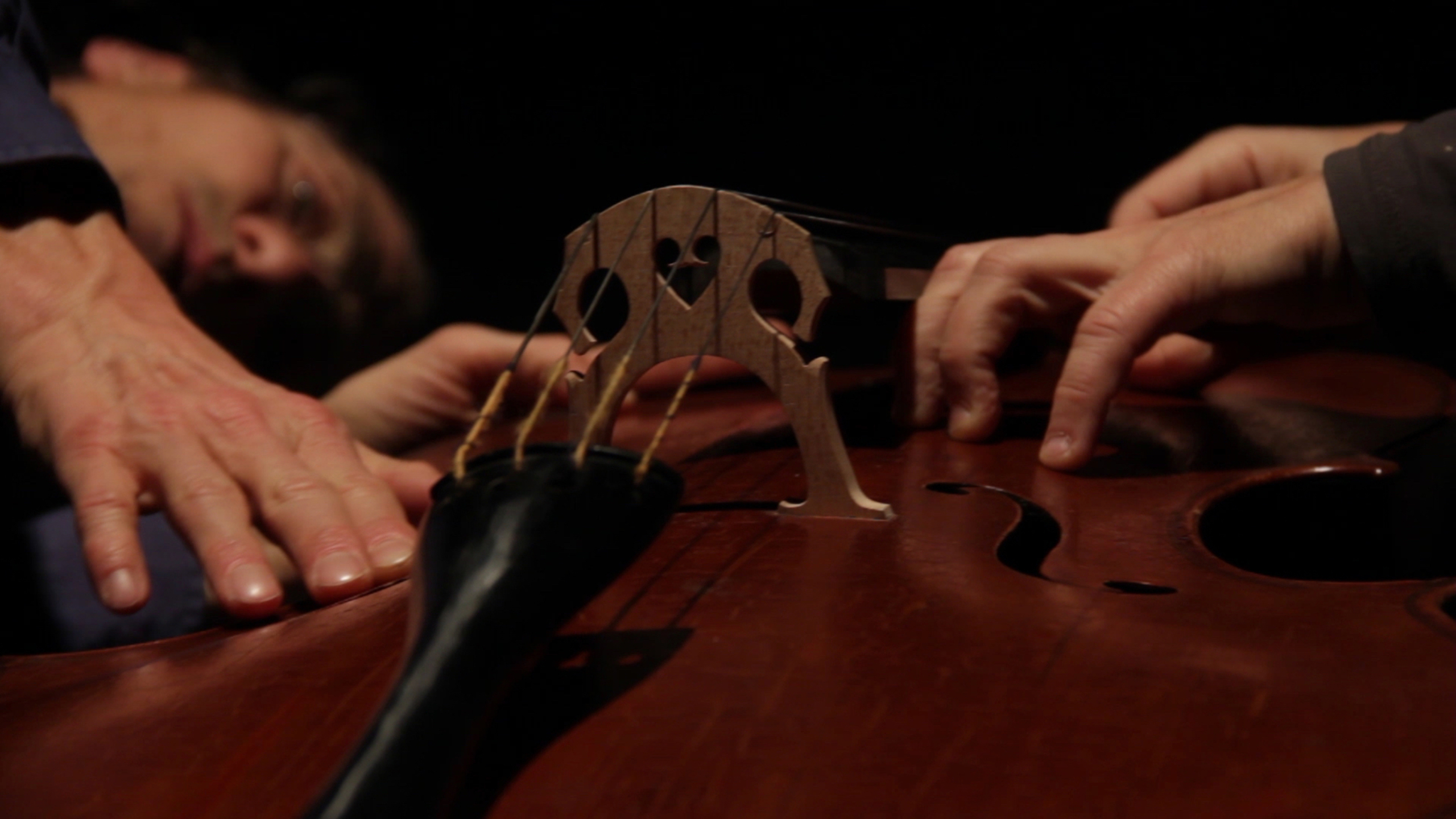
Figure 1: Video still from Korpus, Ulrike Brand and Ingo Reulecke, 2016. © Helena Lingor; https://www.hylynyiv.com
Working with dancers, I felt the need to overcome the forced immobility of the seated playing position. I felt that being an immanent part of the choreography through visual appearance, without being able to move with the instrument in space, was a counterproductive restriction. At first, I experimented with elastic bands, with the help of which I tied the corpus directly in front of my body. This made it possible to play standing upright, but only allowed me to walk to a very limited extent, and also made it difficult to grasp certain positions on the instrument with the left hand. Then I had a small wheel built which attaches to the cello pin and allows me to place the neck of the instrument loosely on my left shoulder and thus move forward, backward, and in circles while walking with the cello. Subsequently, with the support of dancers, I developed different techniques to play squatting, kneeling, sitting, or lying down on the floor. The communication with dancers is therefore amplified around the theme of the levels in space.
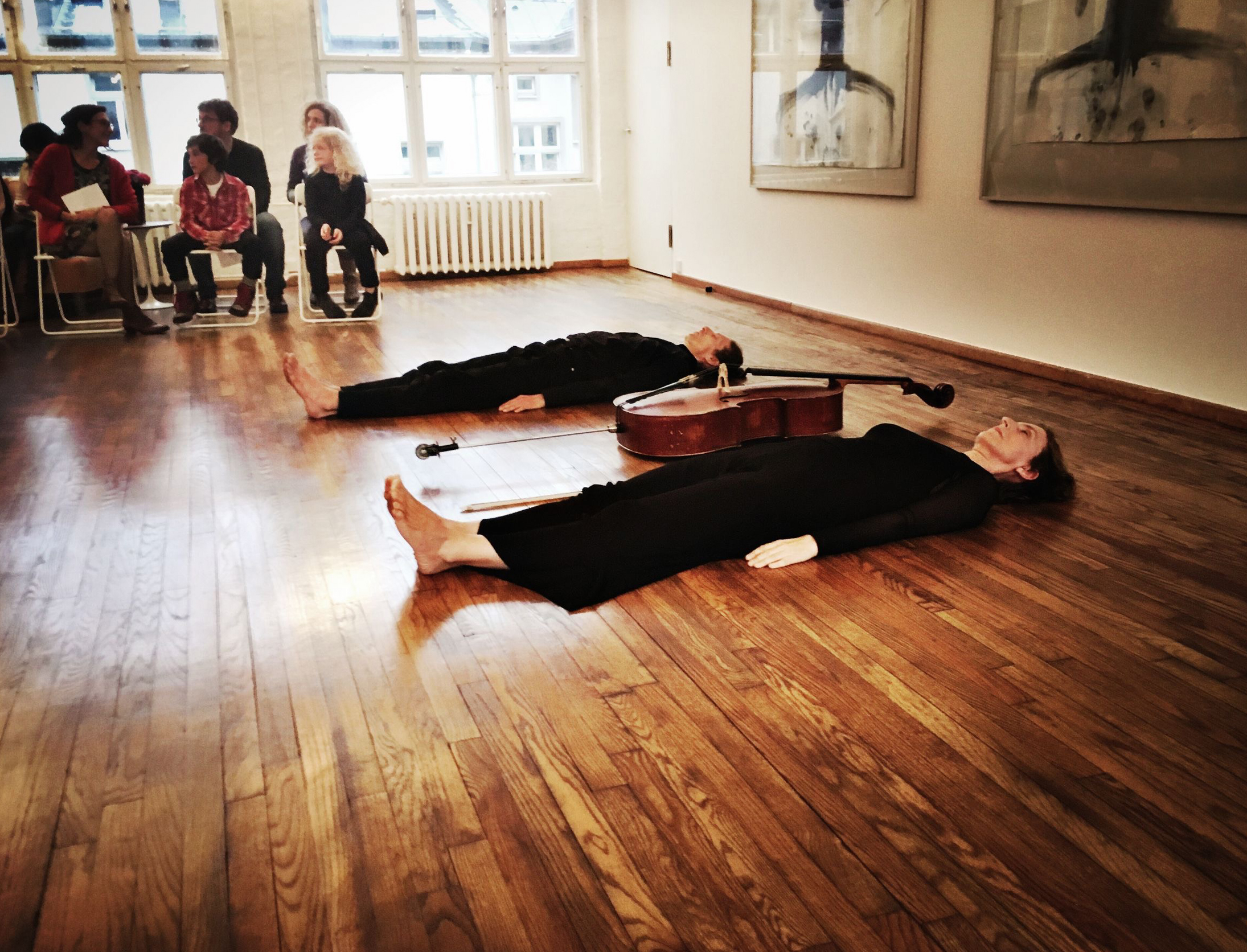
Figure 2: Korpus, Ulrike Brand and Ingo Reulecke at Hoffmann Collection, Berlin 2018. © Sven Hagolani; https://www.hagolani.com
One consequence of removing the cello from the traditional playing position and the mobility thus gained is, on the one hand, an emancipation of the corpus, which—removed from its function—appears more as an object. On the other hand, the playing techniques necessarily change. It is true that traditional playing techniques are partially restricted—the lower neck positions cannot be fully grasped, the pressure ratios in the left hand are altered, and the unrestrained lateral rotation as well as the vibration of the corpus during rolling make bowing more unstable. On the other hand, the sitting position with the cello flat on the knees, for example, offers new percussive possibilities; while standing, the cello can rotate and be played on the top, back, and sides. The rolling itself, due to different floor textures, produces diversified rhythmic sounds, to name just a few techniques.
The Performing Cellist
With the movable instrument, the cellist necessarily becomes a performer; her role is no longer limited to purely “producing music.” She moves through the space and she moves independently of the functional instrumental playing gestures. Suddenly she is no longer holding and moving a highly developed tool, but is carrying a body-like object with her, which henceforth in addition produces sounds accidentally. The movements of the performing cellist have gained autonomy; they take place on and around the instrument without specifically intending to produce sounds. Touching the instrument with the body, hands, or feet (with or without bow) has a different, specific sound quality due to the omission of intention. The corpus thus appears as a second body, largely independent of that of the cellist; another independent character has entered the stage.
This transformation offers numerous possibilities for thematization within a performance. In the ongoing performance project KORPUS with the dancer Ingo Reulecke, this theme is varied again and again according to the changing spatial context. The first image of this performance always consists of the “3 bodies” (title of one part of the performance): the cello lying on the floor in the middle, the female body to the left, the male body to the right. This image triggers associations that can usually be understood from an existential interpretation: religious representations of the crucifixion, questions about the whence and whither of man, about his corporeality, about the conflict between organic and inorganic life, and, last but not least, the relationship between the living and the dead body.
The cellist’s body becomes the felt body of a mover, and numerous movements independent of cello playing are possible. This opens up the realm of dance. The movements are still largely connected to the instrument, but no longer have the function of producing optimal tonal results in the sense of traditional playing technique—they are liberated into physical expressive movements. They also may produce sounds (by this I mean the entire acoustic output, distinguished only by its overtone spectrum, spread out between tone and noise), only these sounds caused by dance movement are less intentional than accidental. The resulting sounds become a “by-product” of the movement, whereas in classical playing technique every movement aims at a specific sonic result. Classical instrumental training goes so far as to demand from the musician a complete merging, a becoming one with the instrument.
Another aspect of the cello in motion, the above-mentioned “emancipation” of the musical instrument, is the object character of the cello that emerges as a result. The object, relieved of its original function as a tool, is now simply “there”; it is an object that on the one hand has to find its place in the performative context, and on the other hand, with its resistance, represents a challenge for all those acting.
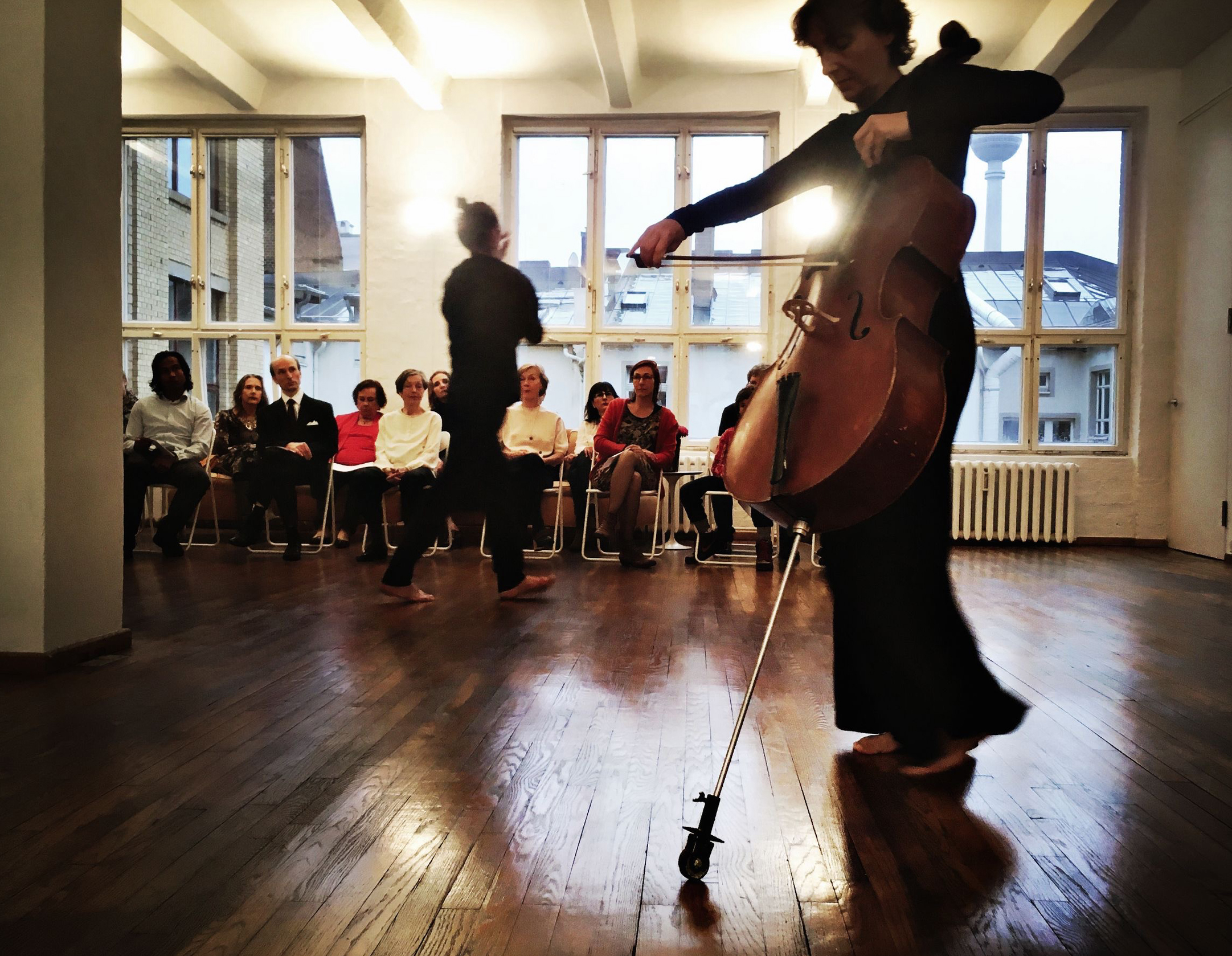
Figure 3: Korpus, Ulrike Brand and Ingo Reulecke at Hoffmann Collection, Berlin 2018. © Sven Hagolani; https://www.hagolani.com
The Dancers
The particular challenge for the other performers lies in the demanding synthesis of various incoming information on all levels of perception. Dancers act and react with their bodies and, as with all interdisciplinary communication, overlapping translation processes take place constantly in their reception. The interactors necessarily experience a fluctuating selection of multiple information.
Sounds are mainly perceived by the ear and by bones and skin, with the special aspect that they cannot be simply avoided by closing the eye like visual information, but rather penetrate the body persistently. In addition, many dancers describe to me a purely physical perception of sounds, a direct perception of the sound waves in space, so to speak. If this is true, it is even more so for a low instrument such as the cello, since slower frequencies also have a stronger effect on the body due to their stronger amplitude. In addition to the movement of the dancers, the instrument in motion now also shifts the sound source in space, combined with the inherent noises produced by the rolling propulsion.
This auditory complex, extremely variable in all its parameters, behaves in practice partly consonantly and partly contradictorily to the visual information. Visual and auditory information can reinforce each other or be in conflict. Extremely soft playing movements, for example, can produce rough sounds on the cello; a fast movement through the space can as well be associated with static sounds. Apart from the cellist’s body acting and interacting as a dancer with other dancers, also in the sense of contact improvisation, the body of the cello is present at the same time as the “elephant in the room,” so to speak. The corpus is static itself, but it vibrates, rolls, can be erected, laid down or rotated around itself and can be perceived as a person, a puppet, an emblem, or an icon through its anthropomorphic form. As an object the cello can hardly be liberated from its omnipresent aura and everything it represents as a classical instrument. The greater the experience of the dancers with the situation of having to “switch on reception” on all channels at the same time, the more varied and interesting is the result of performative and dance exchange with the instrument in movement.
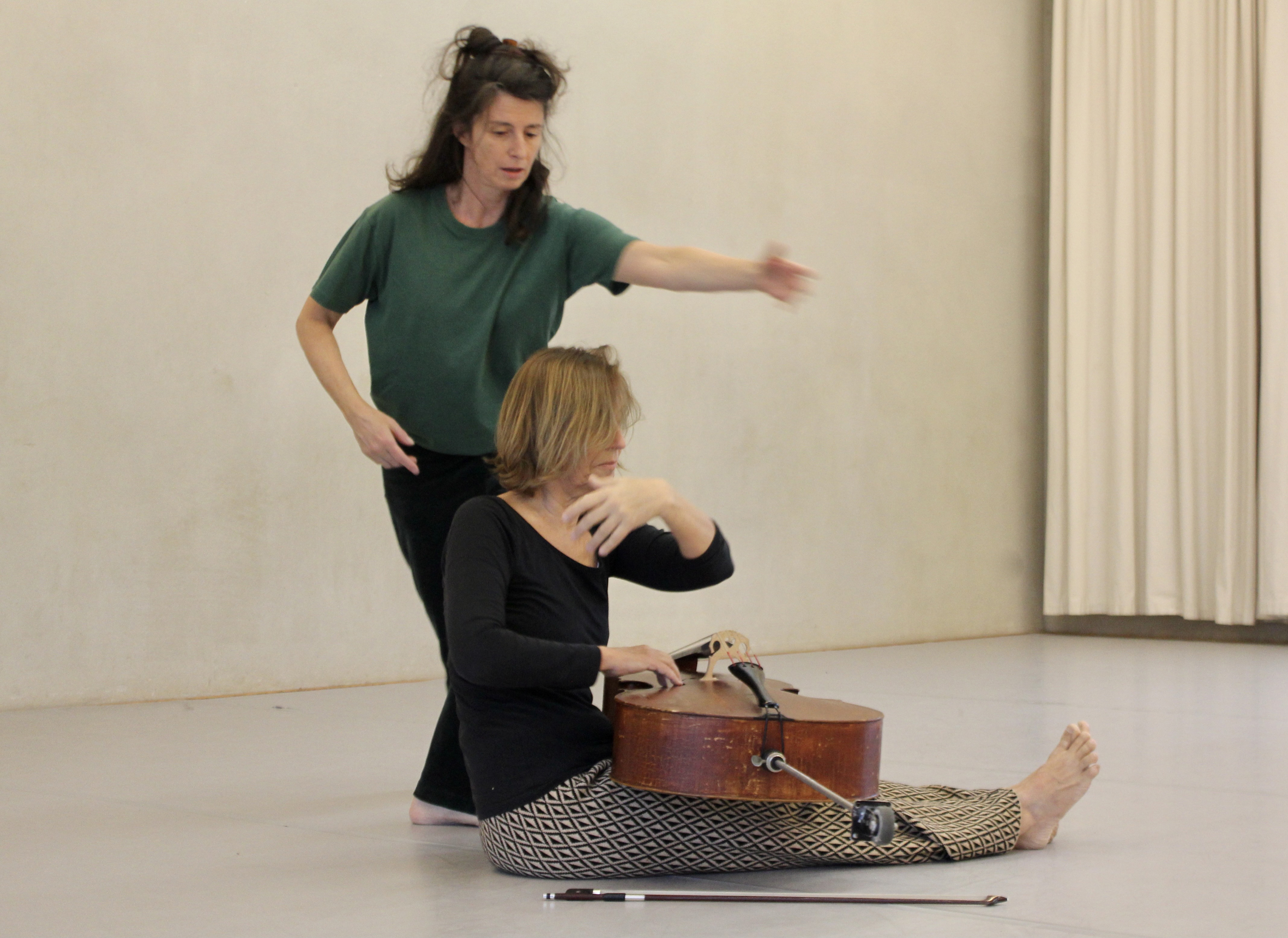
Figure 4: Ulrike Brand and Valentina Bordenave at soundance festival Berlin 2021. © soundance festival / Aïsha Mia Lethen Bird
Performative Context
The performative context within which the situations and processes described here take place is open, both in terms of the spaces and the creative processes. My reflections mainly refer to the improvisational practice with musicians and dancers of the Berlin real-time music scene. Seen from close up, there are of course also evident differences there—as in every microcosm—as far as the development and rehearsal techniques are concerned. The question is whether the influence of the aspect “body versus corpus” is relevant for these differences.
Creative Process (Improvisation/Composition)
For the exchange of information in performance, the same conditions apply to composed music (or choreographed movement) as to improvised music (or dance improvisation). The differences lie in the creative processes, which are, nevertheless, quite comparable. This comparability, however, presupposes that composition and improvisation are not understood as antinomies, but as processes of musical production that flow into each other.
If we agree on a floating line between improvisation and composition and then look at the process of creating music based on its parameters and their determination, the artistic processes become comparable. An analysis of the parameters and their determination—both in the form of notation and in practice—quickly shows that there were historically always parameters in music that were not notated, either because there was an interpretive tradition or because the parameter in question was irrelevant to the specific style. If one also looks at the degree of specification of a parameter, one comes to the same conclusion. If one applies this question against the background of a broader understanding of parameters of improvisation, one discovers several agreements concerning the parameters, whether actively expressed or passively assumed. Some of these agreements include: pluridirectional reactivity, the equality of playing gestures and expressive movements, the equal correspondence between auditory, visual, spatial, motoric, instrumental, and vocal actions, and the inclusion of inherent sounds of the space or its environment in the performance. All these parameters may be based on a general understanding or on a deeper and more specific agreement with a higher degree of determination.
If interaction—the reversible play of action and reaction—is a parameter of the artistic shaping of sound and movement, then the learning of reaction patterns by the respective artistic partners and their playing with them is a thoroughly predictable, and to a certain extent, plannable element. The decision to notate such interactions integrates them into a structural discourse; the decision not to specify leaves room for the creative added value of the gradual differences that grow out of the moment.
Spaces
In 2020/21, the number of outdoor performances and performances in public spaces increased enormously due to the pandemic-related contact restrictions. If site-specific performance adds the openness and unpredictability of public space to the improvisational approach, the need to perform outdoors and at a great distance from the audience further expands the creative conditions.
Everything described in the above section about the “acting figures” remains valid, but takes on different dimensions in the outdoor performance. The paths become longer and more uneven and the distance requires acoustic adaptation, such as amplification of the cello or voice. The audience, which I have otherwise not taken into account in these considerations, covers distances walking with the performers and becomes part of the performance.
In this new, expanded situation, my experience of the cello corpus as an independent object has intensified once again. The cello has accompanied me to football fields, parks and forests, fortresses and ramparts, balconies and roofs, pedestrian zones, shop windows and showcases. Not only the sounding body of the cello has accompanied me, but also a receiving and perceiving sound body that absorbs the vibrations—of outside acoustics, of wind, birdsong, and street noises—like a transducer and emits them transformed.
Roles
Classical instrumental playing is based on learning how to use a highly developed traditional tool. Each movement aims at a clearly defined sound result and yet there is an aspect of reciprocity in the movement patterns. The extremely differentiated sound penetrates through the corpus back into the body of the player, who, by making minimal corrections and adjustments, in turn adjusts her fine motor skills to it. Ideally, body movement and sound merge into a motor-auditory-visual unit. The sounding body of the corpus, thus statically anchored in space, reacts and has an effect on the movers dancing around it, who are in turn permeated by the sound in their circles.
When the cellist moves in space, she marks distances and draws lines and pathways. She thus enters a space reserved for dance and assumes the role of the mover. She leads the corpus of the instrument, which in its static nature is both a challenge and an obstacle for the dancers. The performing cellist has freed her body from the fixed sitting position, but not from the corpus of the instrument. The cellist’s dance is always in relation to the corpus, which she pushes, pulls, tilts, turns, puts down or carries; that is to say, her dance is by all means primarily a dance with the instrument as a body. The two corpi can only react to the other actors in agreement; conversely, for the dancers, body and corpus are inseparable and can only be weighted differently through a different focus. So now the dancer also dances with the cello’s corpus.
The new playing positions change the handling of the instrument. Dancing movements and playing gestures are no longer separable. The arms can sink out of the air onto the corpus and produce wiping sounds or falling, tapping sounds; the cello can come into contact with the body of the cellist over its entire surface, on the top, bottom, and sides and produce the most varied sounds, such as patting, grinding, rustling, scratching, or squeaking. It is also possible for the dancers to come into contact with the corpus of the instrument, which may lead to the production of specific sounds. The dancer not only dances with the cello as a body, but also perceives the corpus as a sounding object at every moment, even to the point of producing sounds on it in the dance.
It is the role of the musical instrument that changes the most in this setup—from corpus to body, from object to character, from transformer to transformed. The cello enters the stage in an emancipated manner, walking upright, but at the same time retains the character of a stick puppet, a marionette. Its original function is alienated, its aura broken, its semantics questioned, yet it remains trapped in its “Gestalt.”
Masks
In order to overcome the dominance of the physical presence of the “classical musical instrument” with its semantic background, producing noise has been introduced to contemporary music since the beginning of the twentieth century, leading to an often striking contradiction between sound and visual perception.
Starting from my experience in interpreting contemporary composed and notated music, in a first step I tried experimentally not only to alienate sounds, but also to inhibit my musically functional movements by blocking my own body, or rather my body’s motor function, for example by playing with gloves or handcuffs made of fabric. Since even in this extreme experimental arrangement the learned instrumental motor function strongly asserted itself, I proceeded to make changes to the instrument. I prepare the corpus with different materials, wrap and modify it.
I tie up strings of different material and diagonally over the instrument, use other objects instead of the bow, play with only the bow hair instead of the bow, and much more. One consequence of these experiments is certainly the change in my own approach to the instrument. What I originally wanted to achieve—the “ghosting” of the learned instrumental motor skills—has now occurred as an overcoming and a different, freer handling has opened up. There are clear parallels to contact improvisation: weighting, perception, assimilation, extension happen here between a human body and the corpus of the musical instrument. This applies similarly in collaboration: other performers learn to behave in relation to a body, which in turn holds a corpus and is held by it.
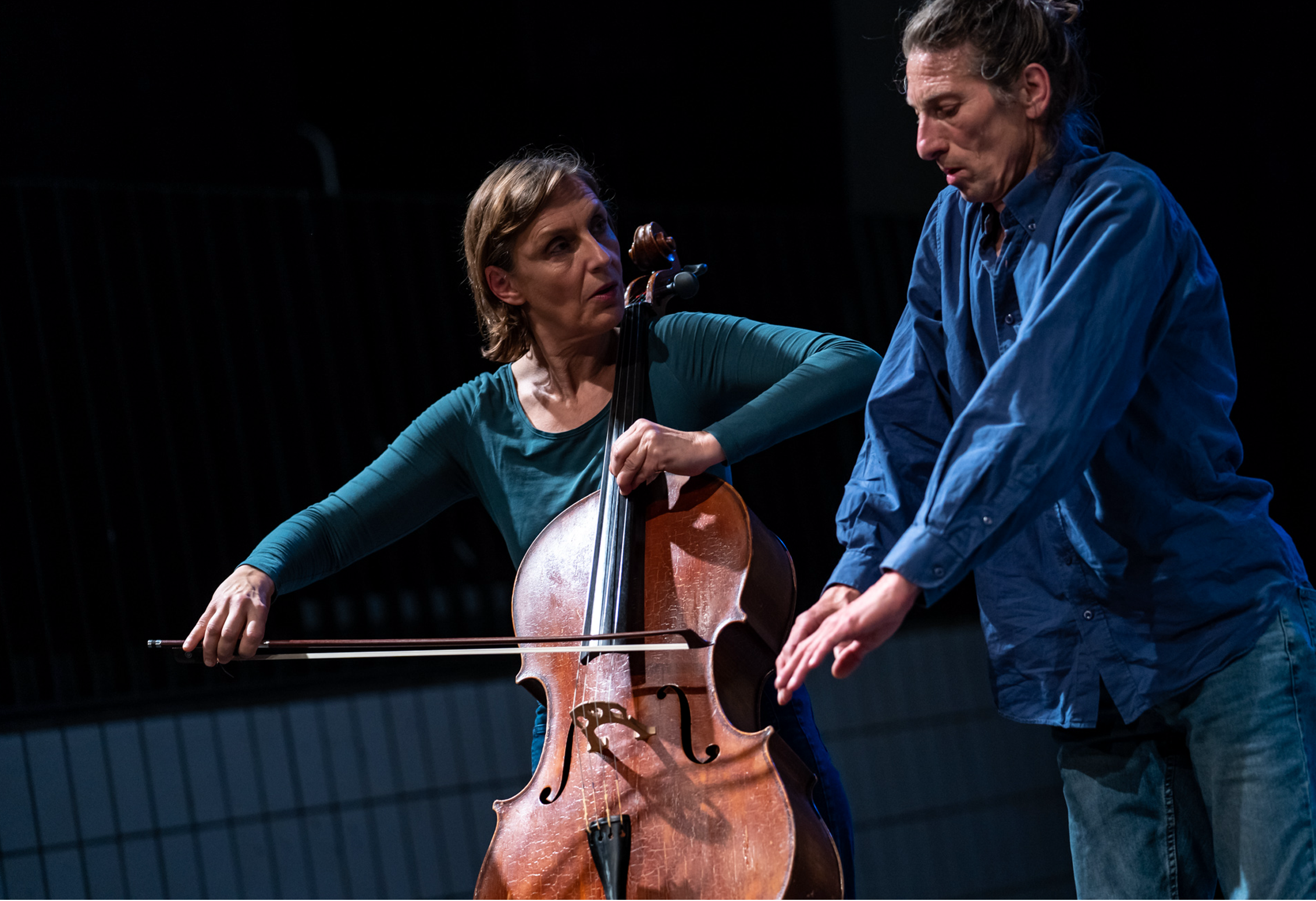
Figure 5: Ulrike Brand and Ingo Reulecke at NOW! Festival Berlin 2019. © David Beecroft; https://www.davidbeecroft.de
Corpus and Body
Gilles Deleuze’s idea of the “organless body” offers only a pseudo-solution to the conflict between corpus and body. The human body is subtracted to an assumed state before the formation of an organized interplay of body parts and thus brought to a level comparable to the inanimate object.3 This model may work very well in connection with the use of electronic sound4 but experience has shown that it is not applicable in the practice of improvisation in music and movement with acoustic instruments.
Jean-Luc Nancy’s body theory, despite its mystification, opens up the concept of corpus and thus ascribes permeability to the body. Referring to the “corpus” Nancy writes:
To sound is to vibrate in itself or by itself: it is not only, for the sonorous body, (which is always at once the body that resounds and my body as a listener where that resounds, or that resounds with it) to emit a sound, but it is also to stretch out, to carry itself and be resolved into vibrations that both return it to itself and place it outside itself.5
I would like to paraphrase Nancy’s sentences on the relationship between sound and the human body regarding the relationship between the body and the cello: The cello is always simultaneously the sounding body that and my playing and moving body, through which it sounds, and which sounds from it. For the sounding body of the cello, this means not only emitting sounds, but also expanding, transferring the vibrations to the playing and listening body and dissolving completely in these vibrations, which simultaneously relate the sound to themselves and set it outside themselves.
The use of the cello in the performance leads to changes on different levels. The trained playing gestures lose their instrumental functionality and become dance-like, visually connoted gestures, which in turn produce new sounds. They are created both in the body of the instrument and through the body of the cellist, connecting the sounding body and the human body and at the same time reaching far out into space. The classical instrument cello is allowed to move as an object in space, which emphasizes its physical aspect.
All the aspects of the performance that I have described in this text are dynamic: through their changing sounds and diverse forms of movement, they enable maximum openness, in which sound and movement intertwine and animate each other.
-
The German term “Körper” will always be translated with “body” or, in case I want to emphasize, with “human body,” meanwhile “Korpus” as the instruments body will be translated with “corpus.”↩︎
-
The German term “Körper” will always be translated with “body” or, in case I want to emphasize, with “human body,” meanwhile “Korpus” as the instruments body will be translated with “corpus.”↩︎
-
“La signifiance colle à l’âme non moins que l’organisme colle au corps, on ne s’en défait pas facilement non plus. Et le sujet, comment nous décrocher des points de subjectivation qui nous fixent, qui nous clouent dans une réalité dominante? Arracher la conscience au sujet pour en faire un moyen d’exploration, arracher l’inconscient à la signifiance et à l’interprétation pour en faire une véritable production, ce n’est assurément ni plus ni moins difficile qu’arracher le corps à l’organisme.” Gilles Delauze and Félix Guattari, Mille Plateaux (Paris: Les Èditions de Minuit, 1980), 198. “Signifiance clings to the soul just as the organism clings to the body, and it is not easy to get rid of either. And how can we unhook ourselves from the points of subjectification that secure us, nail us down to a dominant reality? Tearing the conscious away from the subject in order to make it a means of exploration, tearing the unconscious away from signifiance and interpretation in order to make it a veritable production: this is assumedly no more or less difficult than tearing the body away from the organism.” Gilles Deleuze and Félix Guattari, A Thousand Plateaus, trans. Brian Massumi (Minneapolis: University of Minnesota Press, 1987), 160.↩︎
-
“The choreographer, composer and designer must all give up trusted paradigms. The traditional model, in which a choreographer engages a designer or composer to build a ‘setting’ for their dance has little relevance to work of this kind. Interactive systems are not ‘a kind of stage set’! They require a new kind collaboration between artists—it is more intense, involving more sacrifice. The composer, for example, may have to give up considerable control over how the music sounds as it may be played by a group of dancers through their movements in space.” Frieder Weiss in the manual of the interactive sofware “eyecon,” accessed 10 January 2023, https://frieder-weiss.de/eyecon/Manual/Essay/rw-essay-concl.htm.↩︎
-
Jean-Luc Nancy, Listening, trans. Charlotte Mandell (New York: Fortham University Press, 2007), 8. “Sonner, cèst vibrer en soi ou de soi: ce n’est pas seulement, pour le corps sonore, (lequel est toujours à la fois le corps qui résonne et mon corps d’auditeur où ça resonne) émettre un son, mais c’est bel et bien s’étendre, se poter et se résoudre en vibrations qui tout à la fois le rapportent à soi et le mettent hors de soi.” Jean-Luc Nancy, À l’écoute (Paris: Editions Galilée, 2002), 22.↩︎