
How to cite
How to cite
Exotic spectacles such as Ki sua heli were preceded by experiments in propagandistic mass culture labeled as genuinely National Socialist. These were buttressed, not least, by academic claims of Germanic lineages. Alongside a visual regime of antisemitic invective—prefigured, for instance, by Braun’s photo in drag—the Nazis relied on fictitious, ethnonationalist “self-indigenization:” an assertion of their own autochthonous rootedness in a German blood and soil. The performative flipside of these exclusionary policies, marked by derogatory and exoticizing hypervisibilizations of supposed Others, can be observed in two case studies: the so-called Thingspiele—mass choral propaganda theater—and a form of Germanic ethnology (Volkskunde) shaped by dance studies. The Thingspiele theatricalized a German modernity supposedly cleansed of the impurities of cultural contaminations through fictionalized, militaristic reenactments of the Nazi seizure of power and the staging of the Volksgemeinschaft. Volkskunde, in turn, supported this performative fiction with retrospectively invented customs drawing from männerbündian—i. e., fraternal—fantasies and provided the genealogical legitimation of contemporary territorial politics. Theater and ethnology each invoked moving bodies in the service of Nazi propaganda: as instruments of decreolization and the cleansing of cultural entanglements. While targeting allegedly “dirty” modes of performing and relating, these invocations themselves could be read as a form of racialized dragging: as the exaggerated staging of a people’s body—the Nazi Volkskörper.
Thing (Euringer, Heynicke)
“Rooted” in an ancient Germanic folk etymology, invented by theatre studies, the Thingspiele—a mass theatrical form devised for Nazi propaganda shortly after their seizure of power—were conceived as modernized court plays meant to revive claimed Germanic origins in a modern guise.307 In practice, this supposedly ancestral label served as a vehicle to extend avantgarde movement and choral aesthetics of the Weimar period. These mass spectacles sought to performatively conjure the national community, presenting the becoming of one people as the realization of its “nature” by Nazi ideology. In open-air theaters—Thingstätten—constructed by local governments in coordination with the Nazi propaganda ministry, specially recruited marching columns moved through the audience. Supposedly playing themselves, these performers were meant to simulate a territorially bounded mode of participation. At first, the movement repertoire still bore the mark of early interwar avant-garde experimentation, particularly the tradition of “Ausdruckstanz,” that is, so-called German dance. The Thingspiele were designed to generate surrogate communal experiences within a staged sense of collective unity. While Joseph Roach’s Cities of the Dead defines surrogation as the creolized signature of the circum-Atlantic world shaped by colonial trauma,308 the Thingspiele instead grappled with the traumas of World War I as described by Benjamin in Erfahrung und Armut, thus emerging as a National Socialist form of surrogation.
The choral mass performances, mainly staged by the Reichsarbeitsdienst (Reich Labor Service) and party branches, “reenacted” the alleged Nazi revolution of 1933. The prominent playwright Richard Euringer, in particular, used his theatrical work as a vehicle for personal reckoning. His first award-winning Thingspiel, Deutsche Passion 1933, which restaged Germany’s defeat in World War I as a passion play, served as a model.309 However, my focus here is on Euringer’s largely unknown and apparently never-performed later 1935 play Totentanz, which returns to the theme of defeat in World War I and a soldierly national rebirth under Nazi rule. More starkly than other Thingspiele, this five-scene Totentanz violently distances itself from the creolized aesthetics of the Jazz Age and reveals the symptomatic terror embedded in Nazi figurations of indigeneity. In turn, Kurt Heynicke’s Der Weg ins Reich (The path to the Reich), which recounts the consolidation of the Nazi state apparatus, illustrates how the brutality of Totentanz was transformed into the choric staging of structural violence. Here, the Volksgemeinschaft becomes presented as a surrounding figure and immobilized.
“Jazzen! Jazzen! Jazzen! / Bis die Därme platzen! … Tanzen! Tanzen! Tanzen! // Freßt die Völkerwanzen!”310 —in English: “Jazz! Jazz! Jazz till the guts burst! … Dance! Dance! Dance! Feast on the lice of the Volk.”—declares Der Tote Mann (The dead man), the redeemer figure in Euringer’s choral court play Totentanz. Labeled by its subtitle as “a dance of the living dead and the awakened musketeers,”311 that is, of low-ranking soldiers, the work draws on medieval allegories and contemporary grotesque number revues at the same time. More than any other Thingspiel, it exposes the violent phantasm of the Nazi Volksgemeinschaft as set against a globalized mass culture, thus anticipating the sociocidal turn of Nazi politics. Totentanz aimed to restore soldierly masculinity. The play belongs to that “flood of war books” which, according to Benjamin’s Experience and Poverty, indicated the “loss of experience passing from mouth to ear.”312 Totentanz lays bare how the traumas of World War I were transformed into nationalist self-victimization and, ultimately, into political violence. Euringer’s ghostly choral play depicts vigilante justice carried out by the dead against grotesquely rendered, supposedly “dirty” figures. This is made explicit in the “Leitsätze zur Spielgestaltung”—or “Guidelines for Staging”—that precede the play itself:
Bei der Aufführung als Tanzwerk treten die Schieber der Lebewelt—ausschließlich der Goldnen Puppe—in hölzernen Gesichtsmasken auf, die den Charakter typisieren. Man spare nicht an Spukgewändern! Typen wie der Weltvampir sind ins Phantastische zu steigern, Typen wie das Schnapsgesicht, der Spießbürger und der Präsident ins Groteske zu übertreiben, da und dort nicht ohne Humor.
Die toten Muskoten dagegen erscheinen grau und ernst, vertraut und menschlich. Die Uniformen der Nationen, auf das Schlichteste stilisiert, kennzeichnen den Träger etwa. Dem internationalen Spuk setzen sie den Mannschaftskorpsgeist jeglicher Nation entgegen.
Die Scharen des Volkes erscheinen bäuerlich, was nicht besagt, es dürften die Stände der Schaffenden nicht irgendwie erkenntlich sein. Nur tritt der Halbwelt der Metropole hier die andere Welt entgegen.313In the choreographed performance, the dealers of the demimonde appear wearing typified wooden character masks—except for the Golden Doll. No expense should be spared on ghostly costumes! Figures such as the World Vampire should be elevated into the realm of the fantastic, while figures like the Booze-Face, the Petty Bourgeois, and the President should be grotesquely exaggerated—at times not without humor.
The dead musketeers, by contrast, appear as gray, solemn, familiar, and humane. Their national uniforms, modestly stylized, indicate their bearers. They counter the international specter with the male esprit de corps of each nation.
The crowds of the Volk appear peasant-like—which is not to say that the various social strands of working people may not be recognizable somehow. It is simply that the underworld of the metropolis is here confronted by the other world.
Euringer’s play, which suffers from the genre problem that the depiction of the demimonde appears much more spectacular than some grayish defeated soldiers, also makes subliminal reference to the Weimar reception of a new transoceanic mass culture. Accordingly, ghostly figures form a kind of equivalential chain of killability—the constitutive outside of the Volksgemeinschaft: “Gauner, Schieber, Spekulanten/Volksverhetzer, Intriganten,/Bankbanditen, Parasiten,/Literaten, Trustmagnaten/und geheime Diplomaten” (“crooks, dealers, speculators/demagogues, schemers, bank bandits, parasites/literati, trust magnates/and secret diplomats”).314 These figures ghostly dance around a naked Puppe (doll)—“das vergeilte Weibsgesicht” (“the horny female face”)—while “Frechstes Jazzgeplärr”(“cheekiest jazz blare”) begins.315
In the second scene, the music by Leipzig composer Siegfried Walther Müller transforms, as noted in the stage directions, into a Carmagnole der Schieber- und der Lebewelt um die Goldne Gliederpuppe”—“im Tanztakt gestampft” (“Carmagnole of the racketeers and the demimonde around the golden jointed doll” … “stomped in dance rhythm”)316 Euringer mixes the dance-of-death motif with borrowings from Max Reinhardt’s Salzburg Jedermann, the allegory of the golden Mammon. The naked, golden Puppe, which can also be read as an allusion to creolized, “brown” mass culture personified by Baker, calls for dancing: “Die Kugel rollt, die Welt ist rund/und kreiselt um die Pole. … tanzt die Carmagnole!”317 (“The ball rolls, the world is round/and spins around the poles. … dance the carmagnole!”) The Thingspiel begins where Krenek’s Jonny spielt auf ends—with the dance around the world. Respectively, the Puppe, later calling for face paint,318 appears as the allegory of the Jazz Republic and its uncontrollable, transoceanic-nomadic mass culture.
In the third scene, Euringer contrasts this with the chorus of the fallen from all factions of World War I, accompanied by marching music. Colonial soldiers from the French army also rising from mass graves evoke Old World European racism, intertwining fears of racial mixing with imperial claims to land, and drawing a sharp line between the colonized cast as indigenous and the threat of creolization:
Tote Senegalneger:
Schleppten uns, weiß nicht, wohin.
Wußten nie, warum, wieso,
und zittern und frieren noch immer so.
Sind erbärmlich aufgewacht;
treibt ihr uns wieder in die Schlacht?!
Der tote Mann: Arme Luder! Macht nach Haus!
Fechten’s wohl alleine aus.319Dead Senegalese Negroes:
Dragged us—who knows where.
Never knew the why or wherefore,
and are still shaking and freezing.
Woke up wretched—
you’re sending us to war again?!
The Dead Man: Poor bastards! Get yourselves home!
We’ll have to fight it out on our own.
Unlike the golden, hollow Puppe, which later shatters like porcelain, the colonial soldiers serving in the French army appear as part of the returning dead.320 However, the chorus of Senegalese soldiers also illustrates the ambivalence with which the relation to the African continent is portrayed. Following the logic of Totentanz, they should be sent back—to Africa, their “homeland”—as victims of French imperialism, since the play’s main target is an internationalist mass culture framed as Jewish, for instance, in references to Max Reinhardt’s Salzburg Jedermann. Its appendages—the world of the racketeers and the demimonde are finally danced to death in a “Massengrub” (mass pit) by Toter Mann, a figure reminiscent of Hitler in the persona of “the nameless soldier.”321 Accordingly, the “hellish sabbath of the orgy” in the final scene culminates in a “dance of horror” to the “heroic” rhythm of marching music.322 In the aftermath of Germany’s 1918 defeat, the play offers necropolitical National Socialist masculinity. Respectively, the choreographed massacre serves to protect a village-like community of women, children, and the elderly catering to contemporary retrotopian fantasies of purity and transposing veterans’ traumas into the fictionalized annihilation of “the Others.” As in Krenek’s work, Euringer’s associates blackness not only with skin color but, referring to its Old World European, that is, pre-Black Atlantic understanding, with death and the invisible. Euringer’s Totentanz thus blends the dance of death motif with coloniality, modern racism, and resentment toward the nomadic or creolization. In doing so, however, it evokes premodern aesthetics that resist representation.
In the early years of Nazism, the stagings of the seizure of power demanded constant aesthetic transformation to appeal to a mass audience. In the mid-1930s, shortly before the end of the Thingspiel era, the apotropaic ban of a creolized carnivalesque—clearly evident in Euringer’s Totentanz—became transposed onto the expulsion of the comic figure. Kurt Heynicke’s Der Weg ins Reich premiered at the Heidelberg Thingstätte, which had just been completed the same year as the Nuremberg Laws, which codified Nazi racial ideology by stripping citizenship from Jews and prohibiting “racial defilement” through marriage or sexual relations.323 The 1935 production transformed the theater’s architecture into a mass choreography of bodies. In this model production, directed by Lothar Müthel and—once again—designed and choreographed by Traugott Müller, the image of the national community became rendered geometrically; the soldierly chorus was staged as a wall to exclude the comic figure. Der Weg ins Reich pursued a propaganda aesthetic that banished creolized mass culture along with overly ambivalent folk-theatrical elements by ornamentalizing the Volksgemeinschaft. Performance photos show how the chorus became arranged as an extension of the stage architecture in standing still in strict ranks and files.
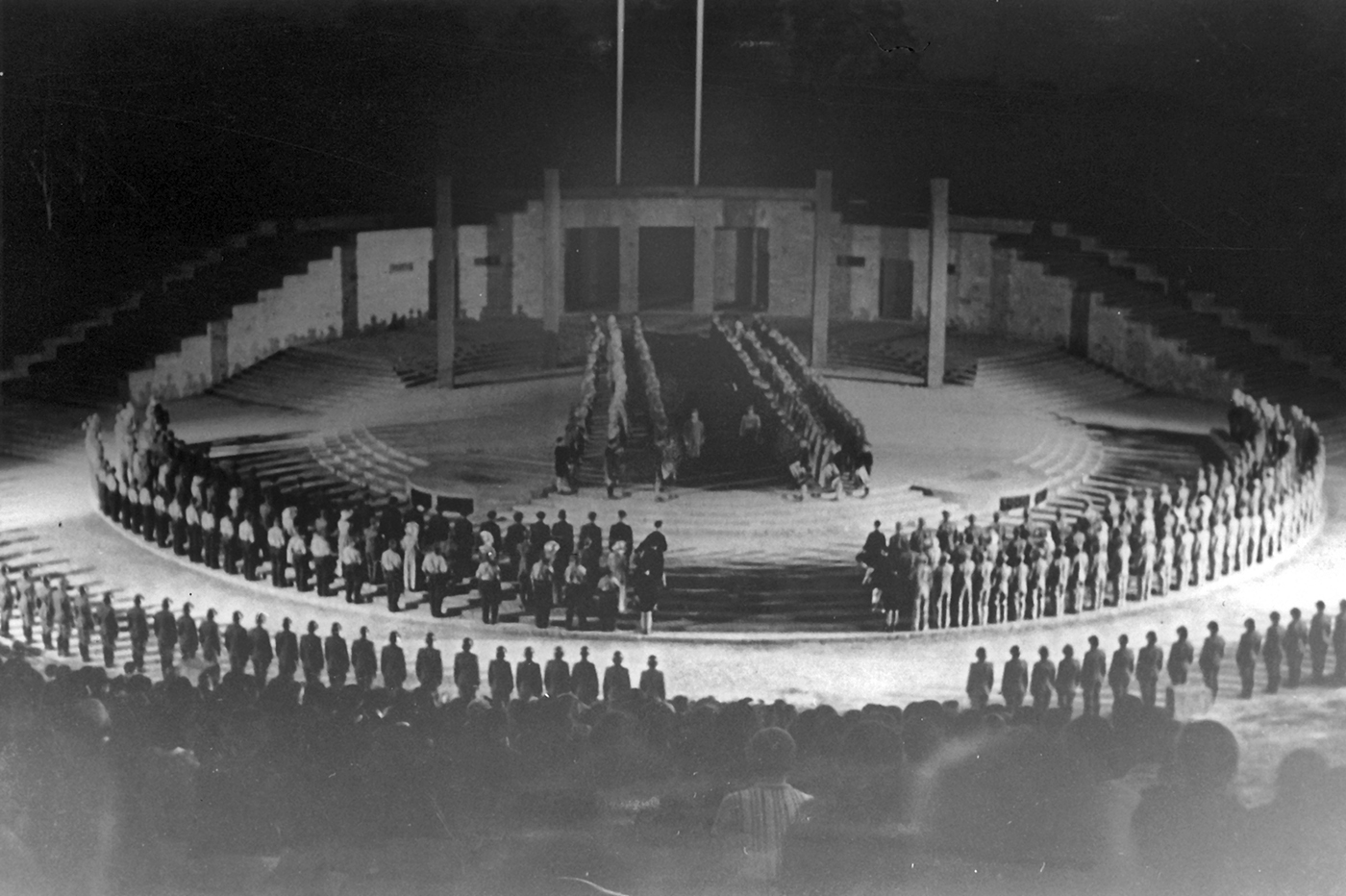
Figure 28: Der Weg ins Reich, Thingstätte Heiligenberg, Reichsfestspiele Heidelberg, 1935. Theaterhistorische Sammlungen of the Theater Studies Institute at the FU Berlin.
The mass assault on “the Others,” which plays a central role in Totentanz, is merely alluded to through two exemplary figures: the Abtrünnige (renegade)—reminiscent of Mephisto from Goethe’s Faust—who is eventually expelled and drags with him a chorus of Mitläufer (followers), functioning as a counterchorus to the groups of Kämpfende (fighters); and the “geckenhaft gekleideten” (“foppishly dressed”)324 Schwankende (waverer), who fails to penetrate the closed ranks of the chorus. Played by Hans Hessling, who would later also appear in Ki sua heli, the Schwankende is ultimately driven off the stage. Müthel and Müller adapted the expulsion of the Harlequin for the Nazi stage, and in targeting the comic figure, they also attacked the genre associated with it: namely, Old European folk theater and its play with referential slipperiness. Euringer’s crude portrayals of violence were translated into the spatial arrangement, which thus became a chorally generated environment—a living wall.
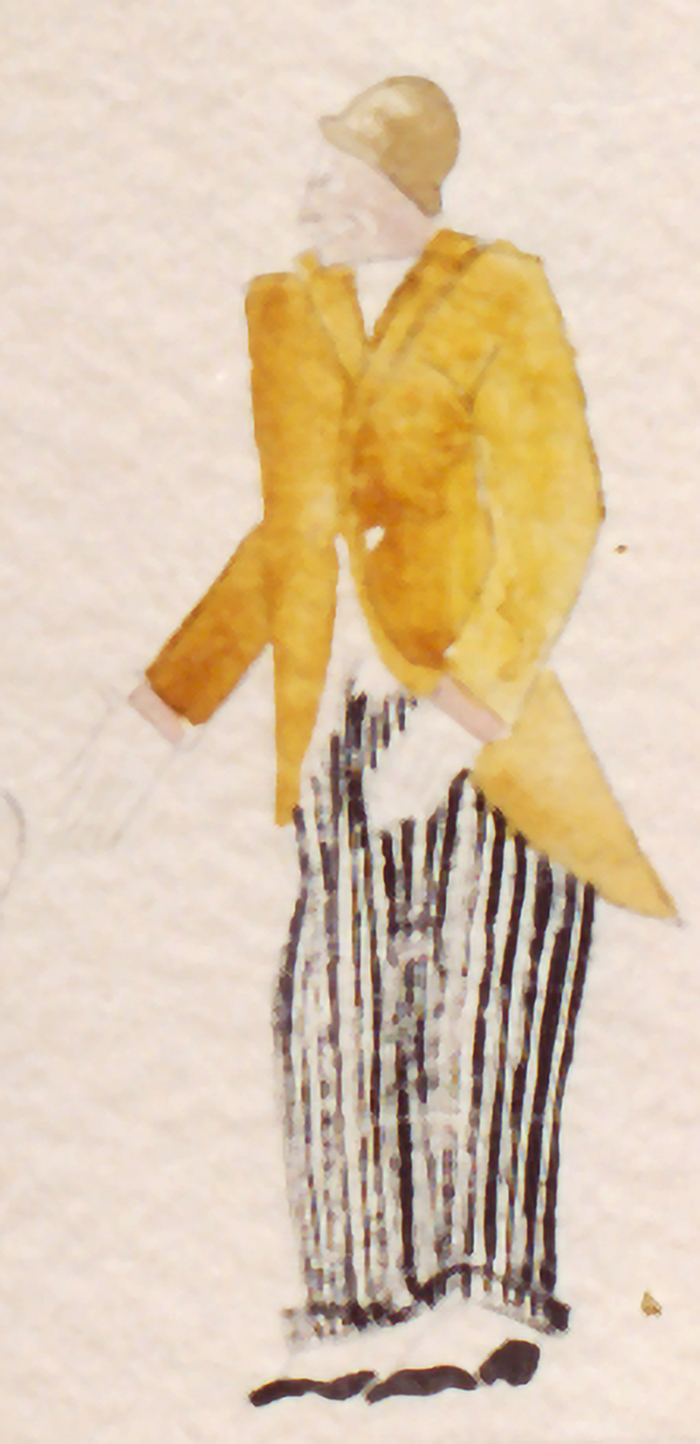
Figure 29: Der Schwankende (the waverer), costume sketch: Traugott Müller, 1938 (detail). Traugott Müller Collection, Theaterhistorische Sammlungen of the Theater Studies Institute at the FU Berlin.
This Thing aesthetic again serves to exorcise the nomadic figure. The persona with a stick, white gaiters, and a conspicuous hat—first hobbling, then merely limping—can also be read as an implicit minstrel reference, evoking “Jump Jim Crow” and their ilk; however, the citation omits the element of blackface. Müller’s costume sketch shows the Schwankende in a yellow long-tailed dandy jacket with matching headgear and striped trousers with gaiters, faintly recalling depictions of Zip Coon. Ostensibly identified by the audience as “the Jew,”325 this harlequin-like minstrel figure is presented as only “half a man”—a drag-like character associated with contemporary antisemitic and homophobic stereotypes. He appears as an allegory of everything that contradicts the statuesque image of an idealized, corporatist national community—colorful, yet orderly. Still, Der Weg ins Reich stages this national community as inherently precarious. It is not only the apparently “foppish” Schwankende—neither a “real man” nor a “real German”—who is introduced as a figure of minor mimesis. Reversing their costumes and speech,326 the Mitläufer initially attempt to infiltrate the main chorus, embodying the community of the Volk, in disguise, only to be swept along by its sound and to become reintegrated by once again reversing their garb.327 The choral scene thus explicitly stages a collective withdrawal from “drag.”
In turn, colonial discourse is transposed into a portrayal of land appropriation on home soil. The figure of the Heimkehrer (returnee) is depicted as an engineer who has ‘“worked, toiled, lost, won, grabbed” in a foreign country.328 In the new Germany, he contributes to building a dam—subjugating nature. Precisely because of his experiences abroad, he comes to embody a modern racist perspective on German supremacy. At the same time, he represents the Führer perspective. In the play, this is set in contrast to a völkisch, familial ancestor cult, represented by an old peasant woman who initially refuses to relinquish her family’s land to advance the national community, but ultimately submits to the collective cause. The Thingspiel concludes with a spectacle of fire that harmonizes modernity and archaic cult. It stands at the threshold between the early militaristic mass stagings and the later mass ornamental spectacles. The Thingspiele bear witness to how the Nazis essentialized “blood and soil” through the choral figure of the Volksgemeinschaft as they consolidated their rule. At the same time, the abrupt demise of these Thing plays in the mid-1930s illustrates how swiftly propaganda instruments can lose their effectiveness.329 Later, up until the beginning of World War II, mass ornamental pageants were staged alongside revues such as Ki sua heli, which clearly no longer relied on representational choral performance to enable surrogate participation.330 As Der Weg ins Reich demonstrates, the national community was transposed into a deployed “environmental figuration,” and thus rendered as second nature.
During the Weimar Republic, Siegfried Kracauer had argued that ornaments of the masses, as a modern “rational and empty form of the cult,”331 could evoke an understanding of social relationships as collective labor, rather than organic. Kracauer saw them as the antithesis of blood-and-soil ideologies and respective group figures. The Thingspiele, however, repurposed the ornamental—as a territorial figure and a performative threat of exclusion. They gave concrete form to the national community, transforming it from a figure evoking the uprising of the dead (Totentanz) into a domesticated environment purged of unruly movement (Der Weg ins Reich). Nazi Volkskunde—an ethnographic discipline based on racial understandings of the ancient Germans—in turn conceptualized the Volksgemeinschaft through the occlusion of the carnivalesque from the study of masking rituals. Here, too, the aim was to expel references to mass culture and borrowings from globalized mimetic forms, to code the Volk as soldierly and masculine, and to suppress reflexive performativity.
Volkskunde (Wolfram, Perchten)
One sees a ghostly, at first glance barely decipherable bustle of wandering, disguised people—some appear alone, others in pairs, and still others in gangs. At the outset, strange figures dressed in suits made of fir branches or pinecones climb up the side of a house and enter through a window, dragging along a man with a sooty face. Then someone appears in a patchwork costume—a kind of Harlequin-style red-and-white jumpsuit, with a white face mask and a pointed patchwork cap—swinging a doll on a leash. Then, someone in uniform, straddling a toy horse, cracks a whip. Eventually, a kind of procession comes into view: older men wearing fantastical, reflective headdresses adorned with brightly colored flowers—some several meters high—walk alongside young men dressed in dirndls. Their cross-dressing is accompanied by spectacularly monstrous apparitions: one wears a fur costume with cowbells; others don grotesque wooden masks with horns. Some simply have black, red, or white cloths over their faces, with eye holes cut out. Others wear Orientalized masks: one has a turban, another a glued-on beard and a fez, yet another has black makeup and resembles a carol singer. Then the figure with the toy horse and whip reappears. Eventually, the older men with their enormous headdresses dance in pairs with the young men in dirndls, jumping with one knee raised, arms on hips—a bit reminiscent of “Jump Jim Crow” and the images of T. D. Rice dancing.
After this carnivalesque arsenal of figures is introduced, the camera pans over the fantastically costumed procession, then cuts back into the action. Some figures spin in place, others dance or wrestle in pairs. At some point, the men with the towering headdresses bow—supported by the young men dressed as girls. Women appear only occasionally, unmasked, as companions of the procession. Interspersed throughout are shots of the snow-covered mountain landscape. The visual dramaturgy ties the masked figures to their idyllic surroundings. After a sharp cut, the footage turns to black and white and is shown from shifting angles. Some figures now resemble witches with brooms. At one point, a court scene with a verdict is shown.
The silent film, which possesses a grainy texture, has no voice-over commentary, suggesting the images would speak for themselves. This 16-millimeter ethnographic documentary was produced around the turn of 1940. It depicts the Gasteiner Perchtenlauf—a masked procession featuring stock characters from the Alpine region, occurring every four years as a house-to-house ritual, now recognized as part of UNESCO’s World Cultural Heritage.332 The nearly twelve-minute film was copyrighted in 1984 by the Österreichisches Bundesinstitut für den wissenschaftlichen Film Wien (Austrian Federal Institute for Scientific Film Vienna) and is now accessible online via the Österreichische Mediathek, the audiovisual archive of the Technisches Museum Wien.333 Ostensibly capturing indigenous customs, the film carefully frames and focuses on the action, deliberately excluding any elements that might indicate the contemporary filming situation.334 The fade-ins of the snow-covered landscape similarly avoid revealing that, at the time of filming, Gastein had long become a popular tourist destination with associated infrastructure.335 Clearly, the masks, figures, and their repertoire of movements were meant to appear as ritual forms untouched by modernity. At first glance, this seems entirely unrelated to the Thingspiele. The point of connection, however, lies in an understanding of performance not as drag, but as a cultic link to the dead within a suprahistorical community figure.
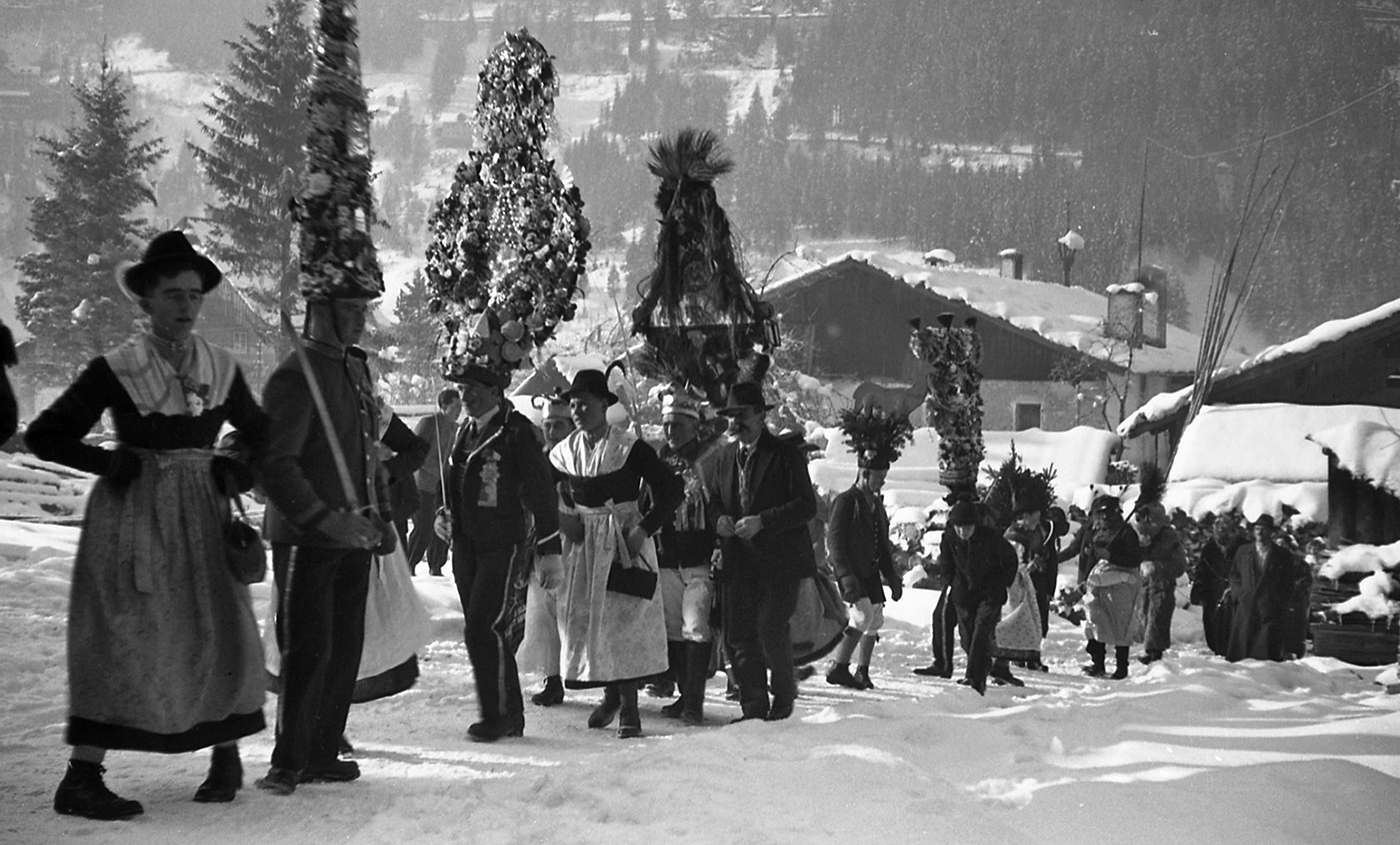
Figure 30: Perchten procession, Gastein Valley, 1940. Salzburger Landesinstitut für Volkskunde (NSLA, rw_48-2).
Neither the film nor the accompanying idyllic photographs of the Perchten procession in the snowy landscape can simply be considered documents of ancient customs; rather, they are evidence of its National Socialist invention. They were produced against the backdrop of Austria’s annexation, the so-called Anschluss, into the Nazi state and form part of the research project of Richard Wolfram, considered the founder of Austrian ethnology—of Volkskunde.336
Wolfram began photographing the Gasteiner Perchtenlauf as early as 1936 and documented it again in 1940, 1944, and later in 1962.337 In his habilitation thesis Schwerttanz und Männerbund (Sword dance and brotherhood), partially published by the German Bärenreiter Verlag in 1936 and 1937, Wolfram argues that the Perchten procession, with its jumps and stamping dances, represents the ancient Germanic Wilde Jagd (Wild Hunt), and should thus be understood as a reenactment rather than mere masquerade. According to Wolfram, the Perchten procession evokes a ghostly army of fallen warriors led by the Germanic god Wotan. The Perchtenfrenzy was a magical rite of movement, he argues, emphasizing both performative and genealogical aspects.338 In his interpretation, old Germanic legends have always been performed, not just narrated, and as manifestations of living customs they revive those who had died.339 For him, the blackened faces therefore explicitly mark the Perchten as deceased figures, distinguishing their appearances from mere masking practices.340 He thereby explicitly contests earlier interpretations that described Perchten processions as fertility or vegetation rites of pre-Christian origin,341 as well as contemporary readings of blackened faces within the context of globalized mass culture as racialized drag.
Drawing on ethnological theories of brotherhood and male bonding (Männerbund), Wolfram interprets the blackening of the face as a means of erasing one’s identifiability and thereby entering a suprahistorical warrior community.342 Deliberately ignoring both contemporary blackface and Germany’s colonial legacy, he thus redefines the black mask as the emblem of a Germanic warrior cult and its afterlife in a secret fraternity. This situates the blackened faces seen in contemporary Perchten processions within a traditional framework of combative masculinity presumed to be untouched by modernity.343 In the absence of local Germanic sources, Wolfram turned to Tacitus, who had described Germanic tribes as “indigenous.”344 Never having seen them himself, Tacitus linked the Germanic Harii—who blackened their bodies in battle—to the trope of the army of the dead.345
In Wolfram’s tribalist interpretation, blackening the skin did not merely serve to impersonate the ancestors, but to embody them through mimesis. He buttressed this claim with all kinds of sources, including Book XIII of the Historia Ecclesiastica by Ordericus Vitalis, a Norman chronicler from the twelfth century, who describes a nocturnal apparition with “two Ethiopians” dragging along a massive torture pole.346 Wolfram insisted that these accounts of a nocturnal “armed band” were not fantasies, but evidence of a mimetic reenactment of the Wild Hunt.347 At the same time, he sought to shield this ritual repertoire from transcontinental references. He “indigenized” the “Ethiopians,” casting their appearance within a thanatopolitical framework.
Likewise, he ignored the obvious cross-dressing of the young Perchten in Gastein, linking the masked procession exclusively to martial dance as an embodiment of the army of the dead.348 By conjuring the dancing undead, Wolfram’s ethnographic reading aligns with Euringer’s Totentanz.349 Yet unlike the mass theatrical staging of the community of the Volk in the Thingspiele, Wolfram treated “Germanic customs” as an indigenous revival of the dead. While the Thingspiele were propaganda tools for performatively becoming the national community, Wolfram’s Volkskundeframed contemporary Alpine traditions as living proof of the Germanic roots of Austrian culture. Like the Thingspiele, National Socialist Volkskunde positions itself here as a countermodel to drag and its incorporation into carnivalesque modes of performance.
However, Wolfram’s invention of timeless customs, informed by dance research, was also distinctly modern.350 At the turn of the century, the Viennese scholar Rudolf Much had already described an ancient Germanic world in his influential book Deutsche Stammeskunde (German tribal studies).351 Wolfram, however, gave his assertions a performative twist, transposing the nineteenth-century German national mythizations of Perchten legends into the twentieth century tale of actual nocturnal reenactments and linking them to contemporaneous studies of secret brotherhoods (Männerbund-Forschung).352 This shift in perspective within Volkskunde coincided with the Nazis’ institutionalization of theater studies, as a discipline that was also emancipating itself from German philology and that served the Ministry of Propaganda in developing mass theatrical modes of surrogate experience.353 Like the theater studies of his day, Wolfram thus anticipated the performative turn in recent research on mimesis and performativity354—albeit with the aim of fabulating a Germanic homosocial, militaristic revival of the dead.355 Claiming blood and soil, he interpreted the masked Perchten dancers and their movement repertoire as an embodied archive of the Wild Hunt.
Wolfram thus engaged in speculative thinking to address gaps in the archival record, aiming to decreolize the mask repertoire, as we might say, through ethnological dance research. What today appears as a scientifically untenable Germano-fiction—a rather wild fusion of people and landscape—was deeply complicit in the political violence of its time. Wolfram’s treatment of sources was shaped by his research environment and was emblematic of the instrumentalization of ethnologically validated origin stories. While his habilitation thesis had been published in Germany before the Anschluss of Austria, Wolfram’s film officially served Nazi government policy. His “documentation” of the Perchten in the Gastein Valley, in the Austrian Alpine Pongau region, was produced two years after Austria’s integration into the Nazi state and one year after the Nazi regime banned the Jewish population from wearing the dirndl and other traditional garments.356 The film described at the beginning of this chapter was also part of a large-scale field research project on customs in the Salzburg region, directed by Reichsführer SS Heinrich Himmler and conducted in cooperation with the police. The Alpine region on the German-Austrian border held particular significance for the propagandistic claim of a shared Austrian-German heritage, which countered the clerical-fascist policies of the Austrian corporatist state that had prevailed until 1938. The Catholic Church had long branded the Perchten processions as pagan rituals and sought to regulate their potential transformation into peasant uprisings. Wolfram’s research thus supported the anticlerical Nazi agenda directed against Austria’s rival fascism.357
The Perchten film was produced within the framework of the Lehr- und Forschungsstätte für Germanisch-Deutsche Volkskunde (Teaching and Research Center for Germanic-German Ethnology/Tribal Studies) founded in Salzburg in 1938 as part of the SS-Forschungsgemeinschaft Deutsches Ahnenerbe (SS Research Association for German Ancestral Heritage).358 Wolfram, a party member since 1932 and already well-networked during the years when the Austrian NSDAP had been outlawed (1933—1938), was appointed head of the center after the Anschluss; he received financial backing, and his work was classified as important to the war effort. In 1939, he was promoted to professor at the University of Vienna. Within the context of his work for the SS-Ahnenerbe, his habilitation thesis appears in retrospect as a latent legitimation of the so-called Schutzstaffel, the SS as a paramilitary “security” organization: the blackened bodies he describes in Schwerttanz und Männerbund could be read in relation to the black SS uniforms adorned with skull and crossbones emblems, that is, as a continuation of the black army of the dead.359 That Wolfram reformulated earlier Männerbund theories from the turn of the century and Germanized ethnographic ideas originally linked to the tropics—thus “indigenizing” them—accordingly assumed a specific political function with regard to the most murderous of Nazi organizations.360 He de-eroticized homosocial community myths, aligning them with the image of a heteronormative paramilitary elite tasked with securing and protecting the entire Volksgemeinschaft.361 Wolfram’s research, which distinguished the cross-dressing of the Perchten from contemporary drag, gender bending, and blackface, thus became a weapon on multiple fronts.
Shortly before the collapse of the regime, black-masked Schiachperchten, that is, ugly-masked Perchten, threw themselves to the ground before a Gauleiter.362On closer inspection, Wolfram’s brand of Volkskunde, however, was more directly complicit in the terror of the Nazi regime. While the Perchten were portrayed as descendants of the ancient Germanic tribes, Wolfram, who was rehabilitated in 1954, appears to have been involved not only in art theft and resettlement operations, but also in the murderous policies of the SS. When he failed to “reeducate” Norwegian students at the Sennheim training camp in Alsace, he had them deported to the Buchenwald concentration camp, where fifty of them were subjected to medical experiments and where prisoners were killed through the most brutal forced labor.363 This episode reveals the vicious underside of Wolfram’s academic entanglement with the SS, whose Totenkopfstandarten were tasked with organizing concentration and extermination camps and conducting human experimentation. Read as a case study, Wolfram’s work uncannily exemplifies the politicality embedded in academic fantasies of indigeneity.
This is also evident in Wolfram’s justification of irregular jurisdiction, which characterizes the Thingspiele, as well. Schwerttanz und Männerbund emphasized the link between masked processions and quasi-judicial stagings. Wolfram thus associated the Perchten—as well as the Alpine Krampus runs around December 6, in which adolescent men wearing dark wooden masks and fur costumes parade from house to house—with rural, boisterous reprimand courts of peasant secret societies. Although he mentions neither the Thingspiele nor the SS, his research can in fact be related to the legitimation of the Nazi regime’s production of a permanent state of exception.364 Wolfram used his “folklife studies” to legitimize extralegal jurisdictions, and thereby also the contemporary policy of irregular governance (Maßnahmenpolitik), invoking what he called the unpredictable Janus face of the customs described in Schwerttanz und Männerbund.365
Wolfram justified, for instance, the right to steal during Heischegänge, that is, ritual soliciting processions. Reading these performative practices as traditional moral courts or playful inspections of household cleanliness, he claimed that the Heischegänge lived on in playful form in the Perchtenlauf and in charivaris—legitimizing how gangs of men would break into houses and, for instance, “disguised as Jews,” steal something or engage in “bloody brawls.”366 Hence he did not associate these appearances with acts of private revenge, sexual harassment, or local lynching under the cover of masked, noisy parades, but rather saw them as forms of communal moral enforcement. Accordingly, he further situated these processions within the framework of political uprisings for local order. In this sense, he described the vigilante public shaming procession known as Haberfeldtreiben in the Bavarian town of Miesbach—a secret peasant court of rebuke from 1863 that some had still sought to revive in 1919—as well as the Gastein Perchten as political performances.367 And he interpreted these masked processions as protests against the corruption of those in power, legitimized by age-old customs. The peasant secret society remained entirely impenetrable to the authorities, Wolfram claimed in reference to the Haberfeldtreiben, as long as the custom was upheld with its traditional rigor.368
The Gastein Perchtenlauf that Wolfram filmed, however, also draws on the carnivalization of courtly pageantry. On closer inspection these borrowings reveal themselves as performative transpositions that contradict Wolfram’s reading. Herod and his wife, Roman soldiers, and fanfares—figures featured in the Gastein masquerade shot by Wolfram—are today seen as a blend of St. Nicholas plays and carnival satire.369 The Gastein Krampus runs are likewise connected to this tradition. In these events, masked young men visit their fellow villagers to scold them, distribute small gifts, and demand schnapps in return. At the end of these rituals—reminiscent of plays, in which baby Jesus was traditionally, and until recently, performed by men dressed as young girls—the Kramperl are finally unleashed: increasingly drunken devil figures clad in fur costumes and grotesque dark wooden masks. Krampus runs, associated with winter customs during the “dead” Rauh- or Glöcklernächte—Twelfth Night, or masked bell-runner night—carry with them a parody of prevailing justice. As carnivalesque performances, they do indeed echo independent jurisdictions that often served to violently enforce traditional norms under the protection of masks.370 On the one hand, such performances recall earlier uprisings against authority; on the other, they invoke the social, and at times terroristic, disciplining historically associated with male-adolescent parades—targeted at young girls or “fallen” women and, in certain instances, at the Jewish or Protestant population.371
The reference to the Gastein Perchten run also highlights what Wolfram’s reading of masked states of exception actively represses: the entanglement of diverse performative techniques, whose origins cannot be traced as neatly as Schwerttanz und Männerbund implies—particularly in light of histories of forced migration. In their regionally adapted forms of performance, continually responding to local conditions, the Perchten testify to long-distance trade routes and networks (via old pack trails and mountain passes reaching as far as Venice); to experiences of flight and expulsion; to rural carnivalesque parodies of courtly spectacles; and to the citation of modern mass culture. They are less domestic than nomadic figurations.
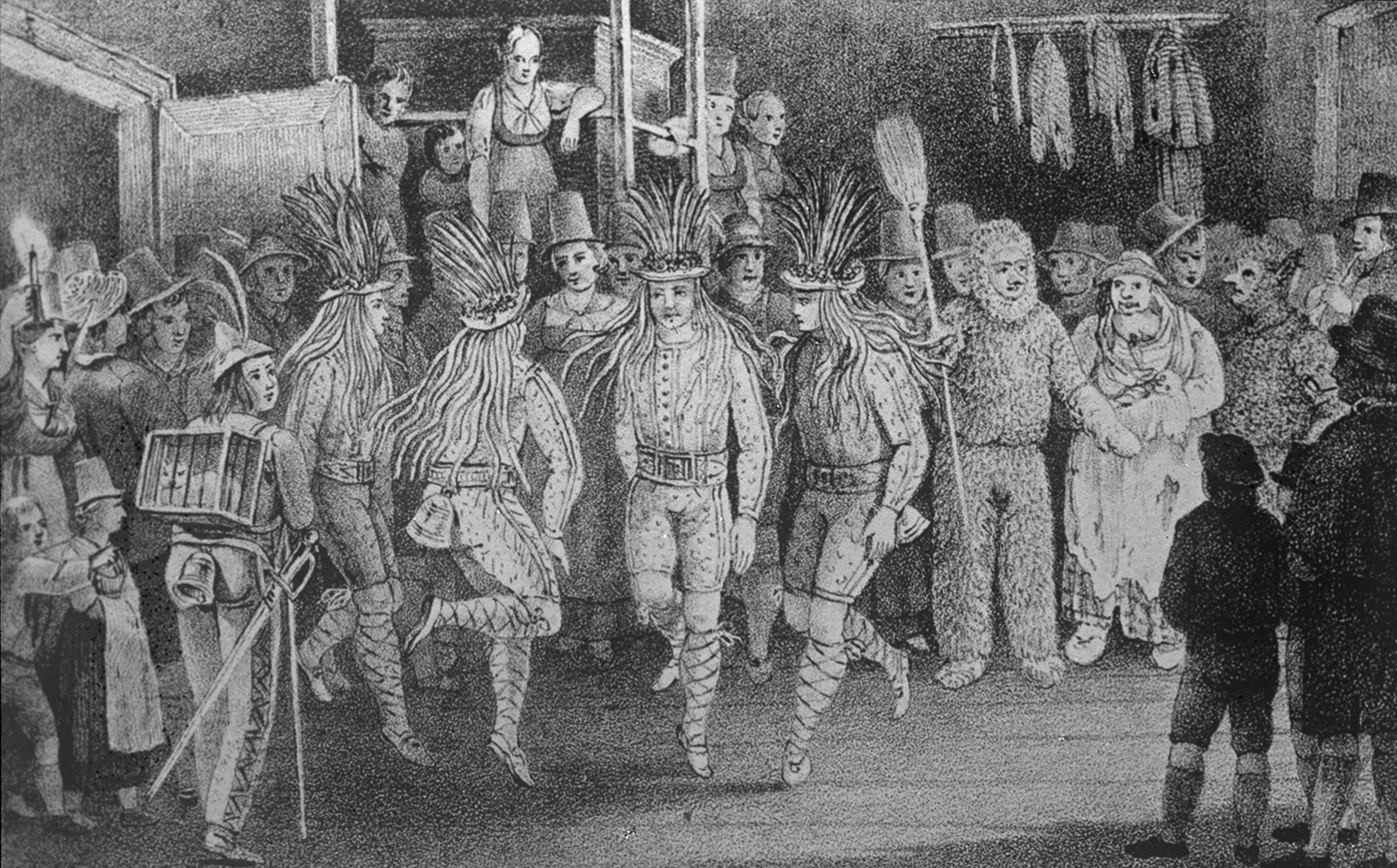
Figure 31: Pinzgauer Tresterer, undated. Österreichisches Volkskundemuseum, Vienna (CC PDM 1.0).
In the case of the neighboring Pinzgauer Tresterer—a variant of Perchtentum distinguished by feathered crowns and long ribboned headdresses—carnival elements are joined by echoes of nineteenth-century Amerindian stereotypes.372 Photographs such as the one above taken before National Socialism and collected by Österreichisches Volkskundemuseum clearly show, just as historical sources indicate, what Ignaz Kürsinger noted in 1841: “ihre Kleidung und Tanz erinnerte mich lebhaft an die Tänze der Indianer, wie ich sie in Bildern sah” (“Their clothing and dance reminded me vividly of the dances of the Indians as I saw them in pictures”).373 Kürsinger continues by emphasizing their resemblance to the harlequin:
Sie ziehen von Pfarre zu Pfarre, begrüssen die besseren Häuser, so ihnen die Mühe des Tanzes mit Branntwein und Brod gelohnt wird, und kehren dann friedlich wieder zu ihren Arbeiten zurück. Alt und Jung, Groß und Klein läuft diesem uralten Volks-Schauspiele zu, weidet sich fröhlich an den Sprüngen der Tresterer, freuet sich über die Berchten und belachet den Hanswurst.374
They travel from parish to parish, greeting the better-off households—provided the effort of dancing is repaid with brandy and bread—before peacefully returning to their work. People of all ages and sizes gather for this time-honored folk play, happily taking pleasure in the Tresterer’s jumps, cheering the Berchten, and laughing at the Hanswurst.
The Perchten also cite an amalgam of earlier practices, which Wolfram overwrites, thereby obscuring performative entanglements. The Viennese ethnographer Wilhelm Hein, by contrast, had already asserted in the nineteenth century:
Die große Aehnlichkeit dieser Masken in Form und Auffassung mit den Tanz-, Beschwörungs- und Teufelslarven verschiedener Völker, verleiht ihnen nicht bloß österreichische und mitteleuropäische volkskundliche Bedeutung, sondern stellt sie in eine Linie mit jenen Erzeugnissen, in welchen sich allerorts der Menschengeist in gleicher Weise offenbart; sie bilden daher ein unentbehrliches Glied in der Gesammtheit der Volksvermummungen, wie sie bei allen Völkern des Erdballs geübt werden.375
The strong resemblance these masks bear in both form and conception to the dance, invocation, and devil masks of various peoples not only lends them ethnographic significance in the context of Austria and Central Europe, but also aligns them with those cultural forms in which the human spirit reveals itself in the same way everywhere; they thus form an indispensable link in the totality of folk masquerade as practiced by all the peoples of the world.
Even in Wolfram’s original book manuscript, preserved in his papers at the Salzburger Landesinstitut für Volkskunde, there are recurring echoes of parallels between his ostensibly Germanic field research and African ethnology. Moreover, in the book version released in three installments, which for unexplained reasons breaks off mid-text without the remainder being published, he notes that his research on the sword dance reminded him of African step dancing.376
Contemporary scholarship traces the Perchten repertoire back to medieval jumping processions, prop dances performed by craftsmen, or courtly morris dances,377 pointing to comparable practices throughout Europe. This applies particularly to the so-called Schönperchten, that is, the beautiful Perchten, with their towering caps: older men accompanied by their “Gsellinnen” (“female companions”)—boys dressed as girls, referred to as “sekundierende Nachtänzer” (“seconding dancers”). As shown in Wolfram’s film, they bow to the houses they pass. This cites performances of the Salzburg court, where the Venetian carnival—internationally influential around 1600—was celebrated as part of a spectacular Baroque urban cultural politics, intended among other things to channel street carnival.378 Nevertheless, bans on masks and court edicts of the seventeenth and eighteenth centuries—measures aimed not least at cross-dressing and the carnivalization of gender—also indicate the carnivalization of courtly and liturgical performances from below. Astrid Kusser describes the Cake Walk as a parodic creolization of European social dances by those enslaved on the plantation.379 The Alpine peasants’ quotation of courtly dances, carnivalesque masked festivals, and commedia performances from the Salzburg court into the kinaesthetic jumping repertoire of the Perchten can be seen as distantly related.380
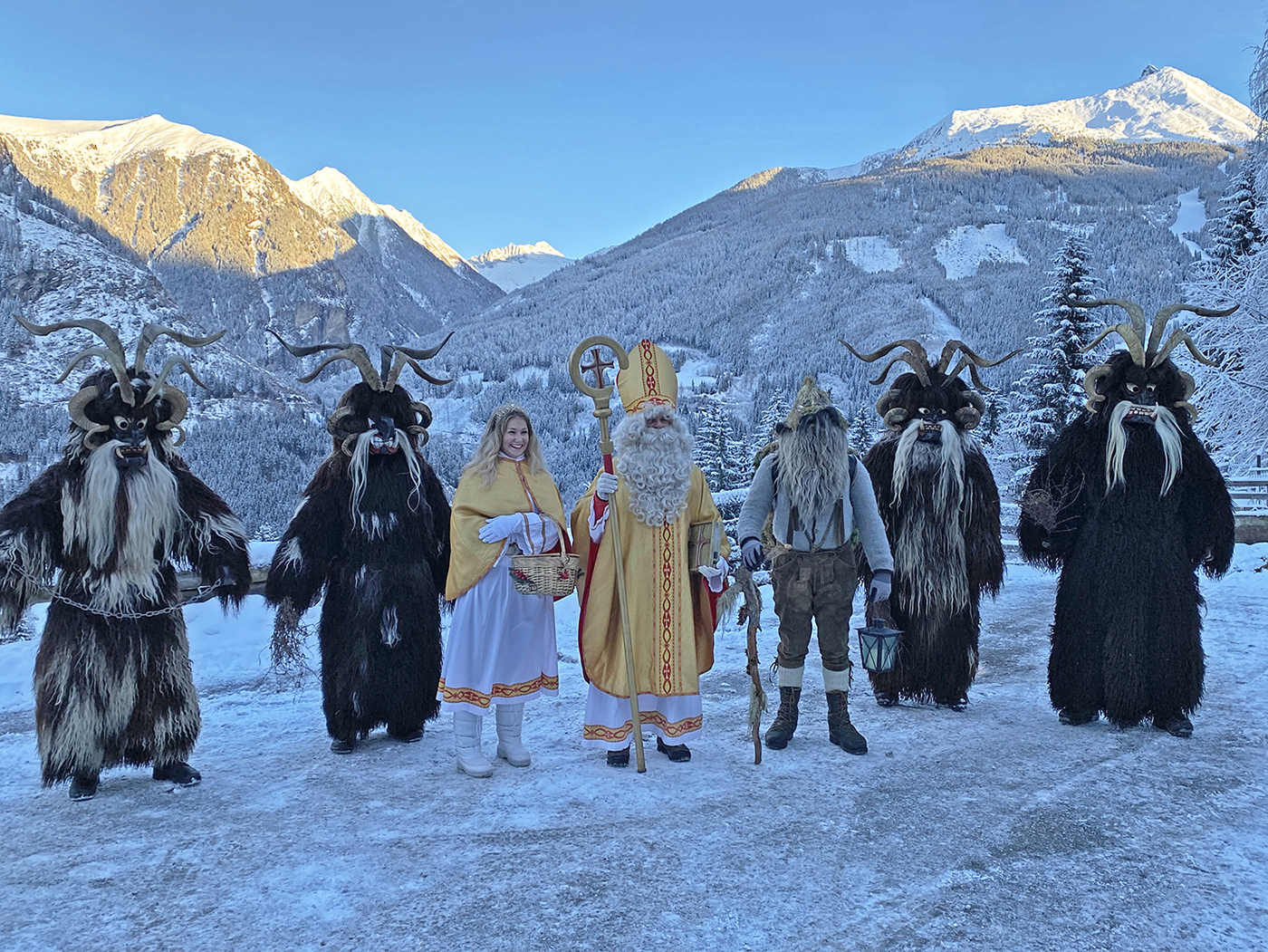
Figure 32: Krampus run, Gastein 2022, Bassetti Pass. Photo: Evelyn Annuß.
The intertwined history of performative citation also recalls long-forgotten local contexts of violence. Some figures and masks—such as the towering table caps of the Schönperchten—are today attributed to Tyrolean customs. Their migration to the Gastein Valley, however, dates back to the expulsion of the Protestant population from the Salzburg region by the Catholic Church in the sixteenth and seventeenth century. The now “cleansed” Gastein Valley was repopulated with laborers from Tyrol, who brought the Perchten caps with them and gradually transformed them into oversized forms.381 Appearances of figures such as Frau Perchta and the so-called Schnabelperchten can likewise be read as performative transpositions of plague narratives; the “long nose” of the Perchta, documented as early as the fourteenth century, also references the plague doctors’ medical masks—though this connection is barely legible today. Incorporated into the costume repertoire of the Venetian carnival, these masks made their way to the Salzburg court and from there, apparently, into rural winter processions.382 Even the witch figures evoke the often gendered persecutions tied to plague-related fears.383 Accordingly, the masks depicted in Wolfram’s film can be linked to both earlier and contemporary political violence.
In the context of Wolfram’s SS affiliation, the Germanized and militarized Perchten were understood as pre-Nazi courts of reprimand—beyond the reach of state control and regulation. At the same time, Wolfram sought to purge the comic-carnivalesque elements—expelling, as it were, the harlequin, with all its grotesque entourage and all its dragging. In the context of his activities in Salzburg for the SS-Ahnenerbe, Wolfram instrumentalized the Perchten as a latent, genealogical legitimation of Nazi state terror prior to its collapse in 1945, and as an ethnonationalistically indigenized counterfigure to the nomad. Read against the grain, this instrumentalization underscores the microfascist potential of carnivalesque performance,384 something that remains visible in other contexts today. Through the Nazi reception of the Perchten, the terroristic potential of masked, anonymous parades comes into play—not as expressions of traditional jurisdiction, the Thing, so to speak, but as the possible violent flipside of carnivalesque transgression. Despite the existence of regional resistance to the Nazis,385 Wolfram’s readings of these performances provoke questions about the diverse ways in which mimesis can be politically mobilized.
*
From 1941 onward, theatrical condemnations of the nomadic in propaganda, art, and scholarship—accompanied by genealogical fabulations—helped legitimize the industrial extermination of those who had been marked as tribeless, impure, dirty, and lacking primordial affiliation to blood and soil—in other words, as always already in drag. Against the backdrop of current and often competing debates on antisemitism and colonial racism, this chapter has sought to analyze the violent equations of figures of “the Other.” In the case of Nazism, the dangers of essentializing, territorializing thinking become starkly apparent. Eva Braun’s antisemitically charged photograph in blackface-drag, the exoticism of Ki sua heli, the performative invention of the Volksgemeinschaft in propaganda theater, and the legitimation of the Germanic Thing lineage through Volkskunde—the Nazi materials assembled in this chapter—testify to diverse strategies of fascist decreolization, to a fictive process of “dedragging,” so to speak. Beyond the antisemitic charge of blackface, and its reading as a modern figure of globalization, Nazi representations of “African natives” served to banish the contemporary creolization of the world—epitomized in the figure of the nomad—through a German project of “debarbarization.” What emerges here are both differentiated forms of representational racism and their complementary role in the ideological construction of blood and soil—as well as their inverse: the ethnonationalist claim of autochthony through figurations of the Volksgemeinschaft in the Thingspiel, and the justification of extralegal, supposedly indigenous jurisdiction through the expulsion of carnivalesque performativity in Volkskunde. These forms of propaganda, which were by no means uniformly effective, perished with the end of the regime at the latest. Yet the modes and figures of thought embedded in them continue to reappear elsewhere in new forms.
An analysis of the Nazi era, in particular, makes clear which of these need to be reexamined today—and to what extent the debate around mimetic messiness demands greater precision. The political right is increasingly contributing to the dismantling of international law and legal protections for refugees—legal frameworks established in direct response to Nazi terror after 1945—through its appeals to majoritarian identitarianism. This chapter, by contrast, employs historiography to mediate between the increasingly siloed debates on antisemitism and colonialism. In this context, Baker’s dance, along with Benjamin’s and Kafka’s understandings of language, serve as examples that not only recall the figure of nomadic schlepping-along in relation to creolized, queer cultural techniques, but also foreground a figure of dirty dragging which points toward possible future alliances.386
Endnotes
-
On the Thingspiel, see Annuß, Volksschule, 2019 (the section on Kurt Heynicke’s Der Weg ins Reich contained here is the continuation of a longer chapter: 266—278); Stommer, Die inszenierte Volksgemeinschaft, 1985. The term “Thing,” a transliteration of “concilium,” comes from contemporary translations of Tacitus and serves the Germanized branding of the Nazi mass spectacles.↩︎
-
See Roach, Cities, 1996. ↩︎
-
See Annuß, “Quoting Passion Aesthetics,” 2023.↩︎
-
Euringer, Totentanz, 1935: 28. See also Annuß, “Environnement et communauté nationale,” 2024.↩︎
-
Euringer, Totentanz, 1935: 28. In German: “Ein Tanz der lebendig Toten und der erweckten Muskoten.”↩︎
-
Benjamin, “Experience and Poverty,” 2005. 731—732. In German: “Was sich dann 10 Jahre danach in der Flut der Kriegsbücher ergossen hat, war alles andere als Erfahrung, die vom Mund zum Ohr strömt.” Benjamin, “Erfahrung und Armut,” II.1, 1991: 214.↩︎
-
Euringer, Totentanz, 1935: 15—16.↩︎
-
Euringer, Totentanz, 1935: 15—16.↩︎
-
Euringer, Totentanz, 1935: 16.↩︎
-
Euringer, Totentanz, 1935: 16.↩︎
-
Euringer, Totentanz, 1935: 16. ↩︎
-
Euringer, Totentanz, 1935: 18.↩︎
-
Euringer, Totentanz, 1935: 23. In the case of the colonial soldiers, Euringer lets the meter stumble, while he ascribes a march-like rhythm to the German martyrs. ↩︎
-
Euringer thus does not follow the common distinction between the figure of the “loyal Askari” and the personification of “black shame”; see Lewerenz, Die Deutsche Afrika-Schau, 2006, 132—136. Bruno Schönlank, Der gespaltene Mensch, 1927, provides the countermodel to the revisionist colonial discourse in the German-language theater of the Weimar period.↩︎
-
Euringer, Totentanz, 1935: 32; on the figure of the nameless soldier: 27; see also Euringer’s Deutsche Passion, 1934.↩︎
-
Euringer, Totentanz, 1935: 25.↩︎
-
For more details, see Annuß, Volksschule, 2019: 251—280. The corporatist construct of the Volksgemeinschaft was envisioned to comprise 90 combatants (men and women), 450 main chorus members, and 30 followers (Mitläufer); see Heynicke, Der Weg ins Reich, 1935: 5. On the Nazi reception, see Braumüller, “Kurt Heynicke,” 1935.↩︎
-
Heynicke, Der Weg ins Reich, 1935: 13. See Ihering, “Auf der Thingstätte,” 1935.↩︎
-
See Röhr, “Reichsfestspiele Heidelberg,” 1935.↩︎
-
See Heynicke, Der Weg ins Reich, 1935: 12.↩︎
-
Heynicke writes: “Der Schluß des Abmarschliedes rauscht noch einmal zwingend auf. Wie von ihm gezogen, marschieren die Mitläufer dem Hauptchor nach”; in English: “The end of the marching-off song once again roars out compellingly. As if pulled by it, the followers march after the main choir.” See Der Weg ins Reich, 1935: 38.↩︎
-
In German: “geschafft,/Geschuftet, verloren, gewonnen, errafft.” Heynicke, Der Weg ins Reich, 1935: 15. The figure of the returning engineer is an updated Faust II quotation. Heynicke turns Goethe’s plot into a happy ending and reinforces its latent colonial reference; on Faust as entrepreneur and colonizer, see Hegemann, “Mit welcher Freude,” 2017; Jäger, Fausts Kolonie, 2011; Goethe’s “Faust,” 2021. ↩︎
-
On the rejection of cultic rituals after the consolidation of the state apparatus, see Hitler’s Kulturrede at the Congress of the Nuremberg Party Rally on September 6, 1938, quoted in Domarus, Hitler, 1988, 1: 892—894.↩︎
-
On the concept of externalization, see Lessenich, Neben uns, 2016. On the appropriation of mass ornaments by the Nazis, who used them to ideologically communitize the crowd from a supposed Führer perspective rather than to represent the national community, see Annuß, Volksschule, 2019, 416—437.↩︎
-
Kracauer, The Mass Ornament, 1995, 84. In German: “Leerform des Kults.” Kracauer, Ornament der Masse, 1977: 61. ↩︎
-
For the synonymous use of Perchten and masks in historical sources, see Kammerhofer-Aggermann, Perchtenlaufen, 2002. For an overview of today’s arsenal of figures, see the Gastein Perchten website: www.gasteinerperchten.com, accessed September 12,
2024. Perchten runs were first reinvented in the nineteenth century in the context of the rural exodus of the time, and then again from the 1960s onward in the course of mass tourism developments in urban areas; on the function of this invention of tradition (Hobsbawm, 1996), see Kammerhofer-Aggermann, “Kramperl,” 2002; “Prozess,” 2002; Köstlin, “Bräuche,” 2002. See also the descriptions by Adrian, “Perchtenlauf,” 2002 (originally published in 1948), and Andrée-Eysn, “Die Perchten,” 1905.↩︎ -
The footage is dated January 7, 1940. The credits, added later by the Österreichisches Bundesinstitut für den wissenschaftlichen Film Wien, name Richard Wolfram as the author and cameraman; after his official denazification, he dedicated a merely descriptive commentary to this “strong tradition” of Perchten: https://www.mediathek.at/katalogsuche/suche/detail/?pool=BWEB&uid=018AA5A1-1B9-01FCE-00000484-0189A3E5&cHash=cc97945d539ffa82f91c86a988dd308f; 11:39, C 1984 editing Lisl Waltner, Österreichische Mediathek, Technisches Museum Wien; accessed September 12, 2024.↩︎
-
On the fictionality of the documentary, see Sontag, “Fascinating Fascism,”1981; Balke et al., Durchbrochene Ordnungen, 2020.↩︎
-
For the history of Gastein, which lies on an Alpine pack trail leading to Venice and has been widely connected for centuries through mining and its role as a spa, see Gruber, Über 1000 Jahre, 2020. Today’s genetic studies of bone finds point to early historical migratory movements from Iran via the southern Russian steppe to Gastein (see p. 8).↩︎
-
On the history of German-Austrian ethnography (Volkskunde) and Wolfram’s role, see Bockhorn, “Brauchtumsaufnahme,” 2002; “Von Ritualen,” 1994; Höck, “Richard Wolfram,” 2019; Johler, “Richard Wolfram,” 2021; Ottenbacher, “Richard Wolfram,” 1989. Wolfram’s papers are held—apparently having been purged by Wolfram himself of most Nazi traces—in the Salzburger Landesinstitut für Volkskunde (SLIVK, NRW); see Kammerhofer-Aggermann, “Mythen,” 2020: 120. Wolfram’s papers also contain the complete manuscript of the only partially published habilitation thesis Schwerttanz und Männerbund (SLIVK, NRW, Manuskripte 1998-N, 2000-N, pp. 1—350 of 639).↩︎
-
For the numerous photographs that have not been systematically catalogued, see Greger, “Zum Bildnachlass von Richard Wolfram,” 2022; Bleyer, “Perchtenaufnahmen,” 2002; Bockhorn, “Brauchtumsaufnahme,” 2002.↩︎
-
See Wolfram, Männerbund, 1936—38: 290. On his later Perchten research, see Wolfram, “Percht und Perchtengestalten,” 1979.↩︎
-
See Wolfram, Männerbund, 1936—38: 258.↩︎
-
See Wolfram, Männerbund, 1936—38: 291.↩︎
-
See for example Adrian, Von Salzburger Sitt’ und Brauch, 1924. ↩︎
-
See Wolfram, Männerbund, 1936—38: 104.↩︎
-
The Krampus and Perchten exhibits in the Salzburger Weihnachtsmuseum from around 1900, which are reminiscent of minstrel shows, bear witness to the contrary; see, for example, the Perchten figurines with Afro hairstyles depicted in Gockerell, Weihnachtszeit, 2000: 59, 63.↩︎
-
On the “Germanos indigenas,” see Tacitus, Germania, 1932: 14; with reference to the term “Thing” in Ronge’s translation to German: 23. Geschiere, Perils of Belonging, 2009, describes the pitfalls of the thought figure of the indigenous today. ↩︎
-
See Tacitus, Germany and Its Tribes, chapter 43: “The Harii, besides being superior in strength to the tribes just enumerated, savage as they are, make the most of their natural ferocity by the help of art and opportunity. Their shields are black, their bodies dyed. They choose dark nights for battle, and, by the dread and gloomy aspect of their death-like host, strike terror into the foe, who can never confront their strange and almost infernal appearance. For in all battles it is the eye which is first vanquished.” Tacitus, Complete Works of Tacitus, 1942, translated by Alfred John Church, quoted from Perseus Digital Library, http://data.perseus.org/citations/urn:cts:latinLit:phi1351.phi002.perseus-eng1:43. ↩︎
-
Vitalis, “Ecclesiaesticae,” 1855; cited in Wolfram, Männerbund, 1936—38: 256.↩︎
-
Wolfram, Männerbund, 1936—38: 258. Corresponding approaches can be found in the Austrian medievalist Otto Höfler, who taught at German universities during the Nazi era, worked for the SS-Forschungsgemeinschaft Deutsches Ahnenerbe, and undertook field research with Wolfram (Kultische Geheimbünde, 1934, on 45); and in theater studies with Robert Stumpfl, Kultspiele, 1936.↩︎
-
See Wolfram, Männerbund, 1936—38: 278. ↩︎
-
Like Euringer in his Totentanz, Wolfram continued to attack jazz in his post-Nazi research as a chaotic, unchained antithesis to his Old World European dance tradition; see Volkstänze, 1951. Even during the Nazi era, Wolfram interpreted the Schwerttanz, a folk dance performed by men with weapons, as an “ancient” rural, fraternal ritual custom; see Männerbund, 1936/37, 45; on the Totentanz as Germanic heritage, 112.↩︎
-
With regard to the focus on performativity, studies of Nazi theater and performance studies align; see Annuß, “Wollt ihr die totale Theaterwissenschaft,” 2016.↩︎
-
See Much, Stammeskunde, 1900.↩︎
-
See Johler, “Richard Wolfram,” 2021.↩︎
-
In 1955, Wolfram gave a lecture on Sword Dancing and the Männerbund at the University of Cologne, where the initiator of the Thing propaganda, Carl Niessen, was head of the Institute of Theater Studies and the ethnologically oriented Theaterhistorische Sammlungen. It was apparently expected that he could contribute to Wolfram’s rehabilitation; on the connection between Wolfram and Niessen, see Höck, “Richard Wolfram,” 2019: 515. On Niessen, see Probst, Objekte, 2023.↩︎
-
On mimesis, see Balke, “Ähnlichkeit und Entstellung,” 2015; “Mimesis und Figura,” 2016; Mimesis zur Einführung, 2018; Balke and Linseisen, Mimesis Expanded, 2022; on movement repertoire, Schneider, “Performance Remains Again,” 2012; Taylor, The Archive and the Repertoire, 2003.↩︎
-
See Mbembe on the tremendous work of fabrication bound up with the European Enlightenment and its colonial flipside: “The expansion of the European spatial horizon, then, went hand in hand with a division and shrinking of the historical and cultural imagination and, in certain cases, a relative closing of the mind.” Critique of Black Reason, 2017, 17.↩︎
-
On the antisemitic Nazi ban on traditional costume (Trachtenverbot) in 1938, see Kerschbaumer, “Organisiertes Heimatbrauchtum,” 1996: 126; “Rekonstruktion,” 1996: 294. On the transformation of traditional costume into a folkloristically legitimized Nazi weapon of exclusion, see Nikitsch, “Tracht,” 2019. Schurtz reads traditional costume in the nineteenth century as a badge of gender and class; see Philosophie der Tracht, 1891: 5.↩︎
-
See Talós, Austrofaschismus, 2005, and Das austrofaschistische Herrschaftssystem, 2013. Although the Perchten runs were repeatedly banned by the Catholic Church, after 1938 they were popularly linked to the expulsion of the Protestant population from the Salzburg region between the sixteenth and eighteenth centuries and thus mobilized for Nazi propaganda. See also Eberhard Wolfgang Möller’s Frankenburger Würfelspiel, first performed in 1936 as part of the cultural program for the Olympic Games in Berlin, for similar propaganda claims to peasant uprisings; see Annuß, Volksschule, 2019: 345—388. On the differing Austrian reception of the Thing after the Anschlussin 1938, see Annuß, “Thingspielen in Österreich,” 2017.↩︎
-
See Johler, “Richard Wolfram,” 2021: 1312, 1317. On the “SS-Ahnenerbe” as an umbrella organization for all kinds of obscure and occult positions, see Kater, Das “Ahnenerbe,” 2006.↩︎
-
On the history of SS uniforms and their citation of paramilitary Freikorps, see chapters 8 and 9 in Diehl, Macht, 2005; Ruda, Totenkopf, 2023: 327—415.↩︎
-
On the ethnological invention of Männerbünde around 1900, see Schurtz, Altersklassen, 1902: 261, 264; Urgeschichte, 1900: 110—115; in the Austrian research context, see Much, Deutsche Stammeskunde, 1900. For a critique of studies on Männerbünde as a symptom of changing gender relations around the turn of the century, see Brunotte, Zwischen Eros, 2004; Bruns, Politik des Eros, 2008/Politics of Eros, 2011; Treiblmayr, “Männerbünde,” 2010; Völger and von Welck, Männerbande, 1990. ↩︎
-
On Himmler’s position, which stands in contrast to Alfred Bäumler’s publications related to the Rosenberg faction, see Winter, “Sippengemeinschaft,” 2013. On the differentiation and changeability of National Socialist masculinities, see Connell, “Masculinity and Nazism,” 2013, as well as the overview of Nazi masculinity research by Dietrich and Heise in their volume Männlichkeitskonstruktionen, 2013, with reference to Connell, Masculinities, 2005. On homophobia in the Nazi era, see also zur Nieden, Homosexualität, 2005.↩︎
-
On January 9, 1944, see Kerschbaumer, “Organiertes Heimatbrauchtum,” 1996: 127.↩︎
-
See Kater, Das “Ahnenerbe,” 2006: 185—186; Ottenbacher, “Richard Wolfram,” 1989.↩︎
-
On the permanent state of exception under Nazism, see Benjamin’s theses on the philosophy of history, “On the Concept of History,” 2006, 389—400. Original German version: “Über den Begriff der Geschichte,” 1991, I.2: 691—704.↩︎
-
Wolfram, Männerbund, 1936—38: 292.↩︎
-
Wolfram, Männerbund, 1936—38: 151 (in the Hungarian context), 281 (with the Perchten). For the history of deadly clashes between opposing groups, so-called “Passen,” see Zimburg, “Der Perchtenlauf,” 1947: 40.↩︎
-
See Wolfram, Männerbund, 1936—38: 239, on Haberfeldtreiben: 226—236. On its function as a moral court, see also Queri, Bauernerotik, 1911.↩︎
-
See Wolfram, Männerbund, 1936—38: 231.↩︎
-
See Wierer et al., Gasteiner Perchten, 2001: 69.↩︎
-
On the local Thing, see Gruber, Über 1000 Jahre, 2020: 267—269↩︎
-
On the anti-Judaic coding of the devil figure, see DiNola, Der Teufel, 1990: 371—375.↩︎
-
On the Amerindian interpretations of the Pinzgauer Tresterer, see Kleindorfer-Marx, “Jetzt kommen gar Indianer,” 2018. On the Tresterer, see also Kammerhofer-Aggermann, Matthias tanzt, 2017; Salzburger Tresterer, 2018; Malkievicz Schönperchten, 2020.↩︎
-
Kürsinger, Ober-Pinzgau, 1841: 166.↩︎
-
Kürsinger, Ober-Pinzgau, 1841: 166.↩︎
-
Hein, Zeitschrift für Volkskunde (Berlin); cited in Wenger, Gasteiner Perchtentanz, 1911: 15. Hein founded an association, a journal, and a museum for folklore in 1894, thus institutionalizing the field in Austria early on. His findings, published in the Berliner Zeitschrift für Volkskunde, are quoted in a 1911 volume on the Gastein Perchtentanz by Iwo Arnold Wenger. Wenger, in turn, emphasizes that these processions feature devil’s grimaces and animal masks, whose frightening ugliness and bizarreness are echoed in similar forms across the globe. Gasteiner Perchtentanz, 1911: 15.↩︎
-
See Wolfram, Männerbund, 1936—38: 68.↩︎
-
See Wierer et al., Gasteiner Perchten, 2001: 11.↩︎
-
More recent historiography on the Perchten emphasizes carnival references in place of supposedly cultic elements; see Kammerhofer-Aggermann, “Salzburger Karneval,” 2014/15. See also Hutter, “Salzburger,” 2002; Rest and Seiser, Wild und schön, 2016; Rumpf, Perchten, 1991; Schuhladen, “Zur Geschichte,” 1992, emphasizing discontinuities: 45; Wierer, “Gasteiner Perchtengeschichte,” 2002; Wierer et al., Gasteiner Passen, 2002; Gasteiner Perchten, 2001. The Venetian carnival sometimes took place around the turn of the year and its history thus testifies to the proximity of supposedly Germanic winter customs to carnivalesque masked processions. For the history of bans on these forms of performance and their connection with the exclusion and expulsion of Protestants, see also Dohle and Kammerhofer-Aggermann, “Maskenverbote,” 2002, who offer an analysis based on court records. Regarding the cessation of the nighttime dances in Gastein, see the mandate of the Salzburg ruler from 1756. Pfarrarchiv Taxenbach, Repertorium; cited in Gruber, Über 1000 Jahre, 2020: 423.↩︎
-
See Kusser, Körper in Schieflage, 2013, on 33. On the unpredictable, unruly afterlife of colonial repertoire, see also Kusser, “Visuelle Präsentationen,” 2007; “Deutscher Karneval im Black Atlantic,” 2009.↩︎
-
See Kammerhofer-Aggermann, “Salzburger Karneval,” 2014/15; Wierer et al., Gasteiner Perchten, 2001, on 11.↩︎
-
See Wierer et al., Gasteiner Perchten, 2001: 22.↩︎
-
On the history of the Gastein plague, see Gruber, Über 1000 Jahre, 2020: 152—160, 399.↩︎
-
On witch hunts in Gastein, see Gruber, Über 1000 Jahre, 2020: 382—387. On the transposition of witch hunts into colonial forms of violence, see Federici, Caliban, 2004. On the terror of witch burnings in the seventeenth century, see also Linebaugh and Rediker, The Many-Headed Hydra, 2008 (originally published in 2000). ↩︎
-
On the connection between roving bands and microfascisms, see Deleuze and Guattari, A Thousand Plateaus Plateaus, 1987 (Chapter 12 on war machines: 351—423).↩︎
-
On local Nazi resistance, see Felber et al., Politisches Salzkammergut, 2024.↩︎
-
See Bruns, “Antisemitism and Colonial Racisms,” 2022: 47; Rothberg, Multidirectional Memory, 2009, with regard to the corresponding potential for alliances in the struggle against antisemitism and colonial racism.↩︎