On the Relationship Between Dance and Music in the Works of Stephanie Thiersch and Brigitta Muntendorf
Gerald Siegmund 
How to cite
How to cite
Abstract
Abstract
Stephanie Thiersch’s choreographies Bronze by Gold, Bilderschlachten/Batailles d’images, and Archipel—a Spectacle of Blending—the latter two in collaboration with composer Brigitta Muntendorf—establish a non-hierarchical relationship between dance and music. Rather than the dance following the music and the music following a score, the two composite parts of the productions co-exist in a performative space that they produce together. Creating a performative environment implies inventing performative strategies not only for the dancers but, above all, also for the musicians. Both Thiersch and Muntendorf look for an intermedial way of working that contextualizes their respective arts and makes them resonate socially. Thus, Muntendorf’s music extends into the choreography, while the concerns of choreography gain an audible dimension.
Outline
Outline
Arms wave, hips turn, torsos twist and stretch. Bent over his turntables and computer equipment, Belgian DJ Elephant Power, aka Nicolas Baudoux, plays a set of euphoric techno music that produces an irresistible pulse the seven dancers cannot resist. Huddled together on the movable bandstand encroaching on the DJ’s space, the group enjoys their night out in a club. They move in slow motion thus creating the impression of an iconic moment, an almost frozen film still of a perfect situation in which the dancing bodies merge in unison with the music. Light bars on the floor at the back of the stage emphasize the silhouettes of their bodies, bathing the stage in a play of golden light and its shadows. Slowly and gradually the group disperses. One by one the dancers step off the platform and expand onto the stage. The music sputters and spurts, short flashes of disruptive sounds that accompany the dancers’ abrupt stop-and-go movements. They stretch out trying to reach each other, turning, twisting, shaking, always a little off center, slowly lowering their bodies to the floor until they frieze and the whole scene grinds to a halt.
Bronze by Gold (2015), or: dance by music, is Stephanie Thiersch’s second production that actively probes into the relationship of dance and music on stage. It is also her second collaboration with the Asasello Quartet who have since joined her for two further productions, Bilderschlachten/Batailles d’images (2019) and most recently, Archipel—A Spectacle of Blending (2020/21), all of which explore and expand the possibilities of dance and music to co-exist on stage.1 In her productions, the Cologne-based choreographer—who has a strong background in media arts and has created several award winning dance films2—always includes media and popular culture references into her choreographic research. The name of her company MOUVOIR, which she founded in 1999, blends the French words “mouvement” and “voir,” moving and seeing, thereby underlining Thiersch’s interest in confronting and analyzing bodies, movements, and their medial and social representations on stage. The use of slow motion at the beginning of Bronze by Gold, the blackouts and cuts, the focus on one single scene framed on stage like an image—these techniques demonstrate Thiersch’s filmic way of choreographing although neither film nor video are actually employed on stage.
In this text, I argue that the three productions of Stephanie Thiersch, Bronze by Gold, Bilderschlachten, and Archipel offer perspectives on a non-hierarchical way of integrating dance and music on the contemporary stage. The two more recent productions are both collaborations with the German-Austrian composer Brigitta Muntendorf, whose original compositions for the pieces give the musical side of the endeavors more weight and importance.3 My perspective here is not that of a musicologist but rather of a performance scholar. I will not, therefore, analyze Muntendorf’s complex scores, which is far beyond my professional capacity, but will instead reflect upon the way they are staged and performed as part of Thiersch’s choreographies.
Recently, musicology has turned towards the epistemological role of the body to establish it as a musicological category. With its foundational role in making music, the “body turn” approaches and reflects upon the body as an instrument to produce sound or “body sounds,”4 influencing the way music is produced and perceived.5 Karolin-Schmitt Weidmann looks at the body as a mediator between everyday life and the world of art in which music is performed. Thus, making music is an embodied cultural practice next to other embodied cultural practices that resonate with each other and help to situate and understand music in a social context.6 Rather than focusing on the sounds the body makes as music, my intention here is to look at performative strategies that draw our attention towards the presence of the musicians’ bodies on stage. I will analyze how the various musicians Thiersch and Muntendorf work with are turned into players in the choreographic field. As a choreographer, Stephanie Thiersch works on the presence of bodies on stage, be they the bodies of dancers or musicians. She develops strategies of communication between dance and music, dancers and musicians. In the next section, Bronze by Gold, I will analyze three strategies that Thiersch employs in her work to turn the act of playing music into a physical and therefore risky performance. Then, I take a closer look at Bilderschlachten, the battle of images. I argue that the stage activities and the choreography give Muntendorf’s music a context and space to resonate with contemporary social issues, which her composition tackles by means of music alone. Thus, the stage becomes another, namely a non-musical and hybrid channel for both her music and Thiersch’s choreography to communicate. In the section that follows, Archipel, the “blending” of dance, music, voice, and body to a large extent undermines the professional specialization and compartmentalization of capacities that have hitherto divided dance and music. Here, being a performer is an all-inclusive concept that allows for various modes of expression and communication. It is transversal to any categories of identification.
Bronze by Gold, or: Strategies to Transform Musicians into Performers
Ten minutes into Stephanie Thiersch’s Bronze by Gold—a title taken from James Joyce’s novel Ulysses and its musical ninth episode dedicated to the Sirens and their seductive onomatopoetic powers—the mood changes. On a second bandstand in the right corner at the back of the stage, the Asasello Quartet7 starts playing a section of the Grand Fugue by Ludwig van Beethoven. The celebratory nature of contemporary club music pumped out of the speakers by a DJ gives way to the jubilant and festive nature of Beethoven’s music performed by a string quartet. Their bandstand is tiny. It provides no opportunity for the quartet to assume their habitual seating arrangement from a concert situation. Instead of sitting next to each other forming a semi-circle, the four musicians stand upright with their backs to each other, facing away from the center with only a limited chance to make eye contact. Thus, cues have to be played by ear, by breath, or simply by intuition.
One by one, the dancers get up and approach the musical bandwagon. They pause to look before they decide to climb onto the platform forcing their way through the legs of the musicians, standing up between them or crouching on the floor, filling up what little space there is left. All the time, the quartet keeps playing presumably unperturbed by all the activity that, however, physically affects them. A dancer uses a rope to pull the platform diagonally from its position at the back to the front left side of the stage. Its journey is continuous along the front of the stage before it enters a second diagonal from front right to back left. The movement adds an additional difficulty to the already precarious and shaky situation on the platform. Dancers fall off, being dragged along with the platform, some remain lying on it with arms or legs hanging off its edges while others fall off completely. Four dancers revive and get up again, loosely dangling their arms and expanding into space as the dynamics of Beethoven’s music increase. Finally, fifteen minutes later, the music stops. The DJ wagon is pushed to the back right hand corner of the stage. The light fades, before techno music sets in again. The musicians step off the platform and join the dancers moving across the floor.
The performance of music has always been an integral part of dance performances, with the dancers traditionally following the music. Steps and notes were made to match, supporting each other in myriad ways ranging from providing structure and organization to the choreography—supplying rhythms and energy for the dancing, giving the dancers something to bounce off of—to creating atmospheres to the complex visualization of a musical score by the choreography. While the playing of music is always also a performance—a performative realization of the score the musicians themselves follow—more often than not the performance of the musicians is made invisible. Playing an instrument is also a physical act that requires dexterous coordination of various body parts. While the dancing follows the music, the dance of the musicians that follows the score is hidden away in an orchestra pit or is excluded altogether by the prolific use of musical recordings during dance concerts. What the first half of Bronze by Gold reveals, however, is a different approach to the more traditional ways of how dance and music may relate. Here, the Asasello String Quartet is an integral part of the action taking place on stage.
In my description of the piece, three strategies of how to achieve this integration can be isolated. First, the musicians share the same space as the dancers. In what looks like a simple line formation, Rostislav Kozhevnikov, Barbara Streil, Justyna Sliwa and Teemu Myöhänen become part of the dancing group, blending in physically with the dancers, their bodies now being their instruments. Second, by disrupting the traditional set-up of the quartet, by impairing the quiet execution of making music through the physical intervention of the dancers, the sheer physical act of playing music here and now is stressed as their bodies need to readjust and adapt to an ever-changing and fragile situation. What follows is a different kind of performance that far exceeds the execution of a score. The musicians’ performance becomes evident as a physical performance because the traditional frame of a string quartet performance is challenged. The performance becomes risky because the unperturbed playing of music is challenged by the dancers’ activities. Thus, Beethoven’s Grand Fugue gains a rarely heard urgency and roughness because it is literally the product of movement—the movements of the musicians playing intensely, the movements of the dancers crawling amongst them, the movement of the bandwagon—in the current situation. Third, in Bronze by Gold, Teemu Myöhänen places the sharp endpin of his cello against the chest of a dancer while its neck is lying on his shoulder. The instrument supports the dancer, leaning against it all the while, putting pressure on the musician’s body. Myöhänen plays the cello laid out between their two bodies with a bow while the dancer waves her hand across the strings. The musical tone that emerges is not the result of a single player playing his instrument perfectly, but the result of a physical interaction between the musician and the dancer as performers. Similar scenes occur frequently during Archipel, too. Towards the end, the musicians isolate on stage giving up the security of the musical group altogether. Face to face with individual dancers, the members of the quartet perform Hikara Kiyama’s nervous and highly pitched Raga Phi to sheer physical exhaustion and a general collapse.

Figure 1: Scene from Bronze by Gold © Martin Rottenkolber
The Battle of Images, or: The Insertion of Images into the Music
Both Stephanie Thiersch and Brigitta Muntendorf situate their respective arts in a contemporary context of media representations of our everyday lives. Thiersch looks to film and video to come to terms with the way we make use of and perceive the body today. For Birgitta Muntendorf, the concert hall in all its splendid isolation is not the only venue for classical or “new” music to communicate with its audience.8 In some of her previous works, she used social media platforms and internet tools as a means for generating and changing material through “sharing and commenting.” She calls this method of using contemporary “communication models” to get her music across, “social composing.”9 Social composing, to her, means to compose in “a social environment” like the internet rather than at an “asocial desk” at home.10 Although Bilderschlachten does not include social media platforms, for Thiersch as for Muntendorf the performance presents such an intermedial model of communication. In Muntendorf’s understanding of “social composing,” the performer rather than the musical object (i.e., a violin) becomes the most important instrument. Musicians as performers are not asked to be perfectly trained virtuosos. Rather, they function as part of a larger environment “as triggers of time-controlled processes”11 in a live and interactive situation. Thus, for Muntendorf, dance and scenography are an extension of her composition. For Thiersch, music is an extension of her choreography in a different medium. They meet and see eye to eye in the very moment of the performance, making use of different channels of communication.
For Bilderschlachten, Muntendorf reworks Bernd-Alois Zimmermann’s Musique pour les soupers du Roi Ubu (1962-66), and includes it into her own Six Moods to Stand Up Kings (2018/19). Zimmermann calls his twenty-minute piece a “ballet noir,” a caricature of pompous royal entries and other modes of inflated self-representation. As the score for an actual ballet, it was produced in 1968 at the Deutsche Oper am Rhein in Düsseldorf choreographed by Erich Walter, one of the most prestigious post-war choreographers in West-Germany. Apart from marching music, Zimmermann’s piece makes frequent use of Renaissance dance music such as the pavane to launch his satire on the vulgarity, ignorance, greed, and violence of the times he lives in (the 1960s). The character of Roi Ubu, usurper of the Polish throne—created by French playwright Alfred Jarry and which inspired Zimmermann for his composition—epitomizes these traits perfectly. Zimmermann’s music consists almost entirely of quotations12 from other composers, asking productions to insert “epigrams of the political and cultural situation of the places” the piece was to be performed between its seven sections.13 Thus, already Zimmermann called for an extension of his music into the social sphere making use of another art form, ballet, to make it resonate and communicate. In his extensive study on Zimmermann’s compositions in relation to the body, Steffen A. Schmidt argues that Zimmermann’s “imaginary ballets” demand “the open space, the still to come mirror image of the dance. Thus, the work possesses an explicitly fragmented character”14 His compositional technique of citations, “collage and decollage,”15 which describes the layering and ripping apart of materials, creates an implicit musical body that opens itself up for the medium of dance. “For Zimmermann, dance is a ‘composition with bodies’ and therefore precisely the medium that is addressed by the implicit bodies in music (and above all his music).”16
Taking Zimmermann’s intentions seriously, Stephanie Thiersch inserts images and movements in between Muntendorf’s music which, in turn, makes ample use of quotations from Zimmermann’s piece.17 Vice versa, the music accommodates the dance by becoming physical. Bilderschlachten, the battle of images, probes into our contemporary cultural situation of selfie-induced hedonism, narcissism, overproduction, and waste. Apart from the Asasello Quartet, French orchestra Les Siècles conducted by the American conductor Benjamin Shwartz is responsible for the musical side of the production.18 The piece falls into three sections that explore different aspects of the non-hierarchical relation of dance and music.
For the first fifteen minutes in section one of the performance, down in the almost empty orchestra pit, Benjamin Shwartz, dressed in black trousers and simple black t-shirt, is turned towards the auditorium where he conducts his musicians placed amongst the audience, on the sidelines near the exits and on the balconies above. Muntendorf’s music emerges from amongst the public, it is produced in its midst so that Shwartz also conducts the audience as silent partners in crime. The surround sound created engulfs everybody present in the theater. After a while in semi-darkness on stage, eight dancers appear dressed in black transparent costumes that play with their silhouettes. Twisting, twirling, and turning always slightly off balance on the brink of falling, they move across the stage, until from minute ten onwards, the Asasello Quartet leaves their position in the auditorium and joins them on stage. Moving together, they form a close group center stage that slowly expands. Here, the distinction between dancers and musicians is blurred, because Thiersch’s choreography based on variations of circles and lines gives the same material to both groups, refusing to play up the dancers’ virtuosity or to play down the musician’s abilities to move. A glowing sun appears on the backdrop that transforms into an image of planet Earth.
Once the orchestra has assembled again in the pit, Shwartz assumes the conventional position of a conductor, facing the musicians with his back towards the audience. For the next three minutes, the stage remains in darkness and all we hear is the music. When the light goes up again, the mood has changed completely. On stage eight dancers in flamboyant plastic costumes in garish colors try to come to life. Equipped with small technical devices they inflate their costumes, their cone heads, body suits, and bunny ears come erect to show off their inflated egos. Flamboyant rubber tubes that look like crinolines or chemical molecules extend their bodies. Sita Messer’s costumes raise associations to Oskar Schlemmer’s Bauhaus dances from the 1920s. But whereas Schlemmer’s costumes are precise geometrical abstractions of basic movements shaped into figurines and transferred back onto the body to visualize its structure, Messer lets her imagination run wild. In contrast to the previous section, the preparation for what is to come is played out in silence. The separation of music and movement underlines Thiersch and Muntendorf’s effort not to make dance and music overlap, simply following each other. Sometimes in the middle of a scene, the music breaks off while the dancing continues in silence. After a while, a completely different section of music intervenes in what sounds like a completely random act.19 For the short time of the music playing, the dancers mimic the music in an almost grotesque way, before they, too, break off and continue with something else.
The second part of the piece is based on Zimmermann’s “L’Entrée de l’Académie.” Together the eight dancers and the four Asasello musicians perform what comes across as a parody of festive entrances of court ballets with two-by-two formations hopping and skipping towards the front of the stage with the occasional lifted leg. Light designer Begona Garcia Navas bathes the backdrop in beautifully bright colors from blue to green, yellow, lilac, and pink. The series of images continues with an aerobics class that has everybody bending and stretching, while the music shifts from Zimmermann’s original composition to Muntendorf’s own version of it.20
Thiersch’s images that battle for our attention are constructed in a dialectical way.21 Each image or scene either contains its opposite or is transformed into its opposite by counter action. The result is an ambiguity of how to perceive and read the image. The silly dance class is countered by Benjamin Shwartz suddenly leaving the orchestra pit and moving onto the stage, while the orchestra continues to play autonomously. Bewildered, he looks at what goes on around him. Hesitantly he approaches the dancers, but they withdraw until he is left all alone. Bathed in a single spotlight, Shwartz, barefoot and in silence, turns towards the audience and starts to conduct. Almost tenderly he moves his hands and arms, turns his torso, focused on himself, performing a small and delicate dance, the intimacy of which belies the garish jumps of the group that went before.
While the next scene starts off as a piece of abstract dance, the dancers’ movements slowly evolve into what can be read as movements of protest with rhythmical breathing noises, with raised fists and chanting voices. Before long, however, the image of protest gives way to the idea of a crowd just partying. The difference between protest and party is slim. Both are encapsulated in a single image that seems to oscillate between its two sides. The protest is caricatured by the Asasello Quartet mingling among the dancers with costumes made from straps of plastic and rubbish, an aesthetics of waste that at the same time criticizes and celebrates the remains of our affluent consumer societies.
The protest scene is also an example of Thiersch and Muntendorf’s aim to write or compose a choreomusical score together. Theirs is a collaborative way of working that works across disciplinary boundaries and undermines traditional conceptions of the composer or choreographer as a genius author of her work. The episode is based on a choreographical score that Thiersch developed together with the dancers and which Muntendorf then transcribed into a musical score. In the process of transcription from dance to music, the score changed. The altered version of the score was then given back to the dancers to learn, thereby changing the original material and its structure.
Gradually the music changes into bird noises that trigger animal-like movements in the dancers, quickly gliding across the floor in bizarre positions. Here too, images of nature are turned into their opposite with a microphone being passed around to capture sound bites from the dancers who only move their lips in silence. After a frenzy of movement, self-indulgent babbling, seductive posing, some abuse of musical instruments by heavy playing, colorful strobe-light effects with billowing fog shrouding the stage, the mood once again changes for the third part.22 Muntendorf ends her composition with a funeral march. First the dancers get in line, lifting their arms and then lowering them a little only to raise and open them up again with energy. The four musicians from Asasello approach them, while one by one, the orchestra musicians leave their instruments behind and climb out of the pit to join the procession. Softly swaying to and fro, their bodies occupy the stage to form a Pina Bausch-like line formation that circles the stage. With their arms slightly raised, their right fists punch the palms of their left hands. Then their wrists cross and the backs of their hands touch. Finally their arms open, groping for something in the air. As the number of musicians on stage increases, the music gets thinner and peters out slowly, while a dancer says into the microphone that everybody is going to get sober. Gradually, they all lie down to form a massive heap of bodies. In its midst, the members of the Asasello Quartet are the last ones standing, playing the final mournful notes.

Figure 2: Scene from Bilderschlachten © Sandy Korzekwa
Archipel, or: The Hybridization of Capacities
The ritualistic ending of Bilderschlachten finds its continuation in Thiersch and Muntendorf’s next collaboration for the stage, Archipel—a Spectacle of Blending. Rather than inserting choreographic images into and in-between the musical sections, which in return gain a visual dimension, the piece blends, as the title suggests, dance, music, voice, and body into a single continuous stream of actions. Over the course of ninety minutes, the blending produces a growing feeling of ecstasy. Next to the Asasello Quartet, Muntendorf’s own musical ensemble, Ensemble Garage, is also part of the show. A video of The Norwegian Soloist’s Choir projected onto two screens adds both a visual and aural dimension to the already complex set-up. In conversation Thiersch reveals that the 3D surround sound consists almost entirely of the sixteen voices of the choir, which are distributed onto sixteen speakers spread out across the space. All together twenty-one musicians and dancers fill the stage.
The focus of the production is a sculpture by Japanese architect Sou Fujimoto. With its organic shapes and leaf-like platforms that look like parasols, the sculpture becomes the habitat of the performers, their hive of continuous activity and connectivity, their island of refuge. The species formerly known as human has evolved into some new life form that one may call transhuman. Although uniformly dressed in white leotards, their costumes differ in the various applications of fabric or tubes, rips and tears that extend and open their bodies into space. The futuristic headwear created by Sita Messer and Lauren Steel makes you wonder if you are on the holodeck of Star Trek Enterprise. A reviewer describes the effect of Messer and Steel’s costumes: as if nature with its branches and foliage grew out of their no longer human bodies.23 Fujimoto’s sculpture serves as a visual object that is also the main performance space, with the dancers and musicians climbing on its tiers, changing levels, falling off, or simply running through its middle passage, allowing them to cross the stage more quickly. Most importantly, it also serves as a huge musical instrument. While Thiersch once again makes frequent use of her familiar strategies to incorporate the musicians as performers,24 in Archipel the dancers are also given a chance to contribute to the music. The parasols may be used as drum kits. Tubes and other percussive instruments are attached to them giving everybody a chance to bang on them.
The movements Stephanie Thiersch conceives of in Archipel differ from her interest in creating ambiguous or dialectical images that resonate socially. For Archipel, together with the performers she works on states of energy and their resulting dynamics of ebb and flow, action and repose. Distributed over the various platforms and levels of Sou Fujimoto’s sculpture, the performers are on all fours breathing heavily to the point of convulsion with their backs arching and hollowing, their heads rhythmically moving up and down. Similar scenes of togetherness that rely on trance-inducing ritualistic practices also emerge when the musicians turn into vocalists intoning three simple notes and repeating them in an endless loop. The atmosphere created is intense as it assumes an almost religious fervor. Sometimes the action leaves the sculpture and spills over onto the floor of the hall. Solos, duets, or even smaller group dances are performed in the various corners of the space with the performers changing positions, circling the sculpture like a holy shrine.25 In a rabble-rousing procession they wave their instruments, hopping and skipping across the space. As in Bilderschlachten, music and movement in Archipel are intricately linked. In the parade that Thiersch describes as a “carnival parade,”26 the dancers follow the music, which in turn was adapted to the movements, changed and played back to the dancers. With click tracks in their ears for cues, the dancers move as a choir to complex polyrhythms that constantly navigate between the following of rules and anarchic impulses and freedom.
In Archipel, it is hard to distinguish between dancers and musicians or even singers. Just who does what professionally does not seem to be important anymore. Already the uniform costumes refuse to mark musicians or dancers. The hybridization of faculties, to the point that everybody is capable of doing everything, is also the effect of a staging that does not pay more attention to either music or dancing. While the musicians may still handle their respective instruments, the fact that they do so does not necessarily put them into the spotlight. Doing things together as musicians and dancers or several things happening simultaneously on and around the sculpture produces a multi-focus that levels individual virtuoso performances. Although the production is rich in details and imaginative individual performances, these elements primarily contribute to an overall picture. Every detail resonates and communicates with everything else. Brigitta Muntendorf’s dense score contributes to this effect, too. It begins with simple electronic sounds and overlapping minimalist loops, which develop into rhythmically driven passages reminiscent of music for folk dances that propel the dancers forward. Samples of bird sounds and noises from natural environments emerge while Muntendorf mixes live and prerecorded elements and voices. Thus, she produces a veritable maelstrom of music that carries both performers and audience along with it. As does every other performance, Archipel represents a way of being together. It creates an image of togetherness for the audience. But what sets it apart from other performances is that the performative strategies it employs enact togetherness in the here and now through the collective action of musicians, dancers, and singers, transcending professional boundaries. However, the ritualistic and festive character of the performance should not lead us to assume that Thiersch strives for the representation of a pre-established community. The enactment of this community between dancers, musicians, singers, and the audience only ever results in an incomplete picture. There are always some actions that elude any particular spectator or dancer, actions that fray the borders of the stage and spill over into the audience. The set-up, therefore, remains suggestively open. Community, as the piece suggests, is not a pre-given and stable entity. Rather, because of its non-totalitarian nature, achieving togetherness is an ongoing task that needs to be re-enacted again and again working towards a community to come, but never to be.27
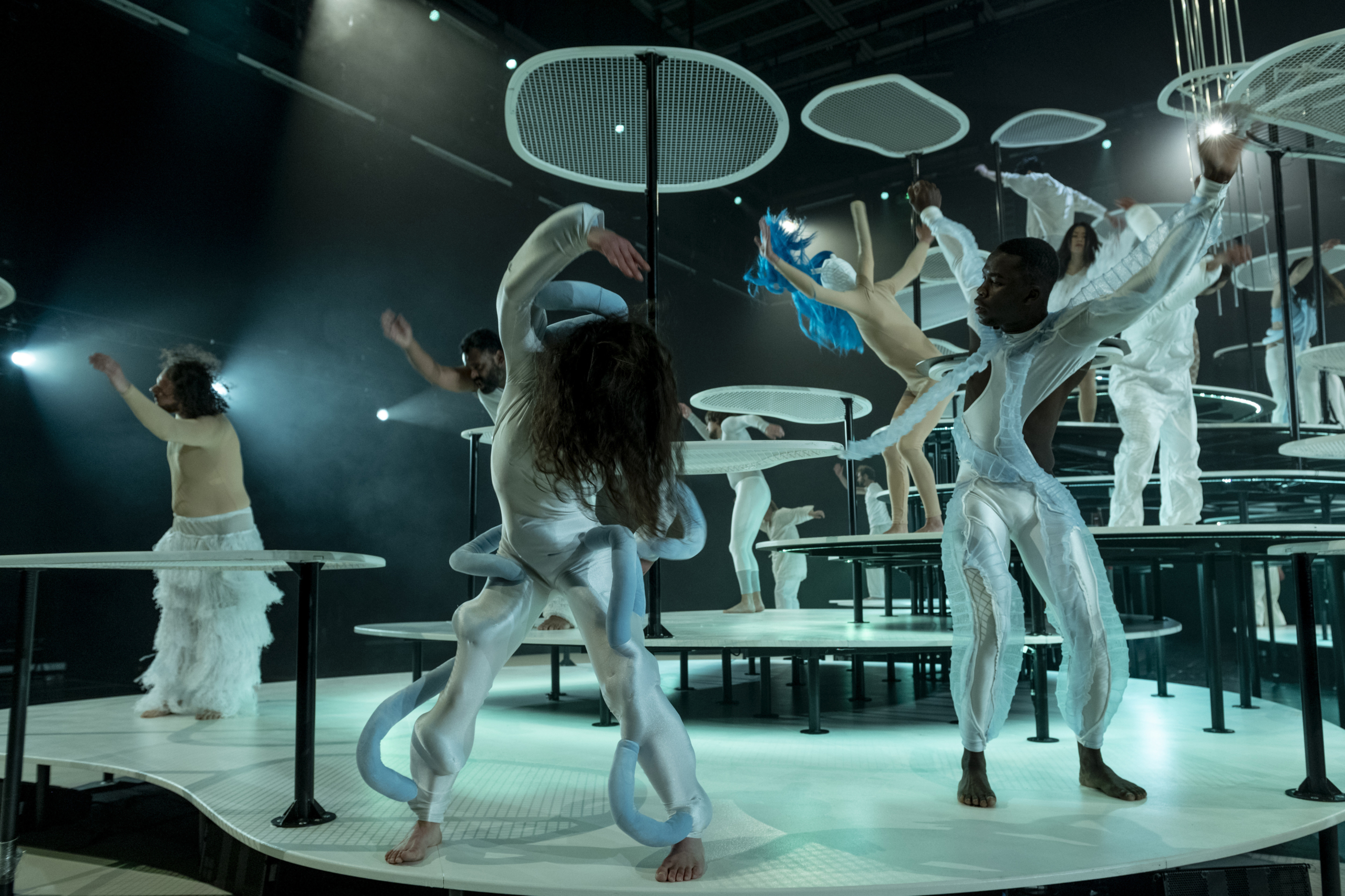
Figure 3: Scene from Archipel—A Spectacle of Blending © Martin Rottenkolber
To sum up: I argue that Stephanie Thiersch’s choreographies Bronze by Gold, Bilderschlachten, and Archipel—the latter two in collaboration with composer Brigitta Muntendorf—establish a non-hierarchical relationship between dance and music. Rather than the dance following the music and the music following a score, the two composite parts of the productions co-exist in a performative space that they produce together. Creating a performative environment implies inventing performative strategies not only for the dancers but, above all, also for the musicians. While playing an instrument is always a performative act producing and perceiving the music in situ, these productions allow the musicians to actively act and react, sometimes in an unpredictable way, with the dancers. Thiersch and Muntendorf bring music and dance into a conversation developing complex choreomusical scores. They make use of the following strategies:
the integration of the musicians of the Asasello Quartet, the Ensemble Garage, and Les Siècles into both the stage action and the chorus of dancers in order to making the musicians move;
the disruption of their traditional way of playing by changing the set-up of their formation or by physical interventions that make playing more difficult. The riskiness of playing adds a strong emotional dimension to the movement which in turn changes the sound of the playing;
the production of music as an interaction between musicians and dancers using the musical instruments as props and bodies in their own rights, making the music the result of a physical interaction.
These strategies put the music at risk, making its appearance fragile and the results edgy. Both Thiersch and Muntendorf look for an intermedial and collaborative way of working (i.e., the passing on of scores) that contextualizes their respective arts and makes them resonate socially. Thus, Muntendorf’s music extends into the choreography, while the choreography gains an audible dimension that reflects back onto the way the sound is produced and perceived. Whereas Bronze by Gold and Bilderschlachten rely on the construction of dialectical images to comment on the state of our contemporary consumer societies that consume both images and bodies, Archipel invents a utopian state in which professional categories and differences between dancers and musicians cease to exist. The piece creates a common and communal form of communication.
-
The first collaboration between Thiersch and the Asasello Quartet was for four (2014), which set out the agenda for their further research into the relationship between playing music and dancing on stage. While I have attended live performances of Bronze by Gold in Darmstadt, Bilderschlachten/Batailles d’images in Bonn and Archipel—A Spectacle of Blending in Berlin, I have not seen for four performed on stage. For my analyses, Stephanie Thiersch was so kind as to provide me with recordings of the productions. Bronze premiered August 22, 2015 at Radialsystem Berlin during the festival Tanz im August. Bilderschlachten premiered May 9, 2019 at the Théâtre de Nîmes, France. Archipel premiered on June 18, 2021 at Central Theater Düsseldorf during the Festival Theater der Welt.↩︎
-
Stephanie Thiersch (https://www.mouvoir.de) studied dance and literature before enrolling to study media arts with performance artist Valie Export at KHM Cologne from which she graduated in 1999. Her most recent dance film, Insular Bodies, was filmed in 2020 on the Greek island of Corfu and premiered at the Venice Biennale.↩︎
-
Brigitta Muntendorf (https://www.brigitta-muntendorf.de) studied composition at the Hochschule für Künste Bremen and at the Hochschule für Musik und Tanz Cologne where she is currently professor of composition.↩︎
-
Jörn Peter Hiekel, ed., Body Sounds. Aspekte des Körperlichen in der Musik der Gegenwart (Mainz: Schott, 2017).↩︎
-
Cf. the recent publication Christine Hoppe and Sarah Avischag Müller, ed., Music in the Body—The Body in Music. Körper an der Schnittstelle von musikalischer Praxis und Diskurs (Hildesheim: Olms, 2021).↩︎
-
Karolin Schmitt-Weidmann, Der Körper als Vermittler zwischen Musik und (all)täglicher Lebenswelt. Distanzauslotungen am Beispiel ausgewählter Werke der Neuen Musik (Bielefeld: transcript, 2021).↩︎
-
The Asasello Quartet was founded in 2000 in Basel, Switzerland. Its members, who graduated from the Hochschule für Musik und Tanz in Cologne, are: Rostislav Kozhevnikov (Violin), Barbara Streil (Violin), Justyna Sliwa (Viola) and Teemu Myöhänen (Cello).↩︎
-
Brigitta Muntendorf, “Anleitung zur künstlerischen Arbeit mit der Gegenwart,” in Zurück zur Gegenwart? Weltbezüge in Neuer Musik, ed. Jörn Peter Hiekel (Mainz: Schott, 2015), accessed 10 July 2022, https://brigitta-muntendorf.de/words/dies-ist-ein-essay/.↩︎
-
Brigitta Muntendorf, “Social Composing,” accessed 10 July 2022, https://brigitta-muntendorf.de/words/social-composing-2015/.↩︎
-
Ibid.↩︎
-
Ibid.↩︎
-
For a detailed description of the material used cf. Werner Klüppelholz, “‘Gott allein kann helfen.’ Der Komponist Bernd-Alois Zimmermann (4),” accessed 10 July 2022, https://www.swr.de/-/id=21358102/property=download/nid=659552/12zkkz3/swr2-musikstunde-20180426.pdf; for Zimmermann’s ballet compositions including Ubu Roi cf. also Jörn Peter Hiekel, Bernd Alois Zimmermann und seine Zeit (Lilienthal: Laaber-Verlag, 2019), 194-200 and Steffen A. Schmidt, Musik der Schwerkraft: die Beziehung von Musik und Ballett in Deutschland nach 1945, dargestellt am Werk Bernd Alois Zimmermanns (Berlin: Kulturverlag Kadmos, 2012), 413-49.↩︎
-
Bernd-Alois Zimmermann, Intervall und Zeit. Aufsätze und Schriften zum Werk, ed. Christof Bitter (Mainz: Schott, 1974), 110: “Epigramme über die jeweilige politische oder kulturelle Situation des betreffenden Ortes oder Landes.” All translations from German in this contribution are mine.↩︎
-
Schmidt, Musik der Schwerkraft, 39: Zimmermanns Charakterisierung des Balletts als imaginär “fordert den offenen Raum, das noch ausstehende Spiegelbild des Tanzes. Das Werk besitzt damit explizit fragmenthaften Charakter.”↩︎
-
Ibid., 427: “Collage und der Decollage.”↩︎
-
Ibid., 445: “Für Zimmermann ist der Tanz eine ‘Komposition mit Körpern’ und daher genau das Medium, an welches sich implizite Körperentwürfe wie die der Musik (und vor allem seiner Musik) richten.”↩︎
-
The piece can be divided into three distinct parts. Part one (00.00-15.00) ends when the musicians have taken their place in the orchestra pit, part two (15.00-1.11.00) displays a series of images as a comment on contemporary society, part three (1.11.00-1.23.00) stages a funeral march. For the beginning of the middle section, Muntendorf references mainly the first section of Zimmermann’s Musique, “L’Entrée de l’Académie.” Towards the end, the seventh section, “Marche du décervellage” provides the basis for her music.↩︎
-
Les Siècles was founded by François-Xavier Roth in 2003. The orchestra comprises forty-eight musicians.↩︎
-
Cf. the break off in minute 54:16, the re-start minute 58:30 and then intermittently.↩︎
-
In a conversation with the author, Stephanie Thiersch stresses the point that Muntendorf’s composition frames Zimmermann’s music that can be heard only in the second part of the piece.↩︎
-
In his commentary on Bertolt Brecht’s epic theater, Walter Benjamin uses the notion of the image as a “dialectics in standstill” to describe the Brechtian notion of Gestus. Dialectical images oscillate from within the standstill of the image making its defined contours vibrate and its content flip into its opposite; Walter Benjamin, “What is Epic Theatre? (First version),” in Walter Benjamin, Understanding Brecht, introd. Stanley Mitchell, trans. Anna Bostock (London and New York: Verso, 1998), 1-13.↩︎
-
Minute 1:11:00.↩︎
-
Arnd Wesemann, “Primitive Zukunft,” in Tanz. Zeitschrift für Ballett, Tanz und Performance, 8/9 (2021): 8-11.↩︎
-
For instance, at the very beginning of the performance, a couple of musicians are stretched out head down over various levels of the sculpture. Despite the awkward physical position they are in, they try to play their instruments. A dancer moves in the tiny space between the backs of two musicians touching und pushing them with his outstretched arms and legs.↩︎
-
Due to the Corona pandemic the arrangement for the audience had to be changed. Originally the audience should have been allowed to stand and walk around the sculpture freely. Due to hygiene rules, it was then seated depending on the venue in three or four blocks, one on each side of the hall. Also, the Norwegian Soloist Choir could not perform live as originally planned, cf. Beatrix Joyce, “An Island of Togetherness,” in Magazin Tanz im August, ed. HAU, Berlin 2021: 6-9.↩︎
-
Conversation with the author, 3 November 2021.↩︎
-
For the notion of a community to come, cf. Jean-Luc Nancy, La Communauté désœuvrée (Paris: Christian Bourgois Éditeur, 1986).↩︎