Keynotes
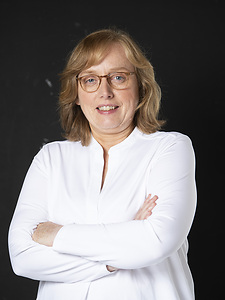
Prof. Dr. Alexandra Kertz-Welzel
Educating for an uncertain future: Ethical dimensions of music and arts schools' societal mission
Music and art schools are not only places for leisure activities or entertainment. They play a significant role in the life of communities and people, offering a place to get in touch with music and culture. Often, this is a place for personal and musical development, removed from the pressure of everyday life. However, music and culture schools are certainly no unproblematic places since there are many questions connected with them, and many of them are ethical questions: Who has access to music and art schools, and who does not? Should the schools focus on the talented or rather be inclusive? Who should be allowed to teach? And which musics should be part of the curriculum? Furthermore, these schools do not exist in a vacuum. Rather, they are part of the cultural landscape of societies, aiming at contributing to the overall goal of human flourishing and social transformation within a specific context, likewise supporting the education of democratically minded people. But this also raises questions: How can music and art schools fulfil these missions? Which role does artistic citizenship play? And how would the education of instrumental and vocal teachers or the structure of schools need to change so that they can better fulfil their societal missions? Indeed, music and art schools’ societal role is complex and times of uncertainty and global crises challenge their mission. But likewise, these times show their importance, demanding new answers. This keynote investigates the societal mission of music and arts school in times of uncertainty with a focus on their ethical dimensions.
Bildung für eine ungewisse Zukunft: Ethische Dimensionen des gesellschaftlichen Auftrags von Musik- und Kunstschulen
Musik- und Kunstschulen sind nicht nur Orte für Freizeitaktivitäten oder Unterhaltung. Vielmehr spielen sie eine bedeutende Rolle im Leben von Gesellschaft und Individuen, indem sie einen Raum bieten, in dem Menschen mit Musik und Kultur in Kontakt treten können. Häufig sind sie auch Orte persönlicher und musikalischer Entwicklung, die einen Raum jenseits des Stresses des Alltags bieten. Gleichzeitig sind Musik- und Kunstschulen keineswegs unproblematische Orte, da mit ihnen zahlreiche Fragen verbunden sind, von denen viele ethischer Natur sind: Wer hat Zugang zu Musik- und Kunstschulen – und wer nicht? Sollten sie sich auf besonders Begabte konzentrieren oder vielmehr inklusiv ausgerichtet sein? Wer sollte unterrichten dürfen? Und welche Musiken sollten Teil des Curriculums sein? Darüber hinaus existieren diese Schulen nicht im luftleeren Raum. Vielmehr sind sie Teil der kulturellen Landschaft von Gesellschaften und tragen zum erfüllten Leben sowie gesellschaftlicher Transformation bei. Sie unterstützen auch demokratische Bildung. Auch dies wirft allerdings weitere Fragen auf: Wie können Musik- und Kunstschulen diese Aufgaben am besten erfüllen? Welche Rolle spielt dabei das Konzept der Artistic Citizenship? Und wie müssten sich die Ausbildung von Instrumental- und Gesangspädagog_innen oder die Strukturen der Schulen verändern, damit sie ihren gesellschaftlichen Aufgaben besser nachkommen können? Tatsächlich ist die gesellschaftliche Rolle von Musik- und Kunstschulen komplex, und globale Krisen stellen sie vor besondere Herausforderungen. Gleichzeitig machen gerade Krisenzeiten ihre Bedeutung besonders deutlich und verlangen nach neuen Antworten. Diese Keynote untersucht die gesellschaftlichen Aufgaben von Musik- und Kunstschulen in Krisenzeiten mit einem besonderen Fokus auf ethischen Dimensionen.
Alexandra Kertz-Welzel, PhD, is Professor and Chair of Music Education at Ludwig-Maximilians-Universität (LMU) in Munich (Germany). From 2023 to 2025, she was Dean of the Faculty of History and the Arts and from 2021 to 2024 Guest Professor (Professor II) at the University of Inland Norway in Hamar (Norway).
She obtained a PhD in musicology from Saarland University in Saarbrücken (Germany), as well as master's degrees in music education, German studies, philosophy, piano performance, and harpsichord performance. From 2002 to 2005, she was a postdoctoral researcher and visiting scholar at the University of Washington in Seattle (United States). From 2005 to 2011, she worked as a high school teacher and lecturer in music education at the University of Music in Saarbrücken (Germany). Since April 2011, she is Professor and Chair of Music Education at LMU in Munich.
With research interests in international music education, philosophy and sociology of music education, music education policy, community music, and children's musical cultures, she has regularly presented at national and international conferences, including many keynotes. She is author and editor of several books and a frequent contributor to leading journals in music education. Since June 2025, she is editor of the international journal Philosophy of Music Education Review. Her book Globalizing Music Education was published by Indiana University Press in 2018. Her most recent book, Rethinking Music Education and Social Change, was published by Oxford University Press in 2021.
She was Excellence Initiative Mentor of the Faculty of History and the Arts at LMU from 2011 to 2017 and director of the School of Arts at LMU from 2018 to 2020. Since January 2026, she is a mentor in the mentoring programme "Reach higher, reach beyond" at the mdw - University of Music and Performing Arts Vienna. Furthermore, since September 2021, she is a liaison professor (Vertrauensdozentin) and mentor of the German Academic Scholarship Foundation (Studienstiftung des Deutschen Volkes).
Alexandra Kertz-Welzel has been active in international societies for many years. She was chair of the International Society for the Philosophy of Music Education (ISPME) from 2017 to 2019 and co-chair of the ISME Commission on Policy: Culture, Education and Media from 2016 to 2018. Additionally, she is an editorial board member of many international peer-reviewed journals.

Assoc. Prof. Dr. Guadalupe López-Íñiguez
Musically gifted children, exceptionalised and erased:
Care ethics amid the ethical cracks of music education
Drawing on her five-year global research project, Caring for Musically Gifted Children, funded by the Research Council of Finland (2022-2027), Dr. López-Íñiguez will explore in her keynote how care ethics can illuminate and address the tensions, gaps, and inequities embedded in policies and practices for educating gifted and talented young musicians globally. The keynote is grounded in the extensive outputs of this global research project, which are numerous and developed in collaboration with international partners and experts across the musical, psychological, social, cultural, legal, political, and educational dimensions of giftedness and talent development.
The keynote will present insights from extensive empirical and pedagogical research involving multiple cohorts of musically gifted children and adolescents, their families, music teachers, and institutional leaders, as well as retrospective reflections from former musical prodigies who are now internationally recognised performers. This multi-perspective approach reveals the ethical and developmental complexities of specialist music education, including the risks of over-exceptionalisation, marginalisation, and the erasure of the child's individual and special needs and rounded development in the pursuit of elite performance.
Dr. López-Íñiguez will highlight emergent strategies and frameworks for supporting children's agency, well-being, and creative growth, advocating for a care-based pedagogy that balances excellence with ethical responsibility. The keynote addresses pressing questions: How can music education systems nurture exceptional talent without compromising the child's autonomy, dignity, or well-being? What shared responsibilities do teachers, families, and institutions hold in mitigating harm while fostering development?
This session offers an essential forum for researchers, educators, policymakers, and families, providing both evidence-based reflections and practical guidance for ethically attuned teaching and institutional practice. Participants will gain a deeper understanding of the social, cultural, and ethical dimensions of gifted music education and leave with concrete ideas for creating environments where musically exceptional children can flourish as whole, agentic individuals.
More information: https://www.uniarts.fi/en/projects/caring-for-musically-gifted-children
Guadalupe López-Íñiguez is a Spanish researcher, cellist, and educator who holds a permanent position as University Researcher in Instrumental Pedagogy and Performance Science at the Sibelius Academy, University of the Arts Helsinki, Finland, where she is also a Docent (Associate Professor). In addition, she serves as an Honorary Senior Fellow at the University of Melbourne, Australia. Dr. López-Íñiguez currently leads the international project The Politics of Care in the Professional Education of Children Gifted for Music, funded by the Research Council of Finland. This project investigates how caring educational ecosystems can support children gifted for music to develop into well-rounded, self-directed individuals while achieving meaningful educational outcomes and exploring potential professional pathways in music.
Since 2009, she has led or contributed to numerous international research projects, receiving multiple awards for her scholarship. She has authored over 70 peer-reviewed publications and is widely recognized as a keynote speaker, peer reviewer, and expert advisor for academic journals, doctoral programs, research councils, and scientific committees. Her authored and co-edited works include Real-Life Experiences of Children Gifted for Music (Oxford University Press, forthcoming), Caring for Gifted and Talented Music Learners (Oxford University Press, in press), Learning and Teaching in the Music Studio – A Student-Centred Approach (Springer, 2022), and Research Perspectives on Music Education in Ibero-America (Routledge, 2025).
Her practice-based, methodologically innovative, and interdisciplinary research integrates learning psychology with philosophical and sociological approaches to music education and performance. Drawing on theories of self-regulation, socio-cognitive constructivism, and developmental-ecological models of giftedness and talent, she examines musicians' learning and development, including career trajectories, identity, motivation, and emotional wellbeing. Her scholarship is further informed by care ethics, sustainability, and systemic and organisational perspectives, conceptualizing music education and performance evolving systems shaped by human interaction, policies, and organisations. She supervises international doctoral researchers, fostering the next generation of scholars and practitioners.
Dr. López-Íñiguez earned her Doctorate in Psychology applied to music education from Madrid Autonomous University in 2014, graduating summa cum laude and receiving the extraordinary prize for the faculty's best doctoral thesis. A classically trained cellist, she earned a Bachelor’s degree in Cello Performance from the Madrid Royal Conservatory and a Master’s degree in Baroque Cello Performance from the Sibelius Academy. Her recordings of complete cello works by Gabrielli, Scarlatti (2018), and Mendelssohn (2019) were critically acclaimed, and she has performed on baroque, classical, and modern cellos at leading venues and festivals across Europe and the U.S.
More information: https://guadalupelopeziniguez.eu/