
Performance of Transgressive Musical Knowledge and Artistic Skill*
Jane Hatter 
Jane Hatter
How to cite
How to cite
Outline
Outline

In 1609 the Venetian printer Evangelista Deuchino published a compendium by Pietro Paulo di Ribera (c. 1550–1609), a Spanish-born canon living and working in Venice.1 On the title page Ribera claimed that the volume included accounts of 845 notable and famous women, embracing both ancients and moderns in a wide variety of disciplines. Among this impressive compendium we find one of the first summaries of the life and impact of Sofonisba Anguissola (c. 1539–1625/26).2 Ribera’s subtitle for her entry states that he will write ‘on the noble Sofonisba of Cremona, musician, scholar, and above all rarest painter.’3 Although her exposé is in the category of artists – and she is primarily remembered for her work in this area both by Ribera and modern scholars – this heading also highlights her status as a member of the nobility and two other areas of accomplishment that qualified her to be listed among the women in the book – letters and music.4 What does it mean that Ribera, as her close contemporary, lists music as her first meritorious characteristic and that her aristocratic identity prefaces all of her accomplishments? Like Sofonisba he had access to both the Italian and Spanish elite social contexts.5 Had he perhaps heard her perform in Italy or spoken with those who had visited the Spanish court during her years living there as a courtly lady of the late Queen Isabel de Valois (1545–1568)?
Ribera’s summary of her merits might easily serve as a caption for one of Sofonisba’s youthful self-portraits, especially the one currently housed in Naples at the Museo di Capodimonte (Fig. 1).
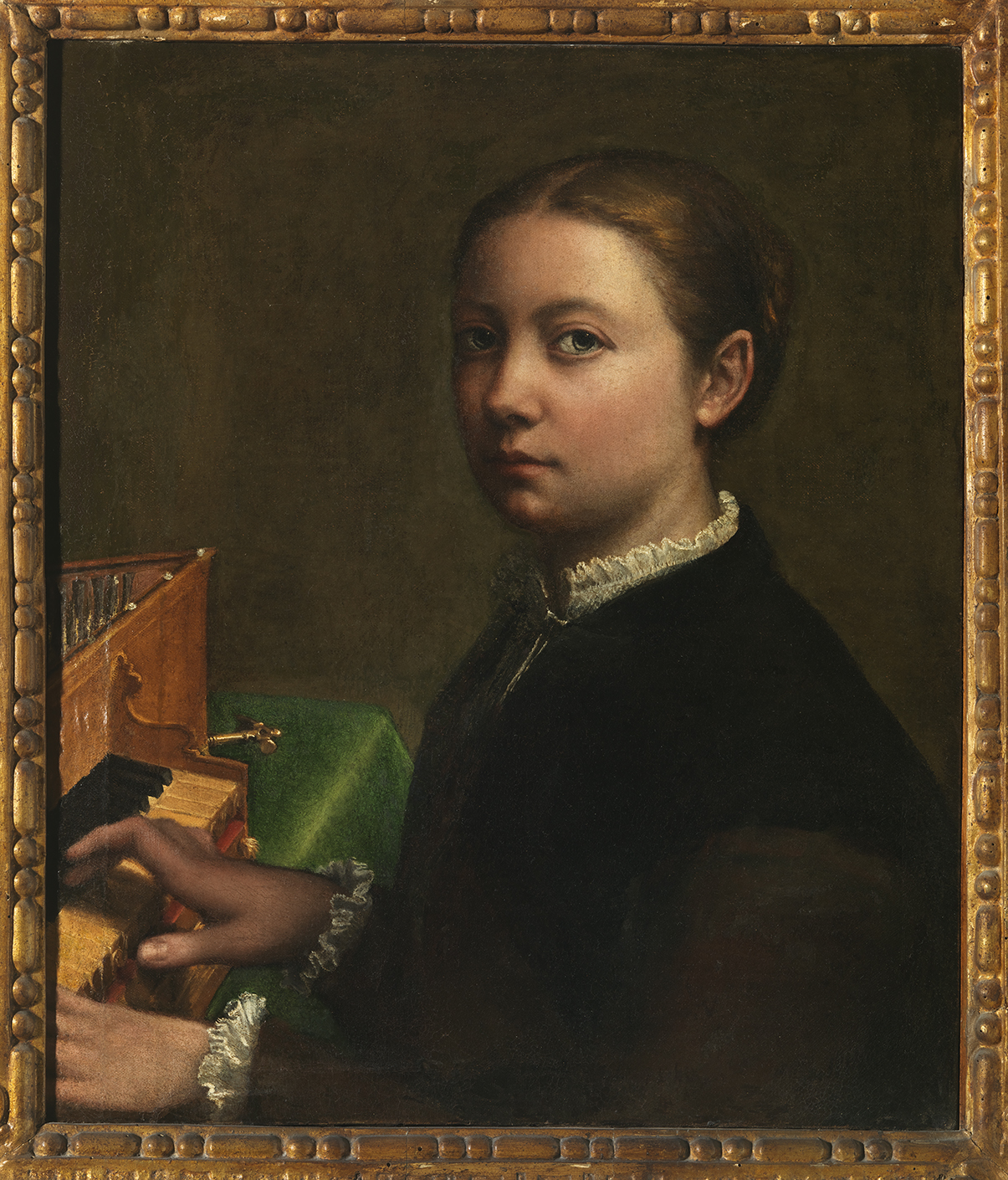
Figure 1: Sofonisba Anguissola, Autoritratto alla spinetta (1554/55), oil on canvas, Naples, Museo di Capodimonte, Inv. no. Q358, <https://commons.wikimedia.org/wiki/File:Autoritratto_alla_spinetta,_Sofonisba_Anguissola_001.JPG?uselang=it> (accessed on 24 August 2024).
One of three extant musical self-portraits, this painting shows her gazing confidently out at the viewer from her seat at the keyboard in the modest yet refined attire and secluded space of a minor aristocratic girl.6 Despite contemporary accounts of her musical accomplishments and her own self-portraits at the keyboard, modern scholars have struggled to appreciate Sofonisba’s musicality because unlike Ribera, we cannot listen in on the music made during a Spanish courtly gathering or talk to others who had accessed those privileged spaces. Unlike her extant paintings and drawings, musical performance is ephemeral, especially the often non-notated traditions of dances and song arrangements that were integral to the musical self-presentation of noble women and girls.7 Although recent art historians have been keen to rescue Sofonisba the painter and grant her a position among the noted ‘professional’ female creators of 16th-century art, scholars tend to dismiss the question of her musical accomplishments and to see music primarily as a theme aligning her with a few other female artists who left similar musical self-portraits.8However, identifying these paintings simply as evidence that she participated in a trope used by others – including Catharina Van Hemessen (1528–after 1583), Lavinia Fontana (1552–1614), and Artemisia Gentileschi (1593–1653), all members of the artisan class and daughters of professional painters – lacks contextual nuance and can be misleading. While these class differences may seem subtle to us with our historical distance, the elision into an artistic trope does not take into consideration the way that music would have functioned differently in Sofonisba’s daily life as an aristocratic woman seeking membership as a peer in an elite court. These other female artists did not come from the same elevated social status as Sofonisba, even if they also aspired to income and stability from courtly connections. For example, Catharina van Hemessen was married to a professional organist and while they both served Maria of Austria and traveled to Spain with her, they were clearly employees rather than peers.9 Lavinia Fontana lived and produced work in the urban contexts of Bologna and then Rome after 1603. While she married a minor aristocrat who was also an art student of her father, her marriage contract makes it very clear that she was expected to continue her trade as a source of income, keeping her squarely in the professional artisan category.10 For both of these artistic middle-class women music was proof of refinement, part of what made them worthy of employment at court, or in the case of Fontana, aristocratic marriage. Artemisia Gentileschi was also the daughter of a professional painter and depicted herself as a musician at times, but her public persona was significantly different from the other female artists discussed here as a result of a very public rape trial she endured in Rome as a teenager.11
Although they were active a little later in the century, the musical ladies of the Este court are better equivalents to Sofonisba than the daughters of professional visual artists. Although they have long been seen as the first professional ensemble of female musicians, in part because they were believed to be from non-noble families, the research of Elio Durante, Anna Martellotti and Laurie Stras has shown that all three of the women recruited for the inner-circle of Margherita Gonzaga were born into noble status. Like Sofonisba’s position as a lady-in-waiting at the Spanish court, the primary duty of Laura Peverara, Livia d’Arco, and Anna Guarini, was to elevate the musical practice within the young duchess’s household.12 Their noble status should not be considered to diminish their musical skills and accomplishments, but it did cause challenges for when and where they could decorously display these skills. In fact, as a noble woman, musicality was a more socially acceptable activity for Sofonisba than the menial and potentially messy tasks associated with painting and drawing. I would like to propose that Sofonisba deftly used decorous music, both the visual trope and the actual practice, as a tool to help her transgress her contradictory identities as a noble woman and a highly skilled painter. This transgressive use of musical knowledge to justify her performance of painterly excellence was integral and necessary to the deft management of her social/professional persona.
Negotiating Self-Presentation
To understand Sofonisba’s complex persona, it would be useful to summarize what is firmly established about her biography. Sometime between about 1535 and 1540 Sofonisba was born in Cremona to the socially higher-ranking Bianca Ponzoni and the older Amilcare Anguissola, a well-educated minor aristocrat, himself acknowledged but born out of wedlock, who traded in manuscripts, books, and paper but struggled financially.13 The couple had six daughters and one son, all of whom were provided with extensive opportunities for education, regardless of gender. Along with her younger sister Elena, Sofonisba began her formal artistic training in 1546 with Bernardino Campi and later with Bernardino Gatti.14 Campi, a professional painter from a local family of goldsmiths, seems to have welcomed the sisters into his home, in a modified sort of apprenticeship.15 In a letter written fifteen years later, Sofonisba demonstrates that in addition to respecting him as a teacher, she had developed fond relationships with Campi’s wife, sister, and mother, women who probably acted as chaperones for the young girls during their lessons and who may have supervised their care if they did live with the family for an extended time.16
The hard-up Amilcare’s motivation for educating his many daughters was probably to prepare them for life at court in the hope that their higher level of courtly skills would result in a superior position with a reduced dowry.17 The development of special abilities and knowledge for girls was usually organized around their class and potential for marriage. Published in 1574, the two interlocutors of Book 3 of Stefano Guazzo’s La civil conversatione propose that,
[Annibale:] If the father means to marry his daughter to a courtier, he must send her to a court in the service of some great Lady, and she must know how to read, to write, to discourse, to sing, to play on instruments, to dance, and to be able to perform all that which a lady of the court must be able to do […] Guazzo: I have seen poor young women in the Queen’s court by this means married to great Gentlemen, without one penny of a dowry given by their Father.18
Of the three accomplishments noted by Ribera in his entry on Sofonisba—music, literature and painting—only painting is not highlighted by Guazzo as a requirement for a girl’s courtly education. While Sofonisba labored in her courtly education and artistic practice, her father spent his efforts sending out her drawings and paintings, accompanied by his own letters modestly proclaiming her excellence, to artists including Michelangelo, and nobles like Ercole II d’Este, people who might be able to help him secure a placement at a court for his daughter. Michael Cole has pointed out that Sofonisba also alluded to or named her father in many of her early self-portraits, articulating ‘a reciprocal relationship between father and daughter, in which she performed, and he showed, or showed off, her performance.’19 In this period she created many self-portraits, group portraits of her family in various activities, and portraits of their Italian social peers, both adults and children. The bulk of her known extant work is from this period of her life, when she was most motivated to sign her works as evidence of her abilities.
By 1559 their labor had paid off and Sofonisba left Italy to accept a generous position as a lady-in-waiting to the new Spanish queen, Isabel de Valois (1545–1568), the third wife of King Philip II (1527–1598). After Isabel’s early death in 1568, Sofonisba continued to serve in the court until 1574 as an attendant and teacher to Isabel’s young daughters.20 Although officially she was a noble courtier during her many years in Spain, she tutored royal family members in the visual arts, especially Isabel, and created portraits. Soon after Isabel’s wedding and Sofonisba’s arrival, Girolamo Neri reported to the Duke of Mantua that ‘[t]his queen [Isabel] shows herself to have intelligence and very good talent. She has begun to paint, and one says Sofonisba Cremonese, who is the one who teaches her, is her great favorite.’21 Rather than direct payment for her artistic activities, which was often quantified in contracts for male artists at the time, Sofonisba’s family received a yearly stipend, and she was listed with the other ladies of the Queen where she was provided with the same resources – 100 ducats a year as well as a personal servant and a groom for her horse.22 When Sofonisba had time outside her direct daily activities as a member of Isabel’s entourage, she also made portraits of her patrons and other members of the court, which she sometimes sent to illustrious figures, including the Pope.23 There are financial records that indicate that Sofonisba’s portraits, sometimes specifically the faces, were copied by the official court painters, but unlike these male painters Sofonisba herself did not receive payment for these.24 Some early biographers indicated that she received precious gifts, including jewelry, in recognition for her extraordinary skills. Usually she did not sign the paintings she created at the Spanish court and seems to have conformed somewhat to Spanish painterly style and tastes, so art historians struggle to identify the paintings she created during this period and they certainly seem to be fewer in number than during her previous period in Italy.
Even though Isabel left a large dowry and yearly allowance for Sofonisba in her will, the king struggled to find a socially appropriate match, given that Sofonisba wanted to return to Italy to be closer to her family, where the King had less direct influence. Eventually she had to compromise and moved to Sicily to marry Don Fabrizio de Moncada, the second son of an important Sicilian noble of Italian-Spanish lineage. However, the Moncada family was not fully supportive, probably because of her less prestigious lineage, so her social and financial positions were insecure. When Don Fabrizio died within five years, she took the opportunity to sail back to the Italian peninsula with her brother. She made the savvy choice to marry the Genoese captain of the ship she was on, Orazio Lomellini.25 Although they might seem poorly matched because he was significantly younger than Sofonisba and of a lower social rank than her first husband, with his shipping business and mobility, Orazio was able to travel regularly to Palermo to maintain the yearly allowance promised to Sofonisba by the Spanish king, which was drawn from the taxes of that city. This financial dependence on Palermo may also explain why, even though the couple resided in northern Italy where their social and cultural connections primarily were from their mariage in 1579, they returned in 1615 to Sicily for their retirement.26 Despite the fact that some of her early biographers claim that she continued to produce paintings during her married years, there are only two works that can be firmly identified from this lengthy period.27 It seems likely that Sofonisba spent her later years as a royally-connected great lady, who was renowned for her artistic knowledge and skill. She did not pursue an active career as a painter because that would have been inappropriate to her status as a former lady-in-waiting to a Spanish queen. She could not afford to compromise the annual income that her elevated social status provided for her and her family.28
Picturing the Girl
Uniquely, when we look at the overall output of Sofonisba Anguissola, we are primarily considering the activities of an adolescent.29 In the life of a 16th-century female aristocrat, adolescence was a more public period than adult life as a wife and possibly a mother. In the introduction to their edited collection The Youth of Early Modern Women, Elizabeth S. Cohen and Margaret Reeves describe this period as a ‘fluid time’ that ‘brought some danger; it was easy for girls to go astray or to become prey to exploitative adults. Yet young women’s physical, economic and social transformations could also accompany the acquisition of fuller self-knowledge and a greater measure of agency and decision making.’30 Cohen and Reeves have also pointed out that until a woman married and became sexually active, she was still in many ways considered a youth or adolescent, no matter her age.31 Although we do not know her exact age, in her self-portraits Sofonisba proclaims her identity as a ‘virgo’, ‘filia’, and ‘puella’ in the inscriptions. She seems to have extended this creative, adolescent period significantly, probably into her thirties, by remaining unmarried while serving the youthful bride of the Spanish court.32 When she was considered a young woman, Sofonisba could study and practice music, painting and other creative pursuits, but because of her status as an aristocrat she had limited mobility to use those skills for any kind of direct financial gain. She also had to be extremely careful about how she advertised her abilities, especially the manual skills associated with painting.
During her first period of activity, from about 1550 to 1559 in Italy, she created an extensive series of self-portraits, with 24 extant and possibly as many as 40 paintings of various sizes, shapes, media, and themes (Tab. 1).
|
Paintings that are verifiable and recent scholars have consulted: • Signed self-portraits = 5 • Unsigned self-portraits accepted by scholars = 13 • Self-portraits attributed but contested by some = 6 Extant possible self-portraits = 24 |
|
Unverifiable self-portraits listed in inventories or catalogues: • No illustrated documentation since 1600 = 4 • Listed in 19th-century sources = 12 • Mentioned in 16th-18th-century sources = 5 Unverifiable = 21 |
Table 1: Self-portraits by Sofonisba Anguissola
Analyzing the 24 extant works as a group reveals how she used a few interrelated conceptual themes, including music, to navigate and make the most of her opportunities. Most depict her in somber attire, four include her father’s name, three feature an easel and mahlstick as her painterly tools, two show her looking scholarly with a book, and finally, three include a musical element. In the decades before and contemporary to Sofonisba, noble women were regularly painted with books of various kinds and sometimes those books feature music notations.33 Two of the earliest and most securely attributable self-portraits emphasize Sofonisba’s propriety and nobility with text. The one in Boston (Fig. 2) is a small oval of 8.3 by 6.4 centimeters, while the version in Vienna (Fig. 3) is about 20 by 14. The small size made them portable and easy to send as gifts. In a letter to Amilcare from July 1559, Annibale Caro wrote that ‘there is nothing I desire more than an image of the artist herself, so that in a single work I can exhibit two marvels, one the art, the other the artist.’34 As discussed previously, there is evidence that many of these self-portraits were created to be sent by her father to well-connected aristocrats, including the Este, Medici, and those linked with the Spanish Habsburgs who ruled Cremona in the mid-sixteenth century. In addition to the convenience of using herself as subject, these works essentially constituted a self-promotion campaign and show the careful curation of a public persona, as noted by Michael Cole, in a joint effort between Sofonisba and her father.
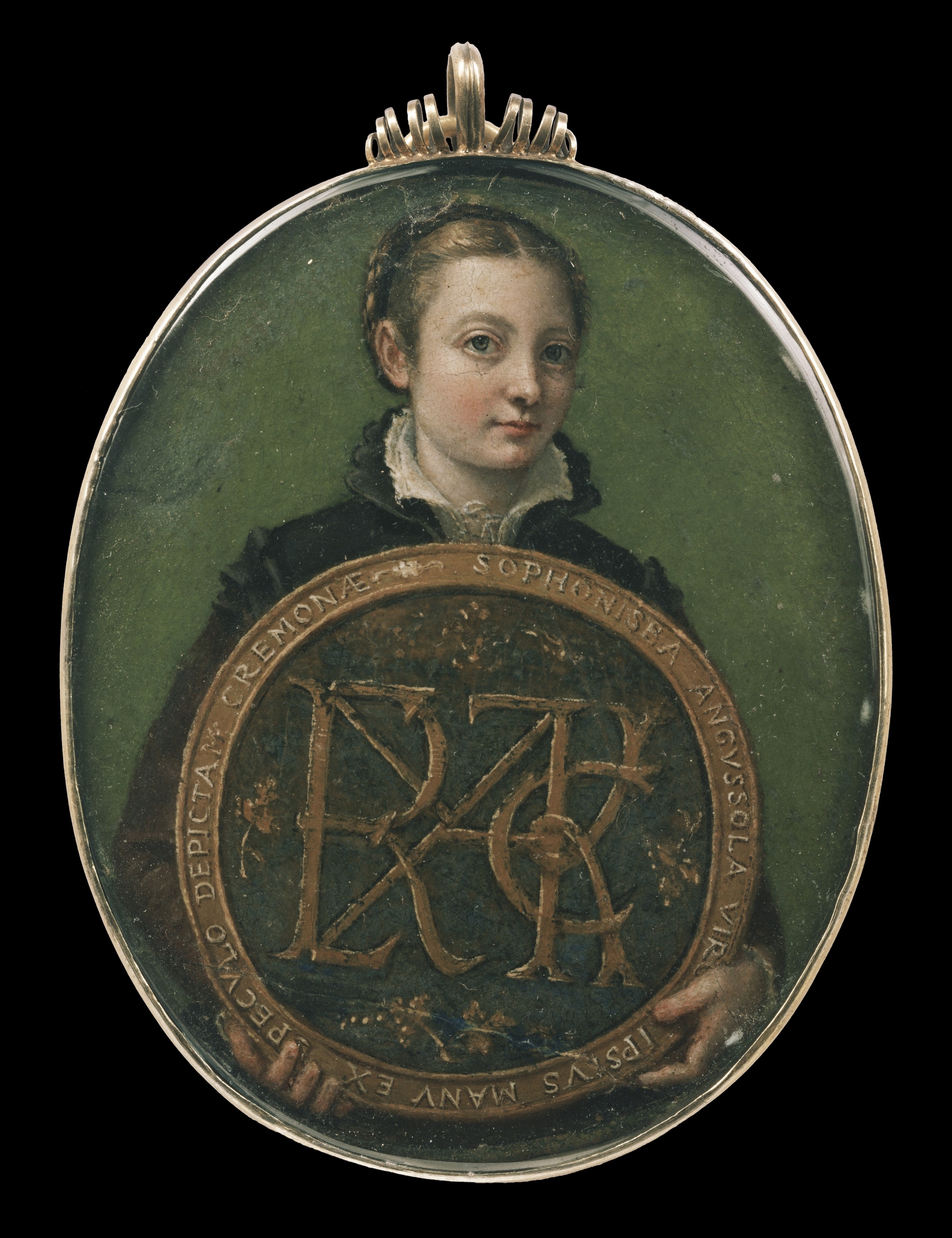
Figure 2: Sofonisba Anguissola, Self-Portrait (c. 1556), oil (?) on parchment, 8.3 x 6.4 cm, Museum of Fine Arts, Boston, Inv. no. 60.155, <https://collections.mfa.org/objects/33656> (accessed on 24 August 2024).
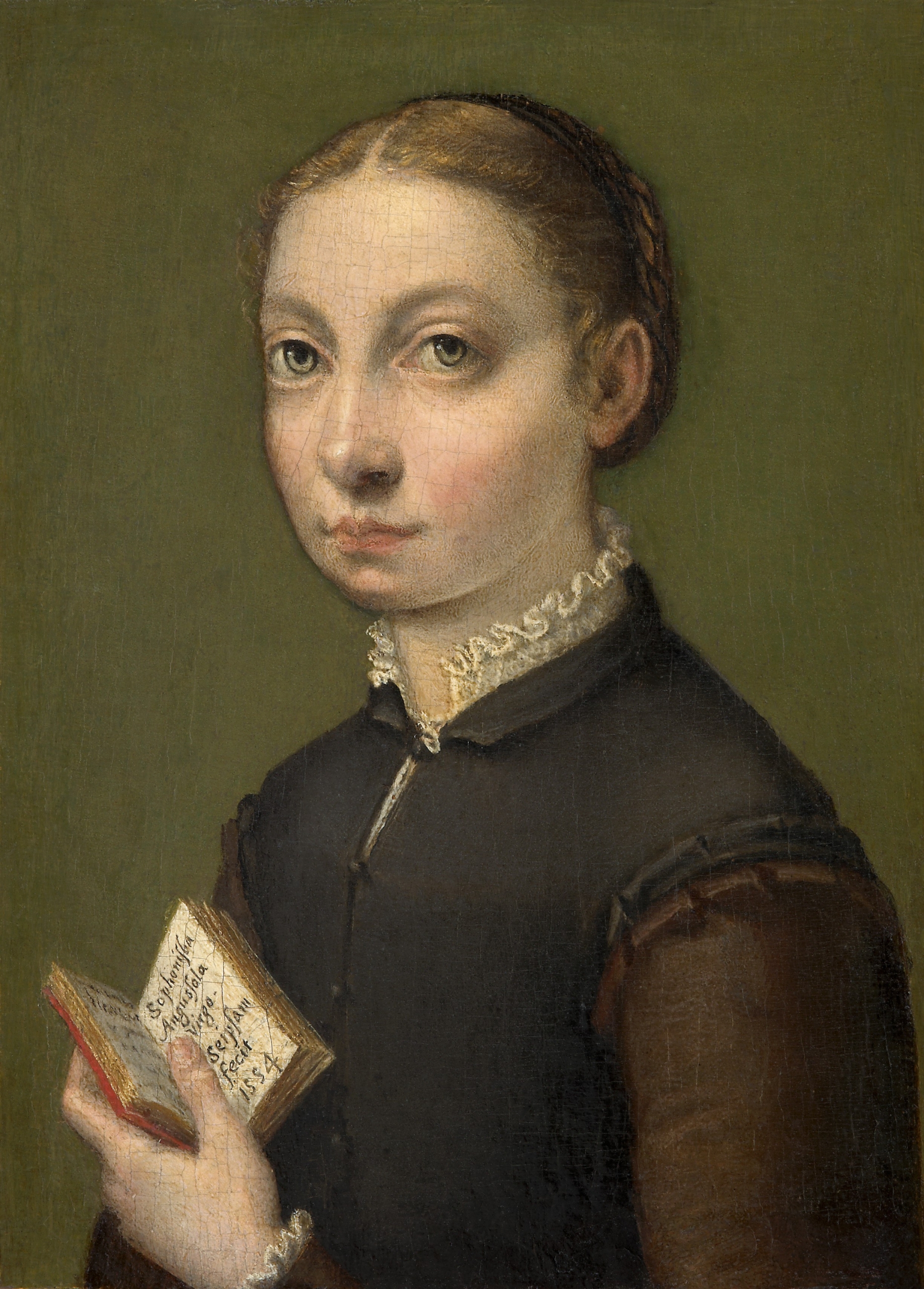
Figure 3: Sofonisba Anguissola, Self-Portrait (1554), 19.5 x 14.5 cm, Kunst-historisches Museum Wien, Gemäldegalerie, Inv. no. 285, <http://www.khm.at/de/object/66/> (accessed on 24 August 2024).
She must have been deeply aware that these images, as much as they demonstrated her painterly skill, also put her person on display, especially as they could circulate – and paintings of women did circulate. For instance, in 1498 Isabella d’Este wrote directly to Cecilia Gallerani, mistress of Ludovico Sforza, Isabella’s brother-in-law, asking for the loan of Cecilia’s portrait by Leonardo da Vinci from years before.35 Although she lived half a century before Sofonisba, Cecilia was born into a similar social rank and at a similarly young age she began, as Lodovico’s adolescent mistress and the noble mother of his son, to negotiate for the benefit and advancement of her orphaned siblings.36 Through their adolescent daughters, the Anguissola family had different means to attain a similar goal of financial stability and improved status. In the inscriptions on these paintings, Sofonisba asserts her own authorship along with her nobility and propriety. Around the edge of a medallion featuring a cypher of her father’s name, an inscription proclaims that this image was ‘painted from a mirror with her own hand by the virgin Sofonisba Anguissola at Cremona’ (‘Sophonisba Angussola virgo ipsius manu ex speculo depicta Cremonae’, Fig. 2). In the panel in Vienna, the text in the book reads ‘The virgin Sophonisba Anguissola made this herself in 1554’ (‘Sophonisba Angussola Virgo seipsam fecit 1554’, Fig. 3). More than just a clever place for her to write a signature, the presence of the book itself emphasizes her elite status as literate, the second quality noted by Ribera in his compendium of great women.
Transgressive Skill
In contrast, two other categories of self-portrait are connected by the fact that they advertise Sofonisba’s technical proficiency and aesthetic wit by showing her in the act of creation – musical and artistic. Other authors have noted that Catharina Van Hemessen had previously used similar configurations in two of her paintings believed to be self-portraits by some scholars.37 However, for the paintings at the easel, both female artists drew on a tradition of male painters depicting themselves as St. Luke, as well as the trope of Pliny’s Marcia, often shown in the act of creating her own self-portrait.38 Luke was often considered the patron saint of artists because it was believed that he had created a famous icon of the Virgin and Child from life. Beginning in the 15th century many altar paintings created for artists’ guilds featured a self-portrait of the painter as the face of St. Luke. For instance, in the earliest extant example of the genre by Rogier van der Weyden, St. Luke is presented with the features of Rogier himself who is making a quick silver point sketch of Mary and Jesus.39 Like the painters of the St. Luke guild paintings, Sofonisba’s various iterations of the theme show her in the act of creating an image of the Virgin and Child. Her comfort and confidence highlight her technical skill and proficiency with the tools of the trade: mahlstick, paints on palette, and brush at work (one example of this is shown in Fig. 4). In an era when female painters were rare, this painting about painting reinforces her exceptional status and manual dexterity, acting as another affirmation that such self-portraits were by ‘her own (skilled) hand’. For a noble girl aspiring to a courtly position, this is a bold statement and another indication that she was seeking recognition for her exceptional skill.
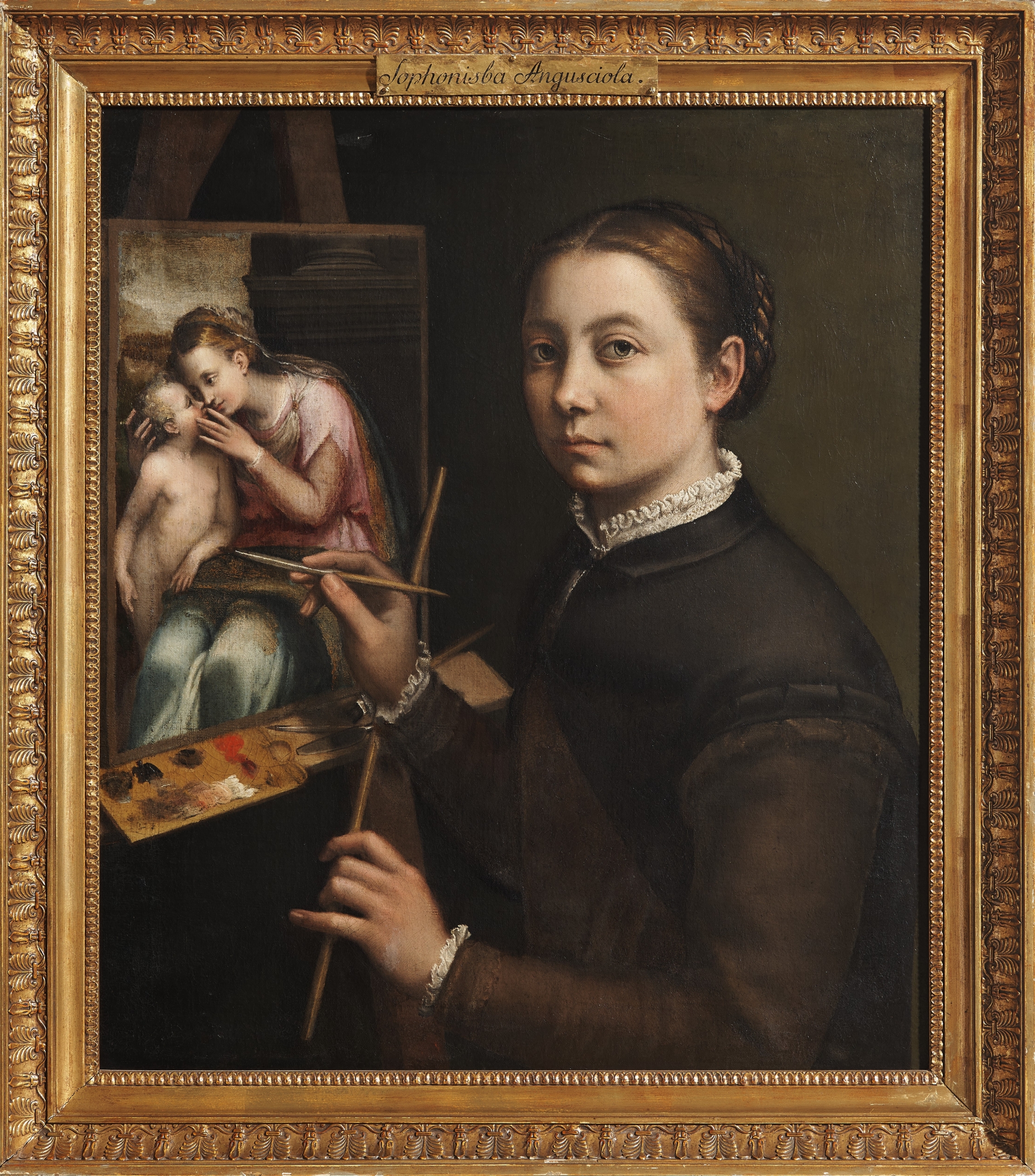
Figure 4: Sofonisba Anguissola, Self-Portrait at the Easel (c. 1556), oil on canvas, 65.5 x 59 cm, Muzeum-Zamek, Łańcucie.
Considering this need to stand out but not break with rules of propriety, I argue that Sofonisba’s musical self-portraits serve as an important bridge between clearly acceptable courtly activities, like music, and the less mainstream manual skills needed for painting. In his treatise on the education of women, although he is in the act of warning guardians about the moral dangers of musical performance, Giovanni Michele Bruto confirms that ‘in the opinion of most people […] it is a great grace and ornament for a girl of good family, if becoming a great mistress of singing and playing several instruments she shows herself among others to be excellent and famous.’40 Sofonisba’s visual performance of her own musical excellence in her paintings works to offset her potentially socially-questionable identity as a painter. The technical skills she exhibits as a painter through the act of creating them, allowing her to skirt along a boundary and eventually opening the door to other noble female artists, like Irene di Spilimbergo.41 In addition, Sofonisba’s musical paintings pay particular attention to the technical aspects of musical performance and even to instrument maintenance, foregrounding the similarity of musical and artistic manual dexterity.
According to Michael W. Cole’s catalogue, where he organizes the works attributed to Sofonisba according to evidence and scholarly accord on their authenticity, there are two paintings that feature her as a musician that are accepted by most scholars as genuine, one at the Museo di Capodimonte in Naples (Fig. 1) and the other in England at Althorp Park (Fig. 5). Cole concludes that a third in the collection of Goodwood House in Chichester is an 18th-century copy of the one at Althorp Park in the Earl Spencer Collection. The painting in Althorp Park is a bit bigger than the Naples image and includes a shadowy second woman in the background (Fig. 5). In each painting Sofonisba depicts herself at the keyboard of an instrument. I believe the instrument she intends to represent in each is an arpicordo, a pentagonal spinet or virginal, of the kind that was built in Northern Italy starting in the early 16th century. It is similar to the Venetian example in the Met collection commissioned for Eleanora della Rovere, Duchess of Urbino and daughter of Isabella d’Este (Fig. 6). To my eye, the slightly acute angles of the corners in both paintings seem consistent with the geometry of this type of instrument. Additionally, all three instruments seem to have the same organization of decorative ivory buttons along the edge of the case, with a similar spacing relative to the keyboard – the 3rd button from the right coming just to the decorative board at the right edge of the keyboard.42
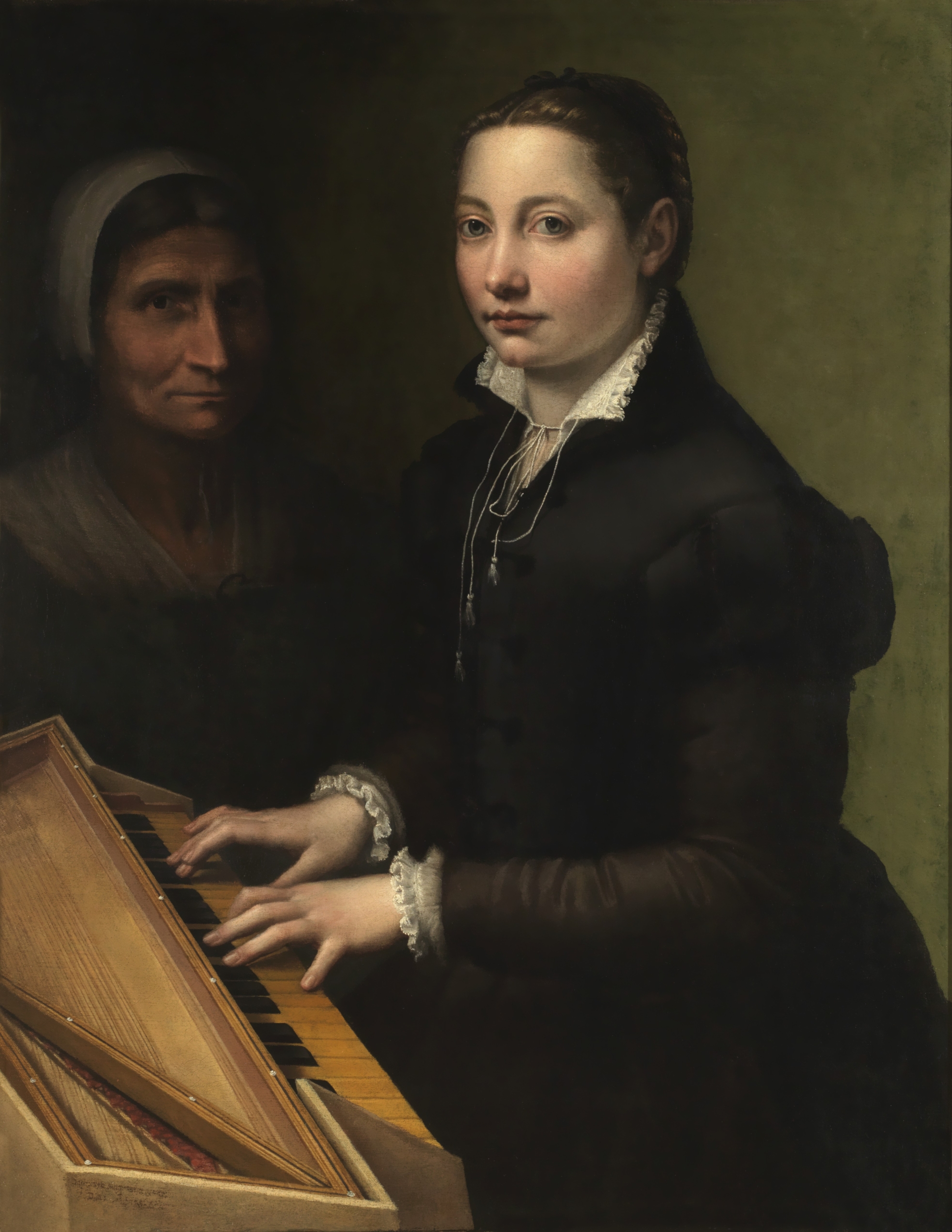
Figure 5: Sofonisba Anguissola, Autoritratto alla spinetta (c. 1559), 81 x 63 cm, Althorp, Earl of Spencer Collection, CC0 1.0, Wikimedia Commons, photo: Bibliothèque Nationale de France (accessed on 26 August 2024).
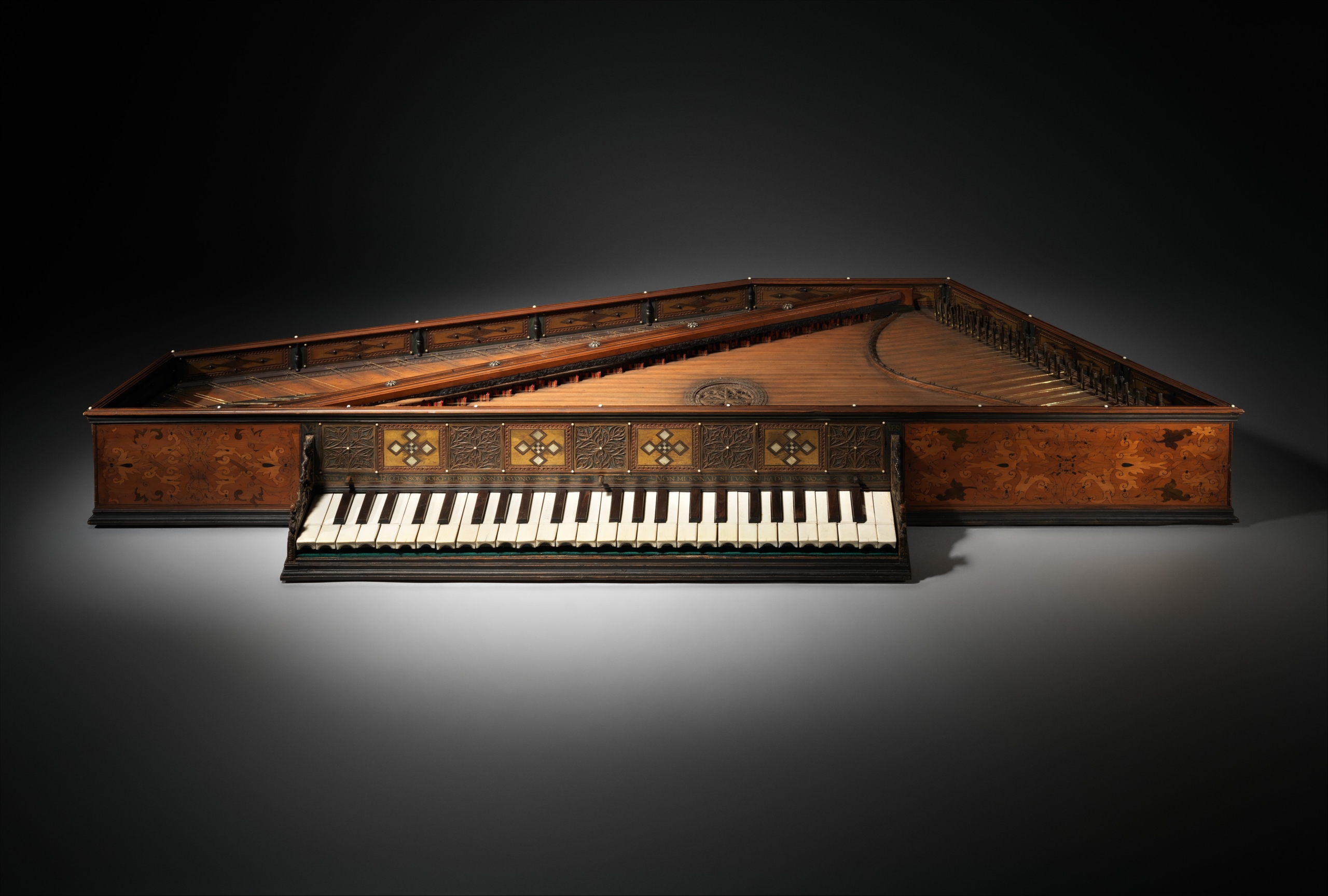
Figure 6: Virginal / arpicordo of Eleanora della Rovere (Italy, 1540), Metropolitan Museum of Art, New York, Acc. no. 53.6a, b, <https://www.metmuseum.org/art/collection/search/503043> (accessed on 26 August 2024).
From this point the instruments depicted diverge and the organological information becomes less clear, especially in the Althorp Park portrait. Either Sofonisba had access to two different but similar instruments or she depicted the same instrument but with significantly less attention to detail, or even with a level of unfinish in the painting in England. For example, the instrument shown at Althorp Park is depicted in an unadorned protective outer case, possibly one with its own legs like the one by Alessandro Trasuntino in the Tagliavini Collection (Bologna). We can also see that the instrument in the Naples image sits directly on a table covered with a luxurious green cloth, without a protective case. On the instrument depicted in Althorp Park, the decorative board at the right side of the keyboard, while similar in general shape to the Naples instrument, seems to lack the ornamental black line and is in general less clearly defined. The most egregious error or omission, however, is the lack of tuning pegs in the soundboard, an aspect that is executed beautifully, with extreme detail in the Naples painting. This is my main rationale for believing that the Althorp Park painting remains in an unfinished state, rather than representing a lack of knowledge on the part of the artist.43 A painter who spent the kind of attention to rendering the metallic but matte finish of the tuning pegs and expressing the energetic tension of the glistening strings wound around them could not have simply failed to notice the pegs for another painted instrument.
At the same time, the Althorp Park instrument demonstrates minute attention to the jackrail, which is in the foreground of the painting, near the now indistinct signature on the outer case. Under the jackrail which is decorated with ivory buttons like the case, a band of red felt protrudes, winding around the strings just on the inside of the bridge, in an arrangement that would dampen the sound. In her recent article on musical instruments included in domestic inventories from late 16th-century Venice, Bláithín Hurley discusses records that mention the presence of both a keyboard instrument in the portego or public space of a home along with an ‘arpicordo sordin’ or ‘muted harpsichord’ in the more private spaces, near where the young children were educated and cared for.44 Such a muted effect would be quite useful as a practice or teaching instrument, especially since when Sofonisba lived in her father’s home, many of her siblings would have been young enough to require an afternoon nap. In addition, the presence of the second older woman, identified as the family governess in the painting of Sofonisba’s sisters playing chess, places this painting in the private domestic spaces of the family home.
In contrast, the Naples painting includes highly accurate renderings of the technical aspects of the Anguissola’s more public-facing instrument, from the tuning pegs and the coils of brass wire to the soft texture of the red felt that cushions the stopping of the keys and the rosettes on their fronts. Like her clothing, this is a refined but not an ostentatious instrument, in good working order and ready for performance in the spaces where her family gathered and entertained their peers, some of whom might also desire the gift of a portrait. Other 16th-century Italian women of a similar class were depicted in portraits that emphasized their claims of musical skill as central to their identity. For example, a representation of a young woman in a painting by Bernardino Licinio now in Munich, emphasizes both her status as recently betrothed with the ring on her right forefinger, and her declaration of music literacy with the open partbook in her left hand.45 Although its notation is no longer clearly legible, the oblong format and ink traces are strongly suggestive of contemporary music sources, both printed and manuscript. Music and love were closely linked, as claims both for the utility of music in improving sanctioned marital intimacy – as demonstrated by a significant number of paintings that show young noble couples making music – and conversely as expression of anxieties over the potential of music to induce improper behavior – demonstrated in another canvas also by Licinio where a young woman at a clavichord is being tempted into an illicit relationship by an older man.46 In addition to keyboard instruments, noble Italian women could be depicted with a lute or even a lira da braccio, the instrument associated with both Apollo and Orpheus and the quasi-improvisatory recitation of poetry.47 Sofonisba’s musical self-portraits affirm her position as a knowledgeable and desirable young musician, ready to contribute to the cultural and social life of a court.
One of the most persistent doubts raised about Sofonisba’s musical ability by art historians is the placement of her hands in relation to the keys. It is unclear exactly what they question, but I suspect it is because her hand does not conform to the modern gesture we associate with piano playing, a position required for the heavily weighted keys and hammer actions of steel-framed pianos since the 19th century.48 Granted that there are certainly some issues with proportion (for example, her hands seem a little too big in relation to her body and head) and the painting is also damaged in the lower left corner, her playing technique is within 16th-century expectations and aligns with both written and visual contemporary examples of keyboard technique. Maria Luisa Baldassari has isolated three distinct traditions of keyboard technique in comparing 16th and 17th-century text sources with a database of images of keyboard players that she has compiled. She and Augusta Campagne have generously tested these through their own performance research and bodily practice.49 Baldassari identifies the technique in the Althorp Park painting as aligning with what she calls the ‘Diruta’ position, ‘where he [Diruta] suggests keeping the hand at the same height as the wrist.’50 The much lighter touch of such a small instrument does not require weight to be dropped into the keys from above, negating many questions about the accuracy Sofonisba’s depiction of her own keyboarding technique.
Additionally, 16th-century keyboard manuals describe the fingering of quick passages, or diminutions, using only middle fingers, in the motion Sofonisba’s right hand seems to be accomplishing as she looks out at us from both canvases.51 Although Sofonisba’s left hand is mostly outside the canvas in Naples and it was damaged when the painting was stretched for a time in a smaller frame, it seems to be a little flatter and more extended, perhaps playing a chord.52 The position is remarkably similar to Baldassari’s Video 5a, showing Augusta Campagne using the ‘Santa Maria’ position to play a simple aria published by Facoli.53 The fact that Sofonisba’s hands seem a little too big for her body, which possibly can be understood as a flaw in her technique as a painter, might also indicate that her focus was on emphasizing them and their performance, an act made difficult when in reality she was using them to paint that performance. The Althorp Park canvas shows a similar hand placement although the three-quarters length view and different angle allows a more natural placement of her left hand and alignment in the composition. In fact, in this painting we can see that she is playing or about to play a consonant major triad on A la mi – clearly an A with the pinky of her left hand, possibly an E with the index finger of the same hand and a c-sharp with the middle finger of her right hand. Could she possibly be including a musical signature – A for Anguissola?
As with all the 16th-century arpicordi that I have seen, there is no evidence of a music desk in either painting, and Sofonisba seems to be improvising or playing from memory.54 Could she be playing her own intabulation of a popular song or variations on a dance theme? As Baldassari states, in the Naples self-portrait ‘the right hand fingers of Anguissola are not relaxed, but raised and bent as if they were about to “hit” the keys, just as in Diruta’s description of the way the sonatori da balli play on quilled instruments.’55 For this repertoire her depicted hand placement, chord in the left with more active diminutions in the right middle fingers, seems both appropriate and accurate, reinforcing the idea that she was claiming to be capable of both playing and possibly creating her own arrangements for the pleasure of her companions in the portego of her family home, a skill that could contribute to the daily practice of dancing at a court. In book 3 of his conduct manual for courtiers, Castiglione warns that women ought to avoid ‘those loud and oft-repeated diminutions that show more art than sweetness’.56 Although he is definitely placing limits on female musicality, in the process he also confirms that women were expected to ornament their performances and that sometimes, maybe even often, they overstepped the bounds of propriety in their enthusiasm to entertain of others and their enjoyment of their own abilities.
Another element of the Naples self-portrait that has not been fully appreciated for its novelty, is Sofonisba’s bold depiction of a tuning hammer.57 Lying on the table just beyond the keyboard, it is highlighted by the reflective metal of its surfaces against the soft green cloth. Tuning hammers are exceptionally rare in representations of early keyboard instruments, which is ironic because wooden instruments with so many strings and in period temperaments would have required regular, even daily tuning and adjustment for different repertoire.58 In studying music of the 16th through the 18th centuries, historians have often relied on payment records for regular tuning service visits by professional musicians as evidence of female keyboard players in homes or schools. For example, organologist Michael Cole has documented the importance of women in the shift from harpsichords to early pianos through the records of an English keyboard technician.59 Similarly, Kristine Forney established which students at a girl’s school in 16th-century Antwerp were studying keyboard seriously through records of their parents’ payments to professionals for instrument maintenance along with their lessons.60 Although this varies depending on the complexity of the instrument involved, tuning is generally understood as an activity reserved for trained musicians with experiential knowledge and particular theoretical proficiencies.61 While it is possible that many women tuned their own instruments once they had the necessary training, their activities would have become invisible and private, just like their performances. Like the mahlstick and brushes in her self-portraits of painting, in depicting this tool of the musical trade so accurately, Sofonisba makes corresponding claims about her advanced musical knowledge and technical skill.
Music seems to have been more than just a pastime or social expectation for the young Sofonisba. In addition to the depictions of her as a player in Naples and Althorp Park, another early self-portrait that does not include musical imagery, features a Latin inscription that translates as ‘With my songs and my colors, I, the maiden Sophonisba, equaled the Muses and Apelles.’62 She positions herself to rival both the female masters of the performing arts, including song and dance, and the male master of painting. All these skills would have been essential to gaining and maintaining her role as a lady-in-waiting at the Spanish court. Isabel’s court was known for its liveliness, where she and her ladies together performed comedies, made music, and danced.63 And indeed, while there is very little direct documentation of Sofonisba’s specific activities at the court, one account gives us a sense of her status in that environment and the importance of musical knowledge to her position there. Girolamo Neri, mentioned before, also wrote to the Duke of Mantua about the entertainments after the wedding of Philip II and Isabel on 29 January 1560. He stated that ‘His Majesty having said that all should dance, alla gagliarda, nobody wanted to start but Il Signor Ferrante Gonzaga was the first to begin and he went to take that Cremonese woman who paints and who has come to stay with the Queen, and they started the way for many others who danced after them.’64 Ferrante Gonzaga could be sure that Sofonisba, as a fellow north Italian of the noble class, would be familiar with the version of the galliard that he knew. He might even have danced with her before. It was repertoire she played and had certainly learned to dance in the hopes that her father’s distribution of her self-portraits would be successful, and that she would be invited to a prominent court. It seems highly unlikely that she would have dared to disappoint the king or queen with her musical skills, having made such confident claims in her three musical self-portraits. Her long tenure in Spain, including time as a tutor to the noble children, indicates that in addition to painting, she did not leave anything to be desired in her courtly accomplishments of literacy and music.
Conclusion
As a socially acceptable area of excellence for a noble-born girl, music provided an important foil and justification for her transgressive skills in the visual arts. Music and literacy were integral to Sofonisba’s social persona and the visual evidence in her self-portraits confirm the skills Ribera attributed to her in his volume. It seems likely from the evidence in her paintings, that during her youthful formation in the home of her father, Sofonisba had access to at least two different instruments – a muted practice instrument and a performance instrument, each of which she depicted differently in her self-portraits at the keyboard. She made strong claims about her own musical and technical excellence through the prominent placement and depiction of the physical and sonic properties of these instruments – from the muting of the strings in the painting at Althorp Park to the gleaming tuning hammer and carefully coiled strings in the version in Naples. And finally, her visual claims of musical knowledge and performance abilities would certainly have been tested and verified as part of her assimilation into the Spanish court, where skills in dance and music along with painting, were expected of her on a day-to-day basis as part of her regular activities as a lady in the Queen’s retinue.
In both her musical self-portraits and her courtly activities, Sofonisba transgressed but did not break social boundaries for her gender, class and maiden status, regardless of her more advanced age at the time of her marriage. In her self-portraits at the keyboard, she shows a remarkable prioritization of the technical aspects of playing and instrumental construction over proportion and visual concerns. Her unusual focus on the mundane tuning hammer is an especially singular claim of musical skills that until now has not generally been associated with noble women in the 16th century, despite their documented concern with the instruments in their homes.65 I recommend that we listen more seriously to Sofonisba’s claims of musical skill, since her enduring reputation and extant paintings stand as testaments to her successful performance of the unique qualities of her body, voice, and mind through both artistic and musical excellence.
Endnotes
- * Many thanks to the anonymous reviewer for their helpful critique. Thanks also to my undergraduate research assistant Elise LeMonnier for her thoughtful feedback and help with the image permissions process.↩︎
-
The volume was dedicated to Valeria Bonomi, a nun and the abbess of a monastery in Trieste. Pietro Paolo di Ribera, Le Glorie immortali de’ trionfi, et heroiche imprese d’ottocento quarantacinque donne illustri antiche e modern, dotate di conditione, e scienze segnalate (Venice: Evangelista Deuchino, 1609), online: <http://data.onb.ac.at/rep/105EF692> (accessed on 26 August 2024).↩︎
-
Sofonisba’s entry is no. 454, but the end of the numbers is at 495, so it seems that Ribera fell well short of his lofty goal. It is unclear why the title claims such a higher number, but Ribera died in 1609, perhaps before he could complete all the entries that he intended to include.↩︎
-
‘Di Sofonisma nobile Cremonesa, Musica, Letterata, e sopra tutto rarissima Pittrice’, p. 313. Unlike many of the other accounts in his book, which are limited to a sentence or two, Sofonisba’s is almost four pages long. It also stands out because Ribera does not cite other authors when he writes about Sofonisba, indicating that he composed this entry from his own knowledge and experience rather than from another published source as he did with entries for other women. Whether or not the information he provides is completely accurate, this record is an interesting perspective on how Sofonisba was perceived during her lifetime.↩︎
-
She is also mentioned on p. 335 on a separate list headed by Tarquinia Molza of ‘women of great valor in various profession who still live in this century with great honor’ (‘Donne di gran valor in varie professioni, che con grande honore di questo secolo vivono ancora’). Coming at the very end, this second entry for Sofonisba refers the reader to the previous account, but music is again noted as one of her accomplishments, while her noble status has been overlooked. ‘Sofonisma [sic] Cremonesa, oltre che è Musica, e buona letterata, e eccellentissima nella pittura; come sopradicemmo largamente.’ Cap. 14 cart. 457. (If not stated otherwise, all translations of quotations from the original sources are by the author).↩︎
-
I will use Sofonisba’s first name to identify her throughout this essay for clarity, since she used and was referred to by different family names throughout her life. Her first name was consistent.↩︎
-
There is also one in the Spencer Collection at Althorp Park (Fig. 5) and another that seems to be an 18th-century copy in Chichester, Goodwood House.↩︎
-
For excellent and detailed discussions of the ways that women presented themselves through courtly song and dance, see Judith Bryce, ‘Performing for Strangers: Women, Dance, and Music in Quattrocento Florence’, in: Renaissance Quarterly 54 (2001), 1074–107, and Chapters 2 and 3 of Laurie Stras’s book Women and Music in Sixteenth-Century Ferrara (Cambridge, 2018). For a general overview of the role of dance at court, see Jennifer Nevile, ‘Dance’ in: Early Modern Court Culture,ed. Erin Griffey (London, 2021), 478–93.↩︎
-
For example, Maria Kusche states that Sofonisba lived ‘[u]nos dieciséis años en España como profesora en pintura de la reina y admiradisima pintura de la corte’, while also acknowledging that she did not receive any direct compensation for her activities as an artist. Maria Kusche, ‘Sofonisba Anguissola en España: Retratista en la Corte de Felipe II Junto a Alonso Sánchez Coello y Jorge de la Rua’, in: Archivo Español de Arte 62 (1989), 391–420, at 392–3. Except for Linda Austern, Samantha Chang, and Maria Luisa Baldassari, scholars have tended to ignore Sofonisba’s musical accomplishments. Linda Phyllis Austern, ‘Portrait of the Artist as (Female) Musician’, in: Musical Voices of Early Modern Women, ed. Thomasin LaMay (Ashgate, 2007), 15–59; Maria Luisa Baldassari, ‘Le mani di Cecilia: Hand Position and Fingering on Keyboards in Italian Iconographical Sources of the Renaissance’, in: ‘Universum rei harmonicae concentum absolvunt’: The Harpsichord in the Sixteenth Century, ed. Augusta Campagne and Markus Grassl (Vienna, 2024), 136–66, <https://www.mdw.ac.at/mdwpress/mdwp003-le-mani-di-cecilia/> (accessed on 30 August 2024); and Samantha Chang, ‘Musical Self-Portraits by Garofalo, Anguissola, and Fontana’, in: Music and Visual Culture in Renaissance Italy, ed. Chriscinda Henry and Tim Shephard (New York/London, 2023), 71–90.↩︎
-
Céline Talon, ‘Catharina Van Hemessen’s Self-Portrait. The Woman Who Took Saint Luke’s Palette’, in: Women Artists and Patrons in the Netherlands, 1500–1700, ed. Elizabeth Sutton (Amsterdam, 2019), 27–53.↩︎
-
See the first chapter of Caroline Murphy, Lavinia Fontana: A Painter and her Patrons in Sixteenth-Century Bologna (New Haven, 2003), 13–48.↩︎
-
After the accused rapist was found guilty, Artemisia married a Florentine painter and moved away from her family. Letters reveal that at least in the early part of her career her husband was actively engaged in her long-term sexual relationship with the family’s noble patron who was also the father of some of her children. While a recent and controversial exhibition in Genoa in 2023 – Artemisia Gentileschi: Courage and Passion – seems to have gone too far, sensationalizing the impact of sexual violence on her creative process, for better or worse, it must be acknowledged that the public nature of her rape would have had a long-term impact on her life and opportunities. For a thoughtful discussion of these topics, see the two articles by Elizabeth Cohen, ‘The Trials of Artemisia Gentileschi: A Rape as History’, in: The Sixteenth Century Journal 31 (2000), 47–75, and ‘More Trials for Artemisia Gentileschi: Her Life, Love and Letters in 1620’, in: Patronage, Gender and the Arts in Early Modern Italy: Essays in Honor of Carolyn Valone, ed. Katherine McIver and Cynthia Stolhans (New York, 2015), 249–91.↩︎
-
See Chapter 6 of Laurie Stras, Women and Music in Sixteenth-Century Ferrara (Cambridge, 2018).↩︎
-
Ribera, Le Glorie immortali (see n. 1), 313.↩︎
-
Alessandro Lamo, Discorso […] intorno alla scoltvra, et pittvra […] fatte dall’Eccell. […] M. Bernardino Campo (Cremona: Christoforo Draconi, 1584), 37–44, <http://data.onb.ac.at/rep/10B0B519> (accessed on 26 August 2024).↩︎
-
In his tract on Bernardino Campi, biographer Alessandro Lamo states that Amilcare Anguissola ‘l’alluogò ambedue in casa di Barnardino’. Cremona was not a large city, so it seems possible that this just means that they would have come regularly into the Campi home for lessons. Discorso, 37–8. Less is known about Gatti because he was not the subject of Lamo’s tract.↩︎
-
She greets his wife at the beginning and end of her letter of 21 October 1561 to Campi with salutations to his whole family, ‘e con questo fine me li raccomando, e li bacio la mano, cosi alla sua carissima ed onoratissima consorte da me molto amata, ed alla sua madre Sig. Barbara, e sua sorella Sig. Francisca, ed a suo padre Sig. Pietro.’ Kusche, ‘Sofonisba Anguissola en España’ (see n. 8), 402.↩︎
-
Education might also indicate that he could have been preparing them for life as a nun, where a convent dowry might be reduced for girls with skills in music, illumination or painting, and writing.↩︎
-
‘se’l padre haurà destinate i[n] corte alla servitù d’alcuna Prencipessa, bisogna, che cominci ad ammaestrarle in quelle cose, che sono atte ad acquistar la gratia della patrona, & à procurare, che leggano, scrivano, di scorrano, cantino, sonino, & ballino, & facciano acconciamente tutto ciò, che adorna le donne di palazzo […]. Hò vedute presso la Reina alcune povere damigelle […] che sono divenute mogli de principali Cavalieri della Francia, senza che i padri habbiano loro dato un danaio in dote.’ Stefano Guazzo, La civil conversatione (Brescia: Tomaso Bozzola, 1574), fol. 159v–160r, <https://books.google.it/books?id=xXsPAAAAQAAJ&hl=de&pg=PA7-IA1 – v=onepage&q&f=false> (accessed on 2 Sept. 2024).↩︎
-
Michael W. Cole, Sofonisba’s Lesson: A Renaissance Artist and Her Work (Princeton, 2019), 32.↩︎
-
Maria Kusche, ‘Sofonisba Anguissola: Her Life and Works’, in: Sofonisba Anguissola: A Renaissance Woman, ed. Sylvia Ferino-Pagden and Maria Kusche (Washington D.C., 1995), 26–103, at 72.↩︎
-
‘Essa regina si mostra d’aver ingegno e di bonissima intragna, ella ha cominciato a dipingere et dice la Sofonisba Cremonense che é quella le insegna et é molto favorita sua.’ Letter from 18 February 1560, reproduced in Maria Kusche, ‘Sofonisba Anguissola en España’ (see n. 8), 397.↩︎
-
While musicians often held ambiguous positions in a court and were rewarded through gifts or material support, artists usually did not have the same sort of social access and were more likely to be paid directly for their products. For a comparison of their different status, see Evelyn Welch, ‘Painting as Performance in the Italian Renaissance Court’, in: Artists and Court: Image-making and Identity, 1300–1550, ed. Stephen J. Campbell (Boston, 2004), 19–32.↩︎
-
Her letter makes it clear that they were in direct communication about the painting. Filipp Baldinucci, Notizie de’ professori del disegno da Cimabue in qua, vol. 2 (Florence, 1846), 628–9.↩︎
-
Archivo de Simancas, C.M. la época, leg. 1109, cit. in Kusche, ‘Sofonisba Anguissola en España’ (see n. 8), 410.↩︎
-
While this is usually presented as a spur of the moment choice by Sofonisba, it seems likely that she already knew and trusted Orazio as a conduit to communicate with her family in Italy. The compromised propriety and hence forced marriage might have been a calculated decision on her part, one that allowed her to avoid the complex negotiations with the Spanish court that would have had to happen otherwise.↩︎
-
Kusche, ‘Sofonisba Anguissola en España’ (see n. 8), 96.↩︎
-
Cole, Sofonisba’s Lesson (see n. 19), 139.↩︎
-
The taint of professionalism was warned against by Castiglione and others, and can be seen in the behavior of skilled noble musicians, including the famous tension between Lord Giulio Cesare Brancaccio and Duke Alfonso II d’Este that ultimately led Brancaccio to leave Ferrara. See Richard Wistreich, Warrior, Courtier, Singer: Giulio Cesare Brancaccio and the Performance of Identity in the Late Renaissance (Aldershot, 2007), 239–51.↩︎
-
This is very different from Fontana and Gentileschi, who continued to paint after marriage and throughout their lives.↩︎
-
‘Introduction’, in: The Youth of Early Modern Women (Amsterdam, 2019), 12.↩︎
-
For the Italian context specifically see ibid., 15.↩︎
-
Her exact date of birth is not known and age estimates range widely. She probably wasn’t in her 40s at the time of her marriage because the annual income documents indicate that it was believed she might have children.↩︎
-
For example, in her portrait by Pontormo, Maria Salviati is shown holding a little prayer book and Lucrezia Panciatichi was depicted with a similar book by Bronzino around the same time (both are now in the Uffizi: Inv. no. 1890, 3565, <https://catalogo.uffizi.it/it/29/ricerca/detailiccd/1185096/>, Inv. no. 1890, 736, <https://catalogo.uffizi.it/it/29/ricerca/detailiccd/1185046/>). A few examples of noble women with music books include Francesco Ubertini’s portrait of a woman from the 1540s that is at the Getty, <https://www.getty.edu/art/collection/object/103RE1>, and Giovanni Antonio Fasolo’s depiction of female children of the Valmarana family from about 1553, <https://www.museicivicivicenza.it/it/mcp/opera.php/10022> (all accessed on 26 August 2024).↩︎
-
In Baldinucci, Notizie (see n. 23), 625.↩︎
-
Ludovico was married to Isabella’s sister, Beatrice d’Este, and Cecilia was his mistress before and during their marriage.↩︎
-
Timothy McCall, ‘The Girl as Mistress in Renaissance Italy: Gender and Power in Leonardo da Vinci’s Portrait of Cecilia Gallerani’, in: Gender & History (early view, 2023), <https://doi.org/10.1111/1468-0424.12696> (accessed on 27 August 2024).↩︎
-
Catherine King, ‘Looking a Sight: Sixteenth-Century Portraits of Woman Artists’, in: Zeitschrift für Kunstgeschichte 58 (1995), 381–406, and Talon, ‘Catharina Van Hemessen’s Self-Portrait’ (see n. 9). Also of interest in regards to van Hemessen is Laura Ventura Nieto’s contribution to The Museum of Renaissance Music, ed. Vincenzo Borghetti and Tim Shephard (Turnhout, 2022), 234–7.↩︎
-
For a nuanced discussion of these overlapping traditions, see ibid., 29–36.↩︎
-
James H. Marrow, ‘Artistic Identity in Early Netherlandish Painting: The Place of Rogier van der Weyden’s St. Luke Drawing the Virgin and Child’, in: Rogier van der Weyden: St. Luke Drawing the Virgin. Selected Essays in Context, ed. The Museum of Fine Arts, Boston (Turnhout, 1997), 53–60, at 53–4. By the mid-16th-century this was a well established tradition across Europe, as evidenced by Giorgio Vasari’s use of a self-portrait for the face of St. Luke in the Chapel of San Luca at Santissima Annunziata in Florence, painted in the 1560s.↩︎
-
‘Pare alla maggior parte, che molto porti di ornamento & di gratia à cara & gentil fanciulla, se ella fra le molte, divenuta dotta maestra del cantare, ò del sonar à vari stromenti si renda famosa & illustre.’ La institutione di una fanciulla nata nobilmente (Antwerp: Jehan Bellère / Christophe Plantin, 1555), fol. 34v–36r, <https://books.google.at/books?id=hv9cAAAAcAAJ&hl=de&pg=PP3 – v=onepage&q&f=false> (accessed on 24 August 2024).↩︎
-
For Sofonisba’s influence, see ch. 6 of Cole, Sofonisba’s Lesson (see n. 19). For both Sofonisba and Irene as young noble women, musical and artistic prowess served as complementary courtly characteristics, although for Irene her persona was mostly broadcast posthumously.↩︎
-
Annett Richter also pointed out some of the similarities between the Met instrument and those painted by Sofonisba in her paper given at the 2022 AMS annual meeting in New Orleans, which she graciously shared with me after the conference.↩︎
-
Many details of her Chess Players (Muzeum Narodowe, Poznań) also remain unfinished, so this is not without precedent to consider she might not have completed all the details of her painting.↩︎
-
Bláithín Hurley, ‘Musical Instruments in the Venetian Home: Contextualizing Marietta Robusti’s Self-Portrait’, in: EM 51 (2023), 109–15.↩︎
-
Bernardino Licinio, Portrait of a Woman (c. 1520), Bayerische Staatsgemäldesammlungen – Alte Pinakothek München, <https://www.sammlung.pinakothek.de/en/artwork/Qr4DgNbGpE> (accessed on 26 August 2024).↩︎
-
The frescos created in 1551 by Antonio Fasolo for the Villa Campiglia Negri de Salvi includes an example of music as an activity for noble couples, where two couples make music together, <https://commons.wikimedia.org/wiki/File:Villa_Campiglia,_Giovanni_Antonio_Fasolo,_affresco_01_(Albettone).jpg> (accessed on 26 August 2024). The Licinio is now at Windsor Castle, <https://www.rct.uk/collection/search – /3/collection/400008/a-concert> (accessed on 26 August 2024). For a few recent discussions of music and the erotic see the seven articles co-edited by Samantha Chang and Tim Shephard titled ‘Music, Gender and the Erotic in Italian Visual Culture of the 16th Century’ included in Volume 51, Issue 1 of Early Music (2023) and Flora Dennis contribution to the volume Erotic Cultures of Renaissance Italy.↩︎
-
For lute, see Ubertini’s portrait of a lady at the Getty, <https://www.getty.edu/art/collection/object/103RDZ> (accessed on 20 Sept. 2024), and an unsigned painting of a lady in the Spada Gallery in Rome, includes a woman with a lira da braccio (Room 2, Inv. No. 57).↩︎
-
Cole states that ‘the player’s proper right hand, with index finger lifted high and thumb pointing to the front of the key, hardly assumes the pose it would use to play.’ Sofonisba’s Lesson (see n. 19), 83.↩︎
-
Maria Luisa Baldassari, ‘Le mani di Cecilia’ (see n. 8). I highly recommend careful study of the videos they have created and linked, for a practical demonstration and an enjoyable musical experience as well.↩︎
-
Ibid., 145.↩︎
-
Cf. Baldassari’s article for a more nuanced discussion of 16th-century fingering technique in theory and practice.↩︎
-
It is unclear when this occurred, but the damage extends in straight lines all the way up the canvas on the left side and along the bottom edge. This is difficult to see unless you view it in person.↩︎
-
Baldassari, ‘Le mani di Cecilia’ (see n. 8), 160.↩︎
-
Is is possible that a music desk might have been outside the field of view in the painting in Naples if it was small, but in any case, written music was not featured.↩︎
-
Ibid., 148.↩︎
-
‘ne meno nel cantar, o sonar quelle diminution forti, e replicate, che mostrano piu arte, che dolcezza.’ Baldassarre Castiglione, The Courtier of Count Baldessar Castilio […] Done into English by Thomas Hobby, Book 3 (London, 1588), 347, <https://archive.org/details/gri_33125009488665/page/n349/mode/2up?view=theater> (accessed on 20 Sept. 2024).↩︎
-
Cole also took note of it but with a different interpretation. See ‘Harmonic Force in Cinquecento Painting’, in: Animationen/Transgressionen. Das Kunstwerk als Lebewesen, ed. Ulrich Pfisterer and Anja Zimmermann (Berlin, 2005), 73–94.↩︎
-
In my survey of representations of musicians from the 15th and 16th centuries, I have only come across one other image of a tuning hammer. It is quite different because it is a representation of the liberal art of Music as a woman. Tuning is more often represented as the act of turning the pegs on a lute or viol. For a survey of tuning imagery see François Quiviger, ‘The Tuning Figure in Early Modern Art 1350–1700’, in: Music and Visual Culture in Renaissance Italy,ed. Chriscinda Henry and Tim Shephard (New York/London, 2023), 132–56.↩︎
-
Michael Cole, ‘Transition from Harpsichord to Pianoforte – the Important Role of Women’, in: Geschichte und Bauweise des Tafelklaviers. 23. Musikinstrumentenbau-Symposium, Michaelstein, 11. bis 13. Oktober 2002, ed. Boje E. Hans Schmuhl, Michaelsteiner Konferenzberichte 68 (Augsburg, 2006), 43–60.↩︎
-
Kristine Forney, ‘Nymphes gayes en abry du Laurier: Music Instruction for the Bourgeois Woman’, in: MD 49 (1995), 151–87.↩︎
-
While tuning is not generally discussed in written treatises of the 16th century, Aron touches on it briefly in the final chapter of his Toscanello de la musica (3rd edition: Vineggia: Marchio Sessa, 1539), 64, <https://mdz-nbn-resolving.de/details:bsb10148090> (accessed on 24 Sept. 2024).↩︎
-
‘Musas Appellem aequavi Sophonisba puelle Coloribus Fungens carminibusque meis.’ The location of this painting is now unknown, but it was formerly in the Federico Zeri collection and is No. 100 in the catalogue of Michael Cole.↩︎
-
Accounts show that she participated with the other ladies in these entertainments. Kusche, ‘Sofonisba Anguissola en España’ (see n. 8), 408.↩︎
-
‘La sera del sposalizio havendo detto S.Mta. che si bailase alla gagliarda sie essendovi alcuno che desse principio, il Sr. Ferrante Gonzaga fu il primo ch’incominció, il quale ando a prendere quella Cremonese, che dippinge, ch’è venuta a star con la Regina, et fece la vía a molti altri que ballarono depoi.’ Quoted in Kusche, ‘Sofonisba Anguissola en España’ (see n. 8), 397.↩︎
-
For example, Isabella d’Este wrote many letters about instruments, but did not discuss tuning. William F. Prizer, ‘Isabella d’Este and Lorenzo da Pavia, Master Instrument-Maker’, in: EMH 2 (1981), 87–127.↩︎
Bibliography
Pietro Aron, Toscanello de la musica (3rd edition: Vineggia: Marchio Sessa, 1539), <https://mdz-nbn-resolving.de/details:bsb10148090>
Linda Phyllis Austern, ‘Portrait of the Artist as (Female) Musician’, in: Musical Voices of Early Modern Women, ed. Thomasin LaMay (Ashgate, 2007), 15–59
Maria Luisa Baldassari, ‘Le mani di Cecilia: Hand Position and Fingering on Keyboards in Italian Iconographical Sources of the Renaissance’, in: ‘Universum rei harmonicae concentum absolvunt’: The Harpsichord in the Sixteenth Century, ed. Augusta Campagne and Markus Grassl (Vienna, 2024), 136–66, <https://www.mdw.ac.at/mdwpress/mdwp003-le-mani-di-cecilia/>
Filipp Baldinucci, Notizie de’ professori del disegno da Cimabue in qua, vol. 2 (Florence, 1846)
Giovanni Michele Bruto, La institutione di una fanciulla nata nobilmente (Antwerp: Jehan Bellère / Christophe Plantin, 1555), <https://books.google.at/books?id=hv9cAAAAcAAJ&hl=de&pg=PP3 – v=onepage&q&f=false>
Judith Bryce, ‘Performing for Strangers: Women, Dance, and Music in Quattrocento Florence’, in: Renaissance Quarterly 54 (2001), 1074–107
Baldassarre Castiglione, The Courtier of Count Baldessar Castilio […] Done into English by Thomas Hobby (London, 1588), <https://archive.org/details/gri_33125009488665/page/n349/mode/2up?view=theater>
Samantha Chang, ‘Musical Self-Portraits by Garofalo, Anguissola, and Fontana’, in: Music and Visual Culture in Renaissance Italy, ed. Chriscinda Henry and Tim Shephard (New York/London, 2023), 71–90
Elizabeth Cohen, ‘The Trials of Artemisia Gentileschi: A Rape as History’, in: The Sixteenth Century Journal 31 (2000), 47–75
Elizabeth Cohen, ‘More Trials for Artemisia Gentileschi: Her Life, Love and Letters in 1620’, in: Patronage, Gender and the Arts in Early Modern Italy: Essays in Honor of Carolyn Valone, ed. Katherine McIver and Cynthia Stolhans (New York, 2015), 249–91
Elizabeth S. Cohen and Margaret Reeves (eds.), The Youth of Early Modern Women (Amsterdam, 2019)
Michael Cole, ‘Harmonic Force in Cinquecento Painting’, in: Animationen/Transgressionen. Das Kunstwerk als Lebewesen, ed. Ulrich Pfisterer and Anja Zimmermann (Berlin, 2005), 73–94
Michael Cole, ‘Transition from Harpsichord to Pianoforte – the Important Role of Women’, in: Geschichte und Bauweise des Tafelklaviers. 23. Musikinstrumentenbau-Symposium, Michaelstein, 11. bis 13. Oktober 2002, ed. Boje E. Hans Schmuhl, Michaelsteiner Konferenzberichte 68 (Augsburg, 2006), 43–60
Michael W. Cole, Sofonisba’s Lesson: A Renaissance Artist and Her Work (Princeton, 2019)
Flora Dennis, ‘Unlocking the Gates of Chastity: Music and the Erotic in the Domestic Sphere in Fifteenth and Sixteenth Century Italy’, in: Erotic Cultures of Renaissance Italy. Visual Culture in Early Modernity, ed. Sara F. Matthews-Grieco (Burlington, 2010), 223–45
Kristine Forney, ‘Nymphes gayes en abry du Laurier: Music Instruction for the Bourgeois Woman’, in: MD 49 (1995), 151–87
Stefano Guazzo, La civil conversatione (Brescia: Tomaso Bozzola, 1574), <https://books.google.it/books?id=xXsPAAAAQAAJ&hl=de&pg=PA7-IA1 – v=onepage&q&f=false>
Bláithín Hurley, ‘Musical Instruments in the Venetian Home: Contextualizing Marietta Robusti’s Self-Portrait’, in: EM 51 (2023), 109–15
Catherine King, ‘Looking a Sight: Sixteenth-Century Portraits of Woman Artists’, in: Zeitschrift für Kunstgeschichte 58 (1995), 381–406
Maria Kusche, ‘Sofonisba Anguissola en España: Retratista en la Corte de Felipe II Junto a Alonso Sánchez Coello y Jorge de la Rua’, in: Archivo Español de Arte 62 (1989), 391–420
Maria Kusche, ‘Sofonisba Anguissola: Her Life and Works’, in: Sofonisba Anguissola: A Renaissance Woman, ed. Sylvia Ferino-Pagden and Maria Kusche (Washington D.C., 1995), 26–103
Alessandro Lamo, Discorso […] intorno alla scoltvra, et pittvra […] fatte dall’Eccell. […] M. Bernardino Campo (Cremona: Christoforo Draconi, 1584), 37–44, <http://data.onb.ac.at/rep/10B0B519>
James H. Marrow, ‘Artistic Identity in Early Netherlandish Painting: The Place of Rogier van der Weyden’s St. Luke Drawing the Virgin and Child’, in: Rogier van der Weyden: St. Luke Drawing the Virgin. Selected Essays in Context, ed. The Museum of Fine Arts, Boston (Turnhout, 1997), 53–60
Timothy McCall, ‘The Girl as Mistress in Renaissance Italy: Gender and Power in Leonardo da Vinci’s Portrait of Cecilia Gallerani’, in: Gender & History (early view, 2023), <https://doi.org/10.1111/1468-0424.12696>
Caroline Murphy, Lavinia Fontana: A Painter and her Patrons in Sixteenth-Century Bologna (New Haven, 2003)
Jennifer Nevile, ‘Dance’, in: Early Modern Court Culture, ed. Erin Griffey (London, 2021), 478–93
François Quiviger, ‘The Tuning Figure in Early Modern Art 1350–1700’, in: Music and Visual Culture in Renaissance Italy,ed. Chriscinda Henry and Tim Shephard (New York/London, 2023), 132–56
Pietro Paolo di Ribera, Le Glorie immortali de’ trionfi, et heroiche imprese d’ottocento quarantacinque donne illustri antiche e modern, dotate di conditione, e scienze segnalate (Venice: Evangelista Deuchino, 1609), <http://data.onb.ac.at/rep/105EF692>
Laurie Stras, Women and Music in Sixteenth-Century Ferrara (Cambridge, 2018)
Céline Talon, ‘Catharina Van Hemessen’s Self-Portrait. The Woman Who Took Saint Luke’s Palette’, in: Women Artists and Patrons in the Netherlands, 1500–1700, ed. Elizabeth Sutton (Amsterdam, 2019), 27–53
Laura Ventura Nieto, ‘Girl Playing the Virginals’, in: The Museum of Renaissance Music, ed. Vincenzo Borghetti and Tim Shephard (Turnhout, 2022), 234–7
Evelyn Welch, ‘Painting as Performance in the Italian Renaissance Court’, in: Artists and Court: Image-making and Identity, 1300-1550, ed. Stephen J. Campbell (Boston, 2004), 19–32
Richard Wistreich, Warrior, Courtier, Singer: Giulio Cesare Brancaccio and the Performance of Identity in the Late Renaissance (Aldershot, 2007)




.jpg)