Markus Grassl 
How to cite
How to cite
Outline
Outline

Introduction
For several decades, musicological research has collected a wealth of individual, often quite detailed information about keyboard instruments and keyboard players at the courts of the Austrian Habsburgs in the early modern period. Besides studies on specific musicians, particularly those who are also known as composers,1 it has been primarily the extensive investigation into the institutional history of the Habsburg chapels that has revealed numerous biographical data about keyboard players active within this context.2 Likewise, organological studies have led to a considerable knowledge of early keyboard instruments in the realm of Habsburg Austria. While the initial focus of this research was on instruments with a certain degree of renown, such as the organ in St. Vitus Cathedral in Prague, the Ebert-organ in Innsbruck or Charles Luython’s Clavicymbalum Vniversale,3 recent research has yielded a much more comprehensive picture.4 Despite these advances, one shortcoming, however, remains to be noted: A significant proportion of the information is scattered across a vast corpus of scholarly literature, where it is often presented in isolation – in other words: The relationship between the data has only been marginally explored, let alone placed in the broader context of the different areas of cultural or musical history.5 In contrast, an examination of the keyboard culture at the Habsburg courts from an ‘Italian perspective’ may offer a more coherent historiographical approach. The present article will examine aspects of the Italian influence and cross-relations with Italy as a point of departure for investigating the question of whether general developments of the keyboard culture at the Austrian courts can be identified and contextualised in terms of political, cultural and music history.
A Multitude of Courts
The history of the Habsburg courts in the 16th century is inextricably linked to the eventful history of the dynasty itself. A first major turning point occurred with the death of Emperor Maximilian I in 1519. His heirs, Maximilian’s grandsons Charles V and Ferdinand I, agreed a division of power (that eventually led to the separation of the Spanish and Austrian line of the Habsburgs): Charles, who had succeeded his grandfather as emperor, acquired control over Spain and Burgundy, his younger brother Ferdinand, meanwhile, assumed the regency in the Austrian ‘hereditary lands’, i.e. the central European territories of the Habsburgs. In addition, Ferdinand was proclaimed king of Bohemia and Hungary, following the acquisition of these territories by the Habsburgs in 1526/27. Concomitantly, Ferdinand established a courtly household, which also comprised a chapel. Although Ferdinand and, as a consequence, his court were initially quite itinerant, Vienna increasingly developed into the principal residence from about 1530 onwards. Following the death of Ferdinand in 1564, who had also become emperor in 1558 after Charles’ abdication, the realm was divided between his three sons. Hence, in addition to the Vienna-based and since 1583 Prague-based court of the head of the Austrian Habsburgs, who reigned in Lower and Upper Austria and was the incumbent of the imperial as well as the Bohemian and Hungarian throne, two further permanent and full-fledged courtly households were established. One was located in Graz, the capital of Inner Austria, a complex of territories including Styria, Carinthia, Carniola and neighbouring regions in today’s Italy and Slovenia. The other one was situated in Innsbruck, the capital of the Tyrolian lands and the ‘Vorlande’ (i.e. the Habsburg possessions, which were mainly located in what is now south-western Germany).6 Tab. 1 provides a list of the rulers who presided over these dominions. Recent research has increasingly demonstrated that the wives of the Habsburg rulers often exercised a pivotal influence in the realm of artistic patronage, particularly with regard to the importation of cultural artefacts and traditions from their respective homelands to the Austrian courts. Accordingly, the table includes those spouses who were particularly instrumental in fostering connections and the cultural exchange with Italy.
|
Emperors (itinerant/Vienna/Prague) |
Inner Austria (Graz) |
Tyrol and ‘Vorlande’ (Innsbruck) |
|---|---|---|
|
Maximilian I (1493–1519) ∞ Bianca Maria Sforza |
||
|
Ferdinand I (1521/22–64) |
||
|
Maximilian II (1564–76) |
Charles II (1564–90) ∞ Maria of Bavaria |
Ferdinand II (1564–95) ∞ Anna Caterina Gonzaga |
|
Rudolf II (1576–1612) |
||
|
Ferdinand II (1590–1619) |
Table 1: Regents of the Austrian Habsburgs during the 16th century
The number of Habsburg courts was further increased by the custom of providing the consorts and, from a certain age, the children of the ruler with their own courtly households. The composition and size of these Nebenhofstaaten (‘satellite courts’) varied considerably, depending on the age of the prince or princess, his or her official status and the occasion in question.7 Nevertheless it is typical for such courts to include, if at all, merely the nucleus of a chapel comprising a few clerics and no singers or organists.8 In examining the keyboard culture under the Austrian Habsburgs, it is evident that the primary focus has to be on the courts of the reigning members of the dynasty.
Italian Instruments at the Austrian Courts
Current research indicates that there were eleven stringed keyboard instruments of probable or proven Italian origin that were in possession or use at the Habsburg courts during the 16th century. At present, only one of these instruments is known to exist, a spinettino, i.e. an octave spinet. This was formerly part of the collection of instruments and works of art assembled by Ferdinand II of Tyrol at his castle in Ambras, near Innsbruck. It is currently kept in the Kunsthistorisches Museum, Vienna (Fig. 1).9
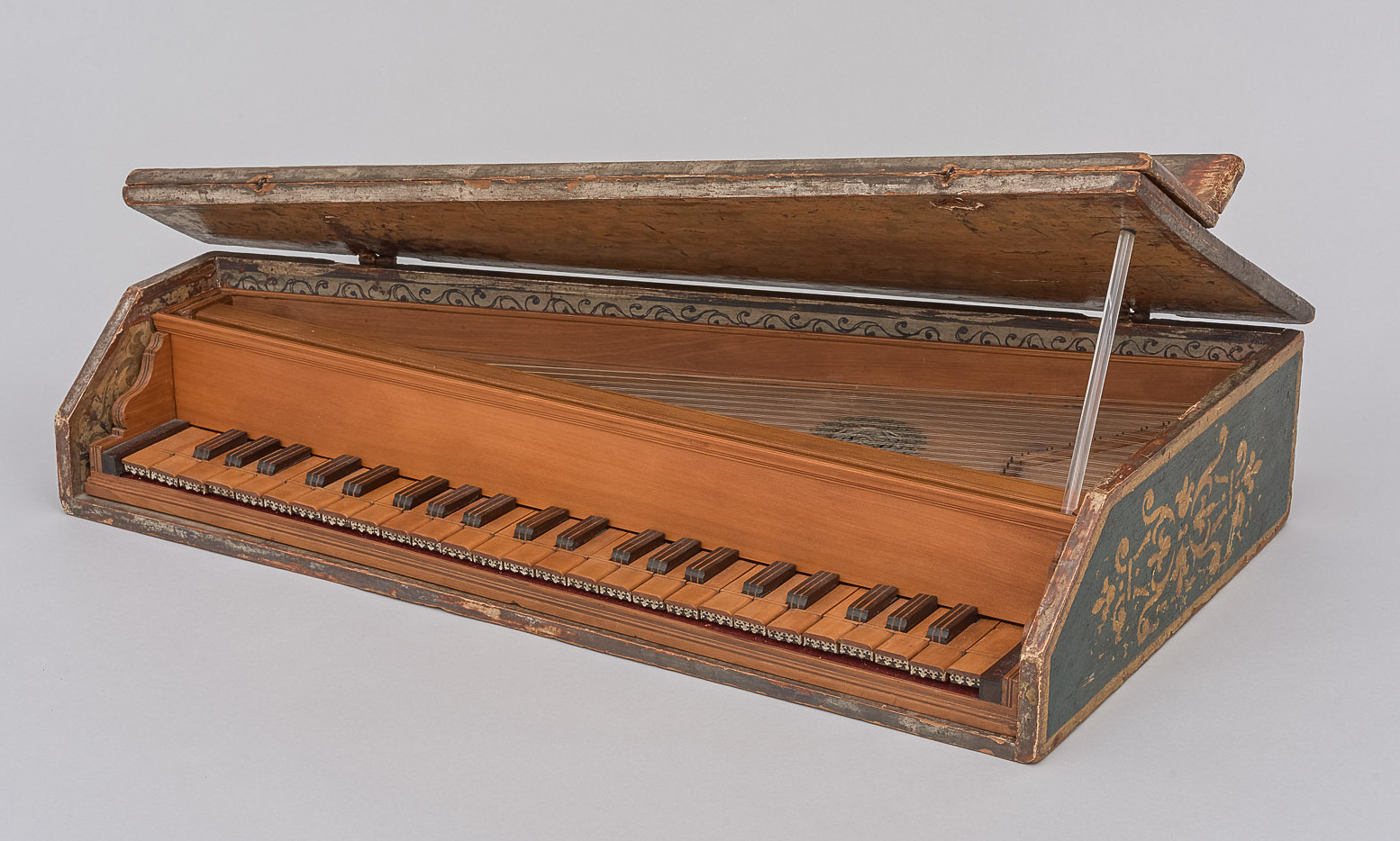
Figure 1: Spinettino (Italy, second half of the 16th century), Kunsthistorisches Museum, Vienna [KHM], Inv. no. SAM 121, <http://www.khm.at/de/object/84815/> (accessed on 27 August 2024).
In all other cases the evidence is derived from contemporary written sources, such as inventories, letters, account books, etc., which explicitly mention a ‘clavichord’, a ‘spinet’, a harpsichord, or more generically, an ‘instrument’ – a term, which in the German context of the time refers to a stringed keyboard instrument of any kind.10 Tab. 2 provides a concise overview of these sources, summarising their content.
|
no. |
date, place |
archival / bibliographical reference |
|
|
1 |
1506, Innsbruck |
Bianca Maria Sforza asks Isabella d’Este to send her a ‘clavicordio’ |
RI XIV, 5,2, N. 25891 [letter] |
|
2 |
1561, Innsbruck |
‘instrument’ from Venice ordered for Archduchesses Magdalena, Margaret and Barbara (daughters of Ferdinand I) |
TLA Oö. Kammer, Raitbücher 1561 [account book] |
|
3 |
1571, Vienna |
payment for the delivery of a ‘Clavicordium’ sent by Alfonso II d’Este, Duke of Ferrara (husband of Barbara of Austria, daughter of Ferdinand I) |
FHKA HZAB 25 [account book] |
|
4 |
1575, Vienna |
payment for the delivery of a ‘Clavicordio’ from Milano |
FHKA HZAB 29 [account book] |
|
5 |
1579, Innsbruck |
payment to ‘Ciacono’, a monk in Rome, for purchasing an ‘instrument’ |
Senn, Musik und Theater (see n. 2), 164 |
|
6 |
1580, Innsbruck |
acquisition of a ‘venedigisch doppelt Clavizimbel’, i.e. a harpsichord by Isepo Gurletta extended into a claviorganum by Andreas Andre Casletanus in Brixen |
TLA Kunstsachen I 710 [remittances, payments, letters] |
|
7 |
1560s–80s, Vienna/Prague |
‘Clavicymbalum Vniversale’ in possession of Charles Luython |
M. Praetorius, Syntagma musicum, vol. ii, 1619 |
|
8 |
before 1590, Graz |
‘ein […] lang instrument mit mössing und stählen saiten’, sent by the Alfonso II d’Este, Duke of Ferrara (husband of Barbara of Austria, daughter of Ferdinand I) |
HHStA UR Familien-urkunden 1446 [inventory 1590] |
|
9 |
before 1596, Innsbruck |
‘ain alts groß ainfachs Instrument, von Anthoni Bondemppo herrierendt’ |
Senn, Musik und Theater (see n. 2), 141 [inventory 1619] |
|
10 |
c. 1600, Innsbruck |
‘einfaches Spinetl Thiorbata’ by Donato (?) Ondei, Bergamo |
TLA Inventare A 1/25 [inventory 1665] |
Table 2: Stringed keyboard instruments from Italy at the courts of the Austrian Habsburgs mentioned in written sources.
As can be seen in Tab. 2, the sources, in particular the inventories, sometimes include certain additional hints on individual features of the instruments. One relatively common reference is to the instrument as either ‘einfach’ (‘single’) or ‘doppelt’ (‘double’). Whereas Walter Senn surmised this to be a reference to the number of manuals,11 other scholars suggest that ‘einfach’ or ‘doppelt’ may indicate the number of choirs, i.e. registers.12 However, the most plausible interpretation is that ‘doppelt’ refers to an instrument combining a harpsichord and an organ, i.e. a claviorganum. This is not only suggested by the ‘venedigisch doppelt Clavizimbel’ documented in Innsbruck (no. 6), an instrument that was demonstrably a harpsichord subsequently equipped with pipes. Moreover, it is attested by an invoice from an organ builder to the Upper Austrian monastery of Kremsmünster in 1598, which mentions a ‘toppeltes Instrument’ as a keyboard instrument with both strings and pipes.13 Other information occasionally found in inventories or account books relates to the size of the instruments by characterising them as ‘lang’ (‘long’) or ‘groß’ (‘large’) or, conversely, as ‘klein’ (‘small’) or by using a diminutive (such as ‘Spinetl’, i.e. small spinet). It seems likely that the former terms refer to a wing-shaped harpsichord or an instrument at eight-foot pitch, while, in contrast, ‘spinetl’ most probably refers to an ottavino. In some cases, however, the meaning of such additional characterisations is open to question. As already noted by Wraight, it is unclear, what a 16th or early 17th-century writer of a court inventory might have had in mind when speaking of ‘thiorbato’ (no. 10).14 Equally difficult to interpret, but particularly interesting, is the description of an instrument documented at the court of Inner Austria (no. 8). The full entry reads: ‘ein ander lang instrument mit mössing und stählen saiten, darauf man laut und still schlagen kann; irer furstlich durchlaucht etc. vom herzogen zw Ferära überschickt worden’15 (‘another long instrument with brass and iron strings, on which one can play loudly and softly; had been sent to his Excellency [Charles of Inner Austria] by the Duke of Ferrara [Alfonso II d’Este]’). Remarkably, evidence of keyboard instruments labelled as istromenti pian e forte appear repeatedly in late 16th-century sources from the court in Ferrara,16 the very place from which the instrument in Graz had come from. Some of these instruments are further characterised by the remark ‘a due registri’ or ‘col’orghano disotto’ (‘with the organ below’), i.e. they had two registers or were claviorgans respectively. At first glance, this could be taken as an explanation for why these instruments were perceived as capable of sounding both loud and softly. However, since other keyboard instruments are simply called ‘istromento a due registri’ or ‘istromento con l’orghano disotto’ without any further remark, one wonders whether the phrase ‘piano e forte’ signalled a special type of instrument, perhaps, as Pollens suggests, an instrument with some kind of hammer action.17
Three instruments require further comment on their provenance and dating. First, the prominent Clavicymbalum Vniversale, one of today’s organological ‘favourites’ from the Renaissance Habsburg orbit (no. 7 in Tab. 2). As is well known, this chromatic harpsichord, famously described by Michael Praetorius,18 was for some years in the possession of Charles Luython, who served at the court of Rudolf II from 1576. Despite Praetorius’ claim of Vienna and the period around 1590 as the place and date of its origin, recent scholarship agrees that the instrument dates from the time of Ferdinand I and most probably came from Italy, where the development of such chromatic or enharmonic keyboard instruments had originated.19 Moreover, as already suggested by Adolf Koczirz and recently corroborated by Christopher Stembridge, Jacobus Buus, who was court organist to Ferdinand I from 1550/51 to 1564 following his tenure at San Marco in Venice, may have been involved in the purchase or even in the construction of the Clavicymbalum Vniversale.20
More difficult to date is the ‘einfaches Spinetl Thiorbato’ (no. 10). It is registered in an inventory drawn up in Innsbruck in 1665 (after the extinction of the Tyrolean branch of the Habsburgs and the subsequent dissolution of the Innsbruck court).21 The entry also reports that the spinet ‘was made in Venice by Ondeo’ (‘so in Venedig von dem Ondeo gemacht worden’). Senn and Stradner believed that this instrument was the same as the one referred to in a later inventory of 1741, drawn up in connection with the re-establishment of a court household in Innsbruck, as ‘ain anderes großes Instrument mit einem Clavier, welche […] mit denen Worthen Hieronymus Undeus, Donati filius, Anno 1632 bemerkt ist’ (‘another large instrument with one manual which is labeled with the words Hieronymus Undeus, son of Donato, in the year 1632’).22 However, as Denzil Wraight rightly points out, these two instruments cannot be identified as the same, ‘since a “spinetl” [small spinet] can hardly have been a “großes Instrument”’.23 Hence, it is equally possible that the instrument in the 1665 inventory, with its attribution only to ‘Ondeo’, was built by Girolamo’s (Hieronymus’) father, Donato Ondei, and thus dates from the period, when Donato, who died in 1623, was active, i.e. around 1600.24
One instrument can only be tentatively included among the Italian keyboard instruments in the Austrian courts. A 1619 inventory of the estate of Karl von Burgau (1560–1618), a son of Ferdinand II of Tyrol from his morganatic marriage to Philippine Welser, mentions ‘ain alts groß ainfachs Instrument, von Anthoni Bondemppo herrierendt’ (‘an old, large, single instrument, stemming from Antonio Bontempo’).25 Born in Brescia, Giovanni Antonio Bontempo is known to have been appointed to the Innsbruck court sometime before 1566. Apparently an extremely versatile musician, he served in Innsbruck as cornetto player, trumpeter and lutenist, replaced the court organist for a time around 1590, and was also active as an instrument maker. Bontempo retired after the death of Ferdinand II in 1596 and finally died in 1607.26 In the absence of more detailed information, no exact date can be determined for the keyboard instrument recorded in 1619, although the remark ‘old’ points towards a relatively early date, presumably still in the 16th century. It is therefore impossible to establish whether the instrument was built before Bontempo came to Tyrol, or to what extent it exhibited Italian features, if it had already been made in Innsbruck.
It can be assumed that the eleven instruments for which there is evidence constitute only a part of all stringed keyboard instruments of Italian provenance present at the Austrian Habsburg courts. It is impossible, however, to determine the exact number of all keyboard instruments and, therefore the percentage that the eleven instruments constitute. One of the main problems is that the extant inventories in one way or another only provide incomplete information. From the imperial court, only early 17th-century inventories have survived, and these are limited to the objects stored in Rudolf II’s ‘Kunstkammer’ (cabinet of curiosities).27 A 1577 inventory of the Graz court lists only the instruments used by the string and wind players, hence not a single keyboard instrument.28 A second catalogue drawn up after the death of Charles of Inner Austria in 1590 mentions only four keyboard instruments29 (one of which is the instrument sent by Alfonso d’Este), which clearly casts doubt on the completeness of the record. In fact, the existence of further keyboard instruments at the court of Inner Austria during the 16th and early 17th centuries is confirmed by another inventory, registering the rich ‘Kunst- und Schatzkammer’ assembled by Charles of Inner Austria and his wife Maria of Bavaria. Six ‘instruments’ are mentioned in this source,30 four of which, according to the description given in the document, appear to have been organs or claviorgans. The Innsbruck inventory, drawn up after the death of Ferdinand II of Tyrol in 1596 and documenting Ferdinand’s vast and precious collection,31 lists sixteen stringed keyboard instruments (as well as several organs of various types). It therefore appears to be comprehensive, but lacks any indication of the provenance of these objects.
Acquiring Instruments
Despite these limitations, the data, when placed in a broader context, allow for some general observations. Three points in particular stand out, the first of which concerns the motives for acquiring Italian instruments and the manner in which this was achieved.
Conspicuously, almost all evidence for Italian keyboard instruments at the Austrian courts dates from the second half of the 16th century. The only exception is a letter from Bianca Maria Sforza, the second wife of Maximilian I, written on 26 January 1506 in Innsbruck, Bianca Maria’s place of residence at that time.32 In this letter, addressed to her aunt Isabella d’Este, Bianca Maria asked for a ‘clavicordio’, because there was none ‘in queste bande’. It is an open question as to whether this actually means that there was no clavichord at all available at the court in Innsbruck.33 It seems equally possible and even more plausible, that Bianca Maria simply did not have such an instrument at her permanent personal disposal or at the disposal of her private household. At the same time, however, Bianca Maria’s request is typical of her endeavours to maintain as close a relationship as possible with her homeland. For example, she preferred to surround herself with ladies-in-waiting and servants from Italy, engaged an Italian solo singer, and cultivated Italian dancing.34
Thus, while Bianca Maria Sforza’s request for a clavichord appears to have resulted from a specific personal, local and cultural situation, the far greater number of Italian instruments acquired by the Austrian courts during the second half of the century reflects a general trend: the intensification of the relationship between the Habsburgs and the nothern Italian city-states and their culture. This development began around the middle of the century and took place on several levels. First, in the realm of political and dynastic relations. Between 1649 and the beginning of the 17th century, no less than five Habsburg Archduchesses and one Archduke, Ferdinand II of Tyrol, got married to members of the d’Este, the Medici and, above all, the Gonzaga families.35 In parallel with the strengthening of the dynastic ties, the inclination of the Austrian courts toward Italian culture in general, and Italian music in particular grew steadily. As has been repeatedly discussed in the literature, especially on the courts of Tyrol and Inner Austria, the result was a significant increase in the employment of musicians born or trained in Italy and in the reception of Italian repertoire.36 This trend towards an ‘Italianisation’ of court music also affected, albeit only partially, the acquisition of instruments. On the one hand, it can be assumed that the numerous Italian string and wind players who were recruited by the Austrian courts from the mid 16th century onwards used instruments which they had brought with them from their native regions in the first place.37 Furthermore, there is also evidence that the Habsburg courts increasingly drew on imports from Cremona, Brescia, Padua, Venice or Milano when procuring new string and woodwind instruments such as violins, viols, flutes and cornets. On the other hand, it seems that brass instruments, for example, continued to be bought exclusively from makers in Austria and southern Germany.38 A similar ‘mixed picture’ emerges for stringed keyboard instruments. In several cases the sources, mostly account books, state the name of the makers, and with the exception of Ondeo and Bontempo (Tab. 2, No. 9 and 10), all of them were evidently active in the German-speaking territories.39 The same is true for the (more numerous) instrument makers known to have supplied organs to the Habsburg courts.40 Given the fact that organ and harpsichord building were one and the same profession at this time, it can be assumed that the demand for stringed keyboard instruments at the Austrian courts was still largely met by the production in the Habsburg dominions and neighbouring German regions. However, as the investigations summarised in Tab. 2 have shown, this supply was significantly supplemented by imports from Italy.
Occasionally instruments were sent directly from Italian courts to their Austrian counterparts, presumably as gifts from the respective ruler in connection with the newly established dynastic ties. This appears to have been the case when Alfonso II d’Este sent two instruments to the Habsburg courts: a clavichord to Vienna in 1571 (Tab. 2, no. 3),41 and, as noted above, the keyboard instrument, which could be played loudly and softly, to Graz. More often, however, the Habsburg households seem to have acquired Italian instruments in other ways. There is evidence that Italian court musicians in Habsburg service from time to time were sent to their native country for the very purpose of purchasing instruments there.42 Unfortunately, the sources, mostly account books, which record the costs of these ‘shopping trips’, usually do not specify the type of instrument in question. However, especially when undertaken by organists, these journeys were probably also aimed at the procurement of keyboard instrument. This might have been the case, for example, when Annibale Padovano was sent to Venice in 1566, 1570 and 1573 by his employer Charles of Inner Austria to buy instruments.43
A Variety of Types and Sounds
In 1580 Ferdinand of Tyrol commissioned the conversion of a Venetian harpsichord into a claviorgan. The process can be reconstructed in considerable detail on the basis of several accounts – payments and remittances to the instrument makers and artisans involved as well as letters from Ferdinand himself, who seems to have taken a personal interest in the process. From these sources we learn that the harpsichord was built by the otherwise unknown Iseppo Gurletta in Venice and purchased on Ferdinand’s behalf by a musician named Zingrello from Trento. It was then taken to Brixen, where it was equipped with both reed and flue stops by the organist and organ builder Andreas Andre, called Casletanus. In addition, it was given a lavishly decorated case with paintings and carved figures, before it was finally dispatched to Innsbruck.44
Recent research has clearly shown that by the end of the 15th century claviorgans had become quite popular in certain regions. These included in particular the court of the ‘Catholic Monarchs’ Isabella of Castile and Ferdinand of Aragon, as well as the aristocratic and ecclesiastical circles associated with these rulers.45 Whether the conspicuous Spanish fondness for ‘claviorganos’ fuelled the interest of the Habsburgs (who eventually inherited the Castilian and Aragonese throne in the early 16th century) in this type of instrument, is impossible to prove, but is not unlikely. In any case, it is certain that the claviorgan had spread to the Habsburg court by the early 1490s at the latest. In 1492 a delegation of envoys from Venice witnessed a performance on a claviorgan by court musicians of Maximilian I. According to the report of one of the envoys,46 this type of instrument was still unfamiliar to the Venetians, which shows that it was not yet widely known in all parts of Italy. A few years later, in the first version of the Triumphzug, an impressive series of pictures produced to glorify Maximilian, Maximilian’s renowned organist Paul Hofhaimer is depicted playing an instrument which most likely is a claviorgan.47
The claviorgan commissioned by Ferdinand of Tyrol in 1580 is just one of several examples which demonstrate, that the Habsburgs’ predilection for combination instruments continued unabated throughout the 16th century (and even beyond). The Innsbruck inventory of 1596 lists no less than five claviorgans alongside eleven stringed keyboard instruments and four organs. As mentioned above, up to four of the six ‘instruments’ documented in the 1668 inventory of the court of Inner Austria might have been claviorgans. Equally, three of the four extant keyboard instruments from the Habsburg Renaissance courts also represent this type of instrument.48
Ferdinand’s involvement in the construction and decoration of the ‘doppelt Clavizimbel’ and the artistic, technical and therefore financial effort invested in it, not only points to the ongoing interest of the Austrian rulers in claviorgans in general. It also points to the specific cultural significance of combination instruments in courtly and aristocratic circles of the 16th and 17th centuries. As recent research has demonstrated, the high value placed on these instruments corresponded to their function of representing the elevated social and cultural status of their owner.49 In addition, when richly decorated and given a sumptuous exterior, these instruments, which could also be regarded as a sophisticated technical apparatus, showed a proximity to the exquisite and rare objects typically collected by Renaissance princes in their cabinets of curiosities.
Another connection between the claviorgan and a more general feature of the keyboard culture at the Austrian courts has so far received little scholarly attention. Obviously, one of the main fascinations of these instruments was their ability to produce a variety of sounds (it was precisely this characteristic that so astonished the Venetian envoys when they encountered the claviorgan at Maximilian’s residence in 1492). There are a number of indications that such a sonic diversity – either integrated into a single (combination) instrument or achieved by the use of individual instruments of different kinds and, therefore different timbres – was sought after at the Habsburg courts. Three aspects are particularly worth mentioning in this context:
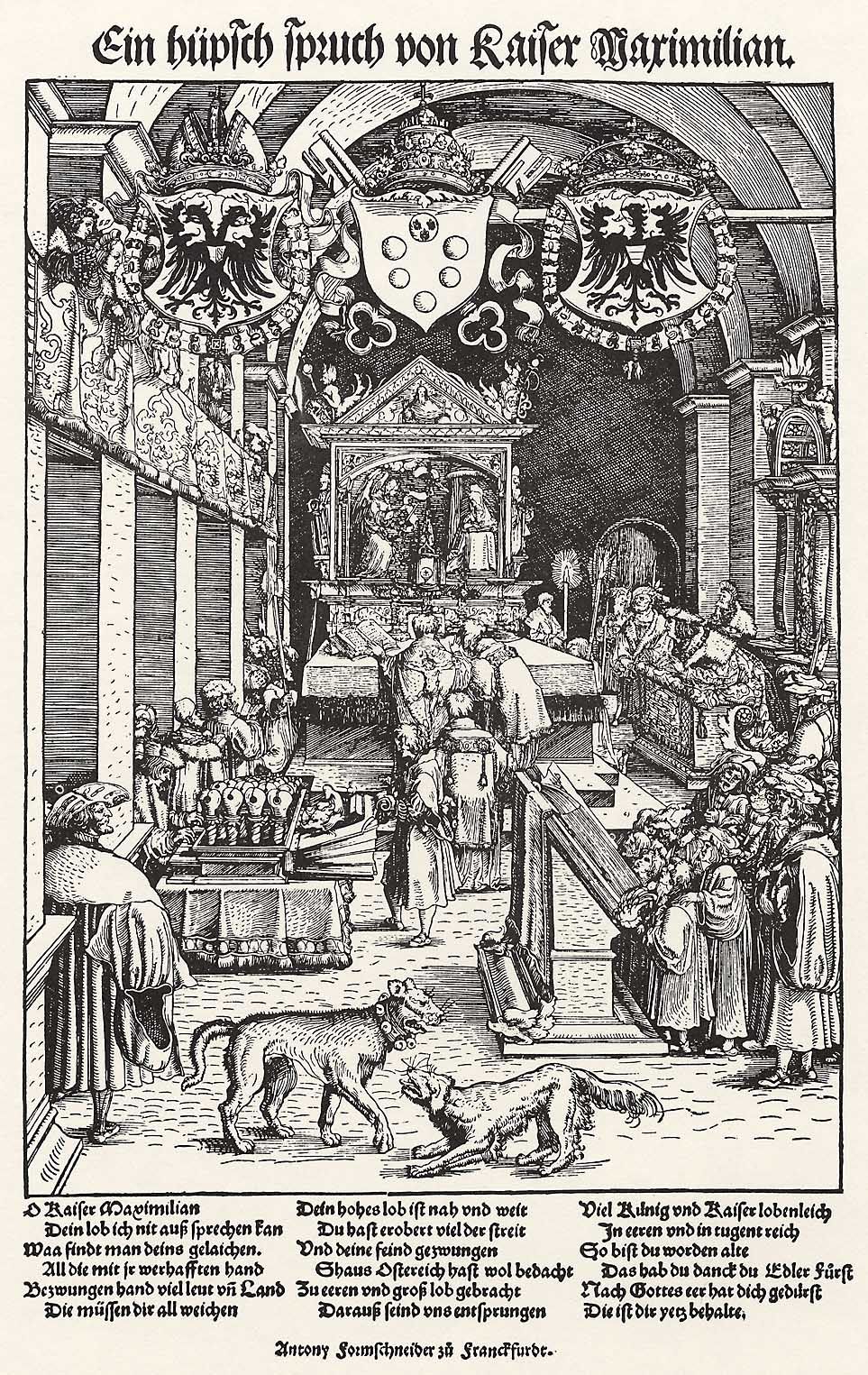
1. The later version of Maximilian’s Triumphzug (consisting of woodcuts based on the watercolours of the first version) shows Hofhaimer virtually surrounded by several different instruments: a positive, a clavicytherium and one or two further instrument, which cannot been identified with certainty, but which could be either a regal and another clavicytherium or a combination of the two instruments, i.e. a claviorgan.50 Since the very aim of the Triumphzug was to glorify Maximilian by depicting his entourage in utmost magnificence and splendour, the function of an array of different instruments and instrumental colours as a means of princely representation becomes clear. That the range of types of keyboard instruments and sonorities to be associated with Maximilian’s court was even broader is attested by another iconographical source: the equally famous woodcut ‘Maximilian attending mass’ by Hans Weiditz,51 in which Hofhaimer can be seen playing the specific type of organ labelled by Praetorius as ‘Apfelregal’.52
2. In 1569 the organist and organ maker Servatius Rorif provided an instrument for Ferdinand of Tyrol which is described in a letter from Rorif as comprising ‘Saiten, Harpfen, Pfeifen, Sagkpfeifen, Voglgesang, Tremulant und andern vil mer Stimwerk, das also zusammen 18 Register hat’53 (‘strings, harps, pipes, bagpipe, birdsong, tremulant and other “voices”, in sum 18 registers’), i.e., besides ‘normal’ harpsichord and organ stops it obviously contained actions producing special sound effects. According to Rudolf Hopfner,54 this instrument is identical with the extant ‘Ambraser Claviorganum’ (now in the Kunsthistorisches Museum Vienna, Inv. no. SAM A 132). Furthermore, an entry in the 1596 inventory of Ferdinand’s estate seems to refer to the same instrument, likewise pointing out its pecularity: ‘ain instrument, so ain real und posidif ist, darauf der fröschdanz und voglgesang und andere mer register’ (‘an instrument which is a regal and a positive and on which the frog’s dance, birdsong and other stops [can be found]’).55 Hopfner ventures a connection between the motto ‘Sic transit gloria mundi’ on the ‘Ambraser Claviorganum’ and the motto of Ferdinand of Tyrol’s father, Emperor Ferdinand I, ‘Fiat iustitia aut pereat mundus’,56 thus ostentatiously associating the prince with the instrument and consequently with its sound effects. In any case, what is certainly significant is how the relationship between Ferdinand and Rorif, who was eventually engaged at the Innsbruck court in 1566, was established. In 1561 Ferdinand of Tyrol came across an instrument which Rorif, based in Augsburg at that time, had built for Ferdinand I. Whether this was an organ or a claviorgan, cannot be determined, but the instrument seems to have been rather small and to have contained a number of registers.57 Ferdinand of Tyrol subsequently commissioned Rorif to construct a similar instrument for him, which eventually turned out to be more richly decorated and to be equipped ‘with the same stops and not one less’ than the one belonging to the emperor.58 Several remarks in a letter, in which Rorif offered to deliver the instrument himself in order to explain ‘alle Gehaim und Griffe’ (‘all secrets and “handles” [stops?]’), suggest that it contained certain unusual features. Moreover, the intention to obtain an instrument that was not inferior to the emperor’s in terms of ingenuity and variety of sounds suggests the value such objects had in the representation of princely splendour.
3. The range of keyboard instruments, which were exceptional for their construction and correspondingly their sound, even went beyond those associated with Hofhaimer or produced by Rorif. In particular, the Austrian courts possessed Glasglockenklaviere, in which the keys operated glass bells struck by clappers,59 as well as Geigenwerke, a type of keyboard instrument developed by the Nuremberg organist Hans Haiden, in which the strings were bowed by means of a rotating wheel, enabling a sustained sound and the variation of the dynamics.60 Finally, the sources mention further instruments of a special nature in one way or another: a claviorgan with what appears to be three manuals (‘ain instrument mit saiten und pfeifwerk, darauf drei personen zugleich schlagen können’ – ‘an instrument with strings and pipes, which three persons can play simultaneously’),61 and an ‘Instrument [das] von sich einen glöckhl Khlang [gibt]: obenher mit 2 Plaspälg belegt’ (‘an instrument producing the sound of bells; with two bellows on it’), and – in case it contained a special kind of action, as mentioned above – the ‘piano e forte’-instrument sent by Alfonso II d’Este.
Keyboard Playing Habsburgs
In 1561 a Venetian ‘instrument’ was purchased for the use of three daughters of Emperor Ferdinand I (Tab. 2, no. 2). This is only one example of a large number of documents, which attest to the playing of keyboard instruments especially by female members of the dynasty. Tab. 3 lists the names of all women of the Habsburg family for whom we have such evidence – in most cases information about keyboard instruments that were acquired by or for them, or about extra payments to court organists for teaching them.
|
Margaret of Austria (1480–1530) |
daughter of Maximilian I and Mary of Burgundy |
taught by Govard Nepotis |
|
Bianca Maria Sforza [?] (1472–1510) |
wife of Maximilian I |
instrument [see Tab. 2, no. 1] |
|
Eleanor of Austria (1498–1558) |
daughters of Philip the Fair, granddaughters of Maximilian I |
taught by Herry Bredemers; instrument |
|
Isabella of Austria (1501–26) |
taught by H. Bredemers; instrument |
|
|
Mary of Hungary (1505–58) |
taught by H. Bredemers and Hans Sattler; instrument |
|
|
Anna of Bohemia and Hungary (1503–47) |
wife of Ferdinand I |
taught by Wilhelm Hofhaimer |
|
Maria of Austria (1528–1603) |
wife of Maximilian II |
taught by Antonio de Cabezón and Francisco de Soto |
|
Anna of Austria (1528–90) |
daughters of Ferdinand I and Anna of Bohemia and Hungary |
taught by Hans Schächinger d.J.; instrument |
|
Magdalena of Austria (1532–90) |
taught by Nikolaus Stockhammer, Gilles Ellco and Wilhelm Hurlacher; instrument [Tab. 2, no. 2] |
|
|
Catherine of Austria (1533–72) |
||
|
Eleonor of Austria (1534–94) |
||
|
Margaret of Austria (1536–67) |
||
|
Barbara of Austria (1539–72) |
||
|
Helena of Austria (1543–74) |
||
|
Johanna of Austria (1547–78) |
||
|
Anna of Austria, Queen of Spain (1549–80) |
daughter of Maximilian II |
taught by Guilelmus Formellis |
|
Maria of Bavaria (1551–1608) |
wife of Charles II of Inner Austria |
taught by H. Schächinger d.J. and Annibale Padovano |
|
Anna Caterina Gonzaga (1566–1621) [?] |
wife of Ferdinand II of Tyrol |
|
|
Maria of Austria (1584–1649) |
daughters of Ferdinand II of Tyrol and Anna Caterina Gonzaga |
instrument |
|
Anna of Tyrol (1585–1618) |
||
|
Maria Christina of Austria (1574–1621) |
daughters of Charles II of Inner Austria and Maria of Bavaria |
instrument |
|
Eleonor of Austria (1582–1620) |
||
|
Margaret of Austria (1584–1611) |
Table 3: Female members of the Habsburg dynasty documented as keyboard players
The apparently strong tradition of keyboard playing princesses and archduchesses can be traced back to the Burgundian ancestors of the Habsburgs in the late 15th and early 16th centuries. Already Mary of Burgundy (1457–82), the first wife of Maximilian I, was taught the ‘clavicordion’ by the Burgundian chapel organist Pierre Beurse.62 Against this background, it is not surprising that Mary’s and Maximilian’s daughter Margaret of Austria also learned to play the clavichord under the guidance of Beurse’ successor Govard Nepotis.63 Later, as Governor of the Netherlands from 1506, Margaret raised the children of her late brother Philip the Fair at her court in Mechelen and ensured that they all were taught to play the ‘manicordion’, i.e. the clavichord,64 by her organist Henri Bredemers.65 Since then, a continuous tradition of teaching the Habsburg archduchesses to play the keyboard can be observed throughout the 16th century. Although this corresponds to a certain extent to a general trend, in that the musical education of the children, and the daughters in particular, had become common among the aristocracy throughout Europe by this time,66 some specific aspects deserve to be highlighted.
Firstly, it can be assumed that the practice of female keyboard playing at the Austrian courts received an additional impetus from several foreign princesses who married into the dynasty, not least those who came from Italy or otherwise had an Italian background. As has been extensively discussed in recent literature, it was in Italy, where the idea of making music as part of (female) courtly behaviour and virtue gained momentum, as early as the 15th century, and was further strengthened from the beginning of the 16th century, not least in the wake of treatises such as Baldassare Castiglione extremely influential Libro del cortegiano, and where, concomitantly, the musical training and activity of noblewomen became customary.67
In the absence of explicit documentation, it remains uncertain, whether Bianca Maria Sforza and Anna Caterina Gonzaga were active als keyboard players themselves. However, there is a certain likelihood that they were. Both grew up at courts strongly influenced by humanist ideas, which had developed into flourishing musical centres during the Renaissance, suggesting the possibility of a corresponding thorough training of the princesses.68 There is also ample evidence of Anna Caterina Gonzaga’s interest in music after her marriage to Ferdinand of Tyrol, not least through her extensive musical patronage, which she continued to exercise even as a widow.69 In any case, Bianca Maria Sforza’s request for a clavichord to be sent from Ferrara – whether for her own use or that of a member of her entourage – indicates that the cultural transfer she brought about from Italy also had an impact on keyboard culture. Concerning Anna Caterina Gonzaga, it has been established that she borrowed an ‘instrument’ from a local organist for the use of her daughters Maria of Austria and Anna of Tyrol during a period of residence in Baden in 1606.70 The most striking example of a keyboard-playing female member of the Habsburg family, who was also strongly Italian-influenced, is, however, Maria of Bavaria.71 The later wife of Charles of Inner Austria was raised at the notoriously Italianate court of her father Albrecht V. of Bavaria, who, along with many other Italian instrumentalists, employed such renowned musicians as Andrea Gabrieli, Ivo de Vento and Gioseffo Guami as organists in the 1560’s and 70’s.72 In Munich Maria was taught by the court organist Hans Schächinger d.J. (who previously had served at the Innsbruck court). Following her marriage in 1571 she moved to Graz, where she cultivated a vital musical patronage by facilitating the exchange of repertoires with other musical centres, procuring instruments and recruiting musicians. Furthermore, she herself remained musically active, continuing her keyboard playing under the guidance of Annibale Padovano.73
In 1561 an episode occurred at the Innsbruck court74 which is significant in two respects. Gilles Ellcom who stood in for the ill Nikolaus Stockhammer as court organist and therefore teacher of Ferdinand I’s daughters, demanded a pay rise announcing that he would otherwise resign. The archduchesses, who obviously wanted to keep Ellcom, supported his request, which the emperor eventually granted. This attests to the women’s agency, i.e. their interest as well as capacity to influence their own musical education.75 Furthermore, the reasons given for Ellcom’s support provide a rare insight into the teaching programme of aristocratic pupils at the keyboard. As Ferdinand’s daughters told him, Ellcom had just started to teach them tablature notation which promised to make them less likely to forget what they had learned.76 Thus, it can be concluded that keyboard playing was initially taught as ‘unwritten practice’, even to (female) amateurs (this, incidentally, is consistent with the many 16th-century paintings which depict women playing a keyboard instrument without notated music).
In contrast to the large number of female members of the dynasty, there is very little evidence of male Habsburgs as keyboard players before the 17th century. The only reliable documentation relates to Charles V, who is known to have received keyboard instruction alongside his sisters at the court of his aunt Margaret in Mechelen, and to have had a clavichord brought to him towards the end of his life (whether for his own use or that of musicians performing for him in a private setting, is unknown).77 Apart from Charles, the only (male) Habsburg who is said to have learned to play keyboard instruments is Maximilian I. However, since this information stems from the autobiographical chivalric novel Weißkunig, which is of a propagandistic and therefore partly fictional nature, it must of course be treated with caution.78 At the same time, it is striking that whenever a keyboard instrument is mentioned in connection with a female member of the Habsburg family, it is without exception a stringed keyboard instrument, predominantly a clavichord. Thus, a distinct ‘gendering’ of the clavichord – and, conversely, of the organ – is recognisable in the sphere of the Austrian courts.
Italian Professionals
As the example of the keyboard-playing spouses and children of the rulers demonstrates, it would be a gross oversimplification to assume that the musical activities at early modern courts were exclusively performed by professional musicians. In contrast, it can be inferred that also amateurs – in addition to the members of the dynasty, other courtiers, nobles or court servants – participated in the music-making perhaps to a considerable extent. Nevertheless, the scope (and quality) of this mostly informal and thus only sporadically documented musical practice is virtually impossible to be assessed.79 At the same time, it is evident that professional musicians, including the instrumentalists, played the pivotal role in shaping the courtly musical life, not only as performers and composers,80 but also as teachers.
Tables 1–3 in the appendix provide a comprehensive list of all known professional keyboard players at the three Austrian courts (the term ‘professional’ is understood to denote musicians who were remunerated for their work). Especially for the more prominent among these musicians, detailed information has been collated in individual studies.81 In addition, I want to put forward an overarching observation, which is concerned with the more general profile of the musical culture at the Habsburg Renaissance courts.
Conventional wisdom in music historiography suggests that from the 1560’s onwards the courts of Inner Austria and of Tyrol were increasingly oriented towards Italy. This development led to the two courts becoming recognized as ‘main outposts north of the Alps’ for the reception of Italian music.82 This was due to several reasons: the dynastic connections already mentioned, the strategic location of the Tyrolian and Styrian lands between the Italian peninsula and central Europe, the personal inclination of the regents83 and a confessional motivation (among Italians, Protestant attitudes were less to be feared). The reception and cultivation of Italian repertoires and musical practices had an impact on all segments of court music: the chapel, the emerging sphere of ‘chamber’ music as well as the instrumental music. This process, which entailed an orientation towards musical developments considered as progressive and forward-looking, was driven, of course, by the recruitment of a large number of court musicians with an Italian background, whether they had been born and raised in Italy, had studied there, or had been otherwise active in Italy prior to their relocation to Innsbruck and Graz (see App., tabs. 1–3, where these musicians are highlighted in red). In contrast, the imperial court has been subject to a persistent narrative, which asserts that the courts of Ferdinand I, Maximilian II and Rudolf II remained a bastion of Franco-Flemish music, thereby exhibiting a significantly more conservative character compared to those in Inner Austria and Tyrol. It has certainly been acknowledged that in both Vienna and Prague, the majority of wind and string players were from Italy. However, in the chapel which comprised not only the singers, but also the organists, the Franco-Flemish predominance allegedly remained unchallenged.
Remarkably, as early as 1934, Alfred Einstein observed that, despite their origin in the Netherlands, prominent Franco-Flemish composers active in Vienna and Prague such as Philippe de Monte, the long-time imperial chapel master from 1568 to 1603, and Jacob Regnart, vice-chapel master from 1579 to 1582, ‘already belonged to Italian music by education, formation, inclination and the bulk of their œuvre’ (‘nach Erziehung, Bildung, Neigung und der Hauptmasse ihres Lebenswerks der italienischen Musik längst selber angehören’).84 Einstein’s insight implicitly draws attention to the necessity of avoiding an essentialist misconception which is obviously rooted in nationalist ideology and which equates the mere fact of origin or birthplace of a person with his or her cultural disposition. Notwithstanding, such notions have continued to impinge on music historiography,85 with the effect that the view of the imperial chapel as a Franco-Flemish dominated institution, which proved to be impervious to Italian influence until the early 17th century, has left its mark even in recent literature.86
On the other hand, the research conducted by Michaela Žáčková Rossi, Robert Lindell and others over the past two decades has both broadened and deepened our understanding of Italian music and musicians at the court, especially during the reign of Rudolf II., indicating that the ‘Italianate element’ was more pronounced than previously assumed. These studies highlighted the relatively large number of musicians from Italy who were connected to the court (although not always as permanent members of the staff), their closer geographical origin (primarily from Udine, Brescia and Cremona), their family networks,87 the extent, to which Italian culture and music was transmitted and cultivated in Prague and the Czech Crown Lands during the latter half of the 16th century, i.e. within the sphere of Rudolf II’s court,88 and, finally, the significant role Italianate music and/or compositions by Italian musicians played in shaping the sacred and secular vocal repertoire at the imperial court, including genres such as the madrigal and the canzonetta.89
I would argue that a similar situation exists in regard to keyboard music. It is evident that almost all organists of the imperial chapel up to the 17th century were natives to the Low Countries or to German-speaking regions, as repeatedly has been stated in the literature. However, when taking into consideration the individual biographies of these musicians, it becomes apparent that some of them had a distinctly strong Italian background. It is important to note that Jacob Buus served as the second organist of San Marco for a period of ten years prior to his appointment at the Viennese court in 1550/51.90 Similarly, Charles Luython left his Flemish homeland at the age of nine to become a choirboy at the court of Maximilian II, before he was sent to study in Italy in 1571 and eventually re-entered the imperial chapel in 157691 (to speak of Luython as ‘Flemish’ musician, therefore, proves to be at least misleading). Equally, the Nuremberg-born Jacob Hassler, imperial ‘cammer organist’ from 1602 onwards, had studied in Italy, probably with Giovanni Gabrieli, a close associate of his elder brother Hans Leo.92 Furthermore, in 1596 Liberale Zanchi, a musician born and presumably trained in Treviso, then part of the Republic of Venice, was appointed chapel organist. As a result, around 1600 most of the organist positions at the imperial court were held by musicians from Italy or by those who had spent a considerable amount of time there.93
In contrast with vocal polyphony, the stylistic classification of the keyboard music at the imperial court faces the challenge of a comparatively limited source base. No extant 16th-century manuscript or print with keyboard music is known, which can be definitively linked to the court.94 The only court organist before the last quarter of the 16th century, from whom compositions have been transmitted, is Jacobus Buus. The available information does not include any specific information regarding Buus’ compositional or performance activities as a member of the imperial chapel. However, since his publications of recercari predate his tenure in Vienna, it can be posited that the genre of the imitative keyboard ricercar – which denotes a then quite modern genre of Italian origin – had already reached the imperial court by around the middle of the century. If works by later court organists are extant at all, their number is rather small (which no doubt also reflects the still largely improvisational nature of keyboard music at the time).95 The music that has survived, i.e. the ricercars, fantasias, canzonas and toccatas by Luython, J. Hassler or Zanchi, manifest a clear proximity to Italian keyboard music of the late 16th century, particularly Venetian, both in terms of genre and compositional style.96
For a long time, musicological research on the court of the Habsburg Emperors focused only on those professional musicians, who were formally employed and assigned to one of the traditional organisational units of court music, notably the chapel. As a result, these musicians are comparatively well documented, as they are mentioned quite frequently in sources such as rosters or account books. However, this approach fails to provide a comprehensive representation of the multifaceted nature of courtly musical culture. As the example of keyboard playing members of the Habsburg family demonstrates, there were areas of courtly music culture, that are only scarcely or indirectly documented and/or left a trace only in scattered sources of various kinds. Another case in point is the so-called chamber music, a more intimate and sophisticated kind of music-making that emerged in the second half of the 16th century at the Habsburg courts including the imperial household. As revealed by Robert Lindell and others, a chamber music ensemble appears to have been established in Vienna around 1570, some of whose members were not employed on a long-term basis and therefore do not surface in the regular personnel lists, or (at least initially) only appear ‘hidden’ in the court documents as they were subsumed there under the traditional organisational units of the chapel or the ‘trumpeters’.97
Three aspects of the imperial chamber music, which rapidly acquired a high reputation,98 are of particular interest:
1. Chamber music provided a framework within which women found an opportunity to develop a professional musical activity (whereas positions in the chapel, still considered primarily as a sacred institution, and in the paramilitary trumpet corps exclusively could be obtained by men). Thanks to thorough research by Robert Lindell99 we know of a singer, keyboardist and lutenist named ‘Marta’, whom several sources from the 1570’s attest to have been a highly praised member of the imperial chamber music. Most probably, Marta was the same person as the ‘young woman from Mechelen’ who was brought to Vienna in 1570 by Philippe de Monte and who is described as a singer and an excellent performer on the virginal.100 Marta was not the only female musician present at the court of Emperor Maximilian II. Indeed, Maximilian’s musical entourage appears to have included an entire ensemble comprising several female singers. This is evident by the repeated ordering of pieces for three sopranos and bass from the Roman composer Stefano Rossetti (who himself had stayed at the court of Maximilian II several times between 1571 and 1573).101 In addition, there were other (at least) attempts to recruit women: In the late 1560’s Maximilian, who was evidently very committed to the development of his chamber music ensemble, attempted to attract the renowned singer and lutenist Virginia Vagnoli to Vienna (albeit without success).102 A few years later, in 1574, Rossetti recommended to the Emperor a young female lutenist he had found in Rome, pointing out that she is not only a fine player, but ’would [also] form a good ensemble with Marta’ (whether she actually went to Vienna is unknown).103
2. The efforts to engage Virginia Vagnoli and the Roman lutenist are noteworthy for one further reason: the preponderance of Italian singers and instrumentalists within the imperial chamber music ensemble. This is exemplified by the cornetto players Luigi Zanobi and Giovanni Domenico Cappa, the string players Alberto, Giovanni Paolo and Carlo Ardesi and Mauro Sinibaldi, the bass Alvigio Felice, the composer and organist Stefano Rossetti and Liberale Zanchi who is occasionally referred to as ‘camer organist’ in court documents between 1605 and 1613.104 Of course, there were also keyboard players serving as ‘camer organist’, who were not of Italian descent – Luython from 1576 to 1582, Jacob Hassler from 1602 to 1613. But, as mentioned before, both had close ties to Italy and Italian music; perhaps it was this Italian background that made them particularly qualified for the assignment as chamber musician.
3. There is some evidence that (plucked) keyboard instruments played an important role in the chamber music performed at the courts of Maximilian II and Rudolf II. Firstly, the expertise of the ‘young woman from Mecheln’ (Marta) as stressed in the court documents and apparently crucial to her recruitment was her skill in playing the ‘virginal’. Secondly, the establishment of the specific position of ‘chamber organist’ (in addition to the conventional ‘chapel organist’) implies a range of duties that the other organists alone were unable to fulfill. Furthermore, conclusions can be drawn from what is known about the repertoire of the imperial chamber music: In 1574 Maximilian II asked Rossetti (who repeatedly supplied the court with compositions during the 1570’s) to send pieces scored for three sopranos and bass together with a keyboard part in which ‘you [Rossetti] should include all the voices which are necessary to supplement with what is missing in the other books [i.e. vocal parts]’.105 One year later the Emperor requested Rossetti to provide a book with intabulations of works Rossetti had recently sent, ‘so that it can serve the person who plays the keyboard’.106 Of course, it cannot be ruled out that these intabulations were intended for a solo performance of the pieces. However, it is equally plausible, and perhaps even more likely, that they were intended to facilitate a performance with vocal voices accompanied by a keyboard, as it is clearly suggested in Maximilian’s first request. In addition, Marta’s dual role as both singer and a keyboard player, along with the fact that she and a lutenist were considered to form a well-matched duo, points towards singing supported by a chordal instrument.
It has been known for some time that Ferdinand of Tyrol established an Italianate chamber music ensemble at his Innsbruck court in the 1570s, composed mainly of musicians from Venice and Milan including female singers (and which, incidentally, was also supplied with pieces for three sopranos by Rossetti).107 The evidence cited suggests a parallel development at the imperial court, possibly in reciprocal influence with Innsbruck, but in any case following the example of northern Italian courts. Especially at the court of the d’Este in Ferrara, with whom the Habsburgs had a closer relationship and from where, as mentioned, they received several keyboard instruments, a tradition of ‘singing ladies’ developed from the middle of the 16th century onwards. This tradition also included solo singing accompanied by a keyboard instrument, and culminated in the famous concerto delle donne from 1580 onwards.108 As a result, this undoubtedly means that the imperial court also engaged with the latest trends in modern Italian music.
Appendix
Keyboard players at the courts of the Austrian Habsburgs during the 16th century
The references only cover the literature specifically addressing the relationship of the musicians to the Habsburg courts. For the sake of better clarity, references are given only by author and year of publication. Full citations can be found in the bibliography. Articles in the standard lexicons (NNG, MGG2, oeml) are only mentioned if they contain specific information that goes beyond the listed studies. Additionally, archival sources not yet covered in the literature are cited.
Italicised dates refer to the earliest or latest documentation available, i.e. they do not exclude preceding or subsequent periods of service.
Of the various spellings of the names, only the most common is given.
Red letters indicate musicians who were born or trained or worked (at least for some time) in Italy.
1. Keyboard players at the imperial court (Maximilian I [1493–1519] – Ferdinand I [1522–64] – Maximilian II [1564–76] – Rudolf II [1576–1612])
Table 1.1. is the expanded and corrected version of an earlier list published in: Markus Grassl, ‘Instrumentalisten und Instrumentalmusik am kaiserlichen Hof von 1527 bis 1612. Fakten – Hypothesen – Fragen’, in: Die Wiener Hofmusikkapelle III. Gibt es einen Stil der Hofmusikkapelle?, ed. Hartmut Krones, Theophil Antonicek and Elisabeth Theresia Fritz-Hilscher (Vienna/Cologne/Weimar, 2011), 109–48, at 141–7.
1.1. Chapel and Chamber Organists
|
years of service |
name |
references |
|
1490–1519 |
Paul Hofhaimer |
cf. only Coffey (2021) |
|
? – 1496 |
Jakob Kellergraf |
RI XIV,2 n. 4556; Waldner (1897/98), 24–5; Moser (1929), 20; Senn (1954), 28, 45; Schwindt (2018), 278. |
|
1501–04 |
Benedikt Sef(f)linger |
RI XIV,3,2 n. 15024; RI XIV,3,2 n. 15711; RI XIV,4,1 n. 15861; Senn (1954), 45; Biba (1999), 223. |
|
1506 |
Melchior Wurmser |
RI XIV, 5 n. 23822; Schwindt (2018), 278. |
|
1504–09 |
Gregor Accot (Ackhert) |
RI XIV,4,1 n. 18287; Waldner (1897/98), 37–8, 42, 44, 46–7; Schweiger (1931/32), 372; Wessely (1955), 205–6; Biba (1999), 223; Schwindt (2018), 278. |
|
1510–25 |
Hans Sattler |
Waldner (1897/98), 47–8, 57, 58, 60, 62, 64; Senn (1954), 43, 45, 47, 50; Biba (1999), 223; Schwindt (2018), 62, 75, 145, 278. |
|
1508–19 |
Jörg (Georg) Baumhackl |
Hirzel (1908/09), 155, 157; Koczirz (1930/31), 532; Reichert (1954), 110; Senn (1954), 33, 38; Biba (1999), 223; Schwindt (2018), 278. [Baumhackl later served as singer in the chapel of Ferdinand I, where he is documented in 1527; Wessely (1958), 160]. |
|
1527 |
[?] Melle |
Hirzel (1908/09), 154; Wessely (1958), 228, 391. |
|
1529–45 |
Hans Grafendorfer |
Hirzel (1908/09), 157; Smijers I (1919), 142; Federhofer (‘Biographische Beiträge’, 1952), 44; Senn (1954), 44; Wessely (1958), 228–33, 396–402. |
|
1546–64 |
Christoph Khräll |
A-Wn Cod. 14363 (chapel roster 1560); HHStA OMeA SR 183/45 (chapel roster 1563); Smijers I (1919), 142, 152, 165, 174; Smijers III (1921), 192–3; Wessely (1958), 233, 406, 408, 410, 412, 416, 417, 420, 423, 426, 429, 433; Pietzsch (1960), 24; Breitner (1977), 21, 148. |
|
1547–48 |
Peter Strapp |
Smijers IV (1922), 70–1; Pass (1980), 160, 343, 344; Pfohl (2022), 43. |
|
1550/51–64 |
Jacob Buus |
A-Wn Cod. 14363 (chapel roster 1560); HHStA OMeA SR 183/45 (chapel roster 1563); Smijers I (1919), 142, 152; Smijers II (1920), 121–2; Wessely (1958), 412, 415, 417, 420, 423, 426, 429, 431, 433; Breitner (1977), 20–3, 144–51; Ongaro (1986), 138. |
|
(1551–)1564–82 |
Guilelmus Formellis |
Vander Straeten V (1880), 104; Smijers I (1919), 145, 147, 153–4, 175; Smijers II (1920), 137–8; Federhofer (1950), 180; Pass (1980), 160–2, 349, 353, 355, 363, 367, 372, 381, 389; Comberiati (1987), 202; Hausenblasová (2002), 163, 391; Hindrichs (2002), 198–9; Gröbl/Haupt (2006/07), Reg. 317, 659; Žáčková Rossi (2017), 10–11, 76; Pfohl (2022), 44–5, 48. [Most authors give 1553/54 as the year in which Formelli’s service started; however, he appears in the chapel rosters as early as 1551; see Pass (1980), 349.] |
|
1565–85 |
Wilhelm van Mulen |
[‘nebenorganist’; served also as singer since at least 1560 and from 1585 to 1598.] HHStA RHR Passbriefe 11-3-81; Vander Straeten V (1880), 106; Smijers I (1919), 145, 147, 167–8; Smijers IV (1922), 54–5; Doorslaer (1930/31), 486, 488; Doorslaer (1933), 150, 156; Pass (1980), 164, 357, 360, 362, 366, 379, 388; Hausenblasová (2002), 162, 388; Hindrichs (2002), 196–7; Rosenberg (2003), 47; Žáčková Rossi (2017), 24–5, 131–2. |
|
1570–94 |
Paul van Winde |
Vander Straeten V (1880), 104–6; Smijers I (1919), 145, 147, 154; Smijers IV (1922), 77–80; Koczirz (1913), 302; Doorslaer (1930); Doorslaer (1930/31), 485, 489; Doorslaer (1933), 150, 158; Lunelli (1975), 142; Pass (1980), 162–3, 381, 389; Comberiati (1987), 202; Hausenblasová (2002), 163, 391; Rosenberg (2003), 87; Gröbl/Haupt (2006/07), Reg. 57, 93, 315, 477, 789, 1198, 1255; Žáčková Rossi (2016), 159, 161; Žáčková Rossi (2017), 36–7, 183–4. [Some authors give 1596 as the end of van Winde’s service; however, as already Doorslaer (1930) has shown, van Winde left the court in 1594.] |
|
1573–75 |
Hans Perger |
[in 1574 also documented as ‘instrumentist’ (= chamber musician?)] Smijers I (1919), 145 [who erroneously gives 1576 as the end of Perger’s tenure]; Pass (1980), 163–4, 381; Comberiati (1987), 199. |
|
1576–1612 |
Carl Luython |
[1566 choirboy, 1576 singer, 1576 chamber musician (organist), 1582 chapel organist, 1603 court composer] Smijers I (1919), 146–7, 149, 156, 186; Smijers III (1921), 196–206; Doorslaer (1930/31), 485, 488; Doorslaer (1933), 150; Comberiati (1987), 62–77; Comberiati (1988); Hausenblasová (2002), 161, 380, 391; Rosenberg (2003), 85–7; Gröbl/Haupt (2006/07), Reg. 181, 371, 1081; Johnson (2012), 159–62; Žáčková Rossi (2016), 159; Žáčková Rossi(2017), xiv, xxv, xxxii, 20–1, 114–16. |
|
1585–99 |
Hans Lemmens (Lampert) |
[‘instrumentist’, since 1591 ‘extraordinari’ organist] Smijers I (1919), 147; Doorslaer (1933), 150, 155; Comberiati (1987), 39; Rosenberg (2003), 83–4 [who erroneously gives 1594 as the start of Lemmens’ tenure]; Hausenblasová (2002), 391; Žáčková Rossi (2017), 16–17, 108. |
|
1596–1612 |
Liberale Zanchi |
Koczirz (1913), 303; Smijers I (1919), 147, 149, 156, 186; Smijers IV (1922), 80; Hausenblasová (2002), 391; Stadelmann (2002), 231–2; Rosenberg (2003), 87–8; Grassl (2009), 68–71; Johnson (2012), 261–2; Žáčková Rossi (2016), 161; Žáčková Rossi (2017), 36–7, 187. |
|
1600–19 |
Thomas Podenstain |
Koczirz (1913), 298; Smijers I (1919), 151, 157; Smijers IV (1922), 58–9; Link (1996), 90–2; Žáčková Rossi (2017), xviii, 26–7, 142; Rainer (2022), 23–4, 30–1, 39, 42. |
|
1601–19 |
Christoph Strauß |
Smijers I (1919), 151, 157, 172, 173, 182; Smijers IV (1922), 72–3; Geiringer (1930/31); Federhofer (1967), 248; Lindell (‘Music at the Court’, 1990), 293; Link (1996), 42–5; Žáčková Rossi (2017), xviii, 32–3, 173; Rainer (2022), 23–4, 31–2, 39, 42. |
|
1602–13(14?) |
Jacob Hassler |
HHStA Jud. Ant. 35; Smijers I (1919), 149; Smijers III (1921), 183–4; Schmid (1941), 90–3; Comberiati (1987), 210; Krones (1988), 30-35; Grassl (1990), 9–13; Krones (1994); Hausenblasová (2002), 381; Rosenberg (2003), 83; Johnson (2012), 304–5; Žáčková Rossi (2016), 159, 161; Žáčková Rossi (2017), 12–13, 90; MGG2. |
|
1607–12 |
Caspar Raickenroy |
Smijers I (1919), 149, 186; Comberiati (1987), 210; Hausenblasová (2002), 391; Žáčková Rossi (2017), 26–7, 146. |
|
1619 |
Matthias Platzer |
Smijers I (1919), 151; Link (1996), 92–3 |
1.2. Other keyboard players in imperial service
|
years of service |
name |
references |
|
1570– ? |
Marta |
[= Marta Ordelwring ?, married: Sinibaldi, since 1591: Ardesi] Lindell (1987); Lunelli (1975), 138, 141–2; Lindell (‘Fillipo, Stefano e Marta’, 1990); Lindell (‘Wedding’, 1990), 257; Lindell (1992); Lindell (‘Stefano Rossetti’, 1994); Žáčková Rossi (2019), 95. |
|
c. 1570–80 |
Stefano Rossetti |
[chamber musician, keyboardist] HHStA RHR Passbriefe 14-2-25; Lindell (1987); Lindell (‘Fillipo, Stefano e Marta’, 1990); Lindell (1992); Lindell (‘Stefano Rossetti’, 1994); Žáčková Rossi (2006), 212. |
|
1602–12 |
Hans Leo Hassler |
[‘Hofdiener von haus aus’] Smijers III (1921) 176-83; Schmid (1941); Krones (1994); Hausenblasová (2002), 267; Žáčková Rossi (2016), 159–61; Žáčková Rossi (2017), xxv, 12–13, 90. |
|
1604 |
Francesco Turini |
[choirboy, also serving as organist] FHKA SuS Pers ORH 3843; Smijers I (1919), 150; Lindell (‘Music and patronage’, 1994), 267; Žáčková Rossi (2017), 33, 203; NNG; MGG2. |
1.3. Organists of St James in Innsbruck, also serving at the court of Ferdinand I
|
years of service |
name |
references |
|
1525–40 |
Wilhelm Hofhaimer |
Waldner (1904), 144–5; Senn (1954), 50–1. |
|
1541–49 |
Hans Schächinger |
Waldner (1904), 146–7; Senn (1954), 50–1; Senn (1973). |
|
1549–58, 60–61 |
Nikolaus Stockhammer |
Waldner (1904), 147; Senn (1954), 52. |
|
1558–59 |
Gilles Ellcom |
Waldner (1904), 147–8; Senn (1954), 54. |
|
1561–81 |
Wilhelm Hurlacher |
Waldner (1904), 148–9, 163–4; Senn (1954), 55, 183–5; Federhofer (1967), 241; Lindell (1992), 235; Tschmuck (2001), 66, 107; Gratl (2012), 53–4. |
2. Keyboard players at the court of Inner Austria in Graz (Charles II [1564–90] – Ferdinand II of Inner Austria [1590–1619])
2.1. Chapel Organists
|
years of service |
name |
references |
|
1564–72 |
Abraham Strauss |
Wallner (1912), 80, 82; Federhofer (1967), 136–7; Gröbl/Haupt (2006/07), Reg. 103; Haupt/Wied (2010), 188; oeml. |
|
1571–74/75 |
Mambrianus Gallo |
Wallner (1912), 83; Federhofer (1954), 404–5; Federhofer (1967), 79. |
|
1579–90, 1594/95–96 |
Annibale Perini |
Federhofer (1953), 227–8, 230–1, 233; Federhofer (1953/1996), 239–42, 246–8; Federhofer (1954); Federhofer (1955), 170–1, 174, 223; Federhofer (1967), 116–18; Seifert (2017), 55. |
|
1582–90 |
Francesco Rovigo |
Federhofer (1953), 230–1; Federhofer (1954), 402, 405; Senn (1954), 92–3, 131, 134; Federhofer (1967), 125–8; Fink 1977. |
|
c. 1589–1615/16 |
Hans Khuretin |
[also serving as singer] Federhofer (1953), 233; Federhofer (1967), 92–3. |
|
1590–1600 |
Ruprecht Steuber |
Federhofer (1953), 233; Federhofer (1953/1996), 243–6; Federhofer (1954), 405; Federhofer (1955), 170; Federhofer (1967), 211–2. |
|
1602–05 |
Francesco Stivori |
Federhofer (1955), 171–2, 175, 203; Federhofer (1967), 213–15; Kokole (2016), 52–3; Seifert (2017), 56. |
|
1606–28 |
Alessandro Tadei |
Federhofer (‘Tadei’, 1952); Federhofer (1955); Federhofer (1967), 216–18; Sinnicco (1992); Kokole (2016), 52–3; Seifert (2017), 56. |
|
1607–25 |
Alessandro Bontempo |
Federhofer (1955), esp. 218–19; Federhofer (1967), 149–50; Rottensteiner (2006), 165–6; Seifert (2017), 57. |
2.2. Other Keyboard Players
|
years of service |
name |
references |
|
1565–75 |
Annibale Padovano |
[1565 ‘musicus’, 1567 ‘obrister Musicus der Instrumentalisten’, 1570 chapel master] cf. only Federhofer (1967), 103–10; Collarile (2019). |
|
1586–1620 |
Ambrosio Bontempo |
[court dance master, esp. in the years before 1602 also active as organist] Federhofer (1967), 60–2; Rottensteiner (2002); Rottensteiner (2006). |
|
1602 |
Georg Graf |
[city organist, also active at the court] Federhofer (1951/1996), 132; Federhofer (1967), 239. |
3. Keyboard players at the court of Tyrol in Innsbruck (Ferdinand II of Tyrol [1564–96])
3.1. Court Organists
|
years of service |
name |
references |
|
1566–87 |
Servatius Rorif |
[c. 1566–68, 1583–87 ‘musicus’ and trumpeter] Waldner (1904), 149, 164–6; Senn (1954), 84–92; Lambrecht (1986); Hopfner, ‘Servatius Rorif ’ (2001); Tschmuck (2001), passim; Tschmuck (2004), 28–9. |
|
1587–89 (90/91?) |
Joan Tomaso Tribiolo |
Waldner (1904), 192; Senn (1954), 93, 152; Pass (1980), 204, 335; Tschmuck (2001), 65, 175, 359, 363. |
|
1591–93/95 |
Claudio Bramieri |
Waldner (1904), 167; Senn (1954), 93–4; Tschmuck (2001), 59, 65, 91, 109, 138, 359; Haupt/Wied (2010), 217. |
|
c. 1590–96 |
Giovanni Antonio Bontempo |
[organist substitute; 1566–96 also ‘musicus’, lutenist, trumpet and cornetto player,] Waldner (1904), 188–9; Senn (1954), 93, 140–1; Tschmuck (2001), passim; Tschmuck (2004), 29. |
3.2. Organists of St James in Innsbruck, also serving at the court
|
years of service |
name |
references |
|
1561–81 |
Wilhelm Hurlacher |
see above 1.3. |
|
1582–88 |
Hans Praschler |
Waldner (1904), 166–7; Senn (1954), 186; Tschmuck (2001), 143. |
|
1588–92 |
Servatius Rorif |
see above 3.1. |
|
1592–98 |
Otto Servatius Rorif |
Waldner (1904), 166; Senn (1954), 91–2, 186; Tschmuck (2001), 66, 140, 143 |
3.3. Other documented keyboard players
|
years of service |
name |
references |
|
1570 |
a ‘singer and instrumentalist from the Netherlands’ |
Senn (1954), 151; Pecknold (2021), 229–30. |
|
1594–96 |
Isabella Istrana |
Senn (1954), 151; Pecknold (2021), 229–30; Koldau (AfMw 2005), 236–7. |
Endnotes
-
Cf. for example the studies on Jacobus Buus, Annibale Padovano or Charles Luython: Walter Breitner, Jacob Buus als Motettenkomponist, Wiener Veröffentlichungen zur Musikwissenschaft 6 (Tutzing, 1977); Luigi Collarile,‘“Un gran valent’huomo, & famoso sonatore di Organo”. Annibale Padovano tra Venezia e Graz’, in: L’Organo 51 (2019), 13–113; Carmelo P. Comberiati, ‘Carl Luython at the Court of Emperor Rudolf II: Biography and His Polyphonic Settings of the Mass’, in: Music from the Middle Ages through the Twentieth Century: Essays in Honor of Gwynn McPeek, ed. Carmelo P. Comberiati and Matthew Steel (New York, 1988), 130–48, and the contributions in: Carl Luython 1620/2020, ed. Association for Central European Cultural Studies, Clavibus unitis 10 (2021), online: <https://www.acecs.cz/index.php?f_idx=4&f_cu=cu_2021_10> (accessed on 30 July 2024).↩︎
-
In the first place it is necessary to mention the extended monographs by Walter Senn, Musik und Theater am Hof zu Innsbruck. Geschichte der Hofkapelle vom 15. Jahrhundert bis zu deren Auflösung im Jahre 1748 (Innsbruck, 1954), Othmar Wessely, Arnold von Bruck. Leben und Umwelt. Mit Beiträgen zur Musikgeschichte des Hofes Ferdinands I. von 1527 bis 1545, Habilitationsschrift University of Vienna, 1958, online: <http://www.dtoe.at/Publikationen/Onlinepub.php> (accessed on 30 July 2024), Hellmut Federhofer, Musikpflege und Musiker am Grazer Habsburgerhof der Erzherzöge Karl und Ferdinand von Innerösterreich (1564–1619) (Mainz, 1967), and Walter Pass, Musik und Musiker am Hof Maximilians II., Wiener Veröffentlichungen zur Musikwissenschaft 20 (Tutzing, 1980). For the numerous more specialised articles see the references in the appendix to this paper.↩︎
-
Cf. Albert Smijers, ‘Die kaiserliche Hof-Musikkapelle in Wien von 1543–1619 (II. Teil)’, in: StMw 7 (1920), 102–42, at 107–18; (III. Teil), in: StMw 8 (1921), 176–206, at 204–6; Rudolf Quoika, ‘Die Prager Kaiserorgel’, in: Kirchenmusikalisches Jahrbuch 36 (1952), 35–46; Pass, Musik und Musiker (see n. 2), 305–11; Senn, Musik und Theater (see n. 2), 59–61; Egon Krauss, Die Ebert-Orgel in der Hofkirche zu Innsbruck (1558), ed. from the estate by Markus Spielmann (Innsbruck, 1989); Adolf Koczirz, ‘Zur Geschichte des Luython’schen Klavizimbels’, in: SIMG 9 (1907/08), 565–70.↩︎
-
This line of inquiry has been epitomised in the substantial volume Das österreichische Cembalo. 600 Jahre Cembalobau in Österreich, ed. Alfons Huber (Tutzing, 2001).↩︎
-
A first attempt in this direction has been undertaken in: Markus Grassl, ‘Instrumentalisten und Instrumentalmusik am kaiserlichen Hof von 1527 bis 1612. Fakten – Hypothesen – Fragen’, in: Die Wiener Hofmusikkapelle III. Gibt es einen Stil der Hofmusikkapelle?, ed. Hartmut Krones, Theophil Antonicek and Elisabeth Theresia Fritz-Hilscher (Vienna/Cologne/Weimar, 2011), 109–48. However, this study focuses only on the Imperial court and on instrumental music in general, therefore it does not provide a detailed investigation into keyboard music.↩︎
-
For a thorough up-to-date survey of the Austrian courts in early modern times, their political background, organisation and structure see Michael Hochedlinger, Petr Mat’a and Thomas Winkelbauer (eds.), Verwaltungsgeschichte der Habsburgermonarchie in der Frühen Neuzeit. Band 1: Hof und Dynastie, Kaiser und Reich, Zentralverwaltungen, Kriegswesen und landesfürstliches Finanzwesen, 2 vols. (Vienna, 2019). An excellent survey of the music at the Imperial court in the 16th century, based on the current state of research, is provided by Jonas Pfohl, ‘The Court Chapels of the Austrian Line (I): From Emperor Ferdinand I to Emperor Matthias’, in: A Companion to Music at the Habsburg Courts in the Sixteenth and Seventeenth Centuries, ed. Andrew H. Weaver (Leiden/Boston, 2021), 131–75. For an overview of the music at the courts of Inner Austria and Tyrol see the respective contributions in the same volume (Lawrence Bennett, Steven Saunders and Andrew H. Weaver, ‘The Court Chapels of the Austrian Line (II): From Archduke Charles II to Emperor Leopold I’, 179–219; Pecknold, ‘The Court Chapels of the Tyrolean Line: From Archduke Ferdinand II to Archduke Ferdinand Charles’, 220–52), Hellmut Federhofer, ‘Musik am Grazer Habsburgerhof der Erzherzöge Karl II. und Ferdinand (1564–1619)’, in: ÖMZ 15 (1970), 585–95, Walter Pass, ‘Zur städtischen, kirchlichen und höfischen Musikkultur in Tirol in der nachmaximilianeischen Zeit’, in: Musikgeschichte Tirols. Vol. 1: Von den Anfängen bis zur Frühen Neuzeit, ed. Kurt Drexel and Monika Fink (Innsbruck, 2001), 653–67, and Peter Tschmuck, ‘Sozioökonomische und kulturelle Rahmenbedingungen der höfischen Musikpflege in Innsbruck im späten 16. und im frühen 17. Jahrhundert’, in: Musikgeschichte Tirols. Vol. 2: Von der Frühen Neuzeit bis zum Ende des 19. Jahrhunderts, ed. Kurt Drexel and Monika Fink (Innsbruck, 2004), 9–38.↩︎
-
For example, when the children of Ferdinand I were given their own household in the late 1530’s, these included only a core chapel consisting of two clerics without any musicians (Pass, Musik und Musiker [see n. 2], 340–1). In contrast, when the 17-year-old Maximilian [II] joined his uncle Charles V in 1544 on a campaign against France, he was accompanied by an entourage of more than 50 people including two trumpeters and, once again, a small chapel of three clerics, but again no musicians (ibid., 341–2; the source, a roster from May 1544, is available on: <https://www.archivinformationssystem.at/detail.aspx?ID=4016028> [accessed on 21 July 2014]).↩︎
-
There are only few exceptions. In 1547, and from 1551 onwards, Peter Strapp and Guilelmus Formellis respectively, are documented as organists of Archduke Maximilian [II] (for bibliographical references see the entries on Strapp and Formellis in App., tab. 1.1.). When he came to power in 1564, Maximilian II retained Formellis, who thus became the organist of the Imperial chapel. In addition to Strapp, only two other keyboard players are known to have served an Archduke without subsequently becoming the employee of a reigning prince. Firstly, an otherwise unknown organist named ‘Johannes N.’, is documented as a member of the retinue of Archduke Matthias, the younger brother and, from 1612, successor of Emperor Rudolf II, during the Imperial Diet of 1594; see Peter Fleischmann, Kurtze vnd aigentliche Beschreibung des zu Regenspurg in disem 94. Jar gehaltenen Reichstag (Regensburg: Andreas Burger, 1594) (VD 16 F 1626), fol. Jj iir, online: <https://onb.digital/result/10A71E8B> (accessed on 24 July 2024); see also Gerhard Pietzsch, ‘Zur Musikkapelle Kaiser Rudolfs II.’, in: ZfMw 16 (1934), 171–6, at 172. Secondly, Hans Giersner is listed as ‘camer organist’ in a roster from before 1608, which records the household of Matthias during a journey to Innsbruck. Giersner also served at St. Stephen’s Cathedral in Vienna until his death in 1626. The roster (in HHStA OMeA SR 184-74) was discovered by Bernhard Rainer, ‘Tam Vocibus quam Instrumentis – Instrumentalisten und vokal-instrumentales Musizieren am Hof von Kaiser Matthias’, in: AMl 94 (2022), 20–47, at 22.↩︎
-
For more information on this instrument with a compass of C/E–c3, a case of cypress and an inner/outer construction, see Julius Schlosser, Die Sammlung alter Musikinstrumente. Beschreibendes Verzeichnis (Vienna, 1920), 74; Victor Luithlen, Kunsthistorisches Museum, Wien. Katalog der Sammlung alter Musikinstrumente. I. Teil. Saitenklaviere (Vienna, 1966), 19; Rudolf Hopfner, Kunsthistorisches Museum Wien. Masterpieces of the Collection of Historic Musical Instruments, A Brief Guide to the Kunsthistorisches Museum Wien 1 (Vienna, 2019), 44–5, and the entry BMO-2112 in: Boalch-Mould Online: A Research Database of Harpsichords and Clavichords and Their Makers, 1440–1925, ed. John Watson, <https://www.boalch.org/References/StaticView/HomePage> (accessed on 24 August 2024).↩︎
-
Alfons Huber, ‘Cembalo’, in: oeml (2002), <https://dx.doi.org/10.1553/0x0001cac4> (accessed on 24 August 2024). Significantly, inventories drawn up at the Innsbruck court in 1619 and 1665 list all stringed keyboard instruments, including clavichords, under the heading ‘instrumenta’; Franz Waldner, ‘Zwei Inventarien aus dem XVI. und XVII. Jahrhundert über hinterlassene Musikinstrumente und Musikalien am Innsbrucker Hof’, in: StMw 4 (1916), 128–47, at 131–2; Senn, Musik und Theater (see n. 2), 340–1. Michael Praetorius also states, that in Germany ‘Spinetta’, ‘Virginall’ and ‘Clavicymbal’ ‘generically as well as individually are called instrument’ (‘Instrument in Specie, vel peculiariter sic dictum’; translation of this and all other quotations from the original sources by the author). Syntagmatis musici tomus secundus. De organographia (Wolfenbüttel: Elias Holwein, 1619) (VD17 12:703304G), 62, <https://mdz-nbn-resolving.de/details:bsb10527678> (accessed on 28 July 2024).↩︎
-
Senn, Musik und Theater (see n. 2), 164.↩︎
-
Gerhard Stradner, ‘Saitenklaviere in österreichischen Inventaren’, in: Das österreichische Cembalo. 600 Jahre Cembalobau in Österreich, ed. Alfons Huber (Tutzing, 2001), 331. Denzil Wraight also suspects, that ‘cembalo doppio’, a term, which surfaces sometimes in Italian sources of the 16th century, means an instrument with two eight-foot registers. See Denzil Wraight, ‘The Stringing of Italian Keyboard Instruments, c. 1500 – c. 1650’, 2 vols., PhD diss., Queen’s University of Belfast, 1997, i, 158.↩︎
-
‘Verzaichnis Was […] ich Friedrich Wegner […] an ainem toppleten Instrument, darbei ein Regal vnnd octava Pfeifenwerkh ist, renoviert vnnd gebessert habe. […] Erstlich […] toppeltes Instrument von neuem besaitt […] item das Pfeifwerck vnnd ganz Instrument umb ein Terz nieder gestim, die Ladt von neuem ventilirt […].’ (‘account of what I, Friedrich Wegner, have renovated and improved in a “double instrument” which includes a regal and an octava stop. Firstly [I have] put new strings on, tuned the pipes and the whole instrument down a third, equipped the windchest with new valves’]. Altman Kellner, Musikgeschichte des Stiftes Kremsmünster (Kassel/Basel 1956), 143–4.↩︎
-
Ibid., ii, 309.↩︎
-
Cit. Federhofer, Musikpflege und Musiker (see n. 2), 283.↩︎
-
These sources, the correspondence of the organist Hippolito Cricca and an inventory drawn up after the death of Alfonso II d’Este in 1598, were discovered by Stewart Pollens, A History of Stringed Keyboard Instruments (Cambridge, 2022), 172–6.↩︎
-
Ibid., 176.↩︎
-
Syntagmatis musici tomus secundus (see n. 10), 63–6.↩︎
-
Martin Kirnbauer, ‘Carl Luython and the “Clavicymbalum Vniversale seu perfectum”: Finding Its Historical and Musical Context’, in: Clavibus unitis 10/3 (2021), 99–112, <https://www.acecs.cz/index.php?f_idx=4&f_cu=cu_2021_10> (accessed on 24 August 2024); Christopher Stembridge, ‘The Cimbalo cromatico and Other Italian Keyboard Instruments with Nineteen or More Divisions to the Octave (Surviving Specimens and Documentary Evidence)’, in: PPR 6 (1993), 33–59, <https://scholarship.claremont.edu/ppr/vol6/iss1/> (accessed on 10 Oct. 2025). Cf. also Pollens, A History of Stringed Keyboard Instruments (see n. 16), 198–203, and Collarile,‘“Un gran valent’huomo”’ (see n. 1), 68–9, on Venice as a center for this type of keyboard instruments. ↩︎
-
Koczirz, ‘Zur Geschichte des Luython’schen Klavizimbels’ (see n. 3), 569; Stembridge, ‘The Cimbalo cromatico’ (see n. 19), 41.↩︎
-
‘Inventarium über die von Erzherzog Siegmund Franz hinterlassenen Musikalien anno 1665’. The document was first edited by Waldner, ‘Zwei Inventarien’ (see n. 10), 130–47, and subsequently analysed and compared to other Innsbruck inventories by Senn, Musik und Theater (see n. 2), 334–46.↩︎
-
Ibid., 340; Stradner, ‘Saitenklaviere’ (see n. 12), 334.↩︎
-
Wraight, ‘The Stringing of Italian Keyboard Instruments’ (see n. 12), ii, 309.↩︎
-
On Donato Ondeo see Boalch-Mould Online, <https://www.boalch.org/instruments/makerprofile/699> (accessed on 24 August 2024), his extant instruments are described in: Donald H. Boalch, Makers of the Harpsichord and Clavichord 1440–1840, 3rd ed. by Charles Mould (Oxford, 1995), 667–8; Wraight, ‘The Stringing of Italian Keyboard Instruments’ (see n. 12), 305–9. On Girolamo (Hieronymus) Ondei cf. Stefano Toffolo, Antichi strumenti veneziani. 1500–1800: Quattri secoli di liuteria e cembalaria (Venice, 1987), 166–7. The 1665 inventory mentions two further instruments of Italian provenance: ‘ein dopplets Instrument mit 2 Clavirn’ by ‘Caesar de Pollastris von Ferrara’ and ‘ein anders Instrument mit 3 Registern […], so der Doppo von Florenz gemacht’. Waldner, ‘Zwei Inventarien’ (see n. 10), 131–2. Apart from that, nothing is known about these builders (cf. the entries in Boalch-Mould Online [see n. 9], which only restate the informations provided by Waldner). It is therefore impossible to date these instruments exactly. However, their features – two manuals and three registers respectively – point towards the 17th century.↩︎
-
Senn, Musik und Theater (see n. 2), 141; Stradner, ‘Saitenklaviere’ (see n. 12), 330.↩︎
-
For the literature on Bontempo see the entry in App., tab. 3.1. Most scholars concur that 1556 was the year in which Bontempo’s tenure in Innsbruck began. This, however, is based on a remark in a petition by Bontempo in 1596, in which he requests a generous pension in light of his 40 years of arduous service (see Senn, Musik und Theater [see n. 2], 141). Obviously, statements of this kind should be approached with caution.↩︎
-
The entries in these documents from 1619, 1621, and 1648 that refer to musical instruments have been published by Klaus Wolfgang Niemöller, ‘Musikinstrumente in der Prager Kunstkammer Kaiser Rudolfs II. um 1600’, in: Festschrift Heinz Becker zum 60. Geburtstag, ed. Jürgen Schläder (Laaber, 1982), 332–41, at 337–9.↩︎
-
Edited in: Federhofer, Musikpflege und Musiker (see n. 2), 281–2. The interpretation of this inventory requires the organisational structure of the court music to be taken into account. The document covers only the instruments for which the ‘obrister musicus’, at that time Simone Gatto, was responsible. The ‘obrister musicus’ oversaw the wind and string players who – according to a traditional scheme which applied to all Habsburg courts – reported to the ‘Hofmarstallamt’ (‘court stable office’) under the direction of the ‘Oberststallmeister’ (hence, the 1577 inventory bears the signature of this official). In contrast, the chapel, which also included the organists, was a separate organisation subordinated to the ‘Obersthofmeister’. It aligns with this basic institutional arrangement of the court music that the 1577 inventory lists only instruments such as trombones, trumpets, flutes, various other wind and some ‘geigen’ and viols. Consequently, this source does not allow any conclusions about the number or the significance of keyboard instruments at the Graz court, let alone Collarile’s claim that ‘[a]lla corte di Graz, la musica per strumento da tasto non sembra riscuotesse particolare interesse’; Collarile,‘“Un gran valent’huomo”’ (see n. 1), 75.↩︎
-
HHStA Hausarchiv, Hofakten des Ministeriums des Inneren 5-1 (first copy), UR Familienurkunden 1446 (second copy). Large parts of the inventory which catalogues the whole estate of Charles of Inner Austria were edited by Heinrich Zimerman (ed.), ‘Urkunden, Acten und Regesten aus dem Archiv des k. k. Ministeriums des Inneren (Fortsetzung)’, in: Jahrbuch der kunsthistorischen Sammlungen des Allerhöchsten Kaiserhauses 7 (1888), xvii–l29iv. Extracts of the passages recording musical instruments were published by Federhofer, Musikpflege und Musiker (see n. 2), 283–9, and cited by Stradner, ‘Saitenklaviere’ (see n. 12), 339. Julius Schlosser, Die Sammlung alter Musikinstrumente. Beschreibendes Verzeichnis (Vienna, 1920), 19–20, conflates the inventories of 1577 und 1590 and omits a passage mentioning three of the four keyboard instruments (which leads to incorrect information about the number of the instruments in the most recent discussion of these sources by Collarile,‘“Un gran valent’huomo”’ [see n. 1], 75).↩︎
-
HHStA Familienurkunden 1737. Ed. in Joseph Wastler, ‘Zur Geschichte der Schatz-, Kunst- und Rüstkammer in der k.k. Burg zu Grätz’, pt. 4, in: Mittheilungen der k.k. Central-Commission zur Erforschung und Erhaltung der Kunst und historischen Denkmale, N.F. 6 (1880), xcvi–xcvii. Although the document covers items from the 16th century, it is usually overlooked in the literature on the music at the Habsburg courts of the Renaissance, presumably because it dates from 1668. On the history of Charles’ and Maria’s collection, which remained in Graz after the death of Maria in 1608 and even after the dissolution of the Inner Austrian court in 1619, and which was inventoried as late as 1668, see Susanne König-Lein, ‘Die Grazer Kunstkammer unter Maria von Bayern, Erzherzogin von Innerösterreich (1551–1608) – ein Überblick’, in: Frühneuzeit-Info 25 (2014), 67–82.↩︎
-
‘Inventari Weylund der Fr. Drt. Erzherzog Ferdinannden Zu Ossterreich etc. […] Varnussen Unnd mobilien’, KHM Vienna, ms. KK 6652. A critical online-edition including a facsimile, ed. by Veronika Sandbichler and Thomas Kuster (Vienna, 2023), is now available on: <https://repository.khm.at/viewer/Nachlassinventar/Ferdinand/1596/>. A fair copy of this manuscript, made immediately after the completion of the inventory, is now kept in the Austrian National Library, Cod. 8228, <http://data.onb.ac.at/rec/AC13953785>. A reliable summary of the entries referring to musical instruments is provided by Senn, Musik und Theater (see n. 2), 166–71, while the studies by Waldner, ‘Zwei Inventarien’ (see n. 10), 129–30, and Stradner, ‘Saitenklaviere’ (see n. 12), 330–4, quote these sources only selectively.↩︎
-
The original letter is kept in Mantua, AS AGonz E/II/2, busta 429, no. 6, and reported in: RI XIV, 5,2, N. 25891, Sabine Weiss, Die vergessene Kaiserin. Bianca Maria Sforza, Kaiser Maximilians zweite Gemahlin (Innsbruck, 2010), 153–4, Nicole Schwindt, Maximilians Lieder. Weltliche Musik in deutschen Landen um 1500 (Kassel/Stuttgart, 2018), 75.↩︎
-
There is evidence that a clavichord was purchased by the Innsbruck court in 1484 for use by Catherine of Saxony, the second wife of Archduke Sigismund of Tyrol; see Senn, Musik und Theater (see n. 2), 8. Although there is no documentation about the later whereabouts of this instrument, it cannot be ruled out that it was still present in Innsbruck during the time of Bianca Maria.↩︎
-
Daniela Unterholzner, ‘Bianca Maria Sforza (1472–1510). Herrschaftliche Handlungsspielräume einer Königin vor dem Hintergrund von Hof, Familie und Dynastie’, PhD diss., University of Innsbruck, 2015, esp. 79–89, 96–8; Weiss, Die vergessene Kaiserin (see n. 32), 136–49; Schwindt, Maximilians Lieder (see n. 32), 73–6.↩︎
-
Besides Ferdinand of Tyrol, whose (second) wife was Anna Caterina Gonzaga, two daughters of Emperor Ferdinand I were married to Gonzagas, Catherine to Francesco III in 1549, and Eleonora to Guiglielmo Gonzaga in 1561. A third daughter of Ferdinand I, Barbara, married Alfonso II d’Este in 1565, and a fourth, Johanna, married Francesco I de’ Medici in the same year. Finally, Maria Magdalena, a daughter of Charles of Inner Austria, became the wife of Cosimo II de’ Medici in 1608.↩︎
-
This development was already described in 1934 in a fairly thorough overview by Alfred Einstein: ‘Italienische Musik und italienische Musiker am Kaiserhof und an den erzherzoglichen Höfen in Innsbruck und Graz’, in: StMw 21 (1934), 3–52. Since then it has been the subject of extensive research. See the monographs by Federhofer and Senn (see n. 2), the chapters by Bennett e.a., Pecknold, Federhofer, and Peter Tschmuck (see n. 6) and the literature mentioned below.↩︎
-
Gerhard Stradner, ‘Die Klangwelt der Musikinstrumente in Prag um 1600’, in: Prag um 1600. Kunst und Kultur am Hofe Kaiser Rudolfs II. Ausstellung Kunsthistorisches Museum Wien, ed. Kunsthistorisches Museum Wien, 2 vols. (Freren, 1988), ii, 28–31, at 28.↩︎
-
Cf. the entries in account books from Innsbruck, reported by Senn, Musik und Theater (see n. 2), 165–6, and the items in the inventory of Ferdinand of Tyrol’s estate from 1596 (see n. 30). ↩︎
-
Hans Gartner, Anton Meidting, Anton Neuknecht, Josua Pock, Servatius Rorif, Leopold Sonderspieß, Georg Wagger. See Senn, Musik und Theater (see n. 2), 161–2, 164–7; Federhofer, Musikpflege und Musiker (see n. 2), 247–8; Pass, Musik und Musiker (see n. 2), 305–11. On Pock and Rorif see also Rudolf Hopfner, ‘Biographische Anmerkungen zu Herstellern von Cembali im österreichischen Raum’, in: Das österreichische Cembalo. 600 Jahre Cembalobau in Österreich, ed. Alfons Huber (Tutzing, 2001), 461–96, at 479–80, 485–7, on Sonderspieß: Richard Schaal, ‘Biographische Quellen zu Wiener Musikern und Instrumentenmachern’, in: StMw 26 (1964), 194–212, at 208–9.↩︎
-
We know of only two Italian organs at Austrian courts in the 16th century. The first, an organ, previously in possession of a monastery in Trent, was presented as a gift to Ferdinand of Tyrol by a priest named Macharius de Spello (see Senn, Musik und Theater [see n. 2], 164); the second is the famous organo di legno in the ‘Silver chapel’ in Innsbruck. As for the exact origin of this instrument, which has not yet been definitively clarified, see Gerardus De Swerts, Pier Paolo Donati and Reinhard Böllmann, ‘Organo di legno – Überlegungen zu Typus und Provenienz des Innsbrucker Instruments’, in: Die Orgeln der Hofkirche in Innsbruck. Teil 2: Die italienische Orgel in der Silbernen Kapelle, ed. Kurt Estermann (Innsbruck, 2019), 160–9.↩︎
-
FHKA Hofzahlamtsbücher 25 (1971), fol. 679r; see Pass, Musik und Musiker (see n. 2), 315.↩︎
-
Several of these cases are reported in: Franz Waldner, ‘Nachrichten über die Musikpflege am Hofe zu Innsbruck unter Erzherzog Ferdinand von 1567–1595’, in: MfMG 36 (1904), 143–92, at 152; Smijers, ‘Die kaiserliche Hof-Musikkapelle (III. Teil)’ (see n. 3), 196; Senn, Musik und Theater (see n. 2), 165–6; Federhofer, Musikpflege und Musiker (see n. 2), 58, 75, 80, 84–5; Pass, Musik und Musiker (see n. 2), 180 and 208; Hanna Schäffer, ‘Maria von Bayern und die Musik. Musik-Mäzenatentum am bayrischen und am innerösterreichischen Hof’, in: Zeitschrift des Historischen Vereines für Steiermark 83 (1992), 205–72, at 240, 247–8. Recent research has revealed the extensive network of agents, courtiers, ambassadors and other intermediaries who assisted Ferdinand of Tyrol in collecting art works from all over Europe. See Annemarie Jordan Gschwend, ‘Treasures for Archduke Ferdinand II of Tyrol: Italy, Portugal, Spain and the Ambras Castle Kunstkammer’, in: Archduke Ferdinand II of Austria: A Second-Born Son, ed. Sylva Dobalová and Jaroslava Hausenblasová (Vienna, 2021), 431–46. Gschwend (ibid., 435–6, 440–1, 443–4) also discusses the background of the acquisition of several music prints (including works by Andrea Gabrieli and Tomás Luis de Victoria). A comparable systematic and thorough investigation into the acquisition of musical instruments has yet to be conducted.↩︎
-
Federhofer, Musikpflege und Musiker (see n. 2), 103–4, 106–7; Collarile,‘“Un gran valent’huomo”’ (see n. 1), 32, 36.↩︎
-
Senn, Musik und Theater (see n. 2), 164–5.↩︎
-
The relevant findings are summarised in Tess Knighton, ‘Instruments, Instrumental Music and Instrumentalists: Traditions and Transitions’, in: Companion to Music in the Age of the Catholic Monarchs, ed. Tess Knighton (Leiden/Boston, 2017), 97–144, at 134–6.↩︎
-
The source was first published by Henry Simonsfeld, ‘Ein venezianischer Reisebericht über Süddeutschland, die Ostschweiz und Oberitalien aus dem Jahre 1492’, in: Zeitschrift für Kulturgeschichte N.F. 2 (1895), 241–83, at 267–8, and has since been occasionally commented on in the literature. Cf. only recently Eleanor Smith, ‘The Claviorgan: Not for Amateurs![?]’, in: Keyboard Perspectives 8 (2015), 133–54, at 134–5. The musicians who played at the event in 1492 cannot be identified, but the account explicetly states that they belonged to Maximilian’s court musicians.↩︎
-
Alfons Huber, ‘Text- und Bildquellen zu frühen Cembalobau in Österreich’, in: Das österreichische Cembalo. 600 Jahre Cembalobau in Österreich, ed. Alfons Huber (Tutzing, 2001), 89–113, at 101. A reproduction of the miniature is available on: <http://data.onb.ac.at/rec/AC14007412> (accessed on 15 Sept. 2024).↩︎
-
These are the ‘Ambraser Claviorganum’built most probably by Servatius Rorif c. 1565–69 (KHM, Inv. no. SAM A 132), the instrument combining a spinettino and a regal by Anton Meidting from 1587 (KHM, Inv. no. SAM 119), and the claviorganum by Josua Pock, Innsbruck 1591 (Museum Carolino Augusteum, Salzburg, Inv. no. B 13/6). For basic information and further literature on these well-known instruments see Alfons Huber, ‘Österreichische Kielklaviere’, in: Das österreichische Cembalo. 600 Jahre Cembalobau in Österreich, ed. Alfons Huber (Tutzing, 2001), 497–542, at 498–502, and <http://www.khm.at/de/object/96367/>, <http://www.khm.at/de/object/84813/> (accessed on 24 August 2024).↩︎
-
Smith, ‘The Claviorgan’ (see n. 46); Elly M. Langford, ‘Before Obsolescence: Cultural Roles of Combination Keyboards in Europe, 1490-1892’, MA thesis, University of Melbourne, 2019, <http://hdl.handle.net/11343/235592> (accessed on 26 August 2024).↩︎
-
Rolf Dammann, ‘Die Musik im Triumphzug Kaiser Maximilians I.’, in: AfMw 31 (1974), 245–89, at 276; Schwindt, Maximilians Lieder (see n. 32), 145; cf. also Huber, ‘Text- und Bildquellen’ (see n. 47), 100–1.↩︎
-
Schwindt, Maximilians Lieder (see n. 32), 116–18; the picture is available online: <http://images.zeno.org/Kunstwerke/I/big/HL31487a.jpg> (accessed on 15 Sept. 2024).↩︎
-
Praetorius, Syntagmatis musici tomus secundus (see n. 10), 148.↩︎
-
Senn, Musik und Theater (see n. 2), 87.↩︎
-
‘Servatius Rorif. Anmerkungen zum “Ambraser Claviorganum” und seinem möglichen Erbauer’, in: Das österreichische Cembalo. 600 Jahre Cembalobau in Österreich, ed. Alfons Huber (Tutzing, 2001), 241–5.↩︎
-
See n. 31.↩︎
-
Hopfner, ‘Servatius Rorif’ (see n. 54), 241. Of course, ‘Sic transit gloria mundi’ was one of the most common harpsichord mottoes in the 16th and 17th centuries. See Thomas McGeary, ‘Harpsichord Mottoes’, in: JAMIS 7 (1981), 5–35, at 31–2.↩︎
-
It is described as ‘schönes, zierliches und künstliches Instrument mit vielen Registern’ (‘a beautiful, daintily and artful instrument with many registers’). Senn, Musik und Theater (see n. 2), 84.↩︎
-
‘es seie vil geschmeidiger und hipscher mit alabastern Figuren und dergleichen äußerlichen Figuren zugericht dann das die röm. kunigl. Majestet […] hat. So hab sollchs auch alle Register wie daßelbige und nit ains weniger’ (‘it is more preciously and beautifulIy arranged with alabaster figures than that of his Majesty, the Roman king [Ferdinand I.]. And it has the same stops and not one less’). Ibid., 84–5. Hopfner, ‘Biographische Anmerkungen’ (see n. 39), 485.↩︎
-
Cf. the ‘instrument von lauterrn glas’ in the collection of Emperor Rudolf II (see Klaus Wolfgang Niemöller, ‘Musikinstrumente in der Prager Kunstkammer Kaiser Rudolfs II. um 1600’, in: Festschrift Heinz Becker zum 60. Geburtstag, ed. Jürgen Schläder [Laaber, 1982], 332–41, at 335 and 337) and the ‘instrument von glaszwerch’ mentioned in the Innsbruck inventory of 1596 (see n. 31), which still is extant: KHM SAM, Inv. no. 124, <http://www.khm.at/de/object/84818/> (accessed on 24 August 2024). See Wilfried Seipel (ed.), Für Aug’ und Ohr. Musik in Kunst- und Wunderkammern. [Exposition] Kunsthistorisches Museum, Schloß Ambras, 7. Juli bis 31. Oktober 1999 (Vienna, 1999), 154.↩︎
-
John Henry van der Meer, ‘Gestrichene Saitenklaviere’, in: BJbHM 13 (1989), 141–81, at 143–52. According to a list of sales of Geigenwerke compiled by Hans Haiden’s son David, two such instruments were purchased by Emperor Rudolf II and one each by Ferdinand II of Tyrol, his successor Maximilian III ‘der Deutschmeister’ and Emperor Matthias (ibid., 148). Several entries in inventories from the Austrian courts seem to refer to these Geigenwerke: ‘ein Flügel mit einem geigen-Werck’ and ‘ein huelzernes instrument wie ein spinnrädl mit saitenwerk’ (‘a wooden instrument like a spinning wheel with strings’) in the inventory of Rudolf II’s collection (Niemöller, ‘Musikinstrumente’ [see n. 58], 335, 338–9), ‘ein instrument […] so mit radlen und Lederstickhlein den Sätten Khlang gibt’ (‘an instrument which produces a full sound with wheels and pieces of leather’) in the Graz inventory of 1668 (Wastler [ed.], ‘Zur Geschichte’ [see n. 30], xcvii). Leather straps propelling the wheels were part of Haiden’s construction; see van der Meer, ‘Gestrichene Saitenklaviere’, 146.↩︎
-
Niemöller, ‘Musikinstrumente’ (see n. 59), 337.↩︎
-
Edmond Vander Straeten, La musique aux Pays-bas avant le XIX siècle, vol. 3 (Brussels, 1875), 214, vol. 7: Les musiciens néerlandais en Espagne (Brussels, 1885), 196–7; Martin Picker, The Chanson Albums of Marguerite of Austria: MSS 228 and 11239 of the Bibliothèque Royale de Belgique, Brussels (Berkeley/Los Angeles, 1965), 15.↩︎
-
Vander Straeten, La musique aux Pays-bas (see n. 62), vol. 3, 214, vol. 7, 198–9, Picker, The Chanson Albums (see n. 62), 15.↩︎
-
On ‘manicordion’ as a common term for the clavichord, particularly in French-speaking areas, see Bernard Brauchli, The Clavichord (Cambridge, 1998), 50–2, 130–1.↩︎
-
See the documents published in: André Joseph Ghislain Le Glay (ed.), Correspondance de l’empereur Maximilian Ier et de Marguerite d’Autriche, vol. 1, Paris 1839, 395; Vander Straeten, La musique aux Pays-bas (see n. 62), vol. 7, 201–5, 218–19; Georges van Doorslaer, ‘Herry Bredemers, organiste et maître de musique, 1472–1522’, in: Annales de l’Académie Royale d’Archéologie de Belgique 66 (1915), 209–56, at 223–8; Picker, The Chanson Albums (see n. 62), 49–50. Of Philipp the Fair’s daughters, Eleanor of Austria, later the wife of King Francis I of France, has particularly attracted the attention of scholars as a keyboard player, not least because of the assumption that several portraits showing young women at the clavichord might depict Eleanor; see Brauchli, The Clavichord (see n. 64), 77–80. However, as Christelle Cazaux, La musique à la cour de François Ier (Paris, 2002), 59, points out, this assumption is purely hypothetical.↩︎
-
For the German-speaking countries see the detailed study by Linda Maria Koldau, Frauen – Musik – Kultur. Ein Handbuch zum deutschen Sprachgebiet der Frühen Neuzeit (Cologne/Weimar/Vienna, 2005).↩︎
-
Cf. only Laurie Stras, Women and Music in Sixteenth-Century Ferrara (Cambridge, 2018), esp. 55–74, and the literature cited there.↩︎
-
On the culture at the court of Milan as background for Bianca Maria’s eduction cf. Unterholzner, ‘Bianca Maria Sforza’ (see n. 34), 23–35; on ↩︎
-
Cf. Koldau, Frauen – Musik – Kultur (see n. 66), 67–8, for a summary of Anna Catarina’s musical patronage.↩︎
-
Senn, Musik und Theater (see n. 2), 198. This episode is likely the basis for the information sometimes found in the literature, which suggests Anna Caterina Gonzaga and her daughters ‘played clavichord together’ (‘gemeinsam […] Klavichord spielten’; Elena Taddei, Anna Caterina Gonzaga [1566–1621]. Erzherzogin von Österreich, Landesfürstin von Tirol und Klosterstiftertin [Innsbruck/Wien, 2021], 63; Monika E. Wallas, ‘Anna Catherina Gonzaga. Leben und Wirken der zweiten Gemahlin Erzherzog Ferdinands II.’, MPhil thesis, University of Innsbruck, 1990, 79) – a claim that cannot be substantiated as such.↩︎
-
Hanna Schäffer, ‘Maria von Bayern und die Musik. Musik-Mäzenatentum am bayrischen und am innerösterreichischen Hof’, in: Zeitschrift des Historischen Vereines für Steiermark 83 (1992), 205–72. For a concise survey of Maria Anna’s profound relationship with music cf. Koldau, Frauen – Musik – Kultur (see n. 66), 69–79.↩︎
-
Cf. Bernhard Rainer, Instrumentalisten und instrumentale Praxis am Hof Albrechts V. von Bayern 1550–1579, Musikkontext 16 (Vienna, 2021), 36–8, who argues that Andrea Gabrieli probably joined the Munich chapel as early as 1559/60 and stayed there until 1566.↩︎
-
Against this background, it is not surprising that the daughters of Maria and Charles also learned to play keyboard instruments. In 1574 Eleanor and Margret were provided with an ‘instrument’ made by the renowned Viennese organ builder Leopold Sonderspieß (Federhofer, Musikpflege und Musiker [see n. 2], 247); according to the inventory of 1590, Maria Christina had a ‘clavicimole mit dreÿ Registern’ (presumably a harpsichord) in her room. See Zimerman (ed.), ‘Urkunden, Acten und Regesten’ (see n. 29), 73i; Collarile,‘“Un gran valent’huomo”’ (see n. 1), 75, assumes Maria of Bavaria to have been the possessor of this instrument. However, the entry in the inventory refers to the ‘young Archduchess Maria’ (‘in der jungen fürstin Erzherzogin Maria zimmer’), i.e., to Maria Christina.↩︎
-
Senn, Musik und Theater (see n. 2), 54–5↩︎
-
A similar event took place three years later after Ferdinand I’s death. His daughters Magdalena, Margaret and Barbara were concerned that Ellcom’s and Stockhammer’s successor Wilhelm Hurlacher might be dismissed by the new ruler, Ferdinand of Tyrol, and once again successfully championed his continued employment. Senn, Musik und Theater (see n. 2), 55.↩︎
-
‘[Ellcom hat] sy mit sonderm underthenigisten Vließ gelernt und sei yetzt in Übung und am Werch, [sie] in der Tabulatur auch zu underweisen, also […] kunftig des, so sy begriffen, umb sovil desto weniger vergessen kündten, dann da er yetzt von dannen gelassen werden solle […], dessen, so sy bisher gelernt, gleich wiederumben vergessen mechten und umsonst sein.“ (‘Ellcom has taught them with particular subservient diligence and is now about to teach them the tablature, so that they forget less of what they have learnt in the future; If he were to leave now, they would immediately forget what they had learnt so far and their training would have been in vain’). Ibid., 55.↩︎
-
Vander Straeten, La musique aux Pays-bas (see n. 62), vol. 7, 198–202; van Doorslaer, ‘Herry Bredemers’ (see n. 65), 223–7; Picker, The Chanson Albums (see n. 62), 23; Christian Kahl, ‘Lehrjahre eines Kaisers – Stationen der Persönlichkeitsentwicklung Karls V. (1500–1558), PhD diss., University of Trier, 2008, 151–3; Mary Tiffany Ferer, Music and Ceremony at the Court of Charles V: The ‘Capilla Flamenca’ and the Art of Political Promotion (Woodbridge, 2012), 43–4.↩︎
-
Moreover, the two versions of the text differ in the relevant passage. Whereas the draft claims, that the Weißkunig, i.e. Maximilian, learned ‘menigerlay handtspil auff lauten, herpfen, klauikordj’ (‘playing various instruments such as the lute, the harp and the clavichord’), the corresponding passage of the final version quite unspecifically reads: ‘Er lernet […] saydtenspiel’ (‘he learned playing instruments’). See Nicole Schwindt, ‘“alle seitten spyel erlernt“. Maximilian I. zwischen inszeniertem und faktischem Musikertum’, in: Fürst und Fürstin als Künstler. Herrschaftliches Künstlertum zwischen Habitus, Norm und Neigung, ed. Annette C. Cremer, Matthias Müller and Klaus Pietschmann (Berlin, 2018), 261–82, at 274–9.↩︎
-
Cf. Grassl, ‘Instrumentalisten und Instrumentalmusik’ (see n. 5), 112–14.↩︎
-
In this context, it is noteworthy that during the 16th century, instrumentalists at the Austrian courts, including organists and wind instrument players, began to emerge not only as composers of instrumental music but also as composers of vocal music, in some cases quite prolifically. Cf. ibid., 125, 138–40.↩︎
-
See the bibliographical references in the appendix.↩︎
-
Bennett e.a., ‘The Court Chapels of the Austrian Line (II)’ (see n. 6), 178.↩︎
-
Charles of Inner Austria and Ferdinand II of Tyrol had gained firsthand experience of Italian music during visits to Florence, Mantua, Ferrara and Venice in 1569 and in 1549, 1561 and 1579 respectively. The encounter with these brilliant musical centres left a formative impression on the Archdukes. See Václav Bůžek, Ferdinand von Tirol zwischen Prag und Innsbruck. Der Adel aus den böhmischen Ländern auf dem Weg zu den Höfen der ersten Habsburger (Vienna/Cologne/Weimar, 2009), 83–5, 158–9; Koldau, Frauen – Musik – Kultur (see n. 66), 570–2; Peter Diemer, ‘Vergnügungsfahrt mit Hindernissen. Erzherzog Ferdinands Reise nach Venedig, Ferrara und Mantua im Frühjahr 1579’, in: Archiv für Kulturgeschichte 66 (1984), 249–314; Federhofer, Musikpflege und Musiker (see n. 2), 27–8.↩︎
-
Einstein, ‘Italienische Musik’ (see n. 36), 3.↩︎
-
Cf. Hellmut Federhofer, ‘Die Niederländer an den Habsburgerhöfen in Österreich’, in: Anzeiger der phil-hist. Klasse der Österreichischen Akademie der Wissenschaften 1956, Nr. 7 (Vienna, 1956), 102–20, at 114. Federhofer states, patently resorting to an essentialist notion: ‘among the Austrian chapels of the Habsburgs the Imperial court chapel held on to “Netherlandishness” most tenaciously and for the longest time’ (‘[…] die kaiserlische Hofkapelle [hielt] unter allen österreichischen Habsburgerkapellen am zähesten und längsten am Niederländertum fest’.↩︎
-
Cf. e.g. the statement of Elisabeth Th. Hilscher, ‘Habsburg, Biographie, Die österreichische Linie 1521–1619: Ferdinand I. bis Matthias’, in: MGG Online (2016), <https://www-1mgg-2online-1com-1004790tl0428.han.onb.ac.at/mgg/stable/532306> (accessed on 15 Dec. 2024):
‘die Hofmusik [blieb] am kaiserlichen Hof Rudolphs II. […] und seines Bruders und Nachfolgers Matthias […] frankoflämisch geprägt, wurde jedoch zunehmend manieriert und koppelte sich von den neuen Entwicklungen in Italien ab’ (‘the music at the court of Rudolf II and his brother and successor Matthias remained Franco-Flemish, increasingly developed mannerist traits and detached itself from the new developments in Italy’). This view even resonates in studies on specific topics. It is significant, for example, that the survey of Venetian influence on the Habsburg court music by Beth L. Glixon, Jeffry Kurtzman, and Steven Saunders, ‘Musical Connections between the Austrian Habsburgs and Venice in the Late Sixteenth and Seventeenth Centuries’, in: A Companion to Music at the Habsburg Courts in the Sixteenth and Seventeenth Centuries, ed. Andrew H. Weaver (Leiden/Boston, 2021), 534–70, does not address the Imperial court until the first half of the 17th century.↩︎
-
See in particular Michaela Žáčková Rossi, ‘I musici dell’area padana alla corte di Rodolfo II (1576–1612)’, in: Barroco padano 4. Atti del XII Convegno internazionale sulla musica italiana nei secoli XVII-XVIII. Brescia, 14–16 Iuglio 2003, ed. Alberto Colzani, Andrea Luppi and Maurizio Padoan (Como, 2006), 207–22; eadem, ‘Da Udine a Praga. La crescente fortuna dei musicisti friulani alla corte imperiale di Rodolfo II’, in: Alessandro Orologio (1551–1633), musico friulano e il suo tempo. Atti del convegno internazionale di studi Pordenone, Udine, S. Giorgio della Richinvelda, 15–17 ottobre 2004, ed. Franco Colussi (Udine, 2008), 266–76; eadem, ‘Provenienza dei musicisti e rapporti di parentela alla corte dell’imperatore Rodolfo II d’Asburgo (1576–1612)’, in: Renaissance Music in the Slavic World, ed. Marco Gurrieri and Vasco Zara (Turnhout, 2019), 87–98. Cf. also Clemente Lunelli, ‘Notizie di alcuni musicisti a Praga nel cinquecento. Dagli atti di un nataio di Trento’, in: Atti dell’ accademia roveretana degli agiati. Contributi della classe di scienzie filosoficostoriche e di lettere, Estratto degli anni accademici 220-223, Serie IV, 1970–73 (Calliano, 1975), 137–42.↩︎
-
Scott Edwards, ‘Repertory Migration in the Czech Crown Lands, 1570–1630’, PhD diss., University of California, Berkeley, 2012.↩︎
-
Christof Stadelmann, ‘Italienische Komponisten am Kaiserhof Rudolfs II. in Prag’, in: Mitteleuropäische Aspekte des Orgelbaus und der geistlichen Musik in Prag und den böhmischen Ländern. Konferenzbericht Prag 2000, ed. Jaromír Cerny (Sinzig, 2002), 223–33; Marco Mangani, ‘I madrigali di Carlo e Giovanni Paolo Ardesi: Un contributo cremonese alla produzione musicale della corte rodolfina’, in: Intorno a Monteverdi, ed. Maria Caraci Vela and Rodobaldo Tibaldi (Lucca, 1999), 423–57; Žáčková Rossi, ‘Da Udine a Praga’ (see n. 87); Edwards, ‘Repertory Migration’ (see n. 88), 94–141. See also the excellent summary by Pfohl, ‘The Court Chapels of the Austrian Line (I)’ (see n. 6), 161–6.↩︎
-
See the biographical informations on Buus in Breitner, Jacob Buus (see n. 1), 16–23, and the literature mentioned in App., tab. 1.1.↩︎
-
The most recent survey of Luython’s biography is Nicholas Johnson, ‘Musica Caelestia: Hermetic Philosophy, Astronomy, and Music at the Court of Rudolf II’, PhD diss., Ohio State University, 2012, 159–62; cf. in addition the literature mentioned in App., tab. 1.1.↩︎
-
On Hassler’s stay in Italy see Markus Grassl, Die in Orgeltabulaturen überlieferten Instrumentalwerke Jacob Hasslers und ihre stilistischen Grundlagen. Studien zur Instrumentalmusik des 16. und frühen 17. Jahrhunderts, Wiener Veröffentlichungen zur Musikwissenschaft 29 (Tutzing, 1990), 3–5.↩︎
-
Nothing is known about the origin and training of Rudolf II’s other organists, except that Christoph Strauß and Thomas Podenstain likely came from a German-speaking area and Caspar Raickenroy from the Netherlands.↩︎
-
The only source of keyboard music that seems to reflect the repertoire of the Habsburg courts of the late 16th and early 17th centuries, is the voluminous Minorite Codex A-Wm ms. XIV.714, which can be dated to around 1630. In addition to an international repertoire of impressive breadth the manuscript conspicuously contains a wealth of works by composers active at the Austrian courts, both intabulated vocal compositions and original keyboard pieces. In particular, the Minorite Codex transmits – as Unica – all known keyboard works by Zanchi and the majority of keyboard music by Luython. However, since nothing precise is known about provenance and scribe(s), the manuscript’s connection with the Habsburg courts also remains unclear. See the contribution of Mario Aschauer on this source in this volume and the literature cited there.↩︎
-
No works by Formellis, van Mulen, van Winde, Perger, Lemmens, Podenstain or Raickenroy are known. The only musician of the late 16th and early 17th centuries who had connections with the court and left a considerable body of keyboard music is Hans Leo Hassler. However, it is doubtful whether Hassler, who was appointed ‘hofdiener von haus aus’ in 1602 and served Rudolf II as agent for commercial transactions and as maker of mechanical musical instruments, was ever musically active at the court itself (Hartmut Krones, ‘Die Beziehungen der Brüder Haßler zu Kaiser Rudolf dem II. und zu Prag’, in: Die Musik der Deutschen im Osten und ihre Wechselwirkung mit den Nachbarn. Bericht über den Kongreß Köln 1992, ed. Klaus Wolfgang Niemöller and Helmut Loos, Deutsche Musik im Osten 6 [Bonn, 1994], 375–81). Therefore, it remains unclear to what extent Hassler’s keyboard works were part of the court’s repertoire.↩︎
-
All three also wrote und published Italian vocal music, Luython and J. Hassler each one book of madrigals in 1582 and 1601 respectively, Zanchi three madrigal books between 1595 and 1603.↩︎
-
On this issue, see Robert Lindell, ‘Filippo, Stefano and Martha: New Findings on Chamber Music at the Imperial Court in the Second Half of the 16th Century’, in: Trasmissione e recezione delle forme di cultura musicale. Atti del XIV Congresso della Società Internazionale di Musicologia. Bologna, 1987, ed. Angelo Pompilio, 3 vols. (Turin, 1990), iii, 869–75; Grassl, ‘Instrumentalisten und Instrumentalmusik’ (see n. 5), 129–31. Cf. also Pfohl, ‘The Court Chapels of the Austrian Line (I) (see n. 6), 154–5.↩︎
-
As evidenced by an often quoted letter from Albrecht V of Bavaria dated 18 Nov. 1573, which reads: ‘Der Orlando [di Lasso] gibt aus, der kayser hab ein so costliche camermusic, die man mitt Zungen nitt khünde aussprechen, noch mitt den Oren genug vernemben oder mitt sinnen begreiffen’ (‘Orlando di Lasso reports that the Emperor has a chamber music which is so excellent that it cannot be described with the tongue, nor can the ears ever hear enough of it, nor can it be grasped with the senses’). See Adolf Sandberger, Beiträge zur Geschichte der bayerischen Hofkapelle unter Orlando di Lasso. Drittes Buch: Dokumente (Leipzig, 1895), 311. ↩︎
-
Robert Lindell, ‘Marta gentil che’l cor m’ha morto. Eine unbekannte Kammermusikerin am Hof Maximilians II.’, in: MusAu 7 (1987), 59–68; idem, ‘Filippo, Stefano and Martha’ (see n. 97).↩︎
-
The entry in the court account book of 1570 reads: ‘ainer jungfrawen von Mecheln außm Niderlandt, die treflich auf dem virginal schlagen und sonst auch wohl singen und musicieren khan’ (a ‘young woman from Mechelen in the Low Countries who can play the virginal excellently and can also sing and perform on other instruments’); Smijers, ‘Die kaiserliche Hof-Musikkapelle (II. Teil)’ (see n. 3), 105. Marta may also have been the Marta Ordelwring, who was married to Mauro Sinibaldi in her first marriage and Carlo Ardesi in her second.↩︎
-
Robert Lindell, ‘New Findings on Music at the Court of Maximilian II.’, in: Kaiser Maximilian II. Kultur und Politik im 16. Jahrhundert, ed. Friedrich Edelmayer and Alfred Kohler, Wiener Beiträge zur Geschichte der Neuzeit 19 (Vienna/Munich, 1992), 231–45, at 237, 243; idem, ‘Stefano Rossetti at the Imperial Court’, in: Musicologia Humana: Studies in Honor of Warren and Ursula Kirkendale, ed. Siegfried Gmeinwieser, David Hiley and Jörg Riedlbauer (Florence, 1994), 157–81, at 162–3, 174, 177. An additional hint at the existence of such an ensemble is found in a 1574 letter from the Ferrarese ambassador to Vienna to Duke Alfono d’Este which mentions, albeit only in passing, that there were young women singing at the court of the Emperor. See Elio Durante and Anna Martellotti, Cronistoria del concerto delle dame principalissime di Margherita Gonzaga d’Este (Florence, 21989), 53–4, 131–2. The relevant passages of this letter had already been quoted in: Angelo Solerti, Ferrara e la corte Estense nella seconda metà del secolo decimosesto (Città di Castello, 1891), lxxi.↩︎
-
Franco Piperno, ‘Diplomacy and Musical Patronage: Virginia, Guidubaldo II, Massimiliano II, “Lo streggino” and Others’, in: EMH 18 (1999), 259–79.↩︎
-
‘[…] che farebbe buon conserto con la Marta’. See Lindell, ‘Stefano Rossetti’ (see n. 101), 163–4, the quotation (from a letter of Rossetti to Maximilian II.) at 178.↩︎
-
For further informations and literature on these musicians see Grassl, ‘Instrumentalisten und Instrumentalmusik’ (see n. 5), 142–7; Michaela Žáčková Rossi, The Musicians at the Court of Rudolf II: The Musical Entourage of Rudolf II (1576–1612) Reconstructed from the Imperial Account Ledgers (Prague, 2017), passim.↩︎
-
‘[…] un libro para la persona que tocare el Instrumento e nel qual [pongais] todas las boces q[ue] fueren nescessarias para suplir las q[ue] falzaren en los otros libros’ (HHStA, Hausarchiv, Sammelband Konv. 2, Kart. 1, fol. 303r). Cf. Lindell, ‘Stefano Rossetti’ (see n. 101), 177. ↩︎
-
‘un otro [libro] por sý en q[ue] pongais en tablatura todas las piecas […] de la manera q[ue] esmenester para q[ue] syrva a la persona q[ue] tocare el Clavo’ (HHStA, Hausarchiv, Sammelband Konv. 2, Kart. 1, fol. 330v). Cf. Lindell, ‘New Findings’ (see n. 101), 238, 245; idem, ‘Stefano Rossetti’ (see n. 101), 179. ↩︎
-
Senn, Musik und Theater (see n. 2), 150–3; cf. also Koldau, Frauen – Musik – Kultur (see n. 66), 569–72.↩︎
-
See Anthony Newcomb, The Madrigal at Ferrara, 1579–1597, 2 vols. (Princeton, 1980), i, 7–19, and in greater detail Stras, Women and Music (see n. 67), 143–216.↩︎
Bibliography
Lawrence Bennett, Steven Saunders and Andrew H. Weaver, ‘The Court Chapels of the Austrian Line (II): From Archduke Charles II to Emperor Leopold I’, in: A Companion to Music at the Habsburg Courts in the Sixteenth and Seventeenth Centuries, ed. Andrew H. Weaver (Leiden/Boston, 2021), 176–219
Otto Biba, ‘Orgeln und Organisten rund um Kaiser Maximilian I.’, in: Die Wiener Hofmusikkapelle I. Georg von Slatkonia und die Wiener Hofmusikkapelle, ed. Hartmut Krones, Theophil Antonicek and Elisabeth Theresia Hilscher (Vienna/Cologne/Weimar, 1999), 213–26
Donald H. Boalch, Makers of the Harpsichord and Clavichord 1440–1840, 3rd ed., ed. by Charles Mould (Oxford, 1995)
Boalch-Mould Online: A Research Database of Harpsichords and Clavichords and Their Makers, 1440–1925, ed. John Watson, <https://www.boalch.org/References/StaticView/HomePage>
Bernard Brauchli, The Clavichord (Cambridge, 1998)
Walter Breitner, Jacob Buus als Motettenkomponist, Wiener Veröffentlichungen zur Musikwissenschaft 6 (Tutzing, 1977)
Jeanice Brooks, Courtly Song in Late Sixteenth-Century France (Chicago/London, 2000)
Václav Bůžek, Ferdinand von Tirol zwischen Prag und Innsbruck. Der Adel aus den böhmischen Ländern auf dem Weg zu den Höfen der ersten Habsburger (Vienna/Cologne/Weimar, 2009)
Carl Luython 1620/2020, ed. Association for Central European Cultural Studies, Clavibus unitis 10 (2021), online: <https://www.acecs.cz/index.php?f_idx=4&f_cu=cu_2021_10>
Christelle Cazaux, La musique à la cour de François Ier (Paris, 2002)
Helen Coffey, ‘Life as an Emperor’s Musician’, in: Musikleben des Spätmittelalters in der Region Österreich, ed. Birgit Lodes, Reinhard Strohm and Marc Lewon (2021) <https://musical-life.net/kapitel/schlaglicht-life-emperors-musician> (accessed on 10 Oct. 2025)
Luigi Collarile,‘“Un gran valent’huomo, & famoso sonatore di Organo”. Annibale Padovano tra Venezia e Graz’, in: L’Organo 51 (2019), 13–113
Carmelo P. Comberiati, ‘Carl Luython at the Court of Emperor Rudolf II: Biography and His Polyphonic Settings of the Mass’, in: Music from the Middle Ages through the Twentieth Century: Essays in Honor of Gwynn McPeek, ed. Carmelo P. Comberiati and Matthew Steel (New York, 1988), 130–48
Carmelo Peter Comberiati, Late Renaissance Music at the Habsburg Court (New York, 1987)
Rolf Dammann, ‘Die Musik im Triumphzug Kaiser Maximilians I.’, in: AfMw 31 (1974), 245–89
Gerardus De Swerts, Pier Paolo Donati and Reinhard Böllmann, ‘Organo di legno – Überlegungen zu Typus und Provenienz des Innsbrucker Instruments’, in: Die Orgeln der Hofkirche in Innsbruck. Teil 2: Die italienische Orgel in der Silbernen Kapelle, ed. Kurt Estermann (Innsbruck, 2019), 160–9
Peter Diemer, ‘Vergnügungsfahrt mit Hindernissen. Erzherzog Ferdinands Reise nach Venedig, Ferrara und Mantua im Frühjahr 1579’, in: Archiv für Kulturgeschichte 66 (1984), 249–314
Georges van Doorslaer, ‘La Chapelle musicale de l’empereur Rudolphe II, en 1594, sous la direction de Philippe de Monte’, in: AMl 5 (1933), 148–61
Georges van Doorslaer, ‘Herry Bredemers, organiste et maître de musique, 1472–1522’, in: Annales de l’Académie Royale d’Archéologie de Belgique 66 (1915), 209–56
Georges van Doorslaer, ‘Die Musikkapelle Kaiser Rudolfs II. i.J. 1582 unter der Leitung von Ph. de Monte’, in: ZfMw 13 (1930/31), 481–91
Georges van Doorslaer, ‘Paul van Winde, organiste à la cour imperiale de Vienne (+ 1598)’, in: Erster Kongreß der Internationale Gesellschaft für Musikwissenschaft, Lüttich, 1-6. September 1930. Kongreßbericht (Guilford, 1930), 93–9
Elio Durante and Anna Martellotti, Cronistoria del concerto delle dame principalissime di Margherita Gonzaga d’Este (Florence, 21989)
Scott Edwards, ‘Repertory Migration in the Czech Crown Lands, 1570–1630’, PhD diss., University of California, Berkeley, 2012
Alfred Einstein, ‘Italienische Musik und italienische Musiker am Kaiserhof und an den erzherzoglichen Höfen in Innsbruck und Graz’, in: StMw 21 (1934), 3–52
Hellmut Federhofer, ‘Alessandro Tadei, a Pupil of Giovanni Gabrieli’, in: MD 6 (1952), 115–31
Hellmut Federhofer, ‘Annibale Perini’, in: Mf 7 (1954), 402–14
Hellmut Federhofer, ‘Biographische Beiträge zu Erasmus Lapicida und Stephan Mahu’, in: Mf 5 (1952), 37–46
Hellmut Federhofer, ‘États de la chapelle musicale de Charles-Quint (1528) et de Maximilien (1554)’, in: RBM 4 (1950), 176–83
Hellmut Federhofer, ‘Graz Court Musicians and Their Contributions to the Parnassus musicus Ferdinandaeus (1615)’, in: MD 9 (1955), 167–244
Hellmut Federhofer, ‘Die Grazer Stadtmusikanten und die privilegierte Stadtmusikantenkompagnie’, in: Zeitschrift des historischen Vereines für Steiermark 42 (1951), 91–118; repr. in: Hellmut Federhofer, Musik und Geschichte. Aufsätze aus nichtmusikalischen Zeitschriften (Hildesheim, 1996), 129–57
Hellmut Federhofer, ‘Matthia Ferrabosco’, in: MD 7 (1953), 205–33
Hellmut Federhofer, ‘Musik am Grazer Habsburgerhof der Erzherzöge Karl II. und Ferdinand (1564–1619)’, in: ÖMZ 15 (1970), 585–95
Hellmut Federhofer, ‘Die Musikpflege an der evangelischen Stiftskirche in Graz (1570–1599)’, in: Jahrbuch der Gesellschaft für die Geschichte des Protestantismus in Österreich 68/69 (1953), 69–97; repr. in: Hellmut Federhofer, Musik und Geschichte. Aufsätze aus nichtmusikalischen Zeitschriften (Hildesheim, 1996), 227–62
Hellmut Federhofer, Musikpflege und Musiker am Grazer Habsburgerhof der Erzherzöge Karl und Ferdinand von Innerösterreich (1564–1619) (Mainz, 1967)
Hellmut Federhofer, ‘Die Niederländer an den Habsburgerhöfen in Österreich’, in: Anzeiger der phil-hist. Klasse der Österreichischen Akademie der Wissenschaften 1956, Nr. 7 (Vienna, 1956), 102–20
Mary Tiffany Ferer, Music and Ceremony at the Court of Charles V: The ‘Capilla Flamenca’ and the Art of Political Promotion (Woodbridge, 2012)
Michael Armand Fink, ‘The Life and Mantuan Masses of Francesco Rovigo (1541/42–1597)’, PhD diss., University of Southern California, 1977
Karl Geiringer, Christoph Strauß. Ein Wiener Künstlerdasein am Beginn des 17. Jahrhunderts’, in: ZfMw 13 (1930/31), 50–9
Beth L. Glixon, Jeffry Kurtzman, and Steven Saunders, ‘Musical Connections between the Austrian Habsburgs and Venice in the Late Sixteenth and Seventeenth Centuries’, in: A Companion to Music at the Habsburg Courts in the Sixteenth and Seventeenth Centuries, ed. Andrew H. Weaver (Leiden/Boston, 2021), 534–70
Markus Grassl, Die in Orgeltabulaturen überlieferten Instrumentalwerke Jacob Hasslers und ihre stilistischen Grundlagen. Studien zur Instrumentalmusik des 16. und frühen 17. Jahrhunderts, Wiener Veröffentlichungen zur Musikwissenschaft 29 (Tutzing, 1990)
Markus Grassl, ‘Instrumentalisten und Instrumentalmusik am kaiserlichen Hof von 1527 bis 1612. Fakten – Hypothesen – Fragen’, in: Die Wiener Hofmusikkapelle III. Gibt es einen Stil der Hofmusikkapelle?, ed. Hartmut Krones, Theophil Antonicek and Elisabeth Theresia Fritz-Hilscher (Vienna/Cologne/Weimar, 2011), 109–48
Markus Grassl, ‘Paralipomena zur Instrumentalmusik im Umkreis Rudolfs II.: Liberale Zanchi und seine Canzonen in A-Wm XIV.714’, in: Wiener Musikgeschichte. Annäherungen – Analysen – Ausblicke. Festschrift für Hartmut Krones zum 65. Geburtstag, ed. Julia Bungardt, Maria Helfgott, Eike Rathgeber and Nikolaus Urbanek (Vienna/Cologne/Weimar, 2009), 67–86
Franz Gratl, ‘Franziskanische Musikpflege in der Innsbrucker Hofkirche von der Gründung bis zur Klosteraufhebung in josephinischer Zeit, in: Wissenschaftliches Jahrbuch der Tiroler Landesmuseen 5 (2012), ed. Wolfgang Meighörner (Innsbruck/Vienna/Bolzano, 2012), 51–69
Lydia Gröbl and Herbert Haupt (eds.), ‘Kaiser Rudolf II. Kunst, Kultur und Wissenschaft im Spiegel der Hoffinanz. Teil I: Die Jahre 1576 bis 1595’, in: Jahrbuch des Kunsthistorischen Museums Wien 8/9 (2006/07), 205–353
Herbert Haupt and Alexander Wied (eds.), ‘Erzherzog Ernst von Österreich (1553–1595), Statthalter der spanischen Niederlande. Das Kassabuch der Jahre 1589 bis 1595’, in: Jahrbuch des Kunsthistorischen Museums Wien 12 (2010), 153–275
Jaroslava Hausenblasová, Der Hof Kaiser Rudolfs II. Eine Edition der Hofstaatsverzeichnisse 1576–1612 (Prague, 2002)
Elisabeth Th. Hilscher, ‘Habsburg, Biographie, Die österreichische Linie 1521–1619: Ferdinand I. bis Matthias’, in: MGG Online (2016), <https://www-1mgg-2online-1com-1004790tl0428.han.onb.ac.at/mgg/stable/532306>
Thorsten Hindrichs, ‘Die Hofkapelle Kaiser Maximilians II. auf dem Reichstag zu Speyer 1570 und während seiner Wahl zum polnischen König in Wien 1576 – Zur “musikalischen Propaganda” in der frühen Neuzeit’, in: Mitteilungen der Arbeitsgemeinschaft für mittelrheinische Musikgeschichte 74/75 (2002), 191–209
Bruno Hirzel, ‘Dienstinstruktion und Personalstatus der Hofkapelle Ferdinand’s I. aus dem Jahre 1527’, in: SIMG 10 (1908/09), no. 2, 151–8
Michael Hochedlinger, Petr Mat’a and Thomas Winkelbauer (eds.), Verwaltungsgeschichte der Habsburgermonarchie in der Frühen Neuzeit. Band 1: Hof und Dynastie, Kaiser und Reich, Zentralverwaltungen, Kriegswesen und landesfürstliches Finanzwesen, 2 vols. (Vienna, 2019)
Rudolf Hopfner, ‘Biographische Anmerkungen zu Herstellern von Cembali im österreichischen Raum’, in: Das österreichische Cembalo. 600 Jahre Cembalobau in Österreich, ed. Alfons Huber (Tutzing, 2001), 461–96
Rudolf Hopfner, Kunsthistorisches Museum Wien. Masterpieces of the Collection of Historic Musical Instruments, A Brief Guide to the Kunsthistorisches Museum Wien 1 (Vienna, 2019)
Rudolf Hopfner, ‘Servatius Rorif. Anmerkungen zum “Ambraser Claviorganum” und seinem möglichen Erbauer’, in: Das österreichische Cembalo. 600 Jahre Cembalobau in Österreich, ed. Alfons Huber (Tutzing, 2001), 241–5
Alfons Huber, ‘Cembalo’, in: oeml online (2002), <https://dx.doi.org/10.1553/0x0001cac4>
Alfons Huber (ed.), Das österreichische Cembalo. 600 Jahre Cembalobau in Österreich (Tutzing, 2001)
Alfons Huber, ‘Österreichische Kielklaviere’, in: Das österreichische Cembalo. 600 Jahre Cembalobau in Österreich, ed. Alfons Huber (Tutzing, 2001), 497–542
Alfons Huber, ‘Text- und Bildquellen zu frühen Cembalobau in Österreich’, in: Das österreichische Cembalo. 600 Jahre Cembalobau in Österreich, ed. Alfons Huber (Tutzing, 2001), 89–113
Nicholas Johnson, ‘Musica Caelestia: Hermetic Philosophy, Astronomy, and Music at the Court of Rudolf II’, PhD diss., Ohio State University, 2012
Annemarie Jordan Gschwend, ‘Treasures for Archduke Ferdinand II of Tyrol: Italy, Portugal, Spain and the Ambras Castle Kunstkammer’, in: Archduke Ferdinand II of Austria: A Second-Born Son, ed. Sylva Dobalová and Jaroslava Hausenblasová (Vienna, 2021), 431–46
Christian Kahl, ‘Lehrjahre eines Kaisers – Stationen der Persönlichkeitsentwicklung Karls V. (1500–1558), PhD diss., University of Trier, 2008
Altman Kellner, Musikgeschichte des Stiftes Kremsmünster (Kassel/Basel 1956)
Martin Kirnbauer, ‘Carl Luython and the “Clavicymbalum Vniversale seu perfectum”: Finding Its Historical and Musical Context’, in: Clavibus unitis 10/3 (2021), 99–112, <https://www.acecs.cz/index.php?f_idx=4&f_cu=cu_2021_10>
Tess Knighton, ‘Instruments, Instrumental Music and Instrumentalists: Traditions and Transitions’, in: Companion to Music in the Age of the Catholic Monarchs, ed. Tess Knighton (Leiden/Boston, 2017), 97–144
Adolf Koczirz, ‘Die Auflösung der Hofmusikkapelle nach dem Tode Kaiser Maximilians I.’, in: ZfMw 13 (1930/31), 531–40
Adolf Koczirz, ‘Exzerpte aus den Hofmusikakten des Wiener Hofkammerarchivs’, in: StMw 1 (1913), 278–303
Adolf Koczirz, ‘Zur Geschichte des Luython’schen Klavizimbels’, in: SIMG 9 (1907/08), 565–70
Susanne König-Lein, ‘Die Grazer Kunstkammer unter Maria von Bayern, Erzherzogin von Innerösterreich (1551–1608) – ein Überblick’, in: Frühneuzeit-Info 25 (2014), 67–82
Metoda Kokole, ‘Echoes of Giovanni Gabrieli’s Style in the Territories between Koper and Graz in the First Quarter of the Seventeenth Century’, in: Giovanni Gabrieli: Transmission and Receptioin of a Venetian Musical Tradition, ed. Rodolfo Baroncini, David Bryant and Luigi Collarile (Turnhout, 2016), 51–67
Linda Maria Koldau, Frauen – Musik – Kultur. Ein Handbuch zum deutschen Sprachgebiet der Frühen Neuzeit (Cologne/Weimar/Vienna, 2005)
Linda Maria Koldau, ‘Frauen in der deutschen Musikkultur der Frühen Neuzeit’, in: AfMw 62 (2005), 220–48
Egon Krauss, Die Ebert-Orgel in der Hofkirche zu Innsbruck (1558), ed. from the estate by Markus Spielmann (Innsbruck, 1989)
Hartmut Krones, ‘Die Beziehungen der Brüder Haßler zu Kaiser Rudolf dem II. und zu Prag’, in: Die Musik der Deutschen im Osten und ihre Wechselwirkung mit den Nachbarn. Bericht über den Kongreß Köln 1992, ed. Klaus Wolfgang Niemöller and Helmut Loos, Deutsche Musik im Osten 6 (Bonn, 1994), 375–81
Hartmut Krones, ‘Jacob Hassler – Leben und Werk eines zu entdeckenden Orgelkomponisten. Mit zahlreichen biographischen Funden’, in Organa Austriaca 4 (1988), 7–40
Jutta Lambrecht, ‘Servatius Rorifs Brief vom 1. November 1565: Ein Mosaikstein zur Biographie des Organisten und Orgelbauers’, in: Collegium Musicologicum. Festschrift Emil Platen zum 60. Geburtstag, ed. Martella Gutiérrez-Denhoff (Bonn, 1986), 21–30
Elly M. Langford, ‘Before Obsolescence: Cultural Roles of Combination Keyboards in Europe, 1490-1892’, MA thesis, University of Melbourne, 2019, <http://hdl.handle.net/11343/235592>
André Joseph Ghislain Le Glay (ed.), Correspondance de l’empereur Maximilian Ier et de Marguerite d’Autriche, vol. 1, Paris 1839
Robert Lindell, ‘Filippo, Stefano and Martha: New Findings on Chamber Music at the Imperial Court in the Second Half of the 16th Century’, in: Trasmissione e recezione delle forme di cultura musicale. Atti del XIV Congresso della Società Internazionale di Musicologia. Bologna, 1987, ed. Angelo Pompilio, 3 vols. (Turin, 1990), iii, 869–75
Robert Lindell, ‘Marta gentil che’l cor m’ha morto. Eine unbekannte Kammermusikerin am Hof Maximilians II.’, in: MusAu 7 (1987), 59–68
Robert Lindell, ‘Music and patronage at the court of Rudolf II’, in: Music in the German Renaissance: Sources, Style and Contexts, ed. John Kmetz (Cambridge, 1994), 254–71
Robert Lindell, ‘Music at the Court of Emperor Matthias’, in: Hudebni veda 27 (1990), 291–8
Robert Lindell, ‘New Findings on Music at the Court of Maximilian II.’, in: Kaiser Maximilian II. Kultur und Politik im 16. Jahrhundert, ed. Friedrich Edelmayer and Alfred Kohler, Wiener Beiträge zur Geschichte der Neuzeit 19 (Vienna/Munich, 1992), 231–45
Robert Lindell, ‘Stefano Rossetti at the Imperial Court’, in: Musicologia Humana: Studies in Honor of Warren and Ursula Kirkendale, ed. Siegfried Gmeinwieser, David Hiley and Jörg Riedlbauer (Florence, 1994), 157–81
Robert Lindell, ‘The Wedding of Archduke Charles and Maria of Bavaria in 1571’, in: EM 18 (1990), 253–69
Horst Link, ‘Musik und Musiker am Hofe des Kaisers Matthias (1612–1619) im Spiegel der Hofzahlamtsbücher (HZAB)’, MPhil thesis, University of Vienna, 1996
Victor Luithlen, Kunsthistorisches Museum, Wien. Katalog der Sammlung alter Musikinstrumente. I. Teil. Saitenklaviere (Vienna, 1966)
Clemente Lunelli, ‘Notizie di alcuni musicisti a Praga nel cinquecento. Dagli atti di un nataio di Trento’, in: Atti dell’ accademia roveretana degli agiati. Contributi della classe di scienzie filosoficostoriche e di lettere, Estratto degli anni accademici 220-223, Serie IV, 1970–73 (Calliano, 1975), 137–42
Marco Mangani, ‘I madrigali di Carlo e Giovanni Paolo Ardesi: Un contributo cremonese alla produzione musicale della corte rodolfina’, in: Intorno a Monteverdi, ed. Maria Caraci Vela and Rodobaldo Tibaldi (Lucca, 1999), 423–57
Thomas McGeary, ‘Harpsichord Mottoes’, in: JAMIS 7 (1981), 5–35
John Henry van der Meer, ‘Gestrichene Saitenklaviere’, in: BJbHM 13 (1989), 141–81
Hans Joachim Moser, Paul Hofhaimer. Ein Lied- und Orgelmeister des deutschen Humanismus (Stuttgart 21929)
Anthony Newcomb, The Madrigal at Ferrara, 1579–1597, 2 vols. (Princeton, 1980)
Klaus Wolfgang Niemöller, ‘Musikinstrumente in der Prager Kunstkammer Kaiser Rudolfs II. um 1600’, in: Festschrift Heinz Becker zum 60. Geburtstag, ed. Jürgen Schläder (Laaber, 1982), 332–41
Giulio Maria Ongaro, ‘The Chapel of St. Mark’s at the Time of Adrian Willaert (1527–1562): A Documentary Study’, PhD diss., University of North Carolina at Chapel Hill, 1986
Walter Pass, Musik und Musiker am Hof Maximilians II., Wiener Veröffentlichungen zur Musikwissenschaft 20 (Tutzing, 1980)
Walter Pass, ‘Zur städtischen, kirchlichen und höfischen Musikkultur in Tirol in der nachmaximilianeischen Zeit’, in: Musikgeschichte Tirols. Vol. 1: Von den Anfängen bis zur Frühen Neuzeit, ed. Kurt Drexel and Monika Fink (Innsbruck, 2001), 653–67
Sara Pecknold, ‘The Court Chapels of the Tyrolean Line: From Archduke Ferdinand II to Archduke Ferdinand Charles’, in: A Companion to Music at the Habsburg Courts in the Sixteenth and Seventeenth Centuries, ed. Andrew H. Weaver (Leiden/Boston, 2021), 220–52
Jonas Pfohl, ‘The Court Chapels of the Austrian Line (I): From Emperor Ferdinand I to Emperor Matthias’, in: A Companion to Music at the Habsburg Courts in the Sixteenth and Seventeenth Centuries, ed. Andrew H. Weaver (Leiden/Boston, 2021), 131–75
Jonas Pfohl, Motetten am Hof Maximilians II. (1527–1576). Komponieren im Zeitalter der Konfessionalisierung, Wiener Forum für ältere Musikgeschichte 13 (Vienna, 2022)
Martin Picker, The Chanson Albums of Marguerite of Austria: MSS 228 and 11239 of the Bibliothèque Royale de Belgique, Brussels (Berkeley/Los Angeles, 1965)
Gerhard Pietzsch, ‘Die Beschreibungen deutscher Fürstenhochzeiten von der Mitte des 15. bis zum Beginn des 17. Jahrhunderts als musikgeschichtliche Quellen’, in: AnM 15 (1960), 21–62
Gerhard Pietzsch, ‘Zur Musikkapelle Kaiser Rudolfs II.’, in: ZfMw 16 (1934), 171–6
Franco Piperno, ‘Diplomacy and Musical Patronage: Virginia, Guidubaldo II, Massimiliano II, “Lo streggino” and Others’, in: EMH 18 (1999), 259–79
Stewart Pollens, A History of Stringed Keyboard Instruments (Cambridge, 2022)
Michael Praetorius, Syntagmatis musici tomus secundus. De organographia (Wolfenbüttel: Elias Holwein, 1619) (VD17 12:703304G) <https://mdz-nbn-resolving.de/details:bsb10527678>
Rudolf Quoika, ‘Die Prager Kaiserorgel’, in: Kirchenmusikalisches Jahrbuch 36 (1952), 35–46
Bernhard Rainer, Instrumentalisten und instrumentale Praxis am Hof Albrechts V. von Bayern 1550–1579, Musikkontext 16 (Vienna, 2021)
Bernhard Rainer, ‘Tam Vocibus quam Instrumentis – Instrumentalisten und vokal-instrumentales Musizieren am Hof von Kaiser Matthias’, in: AMl 94 (2022), 20–47
Georg Reichert, ‘Die Preces primariae-Register Maximilians I. und seine Hofkapelle um 1508’, in: AfMw 11 (1954), 103–19
Monika Rosenberg, ‘Musik und Musiker am Hof Kaiser Rudolfs II. im Spiegel der Hofzahlamtsbücher’, MPhil thesis, University of Vienna, 2003
Gudrun Rottensteiner, ‘“der Ambrosi, danczmaister hat mich ansprechen lassen“. Auf tänzerischer Spurensuche in den Briefen der Erzherzogin Maria von Innerösterreich’, in: MusAu 21 (2002), 69–77
Gudrun Rottensteiner, ‘Ambrosio Bontempo, Tanzmeister am innerösterreichischen Hof’, in: Zeitschrift des Historischen Vereines für Steiermark 97 (2006), 147–70
Adolf Sandberger, Beiträge zur Geschichte der bayerischen Hofkapelle unter Orlando di Lasso. Drittes Buch: Dokumente (Leipzig, 1895)
Richard Schaal, ‘Biographische Quellen zu Wiener Musikern und Instrumentenmachern’, in: StMw 26 (1964), 194–212.
Hanna Schäffer, ‘Maria von Bayern und die Musik. Musik-Mäzenatentum am bayrischen und am innerösterreichischen Hof’, in: Zeitschrift des Historischen Vereines für Steiermark 83 (1992), 205–72
Julius Schlosser, Die Sammlung alter Musikinstrumente. Beschreibendes Verzeichnis (Vienna, 1920)
Hertha Schweiger, ‘Archivalische Notizen zur Hofkantorei Maximilians I.’, in: ZfMw 14 (1931/32), 363–74
Ernst Fritz Schmid, ‘Hans Leo Hassler und seine Brüder. Neue Nachrichten zu ihrer Lebensgeschichte’, in: Zeitschrift des Historischen Vereins für Schwaben 54 (1941), 60–212
Nicole Schwindt, ‘“alle seitten spyel erlernt“. Maximilian I. zwischen inszeniertem und faktischem Musikertum’, in: Fürst und Fürstin als Künstler. Herrschaftliches Künstlertum zwischen Habitus, Norm und Neigung, ed. Annette C. Cremer, Matthias Müller and Klaus Pietschmann (Berlin, 2018), 261–82
Nicole Schwindt, Maximilians Lieder. Weltliche Musik in deutschen Landen um 1500 (Kassel/Stuttgart, 2018)
Herbert Seifert, ‘Giovanni Gabrieli’s Pupils at the Habsburg Courts and the Influence of His Music in Austria’, in: Musica Iagellonica 8 (2017), 53–63
Wilfried Seipel (ed.), Für Aug’ und Ohr. Musik in Kunst- und Wunderkammern. [Exposition] Kunsthistorisches Museum, Schloß Ambras, 7. Juli bis 31. Oktober 1999 (Vienna, 1999)
Walter Senn, Musik und Theater am Hof zu Innsbruck. Geschichte der Hofkapelle vom 15. Jahrhundert bis zu deren Auflösung im Jahre 1748 (Innsbruck, 1954)
Walter Senn, ‘Zur Lebensgeschichte von Hans Schächinger d.Ä. und Hans Schächinger d.J.’, in: Acta organologica 7 (1973), 189–92
Henry Simonsfeld, ‘Ein venezianischer Reisebericht über Süddeutschland, die Ostschweiz und Oberitalien aus dem Jahre 1492’, in: Zeitschrift für Kulturgeschichte N.F. 2 (1895), 241–83
Giancarlo Sinicco, ‘Alessandro Tadei: un musicista ticinese alla corte degli Absburgo’, in: Schweizer musikpädagogische Blätter 80 (1992), 15–22
Albert Smijers, ‘Die kaiserliche Hof-Musikkapelle in Wien von 1543–1619 (I–IV)’, in: StMw 6 (1919), 139–86; 7 (1920), 102–42; 8 (1921), 176–206; 9 (1922), 43–81
Eleanor Smith, ‘The Claviorgan: Not for Amateurs![?]’, in: Keyboard Perspectives 8 (2015), 133–54
Angelo Solerti, Ferrara e la corte Estense nella seconda metà del secolo decimosesto (Città di Castello, 1891)
Christof Stadelmann, ‘Italienische Komponisten am Kaiserhof Rudolfs II. in Prag’, in: Mitteleuropäische Aspekte des Orgelbaus und der geistlichen Musik in Prag und den böhmischen Ländern. Konferenzbericht Prag 2000, ed. Jaromír Cerny (Sinzig, 2002), 223–33
Christopher Stembridge, ‘The Cimbalo cromatico and Other Italian Keyboard Instruments with Nineteen or More Divisions to the Octave (Surviving Specimens and Documentary Evidence)’, in: PPR 6 (1993), 33–59, <https://scholarship.claremont.edu/ppr/vol6/iss1/>
Gerhard Stradner, ‘Die Klangwelt der Musikinstrumente in Prag um 1600’, in: Prag um 1600. Kunst und Kultur am Hofe Kaiser Rudolfs II. Ausstellung Kunsthistorisches Museum Wien, ed. Kunsthistorisches Museum Wien, 2 vols. (Freren, 1988), ii, 28–31
Gerhard Stradner, ‘Saitenklaviere in österreichischen Inventaren’, in: Das österreichische Cembalo. 600 Jahre Cembalobau in Österreich, ed. Alfons Huber (Tutzing, 2001), 329–42
Laurie Stras, Women and Music in Sixteenth-Century Ferrara (Cambridge, 2018)
Elena Taddei, Anna Caterina Gonzaga (1566–1621). Erzherzogin von Österreich, Landesfürstin von Tirol und Klosterstiftertin (Innsbruck/Wien, 2021)
Stefano Toffolo, Antichi strumenti veneziani. 1500–1800: Quattri secoli di liuteria e cembalaria (Venice, 1987)
Peter Tschmuck, Die höfische Musikpflege in Tirol im 16. und 17. Jahrhundert. Eine sozioökonomische Untersuchung, Bibliotheca Musicologica 5 (Innsbruck/Lucca, 2001)
Peter Tschmuck, ‘Sozioökonomische und kulturelle Rahmenbedingungen der höfischen Musikpflege in Innsbruck im späten 16. und im frühen 17. Jahrhundert’, in: Musikgeschichte Tirols. Vol. 2: Von der Frühen Neuzeit bis zum Ende des 19. Jahrhunderts, ed. Kurt Drexel and Monika Fink (Innsbruck, 2004), 9–38
Daniela Unterholzner, ‘Bianca Maria Sforza (1472–1510). Herrschaftliche Handlungsspielräume einer Königin vor dem Hintergrund von Hof, Familie und Dynastie’, PhD diss., University of Innsbruck, 2015
Edmond Vander Straeten, La musique aux Pays-bas avant le XIX siècle, vol. 3 (Brussels, 1875)
Edmond Vander Straeten, La musique aux Pays-bas avant le XIX siècle, vol. 5 (Brussels, 1880)
Edmond Vander Straeten, La musique aux Pays-bas avant le XIX siècle, vol. 7: Les musiciens néerlandais en Espagne (Brussels, 1885)
Franz Waldner, Nachrichten über die Musikpflege am Hofe zu Innsbruck nach archivalischen Aufzeichnungen. I. Unter Kaiser Maximilian I. von 1490 bis 1519. Ein Beitrag zur tirolischen Kulturgeschichte (Langensalza, 1897/98)
Franz Waldner, ‘Nachrichten über die Musikpflege am Hofe zu Innsbruck unter Erzherzog Ferdinand von 1567–1595’, in: MfMG 36 (1904), 143–92
Franz Waldner, ‘Zwei Inventarien aus dem XVI. und XVII. Jahrhundert über hinterlassene Musikinstrumente und Musikalien am Innsbrucker Hof’, in: StMw 4 (1916), 128–47
Monika E. Wallas, ‘Anna Catherina Gonzaga. Leben und Wirken der zweiten Gemahlin Erzherzog Ferdinands II.’, MPhil thesis, University of Innsbruck, 1990
Bertha Antonio Wallner, Musikalische Denkmäler der Steinätzkunst des 16. u. 17. Jahrhunderts nebst Beiträgen zur Musikpflege dieser Zeit (Munich, 1912)
Joseph Wastler, ‘Zur Geschichte der Schatz-, Kunst- und Rüstkammer in der k.k. Burg zu Grätz’, pt. 4, in: Mittheilungen der k.k. Central-Commission zur Erforschung und Erhaltung der Kunst und historischen Denkmale, N.F. 6 (1880), xcvi–xcvii
Sabine Weiss, Die vergessene Kaiserin. Bianca Maria Sforza, Kaiser Maximilians zweite Gemahlin (Innsbruck, 2010)
Othmar Wessely, Arnold von Bruck. Leben und Umwelt. Mit Beiträgen zur Musikgeschichte des Hofes Ferdinands I. von 1527 bis 1545, Habilitationsschrift University of Vienna, 1958, <http://www.dtoe.at/Publikationen/Onlinepub.php>
Othmar Wessely, ‘Neue Hofhaimeriana’, in: Anzeiger der phil.-hist. Klasse der österreichischen Akademie der Wissenschaften 92 (1955), 201–8
Denzil Wraight, ‘The Stringing of Italian Keyboard Instruments, c. 1500 – c. 1650’, 2 vols., PhD diss., Queen’s University of Belfast, 1997
Michaela Žáčková Rossi, ‘Da Udine a Praga. La crescente fortuna dei musicisti friulani alla corte imperiale di Rodolfo II’, in: Alessandro Orologio (1551–1633), musico friulano e il suo tempo. Atti del convegno internazionale di studi Pordenone, Udine, S. Giorgio della Richinvelda, 15–17 ottobre 2004, ed. Franco Colussi (Udine, 2008), 266–76
Michaela Žáčková Rossi, ‘I musici dell’area padana alla corte di Rodolfo II (1576–1612)’, in: Barroco padano 4. Atti del XII Convegno internazionale sulla musica italiana nei secoli XVII-XVIII. Brescia, 14–16 Iuglio 2003, ed. Alberto Colzani, Andrea Luppi and Maurizio Padoan (Como, 2006), 207–22
Michaela Žáčková Rossi, ‘“… questo Bassista è buona persona … ”. A Short Overview of Sources for the Rudolfine Imperial Court Environment’s Studies’, in: Musicologica Brunensia 51 (2016), 155–67
Michaela Žáčková Rossi, The Musicians at the Court of Rudolf II: The Musical Entourage of Rudolf II (1576–1612) Reconstructed from the Imperial Account Ledgers (Prague, 2017)
Michaela Žáčková Rossi, ‘Provenienza dei musicisti e rapporti di parentela alla corte dell’imperatore Rodolfo II d’Asburgo (1576–1612)’, in: Renaissance Music in the Slavic World, ed. Marco Gurrieri and Vasco Zara (Turnhout, 2019), 87–98
Heinrich Zimerman (ed.), ‘Urkunden, Acten und Regesten aus dem Archiv des k. k. Ministeriums des Inneren (Fortsetzung)’, in: Jahrbuch der kunsthistorischen Sammlungen des Allerhöchsten Kaiserhauses 7 (1888), xv–lxxxiv