Performing Entangled Exoticisms in Dance and Theater around 1900
Julia Ostwald 
Julia Ostwald
How to cite
How to cite
Outline
Outline

With their appearance at the Parisian World Exhibition in 1900 and their Europe tour from 1901 to 1902, the Japanese theater troupe of Kawakami and Sadayakko Otojirō hit European art and theater circles like a “comet” (Pantzer 2005, xxi), resonating in performances, publications, art, and literature in the years to come.1 Richard Drain accordingly summarizes the relevance of the company: “[f]or European theatre the century began with the discovery of the Japanese” (Drain 1995, 291). For the first time, as the announcements promised, Kabuki performances by and with “original Japanese people” could be seen in the course of their tour through twelve central and Eastern European countries. Their performances were part of Japonisme—a specific manifestation of Orientalism, which in turn “set the stage for the machinery of exoticism to develop” (Savigliano 1995, 85). According to the Argentinian political theorist and dance historian Marta Savigliano,
[e]xoticism is a way of establishing order in an unknown world through fantasy … It is the seemingly harmless side of exploitation, cloaked as it is in playfulness and delirium. Exoticism is a practice of representation through which identities are frivolously allocated. It is also a will to power over the unknown, an act of indiscriminately combining fragments, crumbs of knowledge and fantasy in disrespectful, sweeping gestures justified by harmless banality. (Savigliano 1995, 189)
While performing arts and specifically dance around 1900 played a vital role in shaping European fantasies of Orientalized and exoticized bodies in the rather one-directional sense that Savigliano refers to, this article aims at considering the Kawakamis’ European tour as a central node from which various polydirectional lines of resonance emanate to different kinds of exoticisms. Rather than using the term Orientalism, which refers to a European perspective towards “the Orient,” I will elaborate on a wider notion of exoticism and ask for its relationship with drag. Accordingly, this article shifts the focus to various forms of exoticism practiced by participants in Japonisme—that is, the Kawakami troupe on the one hand and the Russian dancer Alexander Sakharoff as an artist who can be situated in the wake of Japonisme on the other. In three different case studies, I will trace contradictory manifestations of exoticism and respective gender performances interrelated with cultural and national fantasies. Firstly, I retrace how this relates to the deliberate self-exoticization of the Kawakami group during their performances in Europe; secondly, I will turn to Sakharoff as an example for a Japonist queer exoticization in modernist European dance; thirdly, I will come back to the Kawakamis as one of the protagonists of a “Westernization” and straightening of theater in Japan, who adopted European exoticism for the Japanese stage. A central point of reference in all three examples is Kabuki as a literally queer theater and its specific performative construction of femininity called onnagata. Onnagata denotes female roles that are performed by specifically trained actors—male and female alike—who inherently trouble binary understandings of gender. A closer look at the dynamic shifts regarding the meaning of onnagata in the context of Japonisme—its affirmation, adaptation, or rejection—will not only unravel its changing entanglements with ideas of gender, culture, and nation but will also help to complicate and expand notions of drag.
Short Notes on the Concept of Onnagata
According to the abridged narrative widely used today, Kabuki was initially developed as an all-female theater style in the early seventeenth century before becoming an all-male theater after women had been banned from the stage in 1629. Consequently, onnagata actors specialized in female roles for life. Though most onnagata were male, female onnagata also existed, called onna yakusha (woman player) (Levy 2010, 246; Isaka 2016, 112—138). Kabuki is translatable as a theater that unites song (ka), dance (bu), and acting (ki). Etymologically, the verb kabuku means ““to slant,” “to bend,” or “to tilt” (Kano 1995, 58), as well as “to lean; to act and/or dress in a peculiar and queer manner” (Isaka 2016, 5). Besides its specific stylized mixture of song, dance, and “exaggerated acting, flamboyant costumes and makeup, and unrealistic stories filled with ghosts” (Isaka 2016, 5—6), Kabuki’s queerness is manifested in the concept of onnagata. Today’s definition of onnagata as “men acting as women” became increasingly common since the accelerated Westernization and modernization of Japan in the wake of the Meiji restoration from 1868 onwards2—a redefinition that mirrors the modern process of the naturalization of gender. In contrast, onnagata in the pre- and early Meiji era rather refers to an ambiguous “labyrinth of gendering” (Isaka 2016, 13) based on the “very presupposition of ‘femininity’ [being] separable from women’s anatomical sex” (Isaka 2016, 7). This historical concept of onnagata thus denotes a highly performative understanding of gender in which “women and onnagata, as the doers of femininity, began circulating femininity in the form of reciprocal imitation” (Morinaga 2002, 246). Detached from essentialist bourgeois European ideas of a (gendered) truth beneath the appearance, the femininity of onnagata was thought of as second nature, that could be acquired by male and female performers through respective techniques (gei) (Isaka 2016, 19 and 87—111). Thus, onnagata in pre-twentieth-century thought might be understood as a specific practice to perform a femininity that is inextricably linked to masculinity, yet open to performers of all genders, as e. g., Maki Isaka highlights:
While denoting the role to be performed (i. e., woman), the term “onnagata” inevitably entails connotations regarding the one who performs: male identity, maleness, masculinity, and so on. The concept of the term “onnagata” is ostentatiously composed of the enunciated femininity and the enunciating masculinity. The concept of onnagata thus seems doomed to carry something male-ish about it, but the enunciating masculinity is not directly connected with a male body in and of itself. (Isaka 2016, 112)
Only in the course of the early twentieth century was onnagata reconceptualized as a nonnatural “artistic femininity” that is thought to be incompatible with “natural femininity” (Isaka 2016, 17—18 and 141—152), thus leading for the most part to an exclusion of female onnagata performers.3 Modern onnagata thus reduces the discrepancy between the performer and the figure performed to the formula of “a male performing a woman.” In contrast, the pre-Meiji onnagata concept dissolves this discrepancy by attributing greater importance to technique, appearance, and performative figuration than to the subjectivity and identity of the performer. This approach thus opens up iridescent possibilities of performing imitations of imitations of femininity that do not depend on any gendered corporeality beneath an alleged figurative surface. The performances of the Kawakamis in Europe and Japan were part of the historical transition, of Westernizing Japan, that divided onnagata femininity into “artificial femininity” and “natural womanness.” Accordingly, in what follows I am not interested in any “original” conceptions of onnagata, but rather in how it was exploited by different performative practices in Europe and Japan in the early twentieth century.
The Kawakamis’ Self-Exoticization
The Kawakamis4—that is, the dancer and influential former Geisha Sadayakko and her husband Otojirō—not unknown in Japan upon their arrival in Europe. As a member of the liberal party fighting for democracy Otojirō, under the name Liberty Kid, had already risen to fame in Japan with patriotic and satirical songs in 1890 (Downer 2004, 56). Through an activist amateur group performing Kabuki-style theater, which he founded in response to current political events, his performative work was directly involved in the Japanese nation-building process related to the Meiji restoration. Inspired by a trip to Paris in 1893, during which he attended performances by Sarah Bernhardt and Loie Fuller, Otojirō introduced European aesthetics into Japanese theater. Due to financial hardship and a chance of success as the first “professional” Japanese theater group in the West, in 1899 the Kawakamis accepted the invitation by a Japanese patron to tour through the US;a tour which concluded at the world exhibition in Paris in 1900, where they performed in the theater of the US-American so-called serpentine dancer Loie Fuller. Inspired by this success, from 1901 to 1902 Fuller initiated a second tour through Europe, in which she participated with her solos. Fuller’s solo dances with their waving fabrics, on which multicolored light was projected, were seen as the epitome of theatrical technological innovation; accordingly, she was also known as fée électricité. In contrast, the Kawakami group presented itself for advertising and marketing purposes as the Kabuki troupe of the nonexistent “Japanese imperial court theater” (Downer 2004, 92—93). By combining Fuller’s scenes with those of the Kawakamis, the show not only staged the exoticized binaries of Western progress and alleged Japanese traditionalism, of technology and presumed naturalness (Scholz-Cionca 2016, 53), but also the expanding circuits of globalization.
Contrary to the Japanese troupe’s claims of traditionalism, their program was anything but authentic; in fact, it provided a stage for Japonisme, the European image of Japanese culture that had been circulating in theater programs throughout Central Europe since the late nineteenth century (Francke 2013). The representation of “Japanese people” was based, among other things, on travel records, images, performances by Japanese acrobats at the world exhibitions, and to a large extent on imagination (Francke 2013; Pantzer 2005, 51). Without being educated Kabuki performers, the Kawakami troupe staged scenes that, in terms of content, aesthetics, and gender performance, were firmly adapted to Western Japonisme. Their program included fragments of Japanese Kabuki pieces such as The Geisha and the Knight and The Shogun, and japonized pieces of European theater such as Pygmalion or a scene from Shakespeare’s The Merchant of Venice. Text was mostly omitted due to the incomprehensibility of Japanese; plots and characters of traditional Kabuki pieces were regrouped by stringing together melodramatic scenes of love, madness, and death under the premise of maximum effect (Fig. 1). Thus, the bodily appearances staged by the Kawakami troupe were themselves an imitation, “already quoted (from pictorial conventions)” of Japonisme (Brandstetter 2003, 256).
![A black and white photo-engraving, likely from a European magazine, showing a scene from a Japanese theatrical production, titled "LA GHÉSHA ET LE CHEVALIER (ACTE Iᵉʳ)" [The Geisha and the Knight (Act 1)]. The actors are in full costume on a stage set designed to look like a street or garden lined with cherry trees in full bloom (sakura). The scene depicts dramatic action: a figure (labeled "La Ghésha" - Mme Sada Yacco) in a kimono stands centrally, while figures around her, including some in traditional Japanese dress (labeled "Nagoya," "Banza," etc.), crouch, kneel, and posture with hands raised as if in combat or intense emotion. A parasol and sword props are visible. Captions identify the actors and roles.](https://www.mdw.ac.at/mdwpress/wp-content/uploads/Image-1_geisha-and-the-knight_byron-new-york-scaled.jpg)
Figure 1. The Geisha and the Knight, New York, during the US tour, Otojirō on the left, Sadayakko fourth from left. Photo: Byron, Le Théâtre 41, Sept. 1900, Bibliothèque Nationale de France.
The performances represented a specific adaptation of Kabuki and onnagata to the European audience: by having Sadayakko and other actresses take on female roles, the cast was “straightened” according to European conventions. However, introductory talks, program notes, and press articles highlighted gender ambiguity as a specific “exotic” feature by constantly repeating the narrative that Sadayakko had to substitute a sick male onnagata performer, as this exemplary review shows:
Seit dem XVII. Jahrhundert war es in Japan Frauen verboten, die Bühne zu betreten und Frauenrollen mußten daher stets von Männern dargestellt werden. Sada Yacco, früher die berühmteste Geisha Japans, sah Kawakami spielen und, begeistert von seiner Kunst, wagte sie es, Schauspielerin zu werden. Kawakami, der Reformideen des japanischen Theaters geneigt war, nahm die junge Novizin mit Freuden auf und unterrichtete sie. Eines Tages sprang Sada Yacco für einen unwohl gewordenen Frauendarsteller ein, errang einen kolossalen Erfolg und ist seither die erste und größte Schauspielerin Japans.5(Schwer quoted in Pantzer 2005, 831, italics in the original)
Strictly speaking, Sadayakko and the other female performers did not only appear as actresses who enacted female figures but also as actresses impersonating onnagata femininity. As I will briefly outline, the perception of Sadayakko, who was hailed as the “Japanese Duse” and “Japanese Sarah Bernhardt,” was also imbued with the peculiarly ambiguous femininity of onnagata.
Across the board, the reviews emphasized the nondramatic, the synesthetic intertwining of sonority, physicality, and the “eloquence of the bodies” (Pantzer 2005, 180). It was the voices and the expressiveness of the bodies—especially Sadayakko’s—that the reviews focused on. The different prosody and intonation of Japanese brought the sonority of voices to the center (Klankert 2015, 167).Not only the supposed absence of semantic intelligibility led to a discursive feminization of the performers, but also the materiality of their voices and movements. It was said that the actors would talk “hastily, that they stammer, puff, hiss, whisper. The fast facial expressions and all the bodily movements match the manner of speaking” (Pantzer 2005, 832). Repeatedly, falsetto voices were mentioned, contrasting contemporary European ideas of masculine vocality. This staging of femininity culminated in Sadayakko’s voice, described by metaphors of birds and flowers. Yet, it resonated not only with stereotypical European constructions of the devout, infantile Geisha (Klankert 2015, 171),6 but also with the falsetto voice of onnagata, as the following contemporary review explains:
Die Schauspieler, welche Frauenrollen spielen [im jap. Theater, J. O.] sprechen im Diskant; sie machen ihre Sache aber so gut, daß der unbefangene Europäer, der zum ersten Male ein Theater in Japan besucht, oft erst aufmerksam gemacht werden muß, daß alle Rollen von Männern gespielt werden. Sada Yacco ist die erste Japanerin, die mit Männern zugleich Komödie spielt. … [S]o spricht auch Sada Yacco ihre Rollen—im Diskant: gerade so, wie ein Schauspieler die Rolle sprechen würde. Ein Zeichen, wie die Tradition wirken kann!7 (Japoniscus quoted in Pantzer 2005, 257—258)
In terms of Sadayakko’s gestures, contemporary reviews and depictions indicated two opposing qualities: on the one hand, grace and delicateness associated with the image of the devote Geisha; on the other, a fury and an expressive grotesqueness. Especially the latter can be found in numerous images depicting characteristic elements of Kabuki, typically characterized by a lowered center of gravity and bended knees, expressive hand gestures, and broken or twisted lines of the arms. The body axis buckles from the vertical alignment through forward bends of the upper body and side bends of the head, hips, and knees (Fig. 2). In European perceptions, these movements were perceived less as a dance than as a sequence of pictorial single poses (Pantzer 2005, 373), in fact reflecting the mie pose as a characteristic pausing of the movements in Kabuki as a heightened expression of emotion at the climax of a sequence (Zorn 2013).
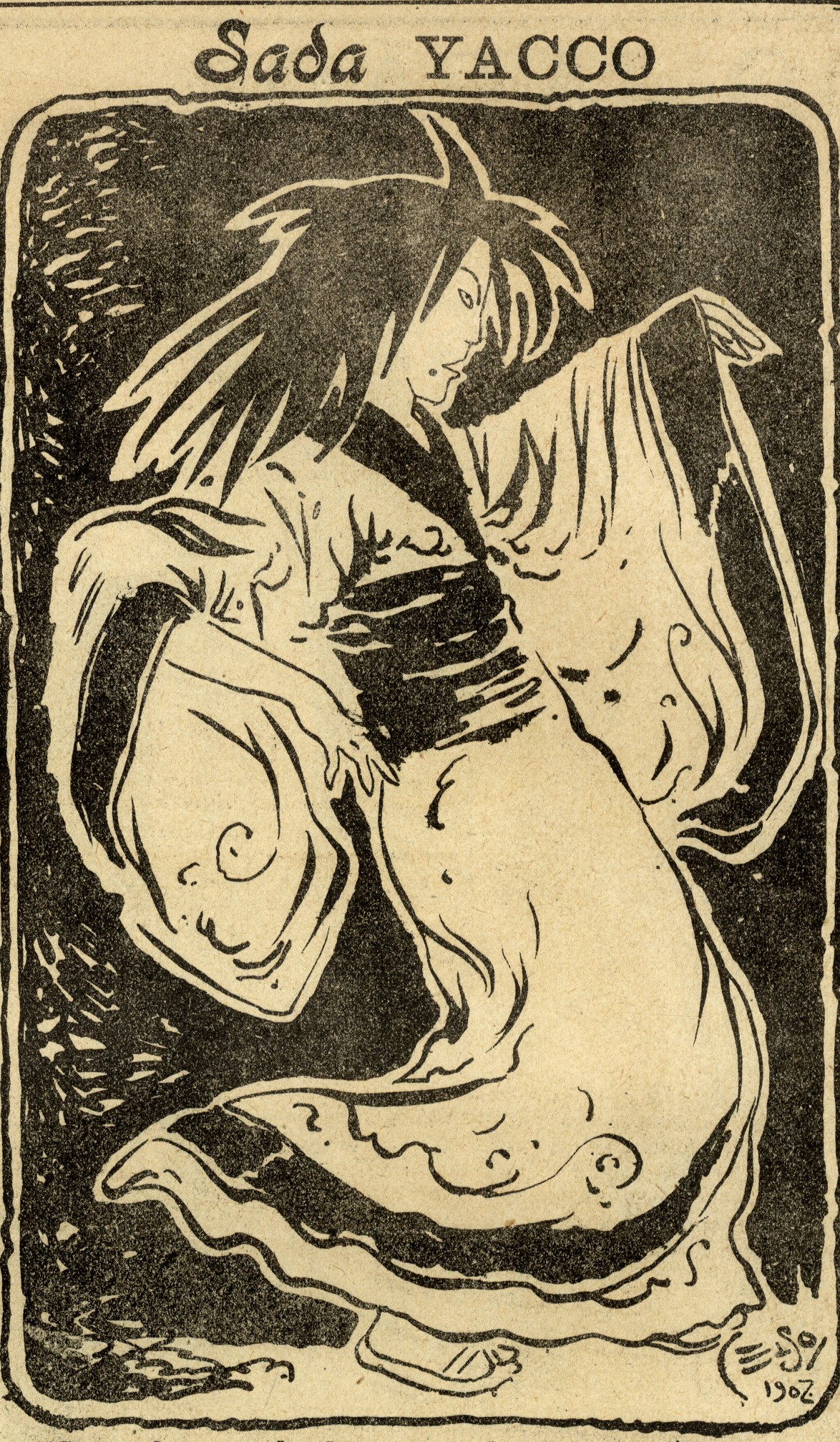
Figure 2. Celso Hermínio: Sada Yacco (1902), published in A Parodía 126/3(1902), Lisbon, Photo: BLX-Hemeroteca Municipal de Lisboa.
Especially Sadayakko’s madness and death scenes were discussed in reviews, where her portrayal was, however, overlayed with the European image of the femme fataleand the figure of Salome typical for that time (Brandstetter 2003, 259). Simultaneously, audiences were kept aware of the fact that Sadayakko modernized Japanese theater by being a “female actress” performing female figures instead of former “male women”8 (Hevesi in Pantzer 2005, 601).
European perceptions of Sadayakko’s performance in particular, and of the Kawakami troupe in general, were thus characterized by a deep uncertainty about how and as what they should be placed or identified, an uncertainty that applied equally to questions of gender performance, cultural “authenticity,” artistic discipline, and temporal positioning. According to Peter Pantzer, who collected contemporary reviews of the tour across German-speaking countries, “[f]inding the right perspective, making a correct judgment was indeed not easy when you had to choose between drama and circus, pantomime and play, museum exhibition and cabinet of curiosities”9 (Pantzer 2005, LXVII, trans. J. O.). Introductory talks and the press emphasized the distance between “original” Kabuki and the Kawakami troupe’s aesthetics and had the effect that the actual performances were haunted by the European “knowledge” about how a Kabuki performance would actually be performed. Thus, the Kawakami troupe was even accused of fraud given that this “European-Japanese” theater (Sazanami in Pantzer 2005, XXV) claiming to be original, was not to be found in Japan. Yet, it was exactly this uncertainty that opened up a spectral variety of ascriptions. While the judgment of the troupe’s aesthetics was based on the paradigmatic exoticist entanglement of effeminacy, naturalness, and “primitivity”—thereby missing its high level of aesthetic stylization—some understood its presumed “primitivity” as lagging behind a supposedly progressive Europe.10 Other saw the Europeanized adaptations of traditional Kabuki, particularly in terms of the straightened cast, as reflecting an ostensibly emancipated and therefore progressive Europe (Fournier 1900) or even its supposed “blossoming of feminism”11 (Pantzer 2005, XXXV).Theater reformer Edward Gordon Craig, in a deeply misogynist article entitled “Sada Yacco” (1921, 261—266), contrarily called the actress a threat to the “naturally” “masculine theatre” (1921, 266) of Japan. Conversely, for avant-garde author and theater theoretician Georg Fuchs, the staged “primitivity” of Japonist theater and Kabuki signified the aesthetic ideal of the future theater of Europewith synesthesia and physicality at its center (Fuchs 1905).
By performing Japonisme, the Kawakami troupe practiced a firm self-exoticization. According to Savigliano, self-exoticization has a certain amount of agency; however, it is limited by an unequal distribution of power between performers and spectators. Although the Kawakamis’ performances clearly operated in the framework of exoticism as described by Savigliano, their self-exoticization still did not entirely fit into an economy of cultural ascriptions and unequivocably distributed risks. Also, the extensive feminization of the Kawakami group, which can be read with Edward Said (1978) as a paradigmatic discursive operation of Orientalism aiming to distinguish supposedly progressive (masculine) Europe from “effeminate” and “regressive” non-Europeans, seems too one-sided in the case of the Kawakamis. Rather, the selling point of the group’s bewildering work was not only that the performance was based on reciprocal imitations of artistic cultural practices (the Kawakamis quoting from European theater, from Japanese Kabuki, and from Japonisme, which in turn quotes from Kabuki and other Japanese arts), but more that this mimetic circuit was presented by supposedly “original” Japanese Kabuki performers. The Kawakamis rather very consciously modeled the imagination of their European audiences by deliberately staging and discursively framing Japonist phantasmas. Instead of clear-cut power relations as suggested by Savigliano or Said in the exoticist and Orientalist context, the troupe’s self-exoticization hints at complex interactions in which active and passive roles cannot be ascribed so easily.
Alexander Sakharoff’s Queer Exoticism
The exuberant nonbinary gender performances of dancer Alexander Sakharoff in the early years of the twentieth century can be read in the context of performative Japonisme as introduced to Europe by the Kawakamis. Born to a Jewish family in Mariupol, then part of the Tsarist empire, in 1886, Sakharoff studied painting in Paris and moved to Munich in 1905 where he became part of the circle of artists associated with the Neue Künstlervereinigung (the predecessor of the expressionist group Der Blaue Reiter). He started to take lessons in ballet and acrobatics and was involved in costume balls. In 1910, he made his debut as one of the first male solo acts within the context of modern dance. However, his work eluded the canonized lineages of modern dance by explicitly drawing from various references, such as circus techniques and acrobatics (Sakharoff 1922, n. p.). During the interwar period, together with his dance and life partner Clotilde van Derp, he toured with great success through Europe, North and South America, and Asia, including Japan. Patricia Veroli describes Sakharoff as a “bridge figure” (Veroli 2002, 171) between Western and Eastern Europe, who connected heterogeneous lines of Russian, French, and German symbolism. Thus, Sakharoff “was exposed to various influences, and filtered them in a way that it has heretofore been possible to know and understand only in parts” (Veroli 2002, 171). Sakharoff’s dances in exuberant costumes (designed by the dancer) were equally characterized by exoticist elements and diverse historical references to European antiquity, the Renaissance, and particularly the Baroque. Similar to Vaclav Nijinsky and the Ballets Russes, whose “archaic, exotic or ‘Oriental’” aesthetics created a distance that made ambivalent stagings of the male body possible (Burt 2022, 58), Sakharoff’s dances raise the question of how his radical disruption of heteronormative gender performances interacted with his exoticist aesthetics. While dance scholar Lucia Ruprecht described Sakharoff’s dances in general and his “Baroque” solos (such as his impersonation of Sun King Louis IVX in Pavane Royal) in particular, with the term “gestural drag” (2019, 169—192), aligning the “intermittent temporality” (177) of his practice with theories of the baroque body and current queer theories of temporal drag, I would like to suggest to take a look at Sakharoff’s work from the perspective of Japonisme and related onnagata performativity. In other words, I read his solos as a queer exoticism in which a nonbinary performance of gender is linked to a bewildering performance of cultural fragments with a specific affinity to the past.
Formative for Sakharoff’s dance concept was the close friendship with the expressionist Munich-based Russian painter couple Alexej Jawlensky and Marianne Werefkin, both members of Neue Künstlervereinigung Munich. They were collectors of Japanese art, theater masks, and woodcuts of theatrical and dance scenes, which they studied intensively. Werefkin and Jawlensky not only portrayed the dancer in a Japonist style in feminized postures and with a whitened face, but they also introduced him to Japanese/Japonist aesthetics (Fäthke 2011). Jawlensky accordingly described their close exchange as follows:
For several years we were always together and he [Sakharoff] came to see us almost every day. The years of our friendship were very interesting … We discussed all of his training as a dancer. I always watched him dance. He also loved and understood my art very well. (Jawlensky quoted in Stamm 2002, 17)12
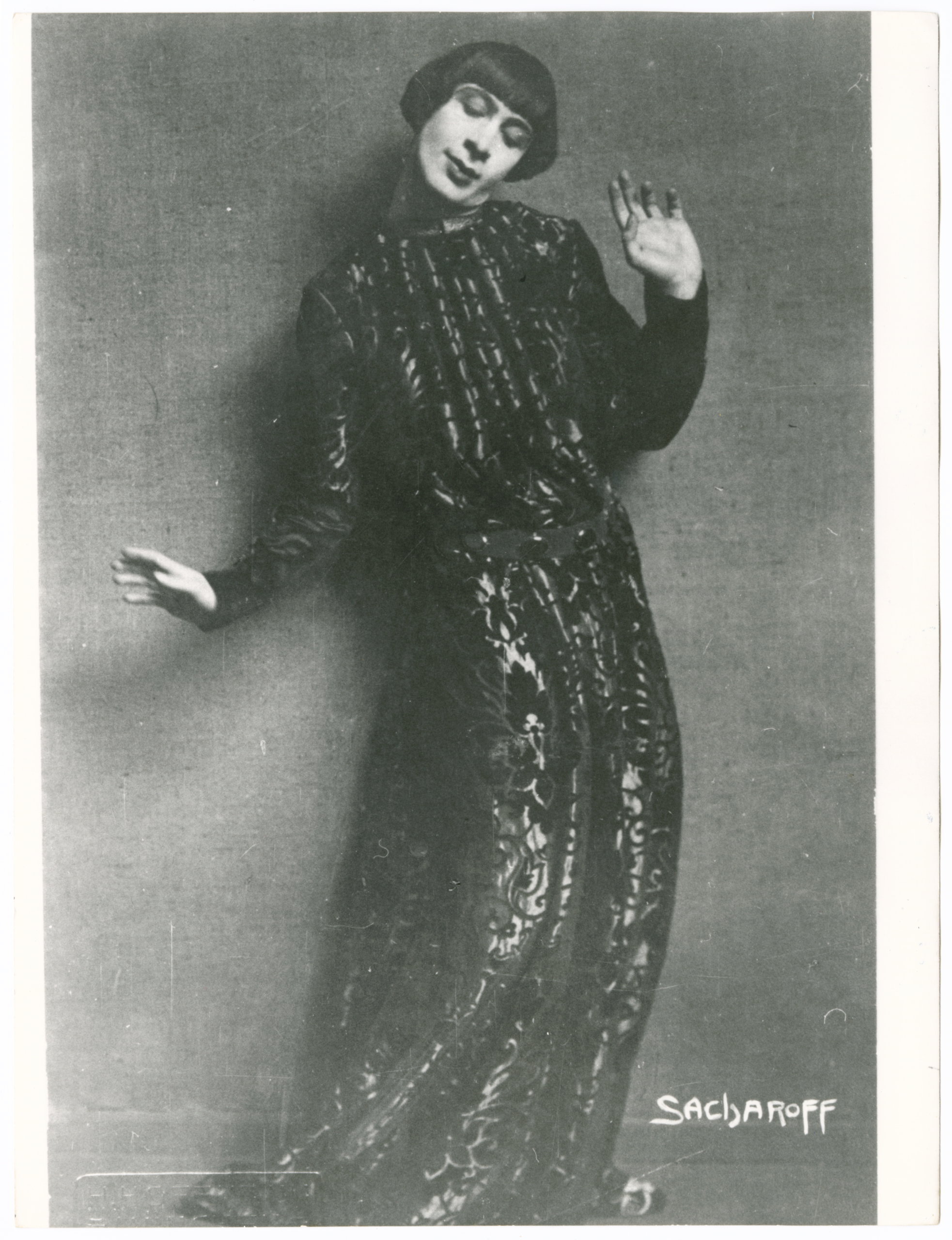
Figure 3. Alexander Sakharoff in a dance pose inspired by Italian Renaissance. Photo: Heinrich Hoffmann (around 1912), Deutsches Tanzarchiv Köln [56013].
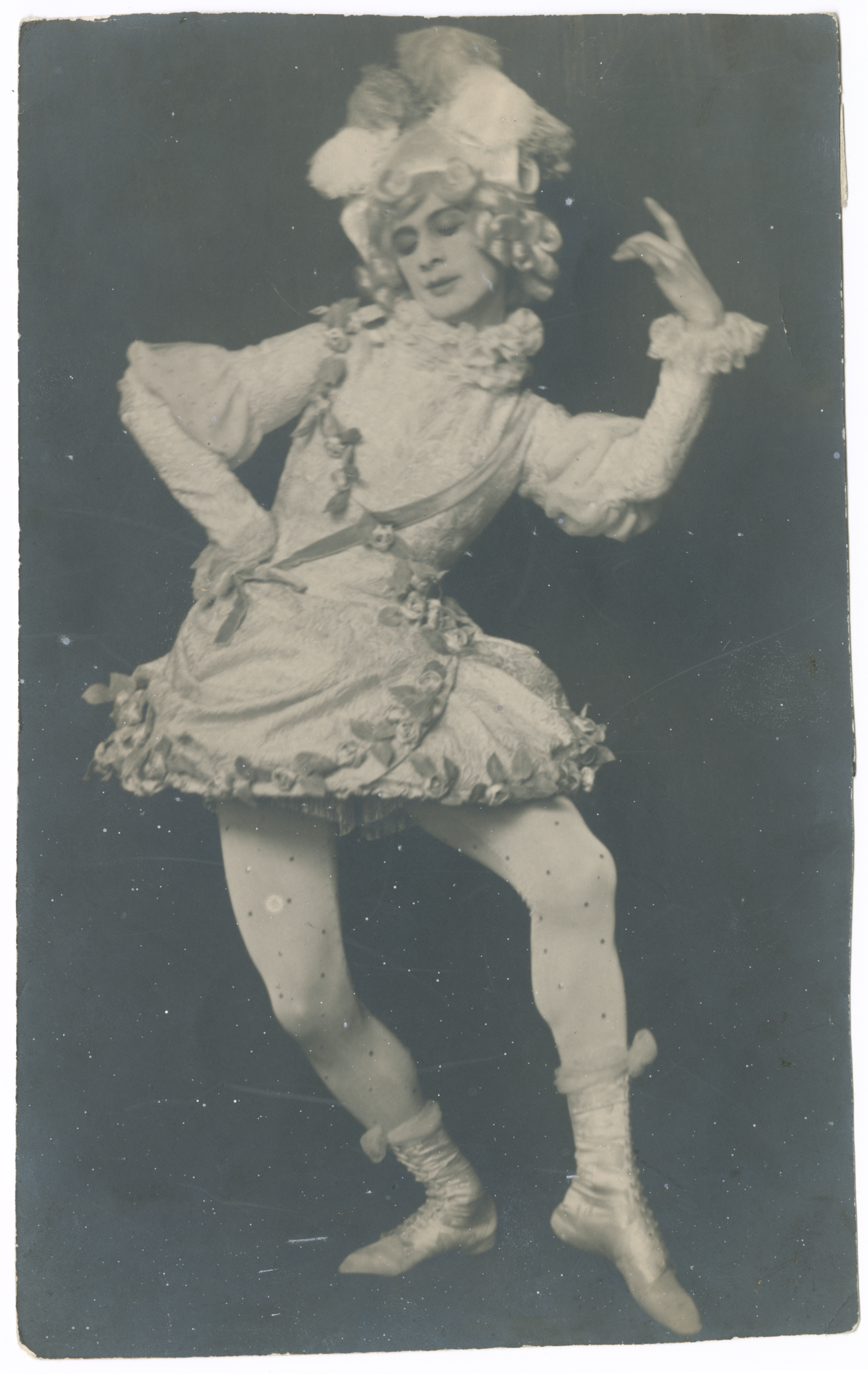
Figure 4. Sakharoff in a version of Pavane Royale (around 1919). Photo: Hanns Holdt, Deutsches Tanzarchiv Köln [56014].
Yet, in his stagings Sakharoff by no means referred back to “the Japanese” in terms of motifs, but adopted fragments of Japonisme into his “reenactments” (Ruprecht 2019, 175) of historical as well as exoticist dances such as Dance of the Baroque Bacchus, Pavane Royal, Chinoiserie, Poème nègre (danced by Clotilde Sakharoff) or Golliwog’s Cake Walk. Among other things, the heavy white face makeup that Sakharoff wore in almost all of his dances is striking. It resonated not only with Baroque makeup traditions but also with the white makeup mask of the onnagata in Kabuki. Dance scholar Gabriele Brandstetter has furthermore pointed to the Japonist shaping of Sakharoff’s specific modeling of postures and movements, which include the upper body bowed forward or sideways, poses with a bent standing and striking leg, the vertical body axis buckled out of alignment in several places, and expressive hand and arm gestures (Brandstetter 1997, 154—158; also Veroli 2002, 186) (Fig. 3—4). While in historical Baroque dance, the body is aligned vertically, striving upwards with a high center of gravity, Sakharoff’s body is specifically broken into several axes with a slightly lowered center. It is this significant breaking of his postures and movements with the “vertical masculinity” (Veroli 2002, 204) of classical ballet and baroque dance that is imbued with echoes of Japonisme, more specifically the performativity of onnagata.
In his work, Sakharoff aimed for gender fluidity when claiming that the only suitable gender for the art of dance is “the young man as a being that … unites the possibility of both sexes in himself”13 (Sacharoff 2002a). He argumentatively associated this quest with feminized male figures: initially with the ephebe of Greek antiquity (Sacharoff 2002a), and, shortly thereafter, with various androgynous figures such as Louis XIV, or the “feverish clown with which he parodied the cakewalk … or the Renaissance angels with wings made of real feathers” (Veroli 2002, 187). In a time that was marked by “sexual antagonism” and “a battle within the sexes” (Showalter in Veroli 2002, 175), and in which homosexuality became a key issue, Sakharoff’s performances raised highly ambivalent reactions. Reviews expressed the pressurization of contemporary heteronormative ideas, responding to it with admiration and rejection; they accused him of feminization and partly expressing homophobia. As an example, the expressionist writer Friedrich Markus Huebner emphasized Sakharoff’s particular performance of dual gender (“Doppelgeschlechtlichkeit”) in which he recognized a “confusingly” liberating effect:
Sacharoff verwirrt. Er verwirrt uns Heutige. … Er öffnet die Schleusentore des Anarchischen. Er stellt dar und glorifiziert das “Charakterlose.” … Es ist gleichgültig, wie Sacharoff seine einzelne Programmnummer nennt. Es ist auch gleichgültig, an welche historischen Ideen er seine Gewandungen anähnelt. Zuletzt ist gleichgültig, die Musik welches Komponisten er als Teppich seines Schreitens, Beugens, Betens benutzt. Das immer wieder und vor allen Dingen Außerordentliche ist, daß die Zertrenntheit der Geschlechter, das Vasallensein des Mannes, des Weibes an ihren beziehentlichen Charakter, daß der Dualismus der Begehrungen in Sacharoff sich synthetisiert und nun zu einer einzigen, charakterologisch nicht mehr faßbaren Geste der zwiefach geschlechtlichen Nacktheit wird. … Die Statue des Ich ist zerbrochen, und aus allen Poren dieser hermaphroditischen Figur flackert der Ausdruck geglückter, erwünschter, gesteigerter Erlösung von der Enge des einsartigen Selbst. (Huebner 1914, n. p.)
14
The influential French critic André Levinson similarly described Sakharoff as a performer whose dances were defined more by “affectation” and “equivocation” than by their topics, titles, or costumes: “This equivocation persists in all his dances, which, although differentiated by costume, are the same, whether they are called Pavane, Rigaudon or Cake-Walk”15 (Levinson 1929, 426). While Ruprecht aligns Sakharoff’s gender performance with baroque burlesque Ballet de Cour in which dancing “en travestie” constituted a form of “majestic drag” (Franko 2003, see also Franko 2015), I would argue that the gender-related incomprehensibility of his gestures, which seems to have permeated all of Sakharoff’s performances, reached beyond baroque concepts. His performative approach was rather characterized by an entanglement of gendered and cultural—or better—exoticist matters respectively connected to specific (queer) temporalities. Though Sakharoff was part of European exoticism and its colonial and racist implications, his artistic work might be called a queer exoticism that to a certain degree, was bending exoticism itself.
As an example, I would like to come back to his aforementioned solo Golliwog’s Cake Walk to the music of Claude Debussy.16 It premiered in 1913, as part of a program in which Sakharoff also performed Baroque-influenced solos. The racist Golliwog doll, inspired by minstrel shows and designed by the illustrator Florence Upton in 1895—a grotesquely exaggerated, childlike, Black figure in a suit17—bears no resemblance to Sakharoff’s staging: a photo of the solo (Fig. 5) rather shows an Orientalized figure in a doll-like, elongated pose with spread-eagled arms and legs on demi-pointe. The figure wears a blue wig (as a hand-colored version of the image shows) and an Oriental costume—”a marvel of feathers and long fringes” (Veroli 1992, 85)—with puffy pants covered in ornaments. The face is whitened and heavily made up.
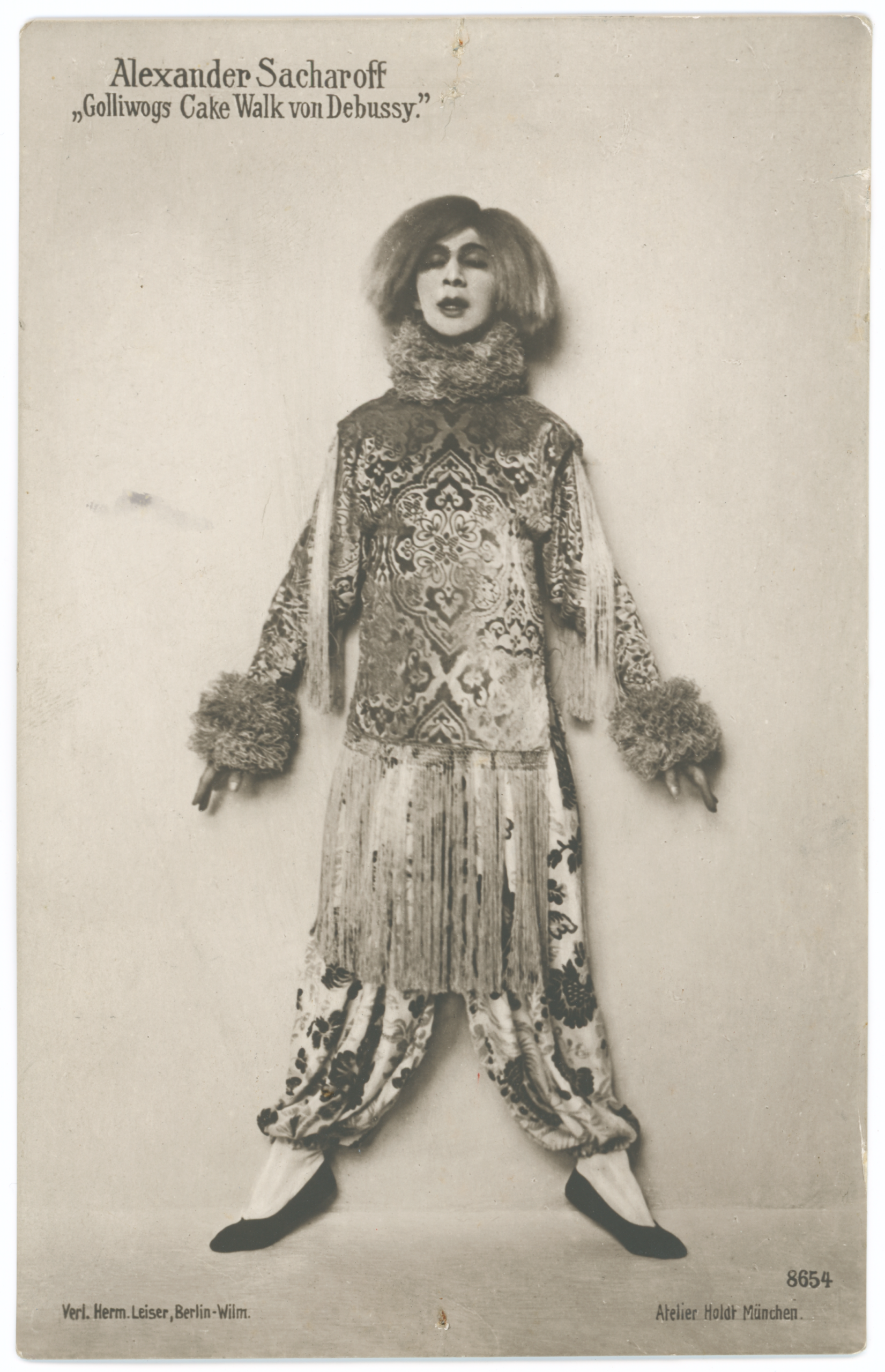
Figure 5. Golliwog’s Cake Walk. Photo: Hanns Holdt, (n. d.), Deutsches Tanzarchiv Köln [12166].
![A vintage photo collage containing five black and white images documenting the dynamic movements of the dancer Alexandre Sakharoff (also Sacharoff). The dancer wears the same elaborate, patterned costume in all five frames: a fringed, brocade-style tunic, matching harem pants, a large fur collar, and a light-colored, short wig. The overall presentation is stylized and theatrical. The photos show different moments of a performance, including: leaping, kneeling, striking expressive poses with arms outstretched, and crouching while holding a small, dark, animal-like prop (possibly a monkey or doll) on the shoulder. Text in the center-right area identifies the subject and performance, reading: "Quelques mouvements d'Alexandre S[akharoff] dans Golliwog[g's Cake Walk]".](https://www.mdw.ac.at/mdwpress/wp-content/uploads/Image-6_sacharoff_golliwogg_BnF-scaled.jpg)
Figure 6. Golliwog’s Cake Walk, from “Alexandre et Clotilde Sakharoff: biographie: documents iconographiques” (n. d.), Bibliothèque nationale de France [FRBNF39511909].
The movements are moreover “described as febrile and spirited, and brought off with an extraordinary disarticulation of the limbs, a sense of lightness, and a mastery of the body even when it was held in the most unusual positions” (Veroli 2002, 206). They at best show only traces of the eponymous cakewalk (Fig. 6). Characteristics such as leaning backward, high prances, arms stretched forward, and a low center of gravity can only be found as residues in Sakharoff’s dance in exaggerated backbends and poses suggestive of swinging arms. The bent forward upper body, poses on demi-pointe with the legs partly parallel, partly turned out with mostly bent knees and highly stylized hand gestures, rather evoke eclectic associations that meld cakewalk with baroque, Japonist, and vaguely “Oriental” facets of movement. Sakharoff’s mocking stylization of the cakewalk eluded both hegemonic masculinity and exotic illusions of original cultures. It is not without an ironic undertone (von Delius in Peter/Stamm 2002, 49) that Sakharoff deliberately juggled codified signs of present and past cultures, races, genders, and sexualities. Through the heterogeneity of costume and makeup, gestures, and poses as a “laboratory of symbols” (Veroli 2002, 192), he overburdened the body with signs and thereby withdrew from any stable attributions. Sakharoff’s cakewalk and other solos did not follow the binary logic of a masquerade, either in the sense of a gendered cross-dressing or as ethnic drag (Sieg 2002). Correspondingly, he demanded “independence from the laws of representation [Abbildlichkeit]”18 (Sacharoff 2002b, 220). Sakharoff rather seemed to invoke the notion of reminiscence, as coined by Mark Franko when reflecting on Japanese Butoh dancer Kazuo Ohno and his performance Suiren (“Water Lilies”).19 Ohno’s drag “speaks of disparate sexes in one body without invoking paradox or inviting us to delude ourselves about the ‘truth’” (Franko 1992, 603). With a reference to Roland Barthes’ thoughts on Japanese puppet theater Bunraku, Franko further states:
Attempting to transcend the double bind of doxa and paradoxa (whether male and female, heterosexuality and homosexuality, or dress and its crossing) Ohno may be in search of just such a third term, “which is not a synthesis but a translation: everything comes back, but it comes back as fiction”. (Franko 1992, 603)
Franko’s conclusion that this “fictive body as third term assumes roles nonparasitically, through reminiscence rather than polemical masquerade” (Franko 1992, 603, italics J. O.), also applies to Sakharoff’s embodiments: they were no imitation of, but fragments that echo gendered and cultured gestures without evoking any kind of origin. In this sense, Émile Vuillermoz calls Sakharoff a “master of an invisible ballet” (1933, 48), “who never dances alone” as he “evokes the living and the dead” (47). When Sakharoff quoted disparate fractions of current and outdated European and non-European performative practices in order to transpose them into nonbinary “reinventions of dance styles,” he created, as Veroli put it, “an ivory-tower world, removed from time and from social and national transformations” (Veroli 2002, 192).
Yet, this removal can as well be understood as a parodist commentary on heteronormative standards of masculinity and the logic of exoticism of his time. If exoticism creates a representative order and allocates social roles “through fantasy” (Savigliano 1995, 189), Sakharoff’s solos such as Golliwog’s Cake Walk withdraw from exoticist representations. He rather refers to exoticism by queering and exposing it as a work of fantasy itself.
While Sakharoff worked with elements associated with drag performance such as opulent costumes, wigs, and overall effeminate modeling of postures, he simultaneously withdrew from logics of drag such as the “destabilizing gesture,” “exploitation of the opposition of construction and essence,” or “the assertation ‘that appearance is an illusion’” (Garber 1997, 152). Sakharoff’s “decentralized gender” (Veroli 2002, 192) rather invented fictional figurations of in-between genders and cultures without stressing the discrepancy between performer and performed. Insofar as he was not operating within any binary logic, his aesthetics bore similarities to the concept of onnagata as a performative and technically achieved femininity independent of the performing subject. The notion of gei that is central to Kabuki (and Japanese arts in general) as an “acquired artistic technique implanted into one’s body via repeated, longtime, physical cultivation” (Isaka 2016, 103) is echoed in the importance that Sakharoff ascribes to the continued bodily practice fueled by a variety of techniques: “Our dances are worked out in every detail and sometimes many years pass before they are actually to our satisfaction. … The true dancer must be an artist—he must learn technique (most importantly breathing)” (Sacharoff 1932, see also Sakharoff 1922). Many reviews emphasize Sakharoff’s “intellectual, frantically ambitious technique, which consciously depicted every pose down to the last detail”20 (Brandenburg 1921, 121—122) leading to artificiality and stylization (Levinson 1929, 278). The concept of work that stands out in Sakharoff’s approach is that of a body that has been worked through by various techniques, and which appears in changing figurations without impersonating a stable figure. Thus, work—to again return to Franko’s thoughts about Butoh dancer Kazuo Ohno’s drag—also forms a theoretical perspective. Referring to Roland Barthes’ observation that in the historical Japanese puppet play Bunraku (a predecessor of Kabuki and Butoh) work “is substituted for interiority” (Barthes 1976, 45), Franko proposes work as a category that goes beyond issues of subjectivization and dichotomies such as interiority and expression, authenticity and masquerade. As such, it is “a third term for theatrical theory: neither subjectivism nor alienation” (Franko 1992, 602). Sakharoff’s elaborated gestures of an in-between gender that simultaneously echo various cultural fragments, among them Japonist elements of his time, are an example of such a work. A work that is not a gendered or ethnic cross-dressing, but a “through-dressing” (Franko 1992, 604) and a through-gesturing that queers exoticism’s quest for representation.
Dragging Exoticism onto the Japanese Stage
As a third example of references to onnagata in the early twentieth century, I will follow the Kawakamis back to Japan, where shortly after their European tour they became the most committed innovators of theater in the so-called Shinpa style (also Shimpa), meaning New School drama.21 Shinpa’s central effort to Westernize Japanese theater by overcoming Kabuki and “replacing onnagata with actresses” (Kano 1995, 6) is part of theater reforms that played a decisive role in Japan’s forced opening up to the West and its striving “to display [its] legitimacy as an advanced nation, one that could not only avoid colonization by nations such as the United States, Britain, Germany, and France but one that would eventually become a colonial power itself” (Kano 1995, 6). Thus, the fierce contemporary debates around Kabuki and New School Shinpa, onnagata and actresses—as women acting like women (Kano 1995, 58)—reflect broader societal struggles for a “modern, civilized and masculine Japan” (Kano 1995, 95). The supposedly traditional, archaic, feminine, and Eastern Kabuki is not only placed in a binary opposition to this new nation’s ideals, but theater should “become a school in which spectators would learn how to be subjects of such a nation” (Kano 1995, 95). While the Japonist Kabuki program of the Kawakamis in Europe was therefore viewed extremely critically in Japan (Kano 1995, 92), the tour simultaneously afforded the troupe the authority to claim themselves as experts in Western theater. Thus, Kawakami called his idealized theater style seigeki, “straight theater.” The term not only refers to a focus on spoken word drama, but to an encompassing “straightening” of all theatrical means according to Kawakami’s association of seigeki with a “correct” or “pure” performance of Western drama (Kano 1995, 59, also 57—84). Among other things, “straight theater” included the adaptation of Western plays and the primacy of dialogues over song and dance, as well as the “straight” assignment of roles in terms of essentializing gender. Even more, “straight” theater meant a masculinization of “resources, and time [that] would be allocated rationally and efficiently, and … in which masculine subjects would enact masculine scenes to educate others to act masculine” (Kano 1995, 76—77). Rejecting Kabuki and its performative femininity of onnagata (male and female alike) as “‘queer’ and abjected” (Kano 1995, 59), the “natural” femininity of the modern actress was turned center stage. Sadayakko, described as a “Western lady” (Kano 1995, 91) upon her return from Europe, epitomized this new model of a Japanese actress.
However, the Westernization of theater that Kawakami intended was not as pure as he claimed. Rather, it was a case of reverse exoticism that dragged the logic of Western exoticism onto the Japanese stage, as Kawakami’s Shinpa adaptation of the Shakespeare play Othello in 1903, among others, showed.22 Othello was staged as one of the first “straight” and at the same time “colonial plays” (Kano 1995, 12) followed by The Merchant of Venice and Hamlet in the same year.23 After their successful experimentations with self-exoticizing performances of alleged Kabuki in Europe, the Kawakamis now claimed to be the only Japanese to have studied and to “authentically” perform Shakespeare.24 Contrary to an advertisement poster that showed figures in historical European dresses, including Othello with a blackened face and hands in front of Greek columns, Kawakami’s actual staging was “an extract of Shakespeare’s play” with “one-tenth the length” (Osanai in Liu 2007, 413) of the original. It moved the setting to present-day Tokyo and Taiwan. Here, Othello, performed by Otojirō, was called Washirō, a colonial general in Taiwan—an island Japan had just colonized in 1895. Washirō, a character transferring Othello into the Japanese context, appeared as a member of burakumin, “a traditional outcaste group in Japanese society” (Yasuko 2016, 488). In the play, he is sent to Taiwan to put down local uprisings. Through the performance of military masculinity, he strives to be accepted as a full Japanese citizen. A stage shot (Fig. 7) shows male actors as male figures in contemporary Japanese and Chinese uniforms and suits. Otojirō/Washirō stands in the center in blackface, transferring its pejorative uses in the West to the Japanese context. The actors epitomize the notion of a straightened theater in strikingly erect poses, without tilted torsos, the arms and heads in line with the upper body, only moving in a small range of bodily space. Yet, two energetically sitting figures, each with a helping assistant in lunges behind their backs, recall the importance of acrobatic fight scenes, which Kawakami takes from his Japonist Kabuki performances into his straight theater. Another image shows Sadayakko as Desdemona, here named Tomone, wearing a traditional Japanese dress, hairstyle, and makeup in a similar “straight” posture. In an image of her as Oriye (the Japanized Ophelia) in the Hamlet production of the same year (Fig. 8), however, she can be seen dressed in Western style, performing the madness scene with a strikingly motionless body, which completely contrasts her madness dances in Kabuki style for which she became famous in Europe.
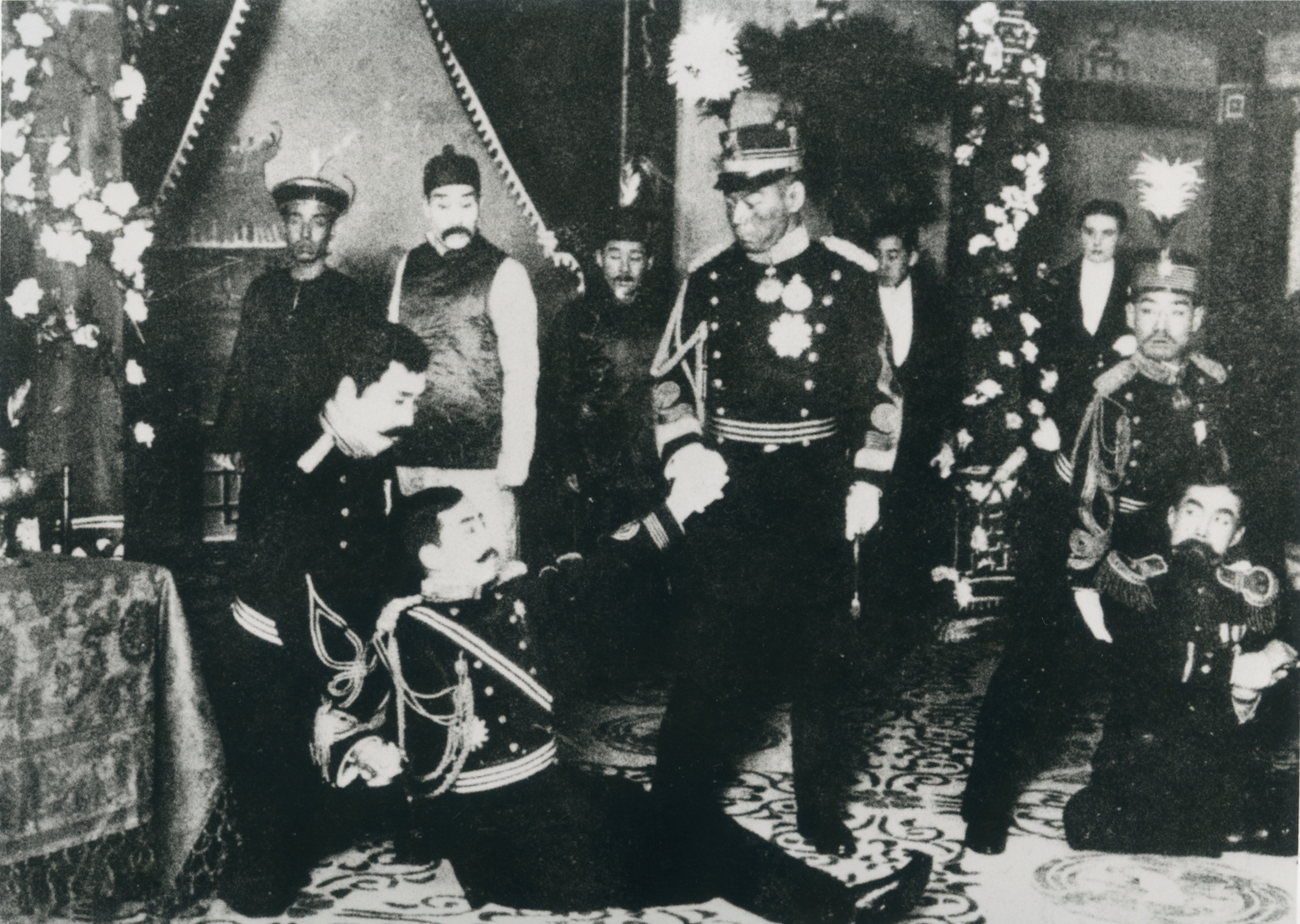
Figure 7. Stage shot of Othello (1903), Kawakami Otojirō standing in the middle, property of the Tsubouchi Memorial Theater Museum, Waseda University Tokyo, No. F01-25994.
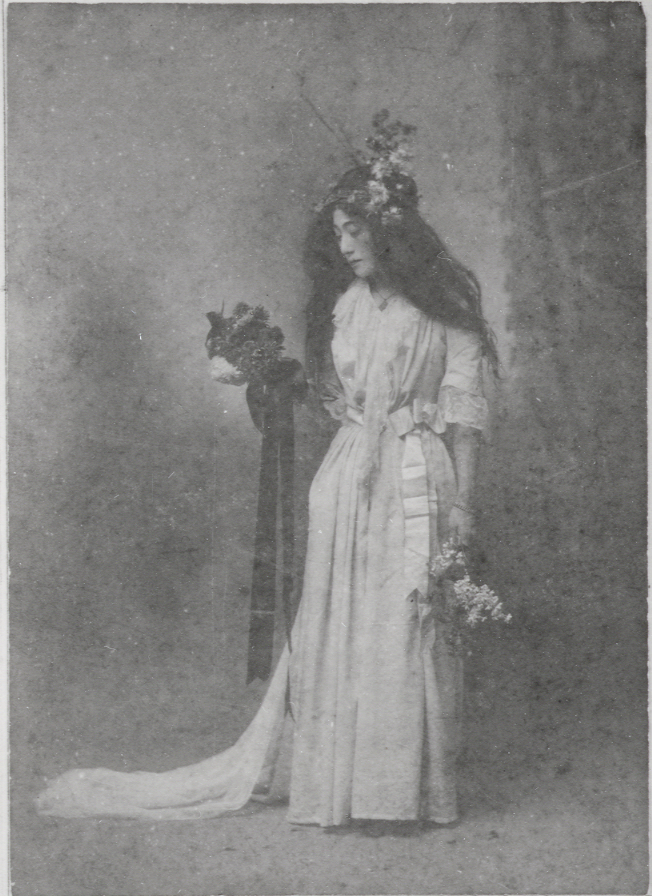
Figure 8. Sadayakko as Oriye (Ophelia) in Hamlet (1903), property of the Tsubouchi Memorial Theater Museum, Waseda University Tokyo, No. F64-00678.
Thus, as Kano puts it, the “definition of [the modern Japanese] actress involves more than a woman performing” (Kano 1995, 32). Her identity is rather formed in comparison to a range of preceding models of performative femininity such as “the male onnagata … and his performances in Kabuki, New School, and New Theater productions, the Western actress, the onna yakusha (woman player) who appeared in Kabuki and New School, and, finally, the New School actress” (Levy 2010, 232—33). Finally, there were also male onnagata in Kawakami’s productions (Ortolani 1995, 237), so the different types of performers of femininity were not mutually exclusive but competed in a mimetic circle for the greater “naturalness” and the representation of psychological interiority.25 However, it is important to note that Kawakami introduced explicit scenes of cross-dressing and ethnic drag in various productions.26 That is, while “straight theater” paved the way for the gradual essentialist replacement of onnagata by “natural” actresses, the importance of cross-dressings as inversion increased.
To come back to the straightening of Othello in terms of aesthetic means, dance and song were not erased but ascribed to the group of indigenous Taiwanese rebels. In their appearance at the beginning of act IV, they sang folk songs and “hopped and leapt about screaming some sort of incantation” (Yasuko 2016, 489). The Kawakami’s Shakespeare adaptations can be said to have drawn on exoticism in two ways: on the one hand, the staging of Shakespeare itself was perceived as exotic in the Japanese context with “the most exotic elements of all: the translated text and the modern actress” (Levy 2010, 202); on the other, his concession to the audience’s affinity for dance and song was reframed according to an exoticist logic by assigning it to the exoticized Taiwanese “Others.” This might be called a reversed exoticism that adopted the Western theatrical means as exotic spectacle and in which actors play “at being ‘Western’ colonial masters who subject indigenous peoples in colonies to their rule” (Yasuko 2016, 489). Yet, the actors of this abridged version of the “original” Shakespearean Othello in the guise of contemporary Japanese and Taiwanese did not perform ethnic drag in the sense of Sieg (2002) as “the performance of ‘race’ as a masquerade” or “a ritual of inversion” (2). The show followed much more the dramaturgy of exoticism as a mimetic strategy to become similar, but not equal—the desire to become a more refined Japanese West, as Kano puts it:
It is the drag against the full identification with the West, the impossibility of a perfect passing as Western, that came to be understood to be Japanese qualities. And to a certain extent, it is these Japanese peculiarities, now understood to be Japanese essences, that are later made to serve as the basis of postmodern performance genres such as butō and underground theater. (Kano 1995, 170)
Nevertheless, contrary to their claims, the Kawakami’s straight theater in many ways exhibited this impossible and undesired entirely “passing as Western.” Their productions, which distort binaries such as original/adaptation, Japanese/European, feminine/masculine, onnagata-actress, constantly teetered on the edge of comedy (e. g., see Brandon 1999, 37), as, for example, in the perception of Othello as a “travesty of the worst kind” (Levy 2010, 210) by some of his contemporaries, or in the explicit parody of Washirō’s masculinity in New Othello (1906) (Kano 1995, 108).
Closing Thoughts: Dragging and Exoticism
The Kawakamis’ European tour in 1902 can be described as a point of crystallization from which various entanglements between Japanese and European dance and theater modernisms radiated outward. In a time of deep societal changes in Japan and Europe, the three case studies show complex and contradictory migrations of gendered and cultured stagings of bodies that revolve around the performative femininity of onnagata as a central point of reference. In research on Kabuki, the term “drag” is rarely used because, in its widespread binary understanding as an inversion of gender or cross-dressing, it does not seem appropriate to the complex mimetic processes of onnagata (Mezur 2005, 256). However, through onnagata, the notion of drag might become more complicated. Within the Japonist framework that I have sketched out, drag could be understood in an expanded sense: as a variety of performative practices that are not limited to the category of gender but inextricably linked to particularly situated ideas of culture and nation, as the notions of self-exoticization, queer exoticism, or reversed exoticism suggest. Furthermore, these practices do not operate in simple binary oppositions as crossings in terms of gender or ethnicity. Much in line with the idea of a performative femininity in onnagata that does not refer to the subjectivity of the performer, even in the proclaimed “straight” productions of the Kawakamis in Japan, different performative models of femininity exist without contradiction next to each other.
Within the Japonist framework, all three examples point to the alliance of exoticist draggings with commodifications.27 However, while neither the Kawakamis nor Sakharoff were detached from colonial exoticism, they also revealed its deeply fictional constitution by deliberately performing exoticism with an ironic component or even taking a parodistic turn. In the case of the Kawakamis, their performances in Europe questioned seemingly clear-cut power relations of exoticism while also reproducing them on the Japanese stage. Their work on straightening Japanese theater finally led to the marginalization of the ambiguity of onnagata while simultaneously introducing scenes of drag as an inversion. In the case of Sakharoff, exoticism was related to a queer modernity. Eventually, his practice might also have pointed to the possibility of detaching the exotic from the colonialist and redefining it, as his French contemporary Victor Segalen has put it: “as the ability to conceive otherwise” (Segalen 2002, 19). In this sense, drag could refer to a work in which cultural sediments are layered and rearranged to create an exuberant body that explodes the exotic from within.
Endnotes
-
This includes works by Emil Orlik, Max Reinhardt, Giacomo Puccini’s Madam Butterfly (1904) or the theoretical texts Die Schaubühne der Zukunft (1905) and Der Tanz (1906) by Georg Fuchs.↩︎
-
Meiji Restoration refers to the Japanese revolution of 1868, which marks a forced political, economic, social, and cultural opening of the country towards the “West.”↩︎
-
Among others, the performative constitution of onnagata as well as its modern essentialization resonate in the differentiation of “woman-actor” (onna yakusha, a woman performing onnagata such as the famous Ichikawa Kumehachi) from “actress” (a woman performing a woman) (see Isaka 2016, 9). In the 1910s, the first is increasingly supplanted by the second.↩︎
-
When using the name under which the company tours, I always imply the importance of both Sadayakko and Otojirō.↩︎
-
“Since the XVIIth century, women were forbidden to enter the stage in Japan and female roles therefore always had to be played by men. Sada Yacco, once the most famous geisha in Japan, saw Kawakami perform and, inspired by his art, she dared to become an actress. Kawakami, who was inclined to reform Japanese theater, gladly accepted the young novice and taught her. One day, Sada Yacco stood in for a female actor who had become unwell, achieved colossal success and has been Japan’s first and greatest actress ever since.” All translations of sources are by the author.↩︎
-
Here Klankert makes an analogy to Cio-Cio-Sans’s voice in Madame Butterfly. The bird-like voice “symbolisiert das Weiblichkeitsbild der Geisha, das sich als europäische Projektion um die Jahrhundertwende in den Künsten herausgebildet und zu einem Stereotyp im europäischen Japan-Diskurs entwickelt hat” (“symbolizes the female image of the Geisha that took shape as European projection in the arts at the turn of the century and developed into a stereotype in the European Japan-discourse”; Klankert 2015, 171).↩︎
-
“The actors who play female roles [in Japanese theater] speak in a descant, but they do it so well that the unbiased European who visits a theater in Japan for the first time often has to be made aware that all roles are played by men. Sada Yacco is the first Japanese woman to perform comedy together with men … [S]o Sada Yacco also speaks her roles in a descant: just as an actor would speak the role. A sign of how tradition can work!”↩︎
-
In the German original: “Schauspielerinnen weiblichen Geschlechts … . Früher gab es Frauen männlichen Geschlechts.”↩︎
-
In the German original: “Den rechten Blickwinkel zu finden, ein Urteil korrekt zu treffen, war in der Tat nicht leicht, wenn man zwischen Drama und Zirkus, Pantomime und Theaterstück, musealer Ausstellung und Kuriositäten-Kabinett zu schwanken meinte.”↩︎
-
As one of numerous examples a review by Bruno Petzold: “this is a type of naturalism as it can only emerge from a people, that … has not yet lost its primitivity, and close proximity with nature, which still … relates to the flowers and the beasts” (in Pantzer 2005, 62).↩︎
-
In the German original: “Blütetage des Feminismus.”↩︎
-
In addition, two years before his debut, Sakharoff experimented with Wassily Kandinsky on a synesthetic theater. Georg Fuchs’s writings Die Schaubühne der Zukunft (1905) and Der Tanz (1906), both inspired by attending performances by the Kawakamis, provided the theoretical background for this.↩︎
-
In the German original: “der Jüngling als ein Wesen, das noch … gleichsam die Möglichkeiten der beiden Geschlechter in sich vereinigt.”↩︎
-
“Sakharoff confuses. He confuses us contemporaries. … He opens the floodgates of the anarchic. He portrays and glorifies the ‘characterless’ … . It doesn’t matter what Sacharoff calls his individual program number. It also doesn’t matter which historical ideas he chooses to resemble in his costumes. Finally, it doesn’t matter which composer’s music he uses as a carpet for his striding, bending, and praying. What is always and above all extraordinary is that the separation of the sexes, the vassalage of man and woman to their relational character, that the dualism of desires is synthesized in Sacharoff and now becomes a single, characterologically no longer comprehensible gesture of twofold sexual nakedness … The statue of the ego is broken, and from every pore of this hermaphroditic figure flickers the expression of successful, desired, heightened redemption from the narrowness of the one-like self.”↩︎
-
In the French original: “Cette équivoque persiste dans toutes ses danses qui, différenciées par le costume, n’en font qu’une seule, qu’elle s’intitule pavane, rigaudon ou cake-walk.”↩︎
-
Described by Brenda Dixon-Gottschild as “another example of whites copying blacks copying whites” (1997, 26), this partner dance was a parody of white social dances by African American slaves. It later became an essential part of the minstrel show, and from about 1900 until World War I a popular white social dance in Europe and the United States.↩︎
-
See, for example, Brown 2008, 66.↩︎
-
In the German original: “Unabhängigkeit von den Gesetzen der Abbildlichkeit.”↩︎
-
The Japanese dance form Butoh draws from traditions of Kabuki and Noh as well as from European modern expressionist dance (see, among others, Fraleigh 2010). The title of Ohno’s performance refers to Claude Monet’s paintings of water lilies, which were created in the context of Japonisme. Against this backdrop, the solo addresses gendered and cultural transfers.↩︎
-
In the German original: “eine intellektuale, krampfhaft ehrgeizige Technik, die jede Pose höchst bewußt bis ins Einzelne durchbildete.”↩︎
-
Shinpa as New School drama is historically largely replaced in the 1910s by Shingeki as New Theater, that actually detaches itself from all residues of “old school” Kabuki theater (see, among others, Kano 1995, 58).↩︎
-
The reason why Kawakami chose Othello was the “fact that it has few strong female parts in comparison with Shakespeare’s other plays, many of which include important active roles for women” (Yasuko 2016, 488).↩︎
-
There is a longer history of performances of Shakespeare in Japan reaching back to the mid-nineteenth century. Strikingly, Shakespeare is often performed in Kabuki adaptations. For the specific affinity between Kabuki and Shakespeare in terms of gender-bending performances, see Pronko 1967 and Brandon 1999.↩︎
-
A text in incorrect English on the advertisement poster states: “Othello, to be produced by Mr. Kawakami and Madam Sada Yacco, is the adaptation from Shakespeare’s play of which they have seen the performance in Europe where they have engaged with their troupe previous year, and learned the art of the acting much differing from our conventional. No foreigner ever had such a good opportunity as this time to see Shakespeare’s drama in its almost original form in Japan” (quoted in Liu 2007, 420).↩︎
-
It was not uncommon in contemporary discourse to see (male) onnagata as the better performers of the manly “modern woman,” because of the alleged exaggerated femininity of Japanese women, as contemporary critic Osanai Kaoru, among others, notes: “I believe that the onnagata, a man by birth, is much more suited to the modern woman than today’s Japanese actresses, who have terribly little of the manly element in them” (quoted in Levy 2010, 239). So there is a “hierarchy of cultural legitimacy” in which “it is the Western actress who stands unchallenged at the top of the totem pole, with the onnagata and the Japanese actress battling it out for second place” (Levy 2010, 238).↩︎
-
For example, in Dumb Travel and Around the World in Seventy Days (see Kano 1995, 95—104).↩︎
-
See Köppert in this volume on commodification and ethnic drag.↩︎
References
Barthes, Roland. 1976. “The Dolls of Bunraku.” Translated by David Savran. Diacritics 6, no. 4: 44—47.
Brandenburg, Hans. 1921. Der moderne Tanz. Munich: Georg Müller.
Brandon, James R. 1999. “Kabuki and Shakespeare: Balancing Yin and Yang.” TDR The Drama Review 43, no. 2: 15—53.
Brandstetter, Gabriele. 1997. “Die Inszenierung der Fläche: Ornament und Relief im Theaterkonzept der Ballets Russes.” In Spiegelungen: Die Ballets Russes und die Künste, edited by Claudia Jeschke, Ursel Berger, and Birgit Zeidler, 147—164. Berlin: Vorwerk.
Brandstetter, Gabriele. 2003. “‘Blumenhaft und schlächterhaft’: Japanische Körperbilder in Europa; Rezeption, Projektion, Fiktion in Texten und Bildern der Zwanziger Jahre.” In Ostasienrezeption im Schatten der Weltkriege: Universalismus und Nationalismus, edited by Walter Gebhard, 247—266. Munich: Iudicum.
Brown, Jayna. 2008. Babylon Girls: Black Women Performers and the Shaping of the Modern. Durham, NC: Duke University Press.
Burt, Ramsay. 2022 (originally published 1995). The Male Dancer: Bodies, Spectacle, Sexualities. New York: Routledge.
Craig, Edward Gordon. 1921. “Sada Yacco.” In The Theatre Advancing, 261—266. London: Constable.
Downer, Lesley. 2004. Madame Sadayakko: The Geisha Who Seduced the West. London: Review Press.
Delius, Rudolf von. 2002 (originally published 1913). “Alexander Sacharoff.” In Die Sacharoffs: Zwei Tänzer aus dem Umkreis des Blauen Reiters/Two Dancers within the ‘Blaue Reiter’ Circle, edited by Frank-Manuel Peter and Rainer Stamm, 49. Cologne: Wienand.
Drain, Richard. 1995. Twentieth Century Theatre: A Sourcebook. New York: Routledge.
Fäthke, Bernd. 2011. “Von Werefkins und Jawlenskys Faible für die japanische Kunst.” In “Diese zärtlichen, geistvollen Phantasien”: Die Maler des “Blauen Reiter” und Japan, edited by Brigitte Salmen, 103—132. Murnau: Schloßmuseum.
Fournier, Louis. 1900. Kawakami and Sada Yacco. Paris: Brentano’s.
Francke, Daniela, ed. 2013. Im Rausch der Kirschblüten: Japans Theater und sein Einfluss auf Europas Bühnenwelten. Vienna: Brandstätter.
Franko, Mark. 1992. “Where He Danced: Cocteau’s Barbette and Ohno’s Water Lilies.” Special Issue “Performance” PMLA 107, no. 3: 594—607.
Franko, Mark. 2003. “Majestic Drag: Monarchical Performativity and the King’s Body Theatrical.” TDR The Drama Review 47, no. 2: 71—87.
Franko, Mark. 2015. Dance as Text: Ideologies of the Baroque Body. New York: Oxford University Press.
Fraleigh, Sondra. 2010. Butoh: Metamorphic Dance and Global Alchemy. Urbana: University of Illinois Press.
Fuchs, Georg. 1905. Die Schaubühne der Zukunft. Berlin: Schuster & Loeffler.
Fuchs, Georg. 1906. Der Tanz. Stuttgart: Strecker & Schröder.
Garber, Marjorie. 1997. Vested Interests: Cross-dressing and Cultural Anxiety. New York: Routledge.
Gottschild, Brenda Dixon. 1997. Digging the Africanist Presence in American Performance: Dance and Other Contexts. Westport, CT: Greenwood Press.
Huebner, Friedrich Markus. 1914. “Alexander Sacharoff.” Phoebus: Monatsschrift für Ästhetik und Kritik des Theaters 1, no. 3: 101—104. https://www.sk-kultur.de/tanz/sacharoff/seiten/text_4.html. Accessed August 30, 2024.
Isaka, Maki. 2016. Onnagata: A Labyrinth of Gendering in Kabuki Theater. Seattle: University of Washington Press.
Kano, Ayako. 1995. Acting Like a Woman in Modern Japan: Gender, Theater, and Nationalism. New York: Palgrave.
Klankert, Tanja. 2015. “Das Echo der Gastspiele von Otojirō Kawakami, Sadayakko und ihrer Truppe in den deutschsprachigen Printmedien.” In Sound and Performance: Positionen—Methoden—Analysen; Thurnauer Schriften zum Musiktheater, edited by Wolf-Dieter Ernst, Anno Mungen, Nora Niethammer, and Berenika Szymanski-Düll, 159—173. Würzburg: Königshausen & Neumann.
Levinson, André. 1929. La Danse D'Aujourd'Hui. Paris: Edition Duchartre et Vanbuggenhout.
Levy, Indra. 2010. Sirens of the Western Shore: The Westernesque Femme Fatale, Translation, and Vernacular Style in Modern Japanese Literature. New York: Columbia University Press.
Liu, Siyuan. 2007. “Adaptation as Appropriation: Staging Western Drama in the First Western-Style Theatres in Japan and China.” Theatre Journal 59, no. 3: 411—429.
Mezur, Katherine. 1995. Beautiful Boys/Outlaw Bodies: Devising Kabuki Female-Likeness. New York: Palgrave Macmillan.
Morinaga, Maki. 2002. “The Gender of Onnagata as the Imitating Imitated: Its Historicity, Performativity, and Involvement in the Circulation of Femininity.” Positions 10, no. 2: 245—284.
Ortolani, Benito. 1995. The Japanese Theatre: From Shamanistic Ritual to Contemporary Pluralism. Princeton: Princeton University Press.
Pantzer, Peter, ed. 2005. Japanischer Theaterhimmel über Europas Bühnen: Kawakami Otojirō, Sadayakko und ihre Truppe auf Tournee durch Mittel- und Osteuropa 1901—1902. Munich: Iudicium Verlag.
Pronko, Leonard Cabell. 1967. Theater East and West: Perspectives Toward a Total Theater. Berkeley: University of California Press.
Ruprecht, Lucia. 2019. Gestural Imaginaries: Dance and Cultural Theory in the Early Twentieth Century. New York: Oxford University Press.
Sacharoff, Alexander. 2002a (originally published 1910). “Bemerkungen über den Tanz.” In Die Sacharoffs: Zwei Tänzer aus dem Umkreis des Blauen Reiters/Two Dancers within the ‘Blaue Reiter’ Circle, edited by Frank-Manuel Peter and Rainer Stamm, 46. Cologne: Wienand.
Sacharoff, Alexander. 2002b. “Spiritualität.” In Die Sacharoffs: Zwei Tänzer aus dem Umkreis des Blauen Reiters/Two Dancers within the ‘Blaue Reiter’ Circle, edited by Frank-Manuel Peter and Rainer Stamm, 220—21. Cologne: Wienand.
Sacharoff, Alexander. 1932. “How I Arrange My Dances.” Typescript. Salzburg: Derra de Moroda Dance Archives, image collection, folder 4.
Said, Edward. 1978. Orientalism. New York: Pantheon Books.
Sakharoff, Alexandre. 1922. “Mes Maîtres.” In Clotilde et Alexandre Sakharoff, edited by Maurice de Brunoff. Paris: n. p.
Savigliano, Marta E. 1995. Tango and the Political Economy of Passion. Boulder: Westview Press.
Scholz-Cionca, Stanca. 2016. “Japanesque Shows for Western Markets: Loïe Fuller and Japanese Theatre Tours Through Europe (1900—1908).” Journal of Global Theatre History 1, no. 1: 46—61.
Segalen, Victor. 2002 (originally published 1955). Essay on Exoticism: An Aesthetics of Diversity. Translated and edited by Yaël Rachel Schlick. Durham, NC: Duke University Press.
Sieg, Katrin. 2002. Ethnic Drag: Performing Race, Nation, Sexuality in West Germany. Ann Arbor: University of Michigan Press.
Stamm, Rainer. 2002. “Alexander Sacharoff: Dance and the Fine Arts.” In Die Sacharoffs: Zwei Tänzer aus dem Umkreis des Blauen Reiters/Two Dancers within the ‘Blaue Reiter’ Circle, edited by Frank-Manuel Peter and Rainer Stamm, 11—45. Cologne: Wienand.
Veroli, Patrizia. 1992. “Archives of the Dance: Between Art and Fashion; Alexandre Sakharoff’s Theatre Designs.” Dance Research: The Journal of the Society for Dance Research 10, no. 1: 78—93.
Veroli, Patrizia. 2002. “The Mirror and the Hieroglyph. Alexander Sacharoff and Dance Modernism.” In Die Sacharoffs: Zwei Tänzer aus dem Umkreis des Blauen Reiters/Two Dancers within the ‘Blaue Reiter’ Circle, edited by Frank-Manuel Peter and Rainer Stamm, 169—217. Cologne: Wienand.
Vuillermoz, Émile. 1933. Clotilde et Alexandre Sakharoff. Lausanne: Editions Centrales.
Yasuko, Ikeuchi. 2016. “Colonial Othello in Taiwan.” In A History of Japanese Theatre, edited by Jonah Salz, 488—489. Cambridge: Cambridge University Press.
Zorn, Bettina. 2013. “Das traditionelle Theater Japans.” In Im Rausch der Kirschblüten: Japans Theater und sein Einfluss auf Europas Bühnenwelten, edited by Daniela Francke, 35—50. Vienna: Brandstätter.