Sam Ehrentraut 
How to cite
How to cite
Outline
Outline

“im anfang, wenn wir uns in der küche trafen nicht zu zweit, guckten wir uns geheimnisvoll an. dann brauchten wir auch das nicht mehr. wenn einer nicht ausgelastet ist, belästigt er den andern. wenn wir zu zweit sind, sind wir zu mehreren. oder: wir sind immer auch zu zweit. es geht, weil es mit den andern geht.”1
Ronald M. Schernikau (2012, 63)
Jessica Dunn Rovinelli’s feature film So Pretty (2019) invites us into the shared living sphere of a polycule of individuals in their mid-twenties, set in contemporary Brooklyn, New York. Through camera maneuvers that seem almost reluctant, the viewer is introduced to a group of gender-deviant2 people, who meet, interact, and separate, their relationships shifting in closeness throughout the film. The various genders and sexual orientations of the characters remain ambiguous—some of them might be genderqueer, some of them transgender, but clear identification is unspecified, a move which I will further elaborate as aligning with Rovinelli’s overall aesthetic motive. So Pretty tells the story of Tonio/Tonia and Franz, Paul and Erika, sharing daily life, cooking, chatting, meeting friends, having sex, fighting, and being politically active together. Rather than following a tightly knit plot, the film’s blurry narrative unfolds through the evolving and shifting relationships within this central constellation. So Pretty seeks to create a cinematic space for queer and trans bodies, exploring ways of relating beyond conventional regimes of representation. Through its focus on interior spaces, fluid camera movements, and an evocative soundscape, the film evokes an ephemeral in-between space that reimagines relationality. The analysis will follow So Pretty into its social microcosmos and trace the ways in which the film deploys a form of temporal dragging to imagine a community that holds multiple layers of time present.
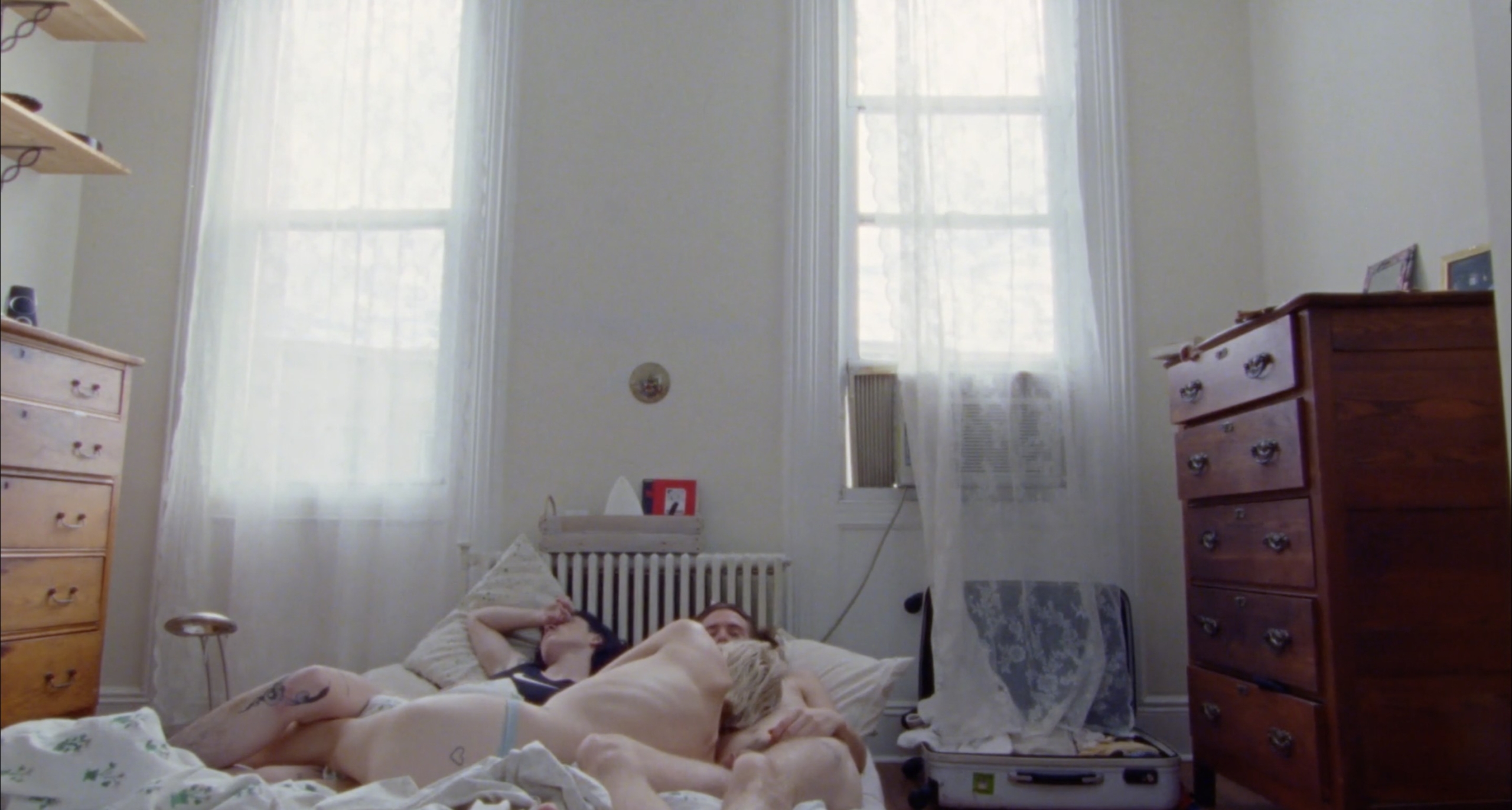
Figure 1. Jessica Dunn Rovinelli, “So Pretty,” 2019, Screenshot, 00:31:25, © Jessica Dunn Rovinelli.
So Pretty is a blurry portrait of four friends and lovers and their social environment that lets the viewer witness a queer constellation without handing over their intimacy to the spectator’s eye. However, the film is also composed as an intermedial transposition of German writer Ronald M. Schernikau’s text So Schön from 1982, a then unpublished text with the subtitle “a utopian film.” Schernikau’s text, characterized by its laconic language, can be read as a literary testimony of the gay communist movement in West Berlin a few years before the fall of the Berlin Wall. In its particularly casual language, So Schön tells fragmentary stories from the lives of a circle of gay men, some of whom bend gender norms, who find each other in shifting relationships oscillating between coupledom, casual sexual relations, and extended friendship structures. The text captures their political engagement, disoriented daily life, and changing intimate relations as entangled and closely interrelated aspects of their gay existence.
Rovinelli not only adapts Schernikau’s script for her film in a modified form; she transposes Schernikau’s So Schön from 1980s Berlin to contemporary New York, translating it into a different gender matrix and creating a cinematic realm in which strands of the past and the present constantly layer and intermingle in a shared gesture of utopian longing.3 By implementing Schernikau’s text as a script, Rovinelli uses the text as a mirroring field of reference, and, at the same time, as a subject of discussion and discourse. Her reading of Schernikau’s text is loving, even as it reorganizes its structures and forms. From her predecessor’s literary script Rovinelli molds a contemporary story of a community struggling with singularization, heteronormative coupledom, a political context of racist oppression and the increase of neofascist movements, showing how these political struggles materialize in the entangled daily life of its inhabitants.
In this text, I am most interested in how So Pretty engages with Schernikau’s text in order to generate a particularly transtemporal narrative. I will also explore how the image production in Rovinelli’s film allows for a form of community to unfold on screen which materializes in the interstices of the created images and is built through the entanglement of people, times and media brought into touch. The shared space imagined by the film emerges in the small cracks within the cinematic tissue and the intentionally created gaps between scenes, events, and people that in many cases show their temporal dynamics. Following the different reformulations of “drag” as a theoretical figure and as a multifaceted aesthetic practice presented in this anthology, I will use Elizabeth Freeman’s concept of “temporal drag” to trace the ways in which the film constructs itself as a multidimensional, interrupted citation of Schernikau’s text, and thus operates through an intermedial form of temporal entanglement. By conceptualizing the specific forms of community and coexistence the film displays, I will trace how So Pretty deals with the political weight of community building in a nonprogrammatic way and centers the topic of nonhomogeneous relationality in its formal language and image politics. I follow the film in its modes of parenthetic political dreaming and longing for a space alleviated from the heaviness of clear readability and unambiguous identification. By looking at how So Pretty introduces a specific form of transtemporal cohabitation, I want to reconstruct the aesthetics of withdrawal and the countering of visual representation. I consider that to be Rovinelli’s contribution to a search for a modified form of nonintrusive imaging of communal existence that also carves out space for modes of queer and trans existence without pursuing an agenda of exclusionary and self-contained identity politics.
I am not searching for presumably better or genuine forms of representation of trans or gender-nonconforming people and their ways of community building—and neither is So Pretty. In my encounter with Rovinelli’s film, I am rather interested in the aesthetic strategies that allow collective figurations to appear in and in between the images, while at the same time defying gestures of gender reveal and literal modes of representation. As I will try to show, the reflective work with and against representation enables a more substantial form of performing community longing for an alternate form of being with one another, a vision of community that implies a transtemporal form of relating. Before I turn to So Pretty, I first want to tread a path into a concept crucial for my understanding of temporal layering: what is created, when dragging different layers of time onto and into each other?
Temporal Drag
In her seminal book Time Binds (2010), Elizabeth Freeman introduced a trope of queer temporality that is characterized by a specific form of anachronistic interrelation between the past and the present.4 In her analysis of mostly film and video works, Freeman traced encounters between past and present which exceed both the practice of critical historical reference—the present addressing the past with methodological skepticism—and harmonious coexistence of different temporal layers—the present welcoming the past without contention. Her concept of “temporal drag” describes a layering of queer temporalities which manifests as a conflictual and heterogeneous relation between the past and the present: “I’d like to call this ‘temporal drag,’ with all the associations that the word ‘drag’ has with retrogression, delay, and the pull of the past on the present” (Freeman 2010, 62). “Temporal drag,” in this understanding, does not simply signify a past making itself present. In the movement of temporal dragging, the past and the present are exerting pressure on each other, forcing themselves into a complex relation.5 “Temporal drag” thus implies a reemergence of the past as a past element and as a temporal clashing that marks itself as nonfitting, heterogeneous, and, in many cases, incompatible. The movement of temporal dragging displaces the present, making porous the present and the past alike. Freeman conceptualizes temporal drag as an interactional dynamic, an adhesive getting-in-relation between the past and the present that interrupts a chronological order and creates a pierced and perforated next-to-each-other of temporal layers.6
In the queer film and video works that Freeman is reading, this tension-filled imbrication of temporalities appears as an attempt to get in touch with a queer past that is unredeemed, problematic and hard to integrate.7 But “temporal drag” is more than just a trope of queer art, and more than the staging of an encounter with queer precedents that do not smoothly fit into the frames of queer bonding through time and a reparative approach of cross-temporal queer history-making. Temporal drag is the movement of a discomforting and unsolvable rubbing of the past and the present against each other—a temporal alteration that inflicts both past and present exerting an anachronistic effect on all temporal layers involved. It goes beyond a citational reiteration and reactualization of a past life, embodiment, and (queer) practice.8 According to Freeman, “temporal drag” opens a transtemporal space of rewriting history and reembodying an altered kind of relating to the past. In her reading of Frankenstein’s monster she explains that temporal drag, in some contexts, can be read as “a historiographic practice wherein the past takes the form of something already fragmented, ‘split,’ and decaying, to which the present and future are somehow porous in an analog way, and for which bodies are both metaphor and medium” (ibid., 116).
Freeman assigns a historiographic potential to the movement of temporal drag, an embodied form of writing history she coins “erotohistoriography.”9 This historiographic potential renders temporal drag as a mediated practice of negotiating and reshaping history that admits and gives space to the mutual incommensurability of past and present. This form of writing or redoing history is not bound to entirely close the gaps and mitigate the fissures between the layers brought in touch. Rather it is a form of historiography that makes the irreducible cracks and fissures feasible and activates the generative and persisting possibilities at play in the transtemporal rubbing of queer historical fragments.
There are two key features that I wish to borrow from Freeman’s concept of “temporal drag” and its potential for a historiography that does not rely on chronological progression and teleological narrations. First, her conception holds space for heterogeneous, nonappropriative forms of temporal encounter. This encounter is fundamentally tense: Freeman’s focus on the differing temporalities that come in touch and clash with one another enables a rethinking of how historical referencing operates and how a transformative influence and leaking of times into one another can be conceptualized beyond an affirmative genealogy.
The second aspect I will apply in my reflection on So Pretty is the potential for the creation of an altered, nonhomogeneous narrative through the performative labor of “temporal drag.” I transpose Freeman’s concept of an embodied historiography into my analysis of transtemporal dialogue in Rovinelli’s film to grasp how the encounter of two different time frames is structured, and to understand what kind of renarration the interactional temporal dynamics between Schernikau’s So Schön and So Pretty generate.
In the clashing of a literary text that captures traces of a gay Berlin in the 1980s and the cinematic depiction of a gender-deviant social world in present-day New York, the film articulates an intermedial encounter that relates one geographically and temporally distant fragment of queer life to another. In bringing together these diffuse contexts, the film creates a temporal tension from which a mutual redefinition and reshaping of the respective temporal frames result. As I will show, this transtemporal movement also goes beyond a historical and historiographical dynamic. It longs simultaneously for an alteration of the cinematic present and a possible future that cannot be outlined. In the rest of the essay, I will explore the performative, aesthetically constituted practices of transtemporal relationality that are central to the narrative and the formal tissue of So Pretty. First, let’s look at the imagery of So Pretty to better understand how the film creates a delicate space for a transtemporal form of relating while taming an investigative gaze.
Transtemporal Making-Out
So Pretty is episodic and sparsely narrative, reflecting the situations and events that the central characters and their surrounding community live through in an anecdotal, almost accidental manner. The film’s enclosed world contains four characters who are tied together through changing relationships of friendship, romantic love, and connections which oscillate across coupledom and nonmonogamy. The film rejects any classification of the characters’ identities, and this rejection is central to the gaze and form of viewership So Pretty prefigures.
For the film script, Rovinelli transposed Ronald M. Schernikau’s main character constellation of four gay men into a gender-deviant group of friends and lovers in a North American context involved in antifascist activism and the Black Lives Matter movement: Schernikau’s character constellation of Tonio, Franz, Erika, and Paul reappear and get remodeled in Rovinelli’s translation of the text into a film script: some of them get different gender markers (Tonia), feminine characters switch from a marginal position in the text to a central role (Erika), and the refiguration of the cast generally breaks with the more exclusively gay male microcosmos Schernikau depicts in So Schön.Rovinelli’s adaptation alters the language and codes of gender via transposition. It actualizes the gender-blurring potential of So Schön, present through a range of deviant masculinitiesand explicit references to Tuntenästhetik.10Through the contemporary transposition into a different language and a different context, the character constellation becomes modular material for the film that softly undermines the male- and gay-centered focus of Schernikau’s text and models a contemporary set of gender modes and presentations.
So Pretty uses So Schön as a matrix for its script, selectively renarrating events taken from the literary text and building an intertextual zone between the textual past and the blurry present of the film time. But beyond using Schernikau’s literary film as an actual film script, So Schön is also present as a text and as a subject of translation. We see multiple scenes of readings of text passages in a park, listen to conversations about translation on the way to a club, and study close-ups of faces and interiors while parts of So Schön are spoken over the resting or slowly moving images. The use of Schernikau’s utopian film text constantly shifts between script template, object of transposition, and body of text that is read, heard, and perceived as an external element in the diegetic realm of the film. In this oscillation between embodiment and exposition of the text as text, an intermedial dynamics of levels of narratives and their temporal layers occurs.
Through the constant back and forth between the rereading of Schernikau and its cinematic reinterpretation, So Pretty creates a specific temporal blurring. The intermedial staging leads to an entanglement of two temporally distant queer worlds—Schernikau’s literary mirroring of splinters of communist gay West Berlin and a presumably contemporary US gender-deviant conglomerate of friends and lovers. The world of So Pretty, however, becomes porous and opens up as a fabric of reference and queer correspondence that brings two languages, two different media, and two temporal spheres of queer existence in touch with each other. Watching the film, I experienced this blurring as a suspension of temporal and spatial exactness. Entering the world the film creates, I lost grip of time and location while witnessing a permeable but self-contained social cosmos.
Coming back to Elizabeth Freeman’s concept of “temporal drag” outlined above, one can understand how the bringing together of two temporal frames becomes an encounter of past and present queer life that creates a constant tension and transitioning between multiple layers. The touching and merging of the two time spaces facilitate a dragging that holds both elements present and next to each other without engaging in hierarchization or mastering of past and present elements (Freeman 2010, 64—65). This movement induced by the rubbing of differently time-coded frames and narratives permeates the present of the film narrative and exposes its constructedness (Gemachtheit). In the intermedial and transtemporal entanglement, So Pretty spatializes a specific form of interrelated queer performativity. While still being recognizable as separate elements and staged as a transtemporal dialogue between text and film, both spaces start to bleed into each other, alter each other, and generate a continuous movement of distinctiveness and hybridization of contexts.
This heterogeneous coexistence of two space times that come with very different vocabularies and codes of queerness destabilizes a chronological and progress-oriented conception of cinematic time. We intentionally never see the context or a chronological cause of an event; instead, we glide through the cinematic space witnessing glimpses and cut-outs from the line of events, being denied what has taken place before or after. In one scene, for example, a small evening get-together unfolds in the shared apartment. Helmut, a transmasculine character, is seen playfully spanking Tonia and Franz, while Paul takes photos of them, and Erika is sitting next to them, distracted by her phone. Their laughter and chatter, the music and the spanking sounds blend into an indistinct soundscape. As the interaction unfolds, the camera slowly, but consistently moves in and out of the sexually charged, playful situation, slipping away from the vivid scene and seamlessly continuing the tracking shot that is then interrupted by the next scene fragment.
The derooting effect of these aesthetic means of film cut, editing, and montaging allows the images to evoke a temporally permeable space that is not representational. What emerges at the margins of visual representation is a historically deunitized and dynamized space for a less controlled form of becoming. So Schön enters the fabric of the film as a text from the past and as an anachronistic constellation and vocabulary of gender from elsewhere, from West Berlin before the fall of the wall. Through this transposition, So Pretty opens itself to an alteration by its literary sibling, continuously generating its narrative from the text while taking distance from the text, interweaving new realities into it that exceed So Schön without assuming a position of critical judgment, dismissal, or discarding the nonintegrable elements tied to it. So Pretty leaves space for incompleteness. Instead of focusing on a correcting and replacing approach, the film emphasizes the space opening up in between the space times it collides. In between the images and in the entanglement of gay and gender-deviant times, So Pretty materializes a nonspace for a queer becoming not yet articulated and it does so by letting itself be haunted and informed by a past space. By allowing this nonspace to become visible in the gaps of its imagery, So Pretty partakes in a form of aesthetic dreaming for a transtemporally connected and resistant form of transgenerational encounter that accepts the incompatible, uncatchable, and unredeemable element of the historical encounter.
So Pretty’s aesthetic language further supports this effect of temporal entanglement by engaging tropes of leftist essayistic filmmaking of the twentieth century that detach the camera’s perspective from the representation of individualized gazes and instead focus on situational settings and collective figurations. Also, the color grading of So Pretty, the rough film grain of its image aesthetics, and its sometimes-analog vernacular constantly oppose the temporal markers the digital format entails. The different layers of mediality and the copresence of multiple historically connotated imageries subvert a clear localization of the film’s events in the present. Also on the formal level, So Pretty is using the effect of temporal dragging for its own purposes. Aesthetically, the adhesive potential of the temporal layering is multiplied and the anachronistic elements are emphasized in a way that impacts the temporal signature of its cinematic space. Both the narrative and the formal language embrace the transtemporal dynamic of their multilayered structure. They are informed by a past that is not enclosed in history but takes effect within the time-crossing dialogue So Pretty is concerned with. While temporal dragging is a central mechanism in the intermedial and transtemporal dynamics of the film, So Pretty’s strategies of imaging further support the vision of community building that is specific to the film’s aesthetic agenda. I will further pursue these strategies in the following paragraphs to get closer to the construction of a gaze that avoids a scrutinizing approach to gender, embodiment, and relationships.
Imaging beyond Intrusion
We follow the camera’s gliding eye through the spaces of the main characters’ daily life—workplaces, demonstrations, clubs, public transport. However, the majority of the scenes take place in the apartment all four share, which also functions as a space for gatherings and meet-ups with a wider circle of friends, as a community space. The gaze offered to us by the film through its specific camera work is nonintrusive. Extensive dolly shots (a specific kind of tracking shot characterized by smooth and controlled camera movements) and the play with distancing and approaching simulate an experience for the viewer that they are constantly passing by.
In its continuous movement through So Pretty’s world—the rooms of the apartment, the park, occasional walks on the streets—the camera acts as a nonhierarchizing tool, unfazed by the differing intensities and emotional states its protagonists may live through. The shots do not put the main focus on the interactions between the human actors. Instead of embodying an individualized perspective, the camera—and by extension the viewer—wanders through rooms, situations, and encounters, following its own slow pace with a constant acknowledgment of the environment and contextual setting rather than a focus on the conversations or specific interactions between the protagonists. The camera’s presence never controls the beginning or the end of a scene. The imaging is presented as an accidental act of noticing, always on the edge of fading out. If bodies or faces are centered, they barely move or they rest, and so does the camera for the time it spends with them.
This effect of accidental and uninterested registering is further supported by the atmospheric sound recording characteristic of So Pretty. We hear chatter, conversations we can barely follow as they are partially drowned out by traffic noise, ambient sound, music, and other voices. There is—beyond the reading of the passages from So Schön that are spoken into a microphone or used as commentary voice—no consistent recording of the individual voices. The soundtrack follows the camera’s movement, getting closer and becoming more distant in accordance with its gliding path. The atmospheric capture of sound encompasses the viewer and listener in the cinematic world without creating the impression of a close partaking in the scenes.
The listening experience resembles a time and space of sharing and accidental witnessing. It is in itself a mode of passing by, an adjacent copresence that is fostered also through the sonic arrangement. The soundscapes and occasional conversation scenes create a nonpsychologizing approach to the events and people in the film, an aesthetic effect of sensory implication that corresponds to the visual nonintrusiveness. This massively contributes to the sliding, dehierarchizing effect of the camera work. Viewing and listening are always slightly suspended, at a distance to the narrative content and its medial layers. One is left with feelings of boredom and of disorientation in the situational fabric of the depicted world—several times I tried to bridge the gaps left by the editing by rewatching and relistening to passages, before I ultimately let go of the desire to capture the discursive interactions, instead giving in to the cinematic dynamics of fragmentation. The detachment of sound and camera movement from a rhythm dictated by the plot creates a space for an intensified reflection on the media dynamics and its different aesthetic registers. The camera does not invite us to enter into the psyche of the protagonists, nor does it give access to their motivations, inner conflicts, or desires. The aesthetic arrangement of sound and image defies the embodiment of a personalized way of looking and works towards a disengagement from an objectifying and penetrating gaze.
In her essay on So Pretty, which is partially based on conversations with Rovinelli, the theorist McKenzie Wark describes this cinematic language as an inversion of a violently intrusive film aesthetics which she refers to as “meta-rape cinema.” “So Pretty attempts to invert the genre of the meta-rape film. … She [Jessica Dunn Rovinelli] is not investigating, exposing, revealing” (Wark 2019, n. p.). Wark’s argument and the usage of rape as a media-specific formal trope is based on Rovinelli’s claim that film—in its structural manifestation of a penetrating and nonconsensually objectifying gaze—is a medium of violence.11
Film as a hierarchized arrangement of looking forces filmmakers, those depicted on screen, and viewers into an interpretative order of visibility and exposition. In its appropriation of bodies, narratives, and topics, the cinematic dispositif imposes a hierarchical and often exploitative regime of depiction. Wark reads the movie as consciously dealing with this form of structural epistemic violence, as drafting a utopian cinematic countervision that materializes as disruptively structured image production and provides spaces for the tender presentation of trans existence and relationality. “This is a utopian cinema, then. To the extent that this is possible. The first principle of utopia as a genre is the exclusion of violence. That means that the violence is contained and neutralized, but still there. This is a place or a time, a constructed situation, where it is kept at bay, so something else might flower” (Wark 2019, n. p.).
So Pretty works towards an aesthetic articulation of imaging that seeks to escape the objectifying and appropriating gaze as well as the manifestations of the cisnormative order that deeply informs seeing, and the positionalities of doing film. The gesture of the camera avoids “clocking”—the uninvited recognition of a trans person as trans—and a clear readability of nonconforming embodiments and identities. Sound and image let the bodies be, let them move, let them rest and fail in the interrelatedness of their becoming and maintaining. For the time being, we are allowed to witness them, but without intruding into their fluidly and collectively organized intimate space.
By rejecting an explanatory and revealing mode, So Pretty longs for a form of cinematic aesthetics at the margins of the codes of representation dominated by the cisnormative visual and auditory regimes. So Pretty sidesteps expectations in the categorization of gender and queerness and the construction of clearly identifiable identities. It is not a movie about transitioning; it is not a film that makes space for the gender-deviant body as a primary site for visual representation. Rovinelli’s film rather makes space for being-in-movement, for the figuration of bodies and their fluid reconstellation in order to create a communal and community-based depiction of being together and for each other. In between the images and as the performative undercurrent of the episodic film, a negatively spaced sphere of a possible world is articulated, which is—according to Wark’s analysis of the trans femme aesthetics the film unfolds—not beautiful, but radically pretty.12 It allows trans existence to take space and flourish without being in the scrutinizing focus. So Pretty’s indirect imaging of the utopian does not exclude conflict—identity issues, structural violence, clashing positionalities, and emotional harm are present throughout the whole film. We see couples losing connection, falling apart and forming new intimate relations, we witness Erika letting down Paul in the streets. But Rovinelli implements the conflicts emerging between the protagonists as a genuine part of creating and negotiating shared life in a present that is constantly subverted and haunted by past gender-deviant experiences, tropes, and histories. The irreducible contradictions and multilayered hardships of community building are a material part of the utopian longing for another way of being, not a mere obstacle to an otherwise purified vision of a (potentially) alternative future.
So Pretty lovingly repositions the receptive gaze as a visiting one. The aesthetic decisions that inform the viewership clearly communicate the gaps and the incompleteness of what is depicted—leaving the imaged world and its inhabitants the right to nonvisibility and nonexposure. Between the split scenes and in the echo of the events and occurrences the camera leaves behind on its way through the scenes, an undefined zone of becoming enfolds that lets itself be haunted by temporal entanglements. It is reaching out for potentially comforting and unrepresentable folds in the fields of visibility.
Desiring Community
Being trans implies multiple ways of being in community: finding form through and in each other, creating spaces for survival and the livability of trans existence, sharing bits of a mostly forgotten and buried history. In many cases, contemporary trans artists deal with the questions of community building and struggle for sustainable trans spaces through their work. The aesthetic modes deployed in their artistic production do not necessarily have to make transness a main topic. Mirroring a desire for an extended shared space that makes possible the formation of nonhegemonic forms of living—and among them, trans lives—informs the ways trans artists fashion layers of media, opt for the gaps between images, and play with references from a not-always consistent communal sphere. Working in a mostly cisnormative world—i. e., a world in which the identification with one’s gender assigned at birth is instituted as the norm—trans artists work towards an extension and protection of spaces that allow for trans becoming to happen, to be embodied, to become readable.
So Pretty joins this contemporary struggle for alternate forms of visibility beyond representation—an endeavor that is shared by different fields of artistic production and theory. The ambivalent dynamics of representation remain a pressing and ongoing question, especially for cultural productions of minoritized and marginalized communities. Trans and queer artists continue to develop changing approaches that work towards a disruption and modification of distorting regimes of readability and recognizability. They reflect on the competing and interacting temporalities in forms of performativity and embodiment—a sensitivity for temporal complexities that equally informs queer theories focused on modes of performance and time-based visual media.13
Adding her voice and gaze to this pressing discussion, Rovinelli searches for a way of producing images that gives space for a nonexploitative circulation of relations rather than determining a fixed frame for gender-deviant representation. In the tender and consciously distant depiction of community, Rovinelli deploys an aesthetic strategy of the parenthetic that disinvites the curiosity-driven normative cis-gaze in favor of a nonexposure and a collectively structured form of resisting representation. The way the film performs community—and forges a corresponding space for it through its intermedial and transtemporal engagement—opts for a shared practice of collective world-building located in daily life. So Pretty actively dreams of a protected but structurally open body of becoming with one another. It presents a blurring vision of a utopian constellation that does not fall into an exceptionalist idealization of trans community. In its distancing mode that gives not only the protagonists but also the viewer space for the slowness of the everyday political struggle, and collective privacy of nonsurveillance, it offers a possibility for becoming and meaning-making. It distances itself from the framing epistemic registers of queerphobia, trans misogyny and racialization without naively excluding their existence and impact.
The protagonists of So Pretty come together, touch and diverge on the basis of their partly shared, partly segregating positionalities. The film marks the epistemic violence the inhabitants are confronted with and that constantly influences the embodiments and the ways in which these bodies become readable within the order of the visible. Despite the failures in solidarity and connection that are also depicted as part of this desired community, it nevertheless manages to articulate a search for an aesthetics that allows for a different vision of life. In doing so, the film turns against the classificatory oppression of bodies, systemic discrimination, and enforced segregation and individualization. On the surface of the imaging dynamics of So Pretty, a glimpse of a historically permeated counterspace can be perceived—a space of diffusely located, structurally impossible breathing, a space emerging from within the ordinary that might not be glorious or beautiful, but pretty.14
It is also in this longing for a different form of shared life and a politically altered reality where Schernikau’s So Schön and Rovinelli’s transformative take on the text meet. So Schön is also a story about a communist utopia dreamt within the interstices of the daily in the capitalist West Berlin of the 1980s. It is a story about failure, about comrades who love, fight for, and also betray each other. Schernikau, who wrote the text before becoming a citizen of the GDR in its latest stage in 1989, i. e., just before the fall of the Berlin Wall, traces the marginalized communist organizing and its entanglement with the gay and Tunten-scene in the western part of the city, depicting how political longing is not equivalent, but inseparable from personal and sexual desire. In grasping the potential for a future that is at odds with the present but might become imaginable Schernikau offered a literary vision of another existence in the cut-off city he lived in. Rovinelli’s reactualization of So Schön explicitly touches this strong dimension of political longing in the text, picking up the—by definition—not actualized part of Schernikau’s depicted daily life utopia and letting it become a layer of her search for articulations of the (im)possible. Amid the temporal dragging that the encounter creates, the shared—and at the same time not shared—time and space of what is longed for, of a possibly different life, constitutes a strongly interacting layer in the film. Letting So Pretty get dragged by the unfulfilled utopian void So Schön captured and left behind for future reading, creates a transtemporal correspondence in the undefinable time-space of the not yet realized. But it is in this formally and narratively sketched sphere of the not yet there and in the folds of the consequently pragmatic and daily life fabric of both frames where a further transtemporal correspondence, a further rewriting and writing forth next to each other happen.
When Freeman points towards the historiographic potential in “temporal drag” and emphasizes the bodily dimension in this form of historicizing queer performativity, we are made aware of the historiographic potential that lies in conflictual and heterogeneous forms of transtemporal encounters. In her transposition of Schernikau’s text and its narrative constellation of characters, Rovinelli’s film manages to reactivate an impossible history of the utopian buried in the novel. The transtemporal dialogue is not merely a contemporary restaging of a lost piece of what has retrospectively been labeled queer life, it also opens the So Schön’stexture to a generative form of historiography that operates through the reanimation of questions of communal existence and the survival of marginalized perspectives within a persistently hostile and oppressive environment. So Pretty is unhinging So Schön from its localization in the past by asking the text’s questions anew, letting them take an altered form, and trigger an open conversation with a present not anticipated. The form of historiography the transtemporal encounter evokes is an act of imaging and reembodiment that gives the presumably historically and contextually distant text a new existence—altered by the present.
Retrospectively, the text can be experienced in its persistent anachronistic features. Historiography, in this sense, means releasing the unfulfilled desires for a different being. It means looking at Schernikau’s So Schön again, with a different gaze formed by a different time and place—and making it present again in its unresolved utopian potential while reconsidering the traces of its pastness. Following Freeman’s thoughts, this historiographic effect advocates for an imagining of the future that does not affirm or discard the past, but creates conditions for actively engaging with it. But it also means to account for the pastness of the past and to not fall into the simplistic approach of a reactualization that tends to smooth out the not-compatible, resistant, sometimes problematic aspects of points of reference.15 So Pretty can be read as an attempt of holding exactly this complexity present and making it viral for its gender-deviant inhabitants and their tenderly alluded life worlds. Though So Pretty does not claim to give answers, it carves the space to let questions of community building emerge—dragging them along as unresolved tasks for a transtemporally informed community.16
Endnotes
- * The work on this publication was fully funded by the Austrian Science Fund (FWF) (P 35728-G).
-
“In the beginning, when we met in the kitchen not just the two of us, we looked at each other mysteriously. Then, we didn’t even need this anymore. When one of us isn’t occupied, he bothers the other. When it’s just the two of us, we are more than two. Or: we are always two as well. It works because it works with the others” (author’s translation).↩︎
-
To avoid an intrusive classification of genders and bodies that would override the film’s intention, I follow Jessica Dunn Rovinelli’s own descriptive language for her character constellation here. The phrase “gender deviant” and other terms are traceable for example in a Scene Report podcastepisode (Dunlea 2019).↩︎
-
For an extensive reading of the concept of the utopian So Pretty articulates, see McKenzie Wark’s essay “Femme as in Fuck You”(2019), published on e-flux. See also the recorded conversation between her and Jessica Dunn Rovinelli “More Pretty: Jessie Jeffrey Dunn Rovinelli and McKenzie Wark in Conversation” (2019), published on e-flux.↩︎
-
See Freeman 2010, xvi.↩︎
-
See Freeman 2010, 63f.↩︎
-
For the topos of stickiness, see Freeman 2010, 112f., 122f.↩︎
-
She exemplifies this multiple times in the clashing of different strands of feminism and emphasizes that the effect of this temporal drag is not a distancing from the anachronistic other, but its haunting presence and the reemergence of its lost and compromised potential in the present that cannot simply integrate the past elements in its fabric and discourse. See Freeman 2010, 62ff., 130f. and Freeman 2000, 728f.↩︎
-
For Freeman’s juxtaposition of “temporal drag” with Judith Butler’s concept of citationality, see Freeman 2000, 732f.↩︎
-
Expanding on the definition of this term, Freeman writes: “Erotohistoriography is distinct from the desire for a fully present past, a restoration of bygone times. Erotohistoriography does not write the lost object into the present so much as encounter it already in the present, by treating the present itself as hybrid” (2010, 95).↩︎
-
Tuntenästhetik can be understood as a spectrum of performative and embodied expressions of nonconforming femininities, often characterized by theatrical, grotesque, and “trashy” elements. Typically (self-)ascribed and closely associated with gay identities, being a Tunte involves mirroring, exaggerating, and transgressing normative concepts of femininity. The category of Tunte intersects with, but is not fully encompassed by cross-dressing and drag, and overlaps with broader notions of transgender identities.
Historically, Tunte is a reappropriated and politically charged term rooted in the German gay movement of the 1970s and 1980s, with a particular concentration in Berlin. For a more detailed contextualization of the Tuntenbewegung within the contested heterogeneity of the gay movement, see Griffiths 2012. For distinctions between drag queens and Tunten as subcultural spheres in Berlin, see Balzer 2004.↩︎ - See Wark 2019, n. p. For a further discussion on the interrelation of film and violence, see also Nanna Heidenreich’s contribution “‘Whose Portrait?’ Fabulations and Triangulations in Shirley Clarke’s Portrait of Jason” in this volume. In her critical analysis of the film and its reception, Heidenreich discusses the exploitative dynamics at play in the speculative relation between filmmaker, protagonist and audience, tracing the currents of desire informing the film along the structuring axes of sex and race.↩︎
-
See Wark 2019, n. p. In her collaborative reading of So Pretty, Wark conceptualizes prettiness as the dominant aesthetic category in the film, an aesthetic register often considered minor but with a potential to hint towards the utopian. Wark’s engagement with the film centers on the presence of trans-femininity in the film and its trans femme aesthetic. For an extension of Wark’s thoughts on the interrelation between trans-feminine aesthetics and prettiness, and a critique of cuteness as a politics of the surface, see her essay “The Politics of Cuteness” (2024).↩︎
-
See for example Keeling 2019, Muñoz 1999, and Nyong’o 2018, who might stand in here for the quite extensive literature on queer temporalities the field of queer studies has produced in interdisciplinary encounters with other disciplines.↩︎
-
For the distinctions between the aesthetic value of the pretty and the beautiful, see Wark 2019.↩︎
- On past’s pastness, see Freeman 2000, 728f.↩︎
-
I would like to thank Jessica Dunn Rovinelli for taking the time to engage in a written conversation with me, which reshaped and deepened my interpretation of So Pretty. I am also profoundly grateful to Evelyn Annuß, Adam Czirak, Julia Ostwald, and May Vajt, whose insights and feedback were invaluable in helping this text reach its final form.↩︎
References
Balzer, Carsten. 2004. “The Beauty and the Beast.” Journal of Homosexuality 46, no. 3—4: 55—71.
Dunlea, Reed, host. 2019. “Jessie Jeffrey Dunn Rovinelli of ‘So Pretty’ on Gender Deviant Film.” Scene Report, podcast. September 3, 2019.
Freeman, Elizabeth. 2000. “Packing History, Count(er)ing Generations.” New Literary History 31, no. 4: 727—744.
Freeman, Elizabeth. 2010. Time Binds: Queer Temporalities, Queer Histories. Durham, NC: Duke University Press.
Griffiths, Craig. 2012. “Konkurrierende Pfade der Emanzipation: Der Tuntenstreit (1973—1975) und die Frage des ‘respektablen Auftretens.’” In Rosa Radikale: Die Schwulenbewegung der 1970er Jahre, edited by Andreas Pretzel and Volker Weiß, 143—159. Hamburg: Männerschwarm.
Keeling, Kara. 2019. Queer Times, Black Futures. New York: New York University Press.
Muñoz, José Esteban. 1999. Disidentifications: Queers of Color and the Performance of Politics. Minneapolis: University of Minnesota Press.
Nyong’o, Tavia. 2018. Afro-fabulations: The Queer Drama of Black Life. New York: New York University Press.
Rovinelli, Jessie Jeffrey Dunn and McKenzie Wark. 2019. “More Pretty: Jessie Jeffrey Dunn Rovinelli and McKenzie Wark in Conversation.” e-flux Events. November 25, 2019. www.e-flux.com/events/298067/more-pretty-jessie-jeffrey-dunn-rovinelli-and-mckenzie-wark-in-conversation/. Accessed September 1, 2024.
Rovinelli, Jessie Jeffrey Dunn, director. 2019. So Pretty. Paris/New York: Les Films du Balibari/100 Year Films. https://vimeo.com/ondemand/sopretty?autoplay=1. Accessed September 1, 2024.
Schernikau, Ronald M. 2012. So Schön: Und als der Prinz mit dem Kutscher tanzte, waren sie so schön, dass der ganze Hof in Ohnmacht fiel. Edited by Thomas Keck. Berlin: Verbrecher Verlag.
Wark, McKenzie. 2019. “Femme as in Fuck You.” e-flux Journal 102 (September 2019). www.e-flux.com/journal/102/282888/femme-as-in-fuck-you/. Accessed September 1, 2024.
Wark, McKenzie. 2024. “The Politics of Cuteness.” Frieze Magazine 246 (October 2024). www.frieze.com/article/mckenzie-wark-politics-cuteness-246. Accessed: October 30, 2024.